Architectural Record
search
cart
facebook twitter linkedin youtube
  • Sign In
  • Subscribe
  • Sign Out
  • My Account
Architectural Record
  • NEWS
    • Latest News
    • Awards
    • Interviews
    • Obituaries
    • Podcasts
      • Design:Ed Podcast
      • Sponsored Podcasts
  • OPINION
    • Book Reviews / Excerpts
    • Exhibition Reviews
    • Forum
  • EXCLUSIVES
    • Videos
    • Design Vanguard
    • Top 300 Firms
    • Sponsored Content
    • Sponsored eBooks
    • From the Archives
  • CONTINUING ED
    • Editorial Continuing Ed
    • CE Center
    • CE Academies
  • PROJECTS
    • Buildings By Type
    • Reuse & Renovation
    • Museums & Arts Centers
    • Colleges & Universities
    • Multifamily Housing
    • Interiors
    • Lighting
    • Kitchen & Bath
  • HOUSES
    • Record Houses
    • House of the Month
    • Featured Houses
  • PRODUCTS
    • Products by Category
    • Record Products of the Year
    • Latest Products
  • EVENTS
    • Dates & Events
    • Record on the Road
    • Innovation Conference
    • Sustainability in Practice
    • Women In Architecture
    • Webinars
    • Ad Excellence Awards
    • Submit an Event
  • CONNECT
    • Ask RECORD AI
    • Newsletters
    • Contact
    • Advertise
    • Editorial Calendar
    • Store
    • Customer Service
  • SUBMIT
    • Submission Guidelines
    • RECORD Competitions
  • MAGAZINE
    • Subscribe
    • My Account
    • Digital Edition
    • Current Issue
    • Firm Pass
    • Historic Archive

Beijing At Warp Speed

In a pair of essays, two RECORD editors look at the city's rapid transformation, try to make sense of the current boom, and ponder its future.
By Robert Ivy, FAIA FAIA
Beijing at Warp Speed

Beijing at Warp Speed

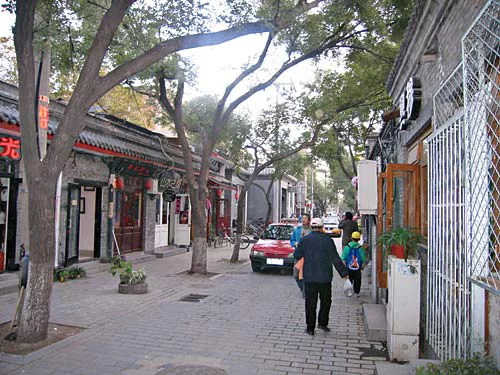
A street in one of the city's fast-disappearing hutong.

Photo © Robert Ivy
Beijing at Warp Speed

Beijing at Warp Speed

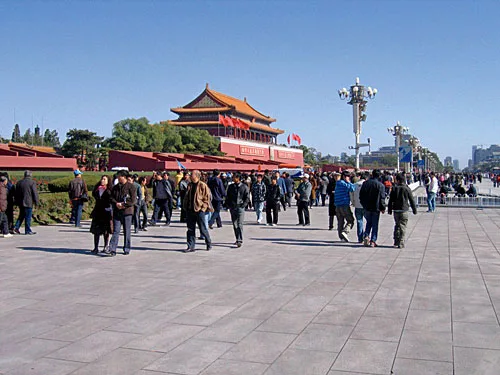
Crowds walking along the monumental avenue that runs in front of the Forbidden City.

Photo © Robert Ivy
Beijing at Warp Speed

Beijing at Warp Speed

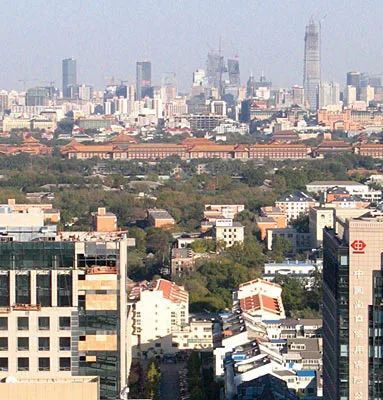
View of Beijing’s burgeoning central business district with CCTV and China World Trade Center under construction.

Photo © Robert Ivy
Beijing at Warp Speed

Beijing at Warp Speed

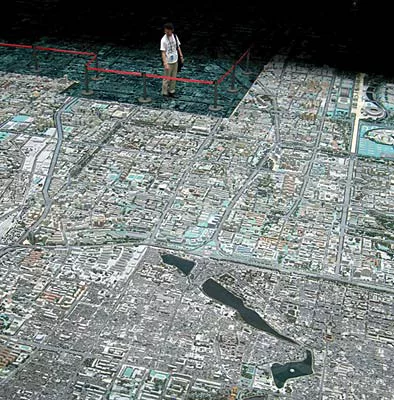
Model of the city at the Beijing Planning Exhibition Hall.

Photo © Robert Ivy
Beijing at Warp Speed

Beijing at Warp Speed

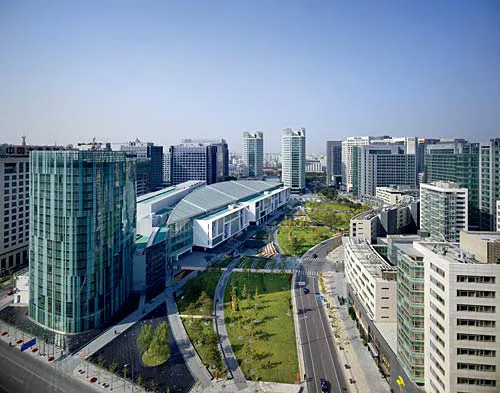
SOM's Beijing Finance Street project.

Photo © Tim Griffith
Beijing at Warp Speed

Beijing at Warp Speed

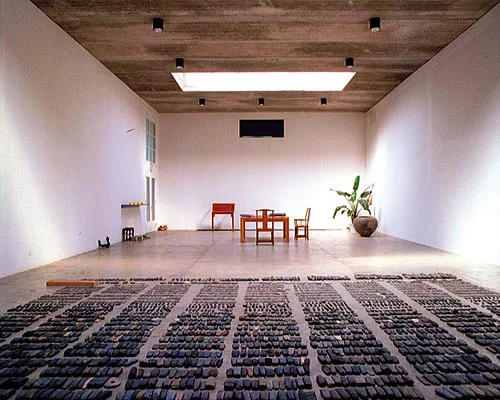
Ai Weiwei’s new gallery in an area outside of the Factory 798 district.

Photo courtesy Ai Weiwei
Beijing at Warp Speed

Beijing at Warp Speed

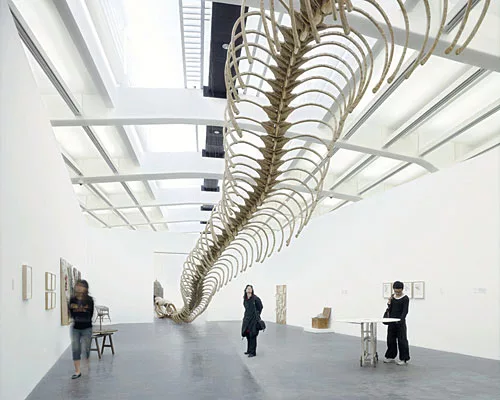
The Ullens Center for Contemporary Art in one of Factory 798’s East German–designed buildings.

Photo © Tim Griffith
Beijing at Warp Speed

Beijing at Warp Speed

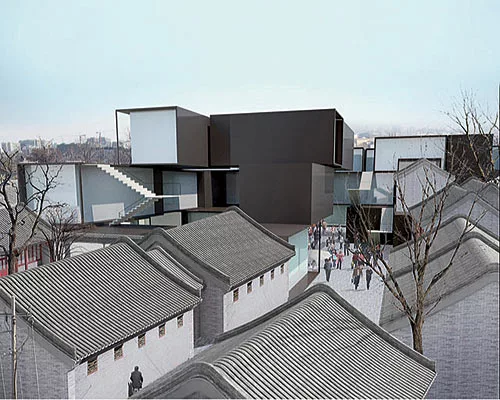
Studio Pei-Zhu’s design for rejuvenating the Xisi Bei hutong.
Beijing at Warp Speed

Beijing at Warp Speed

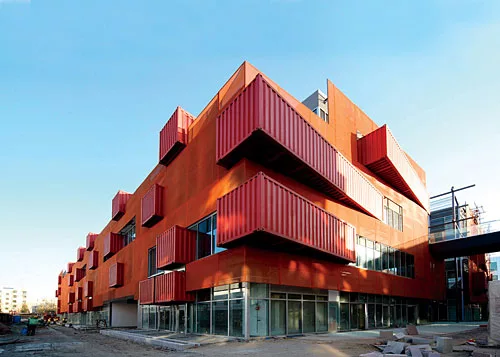
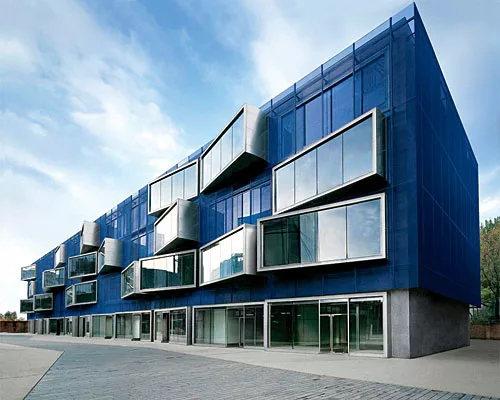
Buildings by LOT-EK at the Sanlitun complex.

Photo © Shuhe Architectural Photography
Beijing at Warp Speed

Beijing at Warp Speed

Buildings by LOT-EK at the Sanlitun complex.

Photo © Shuhe Architectural Photography

Beijing at Warp Speed
July 19, 2008
Ubiquitous, pervasive, the night air seems palpable, like a surreal force blanketing the city. While generated in part by coal-fired power plants, and in part by other industries (including the dust kicked up by construction sites), the haze brings a gloomy quality to most days that masks its real impact on health. The World Health Organization reports that Beijing’s air sometimes reaches five times above the agency’s safety standards. Adding to the brew, the wind sometimes brings a choking, silica-based dust from the Mongolian desert plains, which locals call shachenbao, or “dust cloud tempest.” Still the towers rise.
 
If high-rise towers alternate with open spaces along major highways, and neighborhoods lack the cheek-by-jowl quality of Hong Kong or Shenzhen, density in one precinct approaches Manhattan levels. The CBD, set in the Chaoyang district east of Tiananmen Square, has witnessed the majority of the tallest and biggest structures of recent years. CCTV’s massive headquarters, designed by the Dutch firm OMA and the China World Trade Center, by SOM, now join earlier complexes like the award-winning Jian Wai SOHO complex by Riken Yamamoto and the Yintai Center, originally designed by John Portman.
 
Those towers, the Olympic site, and Terminal 3 all required land. For Beijing, whose urban DNA had consisted of an interlinked aggregation of small-scale neighborhoods called hutong, progress has meant deconstruction of existing buildings, in many cases people’s homes. In a city that counted over 4,000 hutong at one point, up to 70 percent have been destroyed, according to China’s own news service, Xinhua. The past has been literally erased in a generation. Again, a visit to the Beijing Planning Exhibition Hall tells the tale more graphically than words. A massive bronze relief sculpture of the old city, frozen at a scale of 1:1,000 from the year 1949, exhibits a city of two- and three-story buildings, still dominated by the Imperial structures of earlier centuries. No skyscrapers punctuate the skyline.
 
Contemporary Chinese architects and planners and other cognoscenti have rediscovered the hutong, where today’s visitor can find crowds mingling from a variety of backgrounds, taking in the evening air arm in arm. The hip might dip into an alleyway to a contemporary hotel or restaurant, renovated from the historic fabric of a courtyard building, while ordinary citizens go about their routines of haircuts and shopping. Architects like Ma Yansong and his partner, Dang Qun, who both trained in the United States, occupy the top floor of a building down such a street, a locale that flavors each workday with a taste of an earlier, more authentic Beijing.
 
The architects’ offices raise the question of authenticity in modern Beijing. What does the term mean in a city so rapidly reinventing itself? And does the question of authenticity have relevance, when posited through our Western eyes? Beijing has long seemed the most Chinese of cities, with its historic precincts, its palaces and lakes, its narrow lanes where smoke curls up past 16th-century buildings. Now mandarin-collared mannequins from the 1950s in shop windows confront posters touting Euromodels wearing skimpy Gucci and Calvin Klein while everyone clings to a cell phone. Restaurants circling Hohai Lake, near Beihai Park, fill older pleasure houses now outlined in neon. Shopping malls bring capitalism to the Communist capital. Squint, and the world elides.
 
The disjuncture between modernity and history has provoked a vibrant art scene that has found a home in districts like Dashanzi, whose galleries and hip restaurants are housed in former factories away from the center of the city. Artists, dealers, tourists, and the curious throng here to Factory 798, housed in the vaulted halls of a former industrial facility designed by Bauhaus-trained architects. Robert Bernell, an American, founded Timezone 8 bookstore and café, which serves as a locus for the architectural community at Factory 798. Nearby, workers still disassemble small engines and break for noodles during the noon hour.
 
Pervaded by the ironic, by cultural confrontation, Beijing overwhelms our intellectual gamesmanship with its power and ubiquity. Today’s architects are finding a clear field that allows them to realize urban dreamscapes that a lifetime’s apprenticeship in the conservative workhouses of Europe or America might never fulfill. The results arrive mixed: The best show the increasing sophistication of both clients and designers, while the vast majority, the middle-of-the-road buildings that stretch to the end of sight, continue to meet the need for shelter without detail or planning finesse. Beijing, like China, is growing up. The city has bypassed adolescence, jumping into a big, newfound maturity at once awkward and thrilling. Where, we must ask, will this gangling, energetic phenomenon go?


Share This Story

Looking for a reprint of this article?
From high-res PDFs to custom plaques, order your copy today!

Post a comment to this article

Report Abusive Comment

Subscription Center
  • Create an Account
  • Start a Subscription
  • Manage My Account
  • Sign Up for Newsletters
  • Visit Customer Service
  • Update Preferences

More Videos

Sponsored Content

Sponsored Content is a special paid section where industry companies provide high quality, objective, non-commercial content around topics of interest to the Architectural Record audience. All Sponsored Content is supplied by the advertising company and any opinions expressed in this article are those of the author and not necessarily reflect the views of Architectural Record or its parent company, BNP Media. Interested in participating in our Sponsored Content section? Contact your local rep!

close
  • TAMLYN XtremeTrim Exterior Trim
    Sponsored byTamlyn

    Designing Cleaner Panel Facades: Why Exterior Trim Details Matter

  • Building with Vapor Barriers
    Sponsored byReef Industries, Inc.

    Vapor Barriers Help Control Moisture in Tighter Building Designs

  • Duct Interior with Prodeq System
    Sponsored byHenry, a Carlisle Company

    Designing Resilient Water Containment Systems

DESIGN:ED Podcast
Listen to Architectural Record’s DESIGN:ED Podcast

Events

June 10, 2026

Rethinking Stormwater – The Power of Porous Paving

Credits: 1 AIA LU/HSW; 1 AIBD P-CE; 0.1 ICC CEU

Learn how porous paving systems support stormwater management, reduce heat island effects, and enhance sustainable site design performance.

June 11, 2026

Very Early Warning Fire Detection for Mission-Critical Facilities

Credits: 1 AIA LU/HSW; 1 AIBD P-CE; 0.1 ICC CEU

Examine advanced fire detection strategies that support uptime and enhance safety in data centers and other mission-critical facilities.

View All Submit An Event

Products

2026 Architect's Square Foot Costbook

2026 Architect's Square Foot Costbook

See More Products

Popular Stories

Practice Matters illustration

What’s in a (Firm’s) Name? Thinking About Succession and Legacy

Coronado Bridge

The Architect’s Guide to San Diego

Practice Matters illustration

By the Numbers: Counting America's Architects

House on a Hill

Design Vanguard 2026: Forma

Crane Cove, ONO

Design Vanguard 2026 Winners

Broader Sustainability of CMU - Free Webinar - May 21, 2026

Related Articles

  • Beijing At Warp Speed

    See More
  • Beijing At Warp Speed

    See More
  • Terminal 3 at Beijing Capital International Airport by Foster + Partners and Arup

    See More

Related Products

See More Products
  • bim design firms.jpg

    BIM for Design Firms: Data Rich Architecture at Small and Medium Scales

See More Products
×

The latest news and information

#1 Source for Architectural Design, News and Products

SUBSCRIBE
  • RESOURCES
    • Advertise
    • Contact Us
    • Submit
    • Store
  • ACCOUNT CENTER
    • Create an Account
    • Start a Subscription
    • Manage My Account
    • Sign Up for Newsletters
    • Visit Customer Service
    • Update Preferences
  • PRIVACY
    • PRIVACY POLICY
    • TERMS & CONDITIONS
    • DO NOT SELL MY PERSONAL INFORMATION
    • PRIVACY REQUEST
    • ACCESSIBILITY
  • SERVICES
    • Marketing Services
    • Reprints
    • Market Research
    • List Rental
    • Survey/Respondent Access
  • STAY CONNECTED
    • Linkedin
    • Facebook
    • Instagram
    • YouTube
    • X (Twitter)

Copyright ©2026. All Rights Reserved BNP Media, Inc. and BNP Media II, LLC.

Design, CMS, Hosting & Web Development :: ePublishing