Architectural Record
search
cart
facebook twitter linkedin youtube
  • Sign In
  • Subscribe
  • Sign Out
  • My Account
Architectural Record
  • NEWS
    • Latest News
    • Awards
    • Interviews
    • Obituaries
    • Podcasts
      • Design:Ed Podcast
      • Sponsored Podcasts
  • OPINION
    • Book Reviews / Excerpts
    • Exhibition Reviews
    • Forum
  • EXCLUSIVES
    • Videos
    • Design Vanguard
    • Top 300 Firms
    • Sponsored Content
    • Sponsored eBooks
    • From the Archives
  • CONTINUING ED
    • Editorial Continuing Ed
    • CE Center
    • CE Academies
  • PROJECTS
    • Buildings By Type
    • Reuse & Renovation
    • Museums & Arts Centers
    • Colleges & Universities
    • Multifamily Housing
    • Interiors
    • Lighting
    • Kitchen & Bath
  • HOUSES
    • Record Houses
    • House of the Month
    • Featured Houses
  • PRODUCTS
    • Products by Category
    • Record Products of the Year
    • Latest Products
  • EVENTS
    • Dates & Events
    • Record on the Road
    • Innovation Conference
    • Sustainability in Practice
    • Women In Architecture
    • Webinars
    • Ad Excellence Awards
    • Submit an Event
  • CONNECT
    • Ask RECORD AI
    • Newsletters
    • Contact
    • Advertise
    • Editorial Calendar
    • Store
    • Customer Service
  • SUBMIT
    • Submission Guidelines
    • RECORD Competitions
  • MAGAZINE
    • Subscribe
    • My Account
    • Digital Edition
    • Current Issue
    • Firm Pass
    • Historic Archive
Commentary & Criticism

Can an indigenous culture survive in a jungle petropolis?

By Michael Sorkin
June 16, 2007

Pink Floyd was playing on the loudspeaker of the ferry transporting us over the Rio Napo into the 2,700-square-mile Yasuni National Park in the Amazon basin in Ecuador’s El Oriente region. We had missed the previous ferry after making hours of slow progress over rutted roads through a largely denuded countryside, then had to kill an hour in a shoreside scene of extreme informality—hot sun, muddy, littered paths along the river, lazing dogs, scattered houses, a little shop, and a dirt parking lot for waiting vehicles. The scene on the other side, however, was more like Guantanamo. From the dock, my students from City College and I walked along narrow chain-link passages topped with razor wire, passed though a magnetometer, had hand luggage X-rayed and passports balefully compared to a list sent in advance, and watched our bus be taken into a camouflage-painted metal shed for the once-over. No Coke stands or pleasantries here. Instead, there were gun towers, searchlights, signs forbidding alcohol and drugs, and M-16-toting men from the Ecuadorian army and private security firms with Orwellian names like Servisafe and Servipro. An unexpected gateway to paradise.

Yasuni is one of the most biodiverse areas on the planet—a UNESCO “world biosphere reserve”—a river-laced rain forest teeming with life and home to the indigenous Haorani people. And to oil. Crossing the river, we were entering Block 16, one of the giant concessions that have platted Oriente since 1967, when a consortium of Texaco and Gulf discovered huge oil reserves there. By mid-1972, exploitation was in full swing and a 312-mile-long pipeline had been constructed from the now-booming village of Neuva Loja (universally called Lago Agrio—Bitter Lake—after Texaco’s headquarters in Texas) to the coast from which the crude is shipped abroad, primarily to the U.S. The high security was intended to protect this resource, to secure the jungle against incursions by terrorists, smugglers, narcotics traffickers, poachers, loggers, and settlers. Of course, it did nothing to protect the area from the traumatic impact of petroleum itself.

Roads open the jungle (top) to many kinds of development and change the ecological and cultural balance. Heavy machinery (above left) makes quick work of creating a jungle urbanism that includes new towns, camps, and settlements (above center) and large oil facilities (above right).
Photography: © Gareth Mahon (top and above right); David Leven (above left); John Hill (above center)

The effects of oil on the Ecuadorian landscape have been profound. On the one hand, oil has fueled a boom economy which, especially in the go-go 1970s and ’80s, generated much middle- and upper-class prosperity and government investment in public infrastructure. On the other, oil has been an environmental disaster, say people living in the area. Thousands of square miles of rain forest have disappeared. The lives of numerous indigenous peoples have been forever disrupted. And vast areas have become toxic. According to a class-action lawsuit filed in 2003 against the oil companies by 30,000 settlers and people indigenous to the Amazon, Texaco and its successor, Chevron, have not just spilled oil in the jungle (more than what leaked from the Exxon Valdez), but also dumped billions of gallons of toxic wastewater. Much of the oil is extracted via the injection of water under high pressure, and rather than following the standard practice of deep re-injection of wastes, the company simply dumped it in ground-level pits, says Judith Kimmerling in her book Amazon Crude (1990). Plaintiffs in the lawsuit claim these practices have had severe consequences on the health of people living in the area. The lawsuit, which attempts to recover the cost of the estimated $6 billion cleanup, continues to work its way at a snail’s pace through the courts, as does an Ecuadorian government suit claiming fraud on Chevron’s part.

The oil concessions—covering thousands of square miles—have a very specific spatiality, a format that is, by stages, turning the forest not simply into a degraded, toxic environment but into an urbanism, a city of a new “disarticulated” character that combines webs and nodes, formality and informality, density and dispersion. Its components include grids of seismic trails (10-foot-wide pathways in which a 6.5-to-16-foot-deep hole is dug every 328 feet to hold 22-to-44 pounds of dynamite for acoustic exploration), networks of wells and toxic dumps, pumping stations, refineries, tank farms, pipelines, helicopter landing zones, airports, roadways, security check-points, military installations, and a proliferation of camps, depots, towns, and villages. In an environmental lawsuit filed against Atlantic Richfield in 1993, the plaintiffs inventoried—in this one concession—339 wells, 18,000 miles of seismic trails, 300 miles of roads, 600 toxic-waste pits, and 1,368 helicopter landing sites. Welcome to Petropolis.

Share This Story

Looking for a reprint of this article?
From high-res PDFs to custom plaques, order your copy today!

Post a comment to this article

Report Abusive Comment

Subscription Center
  • Create an Account
  • Start a Subscription
  • Manage My Account
  • Sign Up for Newsletters
  • Visit Customer Service
  • Update Preferences

More Videos

Sponsored Content

Sponsored Content is a special paid section where industry companies provide high quality, objective, non-commercial content around topics of interest to the Architectural Record audience. All Sponsored Content is supplied by the advertising company and any opinions expressed in this article are those of the author and not necessarily reflect the views of Architectural Record or its parent company, BNP Media. Interested in participating in our Sponsored Content section? Contact your local rep!

close
  • TAMLYN XtremeTrim Exterior Trim
    Sponsored byTamlyn

    Designing Cleaner Panel Facades: Why Exterior Trim Details Matter

  • Building with Vapor Barriers
    Sponsored byReef Industries, Inc.

    Vapor Barriers Help Control Moisture in Tighter Building Designs

  • Duct Interior with Prodeq System
    Sponsored byHenry, a Carlisle Company

    Designing Resilient Water Containment Systems

DESIGN:ED Podcast
Listen to Architectural Record’s DESIGN:ED Podcast

Events

June 10, 2026

Rethinking Stormwater – The Power of Porous Paving

Credits: 1 AIA LU/HSW; 1 AIBD P-CE; 0.1 ICC CEU

Learn how porous paving systems support stormwater management, reduce heat island effects, and enhance sustainable site design performance.

June 11, 2026

Very Early Warning Fire Detection for Mission-Critical Facilities

Credits: 1 AIA LU/HSW; 1 AIBD P-CE; 0.1 ICC CEU

Examine advanced fire detection strategies that support uptime and enhance safety in data centers and other mission-critical facilities.

View All Submit An Event

Products

2026 Architect's Square Foot Costbook

2026 Architect's Square Foot Costbook

See More Products

Popular Stories

Practice Matters illustration

What’s in a (Firm’s) Name? Thinking About Succession and Legacy

Practice Matters illustration

By the Numbers: Counting America's Architects

House on a Hill

Design Vanguard 2026: Forma

Crane Cove, ONO

Design Vanguard 2026 Winners

House A on a Hill

Design Vanguard 2026: Santiago Valdivieso

Broader Sustainability of CMU - Free Webinar - May 21, 2026

Related Articles

  • Can an indigenous culture survive in a jungle petropolis?

    See More
  • Edes Gallery Lead.jpg

    KTGY’s Edes Building Bridges Culture, Community, and Hospitality in a Small Silicon Valley Town

    See More
  • Arkins Promenade.

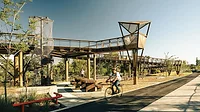
    Wenk Associates and Tres Birds Design an Elevated Walkway in a Nature-Focused Promenade

    See More

Related Products

See More Products
  • image7.jpg

    Contemporary Architecture in China Towards A Critical Pragmatism

  • book3.jpg

    If Architecture is a Language, Then a Building is a Story

See More Products
×

The latest news and information

#1 Source for Architectural Design, News and Products

SUBSCRIBE
  • RESOURCES
    • Advertise
    • Contact Us
    • Submit
    • Store
  • ACCOUNT CENTER
    • Create an Account
    • Start a Subscription
    • Manage My Account
    • Sign Up for Newsletters
    • Visit Customer Service
    • Update Preferences
  • PRIVACY
    • PRIVACY POLICY
    • TERMS & CONDITIONS
    • DO NOT SELL MY PERSONAL INFORMATION
    • PRIVACY REQUEST
    • ACCESSIBILITY
  • SERVICES
    • Marketing Services
    • Reprints
    • Market Research
    • List Rental
    • Survey/Respondent Access
  • STAY CONNECTED
    • Linkedin
    • Facebook
    • Instagram
    • YouTube
    • X (Twitter)

Copyright ©2026. All Rights Reserved BNP Media, Inc. and BNP Media II, LLC.

Design, CMS, Hosting & Web Development :: ePublishing