Architectural Record
search
cart
facebook twitter linkedin youtube
  • Sign In
  • Subscribe
  • Sign Out
  • My Account
Architectural Record
  • NEWS
    • Latest News
    • Awards
    • Interviews
    • Obituaries
    • Podcasts
      • Design:Ed Podcast
      • Sponsored Podcasts
  • OPINION
    • Book Reviews / Excerpts
    • Exhibition Reviews
    • Forum
  • EXCLUSIVES
    • Videos
    • Design Vanguard
    • Top 300 Firms
    • Sponsored Content
    • Sponsored eBooks
    • From the Archives
  • CONTINUING ED
    • Editorial Continuing Ed
    • CE Center
    • CE Academies
  • PROJECTS
    • Buildings By Type
    • Reuse & Renovation
    • Museums & Arts Centers
    • Colleges & Universities
    • Multifamily Housing
    • Interiors
    • Lighting
    • Kitchen & Bath
  • HOUSES
    • Record Houses
    • House of the Month
    • Featured Houses
  • PRODUCTS
    • Products by Category
    • Record Products of the Year
    • Latest Products
  • EVENTS
    • Dates & Events
    • Record on the Road
    • Innovation Conference
    • Sustainability in Practice
    • Women In Architecture
    • Webinars
    • Ad Excellence Awards
    • Submit an Event
  • CONNECT
    • Ask RECORD AI
    • Newsletters
    • Contact
    • Advertise
    • Editorial Calendar
    • Store
    • Customer Service
  • SUBMIT
    • Submission Guidelines
    • RECORD Competitions
  • MAGAZINE
    • Subscribe
    • My Account
    • Digital Edition
    • Current Issue
    • Firm Pass
    • Historic Archive

Urban-Think Tank

Urban-Think Tank stacks multiple structures to meet the myriad needs of the barrio.
By Suzanne Stephens
Urban-Think Tank

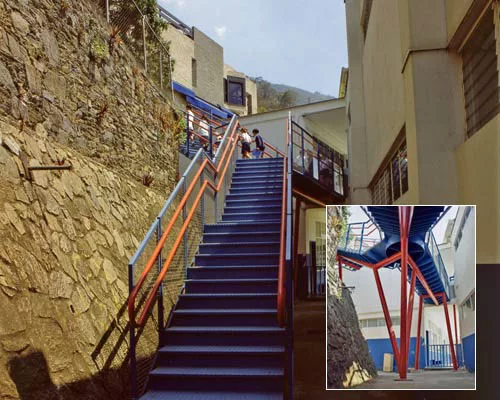
The architects propose modular metal stairs for the barrios based on one realized for the Altamira neighborhood in 2003.

Photo © Ricardo Parra
Urban-Think Tank

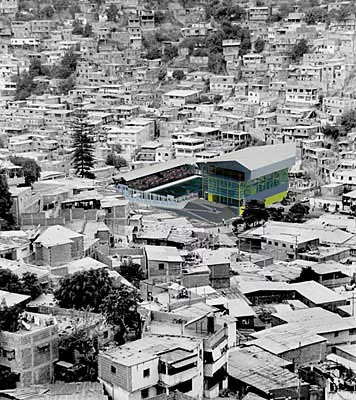
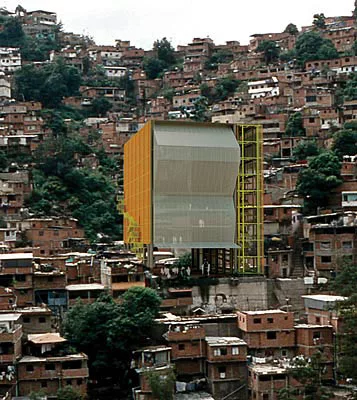
Currently Urban-Think Tank is working on two vertical gyms for the barrios. One, proposed for Los Teques, includes a swimming pool.
Urban-Think Tank

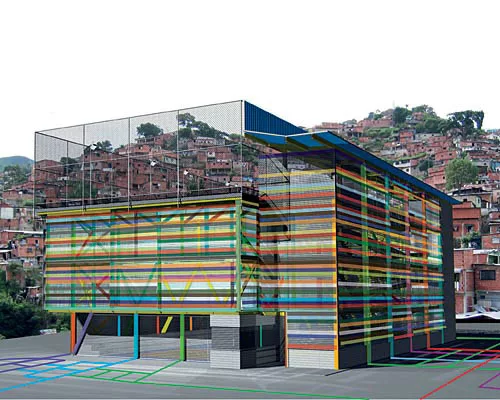
Another gym, in construction in Baruta, features a colorful polycarbonate skin.
Urban-Think Tank

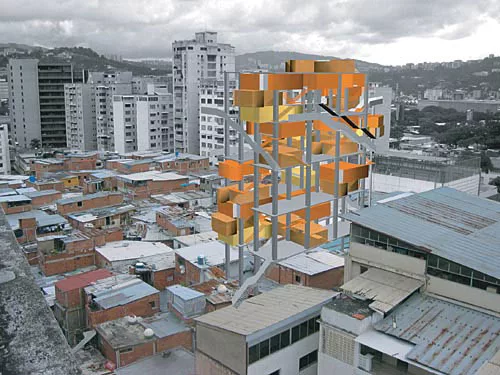
“Growing House” (2004), a residential framework of platforms and columns, can be filled in by occupants.
Urban-Think Tank

Currently Urban-Think Tank is working on two vertical gyms for the barrios. One, proposed for Los Teques, includes a swimming pool.
Urban-Think Tank

Another gym, in construction in Baruta, features a colorful polycarbonate skin.
Urban-Think Tank
Urban-Think Tank

Urban-Think Tank is designing five stations akin to its proposal for Manguitos station in the San Augustin barrio.
Urban-Think Tank

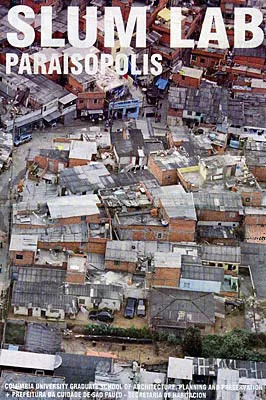
A Columbia University tabloid chronicles the work of U-TT’s design studio there last spring.

Urban-Think Tank
Urban-Think Tank
Urban-Think Tank
Urban-Think Tank
Urban-Think Tank
Urban-Think Tank
Urban-Think Tank
Urban-Think Tank
Urban-Think Tank
October 16, 2008
Brillembourg, who was born in New York but has family ties to Caracas, and Klumpner, who grew up in Austria, both studied architecture at Columbia University’s Graduate School of Architecture, Planning and Preservation in New York City. After having worked in separate firms in Caracas for several years, they joined forces first as a nonprofit research group, later expanding into a design practice. “We had already been moonlighting together,” Brillembourg says. “We began by holding forums and working with community groups.”During the past 10 years, when a burgeoning economy meant that even young architecture offices could attract commissions with hefty budgets, Urban-Think Tank (U-TT) has operated somewhat differently in the barrios of Caracas, Venezuela. “We work in an environment with problems of poverty, violence, and migrating populations,” says principal Alfredo Brillembourg. When Brillembourg and Hubert Klumpner started their Caracas-based research and design firm in 1998, the two architects went into the barrios, where 60 percent of metropolitan Caracas’s 4.7 million inhabitants live. “We want to address the bottom of the pyramid, not the top,” Brillembourg says. These slums, lacking a city infrastructure of electricity, plumbing, or garbage removal, and euphemistically called “nonformal” or “informal” cities in planning circles, have been getting intense scrutiny lately. In university and college design studios, plus conferences, exhibitions, and publications (such as the recent Harvard Design Magazine’s Spring/Summer 2008 issue), barrios, favelas, and slums loom large as the next architecture and planning frontier.
 
In order to improve the living conditions of the barrios through architecture, U-TT finds small-scale intervention and insertion is best in responding to community needs. “Since people may not have the money for their design or realization,” says Klumpner, “we design for free and then present projects to institutions and politicians to get the needed backing for their realization.” Funding has come through foundations, as well, such as the German Federal Cultural Foundation (Kulturstiftung des Bundes), which has helped U-TT with conferences, publications, and prototypical designs. Brillembourg and Klumpner not only consult for government agencies that affect infrastructure, but as Brillembourg puts it,“We also want to get corporate players to join in ventures with us.”
 
One project in the barrios the firm finds is catching on is the vertical gym. Brillembourg says observing New York City’s solution to tight spaces where gyms and recreational facilities often occupy the roofs of buildings led him and Klumpner to work on a prototype to fit into playing fields of the barrios. Here, a narrow four- or five-level structure could provide basketball courts, dance studios, space for weightlifting, and a running track for the barrio youths.
 
Klumpner and Brillembourg currently have a 47,899-square-foot vertical gym in construction in the Baruta section of the city. The Paris-based graphic design firm Integral Ruedi Bauer et Associés acted as a consultant for the splashy facade where colored bands of polycarbonate clad a prefab steel structure. Another gym is being planned with Metro Los Teques and Odebrecht, a construction company, as its clients. Here, a 47,899-square-foot, prefab steel vertical gym on a 11,840-square-foot site will include a swimming pool along with other sports facilities.
 
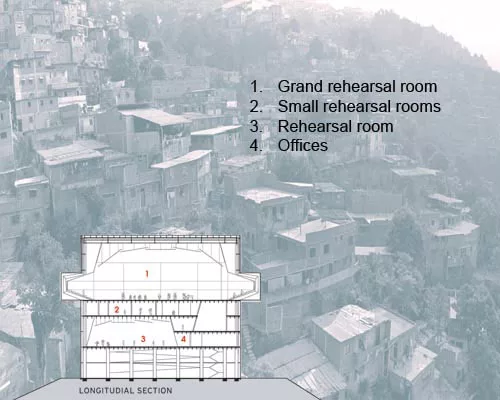
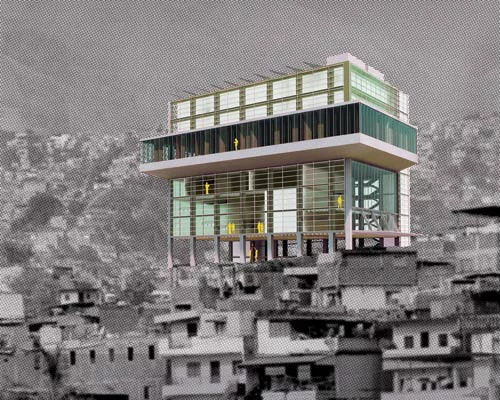
Now Brillembourg and Klumpner want to bring music-education facilities to the barrios. In late August, during the Salzburg Festival in Austria, U-TT exhibited its design for a prototypical music building, the Centro Communitario de Acción Social por la Música, which it is proposing for the Venezuelan barrios. Designed for the Fundación del Estado para el Sistema Nacional de Orquestas Juveniles e Infantiles de Venezuela (FESNOJIV), founded by José Antonio Abreu in 1975, the music building is lifted on columns so that it could hover over a playing field in a barrio. “We have to design these buildings to fit into leftover spaces,” says Klumpner. The architects have identified 100 sites in Caracas where the five-level building, which is estimated to cost about $14 million, could be inserted. The 48,438-square-foot-structure, with a poured-in-place concrete frame and concrete-block infill, is designed to accommodate 800 to 1,000 children a day. With Karl Heinz Muller of BBM Muller in Munich as the acoustical consultant, U-TT included a 200-seat performance hall, rehearsal space, and individual practice rooms. Since the buildings have to be constructed in places where there is no electricity or potable water, U-TT proposes installing solar panels on the roof, along with a rainwater-collection system.
 
U-TT well knows that infrastructure is a major part of the problem in the barrios. The firm designed five stations for the Metro Cable, a 1.3 mile loop developed to connect the San Augustin barrio to Caracas’s metro system. Three stations are expected to be completed by the end of this year. A standard structure based on a 64.5-foot-by-131-foot module, and built of concrete with a steel roof deck, allows the stations to be tucked into crowded neighborhoods without displacement of the population. “We call this ‘urban acupuncture,’ ” says Klumpner.
 
Similarly, the architects have designed a flexible, modular stair system of colored metal prefab stairs with bolted steel columns and sheet-metal landings that can also be built outdoors in the hillside barrios. Besides promoting normal access in these hilly areas, the stairs should provide informal gathering spots. “It can be reconfigured in different directions for flexibility,” says Brillembourg. Another project, a vertical “Growing House,” is currently being constructed for Lecuna Avenue, which is not in the barrios of Caracas. Called Edificio Teatros, it is part of a large development being undertaken by Metro de Caracas. Nevertheless, U-TT plans to develop the concept for the barrios, where the expandable framework system would be filled in by the occupants.
 
The two architects also teach an advanced design studio at Columbia University, which is called SLUM (Sustainable Living Urban Model) LAB. Last spring they turned their attention to the slums of São Paulo, Brazil, and produced a tabloid documenting the work. This fall the studio is concentrating on three phases of improving the barrios—upgrading buildings; using alternative technologies for energy, water, waste, and so on; and researching green infrastructure. Not surprisingly, the two have often turned to student interns to work in the Caracas office, including ones from Columbia. “It’s a nice umbilical cord,” says Brillembourg. With part of the office working on researching prototypes and part oriented to specific clients, says Brillembourg, “we are now more balanced financially.” The two architects well know that being socially responsible, or designing with a conscience, cannot be done without serious financial input. And a lot of energy.

Share This Story

Looking for a reprint of this article?
From high-res PDFs to custom plaques, order your copy today!

Stephens

Suzanne Stephens, a former deputy editor of Architectural Record, has been a writer, editor, and critic in the field of architecture for several decades. She has a Ph.D. in architectural history from Cornell University, and teaches a seminar in the history of architectural criticism in the architecture program of Barnard and Columbia colleges.

Post a comment to this article

Report Abusive Comment

Subscription Center
  • Create an Account
  • Start a Subscription
  • Manage My Account
  • Sign Up for Newsletters
  • Visit Customer Service
  • Update Preferences

More Videos

Sponsored Content

Sponsored Content is a special paid section where industry companies provide high quality, objective, non-commercial content around topics of interest to the Architectural Record audience. All Sponsored Content is supplied by the advertising company and any opinions expressed in this article are those of the author and not necessarily reflect the views of Architectural Record or its parent company, BNP Media. Interested in participating in our Sponsored Content section? Contact your local rep!

close
  • TAMLYN XtremeTrim Exterior Trim
    Sponsored byTamlyn

    Designing Cleaner Panel Facades: Why Exterior Trim Details Matter

  • Building with Vapor Barriers
    Sponsored byReef Industries, Inc.

    Vapor Barriers Help Control Moisture in Tighter Building Designs

  • Duct Interior with Prodeq System
    Sponsored byHenry, a Carlisle Company

    Designing Resilient Water Containment Systems

DESIGN:ED Podcast
Listen to Architectural Record’s DESIGN:ED Podcast

Events

June 10, 2026

Rethinking Stormwater – The Power of Porous Paving

Credits: 1 AIA LU/HSW; 1 AIBD P-CE; 0.1 ICC CEU

Learn how porous paving systems support stormwater management, reduce heat island effects, and enhance sustainable site design performance.

June 11, 2026

Very Early Warning Fire Detection for Mission-Critical Facilities

Credits: 1 AIA LU/HSW; 1 AIBD P-CE; 0.1 ICC CEU

Examine advanced fire detection strategies that support uptime and enhance safety in data centers and other mission-critical facilities.

View All Submit An Event

Products

2026 Architect's Square Foot Costbook

2026 Architect's Square Foot Costbook

See More Products

Popular Stories

Practice Matters illustration

What’s in a (Firm’s) Name? Thinking About Succession and Legacy

Practice Matters illustration

By the Numbers: Counting America's Architects

House on a Hill

Design Vanguard 2026: Forma

Crane Cove, ONO

Design Vanguard 2026 Winners

House A on a Hill

Design Vanguard 2026: Santiago Valdivieso

Broader Sustainability of CMU - Free Webinar - May 21, 2026

Related Articles

  • Design With Conscience

    See More
  • "Small Scale, Big Change" Exhibition Opens at MoMA

    See More
  • John Carl Warnecke, Known for Contextualism and Charisma, Dies

    See More

Related Products

See More Products
  • 047177751X.gif

    Sustainable Urbanism: Urban Design With Nature

See More Products
×

The latest news and information

#1 Source for Architectural Design, News and Products

SUBSCRIBE
  • RESOURCES
    • Advertise
    • Contact Us
    • Submit
    • Store
  • ACCOUNT CENTER
    • Create an Account
    • Start a Subscription
    • Manage My Account
    • Sign Up for Newsletters
    • Visit Customer Service
    • Update Preferences
  • PRIVACY
    • PRIVACY POLICY
    • TERMS & CONDITIONS
    • DO NOT SELL MY PERSONAL INFORMATION
    • PRIVACY REQUEST
    • ACCESSIBILITY
  • SERVICES
    • Marketing Services
    • Reprints
    • Market Research
    • List Rental
    • Survey/Respondent Access
  • STAY CONNECTED
    • Linkedin
    • Facebook
    • Instagram
    • YouTube
    • X (Twitter)

Copyright ©2026. All Rights Reserved BNP Media, Inc. and BNP Media II, LLC.

Design, CMS, Hosting & Web Development :: ePublishing