Architectural Record
search
cart
facebook twitter linkedin youtube
  • Sign In
  • Subscribe
  • Sign Out
  • My Account
Architectural Record
  • NEWS
    • Latest News
    • Awards
    • Interviews
    • Obituaries
    • Podcasts
      • Design:Ed Podcast
      • Sponsored Podcasts
  • OPINION
    • Book Reviews / Excerpts
    • Exhibition Reviews
    • Forum
  • EXCLUSIVES
    • Videos
    • Design Vanguard
    • Top 300 Firms
    • Sponsored Content
    • Sponsored eBooks
    • From the Archives
  • CONTINUING ED
    • Editorial Continuing Ed
    • CE Center
    • CE Academies
  • PROJECTS
    • Buildings By Type
    • Reuse & Renovation
    • Museums & Arts Centers
    • Colleges & Universities
    • Multifamily Housing
    • Interiors
    • Lighting
    • Kitchen & Bath
  • HOUSES
    • Record Houses
    • House of the Month
    • Featured Houses
  • PRODUCTS
    • Products by Category
    • Record Products of the Year
    • Latest Products
  • EVENTS
    • Dates & Events
    • Record on the Road
    • Innovation Conference
    • Sustainability in Practice
    • Women In Architecture
    • Webinars
    • Ad Excellence Awards
    • Submit an Event
  • CONNECT
    • Ask RECORD AI
    • Newsletters
    • Contact
    • Advertise
    • Editorial Calendar
    • Store
    • Customer Service
  • SUBMIT
    • Submission Guidelines
    • RECORD Competitions
  • MAGAZINE
    • Subscribe
    • My Account
    • Digital Edition
    • Current Issue
    • Firm Pass
    • Historic Archive
Architecture News

Fan Pier

Will Boston’s ICA Be Its Own Bilbao?

March 16, 2007
 

With a wave of redevelopment rolling toward Boston’s old industrial waterfront, Diller Scofidio + Renfro’s much lauded new home for the city’s Institute of Contemporary Art (RECORD, March 2007, page 108) has established a beachhead for ambitious modern design.
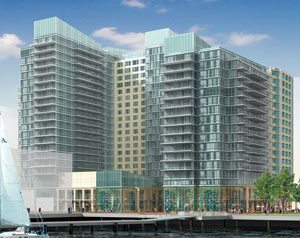
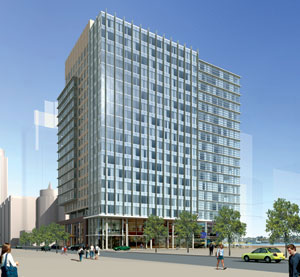
Image courtesy Hill Glazier (top); Image courtesy Elkus/Manfredi (bottom)
Hill Glazier (top): Adjacent to the Institute of Contemporary Art on Boston’s Fan Pier, Hill Glazier Architects have designed a luxury hotel containing more than 100 condominium units. Elkus Manfredi (bottom): Elkus/Manfredi designed an 18-story office building at a site nearby.

The ICA late last year moved from the Back Bay to its new home at a long-vacant site on Fan Pier, in a gritty area southeast of downtown. Plans approved for the surrounding nine-block, 21-acre waterfront district include several office towers, a luxury hotel, condominium buildings, and retail shops. New public parks and a marina are also in the works. Of these projects, 1.3 million square feet of space could be underway by the end of 2007. All told, the master plan allows for up to 3 million square feet of development.

While the popularity of the ICA might suggest Boston sought a Bilbao Effect—an urban revival driven by the construction of an iconic cultural building—there was no conscious plan to seed the area by building the museum first. According to Kairos Shen, Boston’s director of planning, “The plans for the entire waterfront, including the Fan Pier, predated the ICA. The civic spaces and museum evolved out of a larger planning effort. The ICA was completed quicker partly because it was not constrained by same set of economic and market conditions that affect private developers.”

The property had been tangled in legal disputes for decades, straining the patience of public officials eager to see the prime location developed. In 2005, the Pritzker family of Chicago sold the land to local developer Joseph Fallon and Massachusetts Mutual Life Insurance, who refined a scheme negotiated by the Pritzker group and quickly moved forward with it.

Construction on a hotel and residential building, designed by Hill Glazier Architects, is set to begin later this year on a site behind the ICA. This will be followed by a condominium building by Hill Glazier and office towers by Brennan Beer Gorman Architects and Boston-based Elkus Manfredi Architects.

Like the ICA, the new Fan Pier projects eschew Boston’s various revival styles—such as the ubiquitous redbrick Federalist mode—in favor of angular expanses of glass. “It was an easy call. Glass maximizes the views,” Fallon explains.

Although the ICA is less a catalyst for these new developments than simply an accompanying project, it is nevertheless having an effect on the area. Its contemporary design, Shen says, has “stimulated a conversation about architecture and raises the bar for private development as well.”

Share This Story

Looking for a reprint of this article?
From high-res PDFs to custom plaques, order your copy today!

Post a comment to this article

Report Abusive Comment

Subscription Center
  • Create an Account
  • Start a Subscription
  • Manage My Account
  • Sign Up for Newsletters
  • Visit Customer Service
  • Update Preferences

More Videos

Sponsored Content

Sponsored Content is a special paid section where industry companies provide high quality, objective, non-commercial content around topics of interest to the Architectural Record audience. All Sponsored Content is supplied by the advertising company and any opinions expressed in this article are those of the author and not necessarily reflect the views of Architectural Record or its parent company, BNP Media. Interested in participating in our Sponsored Content section? Contact your local rep!

close
  • TAMLYN XtremeTrim Exterior Trim
    Sponsored byTamlyn

    Designing Cleaner Panel Facades: Why Exterior Trim Details Matter

  • Building with Vapor Barriers
    Sponsored byReef Industries, Inc.

    Vapor Barriers Help Control Moisture in Tighter Building Designs

  • Duct Interior with Prodeq System
    Sponsored byHenry, a Carlisle Company

    Designing Resilient Water Containment Systems

DESIGN:ED Podcast
Listen to Architectural Record’s DESIGN:ED Podcast

Events

June 10, 2026

Rethinking Stormwater – The Power of Porous Paving

Credits: 1 AIA LU/HSW; 1 AIBD P-CE; 0.1 ICC CEU

Learn how porous paving systems support stormwater management, reduce heat island effects, and enhance sustainable site design performance.

June 11, 2026

Very Early Warning Fire Detection for Mission-Critical Facilities

Credits: 1 AIA LU/HSW; 1 AIBD P-CE; 0.1 ICC CEU

Examine advanced fire detection strategies that support uptime and enhance safety in data centers and other mission-critical facilities.

View All Submit An Event

Products

2026 Architect's Square Foot Costbook

2026 Architect's Square Foot Costbook

See More Products

Popular Stories

Practice Matters illustration

What’s in a (Firm’s) Name? Thinking About Succession and Legacy

Coronado Bridge

The Architect’s Guide to San Diego

Practice Matters illustration

By the Numbers: Counting America's Architects

House on a Hill

Design Vanguard 2026: Forma

Crane Cove, ONO

Design Vanguard 2026 Winners

Broader Sustainability of CMU - Free Webinar - May 21, 2026

Related Articles

  • Fan of the Arts

    A Fan of the Arts

    See More
  • Rocket Mortgage FieldHouse

    Cleveland's Rocket Mortgage FieldHouse Offers a Fresh Take on the Fan Experience

    See More
  • Pier 42

    MNLA Transforms a Former Industrial Site on the East River into Manhattan’s Newest Pier-Park

    See More
×

The latest news and information

#1 Source for Architectural Design, News and Products

SUBSCRIBE
  • RESOURCES
    • Advertise
    • Contact Us
    • Submit
    • Store
  • ACCOUNT CENTER
    • Create an Account
    • Start a Subscription
    • Manage My Account
    • Sign Up for Newsletters
    • Visit Customer Service
    • Update Preferences
  • PRIVACY
    • PRIVACY POLICY
    • TERMS & CONDITIONS
    • DO NOT SELL MY PERSONAL INFORMATION
    • PRIVACY REQUEST
    • ACCESSIBILITY
  • SERVICES
    • Marketing Services
    • Reprints
    • Market Research
    • List Rental
    • Survey/Respondent Access
  • STAY CONNECTED
    • Linkedin
    • Facebook
    • Instagram
    • YouTube
    • X (Twitter)

Copyright ©2026. All Rights Reserved BNP Media, Inc. and BNP Media II, LLC.

Design, CMS, Hosting & Web Development :: ePublishing