Refusing the Spotlight, Peter Zumthor Designs Quiet Buildings that Still Attract Devotees
Architects & Firms
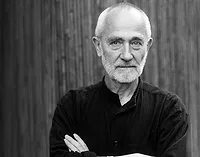
How does one explain the fascination with Peter Zumthor? It is not because of an architectural style. As the architect himself once said, “It is better not to talk of style but of a particular approach, a specific conscientiousness, in finding the solution to a task.” His projects are few in number, small in size, and located mostly within his own neighborhood, the Swiss Canton of Graubünden, or in Germany, Austria, and Italy. His range is similarly restricted to noncommercial, individual residences or housing groups, and community, religious, or cultural institutions.
Zumthor’s best-known projects are the thermal baths in Vals, Switzerland, completed in 1996; the Kunsthaus Bregenz, in Austria, of 1997; and now the Kolumba, Art Museum of the Archdiocese of Cologne. He spends years in discussion with clients before anything is constructed. Preparations for Kolumba spanned 11 years. The relationship with Bregenz lasted 18 years and culminated in 2007 with a retrospective of his works since 1986, the year he built his atelier and house in Haldstein, Switzerland. Berlin’s museum for the Topography of Terror, designed to protect and document an excavated Gestapo torture bunker, started with a competition in 1993, and ended, acrimoniously, when the client demolished the unfinished project in 2004 after budget disagreements. Zumthor is nothing if not thorough. “I want to pursue and reduce things to such a degree that later, no one can come and say, ‘That could have been left out as well,’ ” he said during a workshop in 2001. Minimalism is in inverse proportion to the time necessary for its creation, and clients are rarely prepared to devote the resources required for such ripening processes.
Born in Basel, Switzerland, in 1943, Zumthor studied both design and architecture, first in Basel and then at the Pratt Institute, in New York City. On returning to Switzerland, he oversaw the care of historic buildings before founding his atelier there in 1979. His guest professorships include terms at Southern California’s Institute of Architecture and Munich’s Technical University. Since 1996, he has been professor at the Lugano Architecture Academy of Switzerland’s Italian University.
Zumthor is often described as the pioneer of a new Alpine architecture. His carefully crafted objects, by virtue of being excruciatingly detailed, with long gestation periods, cannot be merely described as buildings. His approach epitomizes characteristics fundamental to Swiss design quality: physical shaping and engineering backed up by hands-on experience and empirical knowledge. It is a holistic view taking into account the origins of materials and their aging within a natural life cycle; an intense concentration on finding solutions that borders on tunnel vision; a peeling away of the superficial elements; and ingrained respect for tried and tested methods, history, and fantasy. In Zumthor’s hands, these strands result in forms of timeless modernity that transmit a mystical, quasi-religious core idea that “beauty is truth, truth beauty,” as Keats wrote in his Ode on a Grecian Urn. Zumthor clears away peripherals to highlight innate composition, patterns, and structural properties of natural materials, such as stone and timber, and even elusive immaterial qualities, such as light.
Daylight plays a central role in the Bregenz museum. A double glass sheath covering the cube-shaped structure, supported internally by just three smooth-faced poured-concrete walls, filters external light into galleries. At night, a James Turrell installation, mounted within the glass-wall sandwich, continually changes the color of the building. The museum is as ethereal as a solid object can be; even the structure is subservient to the idea of light. Zumthor describes it as a leuchtkörper, or “body of light.”
Zumthor decided on architecture after an apprenticeship under his father as a cabinetmaker and identifies strongly with handcrafts, especially timber structures, for which he employs both architects and joiners. In Switzerland’s Expo 2000 pavilion, for which “enclosure” or “shelter” was an imprecise description, 45,000 unseasoned larch and Scotch pine joists were piled horizontally and dovetailed at the corners to form a 30-foot-high maze, with open sides and daylight from above.
At the Vals spa, all the basic natural elements come together. The pools are half-buried in natural rock, and their mineral waters turn red when exposed to air, depositing red oxides on the concrete. The combination of thin Valser Quartzite dry stone walling, with exposed sawn-cut edges; the varied lighting; and flickering water reflections, which follow the rhythms of nature, make this cavelike structure seem alive—a nonsacral place imbued with an atmosphere of pantheist devotion.
In the age of global architecture, which has sacrificed Zumthor’s considered approach to build monumentally for mass categories, an architect with his ethics who manages to survive in business is a wonder—one can only respect someone who often shuns the press, refusing to join the line of super-inflated egos seeking publicity. But this is a double-edged sword. While Zumthor distances himself from the media hype of a Bilbao Effect, he fails to acknowledge what the German architecture critic Wolfgang Pehnt calls the “Vals Effect.” Since the baths were completed, hotels in Vals have experienced a 45 percent increase in bookings.
Mass appeal seems anathema to Zumthor’s monklike image. He told an interviewer: “Institutions, and we know these are not always just the churches, but institutions such as art museums, concert halls, folk music, or other things, which help us work against aggression, which do people good, which bring out the good in people, those are wonderful tasks on which to work.”
In the Eifel, a western German region of extinct volcanoes beside the Rhine, Zumthor designed and helped build a simple concrete tower chapel in a field for an elderly Roman Catholic farming couple, Hermann-Josef and Trudel Scheidtweiler. The architect and clients have been planning this votive structure since 1998. When Zumthor heard that the chapel was to be dedicated to Nikolaus von Flüe, a 16th-century mystic and preacher of peace who was his mother’s favorite saint, he agreed to carry out the project for a nominal fee.
The Chapel in the Field was consecrated in May 2007. A triangular steel door opens into a five-cornered, 39-foot-high, windowless light well, with textured concrete walls formed by the burning away of spruce branches, which were vertically bundled, as if for a temporary farm workers’ shelter, and used for the concrete formwork. The only furniture is a wooden bench and a hanging symbol. Despite the religious dedication, Zumthor has created a universal place of meditation.
“My buildings are declarations of love for their sites,” he once said. His sites are indeed often spectacular. But is it the way he reads the topography and weaves his structures into the landscape that helps us see previously hidden qualities? Perhaps the Zumthor phenomenon is, in essence, inspirational.
Looking for a reprint of this article?
From high-res PDFs to custom plaques, order your copy today!