Italy Calls on Renzo Piano to Address Earthquake Resilience
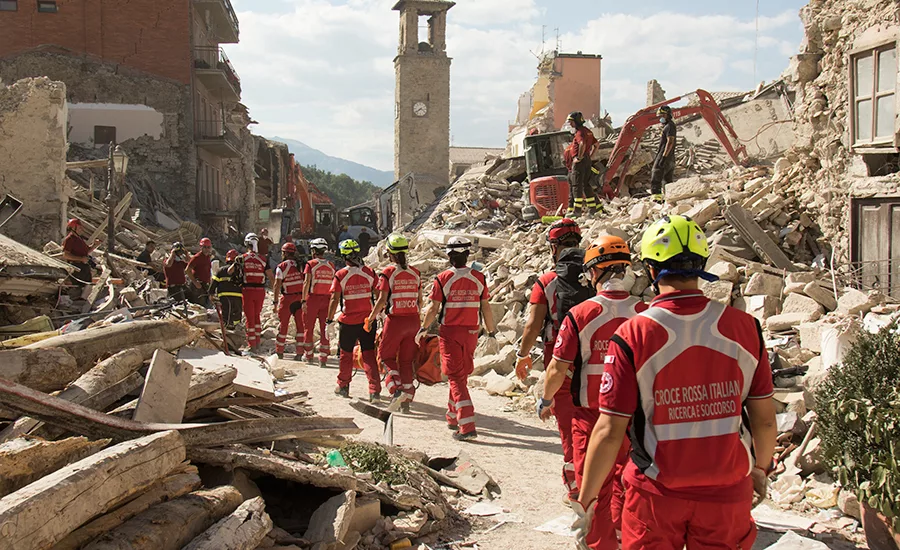
Italy’s prime minister asked Renzo Piano to assist with a national resiliency plan following the earthquake that destroyed Amatrice, Italy.
Photo © Daniele Aloisi/Italian Red Cross
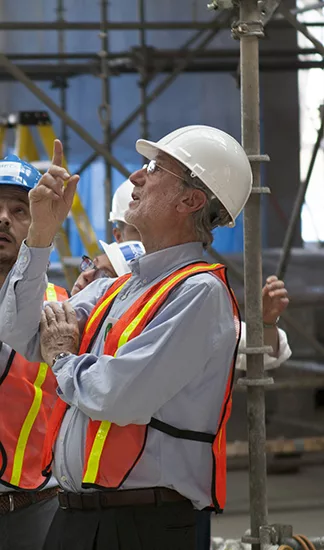
Renzo Piano was appointed a senator for life in 2013 by the Italian president.
Image courtesy RPBW
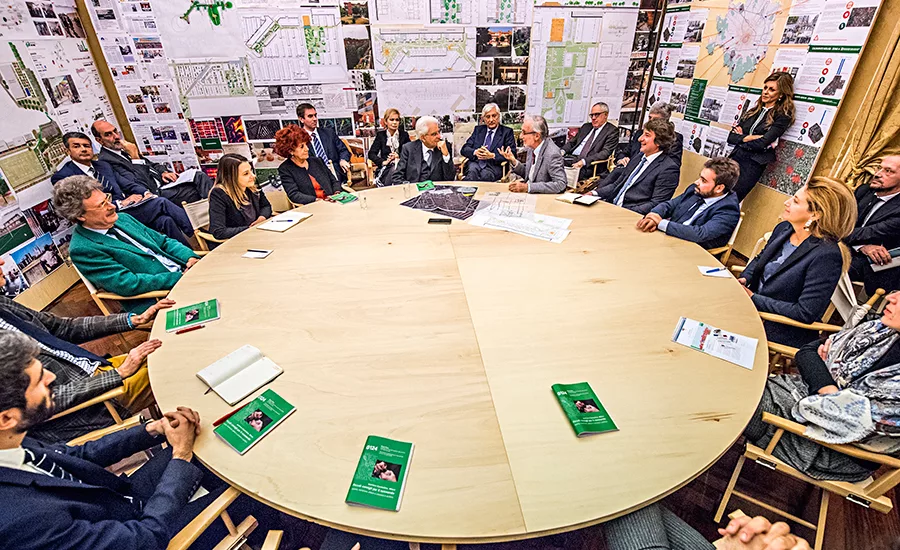
As part of his senatorial work, Piano established a research group called G124 (named after his office in the Palazzo Giustiniani) to study cities—especially the condition of their peripheries. He is working with the team to established a long-term earthquake resilience plan called “Casa Italia."
Photo © Patrizia Dottori/Archivio fotografico, Senato della Repubblica
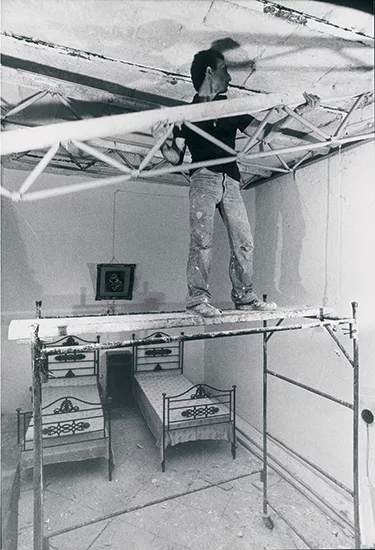
For his long-term resilliiencey strategy for Italy, Piano hopes to apply techniques he developed in 1979 for the Otranto Urban Regeneration Workshop, a project with UNESCO.
Image courtesy RPBW
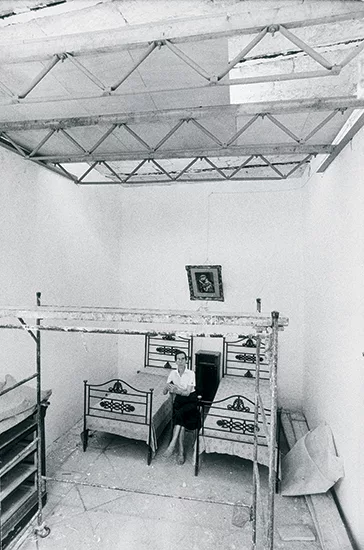
The Otranto project focused on “light construction”—techniques that could reinforce structures without forcing residents out of their homes.
Image courtesy RPBW
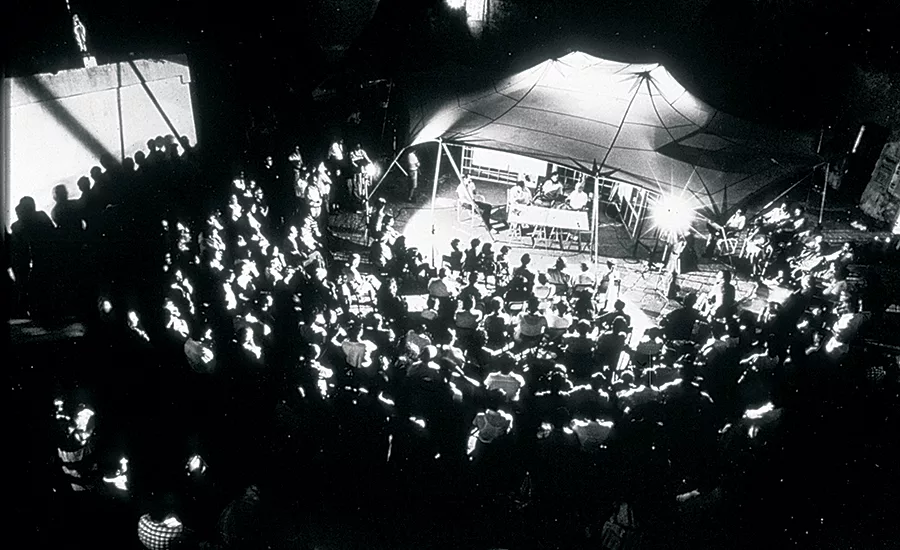
For the 1979 Otranto project, a mobile unit could be deployed to city centers and then used to rehabilitate historic structures.
Image courtesy RPBW
The 6.2 magnitude earthquake that tore through a cluster of medieval towns in central Italy August 24 was swift and relentless. As emergency workers clawed their way through the rubble and as aftershocks continued, the death toll rose from one dozen to 120, then nearly 300. “Italy is crying,” Prime Minster Matteo Renzi said in a televised statement.
Now that the dust has settled, the dead have been laid to rest, and some 3,000 displaced residents have been moved into tent camps, government officials are weighing long-term solutions to safeguard Italy’s cities from future quakes. As part of these discussions, Renzi is calling on one of the nation’s most prominent native sons—Renzo Piano.
The Pritzker Prize–winning architect, who was named a “senator for life” by the Italian president in 2013, is preparing a comprehensive strategic plan called Casa Italia to make the country’s cities and historic structures more resilient.
“The project is not about the reconstruction of the little towns that were demolished,” Piano told RECORD. “Instead, I’ve been asked to work on a generational project—I call it generational because it’s not for the next five or 10 years, but 50 years.
“Italy is really fragile,” he adds. “And beauty is fragile, by definition.”
Italy has endured seismic events for millennia, with the towns scattered throughout the Apennine Mountains—a range that runs along the Italian Peninsula like a spine—being the most vulnerable. In 2009, the town of L’Aquila endured a 6.3-magnitude earthquake, killing 300; in 1980, a 6.9-magnitude quake killed 3,000. And a century ago, an earthquake laid waste to the town of Abruzzo, killing 30,000— 95 percent of the town’s population.
Piano is no stranger to earthquakes either, having designed buildings in seismic zones from California to Japan. In 1995, just one year after completing Kansai International Airport Terminal in Osaka (at the time, the world’s largest), a 6.9 magnitude earthquake struck the region. The nearby city of Kobe was decimated, but not a single pane of glass broke at the Kansai airport.
Looking for quick answers on architecture and design topics?
Try Ask RECORD, our new smart AI search tool.
Ask RECORD →
“You will never be able to master earthquakes,” Piano insists. “But you can limit the damage and the loss of life by being ready.”
Per the request of Prime Minister Renzi, Piano will present a series of objectives to the Italian senate in the coming weeks. The architect has devoted his parliamentary salary to his independent research group, G124 (named after his senatorial office in Palazzo Giustinani). The group has spent the last few years researching ways to bolster cities’ marginalized peripheries, but, this time around, they will devote their attention to earthquake resiliency.
“It’s really a project that is more civic duty than architecture,” says Piano, referring to his role as senator, “but I don’t differentiate between civic duty and architecture—architecture is the art of making and preserving cities.”
He adds, only half jokingly, “The advantage of being senator for life is that nobody can push you out.”
In order for Casa Italia to be successful, Piano says that the government needs to prioritize two primary goals. The first, and most crucial, is to conduct a series of diagnostics to identify Italy’s most vulnerable areas (mostly within the volatile Apennine range), to “introduce science instead of opinion.”
On paper, protocols exist: Italy has strict codes governing seismic standards–rules that were made even more stringent after the 2009 quake in L’Aquila. But they are poorly enforced, especially when it comes to retrofitting fragile historic buildings, an often complicated and costly process. According to a figure cited in The New York Times, the country has spent some 3.5 billion euros annually for the past half century fixing earthquake damage.
To mitigate some of the challenges of retrofitting, the second component of the plan is to develop a range of structural prototypes to reinforce a diversity of buildings—“almost like surgery”—in lieu of a one-size-fits-all approach. The architect cites a UNESCO-backed restoration project he conducted in 1979 for Otranto, Italy. Though the project didn’t focus on quake resilience specifically, it aimed to preserve the town’s historic center, utilizing unobtrusive construction techniques and tools. Such interventions reduced costs, and—crucially—circumvented the need to move people from their homes. “This is the most fundamental thing, socially speaking,” says Piano. “The house is a safe place—it’s everything.”
Piano hopes to issue a complete report with G124 within the year. But the architect acknowledges there is only so much he can do alone: “I will certainly put my nose there, but of course I need the government for this to work.”
Looking for a reprint of this article?
From high-res PDFs to custom plaques, order your copy today!