Architectural Record
search
cart
facebook twitter linkedin youtube
  • Sign In
  • Subscribe
  • Sign Out
  • My Account
Architectural Record
  • NEWS
    • Latest News
    • Awards
    • Interviews
    • Obituaries
    • Podcasts
      • Design:Ed Podcast
      • Sponsored Podcasts
  • OPINION
    • Book Reviews / Excerpts
    • Exhibition Reviews
    • Forum
  • EXCLUSIVES
    • Videos
    • Design Vanguard
    • Top 300 Firms
    • Sponsored Content
    • Sponsored eBooks
    • From the Archives
  • CONTINUING ED
    • Editorial Continuing Ed
    • CE Center
    • CE Academies
  • PROJECTS
    • Buildings By Type
    • Reuse & Renovation
    • Museums & Arts Centers
    • Colleges & Universities
    • Multifamily Housing
    • Interiors
    • Lighting
    • Kitchen & Bath
  • HOUSES
    • Record Houses
    • House of the Month
    • Featured Houses
  • PRODUCTS
    • Products by Category
    • Record Products of the Year
    • Latest Products
  • EVENTS
    • Dates & Events
    • Record on the Road
    • Innovation Conference
    • Sustainability in Practice
    • Women In Architecture
    • Webinars
    • Ad Excellence Awards
    • Submit an Event
  • CONNECT
    • Ask RECORD AI
    • Newsletters
    • Contact
    • Advertise
    • Editorial Calendar
    • Store
    • Customer Service
  • SUBMIT
    • Submission Guidelines
    • RECORD Competitions
  • MAGAZINE
    • Subscribe
    • My Account
    • Digital Edition
    • Current Issue
    • Firm Pass
    • Historic Archive
Architecture News

Architectural Emblems of Kazakhstan's Energy Wealth
By William Hanley
Architectural Emblems of Kazakhstan

Architectural Emblems of Kazakhstan

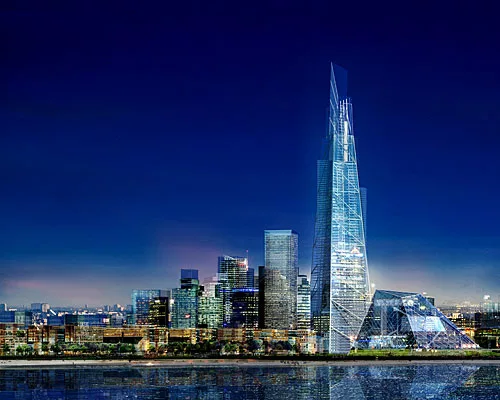
The Boston-based firm Koetter, Kim & Associates is creating a master plan for a massive expansion of Aktau, a city originally developed by Soviet Russia to support oil drilling in the Caspian Sea.

Image courtesy Koetter, Kim & Associates
Architectural Emblems of Kazakhstan

Architectural Emblems of Kazakhstan

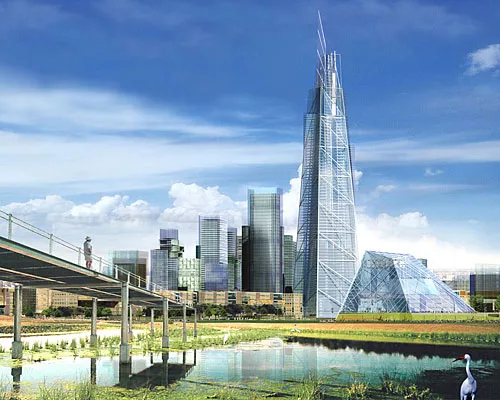
The Boston-based firm Koetter, Kim & Associates is creating a master plan for a massive expansion of Aktau, a city originally developed by Soviet Russia to support oil drilling in the Caspian Sea.

Image courtesy Koetter, Kim & Associates
Architectural Emblems of Kazakhstan

Architectural Emblems of Kazakhstan

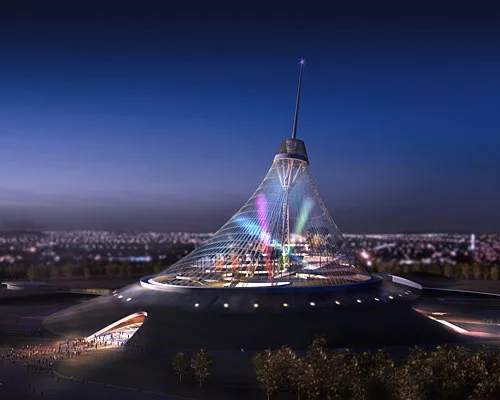
Foster + Partners tent-like Khan Shatyr Entertainment Centre has a fabric skin suspended from a 500-foot mast.

Image courtesy Foster + Partners
Architectural Emblems of Kazakhstan

Architectural Emblems of Kazakhstan

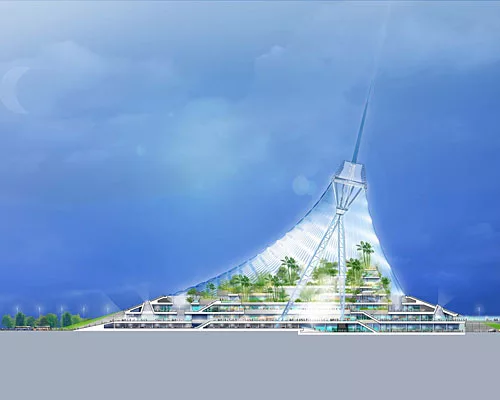
Foster + Partners’ tent-like Khan Shatyr Entertainment Centre has a fabric skin suspended from a 500-foot mast.

Image courtesy Foster + Partners
Architectural Emblems of Kazakhstan

Architectural Emblems of Kazakhstan

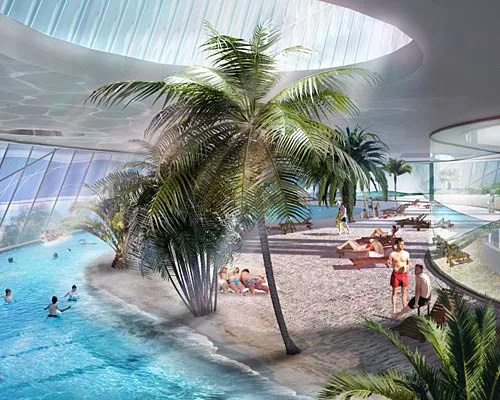
Foster + Partners’ tent-like Khan Shatyr Entertainment Centre has a fabric skin suspended from a 500-foot mast.

Image courtesy Foster + Partners
Architectural Emblems of Kazakhstan

Architectural Emblems of Kazakhstan

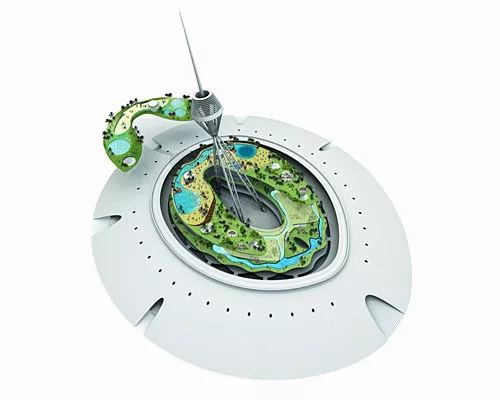
Foster + Partners’ tent-like Khan Shatyr Entertainment Centre has a fabric skin suspended from a 500-foot mast.

Image courtesy Foster + Partners

Architectural Emblems of Kazakhstan
October 28, 2008
With a history tied to nomadic civilizations and a New York City-sized population spread over more than two million square miles of territory, Kazakhstan may not seem like the most probable site for ambitious urban architecture. British comedian Sacha Baron Cohen went so far as to depict the country as a backward nation of ramshackle hovels in his 2006 film Borat. But the reality of contemporary Kazakhstan may be more accurately embodied by the Palace of Peace and Reconciliation, a glass pyramid rising above Astana, the Central Asian state’s capital.
 
Designed by Foster + Partners, the self-consciously monumental palace shoots up 200 feet from an expansive base, its soaring atrium lit by a large skylight at the apex. A meeting chamber, which hosts a triennial conclave of religious leaders, hovers just blow the peak, allowing light to flow into the atrium though a large circle of glass in its floor. The pyramid was completed in 2006 at a cost of roughly $61 million,  and it became a symbol of Kazakhstan's rise from a former Soviet backwater to a leading regional economy.
 
Shortly after declaring independence from the crumbling Soviet Union in 1991, Kazakhstan moved its capital to Astana. Since then, the government has spent billions reaped from thriving oil and gas industries to make the city into a showpiece—a “Brasilia in the Steppe,” according to some observers. With oil prices reaching record heights earlier this year, the development boom has now spread throughout the country, attracting high-profile Western architects, such as Massimiliano Fuksas Architetto and Behnisch Architekten, despite the country’s reputation for corruption and its poor human rights record. Common to many of the projects are designs intended to put forth a uniquely Kazakh identity and construction schedules that mimic the world's fastest developing countries.
 
Astana will boast two additional projects by Foster + Partners in coming years. The first is a mixed-use complex called Abu Dhabi Plaza (the developer is United Arab Emirates-based Aldar Properties). The other is the Khan Shatyr Entertainment Centre, a tent-like construction with a fabric skin suspended from a 500-foot mast. When it is completed, which will likely be next year, the enclosure will have only taken about three years to build and it will be the city's largest structure.
 
Creating an urban park in a city where winter temperatures average near zero degrees Fahrenheit, the 325,000-square-foot building will enclose retail, restaurants, cinemas and a water park in an umbrella of transparent, energy-trapping fabric made from the polymer ETFE. “ It was clear that we would need innovative construction methods to enable such a large building to be completed in within a short timeframe," says Nigel Dancey, senior partner in charge of the project. “ In essentially creating a giant tent, the design also resonated with the historic significance of the Yurt to the people of Kazakhstan."
 
Another project that draws design elements from Kazakhstan’s nomadic past is taking shape on the other side of the country in the port of Aktau. The city was originally developed by Soviet Russia to support oil drilling in the Caspian Sea. Its stark series of numbered boulevards, designed to accommodate large military vehicles, are flanked by rows of low-rise, slab-style buildings. "The streets were not oriented toward people—just tanks,” says Susie Kim, a principal at Boston's Koetter, Kim & Associates.
 
Kim's firm was commissioned by Millennium Development International to create a master plan for a massive expansion of the city to the north of the existing site. The plan gives Aktau a more human scale with a series of distinct, walkable neighborhoods that range from dense blocks to high-end, villa-style homes facing the sea. A basic model of mixed-use buildings surrounding public gardens recurs throughout the plan, which balances a sense of exclusivity and security with access to public space, Kim says. "It has expansiveness as well as enclosure."
 
The entire plan is anchored by a central district, featuring the skyline-defining New Aktau City Energy Tower and an innovative seawater pumping system that will cool buildings and, via a series of canals, streets in the neighborhood. The architects modeled one of the district’s most prominent public buildings, a glass-enclosed retail space named the “ Crystal Souk,” on nomadic dwellings historically constructed in Kazakhstan. “Traditionally the only building that is their own is a round hut," says Kim.
 
Kazakh officials are pushing for a substantial portion of the city to be developed within a decade, though currently a single test block has been completed. “ They're looking at Dubai as their precedent for speed," Kim says.


Share This Story

Looking for a reprint of this article?
From high-res PDFs to custom plaques, order your copy today!

Post a comment to this article

Report Abusive Comment

Subscription Center
  • Create an Account
  • Start a Subscription
  • Manage My Account
  • Sign Up for Newsletters
  • Visit Customer Service
  • Update Preferences

More Videos

Sponsored Content

Sponsored Content is a special paid section where industry companies provide high quality, objective, non-commercial content around topics of interest to the Architectural Record audience. All Sponsored Content is supplied by the advertising company and any opinions expressed in this article are those of the author and not necessarily reflect the views of Architectural Record or its parent company, BNP Media. Interested in participating in our Sponsored Content section? Contact your local rep!

close
  • TAMLYN XtremeTrim Exterior Trim
    Sponsored byTamlyn

    Designing Cleaner Panel Facades: Why Exterior Trim Details Matter

  • Building with Vapor Barriers
    Sponsored byReef Industries, Inc.

    Vapor Barriers Help Control Moisture in Tighter Building Designs

  • Duct Interior with Prodeq System
    Sponsored byHenry, a Carlisle Company

    Designing Resilient Water Containment Systems

DESIGN:ED Podcast
Listen to Architectural Record’s DESIGN:ED Podcast

Events

June 11, 2026

Very Early Warning Fire Detection for Mission-Critical Facilities

Credits: 1 AIA LU/HSW; 1 AIBD P-CE; 0.1 ICC CEU

Examine advanced fire detection strategies that support uptime and enhance safety in data centers and other mission-critical facilities.

June 16, 2026

Focus on the Façade: Exploring Steel, Timber & Fire-Rated Curtain Walls and Channel Glass Systems

Credits: 1 AIA LU/HSW; 1 AIBD P-CE; 0.1 ICC CEU

Explore modern façade and glazing systems that enhance daylighting, fire safety, and thermal performance while expanding architectural design possibilities.

View All Submit An Event

Products

2026 Architect's Square Foot Costbook

2026 Architect's Square Foot Costbook

See More Products

Popular Stories

Practice Matters illustration

What’s in a (Firm’s) Name? Thinking About Succession and Legacy

Coronado Bridge

The Architect’s Guide to San Diego

Practice Matters illustration

By the Numbers: Counting America's Architects

Crane Cove, ONO

Design Vanguard 2026 Winners

House on a Hill

Design Vanguard 2026: Forma

Broader Sustainability of CMU - Free Webinar - May 21, 2026

Related Articles

  • A Superlative Tent by Foster Now Open in Kazakhstan

    See More
  • The Agile City: Building, Well-Being, and Wealth in an Era of Climate Change

    See More
  • Anyeley-Hallova-Lead-1.jpg

    Developer Anyeley Hallová Tackles Equity and Wealth-Building

    See More

Related Products

See More Products
  • drawingfrommodel.jpg

    Drawing from the Model: Fundamentals of Digital Drawing, 3D Modeling, and Visual Programming in Architectural Design

See More Products
×

The latest news and information

#1 Source for Architectural Design, News and Products

SUBSCRIBE
  • RESOURCES
    • Advertise
    • Contact Us
    • Submit
    • Store
  • ACCOUNT CENTER
    • Create an Account
    • Start a Subscription
    • Manage My Account
    • Sign Up for Newsletters
    • Visit Customer Service
    • Update Preferences
  • PRIVACY
    • PRIVACY POLICY
    • TERMS & CONDITIONS
    • DO NOT SELL MY PERSONAL INFORMATION
    • PRIVACY REQUEST
    • ACCESSIBILITY
  • SERVICES
    • Marketing Services
    • Reprints
    • Market Research
    • List Rental
    • Survey/Respondent Access
  • STAY CONNECTED
    • Linkedin
    • Facebook
    • Instagram
    • YouTube
    • X (Twitter)

Copyright ©2026. All Rights Reserved BNP Media, Inc. and BNP Media II, LLC.

Design, CMS, Hosting & Web Development :: ePublishing