World's Best Buildings Honored at Festival
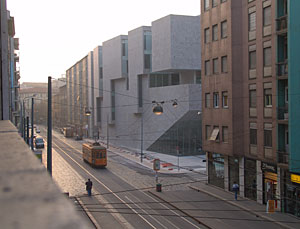
Luigi Bocconi University, in Milan, designed by Ireland's Grafton Architects, recently was named the World Building of the Year.
Tickets ranged from 350 euros for a one-day pass to 700 euros for a three-day pass. The festival featured lectures, seminars, a product showcase, and architectural tours of the area. The core of the festival—and perhaps its greatest success—was a new awards program, billed by organizers as the largest architectural awards program in the world. Prizes were given in 17 categories for projects completed between January 1, 2007, and June 20, 2008; the winners in each of those categories competed for the title of World Building of the Year. “Most other architecture awards are either geographically limited,” Finch says, “or they’re awards looking at architecture from one perspective like environmental design. But architects don’t just design things in one area or from one perspective.”
Despite a 500-euro entry fee, the new awards program drew 722 submissions from 63 counties. All were displayed at the festival on presentation boards and can now be viewed on the awards program Web site. In addition, the architects of the 224 shortlisted projects—each category had up to 16 shortlisted projects—gave 15-minute presentations about their buildings during the festival.
The juries included notable architects such as Will Alsop, Massimiliano Fuksas, Stefan Behnisch, and Neil Denari. RECORD’s deputy editor Clifford Pearson served on the jury for the civic category. The “Building of the Year” was selected by a so-called super-jury, which counted Robert Stern (chair) and Cecil Balmond among its members. Originally, it was to be chaired by Norman Foster, but he had to step down when one of his projects won in the “new and old” category and was advanced to the “Building of the Year” contest.
Of the 17 buildings competing for the grand title, in the end, it went to Luigi Bocconi University in Milan, designed by Ireland’s Grafton Architects. “We were up against fairly stiff competition, and there were some really interesting projects,” says Shelley McNamara, who runs Grafton with Yvonne Farrell. “We were surprised and delighted to win it.”
WINNERS
- World Building of the Year: Luigi Bocconi University in Milan by Grafton Architects
- Civic: Guangzhou Baiyun International Convention Centre in China by Buro II + CITIC ADI
- Culture: Oslo Operahouse in Norway by Snøhetta
- Energy, Waste & Recycling: Landscape Restoration of the Controlled Rubbish Dump "La Vall d'en Joan" in Spain by Batlle & Roig Architects
- Health: Center for the Wellbeing of Women and the Prevention of Genital Mutilation in Burkina Faso by FAREstudio
- Holiday: Nk'Mip Desert Cultural Centre in Canada by Hotson Bakker Boniface Haden Architects
- Housing: Mountain Dwellings in Denmark by Bjarke Ingels Group – BIG
- Learning: Luigi Bocconi University in Milan by Grafton Architects
- Nature: Olympic Sculpture Park, Seattle Art Museum in the United States by Weiss/Manfredi
- New and Old: Robert and Arlene Kogod Courtyard, Smithsonian Institution in the United States by Foster + Partners
- Office: Duoc Corporate Building in Chile by Sabbagh Arquitectos
- Pleasure: Sheep Stable in the Netherlands by 70F Architecture
- Production: BMW Welt in Germany by Coop Himmelb(l)au
- Religion & Contemplation: Dornbusch Church in Germany by Meixner Schlüter Wendt Architekten
- Sport: Sports Hall Bale in Croatia by 3LHD Architects
- Shopping: K:fem in Sweden by Wingårdh Arkitektkontor AB
- Private House: Final Wooden House in Japan by Sou Fujimoto Architects
- Transport: Nordpark Cable Railway in Austria by Zaha Hadid Architects
Looking for a reprint of this article?
From high-res PDFs to custom plaques, order your copy today!