Interview with Norman Foster on Droneports and His New Foundation
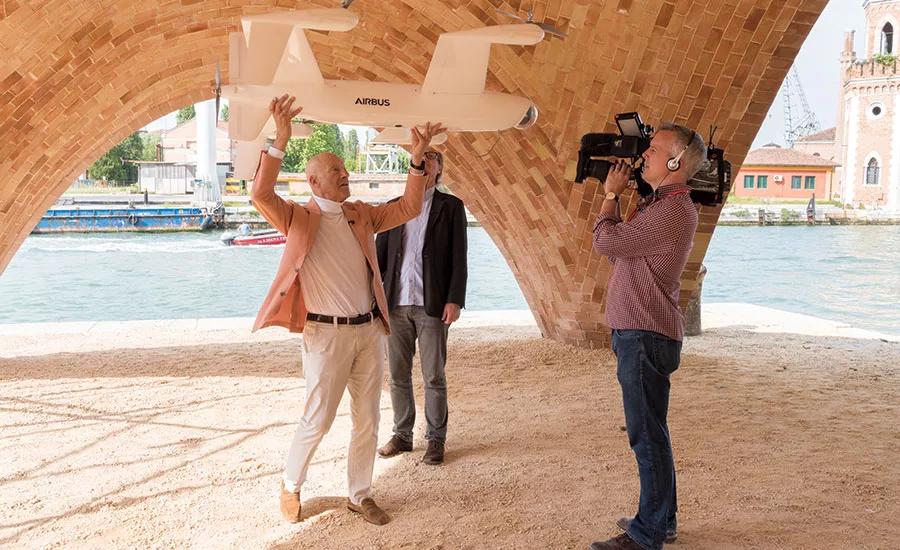
Norman Foster with the Droneport prototype in Venice.
Photo © Nigel Young/The Norman Foster Foundation
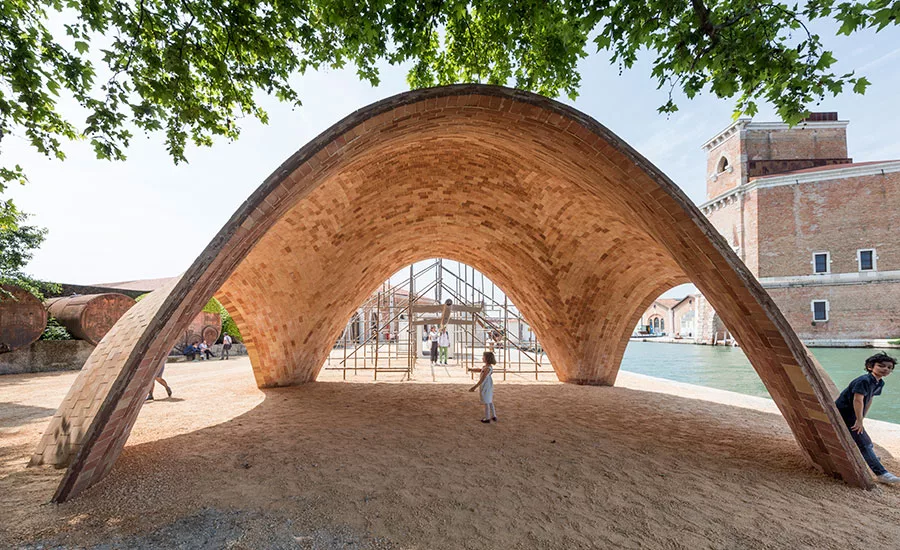
The Droneport prototype at the Venice Architecture Biennale.
Photo © Nigel Young/The Norman Foster Foundation
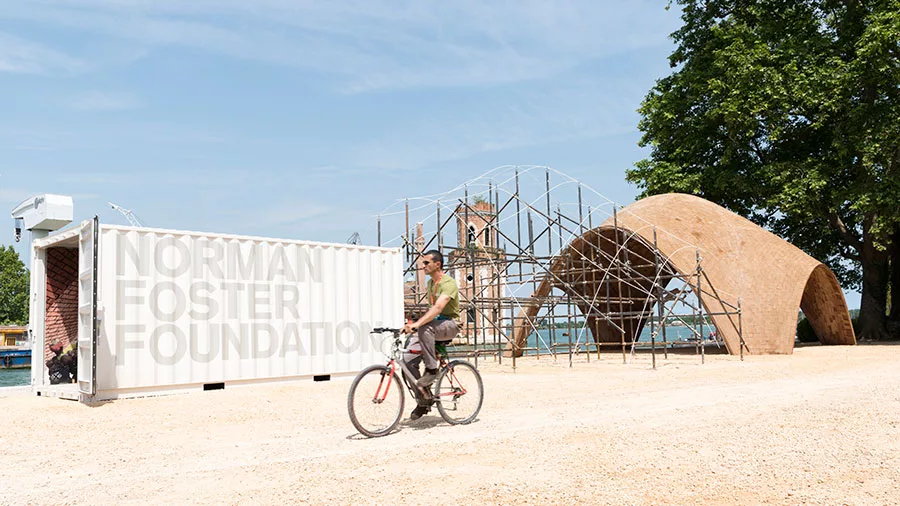
The Droneport prototype at the Venice Architecture Biennale.
Photo © Nigel Young/The Norman Foster Foundation
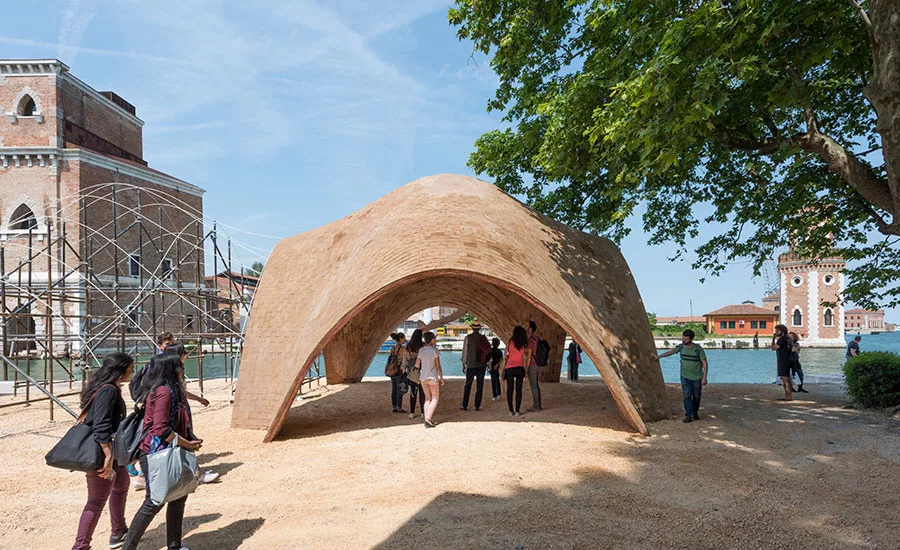
The Droneport prototype at the Venice Architecture Biennale.
Photo © Nigel Young/The Norman Foster Foundation
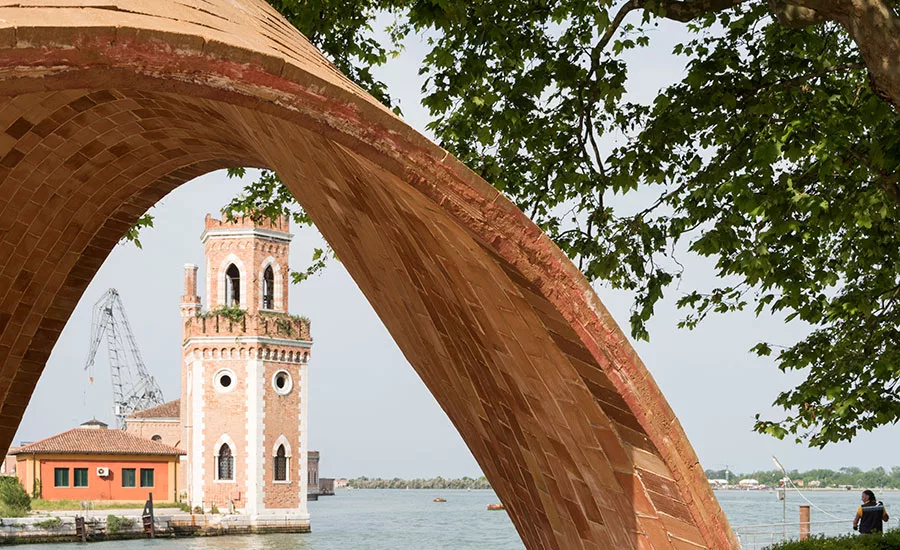
The Droneport prototype at the Venice Architecture Biennale.
Photo © Nigel Young/The Norman Foster Foundation
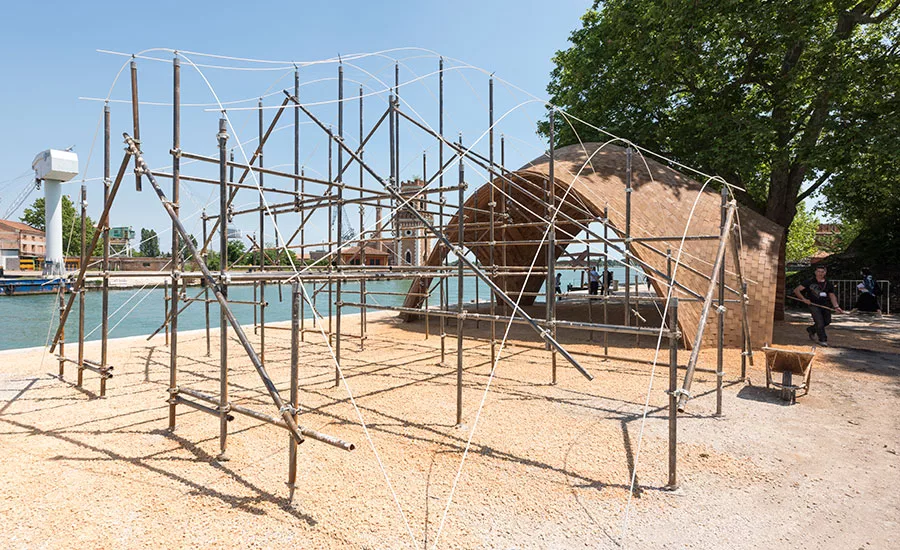
The Droneport is constructed using a lightweight scaffolding system and would be assembled on-site by community members.
Photo © Nigel Young/The Norman Foster Foundation
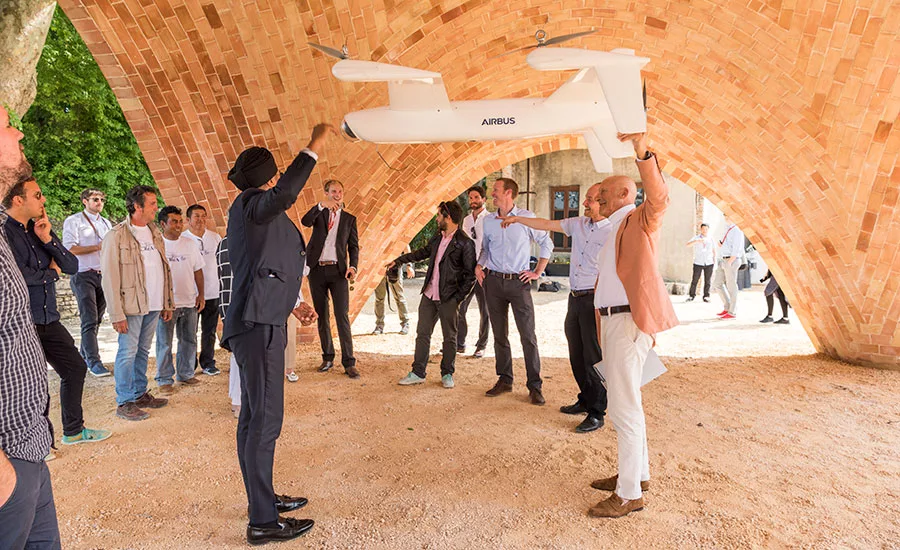
Norman Foster and firm partner Narinder Sagoo with the Droneport prototype in Venice.
Photo © Nigel Young/The Norman Foster Foundation
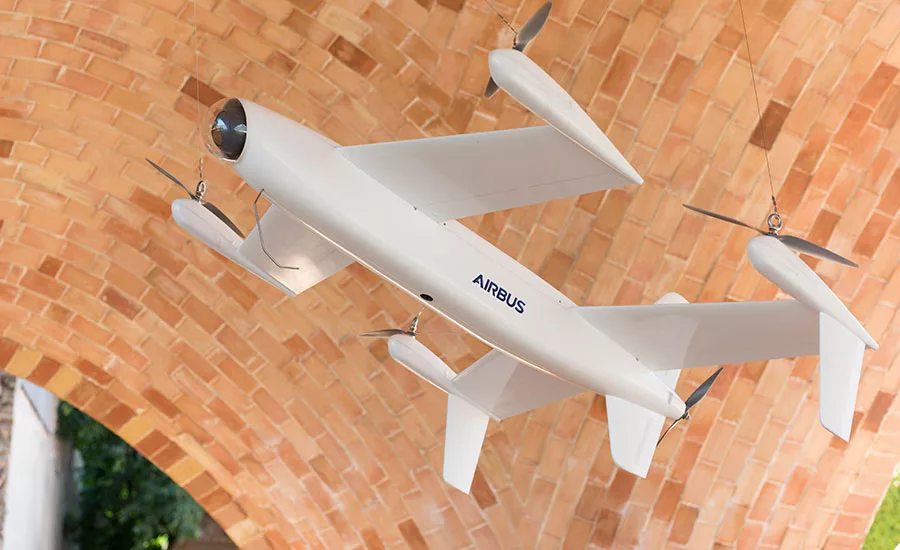
Drones, like this one, would deliver necessities to remote areas.
Photo © Nigel Young/The Norman Foster Foundation
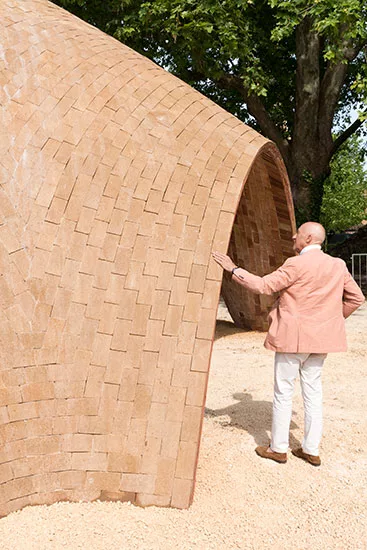
Norman Foster with the Droneport prototype in Venice.
Photo © Nigel Young/The Norman Foster Foundation
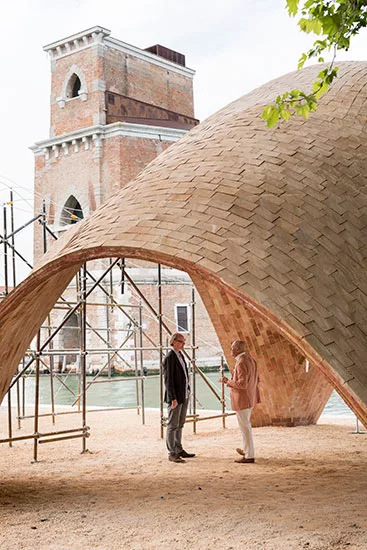
Norman Foster with the Droneport prototype in Venice.
Photo © Nigel Young/The Norman Foster Foundation
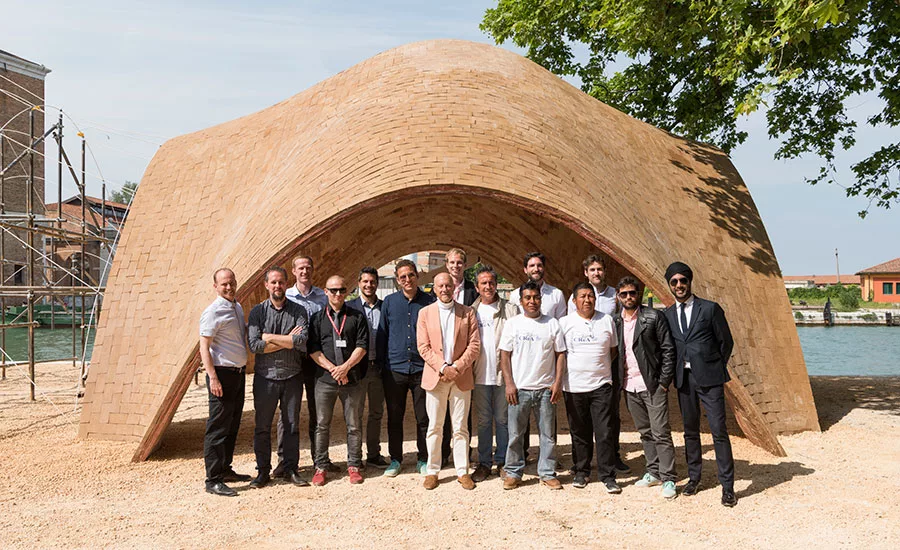
Norman Foster and the Droneport project team.
Photo © Nigel Young/The Norman Foster Foundation
Architects & Firms
You would be hard pressed to find an architect better equipped to talk about aviation than Norman Foster. Not only has the Pritzker-winning architect designed some of the world’s most advanced flight facilities—including the first private hangar for space travel—but, over the years, he has piloted dozens of different aircraft. Now, at 81, the architect is setting his sights on drones. At the Venice Architecture Biennale, Foster, in collaboration with Jonathan Ledgard, director of the Afrotech initiative at the École Polytechnique Fédérale de Lausanne (EPFL), unveiled a prototype for a droneport that would be a hub for the delivery of vital cargo, such as medical supplies, in developing countries. It is the inaugural project of the Norman Foster Foundation, which will launch officially next year. RECORD caught up with the architect, at home in Switzerland, by phone.
Architectural Record: Are you in London at the moment?
Norman Foster: Well, I was in Madrid this morning and I am in Switzerland right now. I will be back in London by the end of the week.
I heard great feedback about the Biennale and your Droneport project there.
It was a really interesting biennale, I have to say. In totality, I think it came together very well.
Tell me about the Norman Foster Foundation.
I think it grows out of a kind of future beyond my involvement. The first objective is to promote the importance of architecture, engineering, and infrastructure to society. It’s also to take up the challenges that architectural practices don’t feel interested in or capable of doing, like responding to challenges for which governments don’t have answers, like lack of access to water, power, and sanitation. We hope that the foundation, which doesn’t have a commercial imperative, could harness the intelligence in universities and bring in funds to address those challenges. Really, I think as a first project, the Droneport fits.
Looking for quick answers on architecture and design topics?
Try Ask RECORD, our new smart AI search tool.
Ask RECORD →
How did that project come to be?
I have known Jonathan Ledgard for many years, and he came back into my life in an unexpected way when he was taken on by EPFL. He said, “Instead of drones being associated with warlike activities, we would use them for humanitarian purposes. A drone could leap over mountains and lakes and could deliver very swiftly.” And, with a smile, he said, “You’ve done the biggest airports in the world—how about doing the smallest?” What he didn’t know was that I also flew drones with my 14-year-old son, who is a drone freak.
So this wasn’t a far-out concept for you at all.
It was more like, “What’s new [laughing]?” Anyway, a drone needs a base. In a way, a droneport would be the filling station of the future and, by extension, a community center, a health center, a technology center. I was very excited about the idea and shared it with colleagues. The foundation then got five universities involved—EPFL, ETH Zurich, MIT, the University of Cambridge, and the Technical University of Madrid.
You have assembled a kind of dream team—including artist Olafur Eliasson, LafargeHolcim, and others. How did you get everyone on board?
The common ingredient is the optimism of youth. The Venice prototype was developed over six months, with 13 days on-site, by a group of students led by a mason from Madrid. LafargeHolcim produced 18,000 pressed elements for the project—a cross between a tile and a brick. The vault is defined by something that looks like a carbon fiber fishing rod bent in a beautiful curve and supported by standard scaffolding; there is no steel in the structure. It has one tenth the carbon footprint of a conventional tin shed.
That’s incredible.
If you have a burning interest in the translation of an idea into reality, then there is nothing like a deadline. Although, at times, the project had the qualities of a nightmare.
Oh, no!
Just one secretive aside: if you look at the text I wrote in advance for the Biennale catalog, the last sentence is “funding permitting.” In other words, right up to the last moment, I wasn’t absolutely certain we could deliver the project. Now—not to under- or overestimate the importance of Venice—I think it brings possibility of a network of droneports closer to reality because you can touch it, you can see it, you can demonstrate it.
Do you see yourself focusing on Africa?
No, I don’t see the response being special to Africa; my interest is totally global. The fantastic thing about this project is the appetite that students and professors had for working together. It’s also fantastic to be brought back to basics. It’s almost like the pilots of sophisticated jets—can they rediscover their roots and fly a vintage aircraft? Sometimes those are life-defining moments. The pilot who landed in the Hudson River [in 2009] and saved everyone’s lives—it was those basic skills that he didn’t forget. But that’s another story.
Have you gotten positive feedback from the ground in Africa?
Positive feedback from Jonathan, yes. I make no pretense—it is a team effort. I do not have that local connection and that local connection is key to achieving the project. There has to be a connection at a decision-making level where there is the ability to move a local community. And that goes all the way up the chain of authority. I will start to prod and poke at that. But I won’t pretend that is my area of expertise.
You build model airplanes as a hobby. Do you build drones?
Oh yes, my fourteen-year-old is totally immersed. We build all kinds of drones, racing drones, cameras drones, virtual reality. We wear 3-D goggles and he makes film. The rate of development in the drone industry is absolutely extraordinary. It’s in the tradition of [Foster’s early mentor] Buckminster Fuller—doing more with less, harnessing the power of killing for living.
Right. Based on how drones are presented in the media, they’re either killing people or delivering your laundry detergent through Amazon.
[laughing] Yes. What we’re doing together is advancing the state of the art, but also serving as a model for others to emulate. But, as I say, it’s also about seeking to cross the bridge, to make the move, to make the leap to reality. And I think that it is very much at the heart of the foundation
Looking for a reprint of this article?
From high-res PDFs to custom plaques, order your copy today!