The New Master Builders
Architects warm to a project delivery method that makes them more integral to the construction process and reasserts their control over the final product.

Fact or fiction, it is a common perception that the design and construction process is plagued with problems: cost and schedule overruns, under-detailed design drawings, shoddy workmanship, disputes, and litigation. Some architects have been pursuing a remedy for this fraught situation—the project delivery method known as design-build. Until recently, most practitioners were reluctant to be too involved in construction. But that may be changing, with new approaches that make design-build a more viable alternative—one that gives the architect more control over the building process and the completed project.
Fans of design-build tout its advantages. They say it provides the client with the convenience of a one-stop shop, or a single point of responsibility, for both design and construction. They maintain that it provides tight control of costs and schedules. And they claim it fosters greater collaboration, and therefore results in a less adversarial process, and ultimately produces higher-quality buildings.
The practice seems to be gaining momentum. According to a 2013 study by RS Means, a supplier of construction-costs data, design-build project delivery is used on 38 percent of nonresidential construction projects in the U.S., up from 29 percent in 2005. “It is not a fad. Design-build is here to stay,” says Jim Whitaker, a principal in the Dallas office of HKS Architects and board chairman of DBIA. “It is just as important as sustainability and BIM [building information modeling] are.”
Some observers point to BIM and other digital technologies, and their potential for facilitating integration among project team members, as one factor in design-build's growth. “This integration is not as easily implemented with design-bid-build,” says Michael Vardaro, managing partner at Zetlin & De Chiara, a construction-law firm.
A design-build team can be organized in a number of ways, though the most prevalent structure is contractor-led: the contractor holds the prime contract with the client, and the architect provides design services as a consultant to the contractor. According to a 2007 survey by the research firm ZweigWhite, contractors take the lead on 56 percent of design-build projects.
There is also an architect-led design-build (ALDB) delivery type. In this situation, the architect is the full-service leader of the project team, performing tasks such as hiring subcontractors, managing costs, and controlling construction means and methods, in addition to designing the building. Yet this format, with the architect at the helm, is rare: ZweigWhite says that design firms lead only 12 percent of design-build projects. (The remaining 32 percent are led by integrated design-build firms, the developer, or a joint venture.)
The dominance of the contractor-led method isn't surprising, since design-build first gained ground on projects where architecture wasn't paramount, like roads or barracks. Nevertheless, some design-oriented architects, including Matthew Chaney, partner at Ehrlich Architects in Culver City, California, prefer the contractor-led process over the architect-led type. He cites insurance and design firms' limited bonding capacity as the challenges to ALDB, especially on large buildings like Ehrlich's recently dedicated 60,000-square-foot John M. Roll United States Courthouse in Yuma, Arizona. The $24 million building, which features photovoltaics mounted on a weathered-steel entry canopy, is the firm's second design-build project with the general contractor Sundt as lead. “Construction is not our core competency,” says Chaney.
On the other hand, the architect-led process has its admirers. They maintain that design-build is especially well suited for buildings with a challenging site, a difficult program, or a tight budget. One of the most enthusiastic supporters, architect Peter Gluck, founder of New York'based GLUCK+, makes the case for the architect as the logical leader in his chapter on ALDB for the AIA's most recent edition of The Architect's Handbook of Professional Practice. Gluck argues that the owner benefits greatly from a process led by the architect who “originated the design and can take responsibility for its execution.”
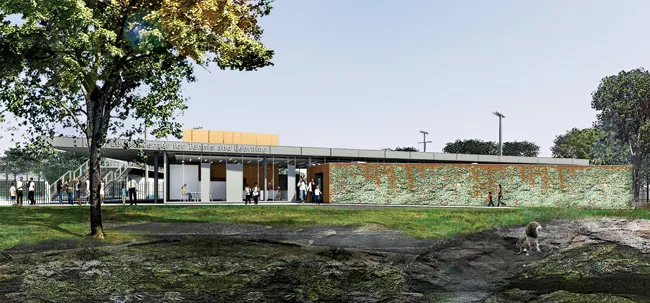
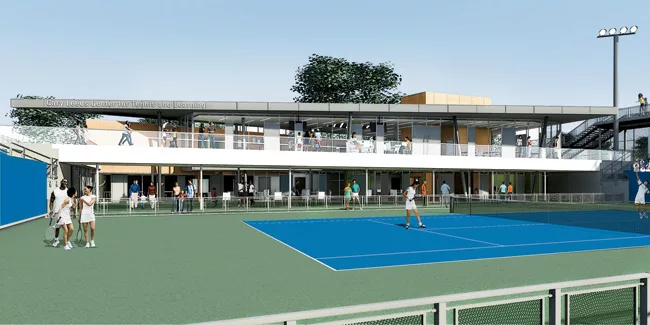
The ALDB approach affords what Gluck calls “informed freedom,” allowing architects to invent and implement design solutions that might otherwise be deemed impractical or too expensive. He points to his firm's 12,000-square-foot facility for the Cary Leeds Center for Tennis & Learning, now under construction in Crotona Park in the Bronx, New York. When the $6.8 million clubhouse is completed early next year, New York children will be able to receive both free tennis instruction and academic tutoring.
As the project's design-builder, GLUCK+ was able to bring subcontractors onto the project early, in order to take advantage of their expertise on the clubhouse's civil construction challenges in the design phase. These complexities included sinking the two-story structure and its adjacent tennis courts 12 feet below grade. “The parks department wanted a building mindful of its context,” says Deborah McFarlane Antoine, president and CEO of New York Junior Tennis & Learning, the nonprofit that will operate the center.
The building's defining element will be its thin, apparently floating triangular roof that comes to a knifelike point at one end. In order to preserve this architectural expression, GLUCK+ took some unusual steps, such as drawing mechanical and electrical elements as early as schematic design. The process not only ensured that the elements would fit between the finished ceiling and the roof deck without conflicting with structural elements, but it also provided a tool for discussing the design conceptually with the engineering consultants. It should also reduce the number of construction-phase surprises and the need for costly change orders.
Although GLUCK+ does not have its own construction tradespeople on staff, some architect-led design-build firms do, including Los Angeles'based Marmol Radziner. When they launched the firm in 1989, partners Leo Marmol and Ron Radziner couldn't find highly qualified contractors and craftsmen interested in working on their then modest commissions. So they built their projects themselves. “It was done out of sheer need,” says Marmol. Since then, the company, known for luxurious houses that take their cues from Midcentury Modernism, has grown. It now includes, in addition to an 80-person architecture office, a construction division with its own concrete crew, carpenters, and metal and cabinet shops. The organization's integrated nature provides the architect with an unusual level of control over its projects, ensuring that “the design is fundamental,” says Marmol, but also offering “a holistic view of cost and schedule.”
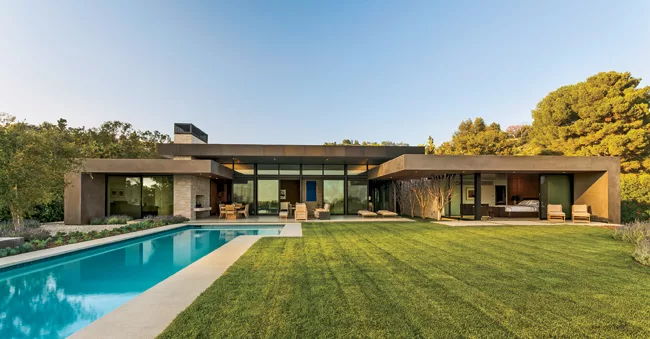
Curiously, prospective clients are often unaware of Marmol Radziner's design-build expertise. Skip Paul, a senior advisor with investment firm Centerview Partners, hired the architect for a recently completed three-bedroom house in the Trousdale section of Beverly Hills simply because he “liked their very clean, Neutra-inspired work.” Initially, Paul intended to have a separate contractor build the dwelling, which has deeply overhanging flat roofs and sliding glass doors opening onto terraces. But several months into the design process, he decided to hire Marmol Radziner's construction arm. It became clear, he says, “that they knew the vocabulary and understood how to translate it without compromising livability or aesthetics.”
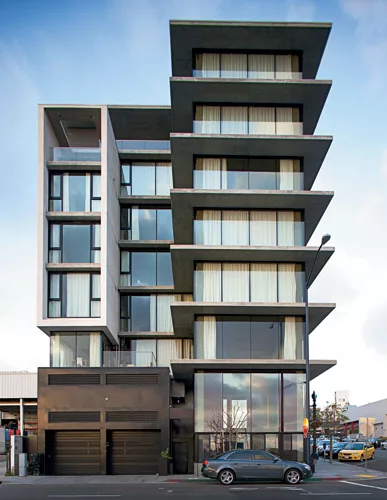
The most entrepreneurial architect-led design-build firms do away with clients altogether and act as their own developers. Such is the business model for San Diego'based architect Jonathan Segal, who has designed, built, and developed 20 projects since founding his firm 25 years ago. The arrangement gives him almost complete autonomy and flexibility, he says. “But I still have to answer to the building department and the banks,” he concedes.
One project that demonstrates the firm's nimbleness is the 27-unit loft-apartment building The Q, in San Diego's Little Italy, completed in 2011. Characterized by floor-to-ceiling glass and projecting floor slabs, the building was first conceived as offices. But when the bottom fell out of the market in 2008, Segal was able to quickly get a new permit and convert the project to residential use, even though the structure had already been topped out and partially enclosed. Although the change in program meant modifications such as adding operable windows and redesigning the interior, The Q has proved extremely successful, he says. Its apartments command rents well above the neighborhood average—from $1,300 for a studio to $5,200 for a two-bedroom duplex—with no vacancies.
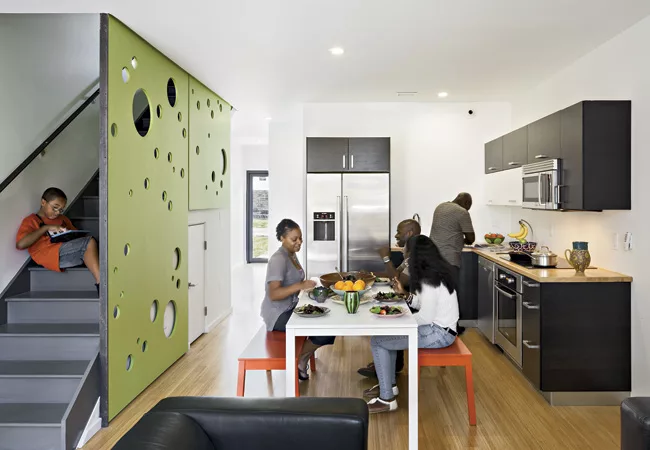
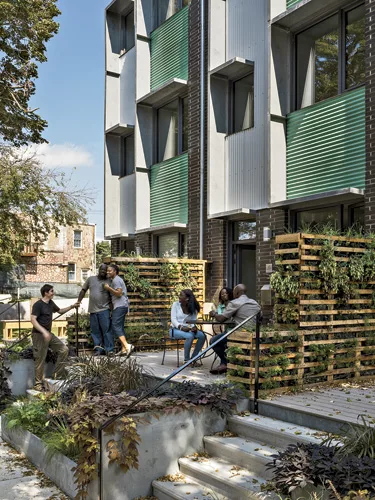
Another firm that combines architect-led design-build and development is Philadelphia-based Onion Flats, which has divisions for design, construction, and development. Its projects often deploy innovative construction methods and are highly energy-efficient. For example, the Belfield Townhomes, three row houses completed in 2012 in Philadelphia's Logan neighborhood, earned Passive House certification (an ultra-low energy designation)—the first to do so in Pennsylvania. The houses were assembled from factory-built wood-framed modules—a strategy that made them viable at less than $130 per square foot.
By demonstrating that high-performance design doesn't have to come at a premium, the Belfield houses have paved the way for Ridge Flats, the company's largest project yet. The 146-unit affordable-housing complex, which is targeting Passive House certification, is slated to break ground in Philly's East Falls section in September. Plumbob (the company's architectural arm) is designing it, while a joint venture of Onion Flats and the much larger Grasso Holdings is serving as developer. Although it will be built by a yet-to-be-named general contractor rather than by Onion Flats' construction division, Timothy McDonald, Onion Flats president, says his company is deeply involved in every aspect, from financing to property management, including design, construction detailing, and quality control on-site and at the factory where the apartments will be prefabricated. It “doesn't rely on our own hands to build it, but it maintains an intimate connection to those who do,” he says.
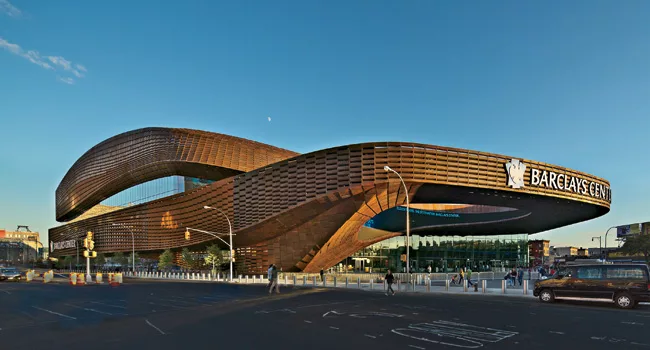
A similar tie to the construction process appealed to New York'based SHoP Architects in its role at the Barclays Center, the 18,000-seat multipurpose arena in Brooklyn that opened in 2012. Here SHoP was hired directly by Forest City Ratner Companies, the developer, to dress up a utilitarian scheme created by the project's design-builder, Hunt Construction Group, with Ellerbe Becket (now AECOM) as its design consultant. SHoP devised a cloak of 12,000 unique preweathered steel panels that wrap the building like scales on a giant reptile. The architect in turn hired its firm's sister company, SHoP Construction, taking advantage of its expertise with digital technologies. SHoP Construction performed such tasks as coordinating the model for the new skin with Hunt's base building model as well as creating an accounting of the thousands of facade components. Once construction got under way, the SHoP spin-off served as the fabricator's consultant, helping detail the panels. “It was our way of maintaining control and not having the design shortchanged,” says Jonathan Mallie, a principal with both SHoP entities.
There are myriad ways, it seems, that architects incorporate design-build into their practices. But, regardless of the approach, the goal is the same: to reassert control of design and construction and the quality of the final product. “At the end of the day,” says Peter Gluck, extolling the benefits of ALDB, “it's all about design and making really good buildings that work.” And who knows? It might just be the way of the future.
People |
Products |
Looking for a reprint of this article?
From high-res PDFs to custom plaques, order your copy today!