The CookFox-designed Bruce Springsteen Center for American Music Opens in New Jersey
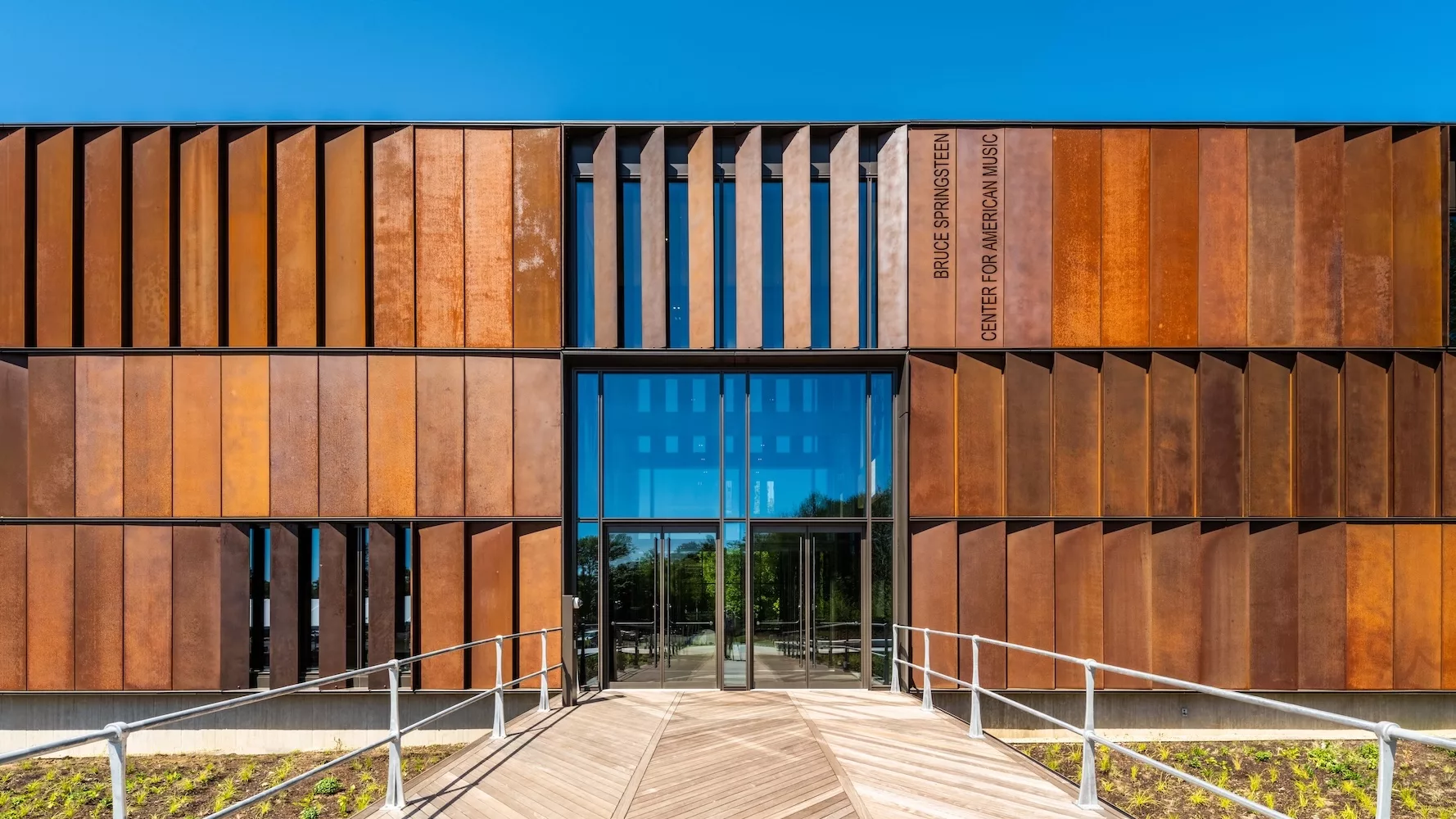
The Bruce Springsteen Center for American Music is clad in weathered steel panels and accessed via a boardwalk.
Architects & Firms
Bruce Springsteen hardly requires an introduction. A son of New Jersey, the acclaimed musician came of age in the town of Freehold, as the consequences of deindustrialization and racial tensions played out across the Garden State. His decades-long body of work, be it “Sandy” (1973) or “My Hometown” (1984), captured the aspirations, frustrations, and resilience of working-class Americans through stories rooted in the landscapes of New Jersey.
Capturing the Boss’s public persona in architectural form might seem daunting, yet, at the newly opened Bruce Springsteen Center for American Music, CookFox Architects, working with exhibition designer C&G Partners and landscape architect LaGuardia Design Group, successfully situates the musician’s career within a broader history of the national canon.
The 30,000-square-foot center occupies a site on Monmouth University’s campus in Long Branch, a short distance from the bungalow where Springsteen wrote much of Born to Run (1975). The two-story building is a rectilinear mass-timber structure clad primarily in weathered steel panels—a nod to the state’s industrial heritage—surrounded by a landscape planted with species native to northeastern New Jersey. An elevated boardwalk, recalling those of the Jersey Shore, floats above the flora and provides access to the museum’s lobby, positioned at the building’s center.
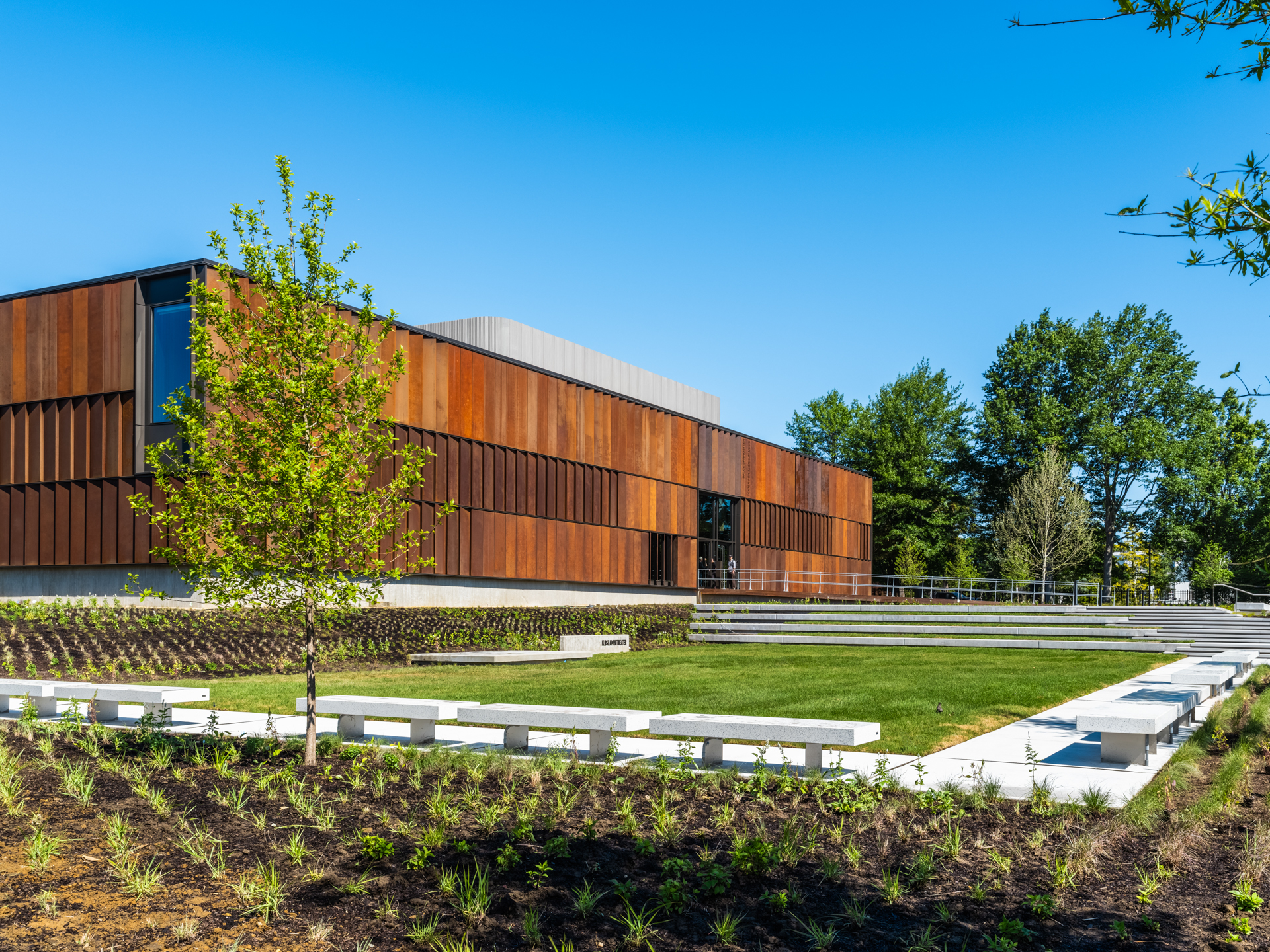
The center's landscape is composed of native plantings. Photo © Alex Ferrec/CookFox Architects
“We wanted to create a threshold where you leave the campus, step on to the boardwalk, and take in the whole building,” explains CookFox founding partner Rick Cook.
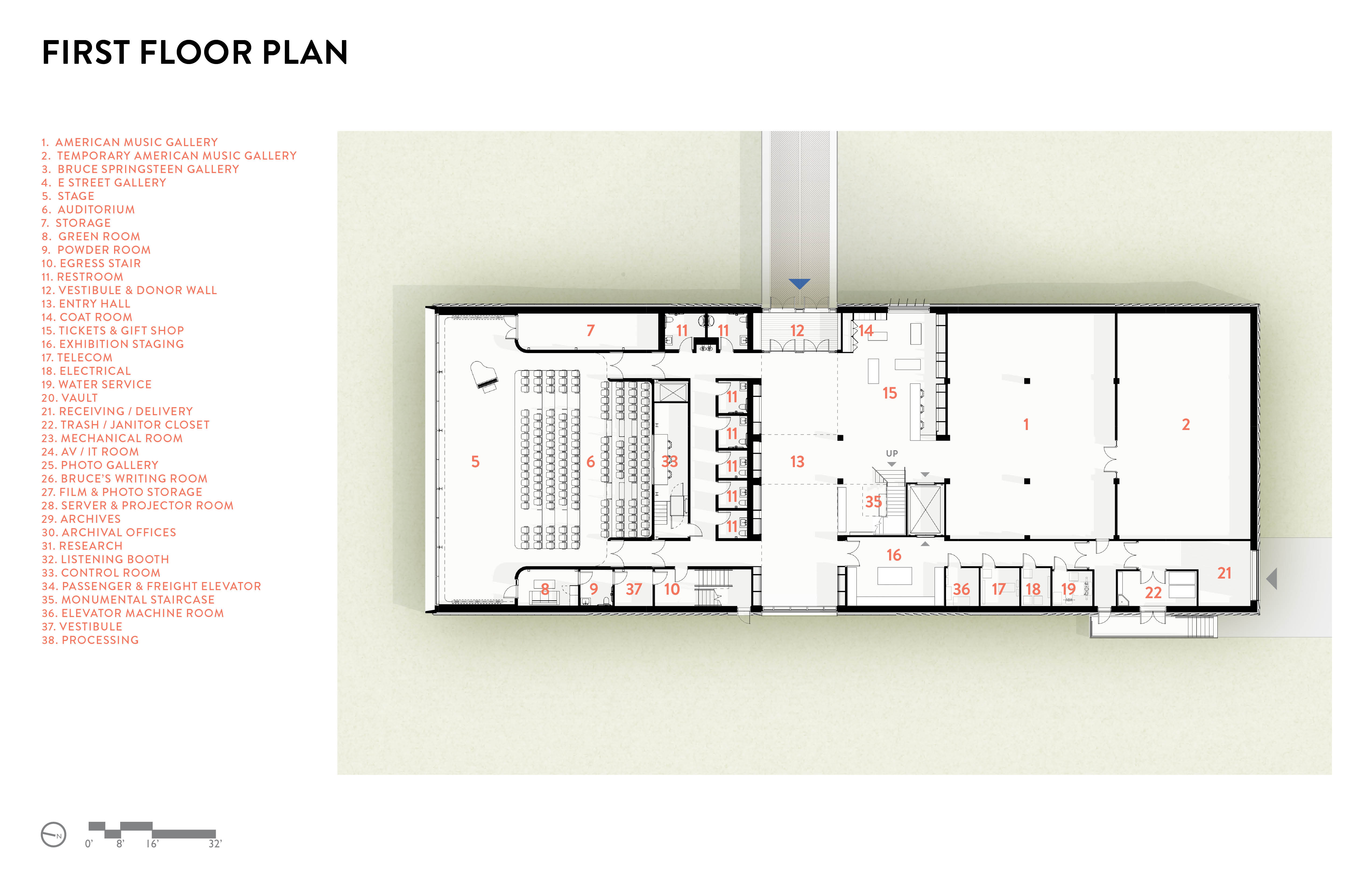
Inside, a double-height atrium organizes circulation and connects the ground floor’s principal elements: a permanent installation devoted to American music, a temporary gallery, and a multipurpose auditorium. The second level houses the Springsteen exhibition, archival facilities, and interactive education spaces equipped with instruments and learning stations, and the auditorium's balcony seating.
Getting the project off the ground was a long time in the making. The museum’s roots date back over two decades to a fan-generated collection hosted in the nearby Asbury Park Public Library. In 2011, Monmouth University opened an archive in an ancillary campus structure, directed by Eileen Chapman, then an associate director of the school’s Center of the Arts and a former manager of The Stone Pony, a legendary rock music venue. The archive, titled the Bruce Springsteen Special Collection, quickly ballooned from 700 to 15,000 items.
1
2
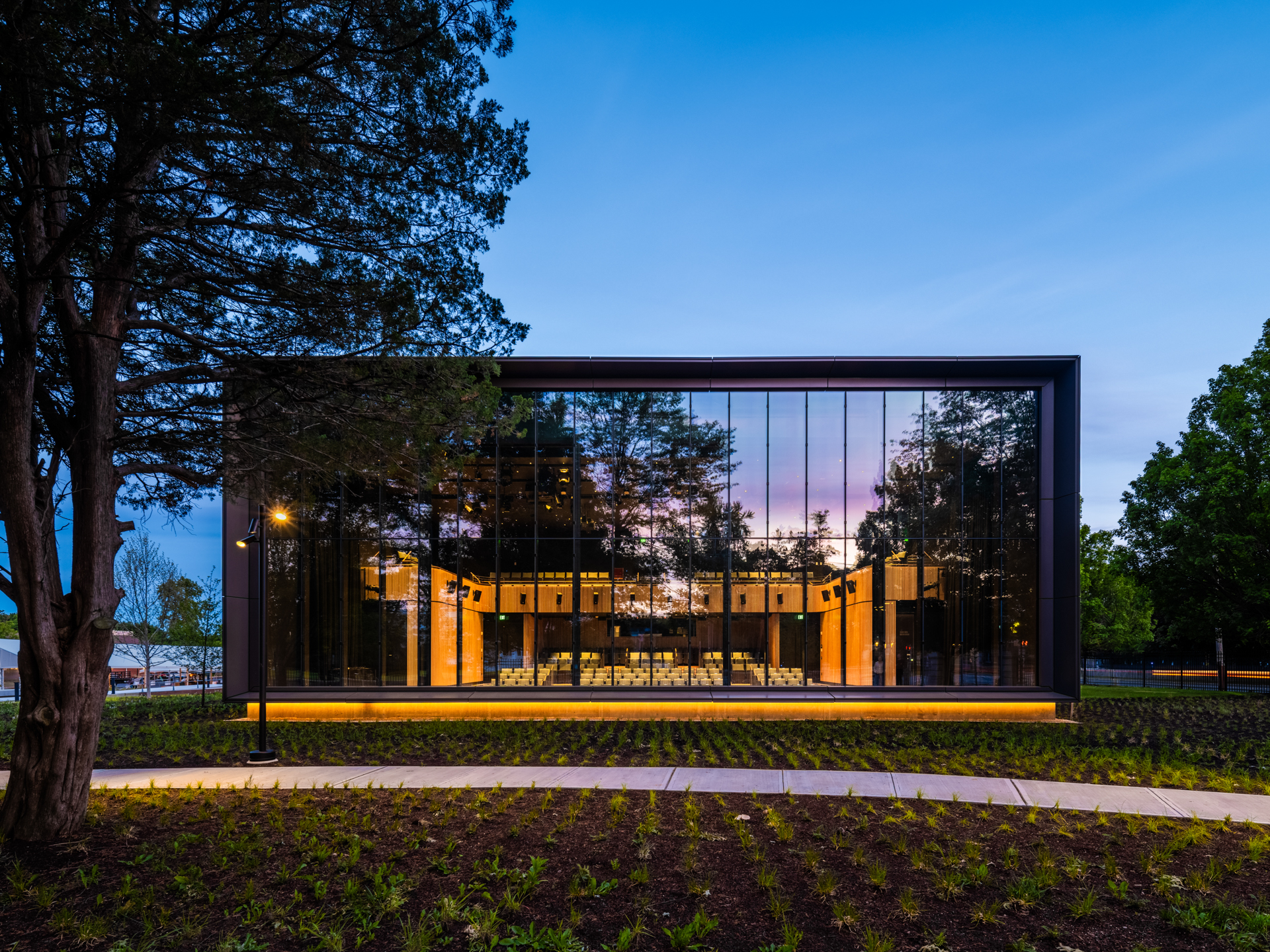
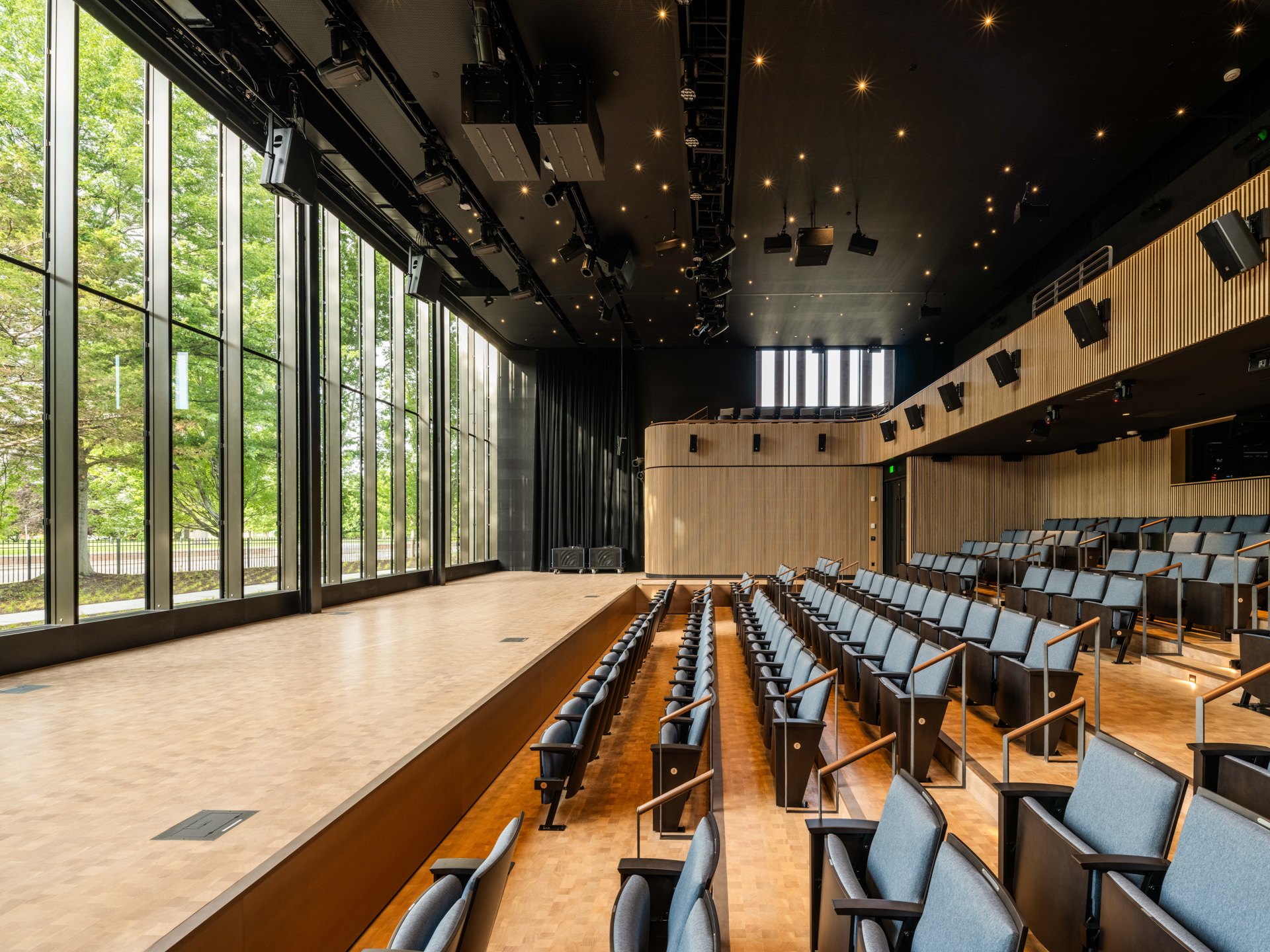
The auditorium faces outward through a large glass curtain wall (1). Its walls and floors are surfaced in oak (2). Photos © Alex Ferrec/CookFox Architects
Not long after, Chapman and Robert Santelli, a Monmouth alumnus and former chief executive of the Grammy Museum, in Los Angeles, approached Springsteen to gauge his interest in supporting an official archive and museum. The famously humble musician was uncomfortable with a building dedicated solely to his legacy and turned down their initial offer. In their second, successful pitch, Chapman and Santelli suggested that the museum could instead contextualize Springsteen within a lineage of American music—The Boss was on board. In 2017, Monmouth University announced the center, with Santelli and Chapman serving respectively as executive director and director. CookFox was awarded the project in 2019 following an invited competition that launched the prior year.
Looking for quick answers on architecture and design topics?
Try Ask RECORD, our new smart AI search tool.
Ask RECORD →
“The ultimate thing that we were looking for was a design that accurately reflected Bruce’s legacy,” explains Santelli. “The idea was to keep it simple and elegant, reflective of his music and New Jersey.”
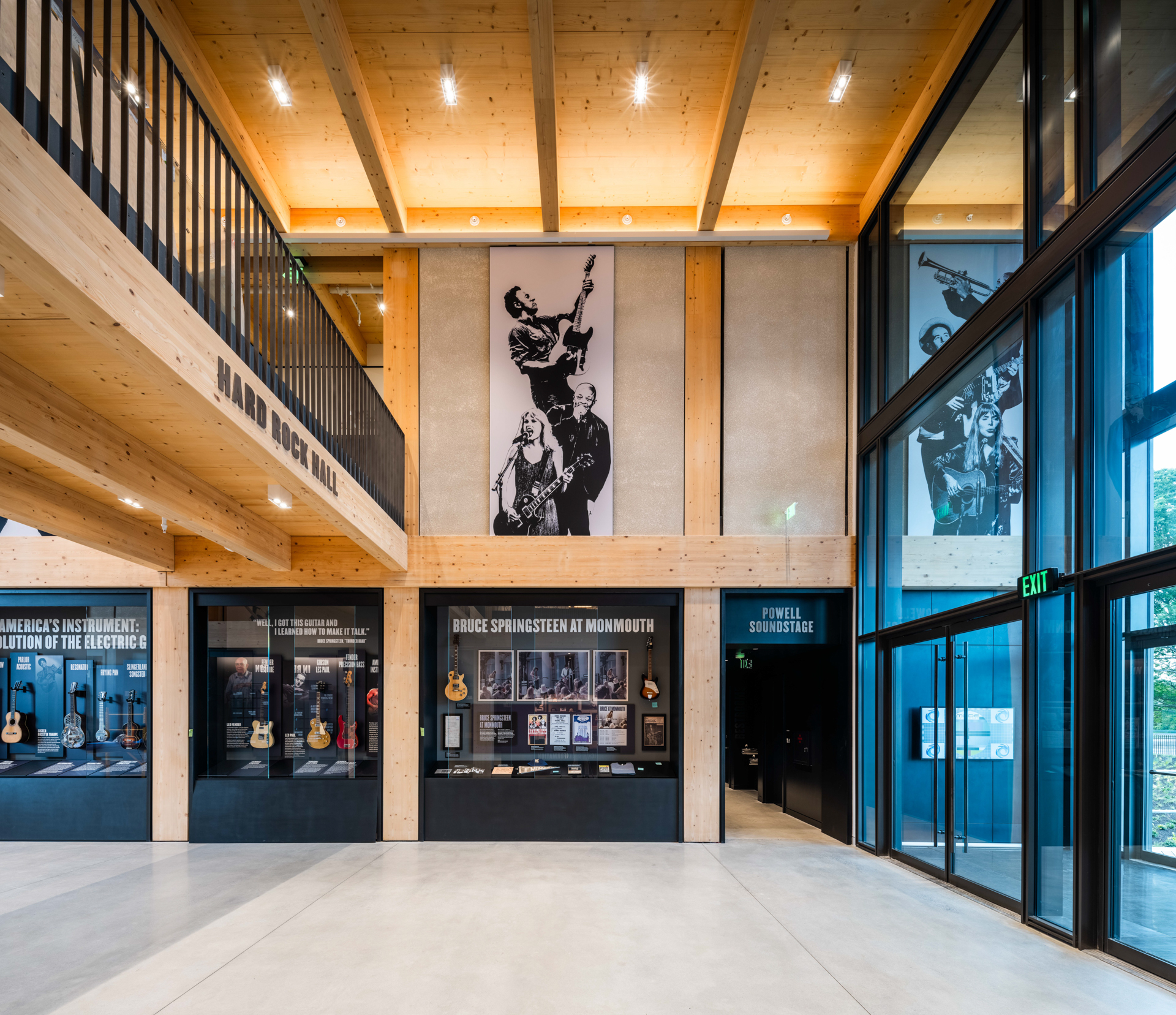
A double-height atrium is placed at the building's center. Photo © Alex Ferrec/CookFox Architects
That approach, expressed at the building exterior by the weathering steel enclosure and landscape design, is achieved within by a design that gives room for the exhibitions to take center stage. The mass timber structure, glulam beams, and CLT floor panels, are left bare while linear diffusers concealed in narrow slots integrated into the ceilings and a hydronic radiant floor system ensure an uncluttered look. The 241-seat auditorium, positioned at the north half of the center, is framed in structural steel and faces outward with an expansive glass curtain wall. It is tied materially to the rest of the building by fir end-grain floor blocks and oak slats used as wall surfacing.
3
4
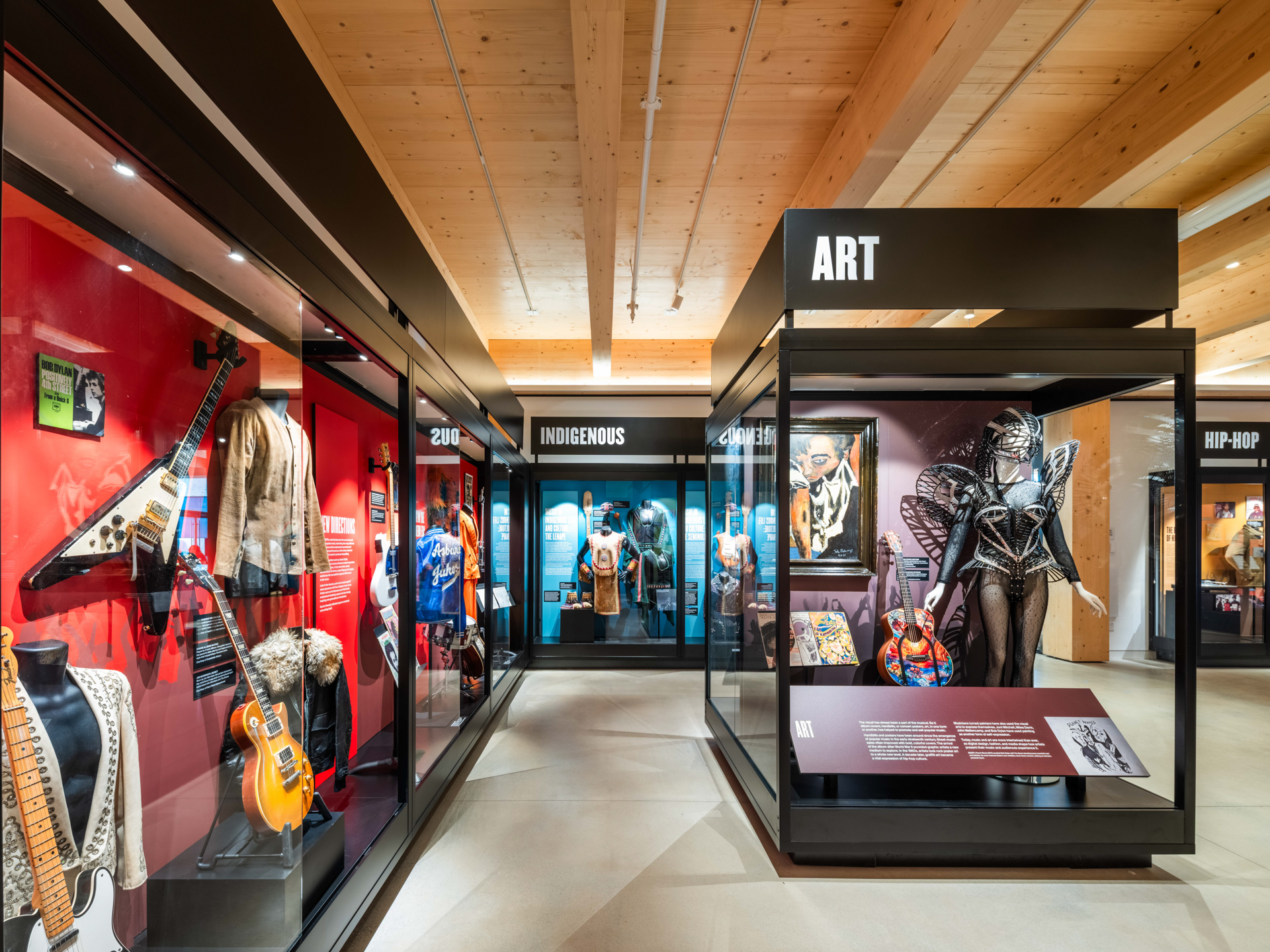
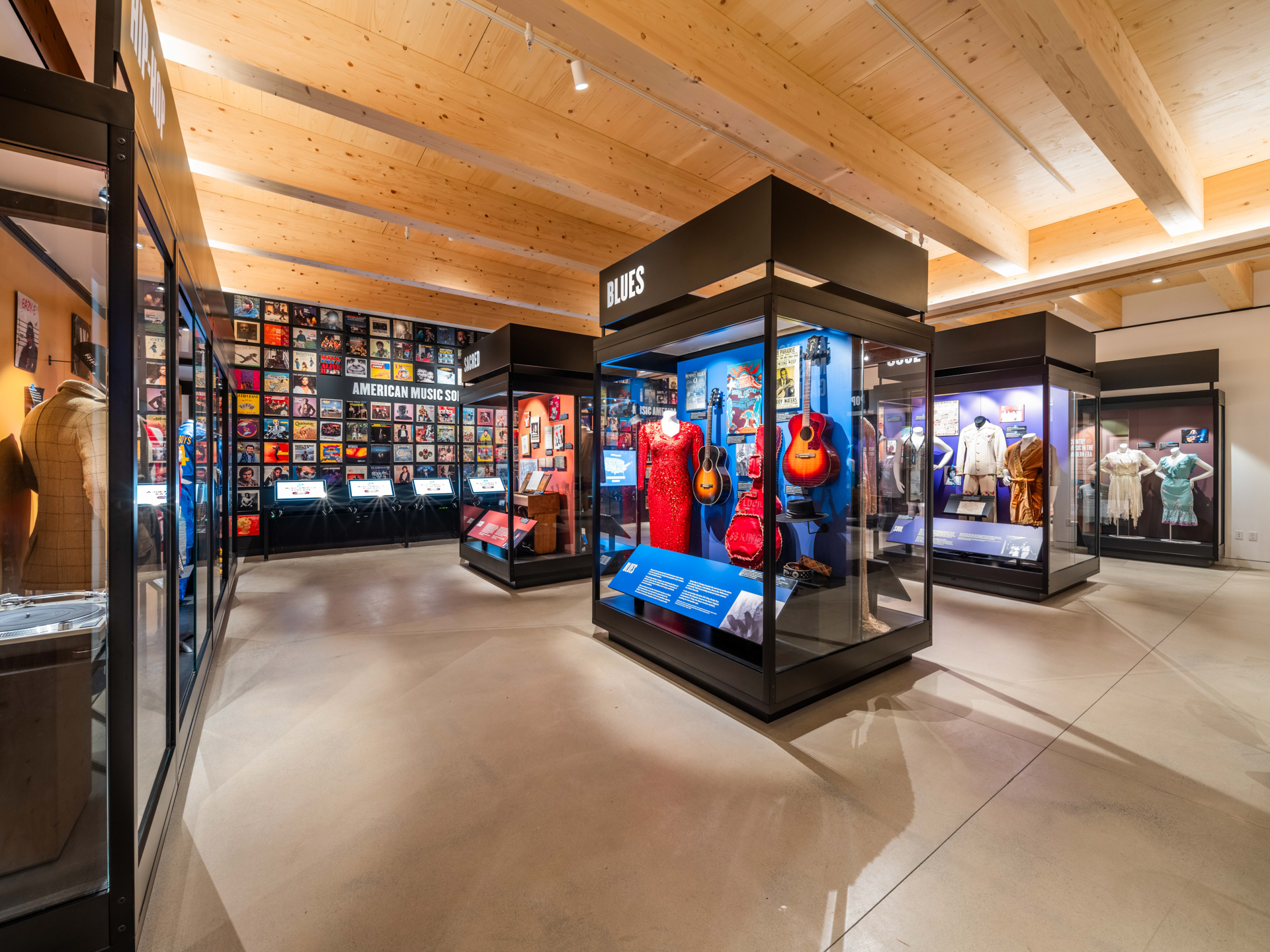
The ground floor's permanent exhibition features an impressive collection of antiques displayed in glass vitrines (3 & 4). Photos © Alex Ferrec/CookFox Architects
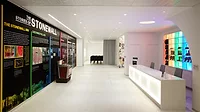
The visitor experience begins in the auditorium, where museumgoers sit down for a short film directed by Thom Zimny, Springsteen’s longstanding documentarian, focused on the musician and how his work fits within the context of American music. That theme extends to the ground floor’s permanent exhibition space, where visitors can take in an array of artifacts, ranging from B.B. King’s case for his beloved guitar Lucille to one of Lady Gaga’s costumes, and, with a series of listening stations, tune in to an expansive audio library. A temporary exhibition on the same level, Chimes of Freedom, traces the tradition of protest music within the United States, with works by Woody Guthrie, Bob Dylan, and Joan Baez, among others.
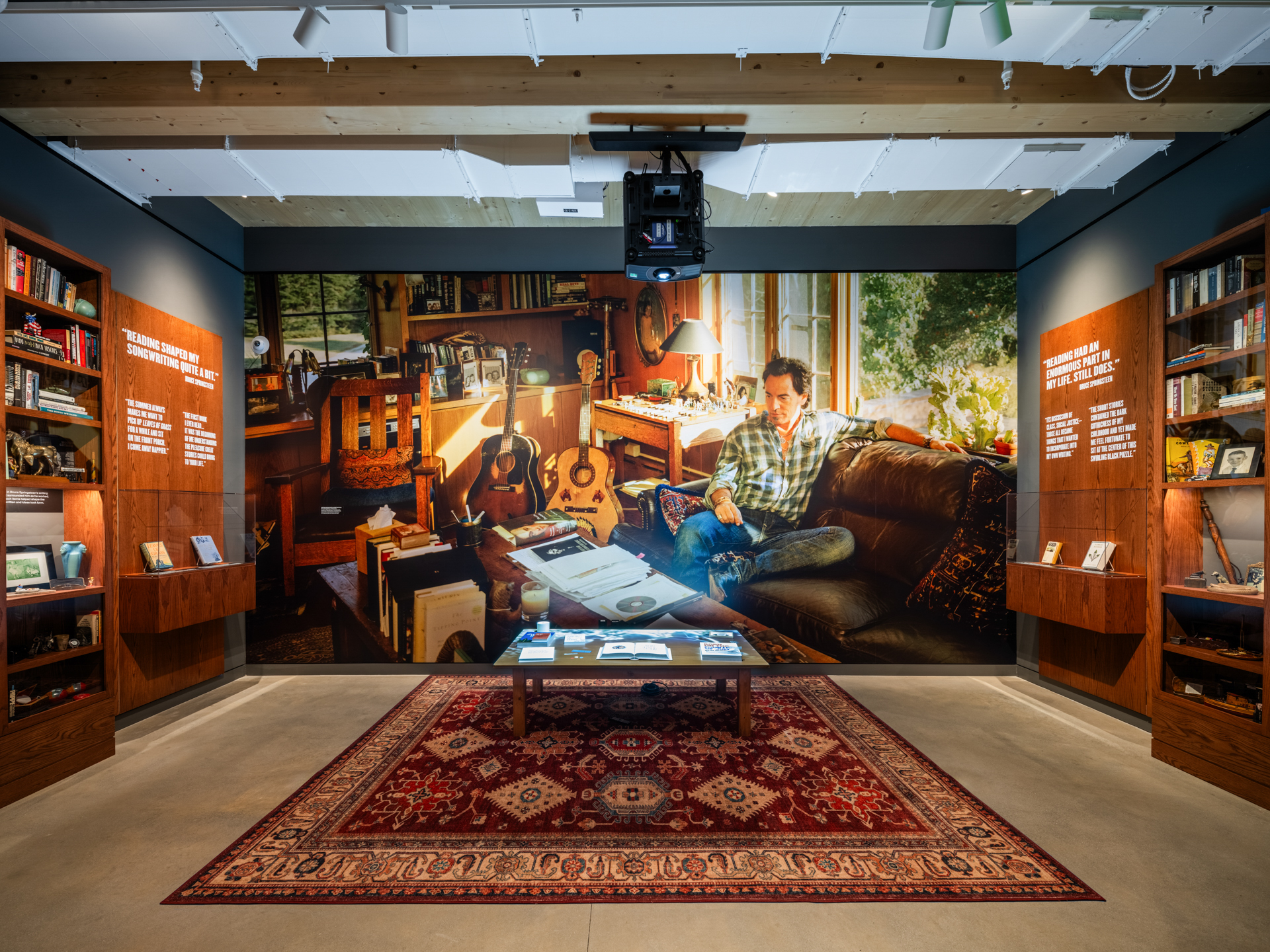
Springsteen donated elements of his study, such as wood shelving and furniture, to the museum. Photo © Alex Ferrec/CookFox Architects
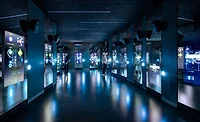
The second level’s exhibition space, focused exclusively on Springsteen and the E Street Band, includes garments worn on stage, like the faded jeans pictured on the cover of Born to Run; notebooks spanning decades highlighting, for instance, the handwritten lyrics to Born in the U.S.A.; instruments played by numerous band members; live performance posters and alternate album covers; and more. The interactive learning area will allow visitors to play along with live instruments to prerecorded tutorials. The expanded archives, visible from the galleries, include high-density shelving and five separate climate and humidity-controlled environments.
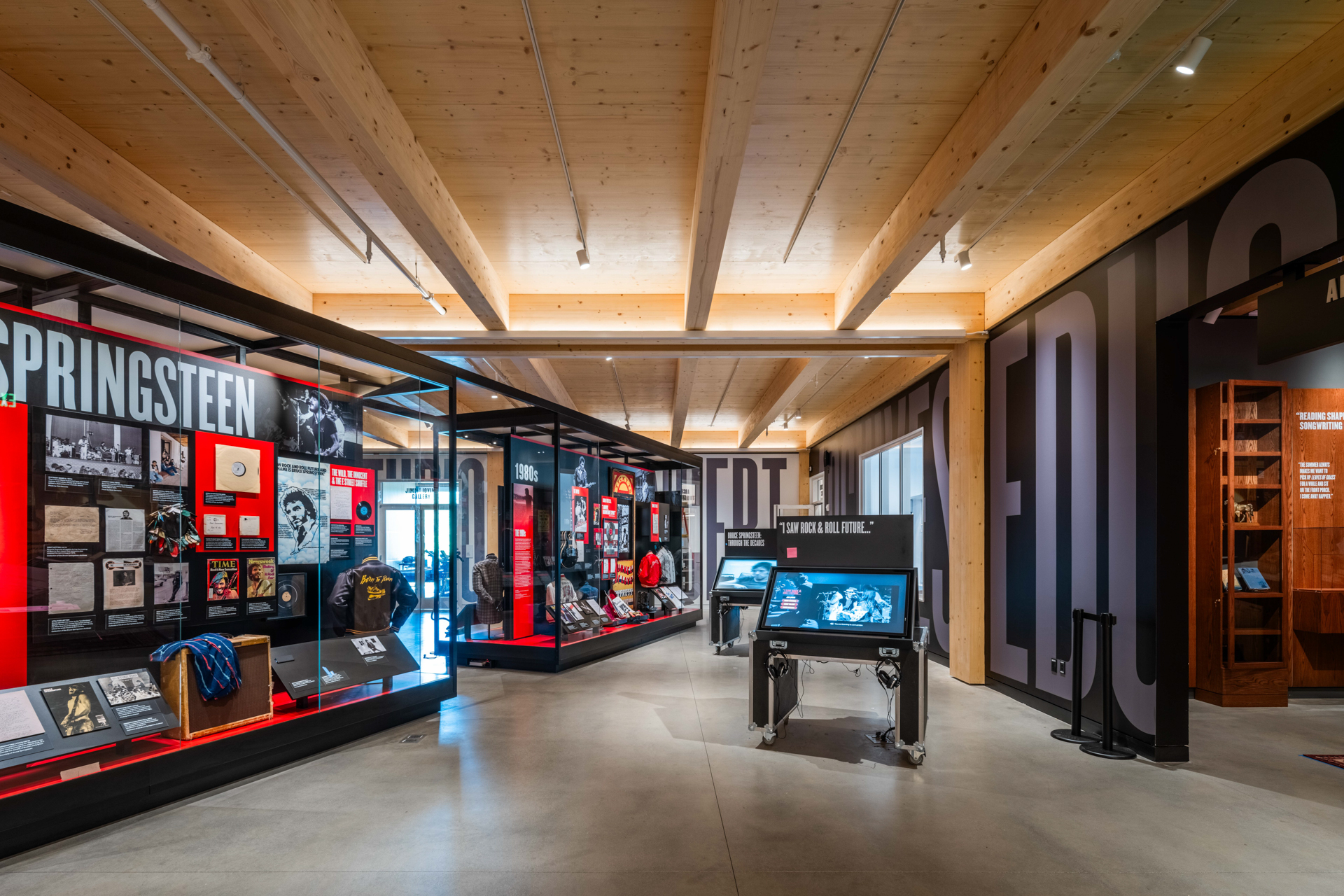
The second floor exhibition includes an array of mementos and interative displays. Photo © Alex Ferrec/CookFox Architects
At the ribbon-cutting ceremony on June 6, Springsteen reflected on CookFox’s design and the beginning of his career. “This building really feels like me, where I come from. It reminds me of a rug mill where I started my first band, half a block up the street. The looms were clanging and banging... It was through the sound of that rug mill that I created my first music."
Bruce Springsteen speaking at the June 6 ribbon-cutting ceremony. Courtesy CookFox Architects
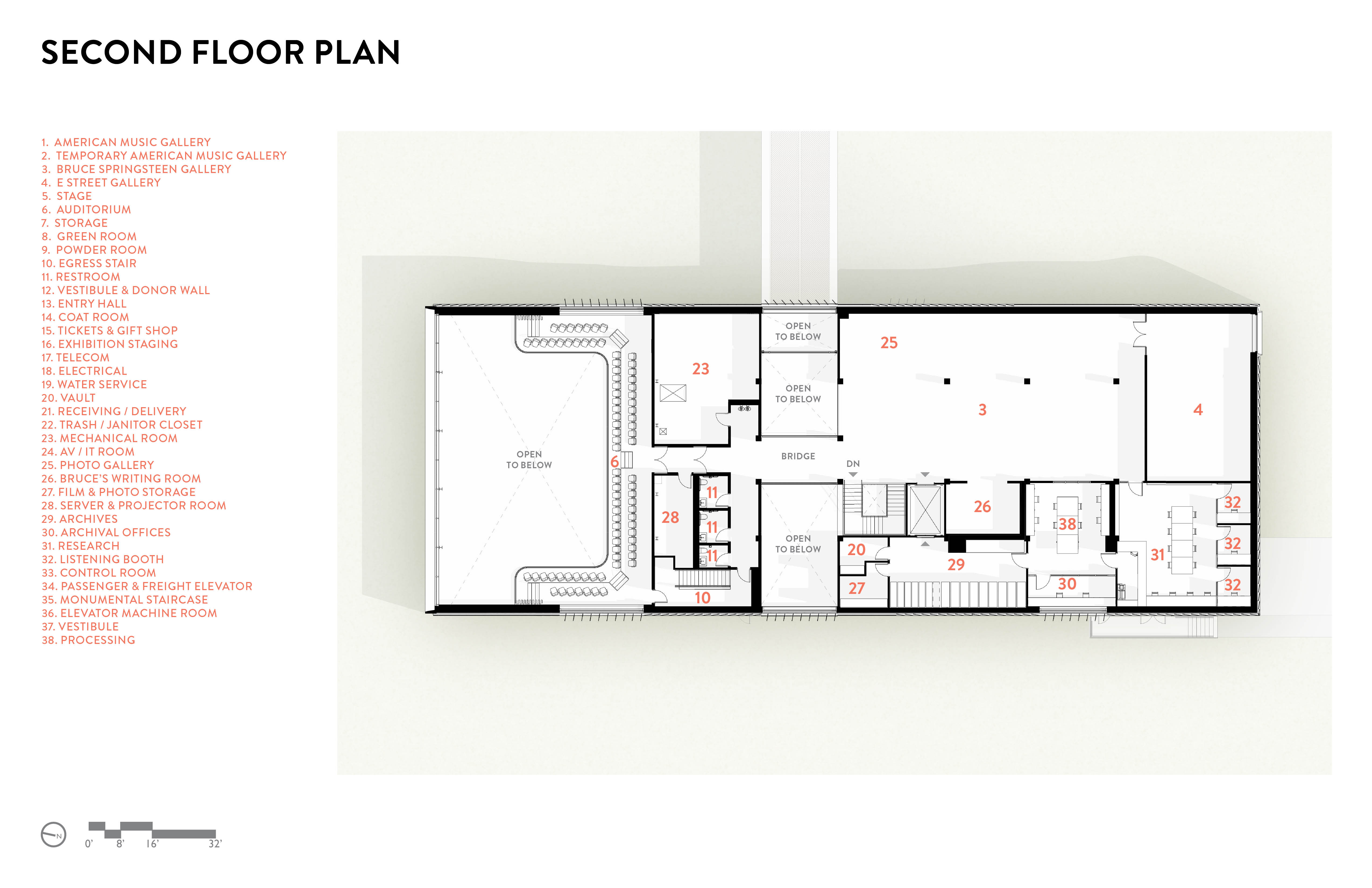
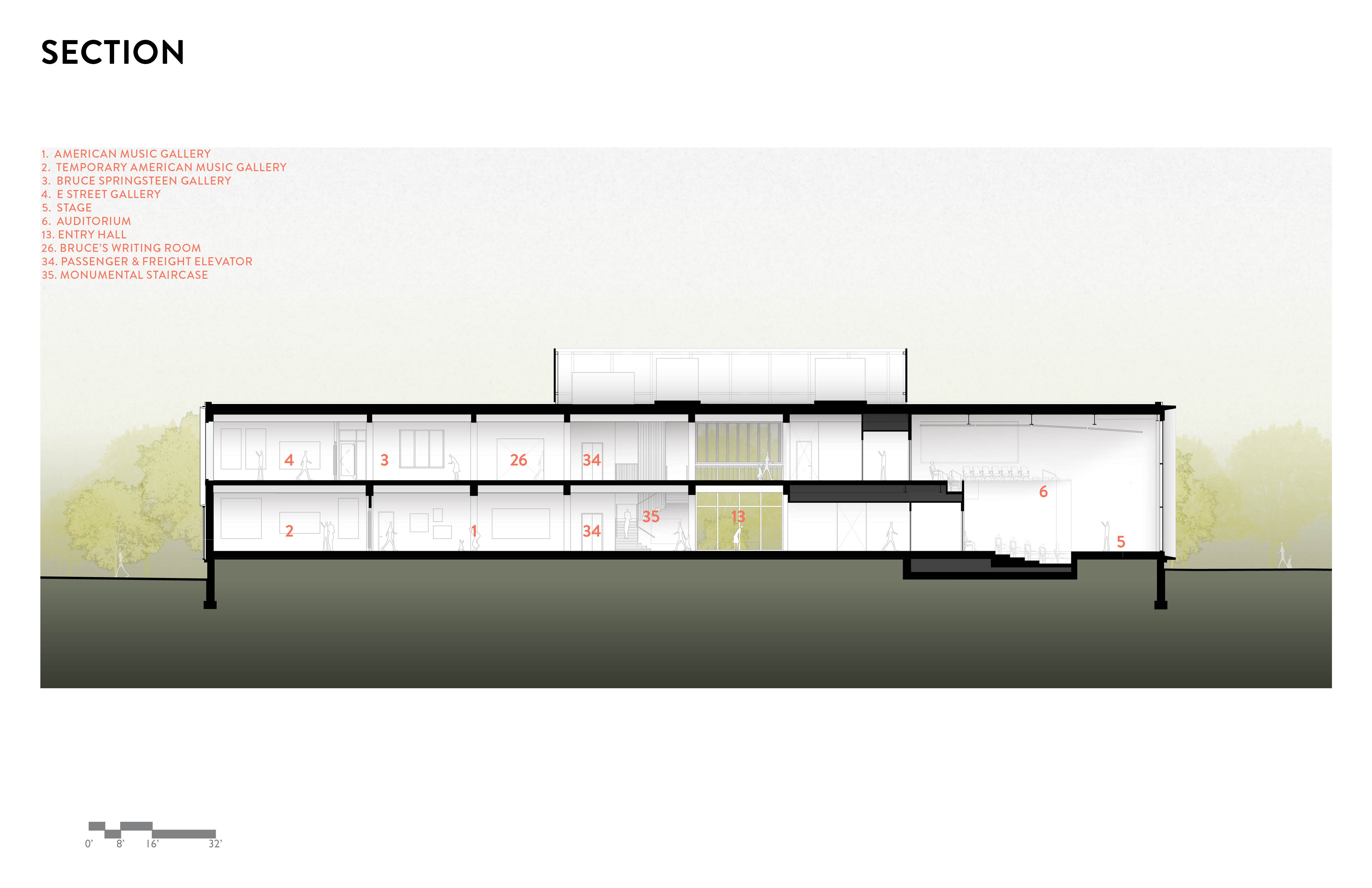
Images courtesy CookFox Architects; click to enlarge
Looking for a reprint of this article?
From high-res PDFs to custom plaques, order your copy today!