Architectural Record
search
cart
facebook twitter linkedin youtube
  • Sign In
  • Subscribe
  • Sign Out
  • My Account
Architectural Record
  • NEWS
    • Latest News
    • Awards
    • Interviews
    • Obituaries
    • Podcasts
      • Design:Ed Podcast
      • Sponsored Podcasts
  • OPINION
    • Book Reviews / Excerpts
    • Exhibition Reviews
    • Forum
  • EXCLUSIVES
    • Videos
    • Design Vanguard
    • Top 300 Firms
    • Sponsored Content
    • Sponsored eBooks
    • From the Archives
  • CONTINUING ED
    • Editorial Continuing Ed
    • CE Center
    • CE Academies
  • PROJECTS
    • Buildings By Type
    • Reuse & Renovation
    • Museums & Arts Centers
    • Colleges & Universities
    • Multifamily Housing
    • Interiors
    • Lighting
    • Kitchen & Bath
  • HOUSES
    • Record Houses
    • House of the Month
    • Featured Houses
  • PRODUCTS
    • Products by Category
    • Record Products of the Year
    • Latest Products
  • EVENTS
    • Dates & Events
    • Record on the Road
    • Innovation Conference
    • Sustainability in Practice
    • Women In Architecture
    • Webinars
    • Ad Excellence Awards
    • Submit an Event
  • CONNECT
    • Ask RECORD AI
    • Newsletters
    • Contact
    • Advertise
    • Editorial Calendar
    • Store
    • Customer Service
  • SUBMIT
    • Submission Guidelines
    • RECORD Competitions
  • MAGAZINE
    • Subscribe
    • My Account
    • Digital Edition
    • Current Issue
    • Firm Pass
    • Historic Archive
Architecture NewsInterviews

Newsmaker: Kengo Kuma
By Naomi Pollock, FAIA
Kengo Kuma and Associates

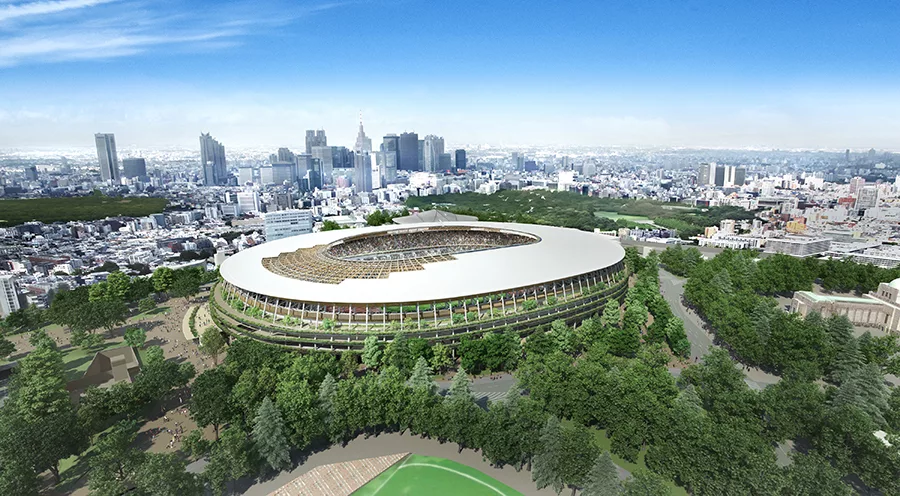
A Bird’s Eye View from southeast, as the stadium will appear 30 years after the Olympics.

Image © Taisei Corporation / Azusa Sekkei Co., Ltd and Kengo Kuma and Associates Joint Venture / JSC
Kengo Kuma and Associates

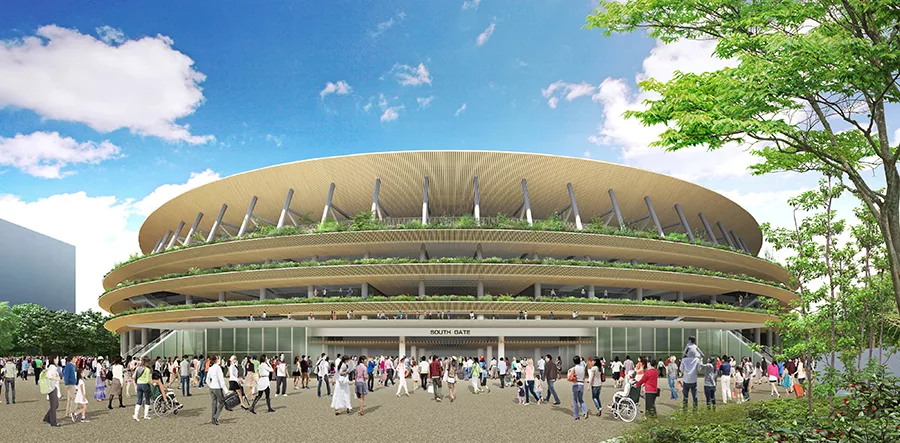
Image of south exterior 30 years after the Olympics.

Image © Taisei Corporation / Azusa Sekkei Co., Ltd and Kengo Kuma and Associates Joint Venture / JSC
Kengo Kuma and Associates

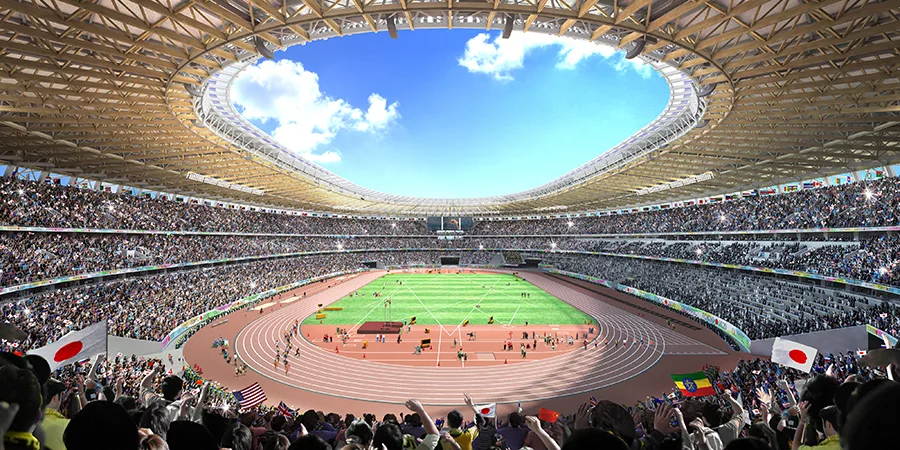
Inside the stadium.

Image © Taisei Corporation / Azusa Sekkei Co., Ltd and Kengo Kuma and Associates Joint Venture / JSC

Kengo Kuma and Associates

The stadium will be built under the concept of Sora no Mori—“Grove of the sky.”

Image © Taisei Corporation / Azusa Sekkei Co., Ltd and Kengo Kuma and Associates Joint Venture / JSC
Kengo Kuma and Associates

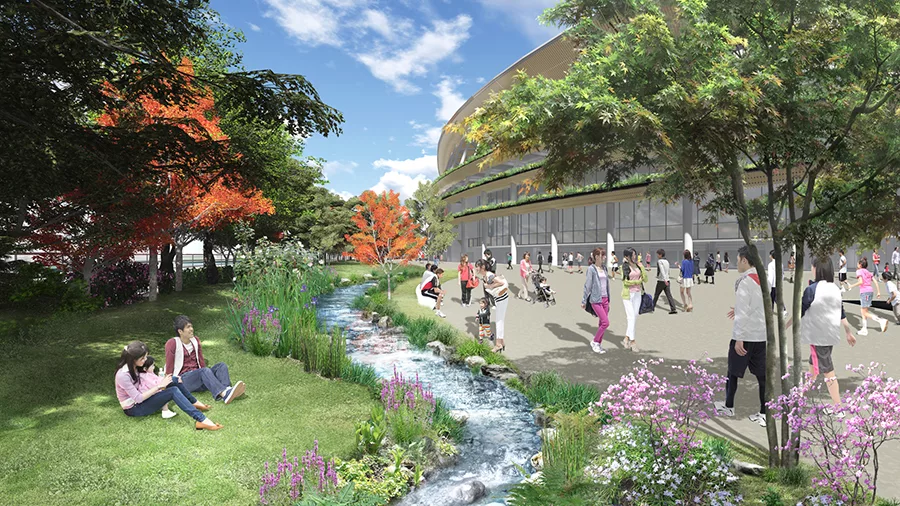
Stream of the Shibuya River.

Image © Taisei Corporation / Azusa Sekkei Co., Ltd and Kengo Kuma and Associates Joint Venture / JSC
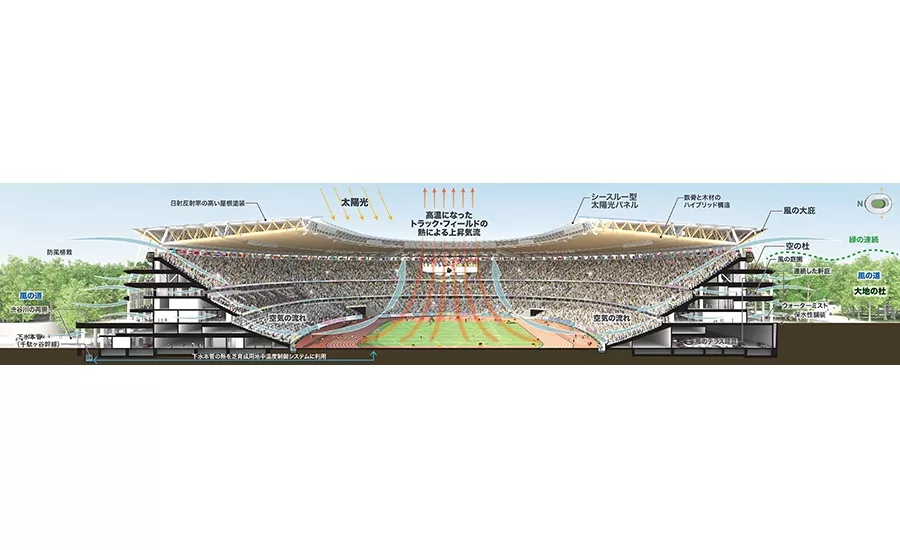
Kengo Kuma and Associates

Section

Image © Taisei Corporation / Azusa Sekkei Co., Ltd and Kengo Kuma and Associates Joint Venture / JSC
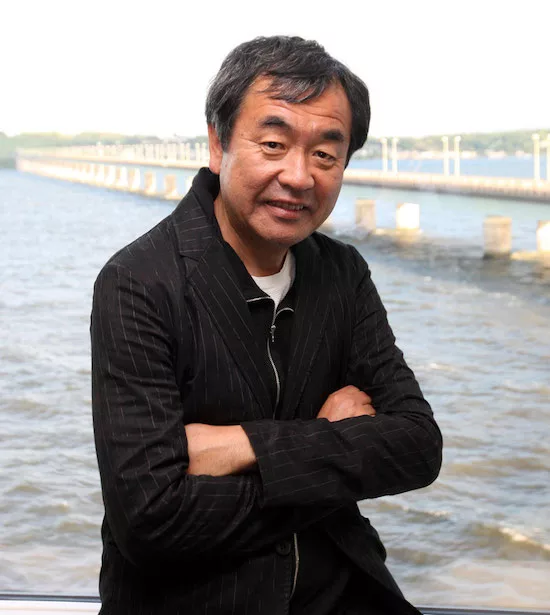
Kengo Kuma and Associates

Architect of the Tokyo National Stadium.

Photo © The Courier

Kengo Kuma and Associates
January 21, 2016

In December, Japanese officials announced their selection of Kengo Kuma as the architect for Tokyo’s 2020 Olympic Stadium. Their decision resolved a hotly contested debate over the building’s design and concluded a second competition for its designer after Prime Minister Shinzo Abe scuttled the building’s initial winning design by Zaha Hadid. The controversy continued last month when Hadid refused to sign over her design’s copyright to the Japan Sport Council and sign a gag order.

Kuma’s scheme, which beat out Toyo Ito’s proposal, was lauded for its relatively modest budget and its sensitive architectural expression incorporating live trees and timber construction— one of the architect’s signature elements. The 80,000-seat structure is being developed with Taisei Corporation and Azusa Sekkei Company. Construction is expected to commence as early as December. Kuma spoke to RECORD's correspondent in Tokyo, Naomi Pollock, about the project.


Architectural Record: What does the Olympics 2020 stadium mean to the Japanese people?

Kengo Kuma: The Olympics can be an important event that represents the spirit of the time. Tokyo’s first Olympics, in 1964, symbolized that Japan had caught up with the West. Now people really want a new kind of monument appropriate for Japan’s postindustrial age. Instead of economic expansion, it is a time of quietness and humbleness but also of richness.

When you say “richness,” what do you mean?

Now we are living in a time when energy and resources are very limited. But I believe we can live richly in that kind of severe condition. Japan can be a good model for solving that problem.

Does that mean that this is an energy-conscious project?

Looking for quick answers on architecture and design topics?
Try Ask RECORD, our new smart AI search tool.
Ask RECORD →

Yes. For example, because of funding constraints, the government decided not to air-condition the arena. We carefully designed a louver system that admits wind from the south in the summer and limits it on the north side in winter.

How else are you coping with the tight budget and schedule?

During the competition phase, we began thinking about the construction method. Standardized and not so big, the wood panels and beams will be prefabricated at a conventional factory. Composed of these repetitive elements, the section of the building is the same throughout [making it comparatively easy and quick to build].

Some say there are similarities between your arena and Hadid’s. What do you think?

My idea and philosophy are totally different. For example, Zaha’s seating layout is kind of saddle-shaped, extending up two sides of the building, while we tried to emphasize the horizontality of the building. There are some similarities, since the building code, the site, and the economical span of the concrete are the same, but these are just parts.

Why is wood essential to your scheme?

From ancient times, wood has had a profound impact on the Japanese. Though concrete proliferated in the 20th century, it does not fit with our mentality or lifestyle. The Olympics should be a trigger to go back to wood again. Kenzo Tange’s gymnasium [for the 1964 Olympics] symbolized the age of concrete and is the most beautiful concrete building in Japan. But I am trying to create a monument that is the opposite. We plan to use wood from Japan. Personally, I would like to use wood from Tohoku [the region devastated by an earthquake and tsunami in 2011].

How can Japan balance this costly event with the need for reconstruction in Tohoku?

People in Tohoku are very worried that they will be forgotten, especially since March 11, 2016, marks the disaster’s fifth anniversary, and they are uncertain about the government’s reconstruction policy after that. The Tokyo Olympics can be a magnet that draws attention to Japan. People in Tohoku are trying to reconstruct their villages again as attractive places that can draw tourists and activate the economy. If we design the Olympic facilities carefully, we can support that growth.

What will happen to this building after the Olympics are over?

One of our main ideas is Sora no Mori, meaning “forest in the sky.” It is an 850-meter running track ringing the top of the building and can be used by runners as well as pedestrians. It will be open to the public every day, even if there are events in the arena. The idea of Sora no Mori is that it can draw people to the building and create a new relationship between the stadium and its neighbors.

KEYWORDS: Tokyo

Share This Story

Looking for a reprint of this article?
From high-res PDFs to custom plaques, order your copy today!
Contributing Editor Naomi Pollock, FAIA, is the author of Japanese Design Since 1945: A Complete Sourcebook and the forthcoming Vanishing Japan: Modern Architecture Gone But Not Forgotten,

Post a comment to this article

Report Abusive Comment

Subscription Center
  • Create an Account
  • Start a Subscription
  • Manage My Account
  • Sign Up for Newsletters
  • Visit Customer Service
  • Update Preferences

More Videos

Sponsored Content

Sponsored Content is a special paid section where industry companies provide high quality, objective, non-commercial content around topics of interest to the Architectural Record audience. All Sponsored Content is supplied by the advertising company and any opinions expressed in this article are those of the author and not necessarily reflect the views of Architectural Record or its parent company, BNP Media. Interested in participating in our Sponsored Content section? Contact your local rep!

close
  • TAMLYN XtremeTrim Exterior Trim
    Sponsored byTamlyn

    Designing Cleaner Panel Facades: Why Exterior Trim Details Matter

  • Building with Vapor Barriers
    Sponsored byReef Industries, Inc.

    Vapor Barriers Help Control Moisture in Tighter Building Designs

  • Duct Interior with Prodeq System
    Sponsored byHenry, a Carlisle Company

    Designing Resilient Water Containment Systems

DESIGN:ED Podcast
Listen to Architectural Record’s DESIGN:ED Podcast

Events

June 10, 2026

Rethinking Stormwater – The Power of Porous Paving

Credits: 1 AIA LU/HSW; 1 AIBD P-CE; 0.1 ICC CEU

Learn how porous paving systems support stormwater management, reduce heat island effects, and enhance sustainable site design performance.

June 11, 2026

Very Early Warning Fire Detection for Mission-Critical Facilities

Credits: 1 AIA LU/HSW; 1 AIBD P-CE; 0.1 ICC CEU

Examine advanced fire detection strategies that support uptime and enhance safety in data centers and other mission-critical facilities.

View All Submit An Event

Products

2026 Architect's Square Foot Costbook

2026 Architect's Square Foot Costbook

See More Products

Popular Stories

Coronado Bridge

The Architect’s Guide to San Diego

Practice Matters illustration

What’s in a (Firm’s) Name? Thinking About Succession and Legacy

Practice Matters illustration

By the Numbers: Counting America's Architects

Inward House

Inward House by VeeV Design Studio

Riverdale House by Studio Lau

Riverdale House by Studio Lau

Broader Sustainability of CMU - Free Webinar - May 21, 2026

Related Articles

  • Tiffany Ginza

    Tiffany Ginza by Kengo Kuma and Associates

    See More
  • Nezu Museum

    Nezu Museum by Kengo Kuma and Associates

    See More
  • Kayanoya by Kengo Kuma and Associates

    See More
×

The latest news and information

#1 Source for Architectural Design, News and Products

SUBSCRIBE
  • RESOURCES
    • Advertise
    • Contact Us
    • Submit
    • Store
  • ACCOUNT CENTER
    • Create an Account
    • Start a Subscription
    • Manage My Account
    • Sign Up for Newsletters
    • Visit Customer Service
    • Update Preferences
  • PRIVACY
    • PRIVACY POLICY
    • TERMS & CONDITIONS
    • DO NOT SELL MY PERSONAL INFORMATION
    • PRIVACY REQUEST
    • ACCESSIBILITY
  • SERVICES
    • Marketing Services
    • Reprints
    • Market Research
    • List Rental
    • Survey/Respondent Access
  • STAY CONNECTED
    • Linkedin
    • Facebook
    • Instagram
    • YouTube
    • X (Twitter)

Copyright ©2026. All Rights Reserved BNP Media, Inc. and BNP Media II, LLC.

Design, CMS, Hosting & Web Development :: ePublishing