Architectural Record
search
cart
facebook twitter linkedin youtube
  • Sign In
  • Subscribe
  • Sign Out
  • My Account
Architectural Record
  • NEWS
    • Latest News
    • Awards
    • Interviews
    • Obituaries
    • Podcasts
      • Design:Ed Podcast
      • Sponsored Podcasts
  • OPINION
    • Book Reviews / Excerpts
    • Exhibition Reviews
    • Forum
  • EXCLUSIVES
    • Videos
    • Design Vanguard
    • Top 300 Firms
    • Sponsored Content
    • Sponsored eBooks
    • From the Archives
  • CONTINUING ED
    • Editorial Continuing Ed
    • CE Center
    • CE Academies
  • PROJECTS
    • Buildings By Type
    • Reuse & Renovation
    • Museums & Arts Centers
    • Colleges & Universities
    • Multifamily Housing
    • Interiors
    • Lighting
    • Kitchen & Bath
  • HOUSES
    • Record Houses
    • House of the Month
    • Featured Houses
  • PRODUCTS
    • Products by Category
    • Record Products of the Year
    • Latest Products
  • EVENTS
    • Dates & Events
    • Record on the Road
    • Innovation Conference
    • Sustainability in Practice
    • Women In Architecture
    • Webinars
    • Ad Excellence Awards
    • Submit an Event
  • CONNECT
    • Ask RECORD AI
    • Newsletters
    • Contact
    • Advertise
    • Editorial Calendar
    • Store
    • Customer Service
  • SUBMIT
    • Submission Guidelines
    • RECORD Competitions
  • MAGAZINE
    • Subscribe
    • My Account
    • Digital Edition
    • Current Issue
    • Firm Pass
    • Historic Archive
Architect Continuing Education

Innovations in Glass

Continuing Education: Dynamic Glass

Three design teams explore the potential of electrochromic-glazing technology to enhance building-envelope performance and aesthetics.
By Linda C. Lentz
Dynamic Glass
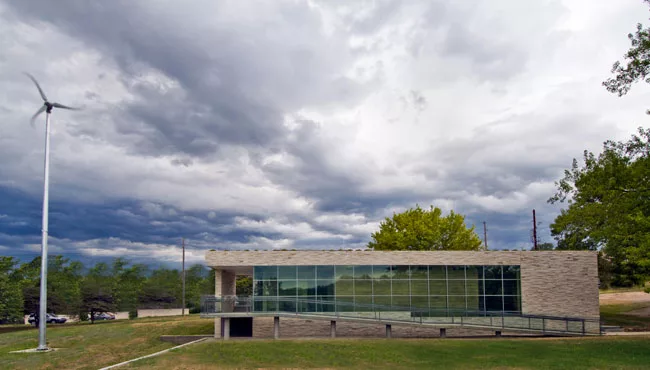
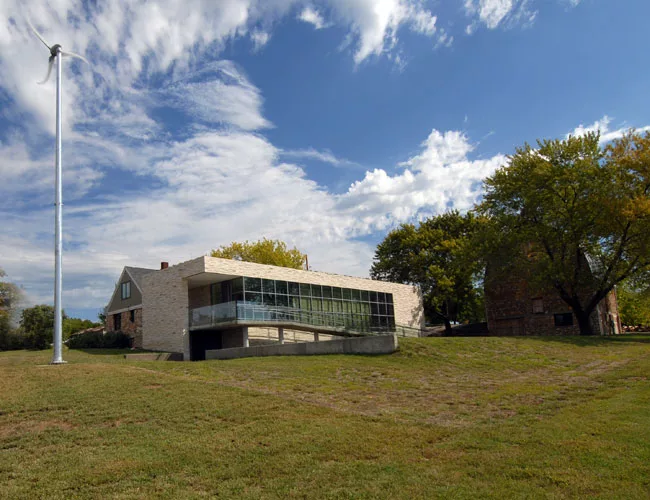
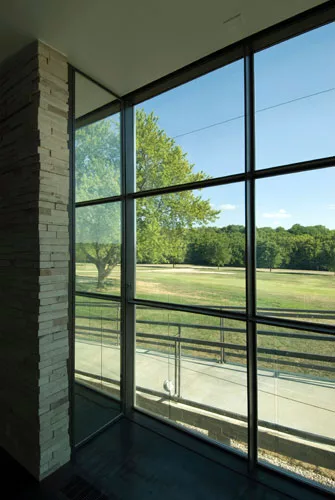
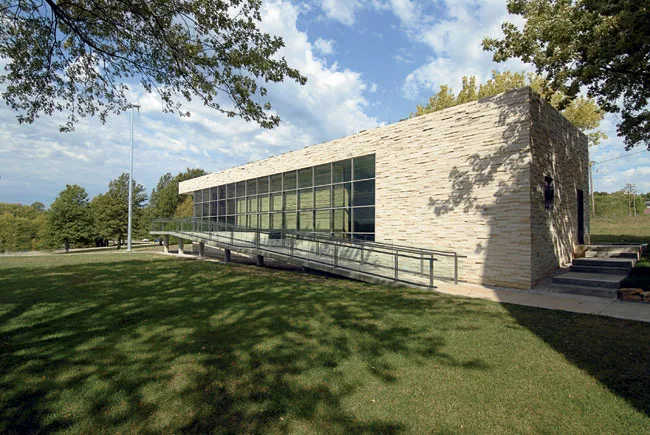
The LEED Platinum and Passive House'Certified Center for Design Research at the University of Kansas features a trombe wall behind an electrochromic butt-glazed curtain wall developed with SageGlass.
 
Photo courtesy Studio 804
Dynamic Glass
This LEED Platinum and Passive House'Certified project at the University of Kansas features a trombe wall behind an electrochromic butt-glazed curtain wall developed with SageGlass.
 
Photo courtesy Studio 804
Dynamic Glass
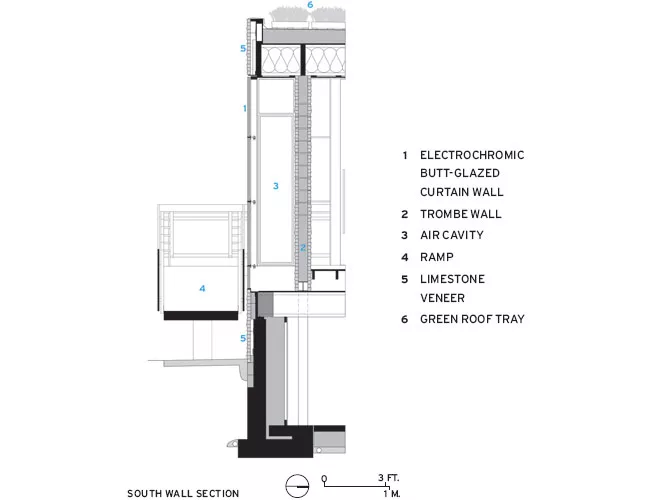
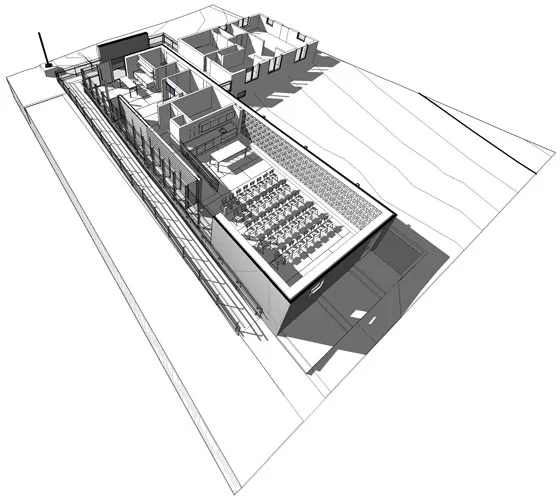
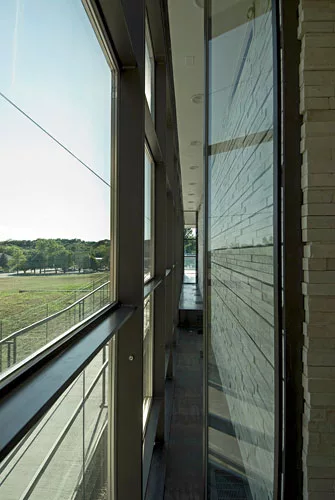
The Passive House-Certified building is largely heated due to its electrochromic butt-glazed curtain wall that is programmed to remain clear during cold weather, so that it radiates heat onto a limestone trombe wall 2 feet behind it.
 
Image courtesy Studio 804
Dynamic Glass
The Passive House-Certified building is largely heated due to its electrochromic butt-glazed curtain wall that is programmed to remain clear during cold weather, so that it radiates heat onto a limestone trombe wall 2 feet behind it.
 
Photo courtesy Studio 804
Dynamic Glass
The Passive House-Certified building is largely heated due to its electrochromic butt-glazed curtain wall that is programmed to remain clear during cold weather, so that it radiates heat onto a limestone trombe wall 2 feet behind it.
 
Image courtesy Studio 804
Dynamic Glass
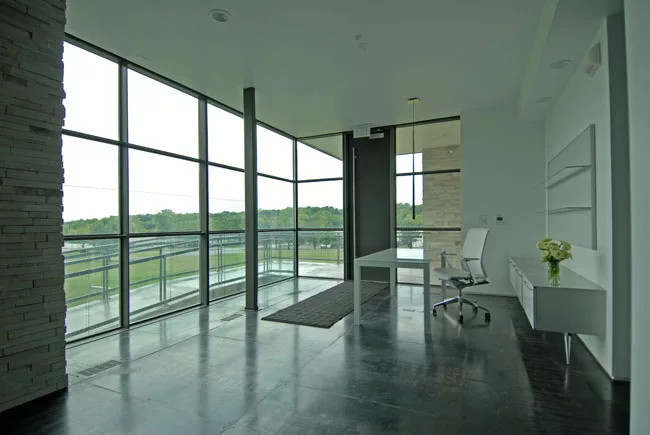
Since the reception area is typically not manned glare is not an issue here. However, the glazing is programmed by SageGlass to tint when warmed by the sun when temperatures rise in the summer, so that the building remains cool.
 
Image courtesy Studio 804
Dynamic Glass
The design team built an insulated trombe wall made of limestone tailings 2-feet behind the electrochromic butt-glazed curtain wall, which was developed with SageGlass. Glass doors prevent the heat from escaping from the air cavity.
 
Image courtesy Studio 804
Dynamic Glass
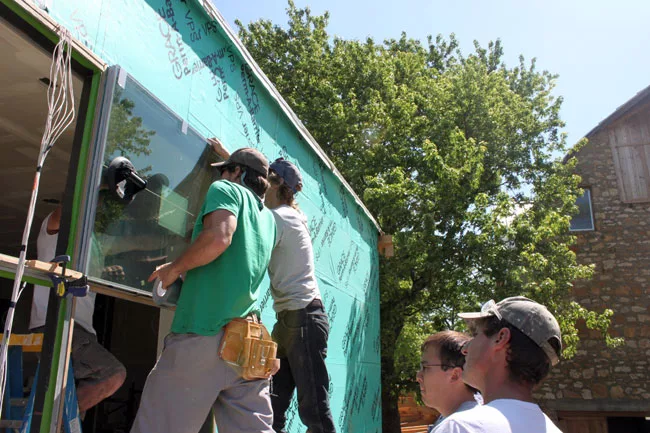
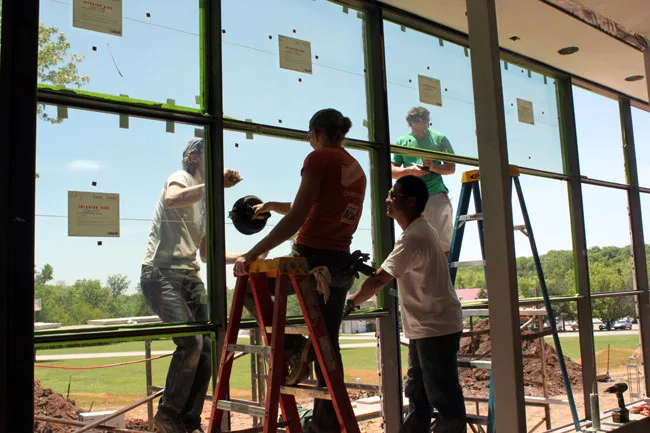
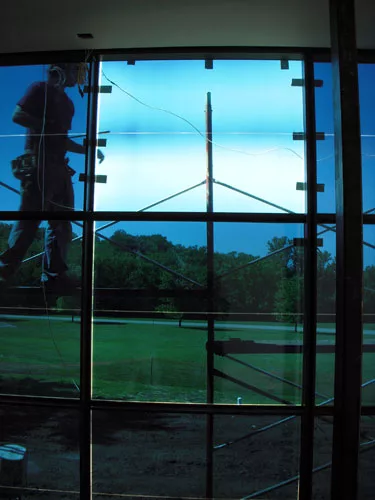
The installation of the electrochromic insulated glazing units from SageGlass did not require special skills, as demonstrated by Studio 804's M.Arch-student design/build team.
 
Image courtesy Studio 804
Dynamic Glass
The installation of the electrochromic insulated glazing units from SageGlass did not require special skills, as demonstrated by Studio 804's M.Arch-student design/build team.
 
Image courtesy Studio 804
Dynamic Glass
The installation of the electrochromic insulated glazing units from SageGlass did not require special skills, as demonstrated by Studio 804's M.Arch-student design/build team.
 
Image courtesy Studio 804
Dynamic Glass
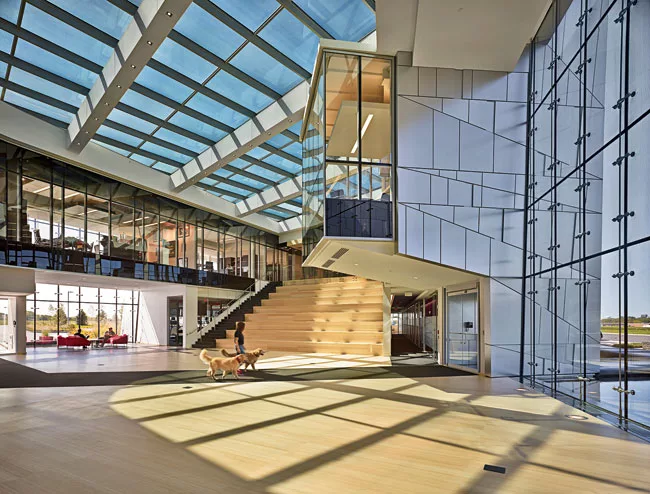
Moody Nolan installed View Dynamic Glass above the atrium of this headquarters building in Dayton, completed in 2014. The glass keeps the space comfortable in all seasons.
 
Image courtesy Studio 804
Dynamic Glass
Moody Nolan installed View Dynamic Glass above the atrium of this headquarters building in Dayton, completed in 2014. The glass keeps the space comfortable in all seasons.
 
Photo © Brad Feinknopf
Dynamic Glass
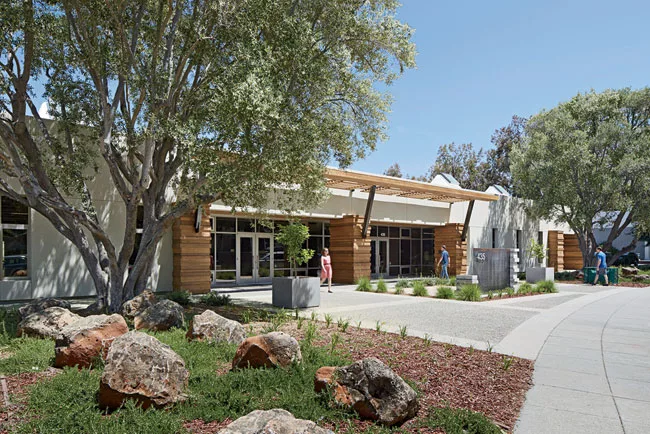
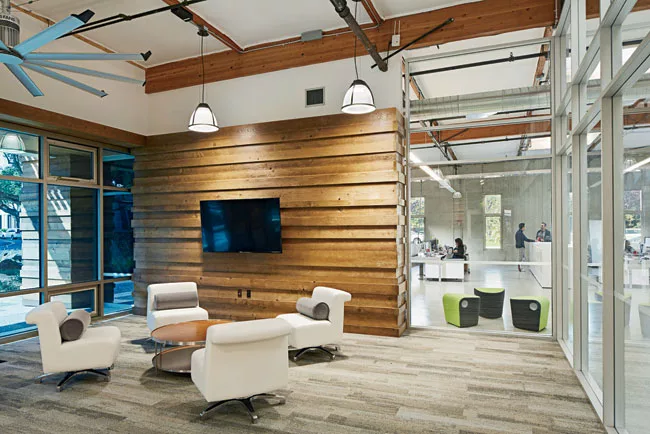
Completed in 2014, this 30,000-square-foot spec office building in Silicon Valley was designed to be a net zero energy'cost facility. It is glazed on the east, south, and west sides with View Dynamic Glass. An overhang above the entrance on the south side assures its glass remains in a clear state longer.
 
Photo © Bruce Damonte
Dynamic Glass
Completed in 2014, this 30,000-square-foot spec office building in Silicon Valley was designed to be a net zero energy'cost facility. It is glazed on the east, south, and west sides with View Dynamic Glass. An overhang above the entrance on the south side assures its glass remains in a clear state longer.
 
Photo © Bruce Damonte
Dynamic Glass
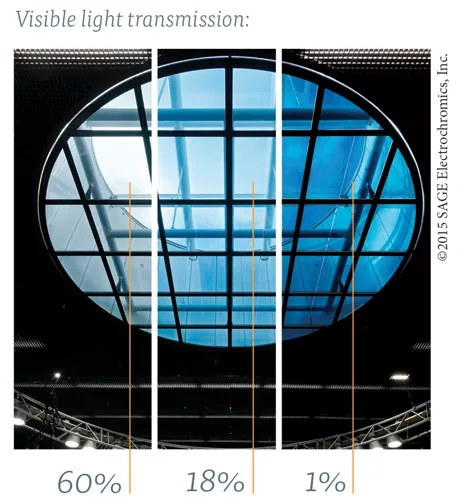
Electrochromic IGUs can tint down from a near-transparent 60% visible light transmission to 1% to prevent glare and solar heat gain.
 
Image courtesy View Dynamic Glass
Dynamic Glass
Electrochromic IGUs can tint down from a near-transparent 60% visible light transmission to 1% to prevent glare and solar heat gain.
 
Photo courtesy Sage Electrochromics, Inc.
Dynamic Glass
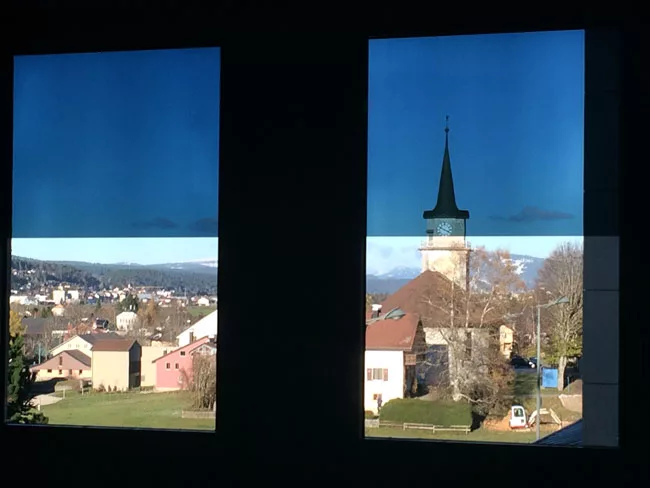
For more precise control of daylight penetration and glare, SageGlass has developed in-pane zoning, whereby a single IGU is partitioned into two or three discrete sections, each of which can be controlled separately from the other. The windows of an office in Switzerland were divided in half allowing generous daylight to fill the office, but preventing glare.
 
Photo courtesy Sage Electrochromics, Inc.
Dynamic Glass
Dynamic Glass
Dynamic Glass
Dynamic Glass
Dynamic Glass
Dynamic Glass
Dynamic Glass
Dynamic Glass
Dynamic Glass
Dynamic Glass
Dynamic Glass
Dynamic Glass
Dynamic Glass
Dynamic Glass
Dynamic Glass
Dynamic Glass
Dynamic Glass
March 1, 2015
Continuing Education
 
Situated along a main approach to the University of Kansas, the Center for Design Research (CDR) touts a sustainable strategy within a taut modernist skin made of limestone tailings and glass.

Designed and built in 2010 and 2011 by architect Dan Rockhill with Studio 804 (a graduate program he directs at the university's school of architecture), the super-insulated, wood-frame building is LEED Platinum and Passive House'Certified. Unique to a passive building is the lack of shading devices on its butt-glazed south-facing curtain wall. To escape the strictures of a typical 'green' building envelope, the architects employed a relatively new glazing made by SageGlass on that elevation'one that uses electrochromic (EC) technology to modify the glass, so it tints dark to block the brutal Midwest sun in summer and remains clear during the winter to capture solar heat on a limestone trombe wall 2 feet behind it.

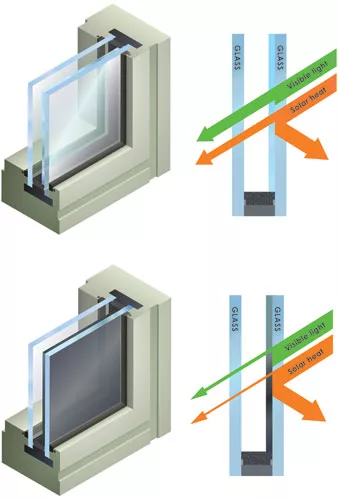
Electrochromic glazing is gaining traction with an increasing number of architects and sustainability professionals for its ability to manage solar heat gain, visible light transmission (VLT), and glare. One of two architectural dynamic glazing technologies, this 'active' system has been commercially available for just a little more than a decade. It comprises a double- or triple-pane insulated glazing unit (IGU) with an electronically chargeable metal-oxide coating applied to the interior side of its outermost pane. When activated by a low-voltage current, the coating shifts from a clear to a dark state, varying among four VLT levels. Programmed by the manufacturer to tint in response to location and orientation, EC systems include sensors that monitor existing sky conditions and manual overrides for specific needs. (The second dynamic option, thermochromic glazing, uses a film that tints when warmed by the sun. While effective for managing heat gain, it cannot be controlled and does not block glare well in cold weather.)

The ability to simplify the architecture and still satisfy Passive House criteria by tailoring the controls of the CDR's facade is what most appealed to Rockhill and his crew. Meanwhile, in northern California, Sharp Development, working with green engineering consultants Integral Group and RMW Architecture, used the material to transform a 1970s tilt-up structure'located at 435 Indio Way in Sunnyvale'into a net zero energy'cost spec office. To do this, the design team wrapped the 30,000-square-foot, one-story building with a highly insulated envelope that operates in tandem with rooftop photovoltaics, precisely configured motorized skylights that diffuse daylight for maximum spread, and a pattern of EC fenestration from View Dynamic Glass'including operable, motorized windows'on the south, east, and west elevations. This glazing was critical to the scheme, says Integral Group principal John Andary. 'Controlling the glazed areas so no direct sunlight penetrates the building allowed for a small and simple HVAC system'much smaller than we would normally put into a building like this.'

On the recently completed headquarters of the Connor Group, a real-estate investment firm in Dayton, Columbus, Ohio'based Moody Nolan used more than 4,800 square feet of View's EC glass over the atrium and in the west-facing conference room and east-facing curtain wall to reduce heat and glare. The firm is also about to complete a technology center for a Louisiana-based telecommunications company, which features 37,000 square feet of EC glazing.

Manufacturers of the glazing continue to improve its quality and performance'with progressively smarter controls, gradations, and variations of VLT and hue, larger panels (up to 5 feet by 10 feet, to date), and more shapes than rectangles. Ultimately, says Moody Nolan partner Daniel Pickett, quite aside from aesthetics and comfort, 'the secret to this technology is going to be demonstrating the savings on energy costs. Once that can be documented, we will see other projects."

CE logo

To earn one AIA learning unit (LU), including one hour of health, safety, and welfare (HSW) credit, read each of the articles below, and complete the test online. Upon passing, you will receive a certificate of completion and your credit will automatically be reported to the AIA. Find additional information regarding credit-reporting and continuing-education requirements at ce.construction.com, under “requirements.”

Innovations In Glass

  • Straight Story On Curves
  • Reflections on the Box
  • Thick-Skinned
  • Bigger, Flatter, Clearer
  • The Future Is Crystal Clear

Learning Objectives

  1. Discuss glass manufacturing processes as well as fabrication options and limitations that architects should take into account while designing glazed building skins.
  2. Define terms relevant to glass and glazing selection, such as VLT, U-value, and solar heat gain coefficient.
  3. Discuss how architects like SANAA and Foster + Partners have overcome the detailing challenges presented by curved glass.
  4. Describe how technologies such as electrochromic glazing and double skins work to improve energy efficiency.

AIA/CES Course K1503A

Take the Continuing Education Test

Share This Story

Looking for a reprint of this article?
From high-res PDFs to custom plaques, order your copy today!

Linda Lentz is a former editor at Architectural Record.

Post a comment to this article

Report Abusive Comment

Subscription Center
  • Create an Account
  • Start a Subscription
  • Manage My Account
  • Sign Up for Newsletters
  • Visit Customer Service
  • Update Preferences

More Videos

Sponsored Content

Sponsored Content is a special paid section where industry companies provide high quality, objective, non-commercial content around topics of interest to the Architectural Record audience. All Sponsored Content is supplied by the advertising company and any opinions expressed in this article are those of the author and not necessarily reflect the views of Architectural Record or its parent company, BNP Media. Interested in participating in our Sponsored Content section? Contact your local rep!

close
  • cold storage facility
    Sponsored byCarlisle SynTec Systems

    How Architects Can Design More Continuous Cold Storage Envelopes

  • TAMLYN XtremeTrim Exterior Trim
    Sponsored byTamlyn

    Designing Cleaner Panel Facades: Why Exterior Trim Details Matter

  • Building with Vapor Barriers
    Sponsored byReef Industries, Inc.

    Vapor Barriers Help Control Moisture in Tighter Building Designs

DESIGN:ED Podcast
Listen to Architectural Record’s DESIGN:ED Podcast

Events

June 18, 2026

Rebooting the Aging Office Building

Credits: 1 AIA LU/HSW; 1 AIBD P-CE; 0.1 ICC CEU; 1 PDH

Explore façade retrofit strategies and award-winning design concepts that can transform aging office buildings into healthier, higher-performing workplaces for today’s hybrid workforce.

June 23, 2026

Enhancing Fire Resistance with Advanced PVC Solutions

Credits: 1 AIA LU/HSW; 1 AIBD P-CE; 0.1 ICC CEU; 1 IIBEC CEH

Evaluate advanced PVC solutions that improve fire resistance, support WUI compliance, and enhance resilience in residential and commercial building design.

View All Submit An Event

Products

2026 Architect's Square Foot Costbook

2026 Architect's Square Foot Costbook

See More Products

Popular Stories

SanDiegoAirport

Top 300 Architecture Firms of 2026

Lorcan O' Herilhy

California Architect Lorcan O’Herlihy Has Died, Age 66

Coronado Bridge

The Architect’s Guide to San Diego

CCA, Studio Gang

The Winners of the AIA’s 2026 Architecture Award Range from Collegiate Rowing Hubs to Housing for the Homeless

Dusk House

Design Vanguard 2026: ONO

Rebooting the Aging Office Building - Free Webinar - June 18, 2026

Related Articles

  • Continuing Education: The Future of Glass

    See More
  • Continuing Education: Large, Flat Glass

    See More

Events

View AllSubmit An Event
  • May 6, 2026

    Glass Options for Enhanced Building Design

    NOW ON DEMANDCredits: 1 AIA LU/HSW; 1 AIBD P-CE; 0.1 ICC CEUDiscover how advanced glass technologies can enhance building aesthetics, performance, occupant comfort, and sustainability to meet today’s high-performance design demands.
View AllSubmit An Event
×

The latest news and information

#1 Source for Architectural Design, News and Products

SUBSCRIBE
  • RESOURCES
    • Advertise
    • Contact Us
    • Submit
    • Store
  • ACCOUNT CENTER
    • Create an Account
    • Start a Subscription
    • Manage My Account
    • Sign Up for Newsletters
    • Visit Customer Service
    • Update Preferences
  • PRIVACY
    • PRIVACY POLICY
    • TERMS & CONDITIONS
    • DO NOT SELL MY PERSONAL INFORMATION
    • PRIVACY REQUEST
    • ACCESSIBILITY
  • SERVICES
    • Marketing Services
    • Reprints
    • Market Research
    • List Rental
    • Survey/Respondent Access
  • STAY CONNECTED
    • Linkedin
    • Facebook
    • Instagram
    • YouTube
    • X (Twitter)

Copyright ©2026. All Rights Reserved BNP Media, Inc. and BNP Media II, LLC.

Design, CMS, Hosting & Web Development :: ePublishing