Architectural Record
search
cart
facebook twitter linkedin youtube
  • Sign In
  • Subscribe
  • Sign Out
  • My Account
Architectural Record
  • NEWS
    • Latest News
    • Awards
    • Interviews
    • Obituaries
    • Podcasts
      • Design:Ed Podcast
      • Sponsored Podcasts
  • OPINION
    • Book Reviews / Excerpts
    • Exhibition Reviews
    • Forum
  • EXCLUSIVES
    • Videos
    • Design Vanguard
    • Top 300 Firms
    • Sponsored Content
    • Sponsored eBooks
    • From the Archives
  • CONTINUING ED
    • Editorial Continuing Ed
    • CE Center
    • CE Academies
  • PROJECTS
    • Buildings By Type
    • Reuse & Renovation
    • Museums & Arts Centers
    • Colleges & Universities
    • Multifamily Housing
    • Interiors
    • Lighting
    • Kitchen & Bath
  • HOUSES
    • Record Houses
    • House of the Month
    • Featured Houses
  • PRODUCTS
    • Products by Category
    • Record Products of the Year
    • Latest Products
  • EVENTS
    • Dates & Events
    • Record on the Road
    • Innovation Conference
    • Sustainability in Practice
    • Women In Architecture
    • Webinars
    • Ad Excellence Awards
    • Submit an Event
  • CONNECT
    • Ask RECORD AI
    • Newsletters
    • Contact
    • Advertise
    • Editorial Calendar
    • Store
    • Customer Service
  • SUBMIT
    • Submission Guidelines
    • RECORD Competitions
  • MAGAZINE
    • Subscribe
    • My Account
    • Digital Edition
    • Current Issue
    • Firm Pass
    • Historic Archive
ProjectsMuseums & Art Centers

National Museum of African American History and Culture by Freelon Adjaye Bond/Smith GroupJJR

Washington, D.C.
By Josephine Minutillo
National Museum of African American History and Culture

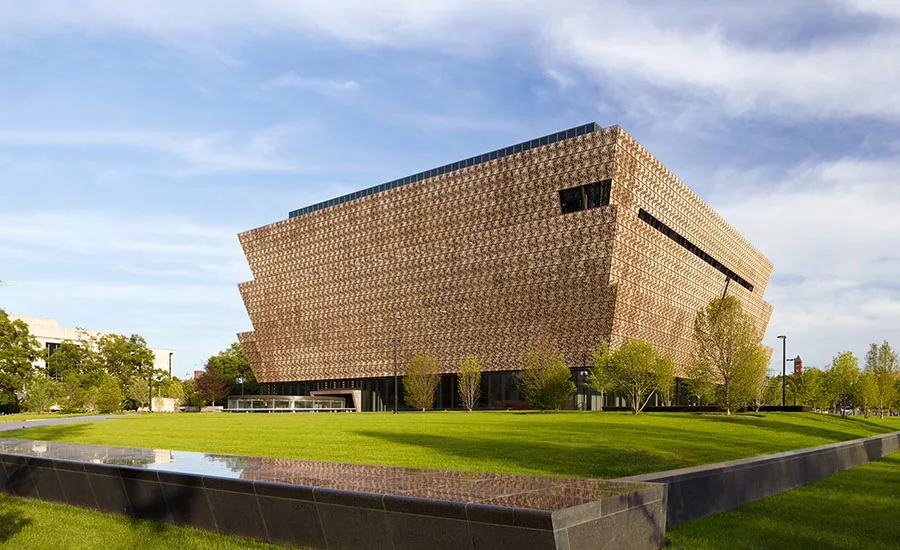
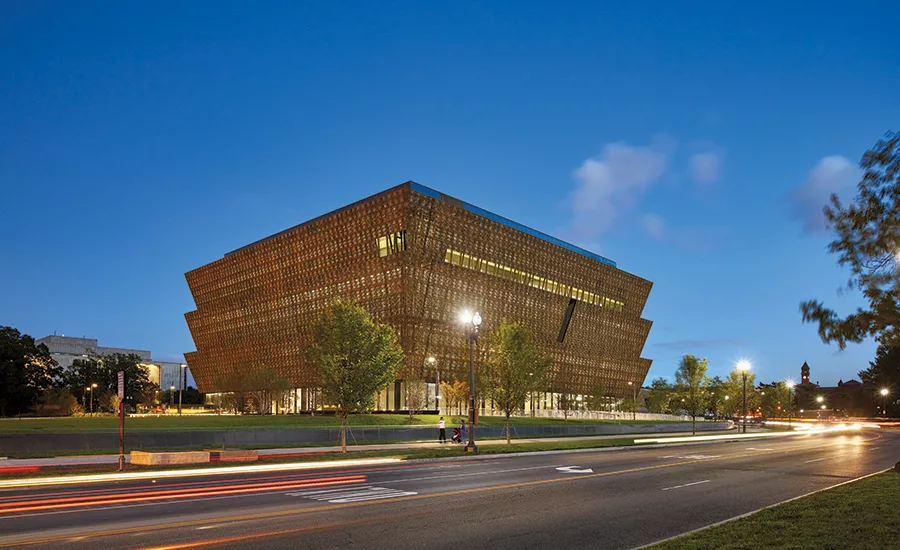
The National Museum of African American History and Culture by Freelon Adjaye Bond/Smith GroupJJR is one of six finalists for the Mies Crown Hall Americas Prize.

Photo © Alan Karchmer
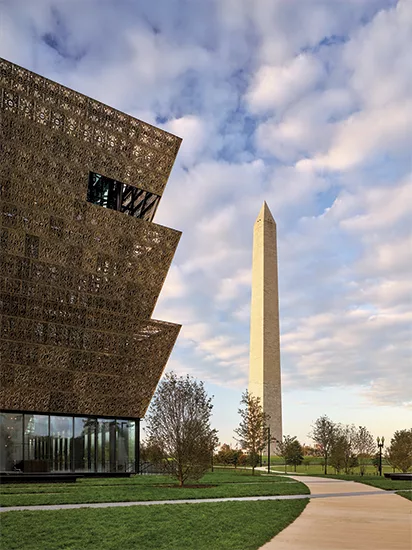
National Museum of African American History and Culture

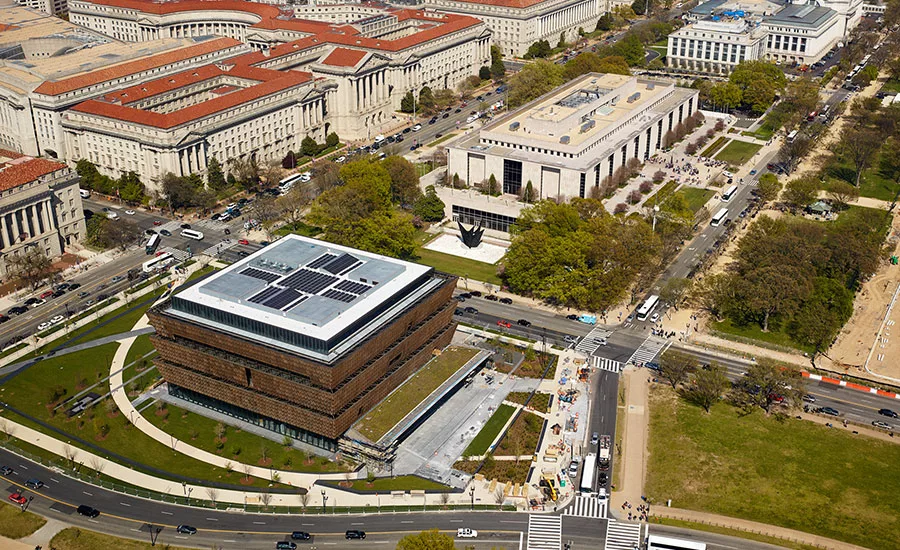
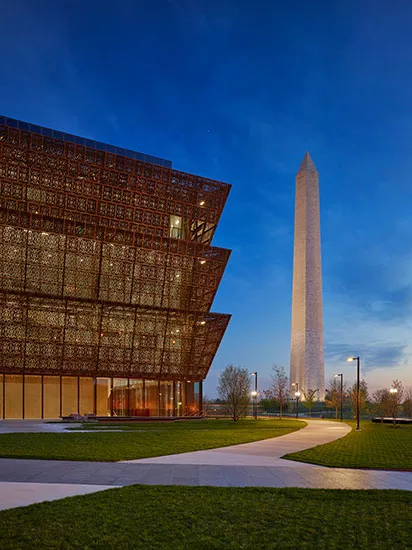
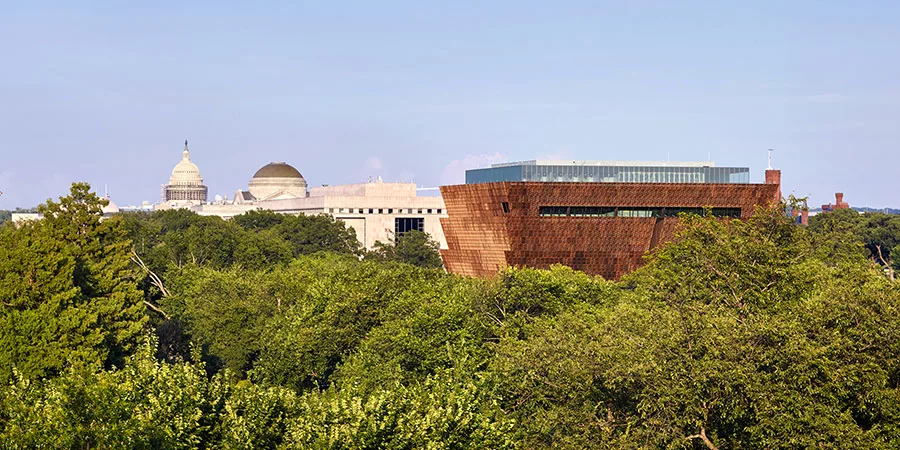
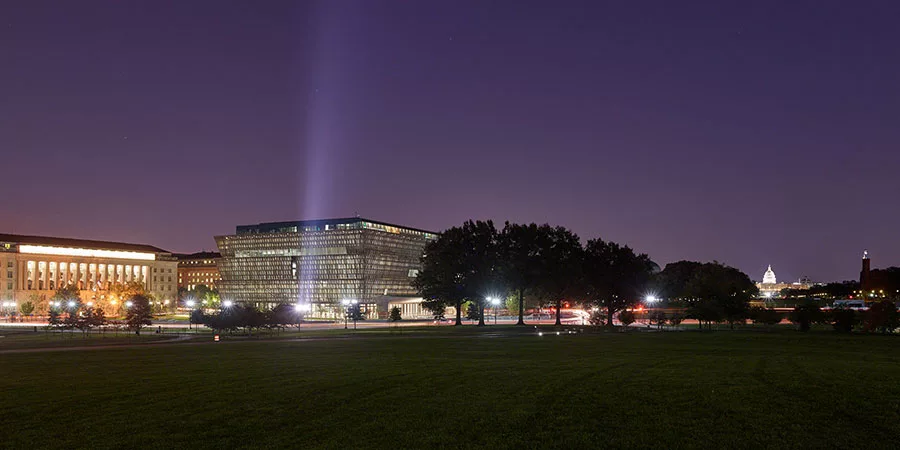
It occupies the last available spot on the National Mall, in the shadow of the Washington Monument.

Photo © Alan Karchmer
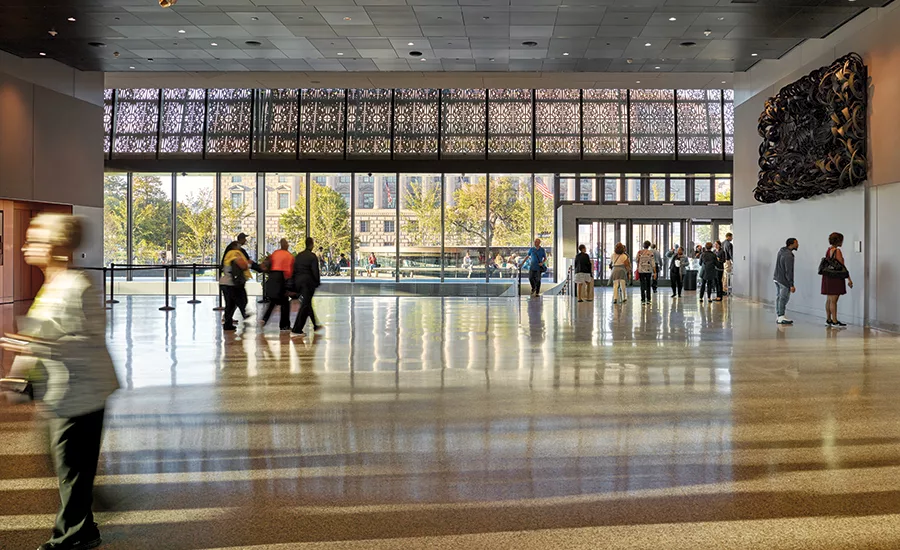
National Museum of African American History and Culture

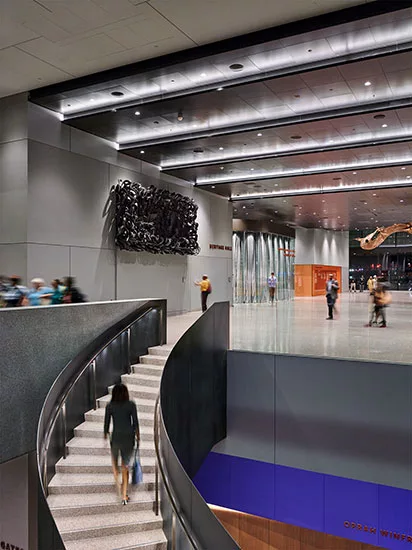
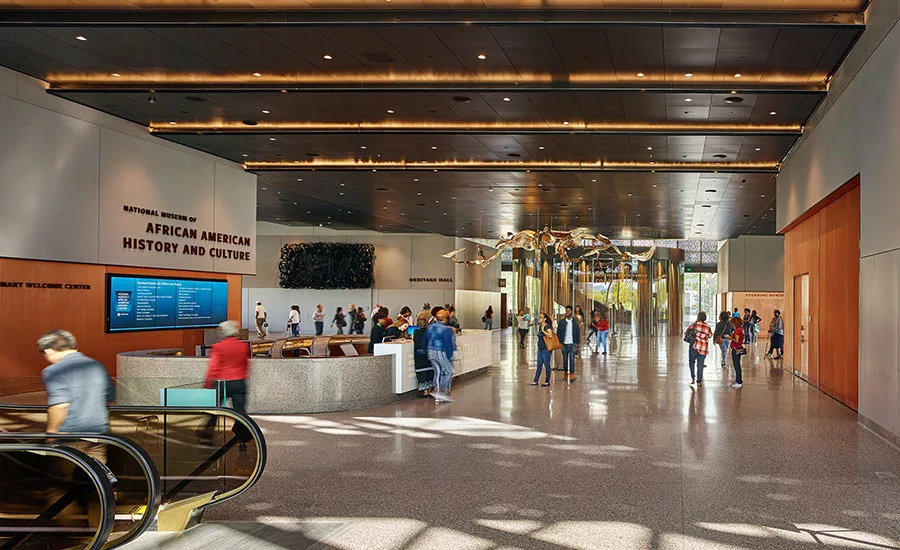
The heritage hall at the ground level is a vast lobby for welcoming visitors.

Photo © Alan Karchmer
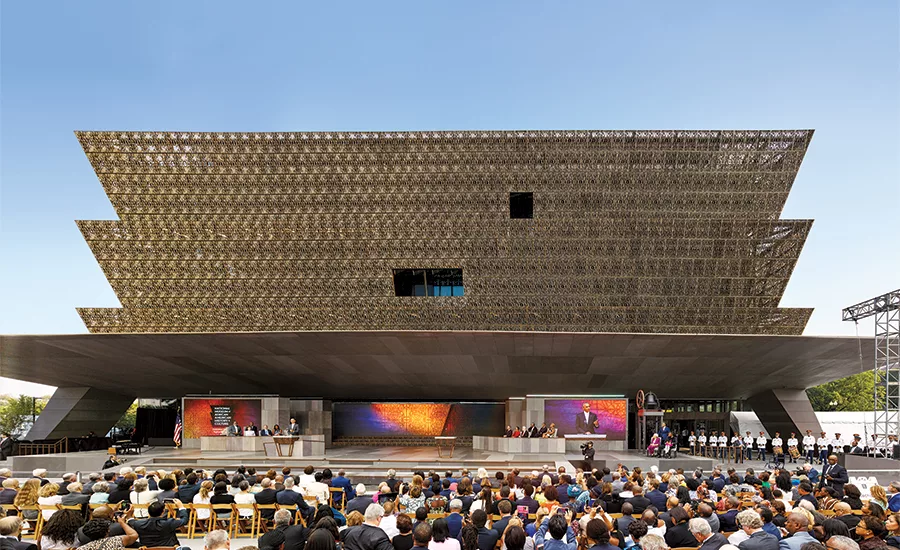
National Museum of African American History and Culture

At the south entrance, a massive canopy referred to as the Porch spans 175 feet. President Obama presided over the museum’s opening here.

Photo © Alan Karchmer
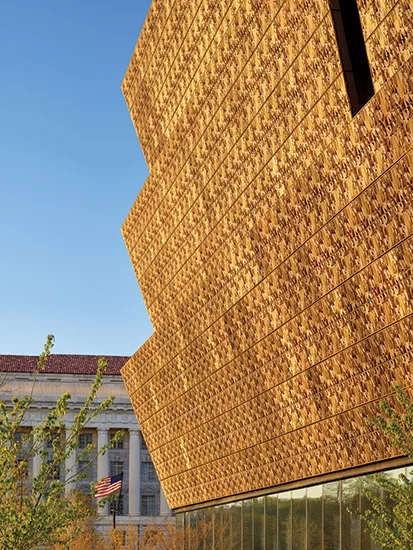
National Museum of African American History and Culture

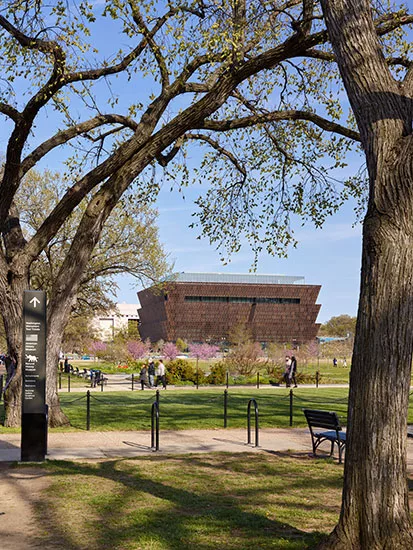
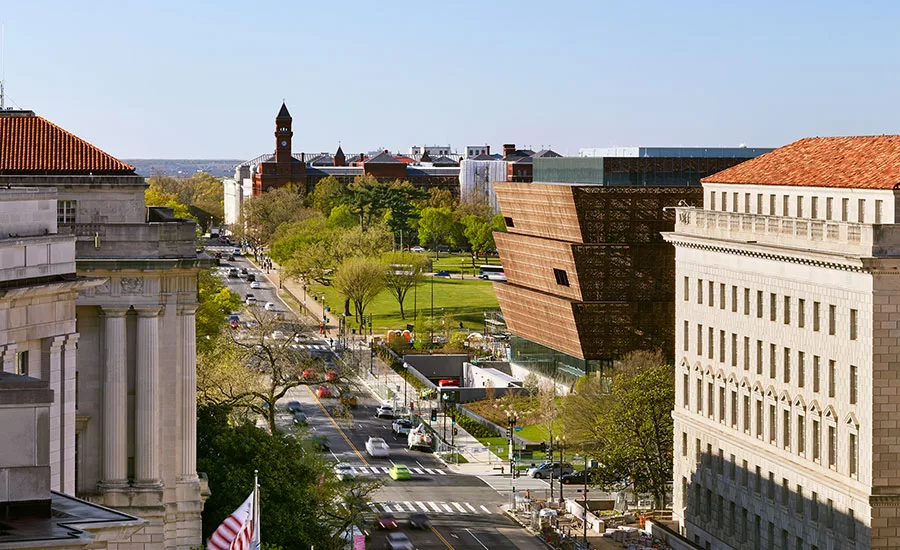
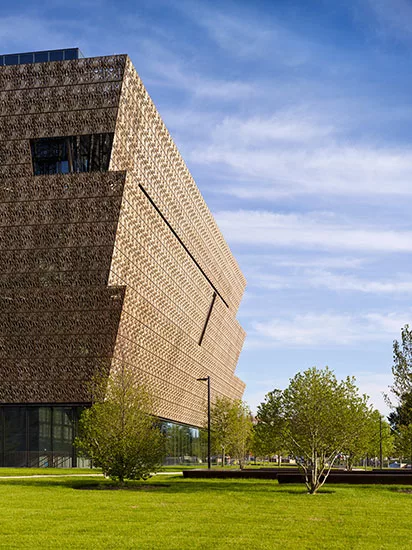
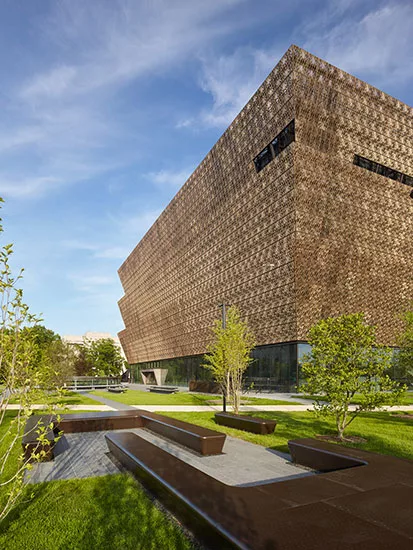
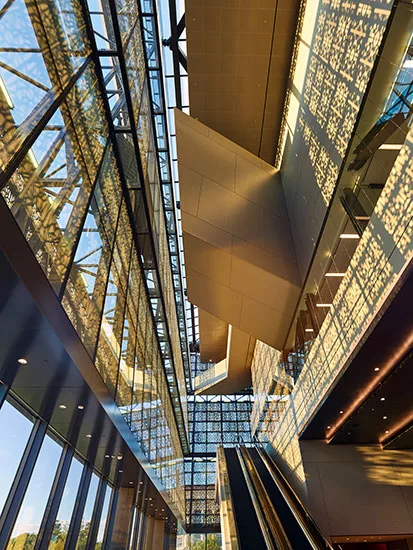
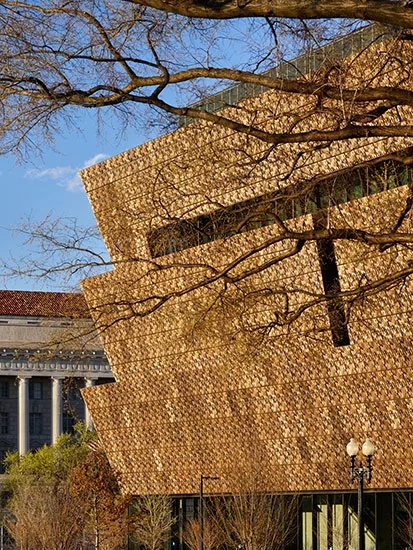
In stark contrast to its Neoclassical neighbors, NMAAHC’s 250,000 square feet of facade are covered in a latticework of bronze-colored cast aluminum panels.

Photo © Alan Karchmer
National Museum of African American History and Culture

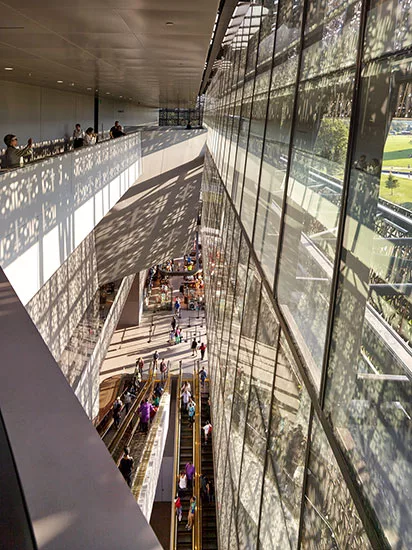
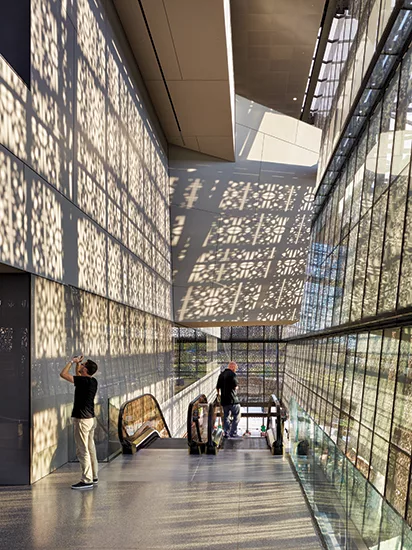
Escalators move visitors through the upper-level galleries.

Photo © Alan Karchmer
National Museum of African American History and Culture

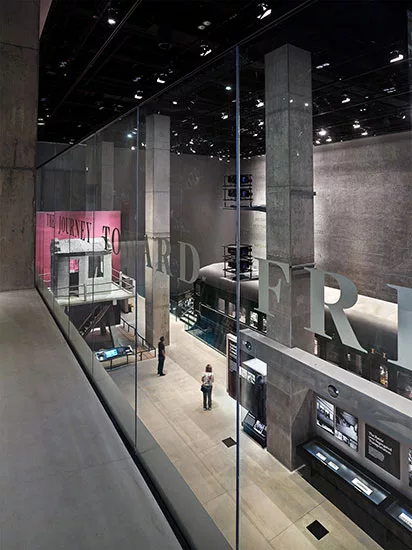
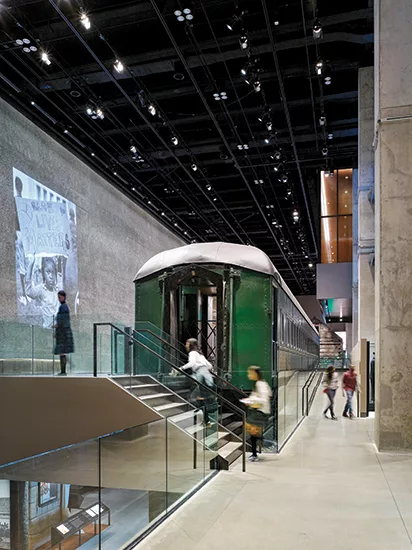
A Jim Crow–era passenger car from the Southern Railway Company is exhibited within the below-grade history galleries. The 154,000-pound car was installed in the museum with two coordinated cranes before construction was complete. The slab supporting it is specifically designed for the load.

Photo © Alan Karchmer
National Museum of African American History and Culture

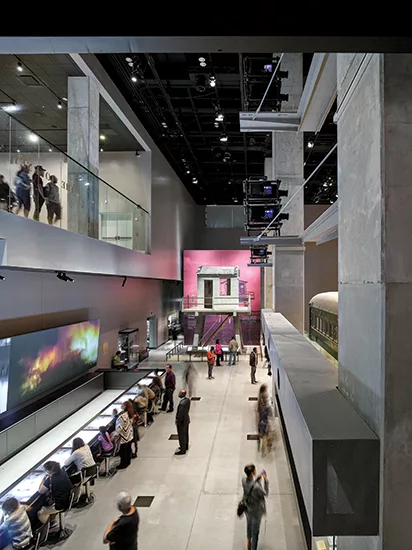
A concrete guard tower from Louisiana State Penitentiary was cut from its original foundations and transported to the museum.

Photo © Alan Karchmer
National Museum of African American History and Culture

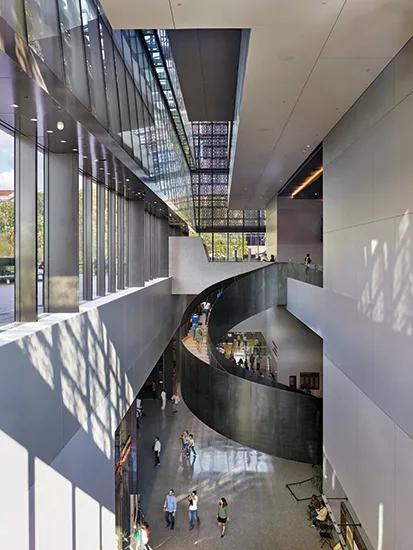
A self-supporting spiraling steel staircase links the lobby to the concourse level below.

Photo © Alan Karchmer
National Museum of African American History and Culture

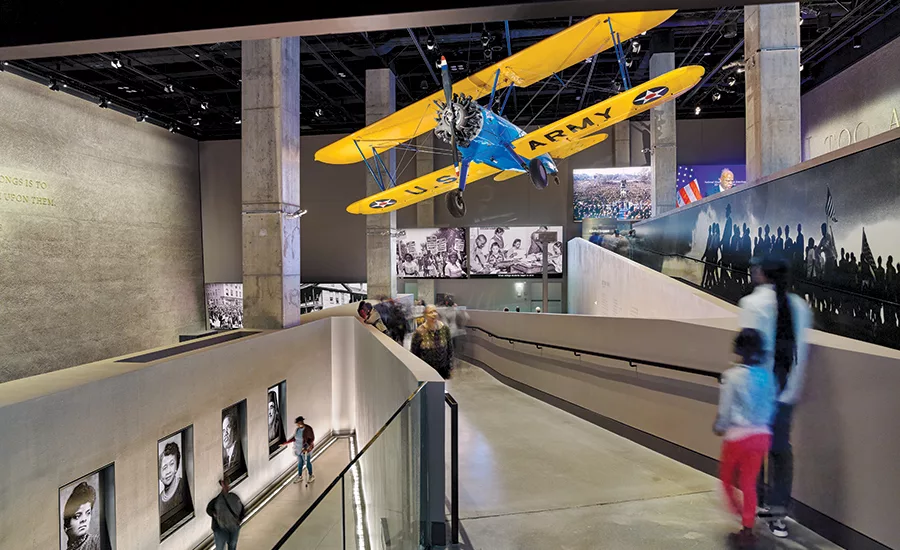
A Tuskegee aircraft hangs in the History galleries.

Photo © Alan Karchmer
National Museum of African American History and Culture

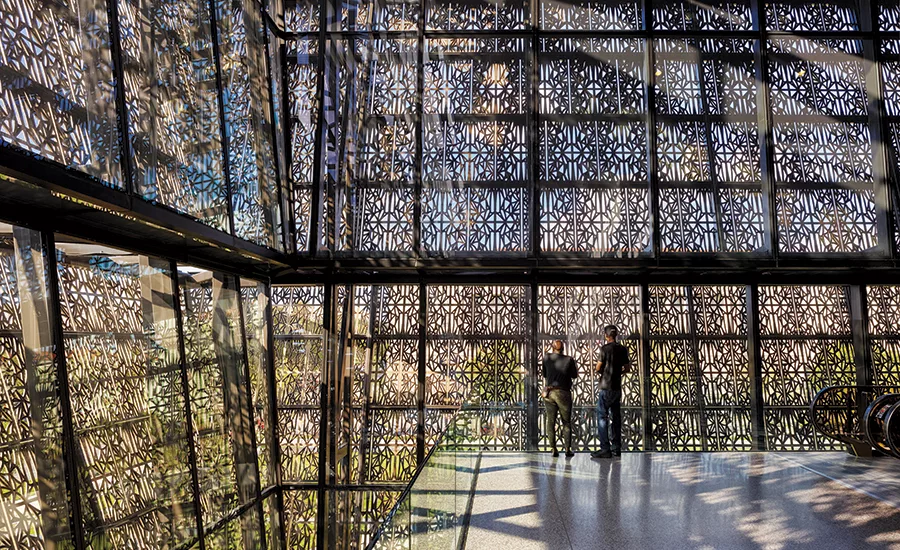
Views through the facade’s latticework over the capital are possible from the upper-level galleries.

Photo © Alan Karchmer
National Museum of African American History and Culture

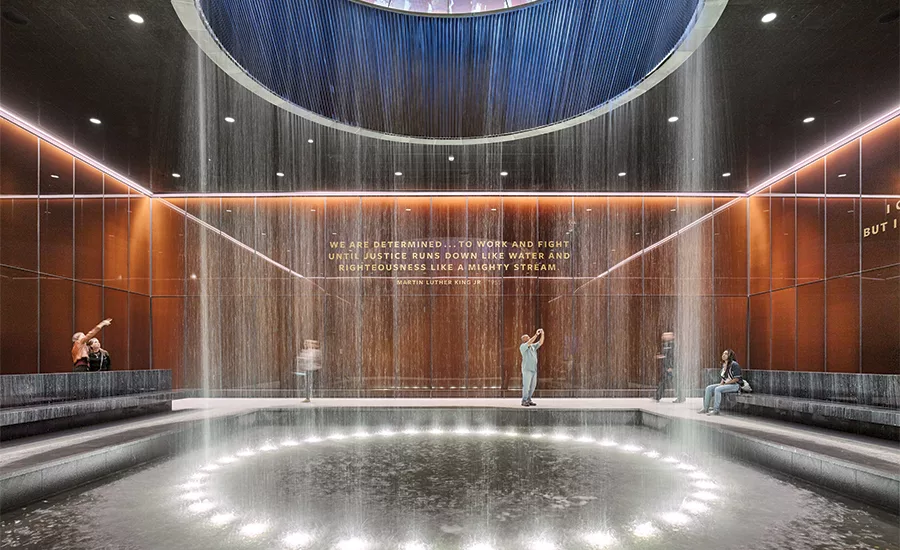
The underground Contemplative Court, with cascading water and daylight streaming in from above, offers a moment of reflection.

Photo © Alan Karchmer, courtesy NMAAHC
National Museum of African American History and Culture

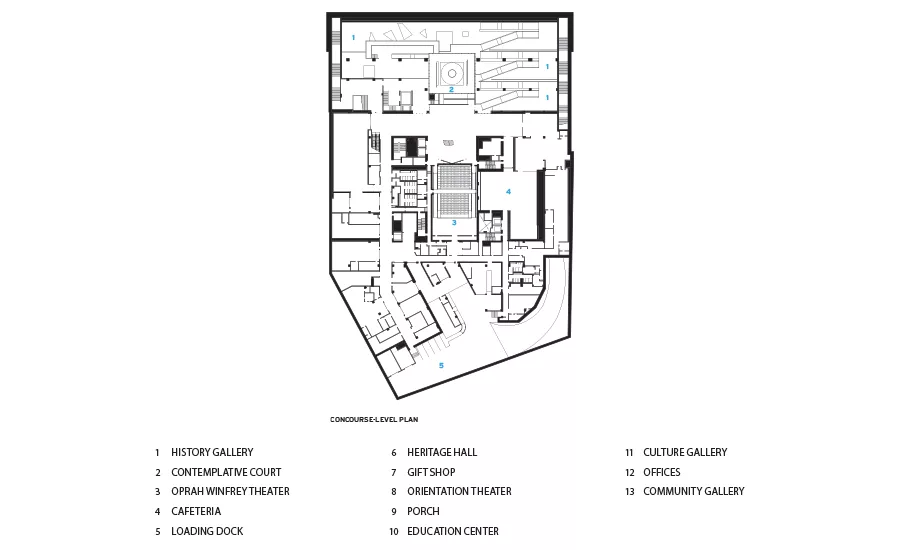
Concourse level plan

Image courtesy Freelon Adjaye Bond/Smith GroupJJR
National Museum of African American History and Culture

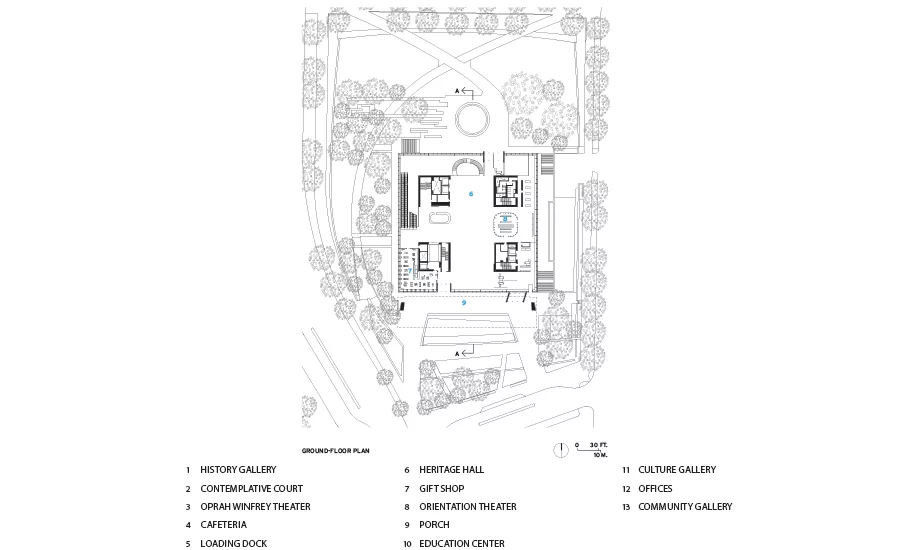
Ground floor plan

Image courtesy Freelon Adjaye Bond/Smith GroupJJR
National Museum of African American History and Culture

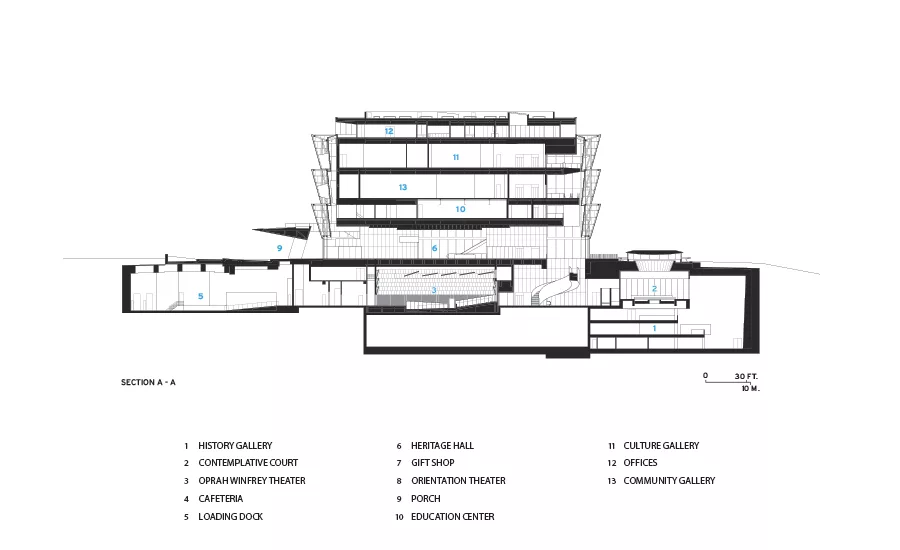
Image courtesy Freelon Adjaye Bond/Smith GroupJJR
National Museum of African American History and Culture

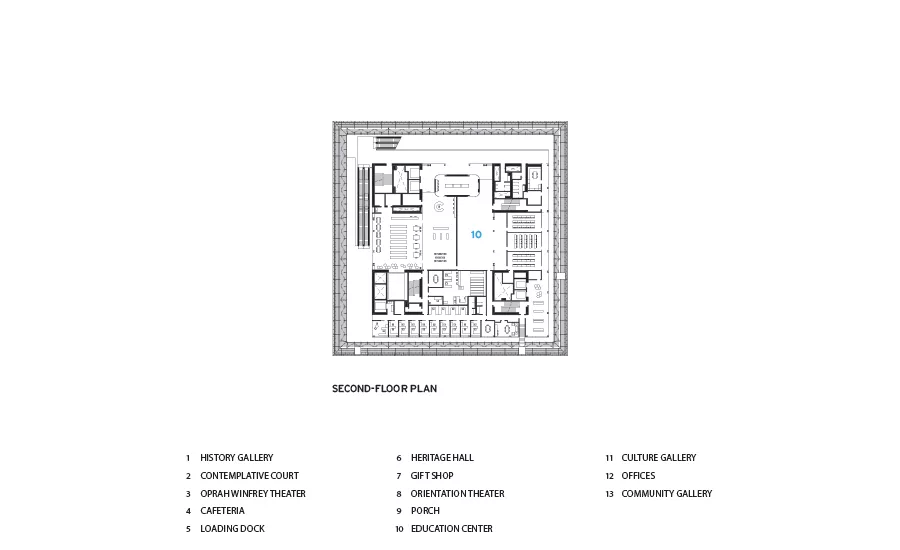
Second floor plan

Image courtesy Freelon Adjaye Bond/Smith GroupJJR
National Museum of African American History and Culture

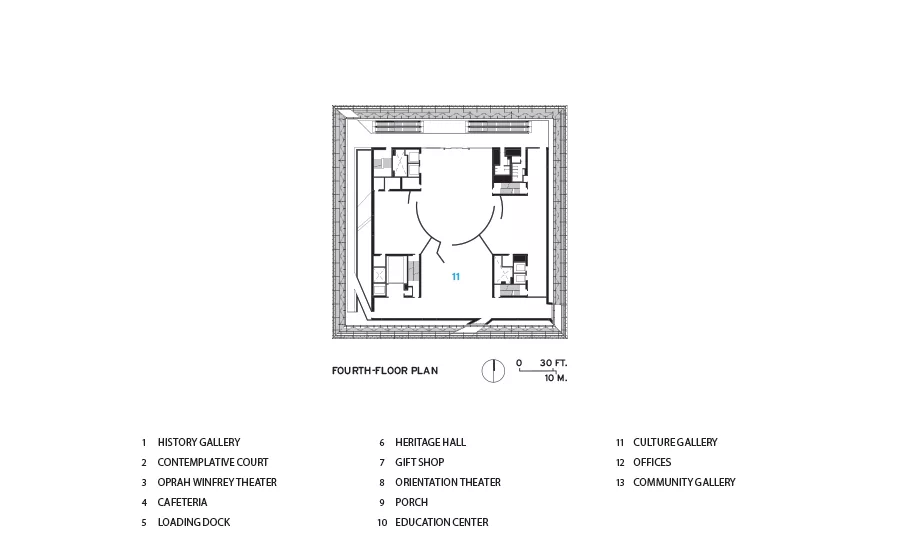
Fourth floor plan

Image courtesy Freelon Adjaye Bond/Smith GroupJJR
National Museum of African American History and Culture

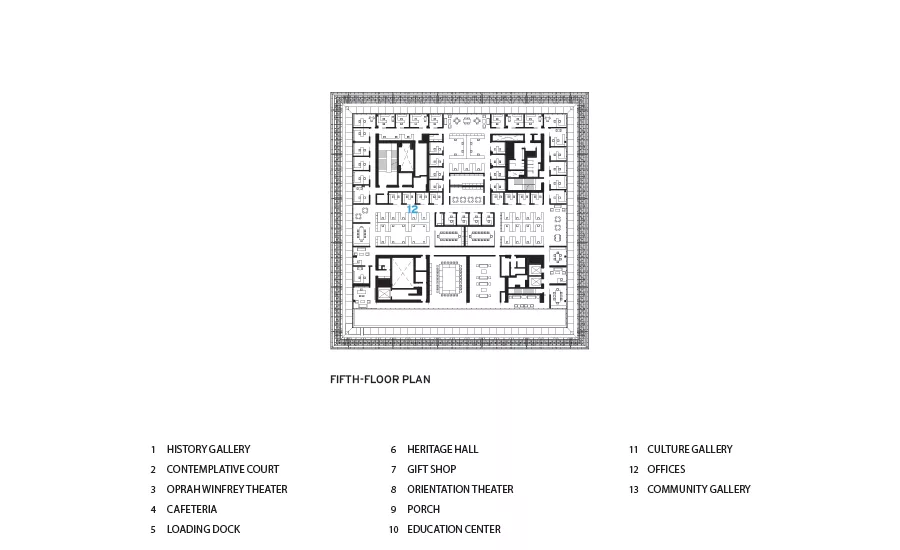
Fifth floor plan

Image courtesy Freelon Adjaye Bond/Smith GroupJJR
National Museum of African American History and Culture

Photo © Alan Karchmer

National Museum of African American History and Culture

Photo © Alan Karchmer

National Museum of African American History and Culture

Photo © Alan Karchmer

National Museum of African American History and Culture

Photo © Alan Karchmer

National Museum of African American History and Culture

Photo © Alan Karchmer

National Museum of African American History and Culture

Photo © Alan Karchmer

National Museum of African American History and Culture

Photo © Alan Karchmer

National Museum of African American History and Culture

Photo © Alan Karchmer

National Museum of African American History and Culture

Photo © Alan Karchmer

National Museum of African American History and Culture

Photo © Alan Karchmer

National Museum of African American History and Culture

Photo © Alan Karchmer

National Museum of African American History and Culture

Photo © Alan Karchmer

National Museum of African American History and Culture

Photo © Alan Karchmer

National Museum of African American History and Culture

Photo © Alan Karchmer

National Museum of African American History and Culture

Photo © Alan Karchmer

National Museum of African American History and Culture
November 1, 2016

Architects & Firms

Adjaye Associates
Davis Brody Bond
SmithGroup
The Freelon Group Architects

People/Products

The opening of the National Museum of African American History and Culture (NMAAHC) on September 24 was a long time coming. It has been over a hundred years since such a monument was first proposed by black Civil War veterans and 13 years since President George W. Bush signed legislation to build it, following decades of lobbying. The highly anticipated museum finally came to fruition just in time for President Barack Obama—who features prominently in one of its exhibits—to preside over the opening before leaving office. 

The freestanding building, occupying five acres on the last available spot on the National Mall in Washington, D.C., is both monument and museum—and memorial, according to its designer, David Adjaye, who, with Phil Freelon, led the four-firm architectural team of Freelon Adjaye Bond/SmithGroupJJR. “This story has embedded in it so much complexity that it’s not just about telling that story,” says Adjaye. “This is more than a functional building to hold content but also a representative building—I felt compelled to find symbolism that would start to make a connection, but symbolism that wasn’t too dogmatic. One that was definitely not familiar immediately but would make you ask questions.”

The museum’s story starts in Africa, and Adjaye’s symbol is the corona, a three-tiered crown used in Yoruban art from West Africa. (The actual sculpture that served as inspiration for Adjaye is on five-year loan to NMAAHC from the Haus der Kunst in Munich and is displayed in the uppermost gallery.) The 250,000 square feet of facade that take on that shape are covered in a latticework of bronze-colored cast-aluminum panels that recall celebrated historical patterns by black ironworkers in the South.

The building’s compact exterior belies the sprawling galleries contained within. The structure extends as deep below grade as it rises above—just over 60 feet. In fact, visitors are encouraged to begin their tour at the very bottom. There, the history galleries begin in dark rooms with the story of slavery.

The building’s location is not far from the site where slaves arrived by boat in the nation’s capital, a center for the domestic slave trade. Built on swampy land where the Tiber Creek once flowed, the entire foundation had to be reengineered when the support for the excavation wall failed. “We encountered similar issues at the Museum of the American Indian on the opposite end of the Mall, but this area of the Washington Monument grounds was much more susceptible to the high water table,” says Hal Davis of Smith GroupJJR. “The excavated area contained too much degradable material and large boulders that interrupted the integrity of the wall, creating opportunities for water to get through.” The new foundation comprises a bathtub-like waterproofing system, with additional piles to tie down the slabs.

The exhibition opens up into a cavernous space as you ascend the ramping history galleries, passing large installations like a Jim Crow–era railroad passenger car and a plane, soaring overhead, used by the Tuskegee Airmen. NMAAHC is, in fact, a vertical museum, spanning multiple levels. As you approach grade, the contemplative court, with its circular cascade of water, offers a moment of reflection, and rest. The adjacent cafeteria offers up soul food.

Aboveground, the structure of the museum is more like that of a bridge than a building. The floors and facade—both the metal panels and the glass behind them—hang off four rectangular concrete-and-steel cores (which contain vertical transporta­tion, restrooms, and mechanical space) toward the corners of the building, which have varying dimensions but are roughly 40 feet long. The entire building is supported by a steel superstructure that spans between those four cores —a convenient reference as well to the four “pillars” upon which NMAAHC metaphorically stands, which include the celebration and sharing of the museum’s content. 

Looking for quick answers on architecture and design topics?
Try Ask RECORD, our new smart AI search tool.
Ask RECORD →

As a place, the museum is not to be missed. The notion that a place like this—a national commemoration of black history—did not exist before is astounding. As architecture, it is not beyond reproach. While on the outside it handsomely—and proudly—stands out against its white neoclassical neighbors, its interiors, with escalators and terrazzo flooring, leave you feeling as if you are at a mall, not on the Mall. Ralph Applebaum’s exhibition design, so moving inside the history galleries below grade, at times borders on kitsch within the busy installations of upper-level galleries that celebrate African-American achievements in music, sports, literature, and pop culture. The vast 22-foot-high heritage hall, which serves as the lobby on the ground floor, feels too empty, too corporate. One wonders if the idea for a forest of columns hanging from the ceiling—part of Adjaye’s original concept for that space but eliminated partly to save costs, and partly to display art instead—would have alleviated that sense.

Where the interiors excel are in the space between the facade and the enclosed galleries on the upper levels that allows dappled light to filter in from the metal screens. According to Adjaye, “Going out into that corridor, into that light-filled space, and then going back into this sort of dark box is an important part of keeping you engaged as you go up the building.” Indeed, as one completes the journey and reaches the lookout at the uppermost gallery, with its views over the capital city, there is a sense of triumph for this ongoing story and how it is told through the architecture of this building.


People

Architect:

Adjaye Associates
415 Broadway
New York, NY 10013
212 965 8477


Architect of record:

The Freelon Group


Associate architects:

Davis Brody Bond, The Smith Group


Engineers:

Structural - Guy Nordenson Associates/ Robert Silman Associates
MEP/FP - WSP F+K - Boston
Blast - Weidlinger
Civil - RK&K
Geotechnical- Froehling & Robertson


Consultants:

Landscape - GGN / Kathryn Gustafson
Facade Consultant - Heingtes & Associates
Code/Fire Protection - Rolf Jensen
Sustainability - Rocky Mountain Institute
Vertical Transportation - Lerch Bates
Facade Maintenance - Lerch Bates
AV/IT - SMW
Lighting - FMS
Theater - Fisher Dachs
Food Service - Hopkins
Traffic - Gorove Slade
Cost Estimator - Faithful and Gould
Security - Arup
Fountain - CMS
Signage - Poulin Morris
Hardware - Frank Erbescloe
Specifications - Construction Specifications, Inc


Exhibition Designer:

Ralph Applebaum


General contractor:

Clark Smoot Russell 


Products

Structural System

Steel Frame

Exterior Cladding

Metal panels: Enclos

Metal/glass curtain wall: Cast Corona Panels and carrier frames - Enclos

Rainscreen: UHPC - Taktl

Curtain wall: Enclos

Green Roof: SemperGreen

Glazing

Glass: Interpane

Skylights: Interpane

Doors

Entrances: Dawson

Fire-control doors, security grilles: Total door

Interior Finishes

Acoustical ceilings: Pyroc Starsilent

Suspension grid: Armstrong; USG; Ceilings Plus

Cabinetwork and custom woodwork: Jefferson Millwork
Paints and stains: Benjamin Moore / Sherwin Williams

Paneling: Benjamin Moore / Sherwin Williams

Plastic laminate: Abet Laminati / Nevamar

Wood slat walls: Rulon

Floor and wall tile: Terrazzo - Generally - Atlantic Refinishing and Restoration; Wall tile at cafeteria - Daltile

Carpet: Shaw / Mannington

Special interior finishes unique to this project: Theatre corona panels - GFRG – Plasterform; contemplative court glass — Bendheim; custom blackened copper ceiling — Pure + FreeForm

Furnishings

Chairs: Knoll

Upholstery: Knoll

Other furniture: Theatre Curtain - Secoa

Conveyance

Elevators/escalators: Escalators - Otis
Elevators - Thyssenkrupp / Emco

Plumbing

Haws Corporation

Energy

Photovoltaic system: Sunpower

 
KEYWORDS: National Museum of African American History and Culture Washington D.C.

Share This Story

Looking for a reprint of this article?
From high-res PDFs to custom plaques, order your copy today!

Josephine minutillo

Josephine Minutillo is editor in chief of Architectural Record. Trained as an architect, she began writing for RECORD in 2001 while practicing architecture, and has held several positions at the magazine over the past two decades. Her articles have appeared in many international publications. She has been an invited critic at Washington University in St. Louis, The Cooper Union, Columbia GSAPP, Pratt Institute, The City College of New York, and Yale University.
Instagram: @josephineminutillo_

Post a comment to this article

Report Abusive Comment

Subscription Center
  • Create an Account
  • Start a Subscription
  • Manage My Account
  • Sign Up for Newsletters
  • Visit Customer Service
  • Update Preferences

More Videos

Sponsored Content

Sponsored Content is a special paid section where industry companies provide high quality, objective, non-commercial content around topics of interest to the Architectural Record audience. All Sponsored Content is supplied by the advertising company and any opinions expressed in this article are those of the author and not necessarily reflect the views of Architectural Record or its parent company, BNP Media. Interested in participating in our Sponsored Content section? Contact your local rep!

close
  • TAMLYN XtremeTrim Exterior Trim
    Sponsored byTamlyn

    Designing Cleaner Panel Facades: Why Exterior Trim Details Matter

  • Building with Vapor Barriers
    Sponsored byReef Industries, Inc.

    Vapor Barriers Help Control Moisture in Tighter Building Designs

  • Duct Interior with Prodeq System
    Sponsored byHenry, a Carlisle Company

    Designing Resilient Water Containment Systems

DESIGN:ED Podcast
Listen to Architectural Record’s DESIGN:ED Podcast

Events

June 16, 2026

Focus on the Façade: Exploring Steel, Timber & Fire-Rated Curtain Walls and Channel Glass Systems

Credits: 1 AIA LU/HSW; 1 AIBD P-CE; 0.1 ICC CEU

Explore modern façade and glazing systems that enhance daylighting, fire safety, and thermal performance while expanding architectural design possibilities.

June 18, 2026

Rebooting the Aging Office Building

Credits: 1 AIA LU/HSW; 1 AIBD P-CE; 0.1 ICC CEU; 1 PDH

Explore façade retrofit strategies and award-winning design concepts that can transform aging office buildings into healthier, higher-performing workplaces for today’s hybrid workforce.

View All Submit An Event

Products

2026 Architect's Square Foot Costbook

2026 Architect's Square Foot Costbook

See More Products

Popular Stories

SanDiegoAirport

Top 300 Architecture Firms of 2026

Coronado Bridge

The Architect’s Guide to San Diego

House A on a Hill

Design Vanguard 2026: Santiago Valdivieso

Dusk House

Design Vanguard 2026: ONO

Crystal Bridges Museum of American Art expansion

Safdie Architects Returns to the Crystal Bridges Museum of American Art for Major Expansion

Focus on the Facade - Free Webinar - June 16, 2026

Related Articles

  • National-Museum-African-American-History-Adjaye

    A Sneak Peak into Adjaye’s National Museum of African American History and Culture

    See More
  • National Museum of African American History and Culture

    National Museum of African American History and Culture to Open September 24

    See More
  • Burke Museum

    Burke Museum of Natural History and Culture by Olson Kundig

    See More
×

The latest news and information

#1 Source for Architectural Design, News and Products

SUBSCRIBE
  • RESOURCES
    • Advertise
    • Contact Us
    • Submit
    • Store
  • ACCOUNT CENTER
    • Create an Account
    • Start a Subscription
    • Manage My Account
    • Sign Up for Newsletters
    • Visit Customer Service
    • Update Preferences
  • PRIVACY
    • PRIVACY POLICY
    • TERMS & CONDITIONS
    • DO NOT SELL MY PERSONAL INFORMATION
    • PRIVACY REQUEST
    • ACCESSIBILITY
  • SERVICES
    • Marketing Services
    • Reprints
    • Market Research
    • List Rental
    • Survey/Respondent Access
  • STAY CONNECTED
    • Linkedin
    • Facebook
    • Instagram
    • YouTube
    • X (Twitter)

Copyright ©2026. All Rights Reserved BNP Media, Inc. and BNP Media II, LLC.

Design, CMS, Hosting & Web Development :: ePublishing