What is the Future for Architecture and Design at MoMA?
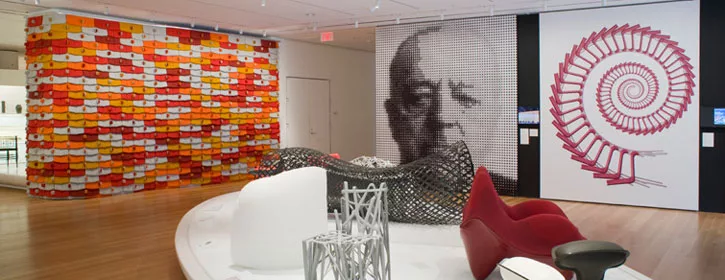
The Future for Architecture and Design at MoMA
Photo by Thomas Griesel, © The Museum of Modern Art
The New York architecture community has been in a swivet since the posting of an article originally titled “MoMA to Abolish Architecture and Design Galleries” in Architects Newspaper on April 12. In the piece, editor-in -chief William Menking pointed out that the recent closing of the third-floor permanent Architecture and Design (A + D) galleries in New York’s Museum of Modern Art are part of Diller Scofidio + Renfro’s renovation and expansion project, to be completed in 2019. Also shut down for the duration are the dedicated museum galleries devoted to photography and drawings.
While this temporary measure seems logical, the brouhaha erupted from the paper’s assertion that after the expansion, galleries devoted to particular disciplines may no longer exist. Instead, the museum could decide to bring together its permanent collections in an interdisciplinary arrangement, so that painting, sculpture, architecture, are exhibited as one fluid continuum.
“Curators across all departments are experimenting with different ways of bringing the diverse holdings of the Museum’s collection into fresh and meaningful dialogues,” MoMA director of communications Margaret Doyle told RECORD. “At the same time, medium-specific collection surveys and thematic exhibitions will continue to appear throughout the museum.”
The approach is visible in the current show From the Collection: 1960-1969, on display until next March. Martino Stierli, the chief curator of architecture and design, who collaborated on the 1960s show with 15 curators from all of the departments, says he is pleased with that installation, and feels that “architecture and design are well represented.” I disagree, and find that while design objects seem to be well spotlighted, architecture, with only a sprinkling of models and drawings, is relegated to the background.
Terence Riley, chief curator of the MoMA A+D department from 1992 to 2006, says that the widespread trend among museums toward integrating architecture and design into overall exhibitions usually diminishes the importance of each discipline’s representation. In a Facebook post on April 13, he wrote, “Apologies to my many curator friends at MoMA and elsewhere, but most curators are not interested in, nor are they knowledgeable about, architecture and design.”
This museum’s thrust, it would seem, will not affect the scheduling of temporary exhibitions in the museum devoted to a particular topic. For example, Stierli notes that the current architecture show, A Japanese Constellation: Toyo Ito, SANAA, and Beyond, on view until July 4—and mounted in the space where the design department had previously installed its objects—will be succeeded in the fall by another department show, Interior Propositions, focusing on early modernist design. Stierli adds “We will have collection-based big shows such as one on architectural and design responses to borders and migration, one on the collection holdings of Frank Lloyd Wright, and another on the evolution of computers and computer-aided design.”
So what is the uproar about? It comes down to the dedicated real estate that the architecture and design department has always had in the museum, until now. While permanent exhibited works (although rotated in display) may not grab the attention of the public as do temporary shows on, say, Le Corbusier, it meant that students and interested lay people had a place to go to study works of architectural significance. It also assures that a department can decide to mount a small temporary show in its own space (for example the architecture department’s Rising Currents: Projects for New York’s Waterfront, 2010) and do it without getting in line to reserve exhibition space somewhere else in the museum.
Looking for quick answers on architecture and design topics?
Try Ask RECORD, our new smart AI search tool.
Ask RECORD →
Phyllis Lambert, the founder of the Canadian Centre for Architecture in Montreal, and an architect and patron with long ties to the MoMA, says about the possible plans to do away with dedicated spaces, “I am shocked.” She points out that architecture was basic to founding director Alfred Barr’s vision for the museum, which reflects “his insistence of architecture as an art, when the Department of Architecture was created in1932. Alexander Gorlin finds it ironic that the museum is willing to give a lot of space to a blockbuster Le Corbusier show, but “in between the shows, architecture does not merit even one square dedicated inch of space.”
With regard to the future, Stierli states “ I am aware of these concerns, and I have a vision for where we are going and I think we are going in the right direction.” About the potential loss of dedicated galleries, he adds, “The design is evolving. The dedicated collections will reopen in the context of the new building addition in 2019, in new configurations to be determined.” Stierli doesn’t think the donors will be affected by the developments being discussed for the permanent galleries and makes the point that the staff of the department will still exist, and will acquire more for the permanent collection as well as archives.. But the museum hopes, he says, to share stewardship of archives with other institutions as it did with the acquisition in 2012 of the Frank Lloyd Wright archives, in partnership with Avery Architecture & Fine Arts Library at Columbia University.
Two past curators in the department expressed concern but declined to comment. Another, Andres Lepik, curator in the A+D department from 2007-2010, commented on Riley's Facebook post from April 13, “It’s a disastrous decision. Why would you keep a department with so many good people and then not allow a permanent display space. A+D is then only D.” Obviously, many observers fear that, regardless of MoMA’s wait-and-see exhortations, the museum may choose to adopt this interdisciplinary approach for all collections when the building project is finished—and that dedicated space for A+D clearly will no longer exist.
The one thing that MoMA can be accused of now, certainly, is a lack of transparency with which it seems to continue to operate. Did it learn nothing from how they handled the Folk Art Museum fiasco? One observer with ties to MoMA wonders about its "secret agenda." Without dedicated space, the presence of architecture and design is unclear. No wonder the architecture community is nervous. Architecture is a difficult enough subject to communicate and without having its own place guaranteed, it will be harder for the general public , and future (or present) professionals to understand it. Lambert had wanted MoMA to take over the old Whitney’s Breuer building (now Met Breuer], for an international center for architecture and design. “It could have been great,” she maintains, “changing and developing the understanding of architecture world-wide.”
While the Architects Newspaper’s alarmist headline can’t be confirmed—that MoMA is permanently abolishing the A+D galleries—it got our attention. Let’s hope that while the museum is thinking about its strategies and space allocations in the current expansion, it listens to the architectural community and does not leave architecture and design by the wayside.
Looking for a reprint of this article?
From high-res PDFs to custom plaques, order your copy today!