The Theodore Roosevelt Presidential Library, Designed by Snøhetta, Is Set to Open in the North Dakota Badlands
Architects & Firms
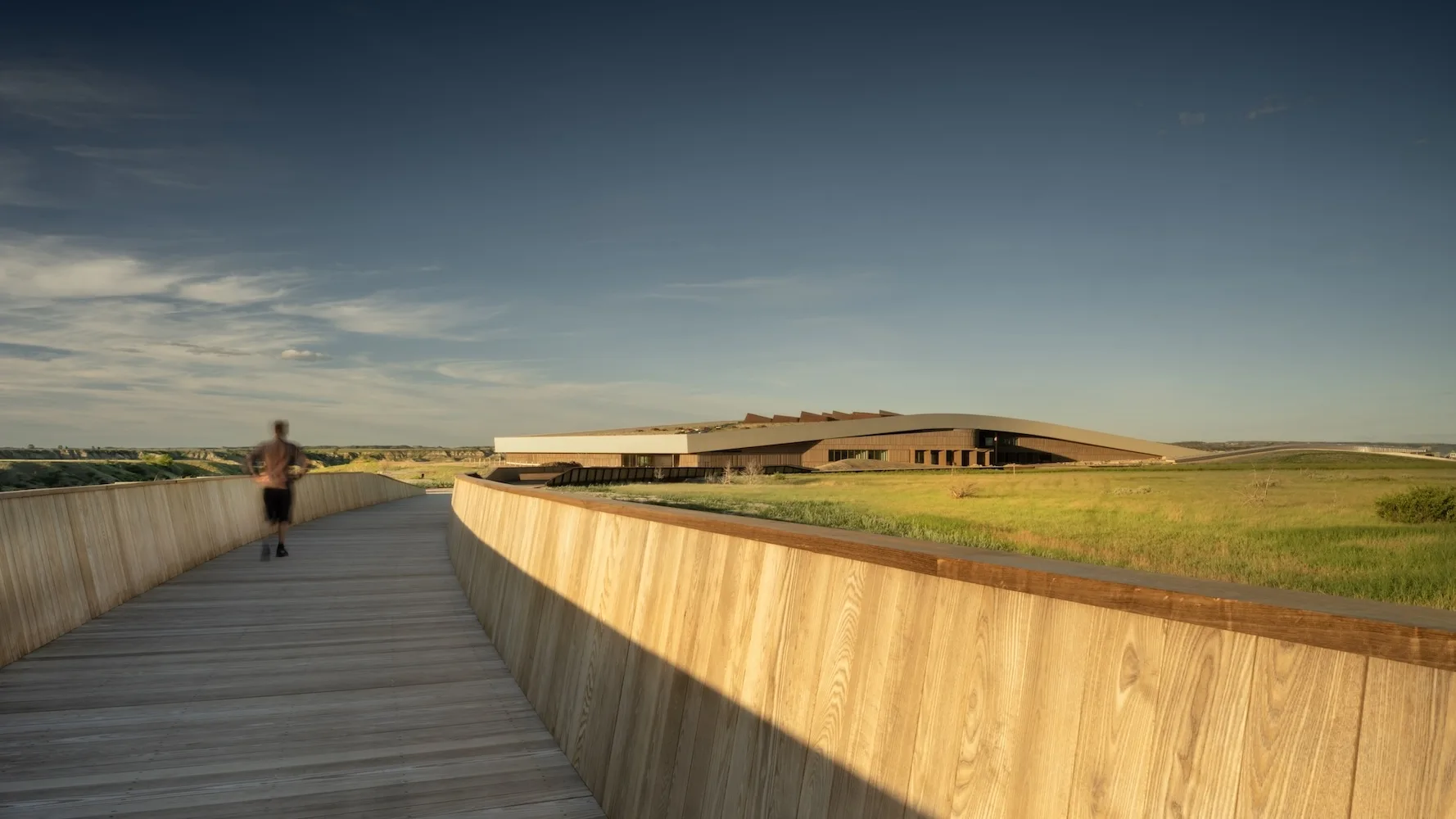
The Theodore Roosevelt Presidential Library, designed by New York– and Oslo-based Snøhetta in collaboration with JLG as the local architect of record, will open its doors to the public this weekend on July 4, coinciding with the 250th anniversary of the United States. The 95,000-square-foot museum and education center, situated atop a butte in far-flung Medora, North Dakota, aims to celebrate the late president’s legacy as an outdoorsman, naturalist, and steward of public land.
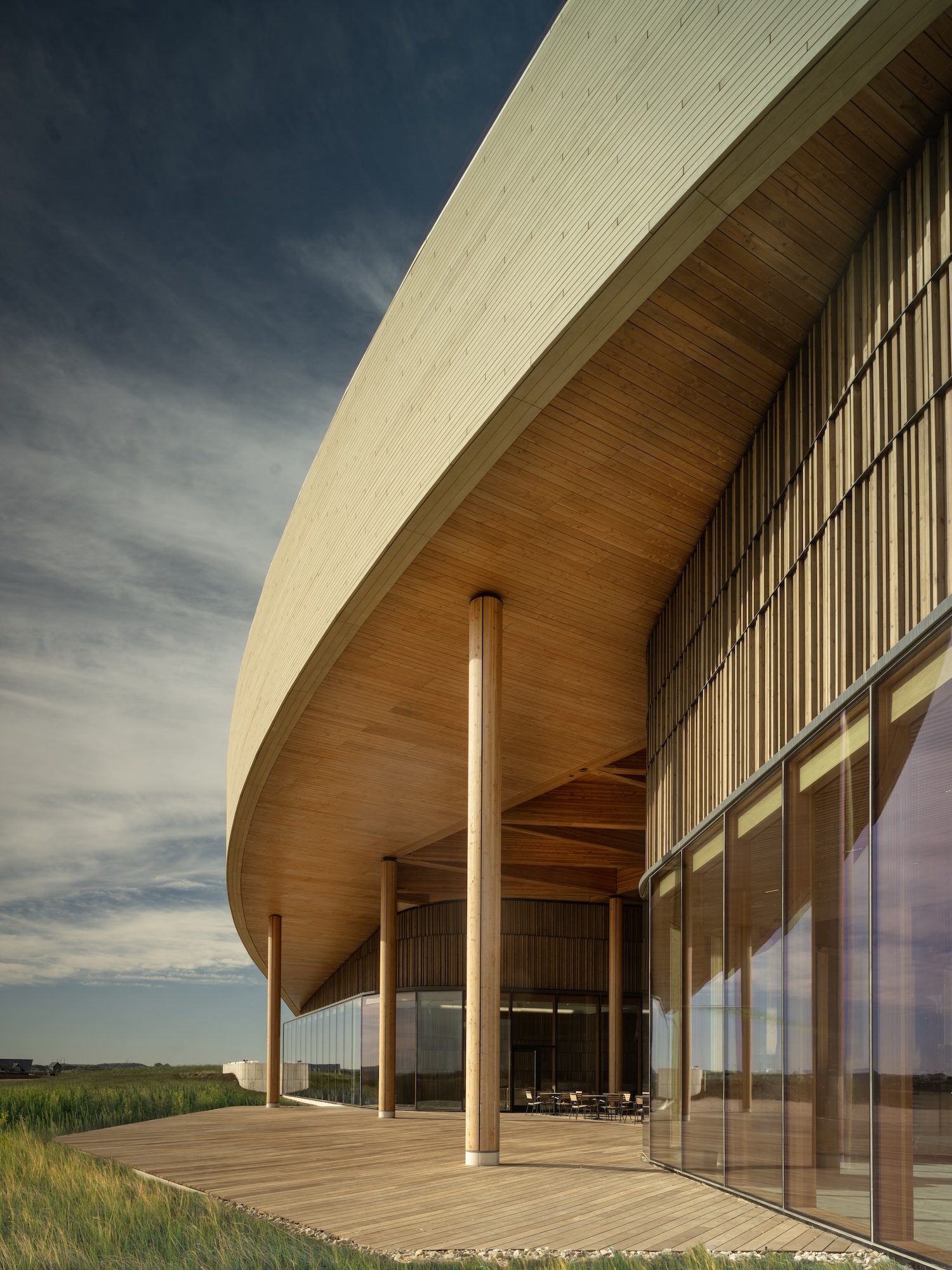
Photo © Nic Lehoux
After six months as vice president, Roosevelt became the 26th and youngest-ever commander in chief following the assassination of William McKinley in 1901. While in office, Roosevelt, who popularized the idiom “speak softly and carry a big stick,” formed the United States Forest Service and through a combination of both legislative lobbying and executive action established over one hundred national forests, dozens of federal bird reserves, five national parks, and four wildlife refuges. Following the passage of the Antiquities Act of 1906, which gives the U.S. president the authority to preserve sites of significance, he also decreed several national monuments, including the Grand Canyon. By some estimates, Roosevelt protected 230 million acres of public land—more than all his predecessors combined—and paved the way for the creation of the National Park Service in 1916.
“Theodore Roosevelt understood that conservation is not simply about protecting land, it is about defining our relationship to the world and our responsibility to future generations,” said Craig Dykers, founding partner of Snøhetta, in a press release announcing the project’s completion. “His conservation ethic emerged from a profound encounter with the American landscape, and we wanted visitors to experience that same sense of discovery.”
Photos © Nic Lehoux
Although Roosevelt grew up in New York City, where he was a key presence in the formation and evolution of several institutions, including the American Museum of Natural History (his father had been a founder and trustee), the Dakota Territory allured him. As a young man in 1883, he trekked to the badlands to hunt bison. He would return the following year, after the tragic deaths of his mother and wife on the same day, to retreat into the wilderness before rejoining public life. In 1947, Congress created a national park there in his honor, which the library now overlooks.
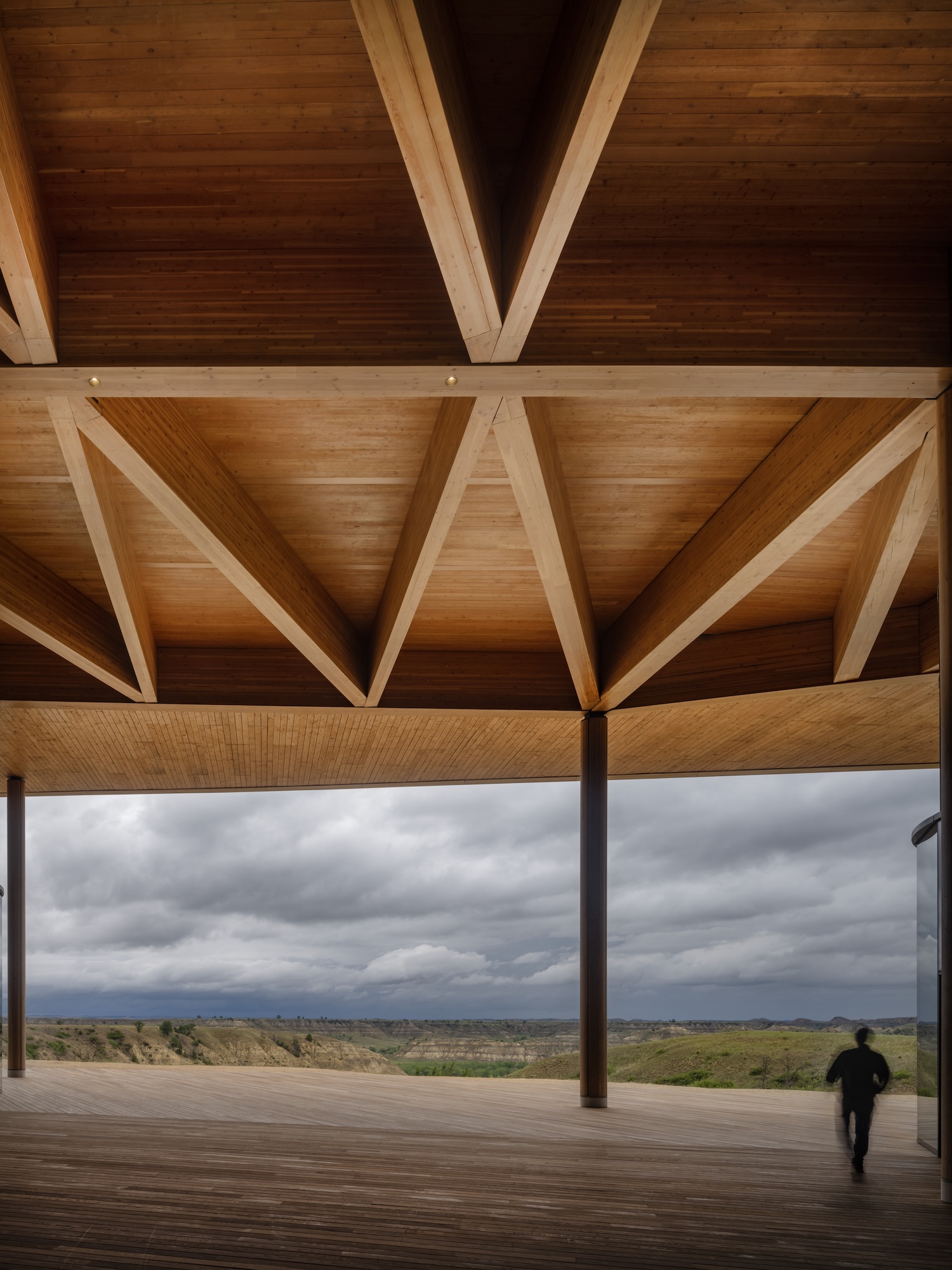
Photo © Nic Lehoux
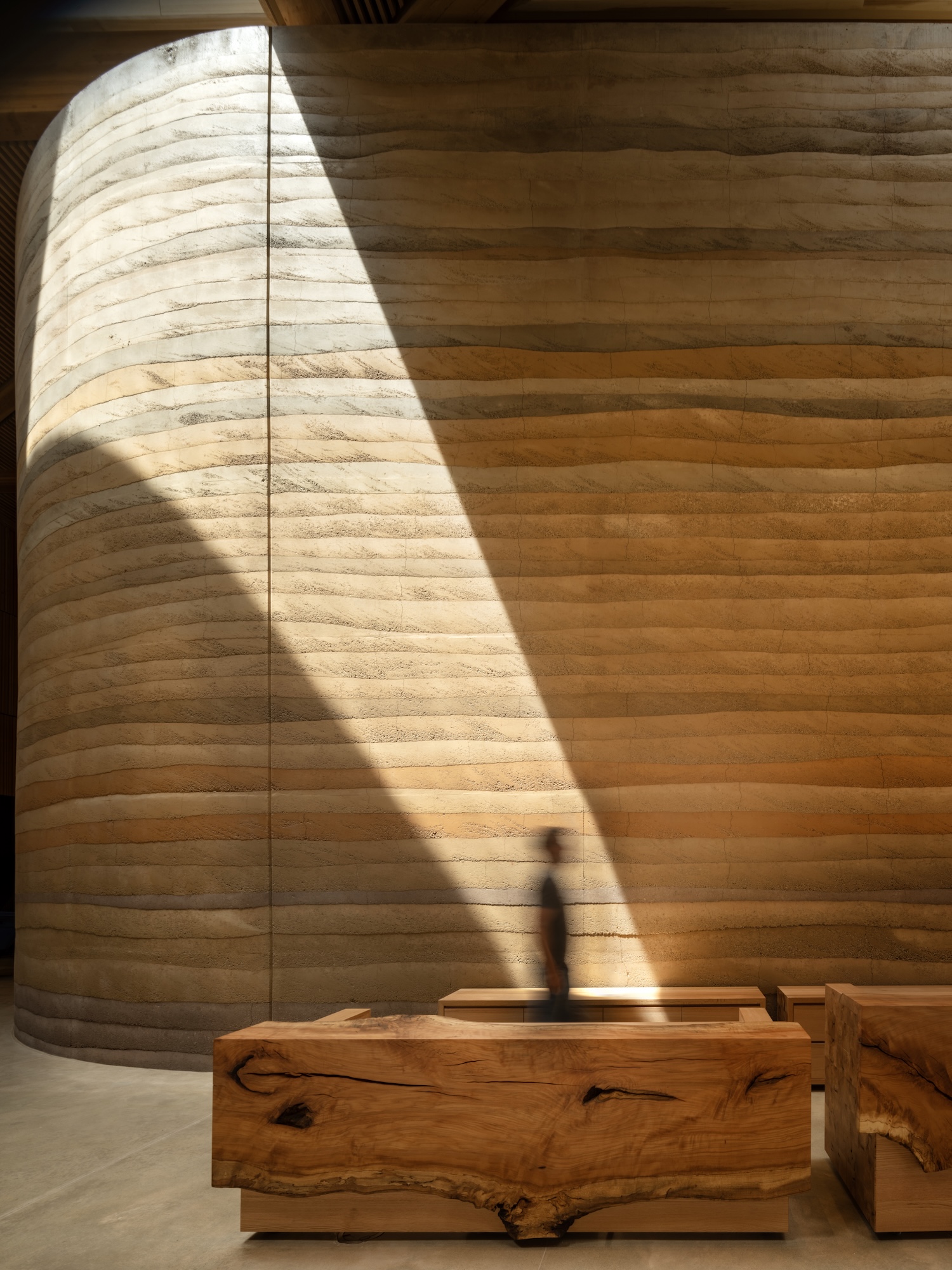
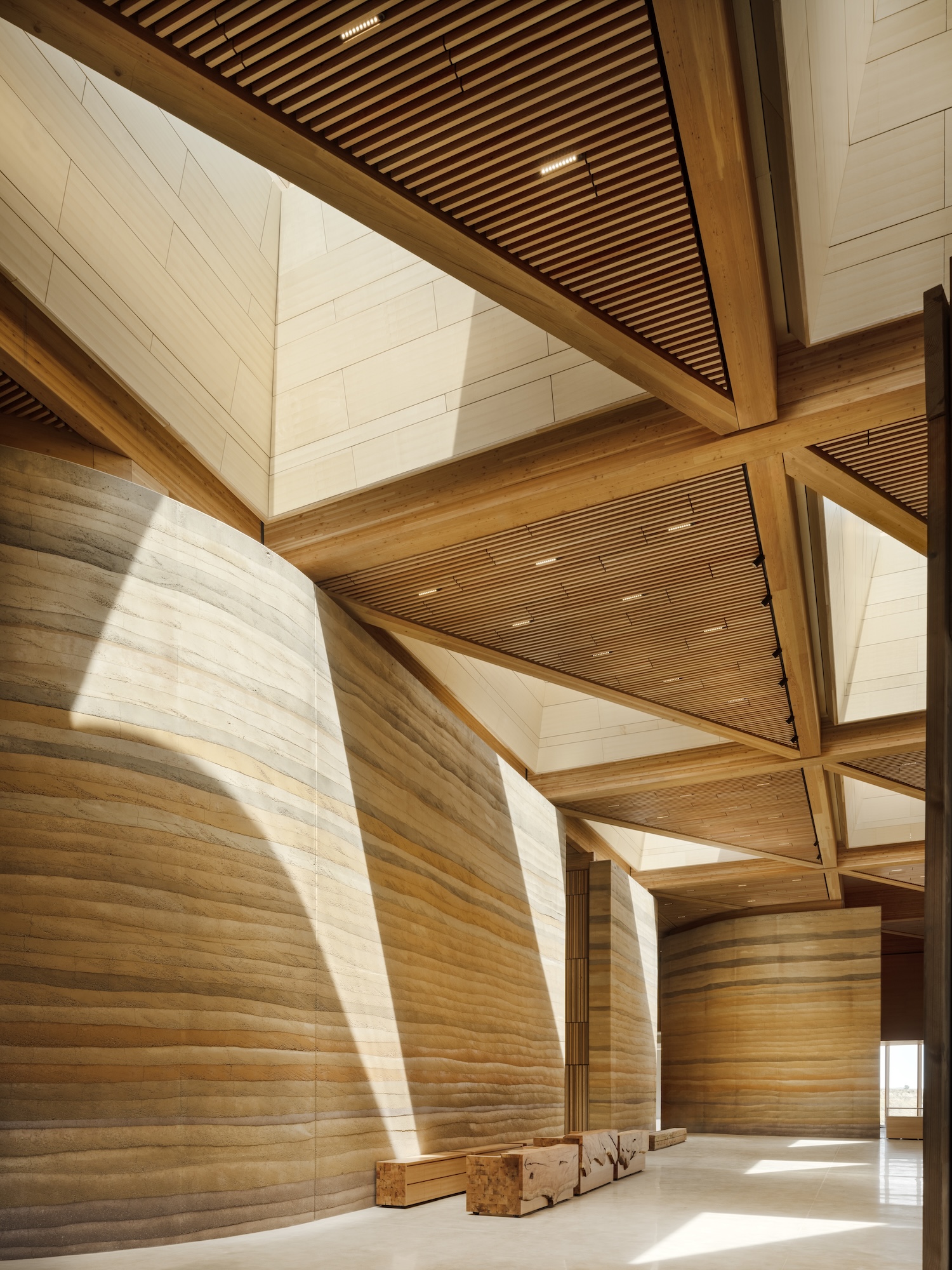
The building consists of two volumes—one accommodates the museum, gift shop, restaurant, and back-of-house spaces and the other includes an education center, auditorium, and staff offices—on a 93-acre site with a boardwalk punctuated by outdoor follies and seating areas. A low-slung, landscape-integrated green roof, supported by a network of mass-timber beams, spans the two halves to create a sheltered patio in between. The museum’s exhibitions, accessed after passing through a striking lobby lined with curving rammed-earth walls, mix original artifacts with digital and physical replicas and showcase the former president’s life and work, from childhood to his presidency and beyond, including a failed third bid for president in 1912 as part of the Bull Moose Party, an unsuccessful assassination attempt on his own life, and another near-death experience during a harrowing four-month expedition to the Amazon.
Aptly recognizing Roosevelt’s conservationist in-roads, the center is pursuing certification through the rigorous Living Building Challenge environmental standard. Should it reach the benchmark (certification is only determined after the collection of a year’s worth of operational data), it will become the largest cultural institution in the world to do so.
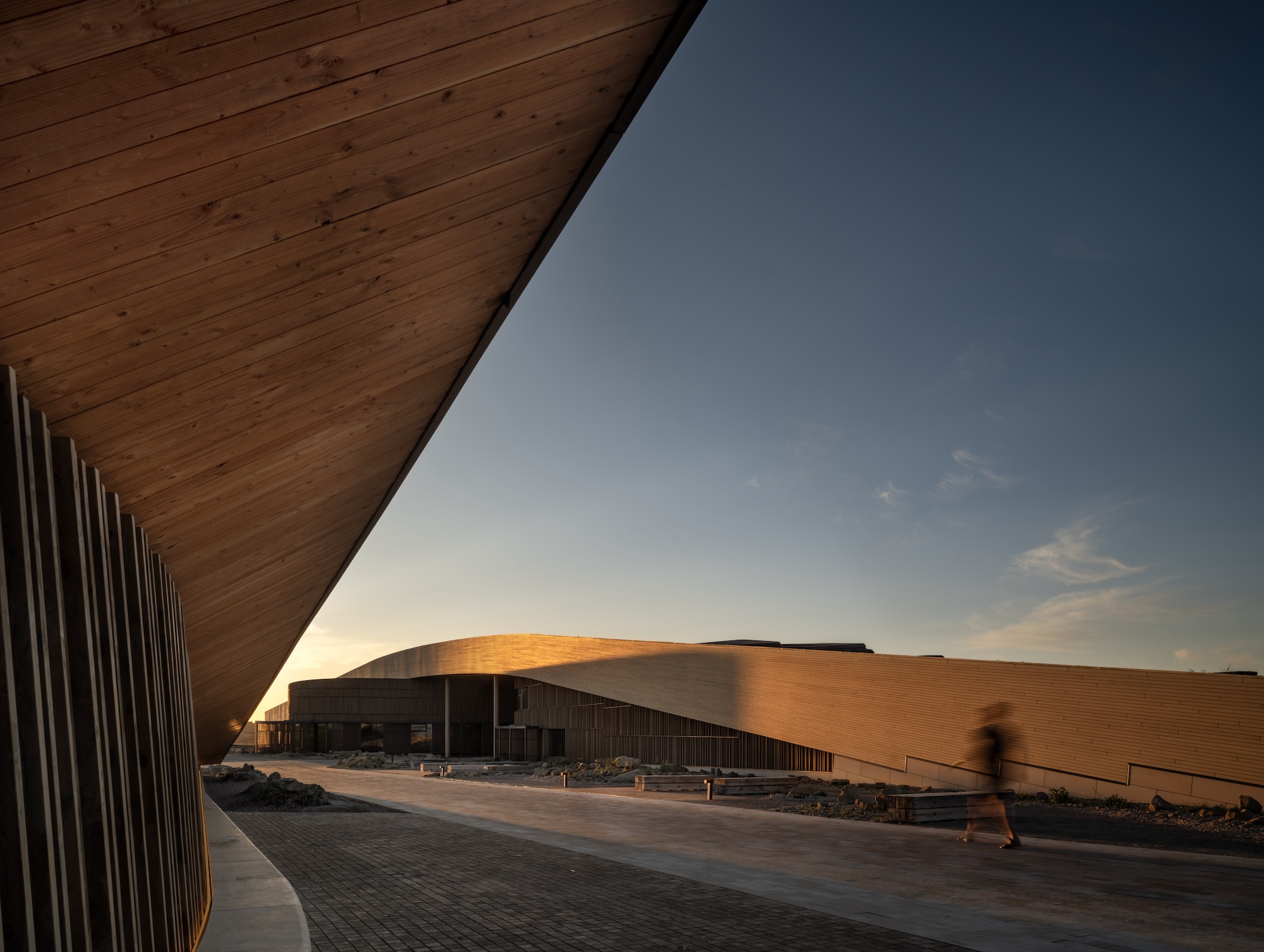
Photo © Nic Lehoux
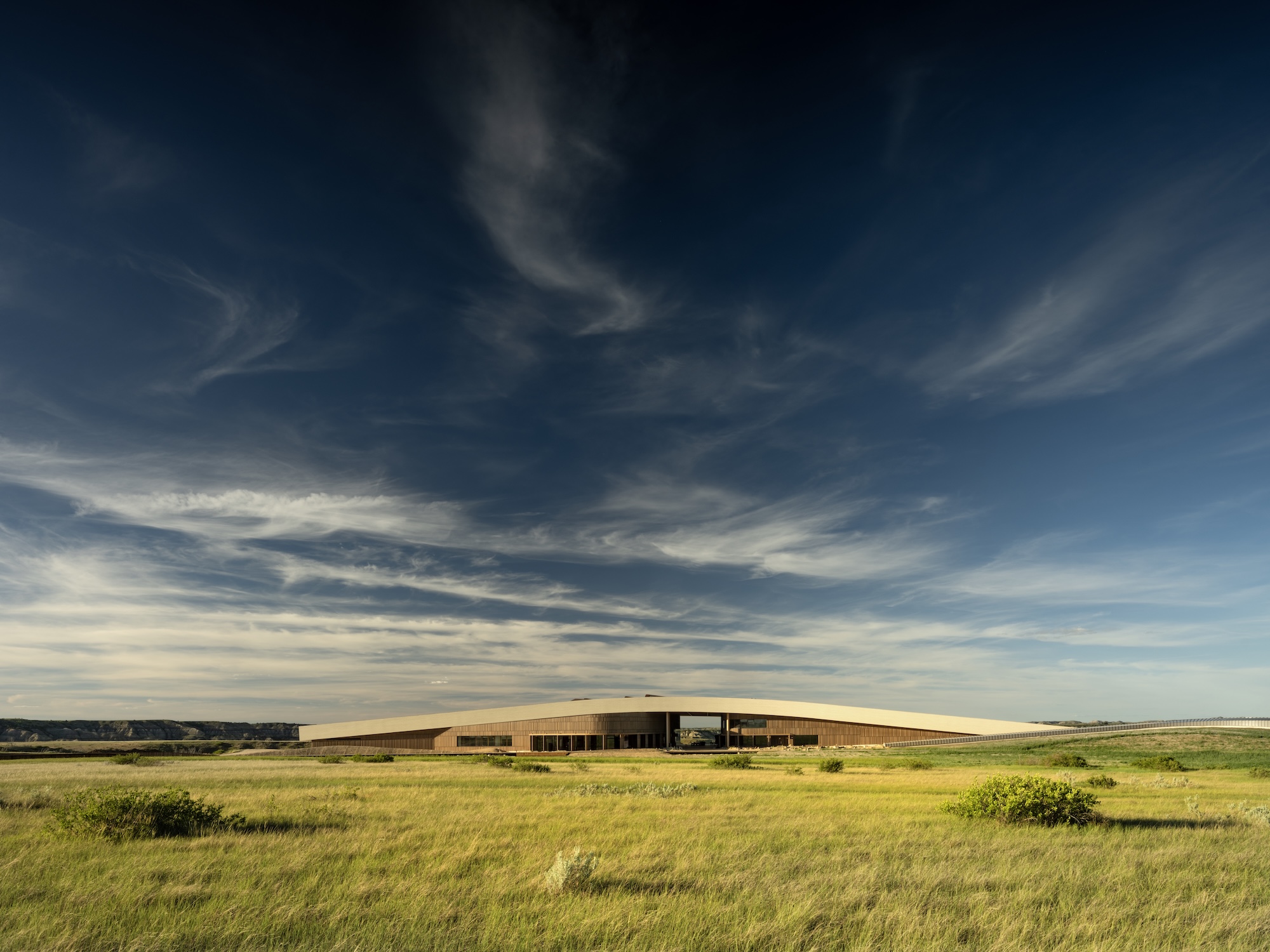
Photo © Nic Lehoux
Despite its remote locale, museumgoers have easy access to the neighboring open-air venue the Medora Musical and the nearby 70,000-acre Theodore Roosevelt National Park, which is visited by nearly 700,000 people annually. There, amid a rugged and dramatic landscape, pronghorns, wild horses, and bison graze freely for all to see—in part due to the groundwork laid by Roosevelt over a century ago.
Editor’s note: A more in-depth article is forthcoming and will appear in the August print issue, alongside the Obama Presidential Center.
Looking for quick answers on architecture and design topics?
Try Ask RECORD, our new smart AI search tool.
Ask RECORD →
Looking for a reprint of this article?
From high-res PDFs to custom plaques, order your copy today!