Commentary
For the Semiquincentennial, Practitioners and Scholars Survey 250 Years of American Architecture
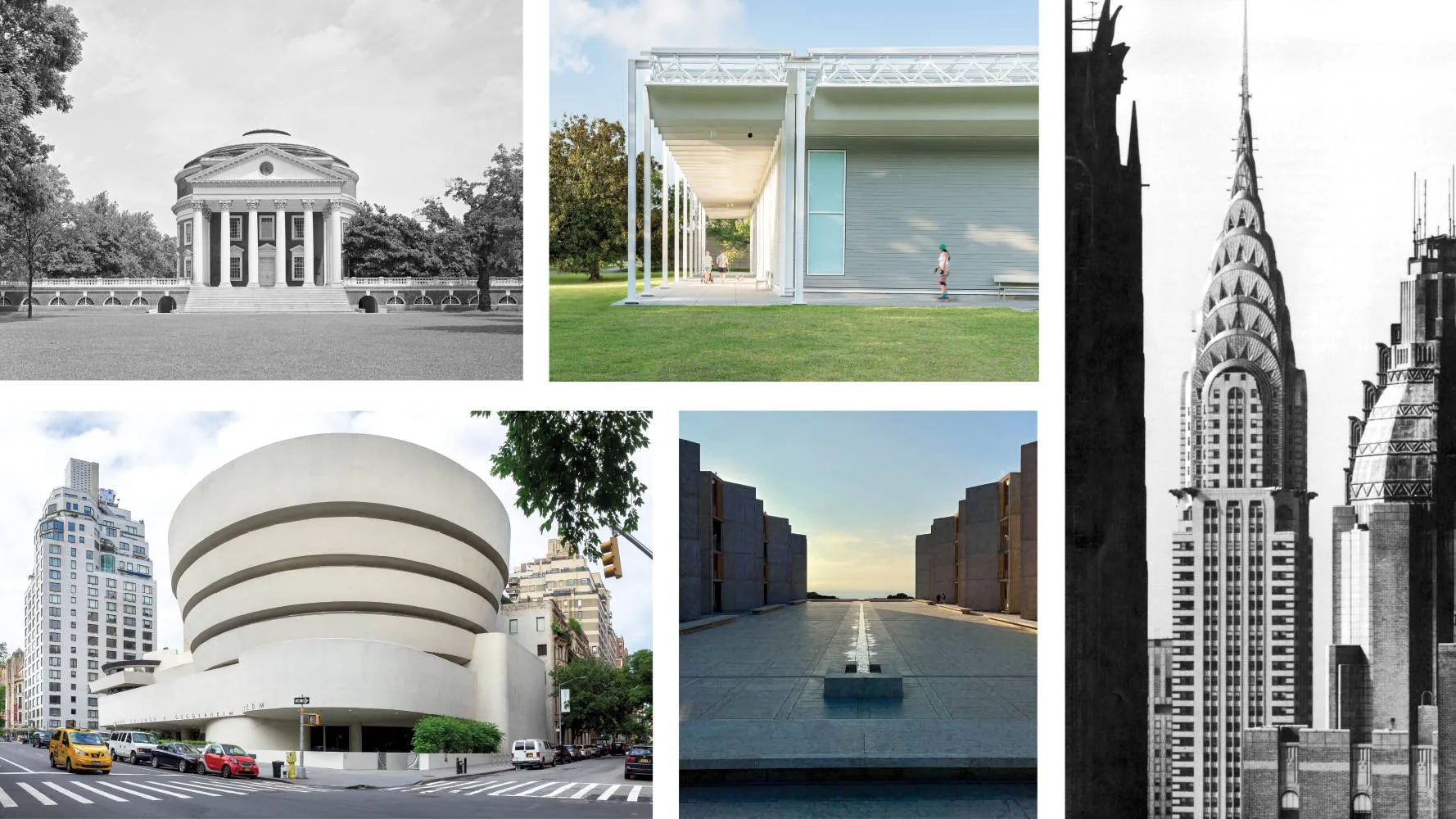
To mark the country’s 250th anniversary, the editors of RECORD invited leading architects and educators, from sea to shining sea, to nominate the most significant works of American architecture. From California bungalows to New York skyscrapers, from forest retreats to streamlined headquarters, what makes an architecture American, let alone the most significant example of such? Interpretation was left to the contributors. Their nominations, and what each choice says about the United States, are as diverse and multifaceted as the nation, its people, and its history.
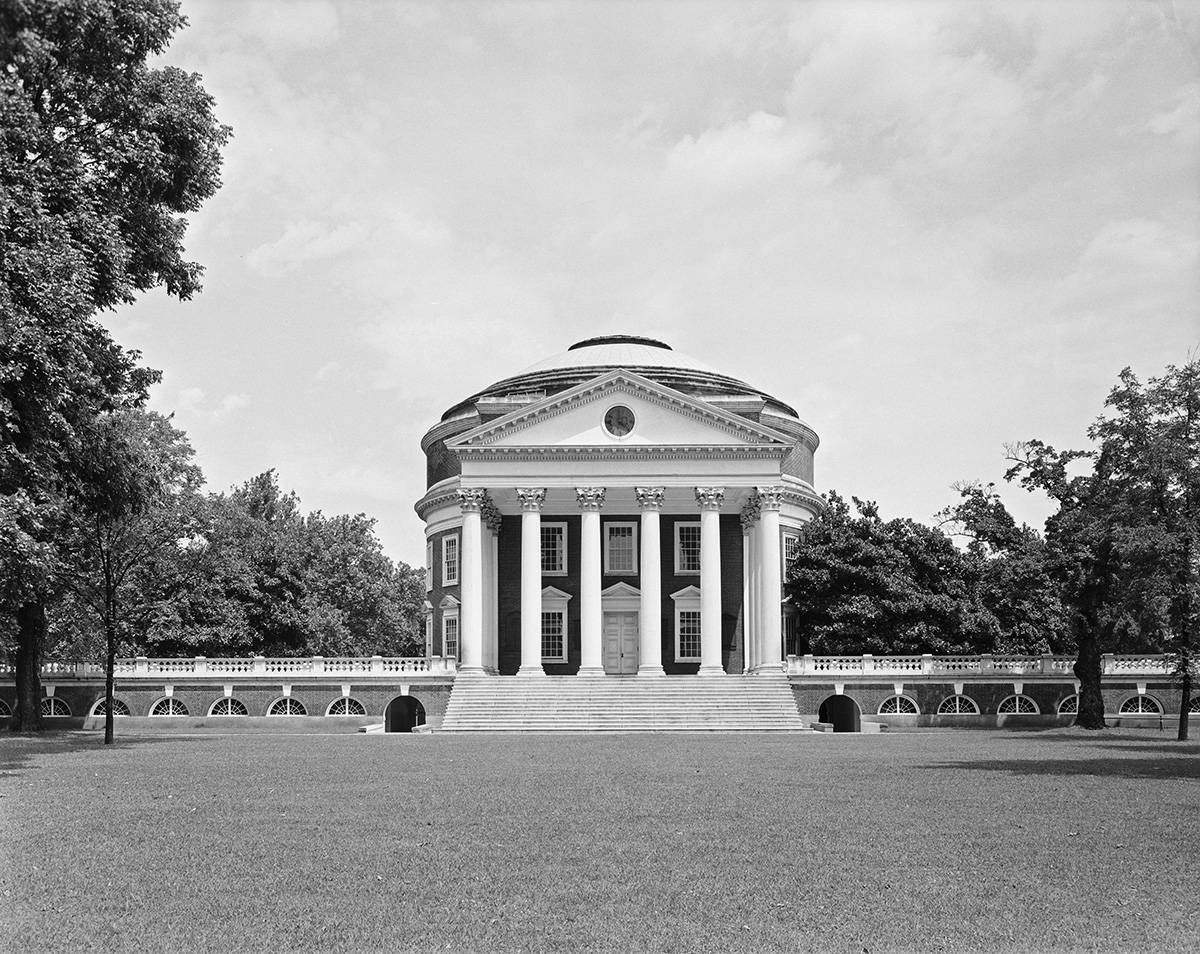
Photo © Wayne Andrews/Esto
University of Virginia (1819–25) in Charlottesville, by Thomas Jefferson
Paul Goldberger, critic: Jefferson’s campus for the University of Virginia in Charlottesville brings together architectural form and symbol with more serene grace than any other building in the United States. Here, in Jefferson’s two rows of classical pavilions facing each other across a broad lawn, was the idea of the democratic university given architectural expression for the first time. Jefferson designed each pavilion in a different classical motif so that together they become a textbook of classical architecture; at the head of the lawn is a library housed in a domed rotunda loosely modeled on the Pantheon. Until Jefferson, the church had been the guiding force in American higher education but, by making the library the dominant element, Jefferson made it clear that the quest for knowledge, not religion, would be preeminent. Yet the symbolism goes further, and deeper: together, the pavilions and the residential buildings behind them represent the idea of a community—not for nothing did Jefferson call the campus an “academical village”—and by leaving the lawn open at the western end to the view of the Blue Ridge Mountains (a view blocked by a building Stanford White added in 1895), Jefferson was making an even more profound point about the balance of openness and enclosure, and about the relationship of man to nature. Today, our awareness that the campus was constructed and maintained largely by enslaved people, and that Jefferson’s notion of democratic education extended only to white males, reminds us that this work of architecture symbolizes shameful as well as noble aspects of American history. But that only makes it an even more critical part of the American architectural story.
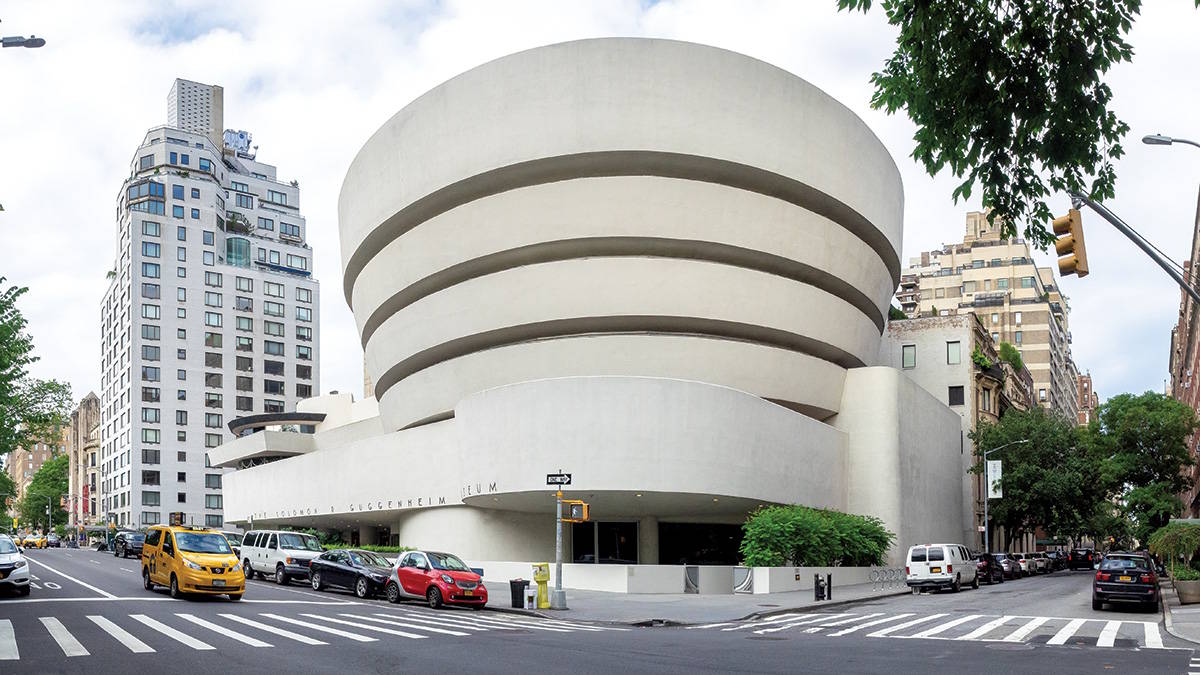
Photo by Ajay Suresh via Wikimedia Commons
Guggenheim Museum (1956–59) in New York City, by Frank Lloyd Wright
Annabelle Selldorf, Selldorf Architects: The Guggenheim has evoked strong feelings since it opened, and its sculptural form continues to delight and challenge. I have always been impressed by the intelligence of the structure and the sheer ingenuity of the space—even at the end of his career, Wright was able to conceive a building that was utterly new. Breaking the street wall along Fifth Avenue remains a bold and unexpected move. Inside, the soaring atrium presents an infinite dynamism. With ramps providing views across all levels, visitors are afforded a procession evocative of the city itself. In many ways, the Guggenheim embodies the ongoing discussions about the relationship of art to architecture in museums. Do the building and the collection work together to create Wright’s stated goal of “an uninterrupted beautiful symphony,” or do its curvilinear form and sloping walls detract from the appreciation of the art? It might not align with my own natural design instincts, but some of the most memorable exhibitions I have seen were in its singular rotunda. Its spiraling architecture washed in natural light informs one’s perception of and connection with the works on view. Wright understood how the best museum architecture holds a balance between a recessive backdrop and an expressive container.
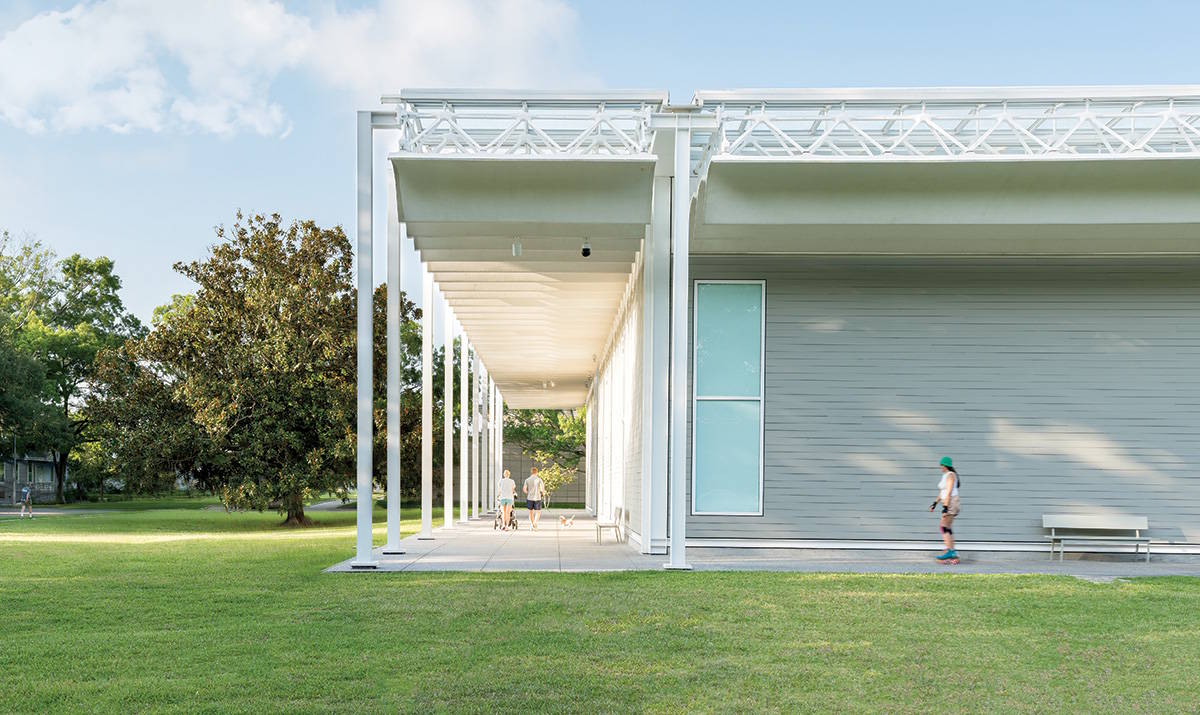
Photo © Grant Gay, courtesy the Menil Collection
Menil Collection (1982–87) in Houston, by Renzo Piano Building Workshop
Sarah M. Whiting, Harvard: Our country’s civic and cultural institutions have forged our collective consciousness—perhaps not as a right, like the pursuit of life, liberty, and happiness, but most certainly a need. And never more so than now. The Menil Collection is the result of a profound collaboration between patrons (Dominique and John de Menil), an architect (Renzo Piano, along with local practitioner Richard Fitzgerald), and an engineer (Peter Rice of Ove Arup). Free to the public, the Menil is a privately endowed civic and cultural pursuit. To meet Dominique’s insistence that the art be viewed in natural light, Piano and Rice invented a “solar machine” consisting of 300 ferro-cement “leaves” held by a delicate white steel frame. Filtering sunlight, these curved leaves form a soft, undulating, luminous ceiling. Underfoot, the black-stained pine flooring anchors the ethereal interiors, all the while revealing the wear of innumerable collective footsteps. The Menil Collection embodies and enables the pursuit of happiness for all.
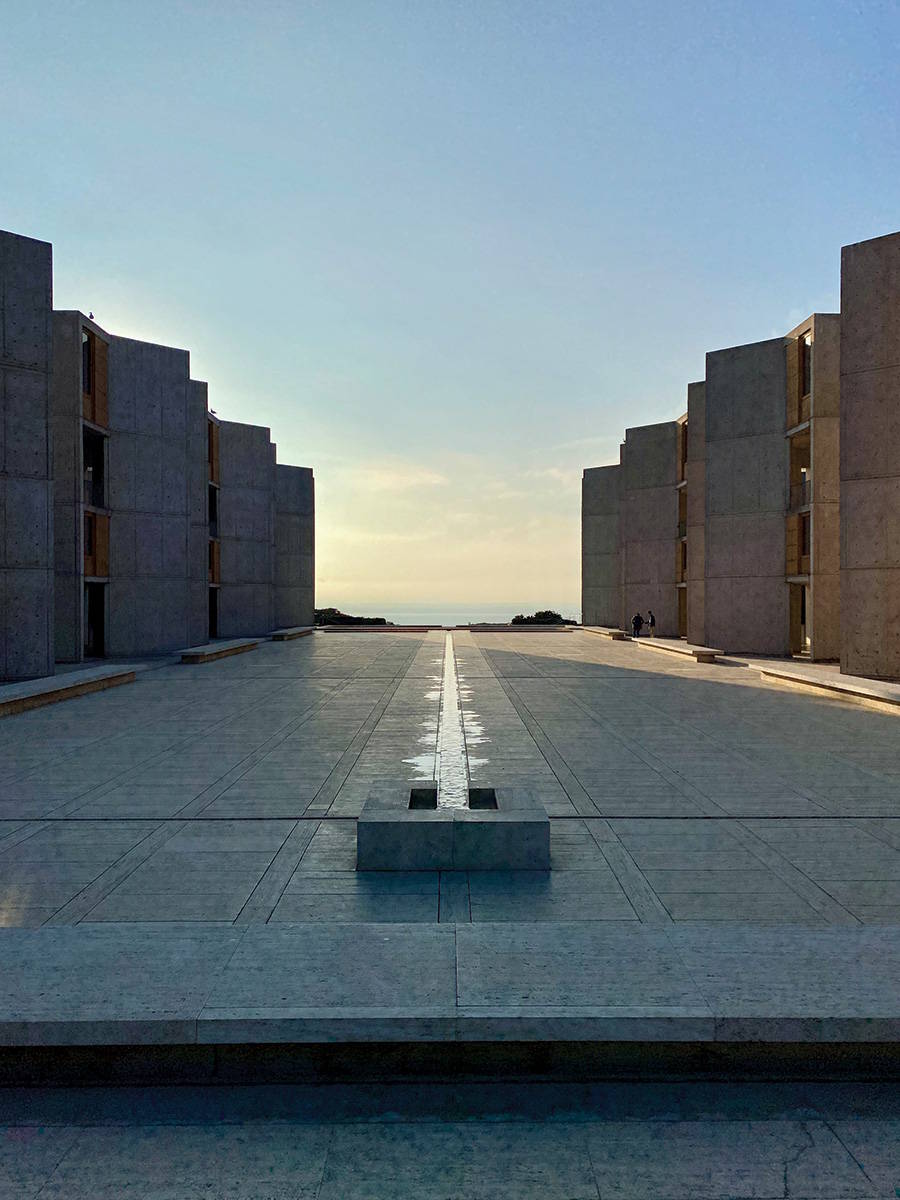
Photo by Leopoldo Villardi
Salk Institute (1962–65) in La Jolla, California, by Louis Kahn
William Pedersen, KPF: Throughout my career, the vertical axis guided my exploration. But no element dominates nature or the human imagination more than the horizon, particularly at the sea. For thousands of years, sapiens have looked to it as the ever-distant edge of the Earth, beyond which lies the unknown. Science deals with the unknown, and as architects, we realize buildings that aspire to represent the clients for whom we build. To my mind, no architect has represented their client with a structure of greater symbolic meaning than Louis Kahn with the institute he built for scientist Jonas Salk on the edge of the Pacific Ocean. It is said that Salk instructed Kahn to build a building that artist Pablo Picasso would desire to visit. He did much more than that; he built a building that represented Salk’s greatest aspiration—the discovery of the unknown.
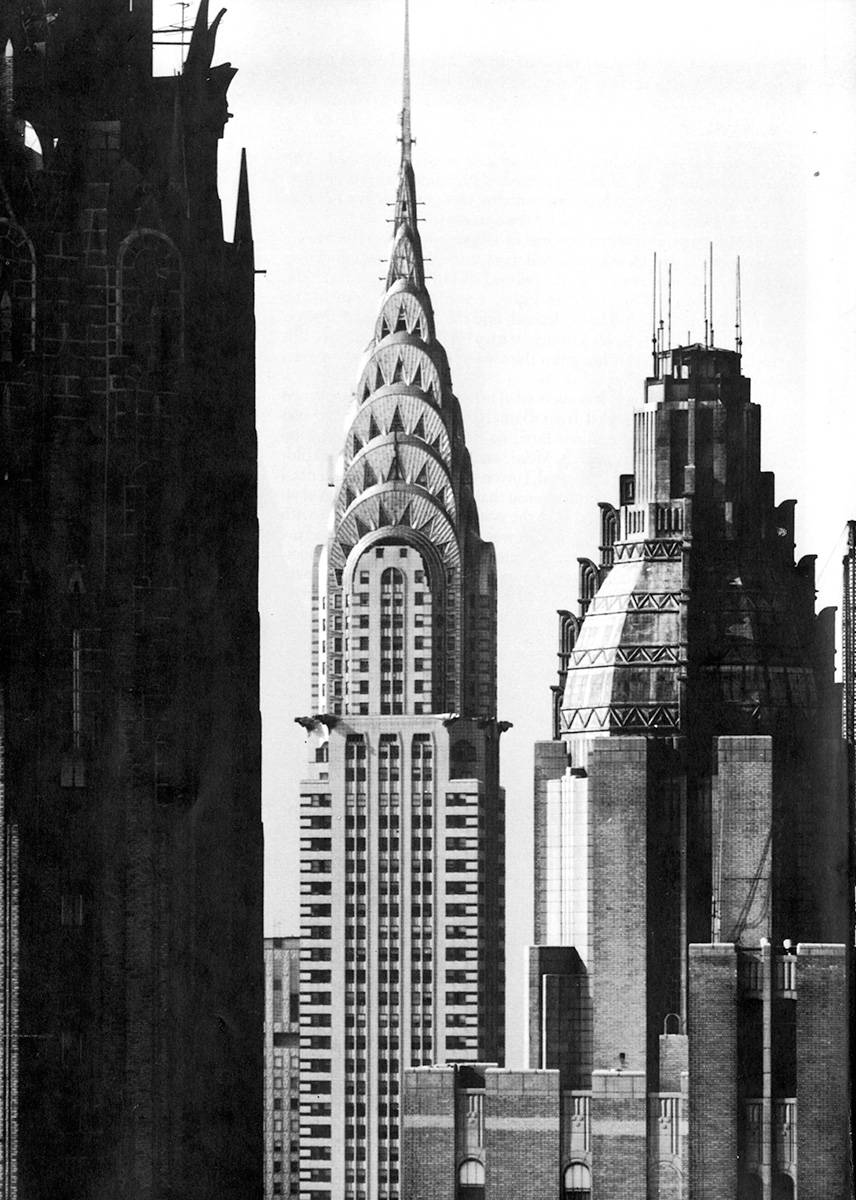
Photo © Cervin Robinson, Library of Congress
Chrysler Building (1929–30) in New York City, by William Van Alen
Mark Foster Gage, Mark Foster Gage Architects: Unique in its lack of references to European classicism or modernism, the Chrysler Building stands as the quintessential American icon. Instead of looking to Old World history, architect William Van Alen drew inspiration from the automobile. Funded by industrialist Walter Chrysler, the tower broadcasts its sources by launching a gleaming, sunburst-patterned stainless-steel form into the Manhattan skyline like a massive hood ornament. Along the way, its shimmering facade showcases numerous stylized metallic accessories, including giant eagle gargoyles and corner decorations modeled after Chrysler radiator caps. At a moment when there was fierce competition to build ever higher, Van Alen had the 185-foot spire assembled secretly inside the frame and hoisted into place just moments before opening. The Chrysler Building reigned supreme as the world’s tallest for 11 months, before being overtaken by its younger art deco descendant, the Empire State Building.
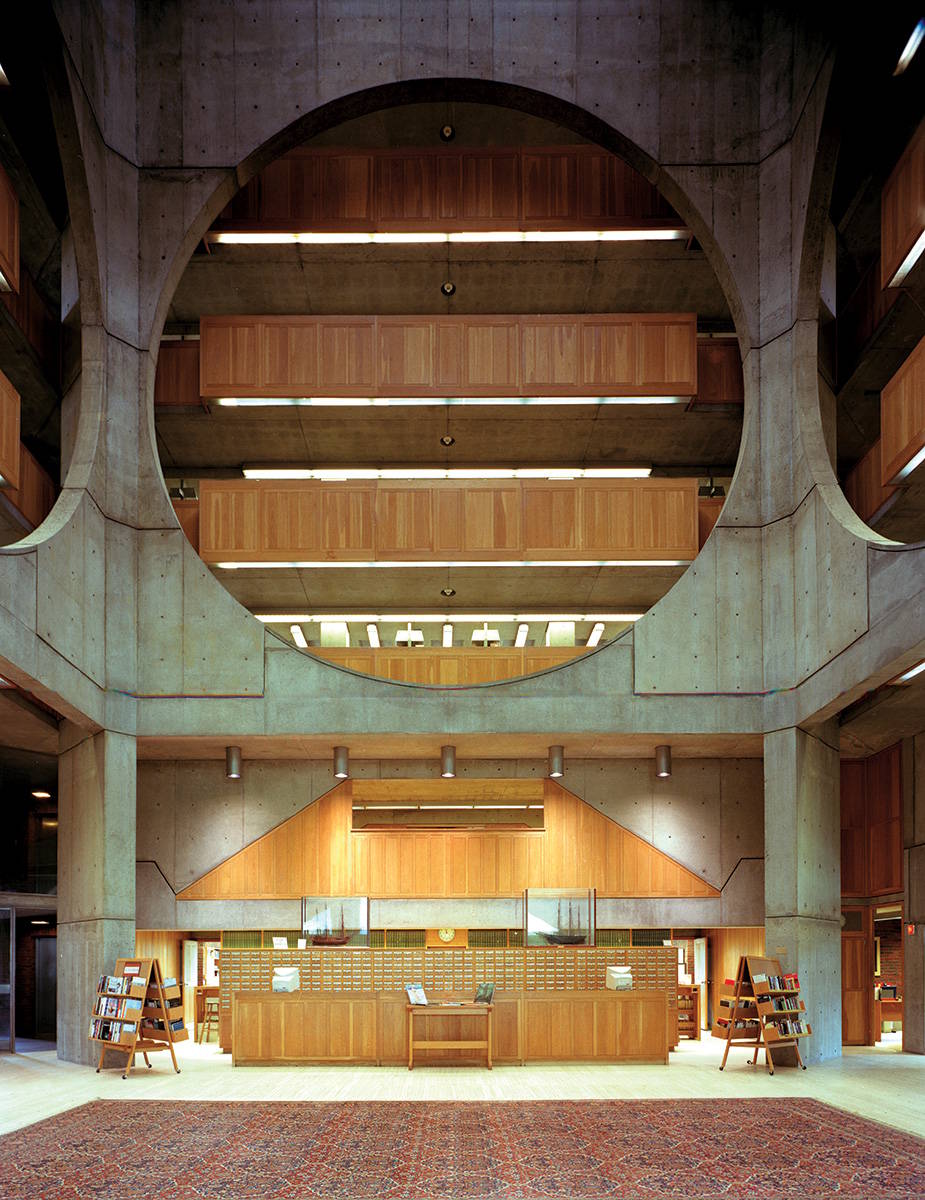
Photo © Carol M. Highsmith, Library of Congress
Phillips Exeter Academy Library (1965–71) in New Hampshire, by Louis Kahn
Thomas Phifer, Thomas Phifer Architects: The Exeter Library has profound presence. It feels as if it has always been there—heavy, quiet, timeless, almost sacred. The symmetry and repetition of the four identical facades create an atmosphere of stillness. The weight of the architecture is palpable, too, in the heft of its brick walls, the expression of the lintels, the width of the piers as they narrow and rise in the elevation, and the feeling of compression in the arcade. You ascend a stair to enter the light-filled metaphoric and physical heart of the library, where the surrounding bookstacks are revealed through honorific circular openings. The individual study carrels, located on the perimeter walls, are places where you become aware of your body, your scale, the passage of time, and being present between light and matter. As Kahn said, “One takes a book from where it is dark to read in light.”
Looking for quick answers on architecture and design topics?
Try Ask RECORD, our new smart AI search tool.
Ask RECORD →
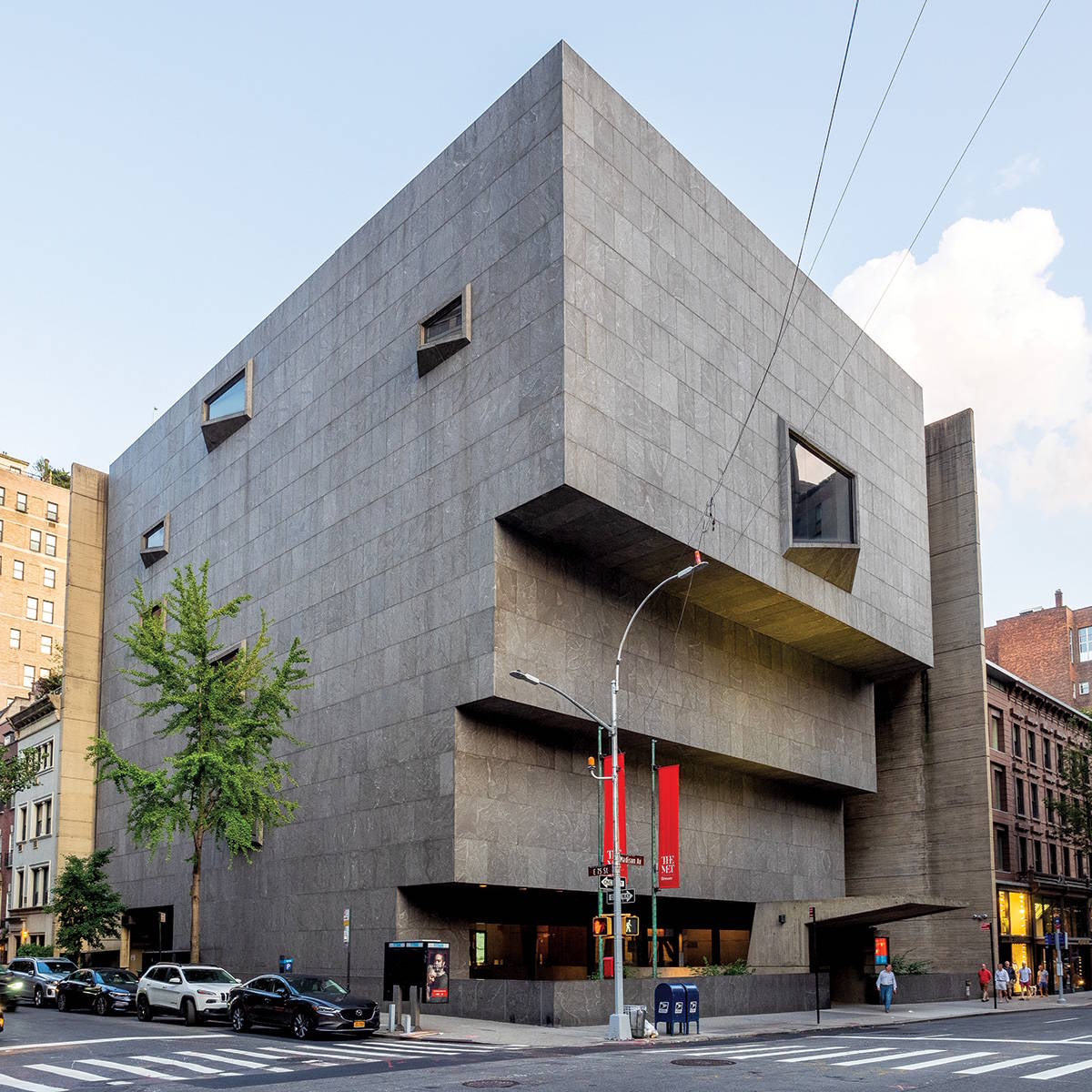
Photo by Ajay Suresh via Wikimedia Commons
Whitney Museum (1963–66) in New York City, by Marcel Breuer
Barry Bergdoll, Columbia: Responding audaciously to the postwar call for a “new monumentality,” Marcel Breuer’s inverted ziggurat for the Whitney Museum of American Art rises over the corner of Madison Avenue and East 75th Street, transforming a neighborhood of taller residential buildings by its assured, almost hermetic presence. Minimalist geometry instantly gave stature to American art and architecture and announced an epoch in which museums themselves would be sculptures, beckoning visitors to a temple of art without columns or pediments. Exposed concrete flange walls set the granite-clad stacked boxes off from Victorian brownstone neighbors and create a “frame” for the hard-edged silhouette. A fully glazed lobby set behind an access bridge and a moat affords views deep into the hollow within, above which the projecting upper floors cantilever, almost floating—a heavy lightness. Open floor plates clad in bluestone feature light partition walls easily reconfigured; at the perimeter is the big surprise: oblique views of the city through those mysterious angled broaches on the building’s two facades.
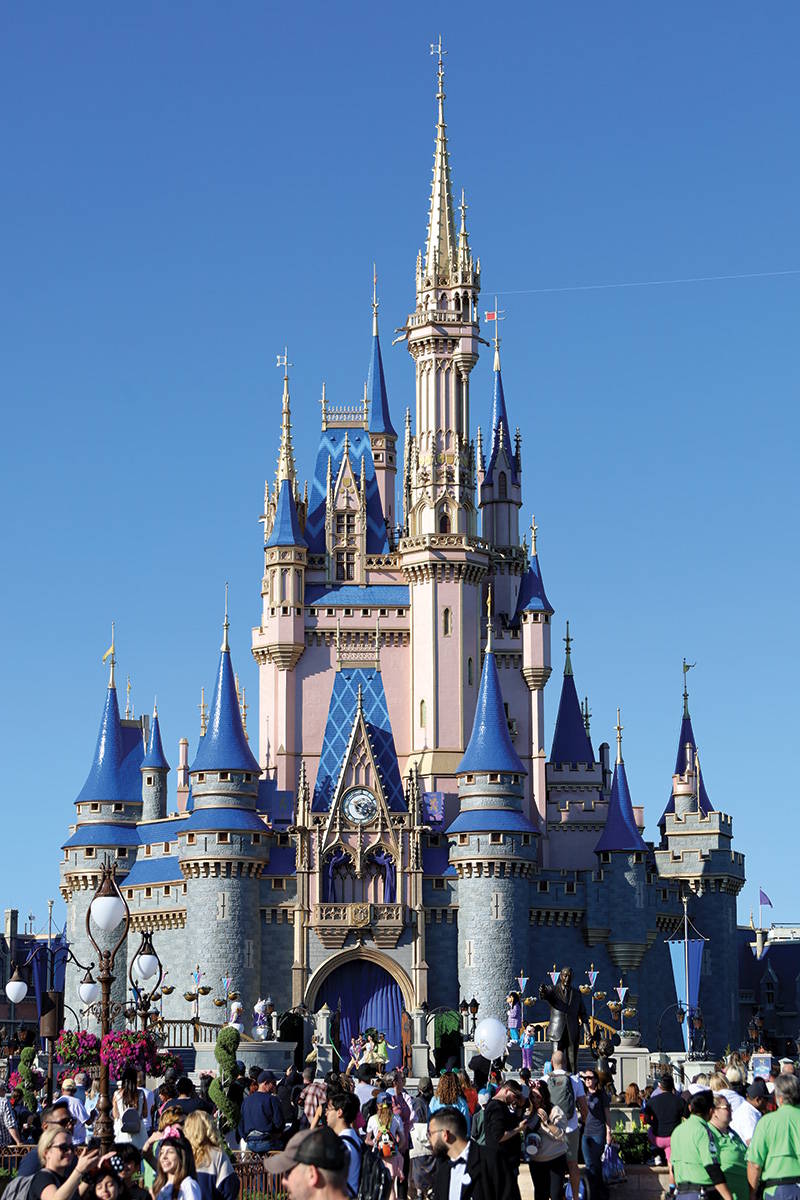
Photo by Jedi94 via Wikimedia Commons
Cinderella Castle (1971) in Orlando, Florida, by Herbert Dickens Ryman
David Rifkind, University of Colorado Denver: Of the 50 million people who travel to Walt Disney World this year, at least 17 million will trek through its oldest theme park, the Magic Kingdom. Their visits inevitably revolve around Cinderella Castle, at the center of the sprawling complex. The iconic landmark, one of the most recognizable and visited buildings in the country, was realized by Disney Imagineer Herbert Dickens Ryman. He drew upon numerous sources, including the castle he designed for Sleeping Beauty at Disneyland and the storybook residence of the title character in the 1950 animated film, Cinderella. Ryman—who also envisioned the Emerald City in The Wizard of Oz for Metro-Goldwyn-Mayer Studios—carefully studied medieval and Gothic-revival buildings and their detailing. The castle’s vaulted passageway features glass mosaic murals by Dorothea Holt Redmond, the first female production designer in Hollywood, who went on to work with Alfred Hitchcock on seven films. What could be more American than this tale of reinvention, imagination, and entertainment?
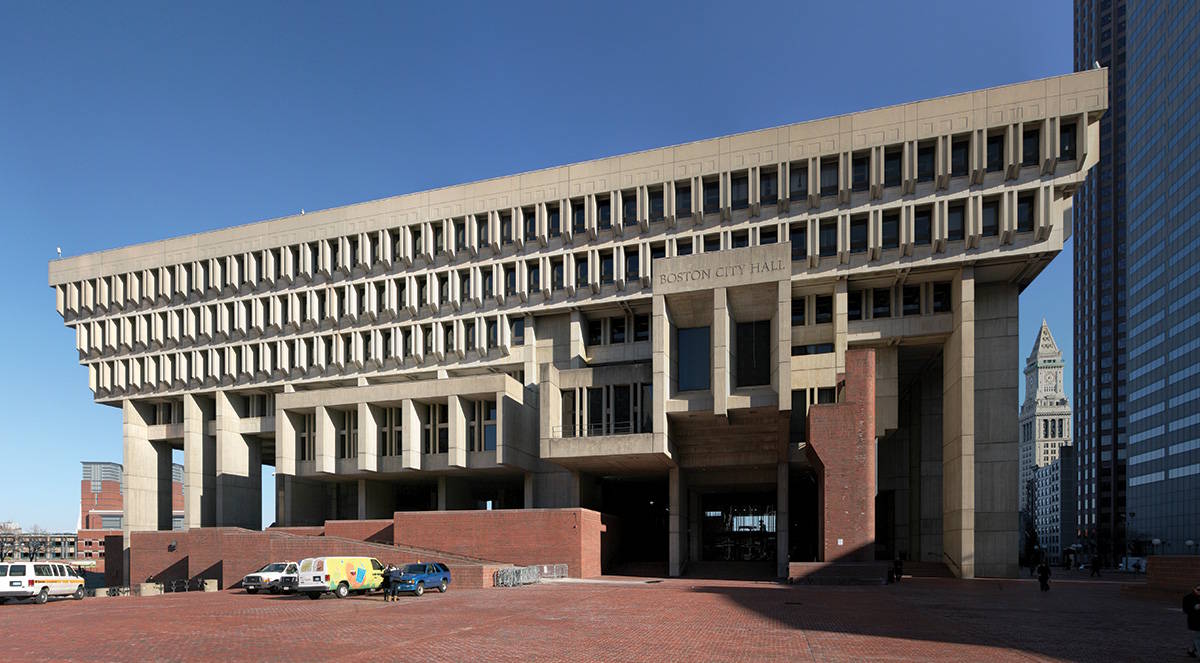
Photo by Daniel Schwen via Wikimedia Commons
Boston City Hall (1962–69) in Massachusetts, by Kallmann McKinnell & Knowles
Peter Eisenman, Eisenman Architects: The Boston City Hall has to be one of the most important monuments built in the United States since the dawn of the 20th century. Until that time, Boston was a backwater for modern architecture. The competition for the new city hall, in 1962, was the first possibility for a new architecture to be proposed. Gerhard Kallmann and Michael McKinnell, two young architects teaching at Columbia, won the competition by breaking radically from public architecture in Boston. They produced a fractured series of concrete layers supported on a brick base with an image of volumetric energy similar to that of Le Corbusier’s monastery at La Tourette. No longer was a public building to be staid, symmetrical, and monolithic. Kallmann and McKinnell’s city hall was provocative, a building that attempted to break all the rules of public decorum. Sixty years on, it remains that pile of brick and concrete which will never be built again.
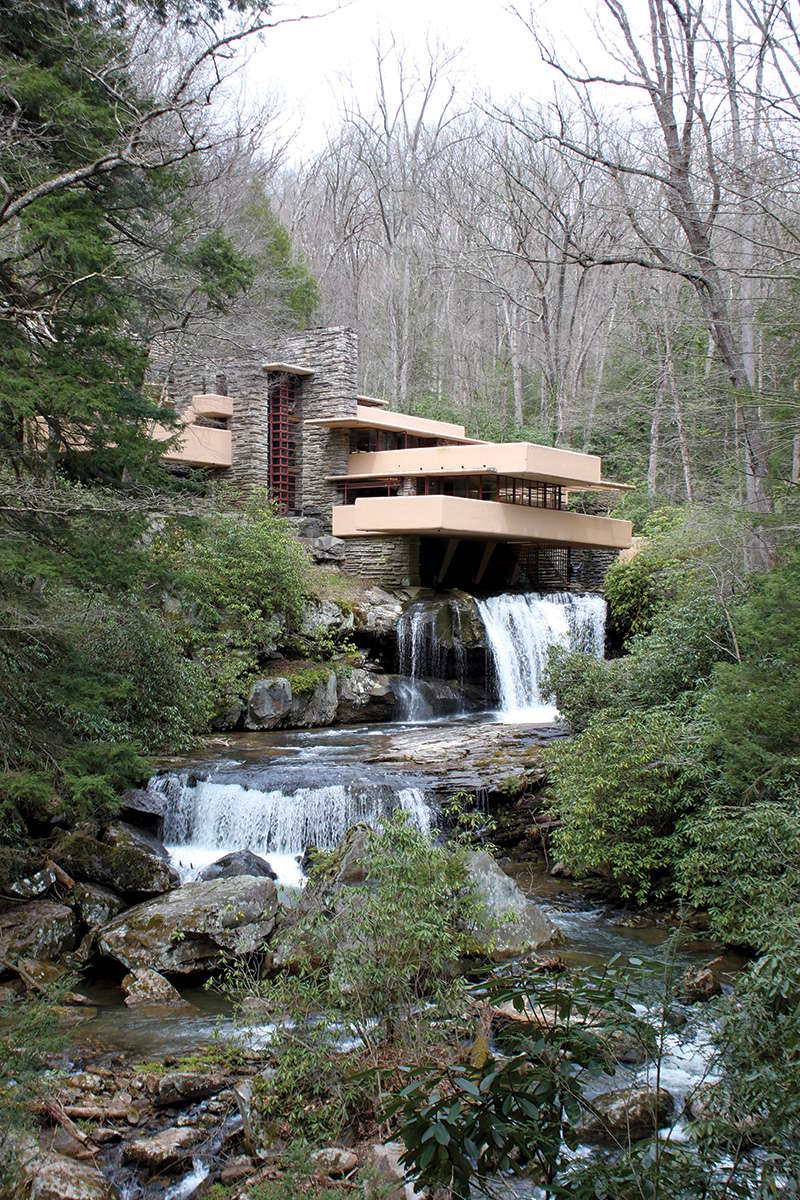
Photo by Patrick Templeton
Fallingwater (1936–37) in Mill Run, Pennsylvania, by Frank Lloyd Wright
Brad Cloepfil, Allied Works: When asked to recommend the most compelling piece of American architecture of the last 250 years, I was daunted. I thought of Charles Bulfinch and Benjamin Latrobe, with their wonderfully stoic, elemental historicism. Or the eclecticism of Frank Furness and Bernard Maybeck. And what of my spiritual mentors, Louis Kahn and Paul Rudolph? Then, I remembered Fallingwater and my first visit to Mill Run. With architects as mythologized as Wright, it is often hard to see the work itself. But, when I emerged from the wooded walk to encounter the surprisingly small building woven into the rock, I was moved to my core. It is the most powerful yet intimate, contextual yet original piece of contemporary architecture I have ever seen. Rather than dominate the forest and stream, the house amplifies their qualities. The closer one gets to the house, the more detail and delight emerge. Fallingwater allows the site to remain wild but creates a profound built place, a piece of land art to dwell in.
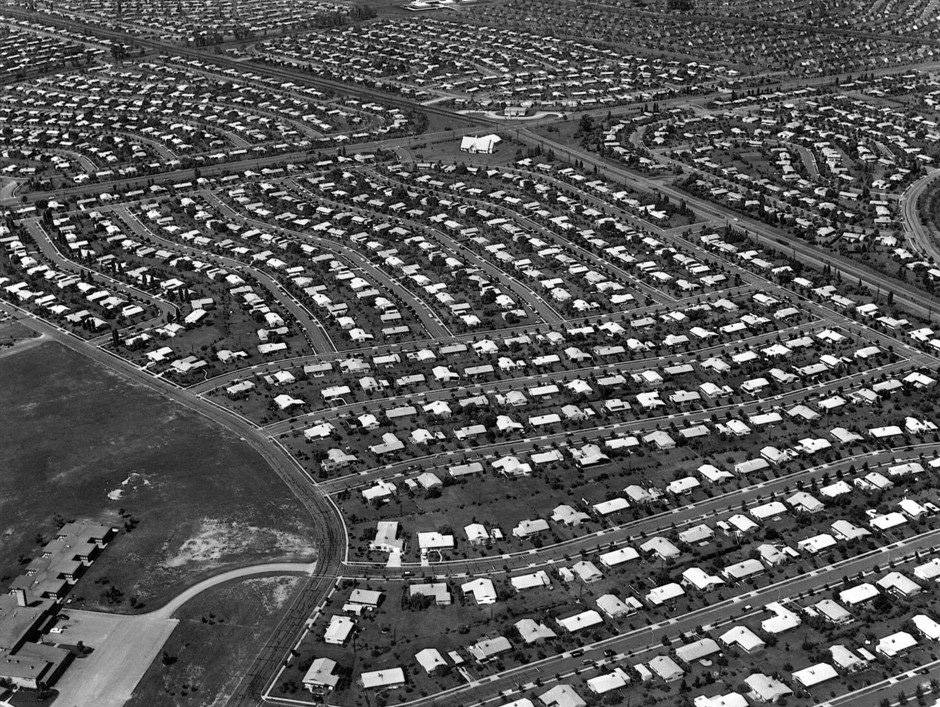
Photo via Wikimedia Commons/Public Domain
Levittown House (1947–71) in, most notably, New York, Pennsylvania, and New Jersey, by Levitt & Sons
Michael Maltzan, Michael Maltzan Architecture: A Levittown house might be an unlikely addition to a list of “most significant” American architecture, but there is no arguing its extraordinary influence on the history of postwar residential development in this country. The Levitt-built house, and its many generations of imitators, is always present, even if only as an undercurrent, whenever there are debates about how we do (and don’t) build affordability, think about innovative strategies for mass production, and wrestle with what form of community we hope for. Its social histories (and the histories of the suburbs) are aspirational, complex, troubled, and persistent. Slyly traditional in its appearance but deeply modernist in its spirit, the Levittown house continues to provoke to this day.
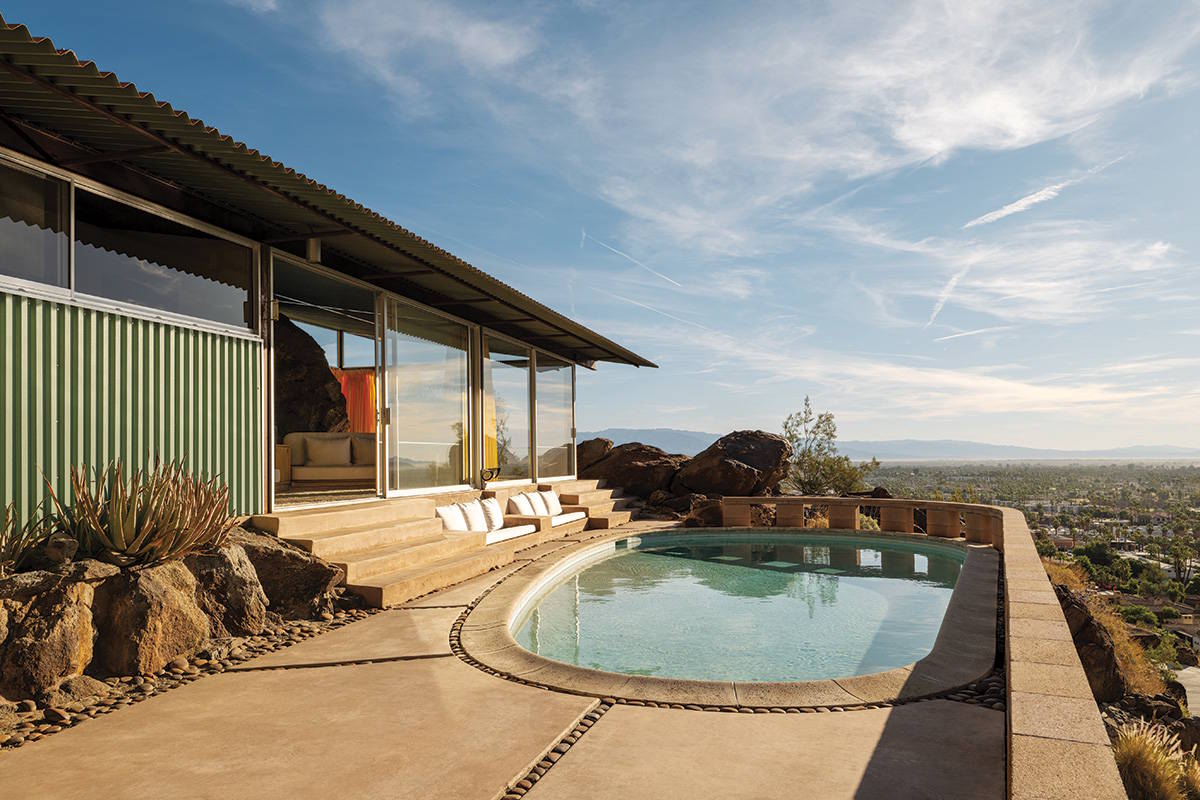
Photo © Lance Gerber, collection of Palm Springs Art Museum
Frey House II (1963–64) in Palm Springs, California, by Albert Frey
Tom Kundig, Olson Kundig: Perched on a ridge, Frey House II is a work of American architecture because it embraces the culture of living in the rugged landscape of the West. North America is vast and Albert Frey understood this. The terrain literally flows into and through the house, then outside of it. The walls slide away, and suddenly you realize you’d rather be outside than in. Frey drew from traditions that emphasized the horizon and a connection between indoors and out, then pushed those ideas even further, in his own way. That, in essence, is the idea behind American architecture. It’s a manifestation of different sites, cultures, and building traditions—but landscape is at the root of it all.
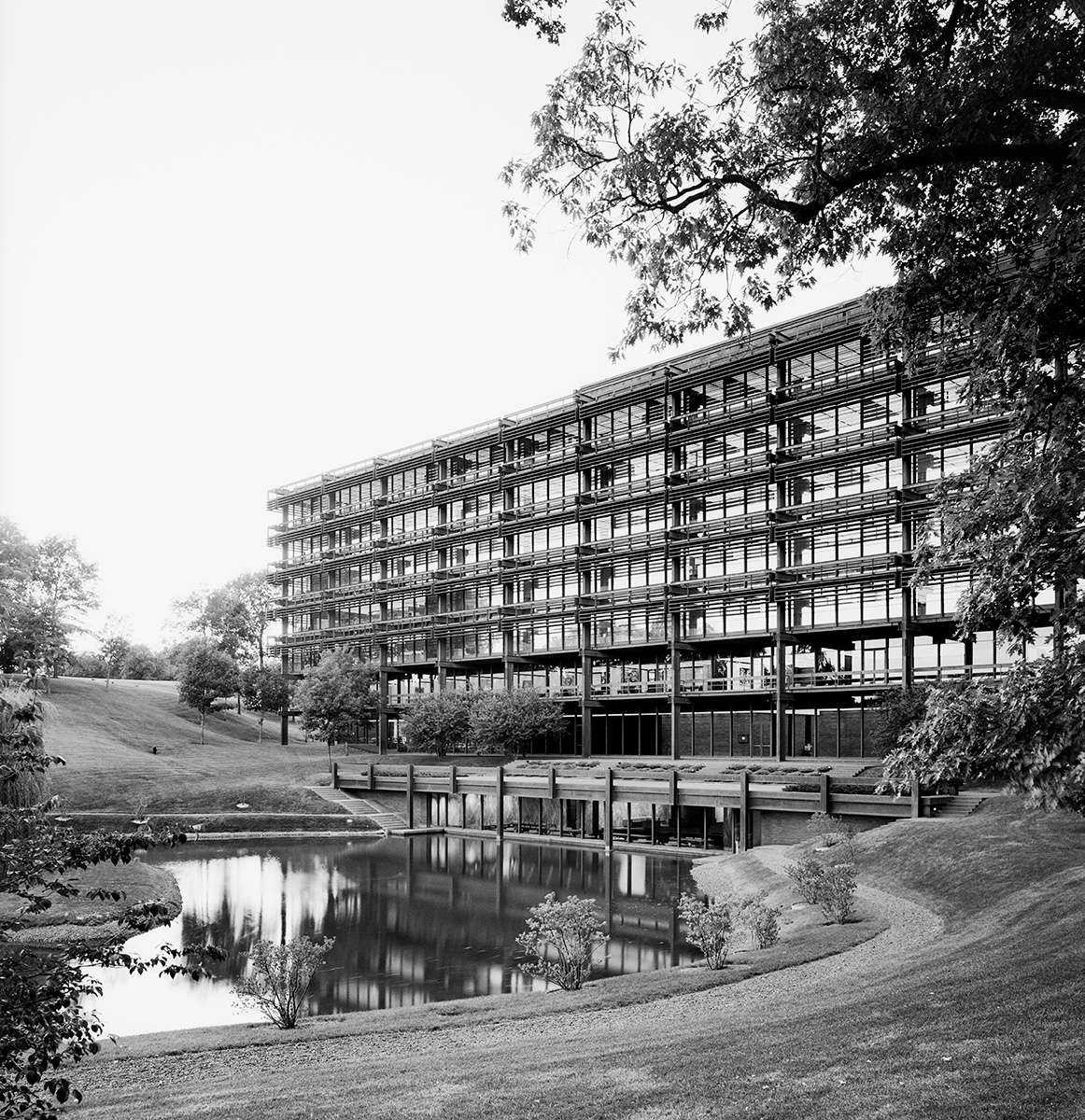
Photo © Ezra Stoller/Esto
John Deere & Co. Headquarters (1961–64) in Moline, Illinois, by Eero Saarinen
William Horgan, Grimshaw: Eero Saarinen’s headquarters for John Deere, completed following his unexpected death in 1961, was an instant classic, and it seems to get better with each passing decade. It exudes an understated sophistication and quiet confidence that seem all the more inspiring from our current era’s preoccupation with bombast and gimmicky one-upmanship. Yet within its subtlety it also exhibits bold innovations in workplace design more generally. It is most famous perhaps for being the first significant building to use weathering steel in its structure and exterior facade, setting a striking new precedent, but it also integrated remarkable low-energy design and occupant-comfort technologies that were years ahead of their time. But what most elevates this building is its symbiosis with its site, the product of a genuine collaboration between Saarinen’s office and Hideo Sasaki that resulted in a remarkable unity of buildings and landscape that is still exemplary.
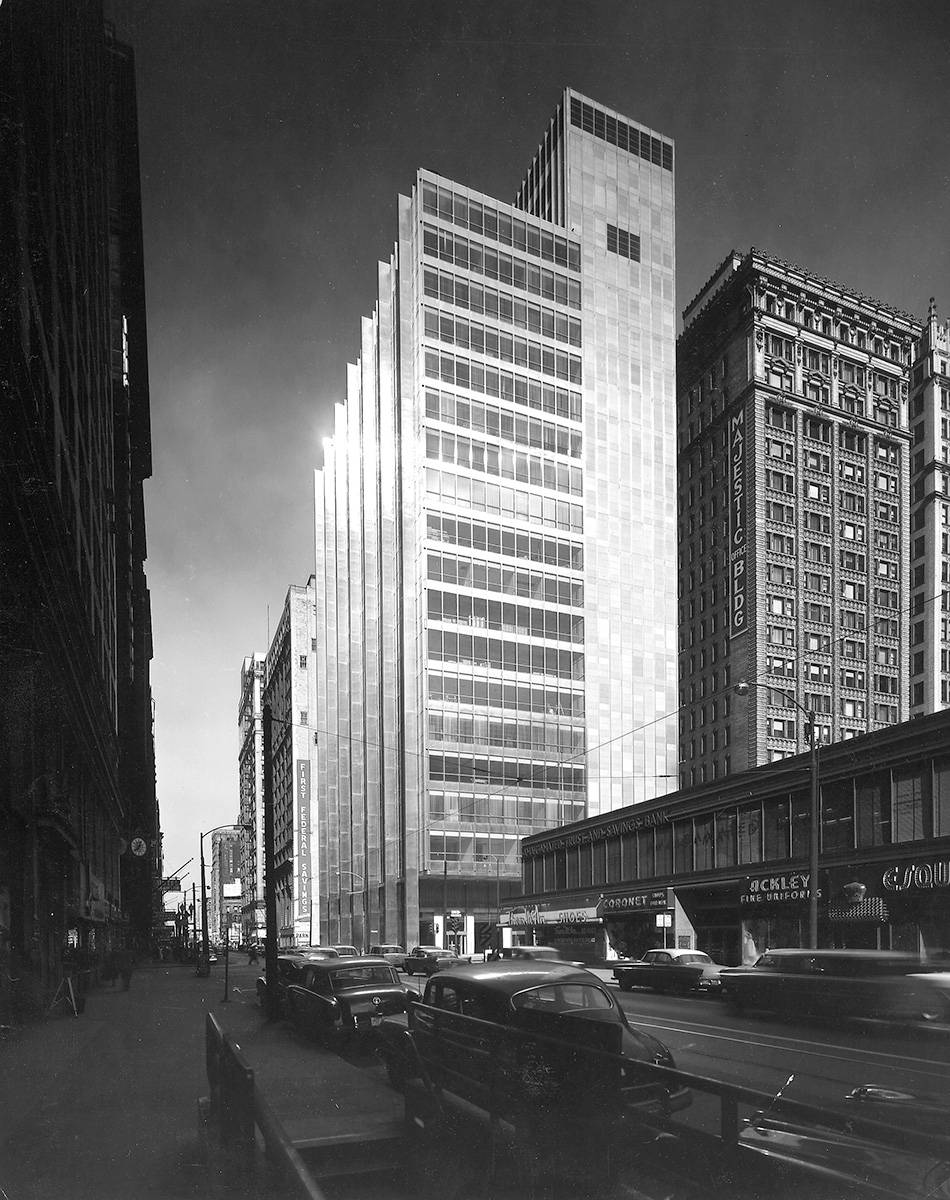
Photo © Hedrich Blessing Photographers, SOM
Inland Steel (1956–58) in Chicago, by Skidmore, Owings & Merrill
Igor Marjanović, Rice University: Designed by Bruce Graham and Walter Netsch of SOM, Inland Steel embodies the form, structure, and labor of modernism. One of the first postwar skyscrapers built in the Loop, it features a rectangular form with a curtain wall facade. The exterior load-bearing columns wrap around an open-plan office volume with a distinctly taller mechanical tower in the back. Together, these elements constitute a pure sculptural form and, at the same time, a monument signaling the importance of steel in both the American culture and economy. Its iconic metallic sheen and green hues are not only atmospheric but also reflections of the conditions of its making: the driving force of postwar corporate expansion, the progressive ideals of labor unions in response to “the toil of piling job on job” (to quote Carl Sandburg’s 1914 poem “Chicago”), and, ultimately, the collective aspiration of architects to articulate a new form of monumentality befitting both the City of Big Shoulders and the world at large.
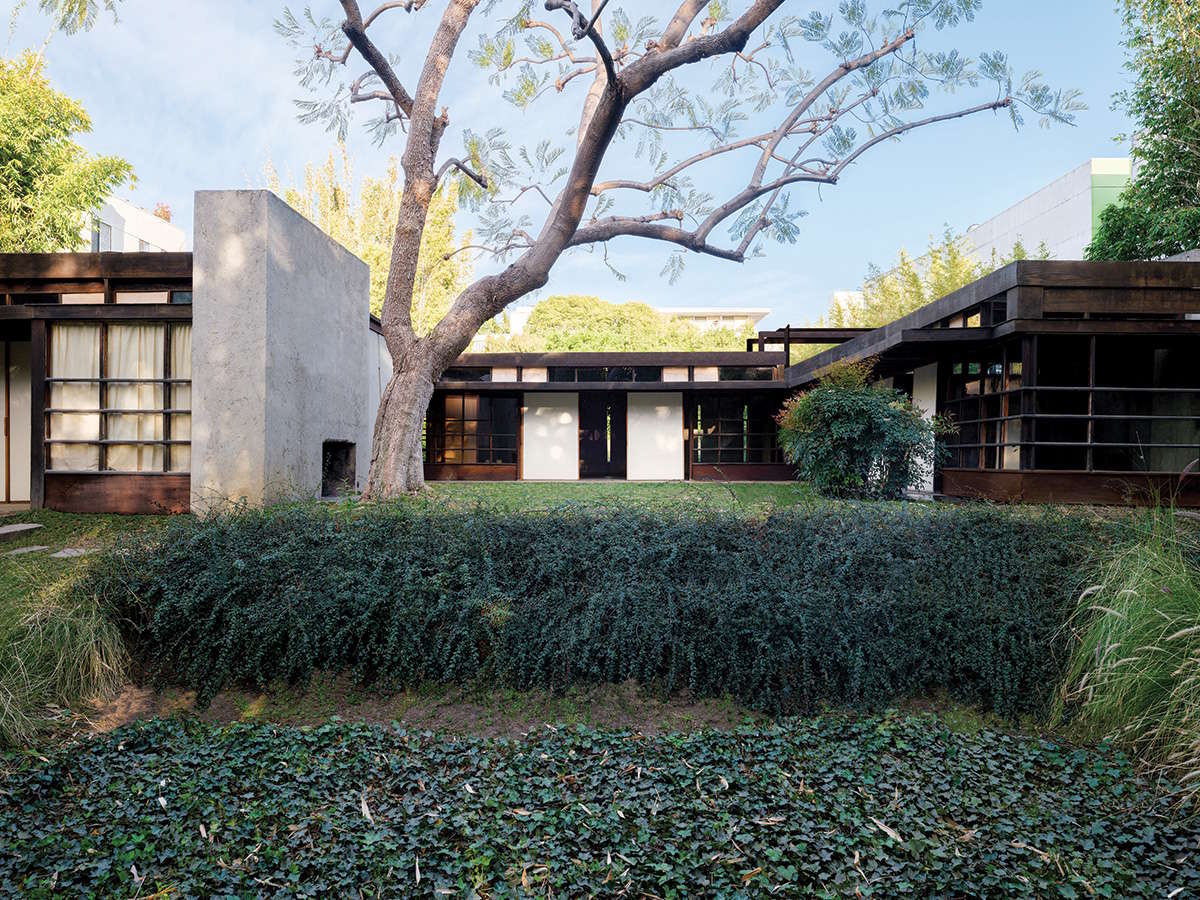
Photo © Tag Christof, MAK Center for Art and Architecture, Los Angeles
Schindler Chace House (1922) in West Hollywood, California, by Rudolph M. Schindler
Thomas Robinson, Lever Architecture: Hidden behind a green hedge in what is now West Hollywood sits a house that is simultaneously radical and over a century old. The Schindler Chace House, built in 1922, has been recognized as the first modern house built in North America or Europe, preceding 1923 projects by Le Corbusier and Gerrit Rietveld. Inspired by a camping trip with his wife, Pauline, to Yosemite in 1921, Schindler designed a communal house, for two couples, that broke all the rules with its flat roof, exposed concrete and wood, and open plan that merged inside and out. The house was so startlingly original that Schindler’s mentor, Louis Sullivan, did not know what to make of it. It wasn’t published until 1932, when the editor of T-Square asked Schindler to write something for the journal and he sent in photos of the house. Designed by an Austrian immigrant, and inspired by the sublime landscapes and mild climate of California, the house has been a touchstone for multiple generations of architects, including myself. Its synthesis of multiple cultures, landscapes, and ways of living deserves to be celebrated at this point in our nation’s shared history.
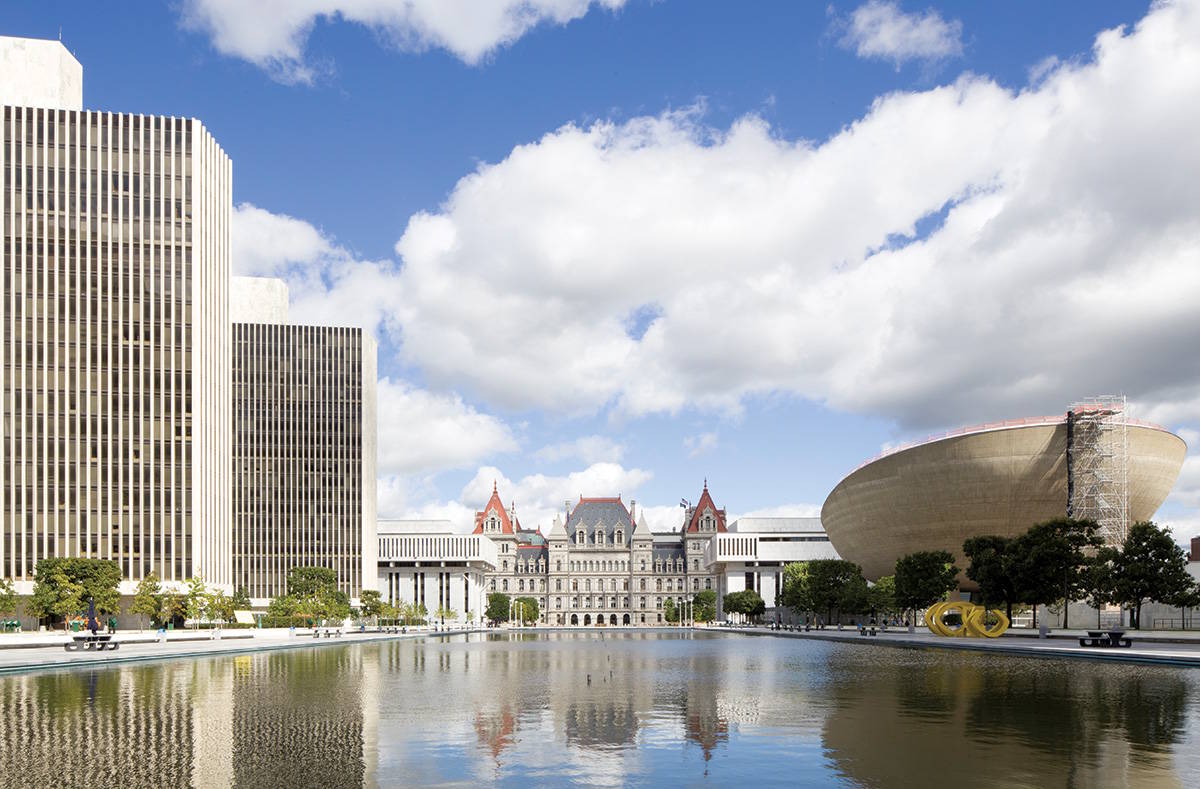
Photo by Leopoldo Villardi
Empire State Plaza (1965–76) in Albany, New York, by Harrison & Abramovitz
Paul Preissner, Paul Preissner Architects: On June 21, 1965, New York Governor Nelson A. Rockefeller and other officials laid a 7,500-pound block of New Hampshire white granite as the cornerstone for the South Mall, kicking off construction of his $2 billion Empire State Plaza government-services building complex. The work displaced some 9,000 people, along with 27 bars, and resulted in a civic project built at the peak of all modernist theories about architecture and feelings toward the city. The abstract marble-clad buildings, reflecting pool, landscaping, and plenty of genuinely wonderful art almost make you forgive the arrogance of it all. The complex is in an urban center, yet you feel removed from the city. It’s pretty, in the way a cathedral can be—accomplished, inspiring, and vaguely accusatory. The plaza is stunning, awesome, and somehow feels empty even when crowded. It is both the pride and shame of the state’s capital and of modernist architecture equally, and fairly. Also, it has an egg.
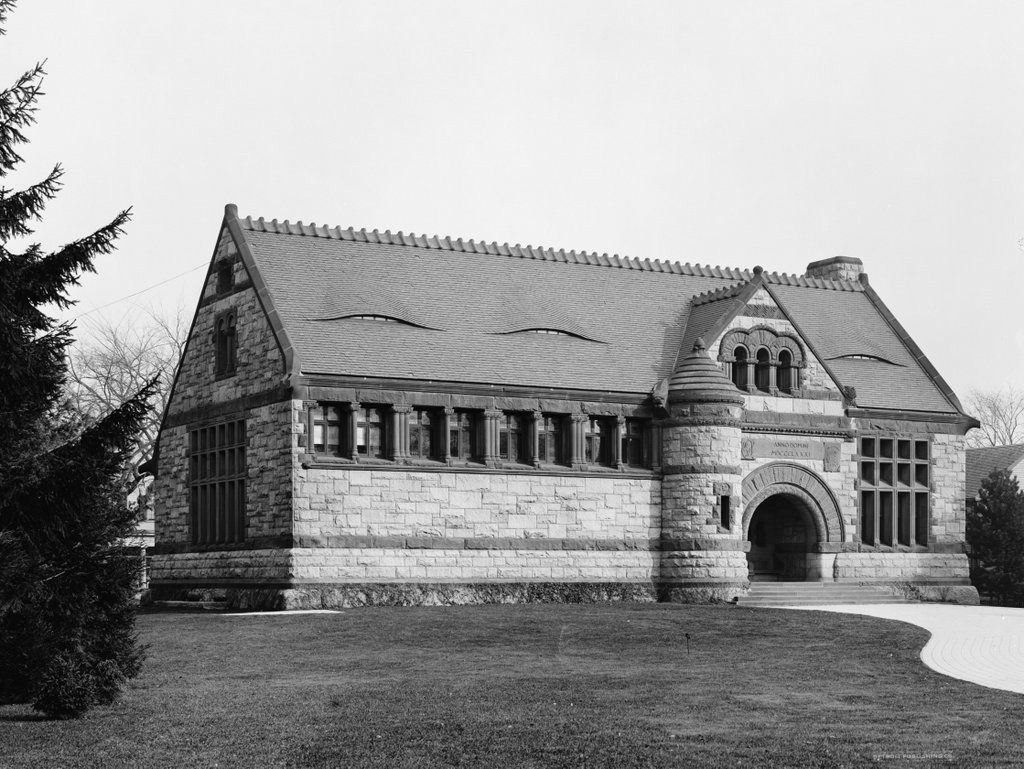
Photo: Library of Congress/Public Domain
Thomas Crane Memorial Library (1881–82) in Quincy, Massachusetts, by Henry Hobson Richardson
Sara Caples and Everardo Jefferson, Caples Jefferson: The Thomas Crane Memorial Library by Henry Hobson Richardson, completed four years before his untimely death at age 48, is still one of the finest expressions of this most American building type, the local library, and it continues to impart a spirit of civic generosity. Among the first Americans trained at the École des Beaux-Arts in Paris, Richardson managed to rethink the Romanesque revival style into something modern, unique to this continent. The rough-hewn stone was sourced locally; the picturesque window openings are massed to provide ample daylight; and the expansive gabled roof crowns the composition. Inside, the stacks and reading areas occur in a sequence of grandly memorable rooms, with their large scale, multiple overlooks and balconies, carved woodwork, and stained glass offering a great feast of delights to the touch and the eye. It remains an intellectual treasure house, rich in scale and appointments, to be enjoyed by the entire community.
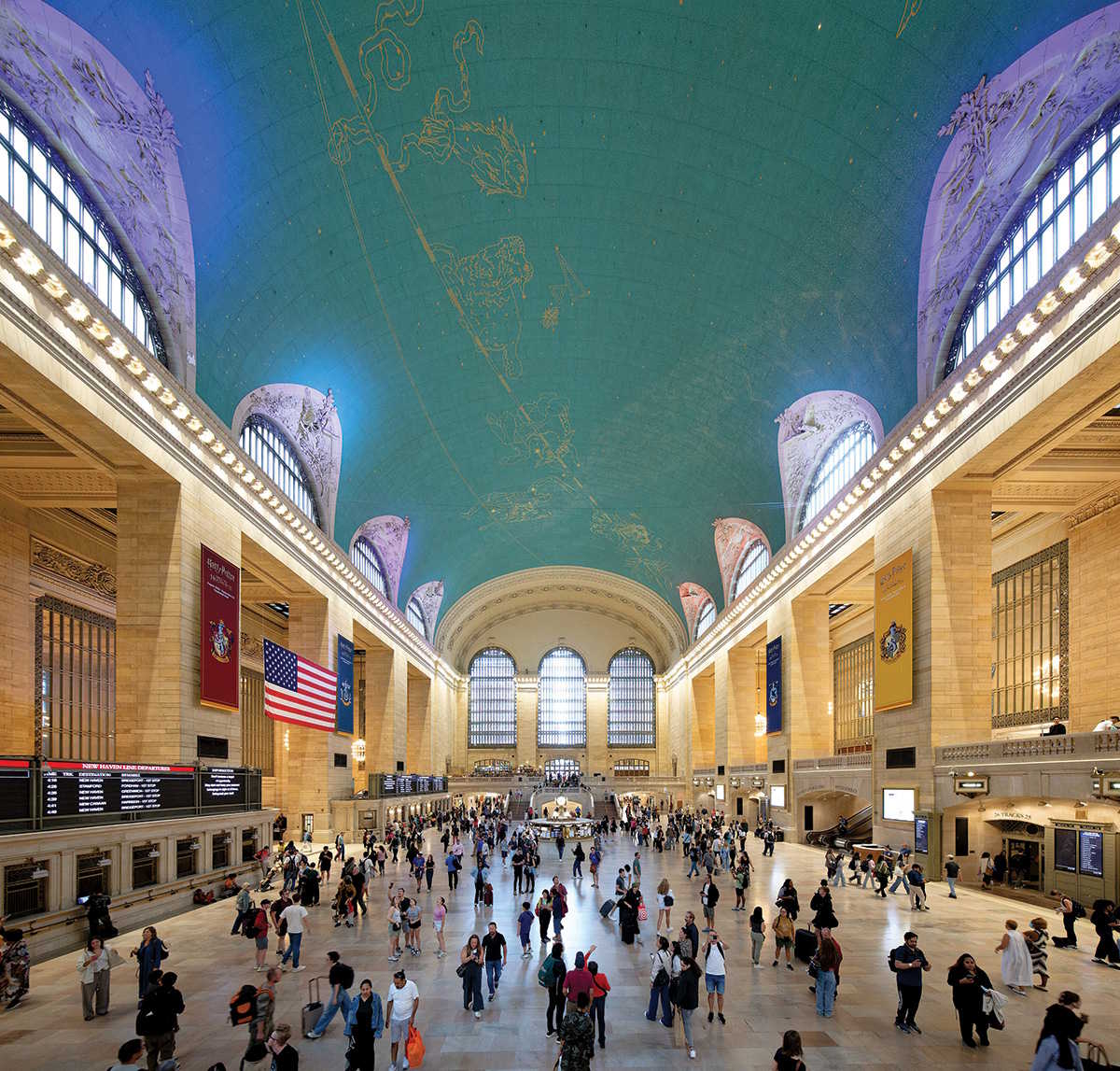
Photo by D. Benjamin Miller via Wikimedia Commons
Grand Central Terminal (1904–13) in New York City, by the Associated Architects (Reed & Stem and Warren & Wetmore)
Peter Pennoyer, Peter Pennoyer Architects: Grand Central is an emblem of the American tendency to marshal the resources of commerce toward the expression of civic pride. The genius of its design is the integration of novel approaches to both transportation and technology with a building inspired by history. Because electrification of the trains allowed the tracks to run below grade, the architects were able to create an unencumbered monument. The principal facade, with its three colossal arched windows and heroic sculptural group, is a masterful expression of Beaux-Arts architecture. Inside, the complex weave of ramps and passageways connects rail, vehicular, and subway transit. The main concourse under its celestial ceiling remains one of the greatest public spaces in the U.S. Grand Central is also at the heart of urban planning and preservation. The extension of the development as Terminal City was the most fully realized manifestation of the City Beautiful movement. And the power the terminal holds as a civic monument led the railroad to forgo a profitable tower atop the building.
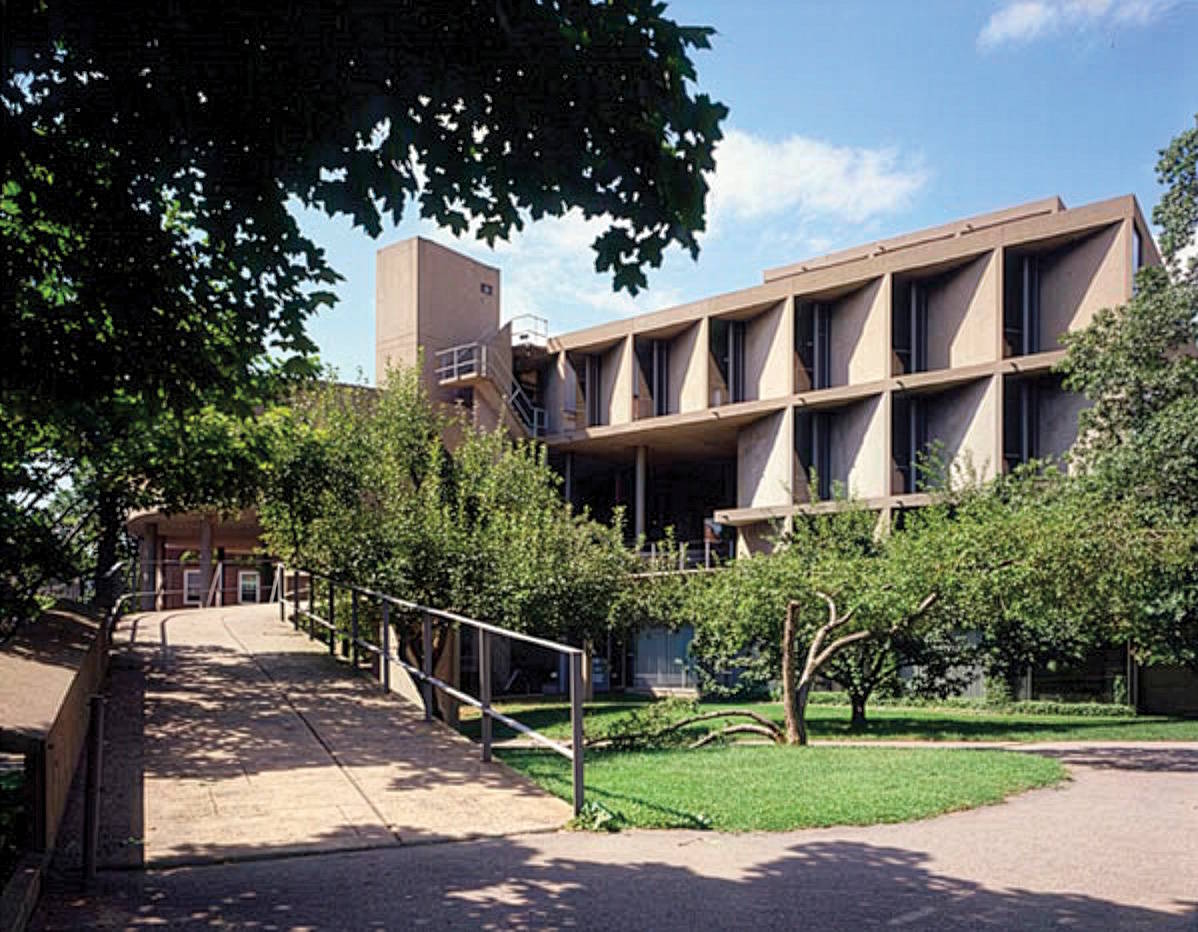
Photo © Ezra Stoller/Esto
Carpenter Center for the Visual Arts (1959–63) in Cambridge, Massachusetts, by Le Corbusier
Bernard Tschumi, Bernard Tschumi Architects: Le Corbusier famously advocated for “Five Points of Architecture.” Viewed today, his remarkable Carpenter Center suggests another set. Point 1—Get the job: How did Corb win his only built commission in the U.S.? Thanks to the recommendation of Harvard GSD dean José Luis Sert. Carpenter Center is simultaneously practical academics and theoretical practice. Point 2—Not a monument: As opposed to most American architectural icons, Carpenter Center has no facade, no front or back. It is nonmonumental, an anti-object. Point 3—Provocatively urban: Carpenter Center’s twisted interior public passage challenges the regularity of the street grid by proposing a poetic but often deserted connection to its urban context. Point 4—Impossibly programmatic: Carpenter Center’s passage divides related functions and activities to better display their independent existences, namely an art gallery (production, praxis) and an art school (education, teaching). Point 5—Get it built: Though designed by a European architect, Carpenter Center is unexpectedly American, an early postmodern architectural manifesto that is simultaneously both/and.
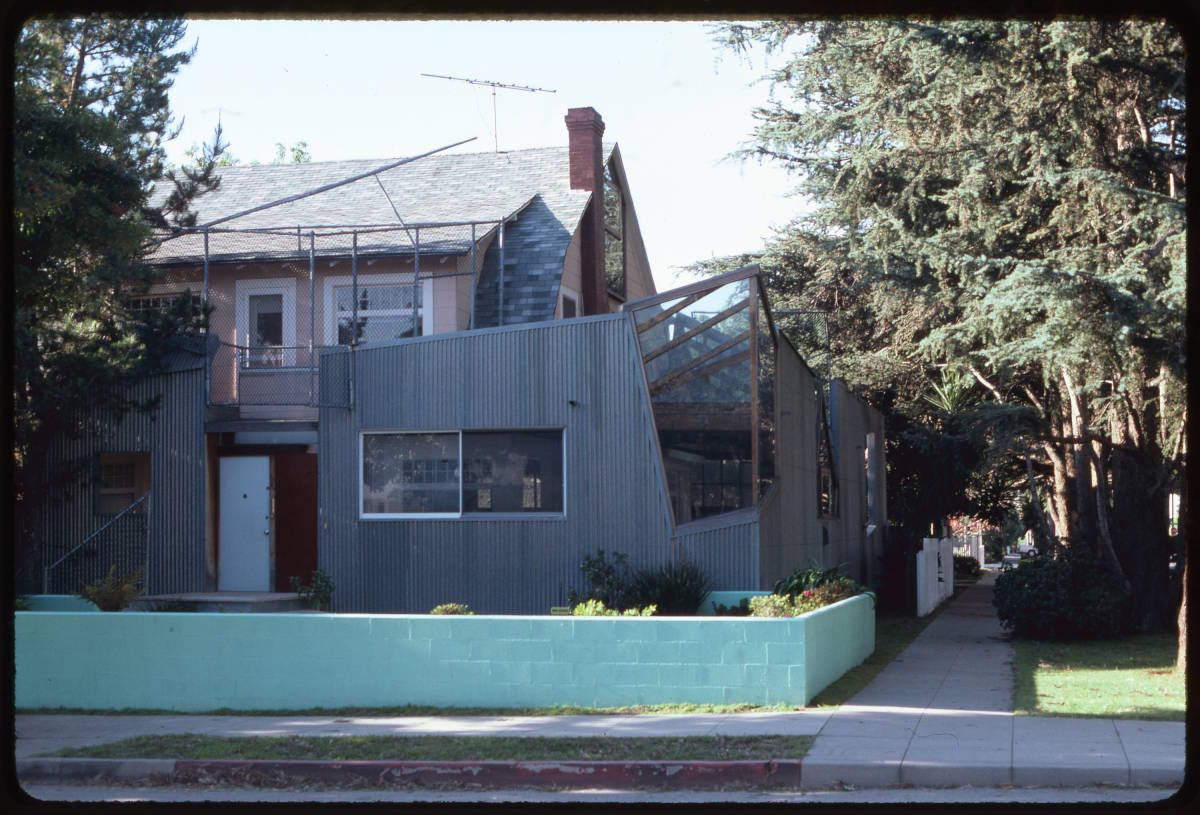
Photo by André Corboz via Wikimedia Commons
Gehry House and Studio (1978) in Santa Monica, California, by Frank Gehry
Mack Scogin and Merrill Elam, Mack Scogin Merrill Elam Architects: Frank Gehry’s house threw a life jacket of imagination to and set contemporary architecture free from the precision and strictures of the modern movement. It predicted the energy of inclusion and difference in American society. Simply put, his house celebrates the human condition. At once messy and variegated in its tectonics, it is a riot of form, material, and texture. Inclined planes reside where vertical planes are usually found. Asphalt is the material of choice for the kitchen floor. Daylight floods in through unexpected ways. In the backyard, a hardware store grade grill is ready for hot dogs and hamburgers, a good-old backyard cookout. The house reconfigures the American dream in a way never before seen. It establishes a new starting point, pushing aside postmodern classicism—an embarrassing moment in the history of architecture. The house is an unabashed declaration of confidence in the future of mankind.
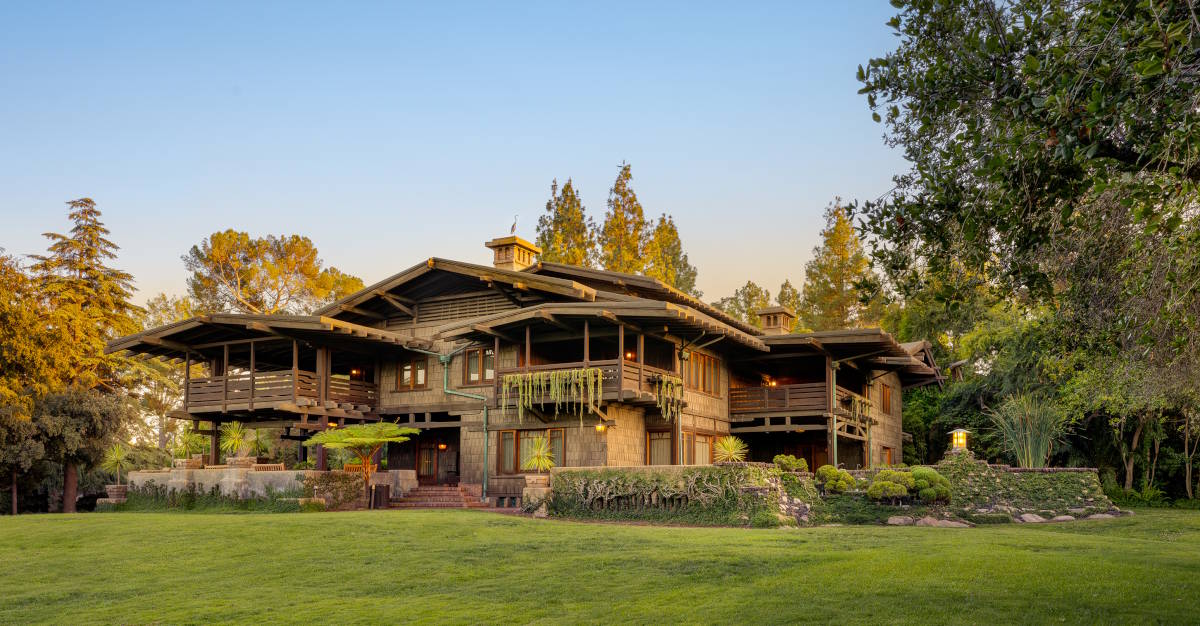
Photo © Alexander Veritkoff
Gamble House (1908) in Pasadena, California, by Greene & Greene
Thomas A. Kligerman, KligermanAD: Brothers Charles Sumner and Henry Mather Greene’s 1908 cottage for Proctor & Gamble heir David B. Gamble stands as the supreme arts-and-crafts bungalow—an American Gesamtkunstwerk, seamlessly blending every corner, from timber to wood peg. Like a magician’s fanned card deck, the exterior is a horizontal show of balconies, rafters, purlins, broad eaves, and deep overhangs. Transparent sepia and khaki tones pick out shingles, posts, and beams and contrast with the house’s russet-colored brick chimneys, driveway, and paths. A low front door wide enough for three abreast leads to burnished interiors, lined with pillowy teak and mahogany. Stained glass imbues an amber glow; every smooth surface invites touch. The house draws from a panoply of foreign precedent, from Japanese joinery to the Swiss chalet, all of which inventively converge in a house of remarkable warmth.
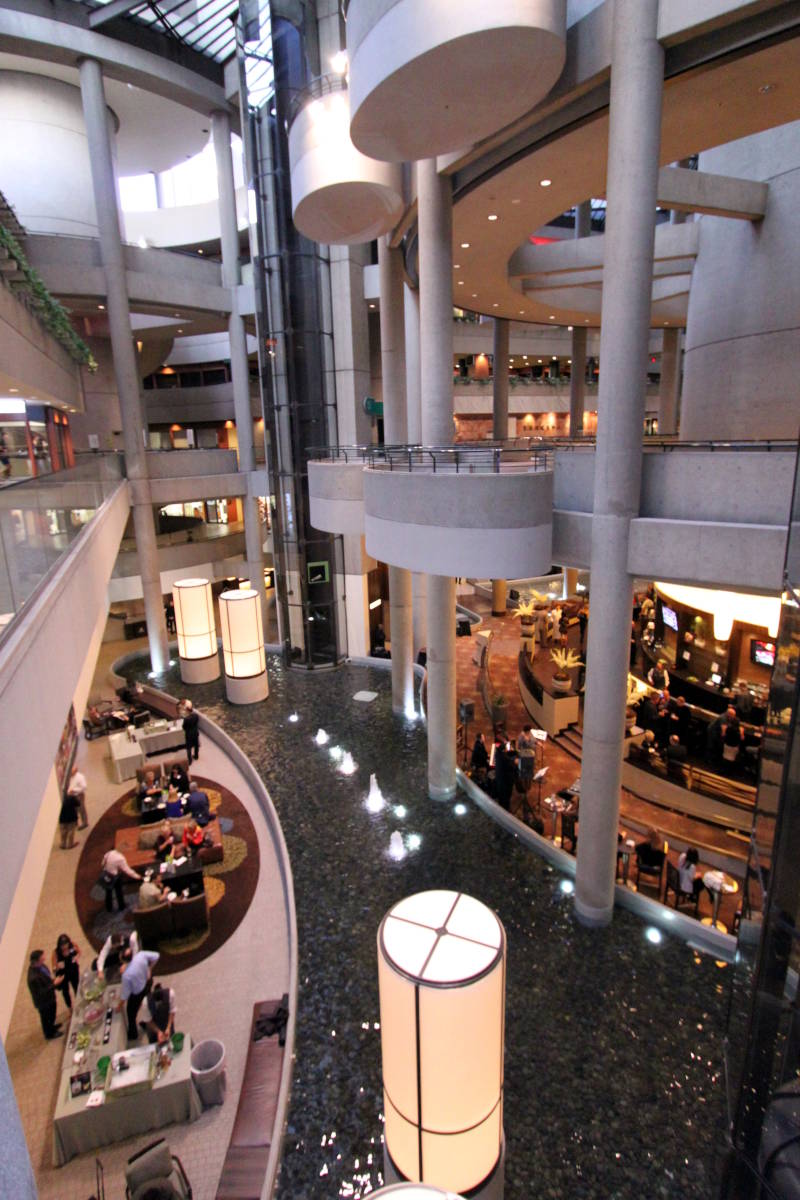
Photo by Prayitno via Wikimedia Commons
Westin Bonaventure Hotel (1977) in Los Angeles, by John C. Portman, Jr.
Nathan Hume, Hume Architecture: Throughout the late 20th century, John Portman designed lavish atriums across America that functioned as oases, offering respite through vertical theater stuffed with bridges and kinetic elevators. Famously stumping Fredric Jameson with its uncelebrated entryway, the Bonaventure produces profound awe once you pass the blank entrance from street into the dizzying expanse within. There’s been much hand-wringing over the interior and its labyrinthine ways. In reality, it’s not so confusing and considerably more fun than the dystopic descriptions of its critics. Less of a sensory overload than contemporary shopping malls but spatially breathtaking. A city within a city, the inner streetscapes, stacked and connected with spiral stairs and walkways looking into the central atrium, saw shopping ebb and flow. Outside, Los Angeles teetered on bankruptcy, emptied out, and got quiet at night. This blank building featured as prominently in film and television as it did in the writings of theorists. It’s an inner world filled with lobe-like balconies—a stage to watch from and to be watched. It’s brutally serious and playfully eccentric—qualities of its era, when things were a bummer but not without a glimmer of surprise and optimism.
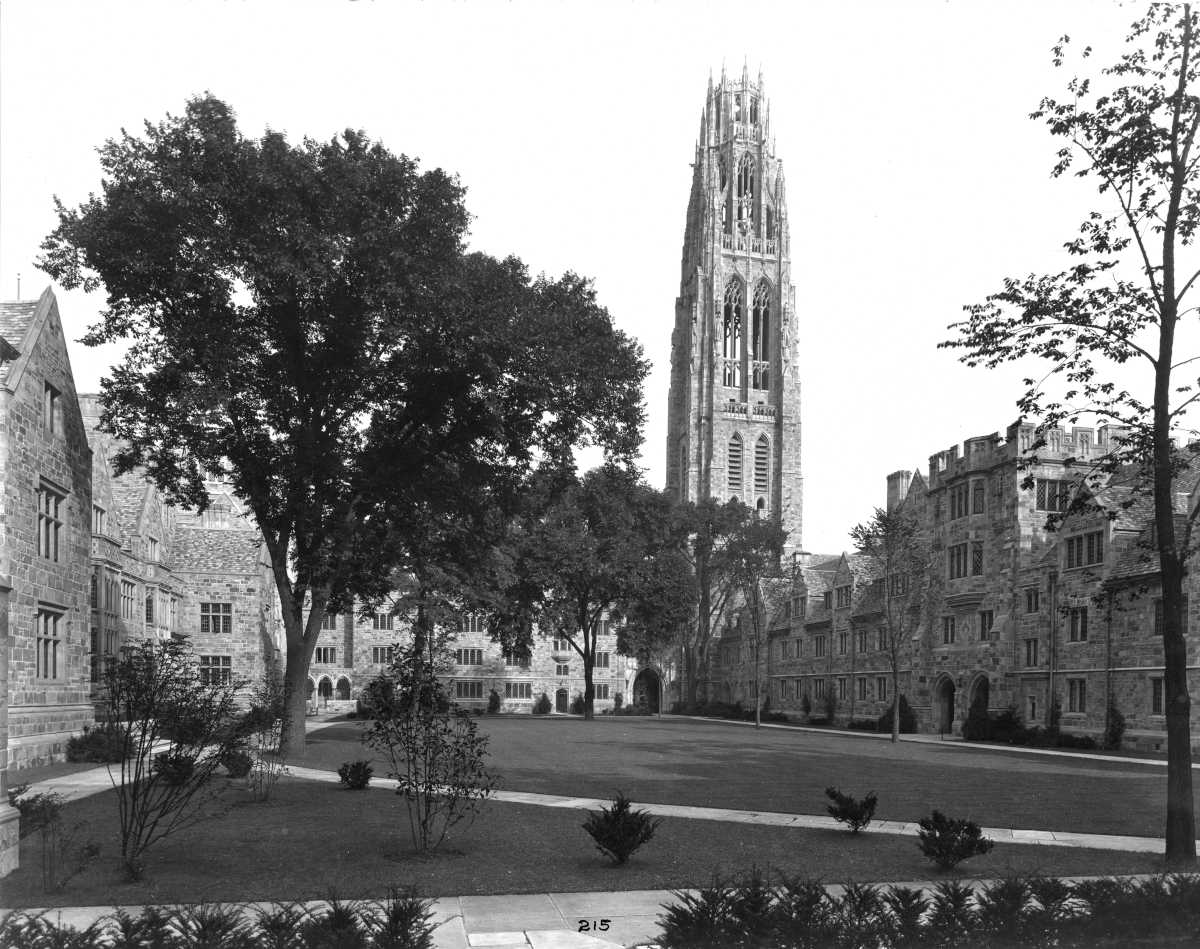
Photo: Yale University, Manuscripts & Archives Division
Memorial Quadrangle (1921) in New Haven, Connecticut, by James Gamble Rogers
Melissa DelVecchio, RAMSA: Architect James Gamble Rogers’s Memorial Quadrangle (now Branford and Saybrook Colleges) marked Yale University’s transformation into one of America’s great Collegiate Gothic campuses. Yale president Arthur Hadley envisioned the building’s beauty as a kind of post–World War I healing, capturing the “spirit of the place” that gives a campus life—generations of students learning from the past while aspiring to build a brighter future, together. Rogers’s composition of courtyards of varying sizes, framed by buildings of different heights, offered an inventive take on the Oxford and Cambridge tradition, particularly well-suited to New Haven’s urban density and climate, and built to last. True to Hadley’s prediction that it would become a place where “life and loyalty can grow and to which tradition and sentiment can attach,” it remains a beloved home for students and a sustainable model for vibrant campus life.
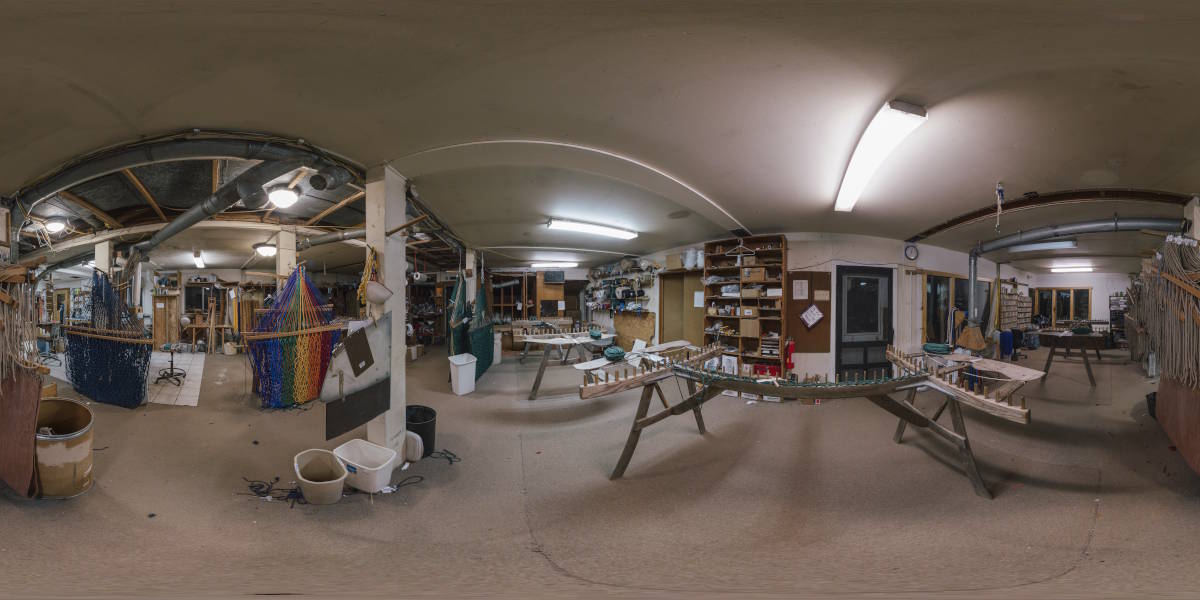
Photo © Andres Jaque / Office for Political Innovation
Twin Oaks Community (established 1967) in Louisa, Virginia, by Kat Kinkade et al.
Andres Jaque, Columbia: Twin Oaks is not significant because it produced remarkable buildings. It is significant because it dissolved architecture into a broader ecology of relations. Founded in Virginia in 1967 by a group of countercultural experimental designers who were inspired by B. F. Skinner’s Walden Two, the community treated wooden structures, space, labor, governance, care, and production as components of a single design project. Its houses, workshops, kitchens, agricultural facilities, and communal infrastructures operate as devices through which everyday life can be collectively negotiated and continuously redesigned. What has emerged is a living protocol for coexistence that, over time, has expanded to include experimentation with gender, kinship, and collective care. The community’s hammock production, organized through collaborative fabrication and distributed labor, extended this project beyond the site itself, transforming material culture into a vehicle for circulating alternative social arrangements. Twin Oaks is important because it demonstrates that architecture is not limited to the production of form. It is a technology for organizing interdependence, redistributing agency, and rehearsing other possibilities for living together.
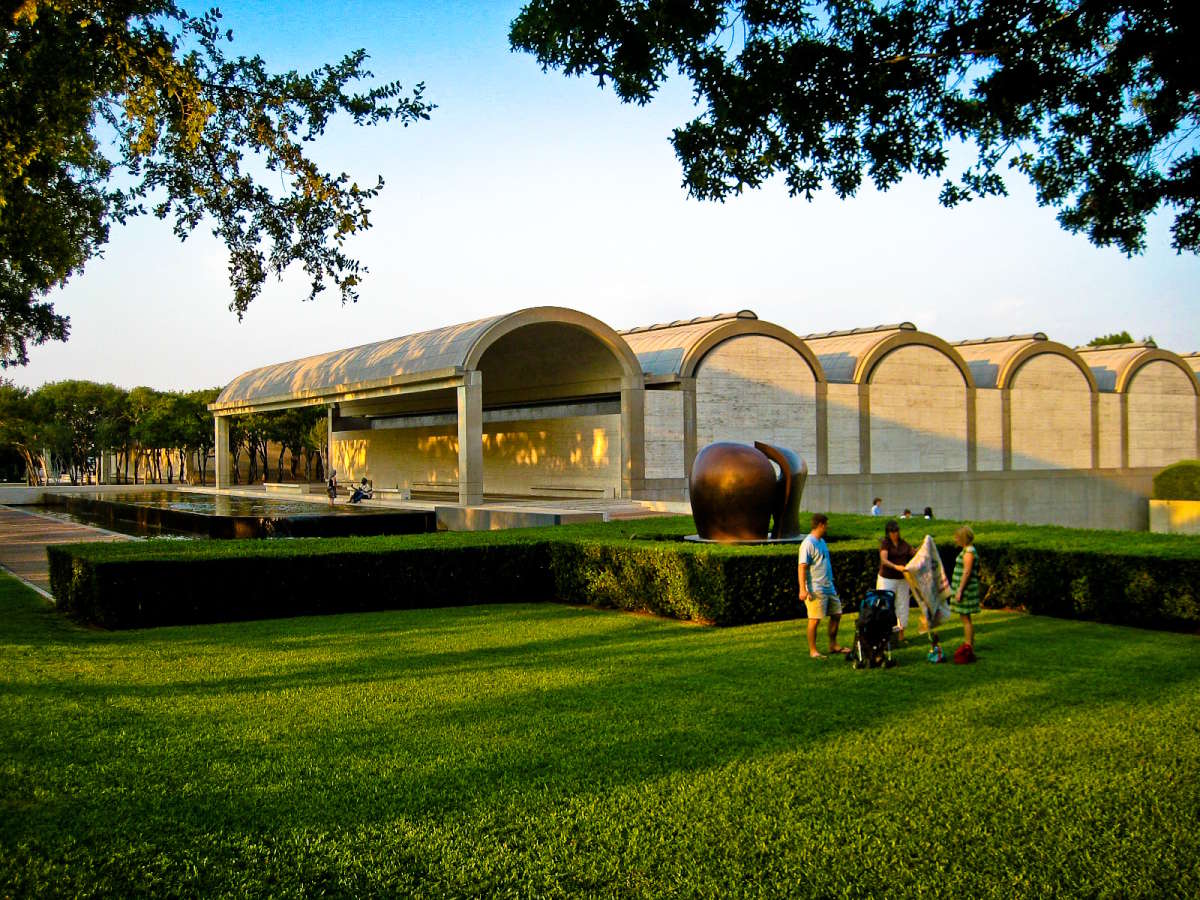
Photo by Kevin Muncie via Wikimedia Commons
Kimbell Art Museum (1966–72) in Fort Worth, Texas, by Louis Kahn
Roy Decker and Anne Marie Duvall Decker, Duvall Decker Architects: The Kimbell Art Museum is widely regarded as one of the masterpieces of modern public architecture and, in our minds, one of Louis Kahn’s best. Its significance lies in the integration of structure, light, materials, and human experience. The vaults simultaneously support the building, define space, and shape the experience of light and art. Kahn believed architecture begins in the realm of human longing, takes form through measurable means, and returns to experience, meaning, and emotion beyond measure. The Kimbell reminds us that architectural space can be critical, educational, and therapeutic. The building seems to be alive; its character, dimensions, textures, colors, and art shift with the hour and the weather. As clouds pass over the galleries, the space darkens, seeming to draw breath, and then it opens again, luminous and expansive. The dimensions and character of the space remain in motion. The visitor is drawn into the full-bodied experience of the moment—the environment, building, and art. This quality of aliveness resists reductive description and opens the possibility of inquiry into broader formal, spatial, and environmental qualities and relations.
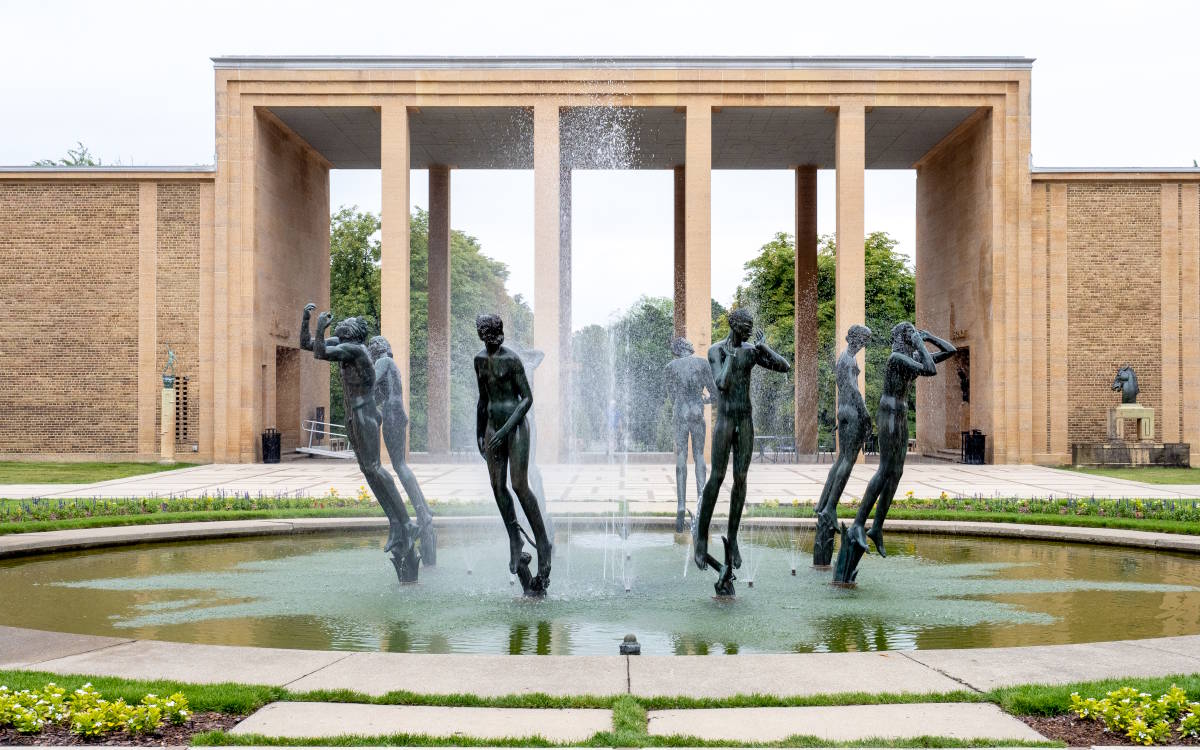
Photo by Ajay Suresh via Wikimedia Commons
Cranbrook Academy of Art (1932) in Bloomfield Hills, Michigan, by Eliel Saarinen
Rafael Pelli, Pelli Clarke & Partners: The Cranbrook Academy of Art, based on the arts-and-crafts educational model from Europe, was a hotbed of design thinking in the 20th century, producing figures across every design discipline who went on to shape the way we live today. What always intrigued me about the arts-and-crafts movement was that it never sought a fixed set of rules about form or expression but rather embraced an open-ended approach. In many ways, the movement spoke to the American entrepreneurial character, celebrating individuals who tinkered, adapted, and made up new techniques. It remains a somewhat unsung strain in the field today. I freely admit to a bias—I was born just a few miles from the campus while my father began his career with Eliel’s son, Eero Saarinen, in the late 1950s, and the Eames House—by two Cranbrook alumni, Ray and Charles—has always been an inspiration.
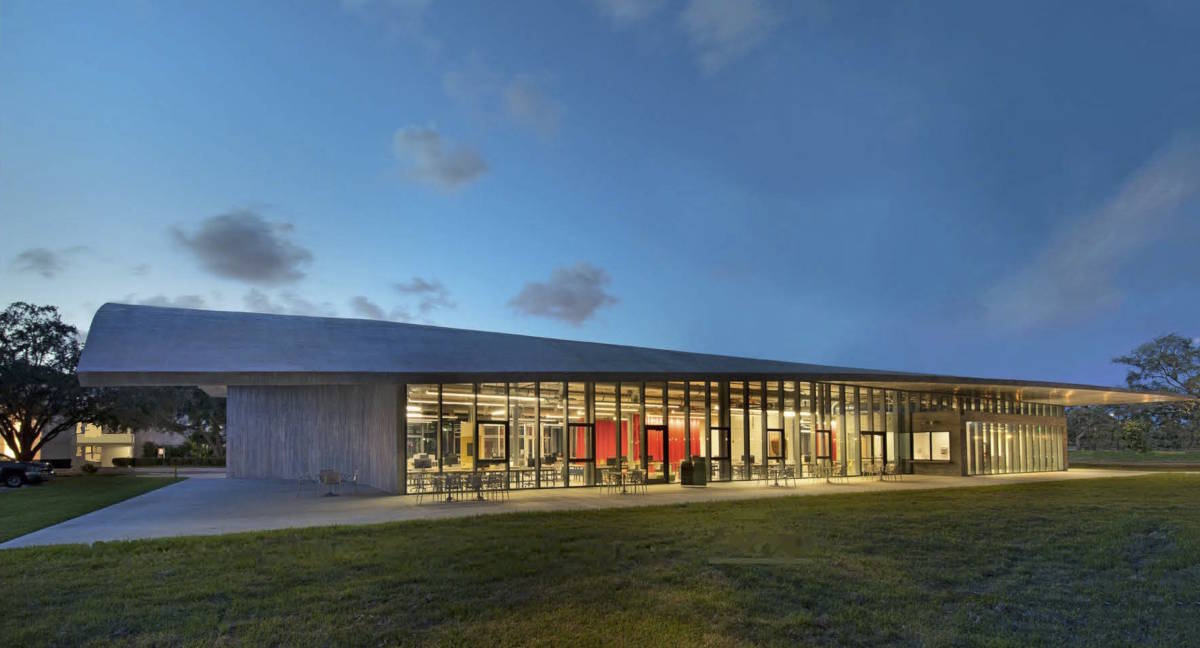
Photo by Miami in Focus
Thomas P. Murphy Design Studio Building (2018) in Miami, by Arquitectonica
Rodolphe el-Khoury, University of Miami: The Murphy Design Studio Building stands as a compelling model of contemporary architectural pedagogy embodied in built form. Designed by Arquitectonica, it reimagines the design studio as an open, collaborative field—an expansive, light-filled environment that fosters interaction, experimentation, and collective learning. Its elegant concrete-and-glass structure, defined by a sweeping canopy and large-span, hurricane-resistant glazing, achieves both technical innovation and spatial clarity. By replacing fragmented studio conditions with a unified, flexible environment, the Murphy Building has reinvigorated studio culture, enabling a productive “messy vitality” essential to design education. Both a pedagogical instrument and an architectural statement, the structure exemplifies how design can shape and elevate the culture of learning.
Looking for a reprint of this article?
From high-res PDFs to custom plaques, order your copy today!