Pierre Lassonde Pavilion
Raise a Glass: A series of stacked glazed boxes offers an alluring street presence for an art museum’s parkland complex.
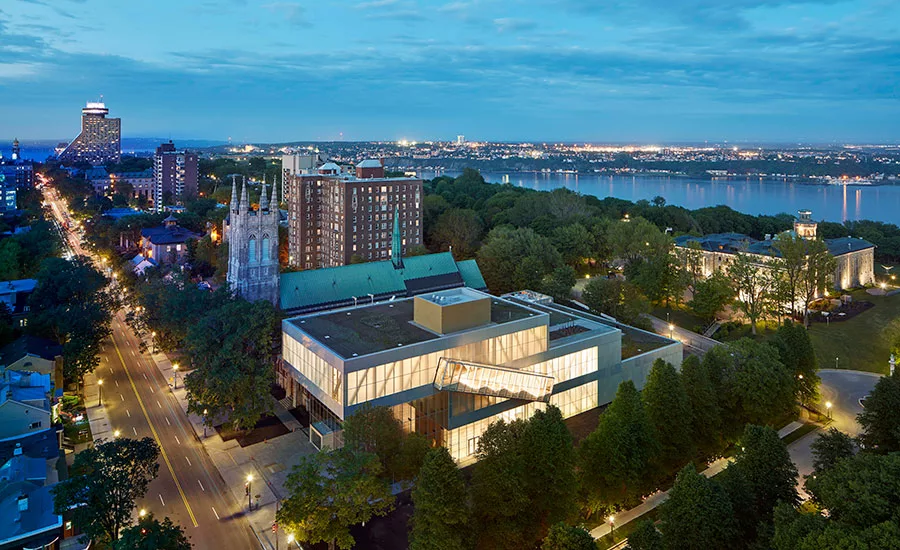
The cantilevering new building is an extension of the historic Parc des Champs-de-Bataille overlooking the St. Lawrence River in Québec City, its terraced roofs planted to mimic the site’s topography.
Photo © Bruce Damonte
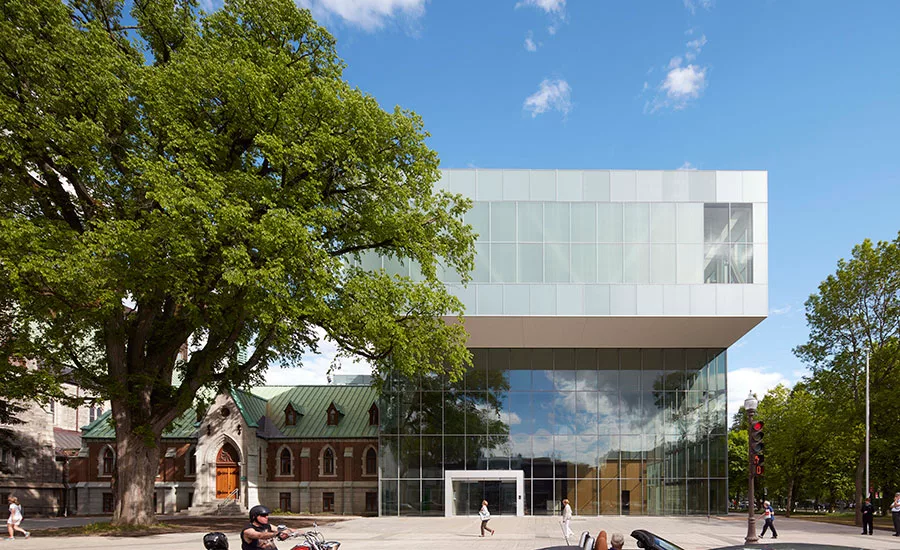
The entrance along the Grande Allée, a main boulevard extending from the city’s old quarter, connects the museum campus to the city.
Photo © Bruce Damonte
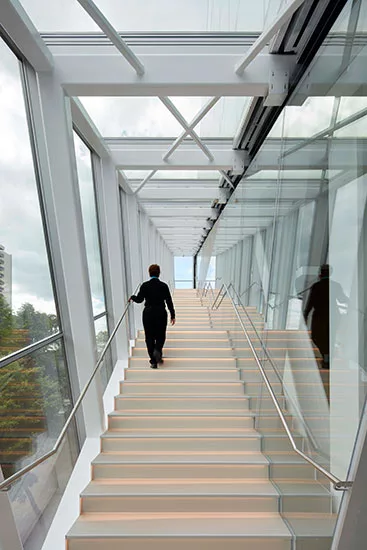
The “stair window” seems to float among the trees.
Photo © Bruce Damonte
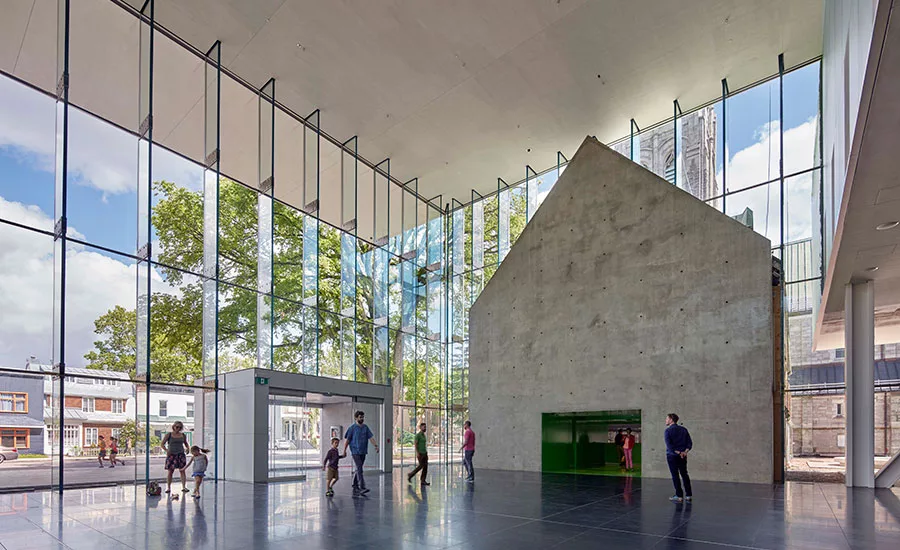
The gable form of the presbytery is mimicked in concrete through the glass wall in the 41-foot-high lobby at the museum entrance.
Photo © Bruce Damonte
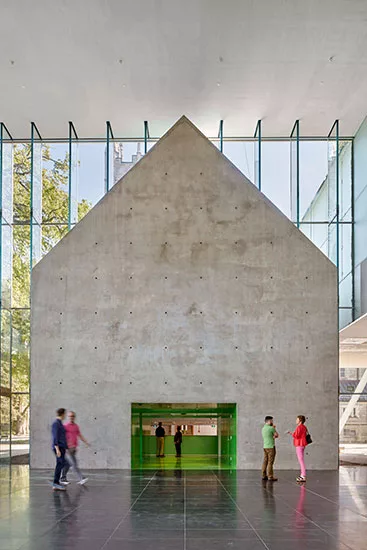
Photo © Bruce Damonte
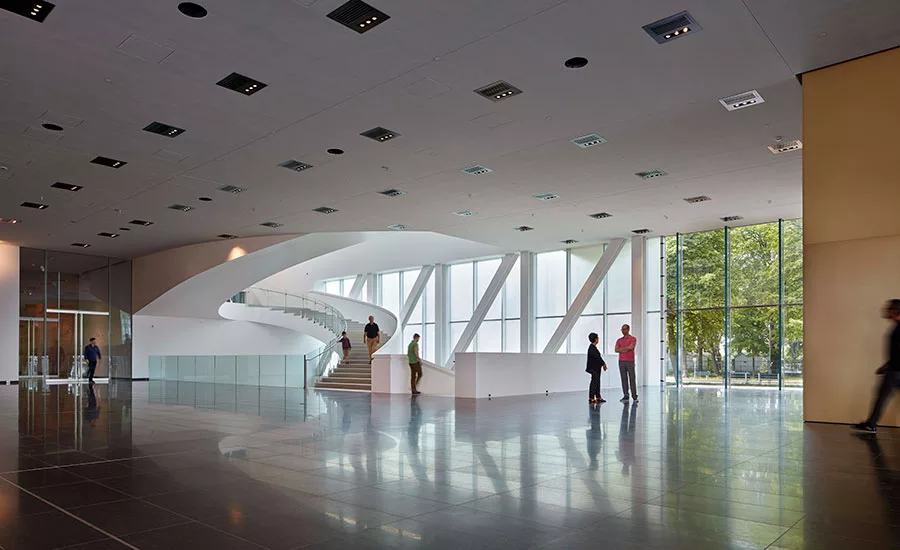
An inviting spiral stair encourages museum visitors to ascend the building by foot from the grand hall.
Photo © Bruce Damonte
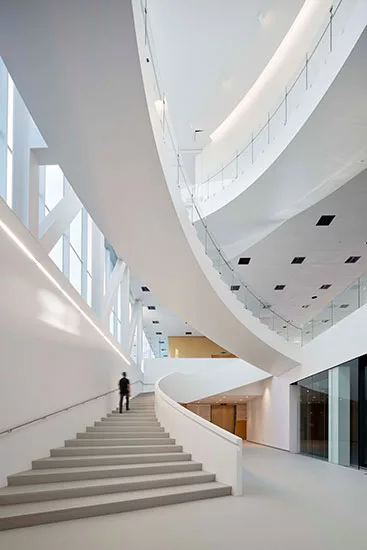
The stair also leads to the basement, where large windows allow daylight streaming from above into the auditorium.
Photo © Bruce Damonte
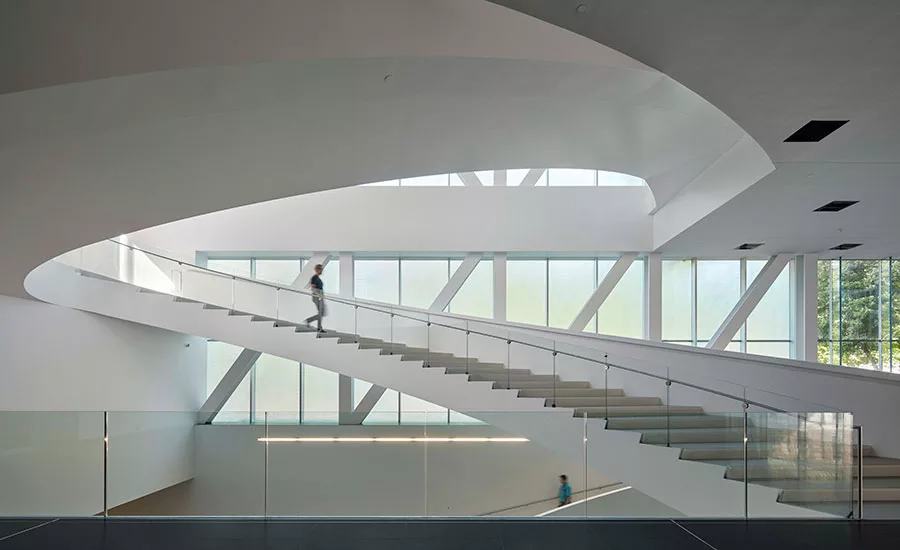
Photo © Bruce Damonte
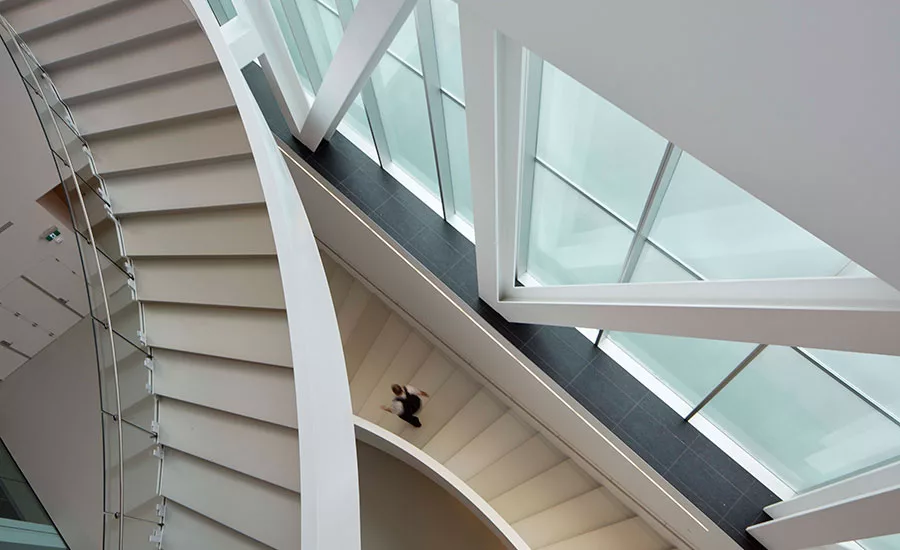
Photo © Bruce Damonte
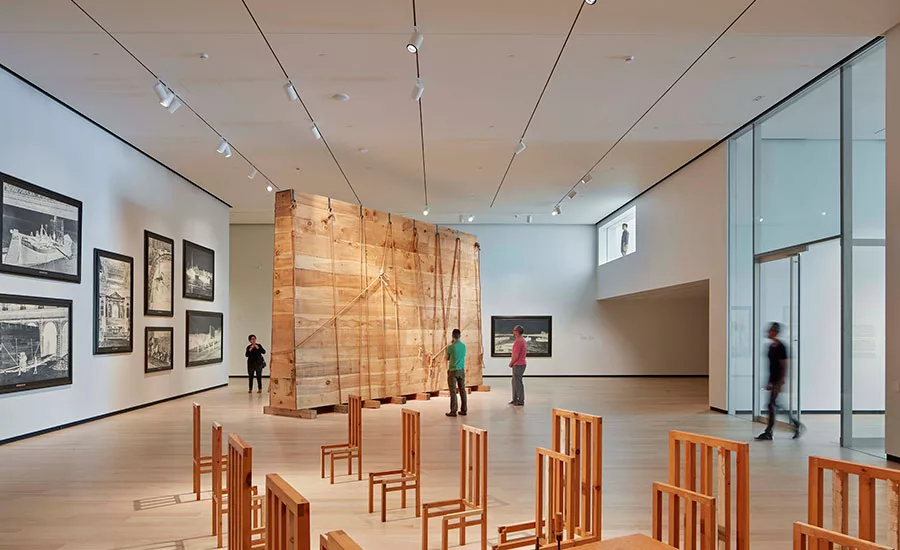
The 18-foot-high ground-floor gallery has been installed with large-format art from the museum’s collection for the opening exhibit.
Photo © Bruce Damonte
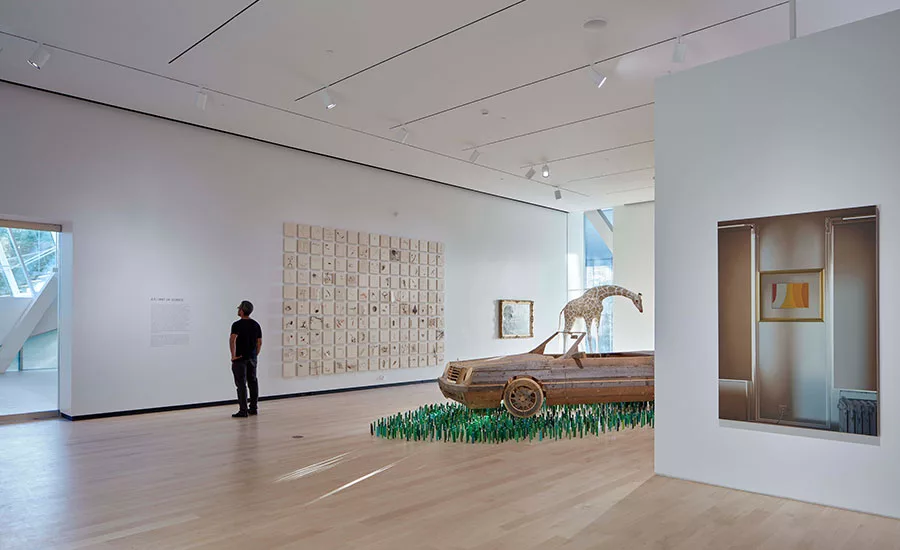
Photo © Bruce Damonte
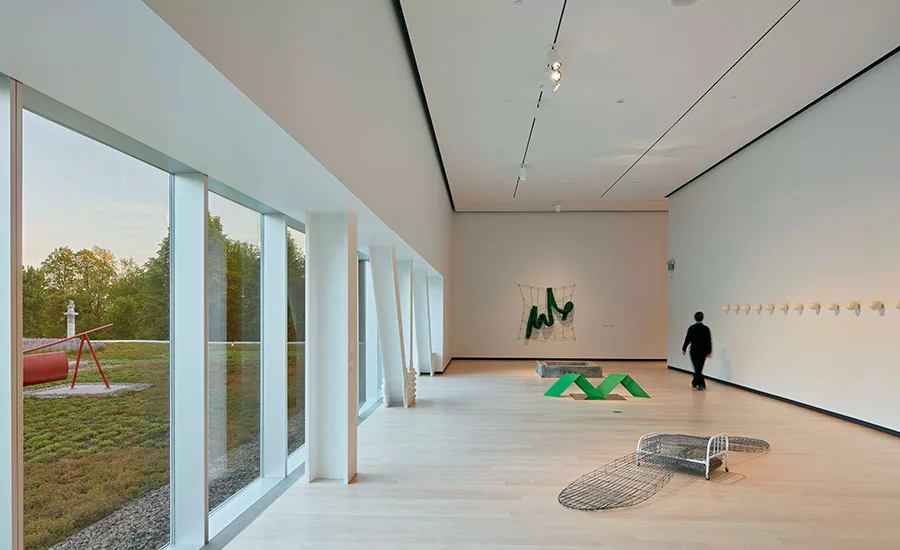
Second-floor galleries have access to ample daylight and views.
Photo © Bruce Damonte
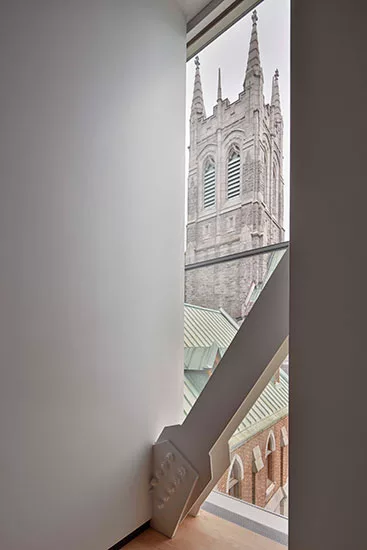
Second-floor galleries have access to ample daylight and views.
Photo © Bruce Damonte
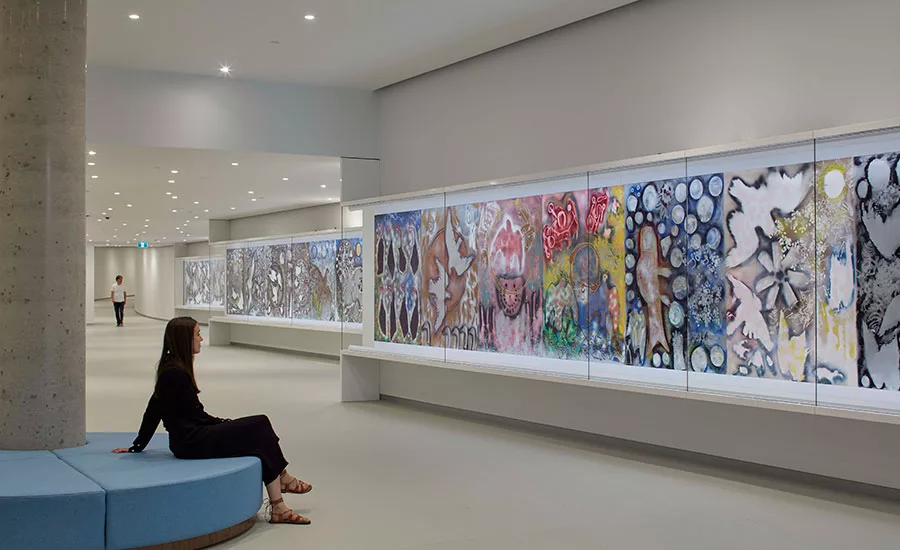
The largest work in the museum’s collection is a sequence of 30 paintings by Montreal-born Jean-Paul Riopelle that hang contiguously in a band stretching over 130 feet in a basement passageway, which connects the new building to the older museum complex.
Photo © Bruce Damonte
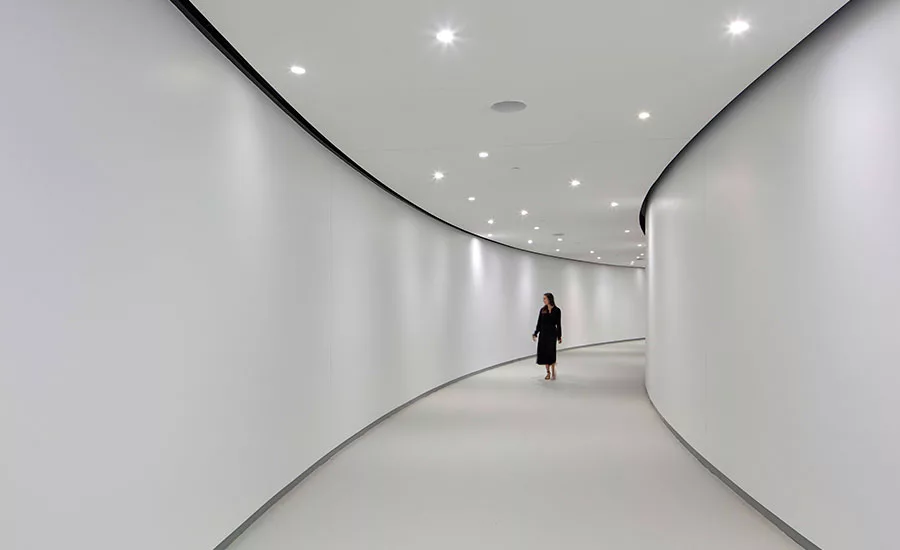
Photo © Bruce Damonte
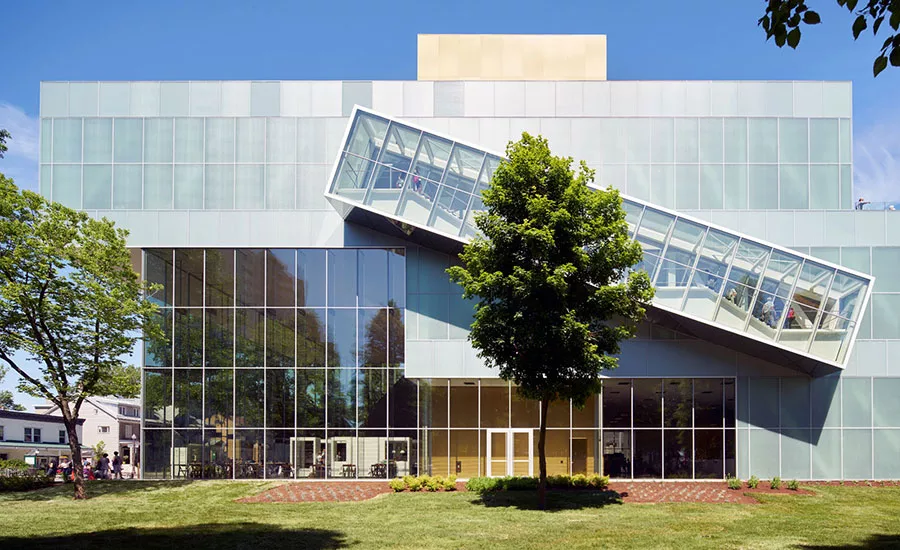
Photo © Bruce Damonte
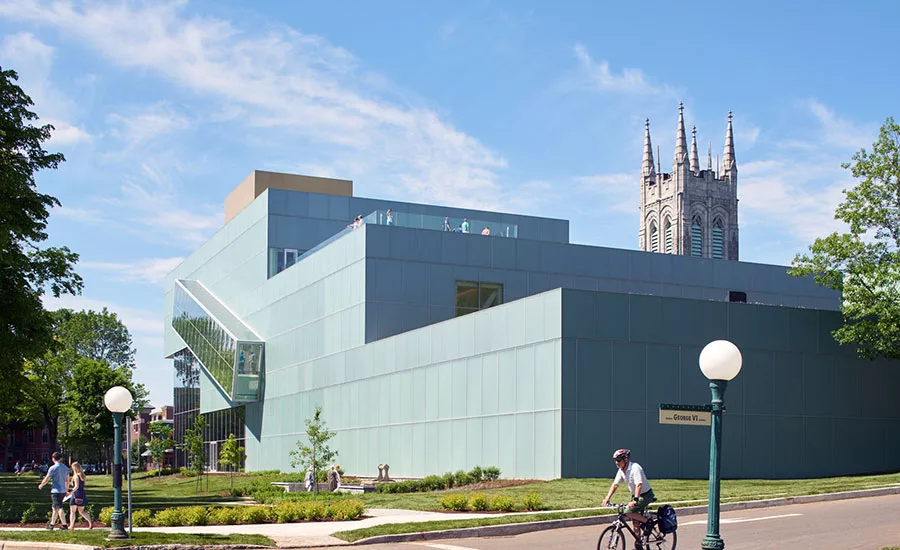
Photo © Bruce Damonte
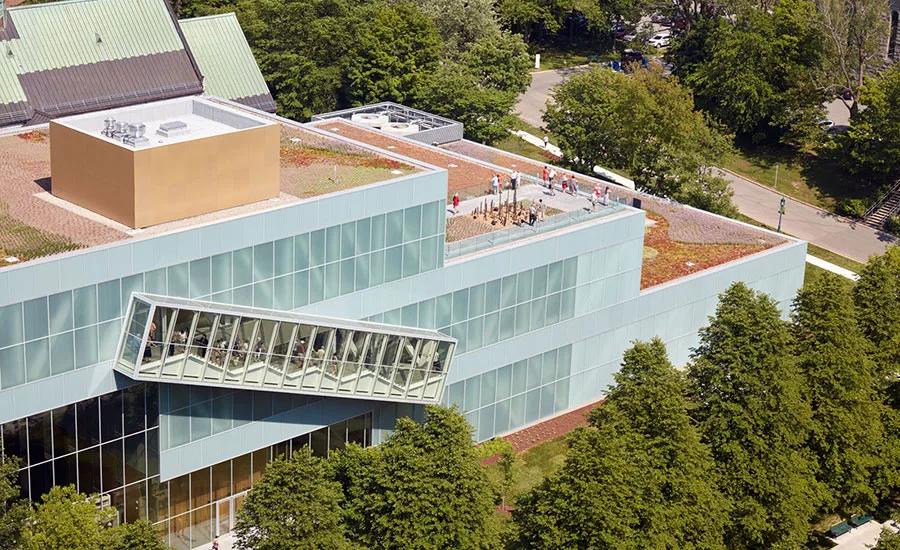
Photo © Bruce Damonte
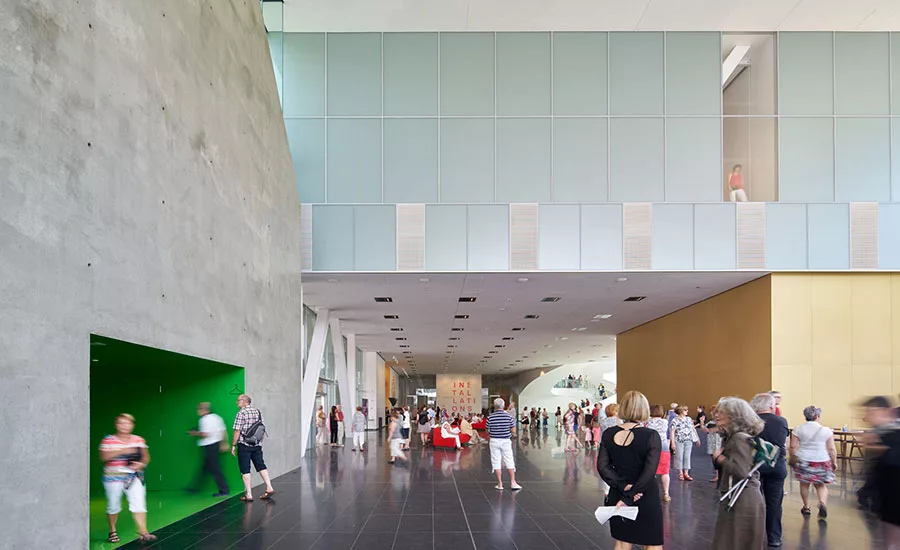
Photo © Bruce Damonte
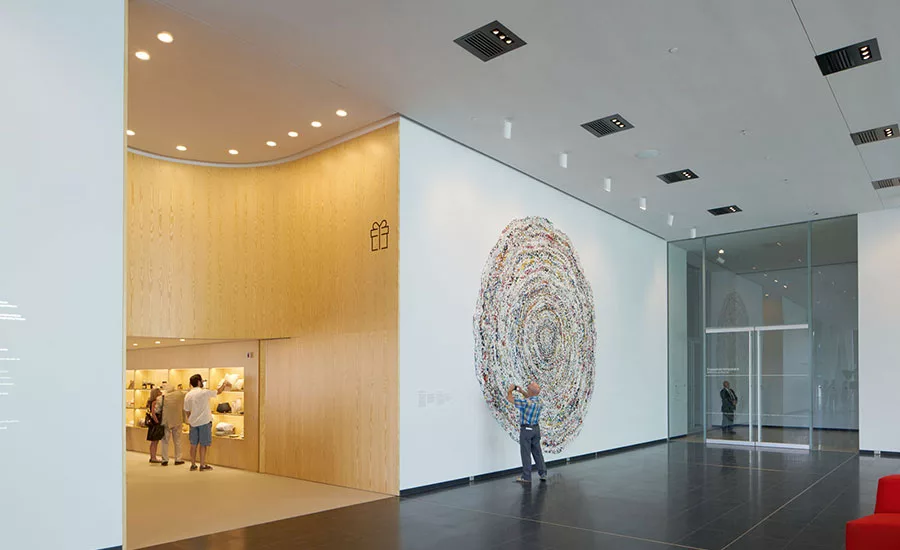
Photo © Bruce Damonte
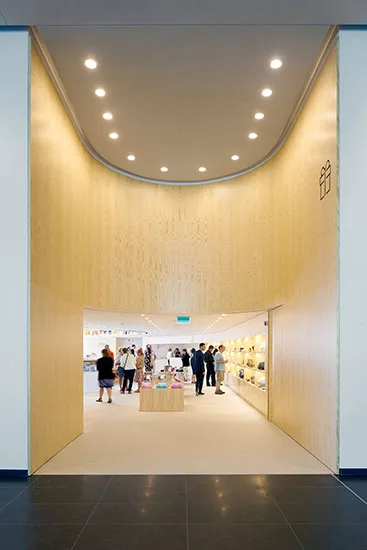
Photo © Bruce Damonte
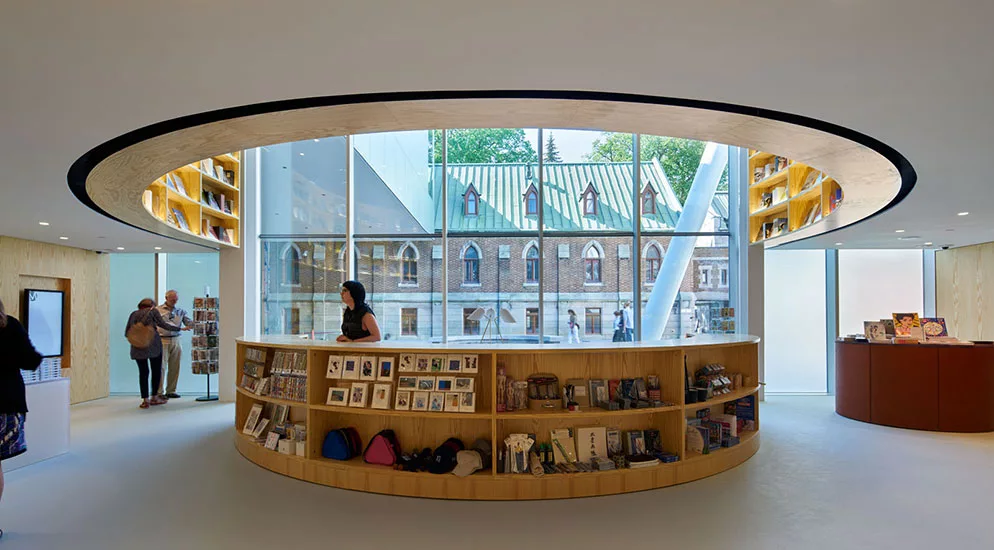
Photo © Bruce Damonte
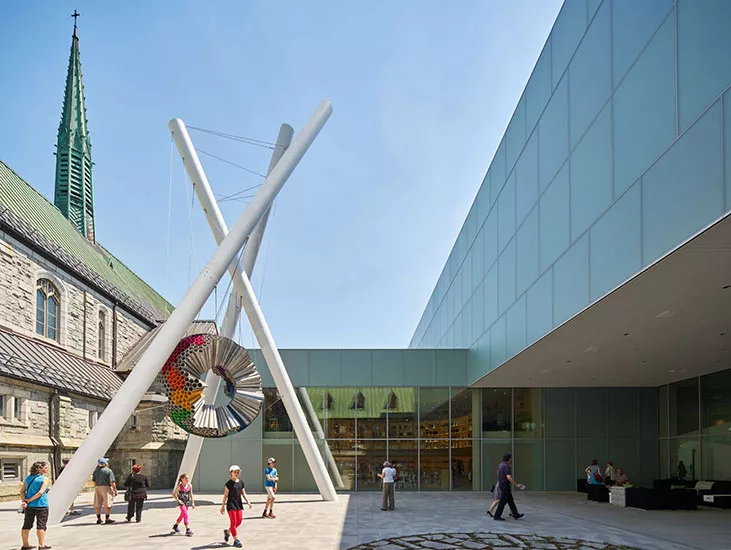
Photo © Bruce Damonte
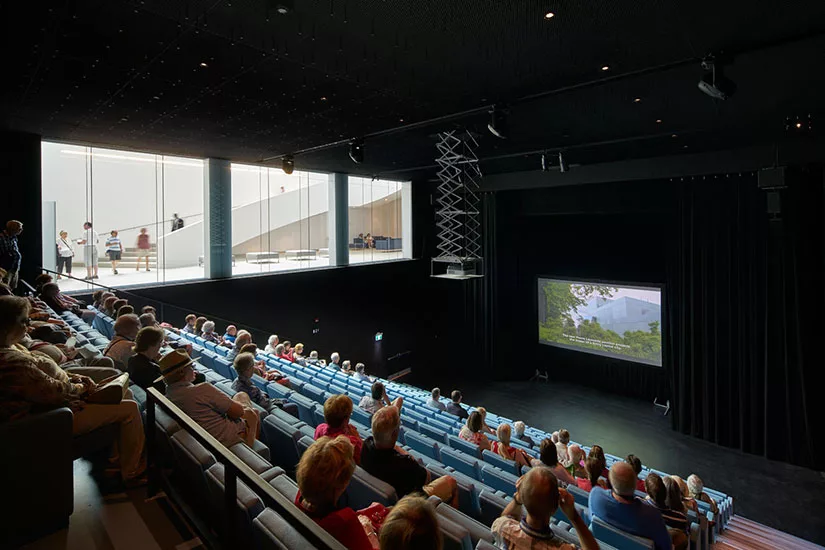
Photo © Bruce Damonte
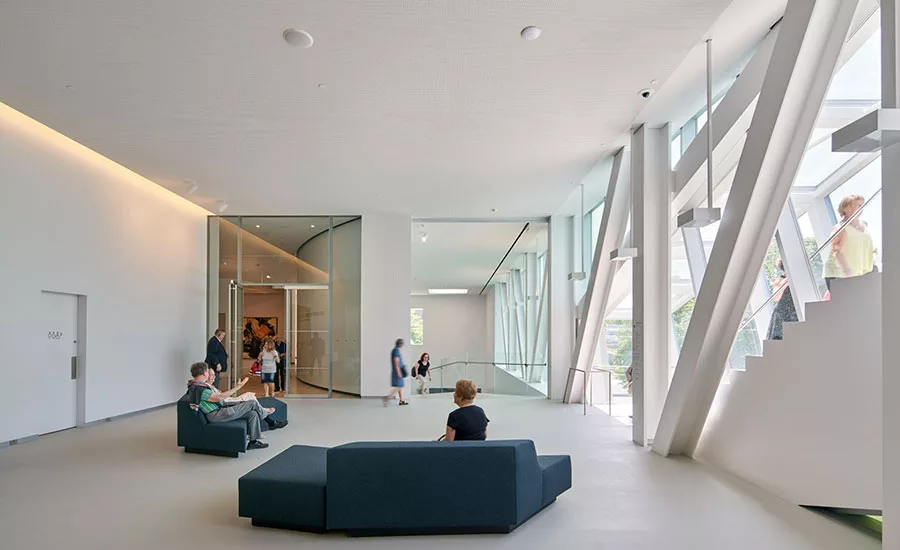
Photo © Bruce Damonte
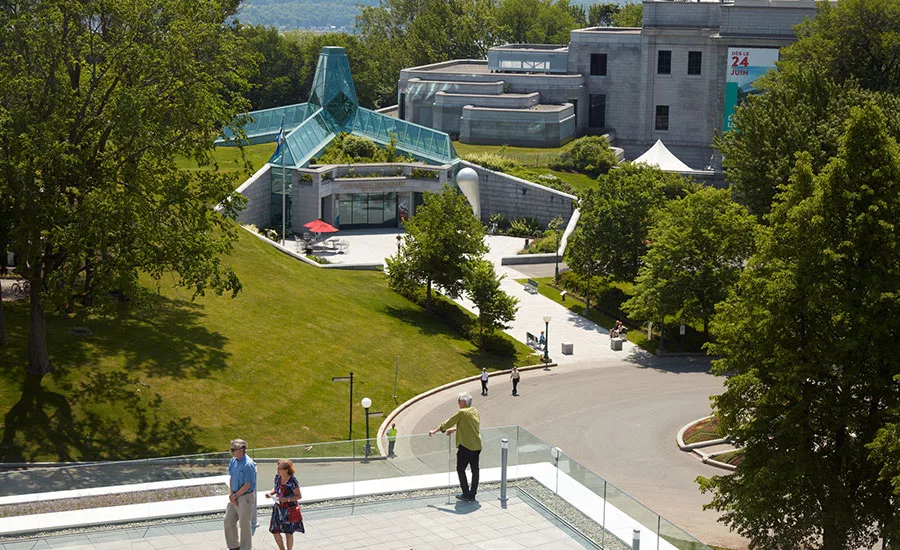
Photo © Bruce Damonte
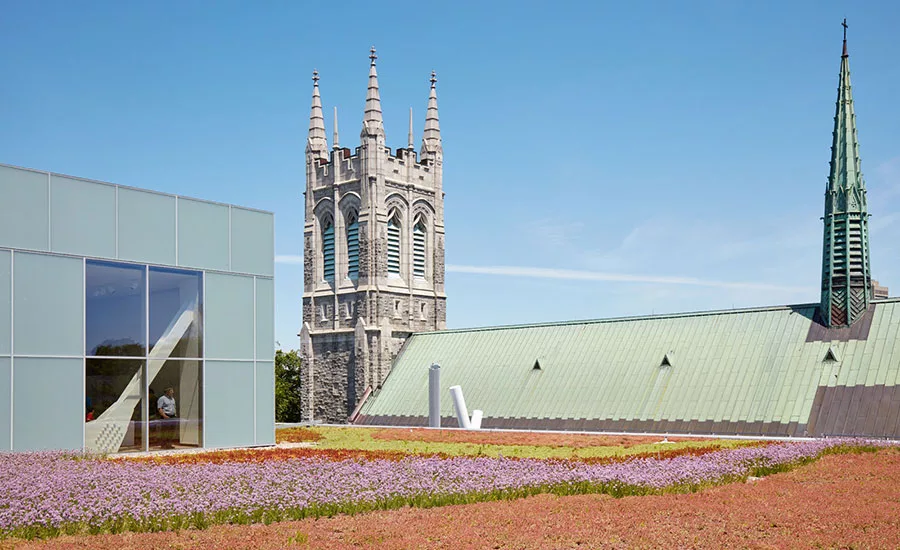
Photo © Bruce Damonte
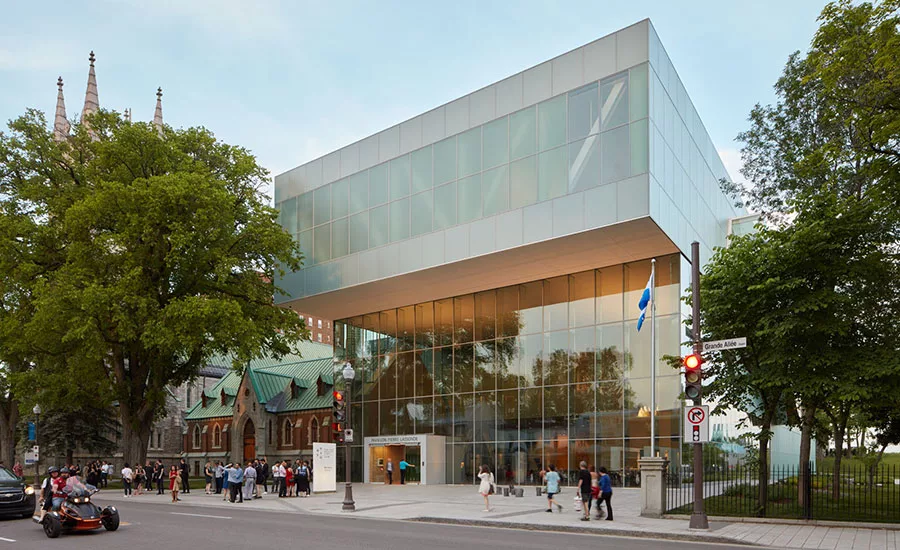
Photo © Bruce Damonte
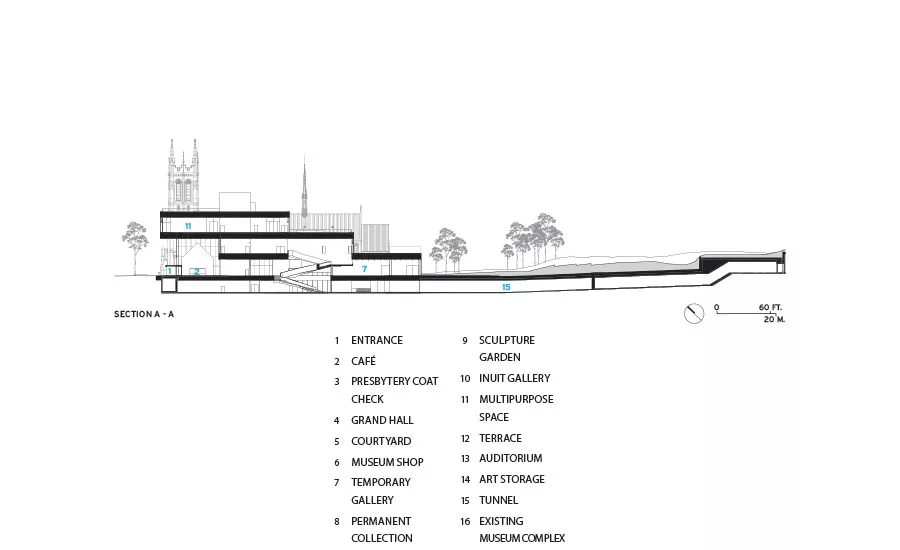
Image courtesy OMA (New York)
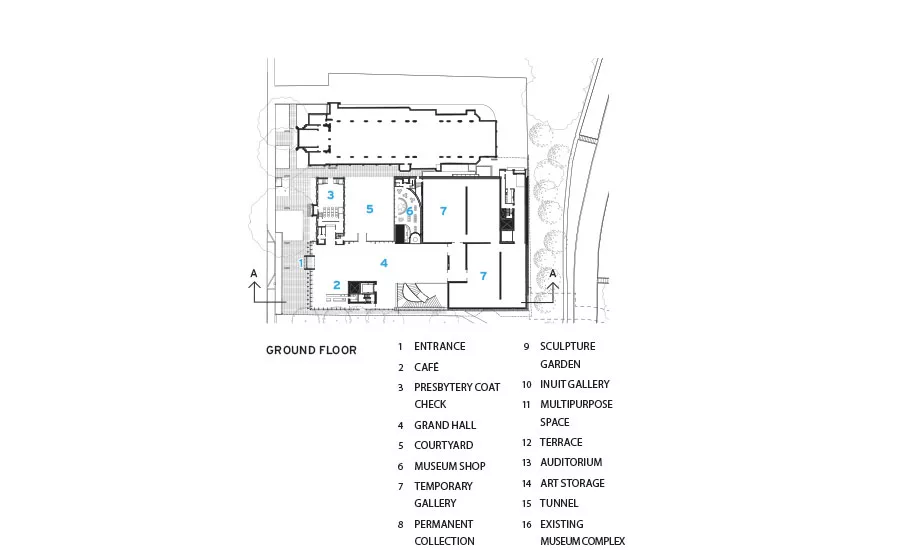
Ground floor plan.
Image courtesy OMA (New York)
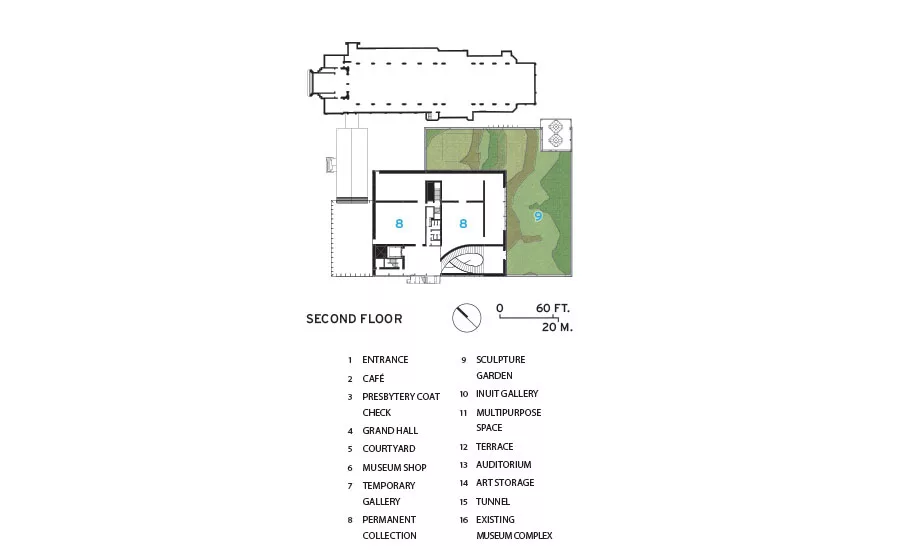
Second floor plan.
Image courtesy OMA (New York)
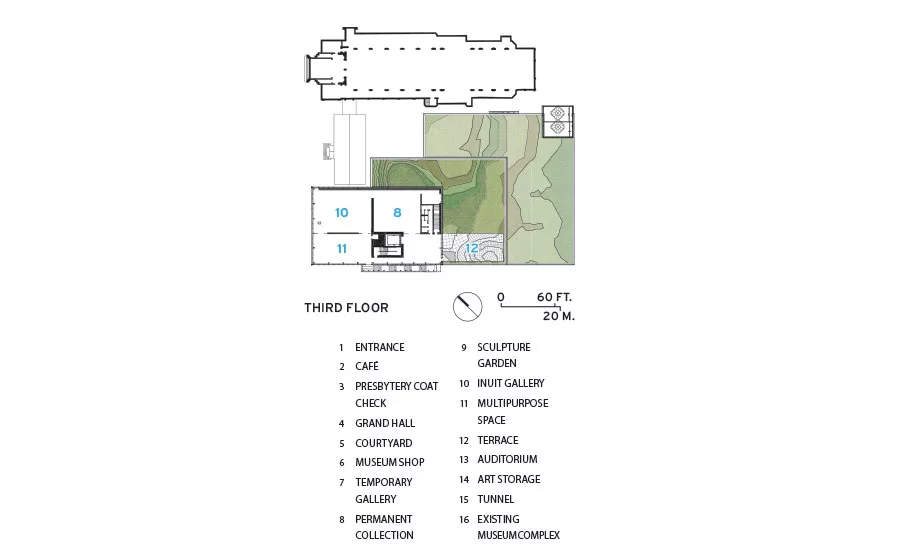
Third floor plan.
Image courtesy OMA (New York)
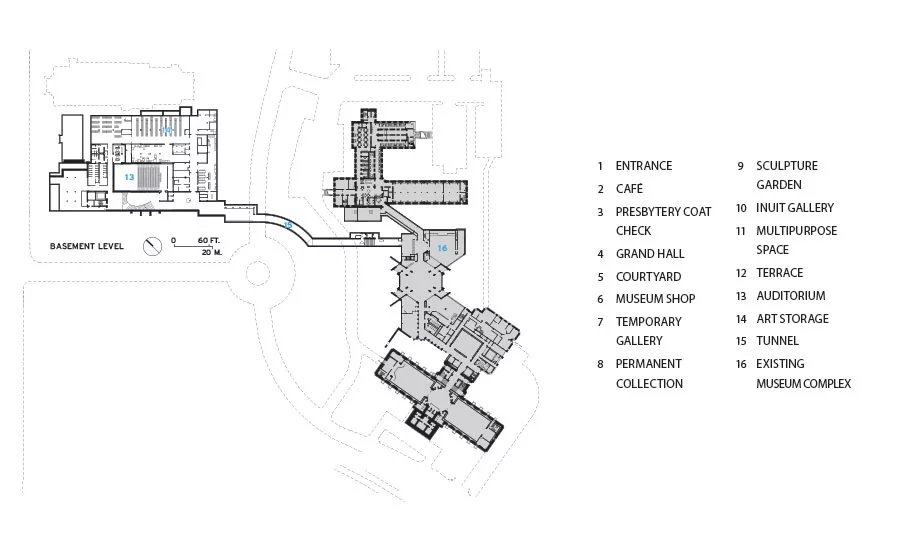
Basement level plan.
Image courtesy OMA (New York)
Architects & Firms
Québec City
Since the 1970s, OMA has established a reputation for pushing the boundaries of architecture—on a theoretical and, then, on a physical level. The worldwide offices of the firm have, in recent decades, completed numerous mixed-use, residential, cultural, and retail projects, often boldly defying gravity and conventional notions of scale and materials. But the public museum is a building type that has mostly eluded them, especially in North America.
True, OMA has found success building museums for private clients in Europe—last year saw the opening of the Prada Foundation in Milan and the Garage Museum of Contemporary Art in Moscow (RECORD, July 2015, page 56 and 50, respectively). On this side of the Atlantic, the New York office, which works somewhat independently from the Rotterdam headquarters, has tackled a variety of often smaller art spaces, including galleries, studios, and residences, collaborating with artists and collectors Marina Abramović, Cai Guo-Qiang, Robbie Antonio, and Alan Faena. Now, finally, it has a full-fledged museum under its belt with the completion of the Pierre Lassonde Pavilion in Canada.
“Renzo Piano was not in the running,” jokes Line Ouellet, executive director of the Musée National des Beaux-Arts du Québec (MNBAQ), where the 164,000-square-foot addition opens on June 24. The project was overseen by partner Shohei Shigematsu, who had been closely involved in the unrealized—and literally over-the-top—design for the Whitney Museum in New York’s extension in 2000, which eventually led to the Piano design for an entirely new building for the Whitney in downtown Manhattan. The design for MNBAQ represents an evolution in approach, one that is decidedly more mellow.
Like many venerable institutions, MNBAQ was saddled with inadequate facilities for showcasing contemporary art. The museum complex includes a Beaux Arts structure (1933), a former prison (1867) converted into galleries and offices, and a mostly below-grade pavilion (1991), all ensconced within the historic Parc des Champs-de-Bataille. What MNBAQ needed were high, column-free galleries in which to install its collection of large-scale art.
OMA offered a provocative, yet pragmatic, solution. Similar to the cantilevering Milstein Hall at Cornell University (2011), the other major building completed by the New York office since Shigematsu became director in 2006, the muscular Lassonde Pavilion anchors the intersection of a bucolic campus and an emerging arts district, while deftly deferring to existing structures. It serves as the museum’s new main entrance.
Located next to a church on a major boulevard a mile outside Québec City’s old quarter, the new structure is composed of a series of stacked glass boxes that climb on top of one another, a seeming reference to the hilly promontory along the St. Lawrence River on which the provincial capital is built. The parti extends the green swath of the 265-acre Champs-de-Bataille—designed in 1908 by Frederick Todd, a disciple of Frederick Law Olmsted—onto the building. With each box smaller than the one below it, the terraced green roofs are planted in a design that mimics the contour lines of the parkland beneath.
The structure sits on the site of a former L-shaped building the museum acquired that comprised a monastery and presbytery. The monastery portion was razed and the new building now abuts the presbytery and employs some of its spaces. As collisions go, this is a rather subtle one on the exterior—and a playful one on the interior.
The uppermost box’s 65-foot cantilever, supported by simple Howe trusses, appears less dramatic than it actually is, extending only 18 feet past the glass fin wall enclosing the lobby. Below that soaring element, the gable form of the sliced presbytery wall—reinforced and reimagined in poured concrete that is several feet thick in parts—features prominently in the 41-foot-high lobby. An opening at its base, painted bright green, serves as a coat check that extends into the ground floor of the presbytery. (The church priest still resides on a floor above.)
The ground level, its floor covered in black granite, encompasses a ticket desk and what the architects call the Gold Core. Covered in gold-painted aluminum panels, it houses vertical circulation and a small kitchen for the café. A grand hall leads to the temporary galleries, a wood-clad museum shop, and an intimate outdoor courtyard featuring site-specific art in the nook between the church and presbytery. A sweeping, and very inviting, spiral staircase interrupts the building’s orthogonal composition. Spanning three floors, from the basement to the second level, the sculptural steel stair encourages visitors to progress naturally through the building rather than take the elevator.
When compared with the aluminum-foam walls and extravagant black travertine floors of Prada, or the glossy polycarbonate walls of the Garage—both projects designed by Rem Koolhaas—the Lassonde Pavilion’s galleries are frankly conventional. “We deliberately chose nondescript materials and finishes, banal even,” says Shigematsu. “I’m comfortable with a simple, neutral space that allows the art to shine.”
It’s also an aesthetic that kept costs down—there was no Italian fashion icon or Russian billionaire financing the Québec building. Canadian philanthropist Pierre Lassonde, for whom the building is named, contributed an initial $7.8 million, but the $50 million project was mostly made possible through funding from the local and national governments.
The 16½- to 18-foot-high galleries, including a top-floor space dedicated to Inuit art, have ceilings of simple gypsum board and Canadian maple floors. What makes them special is the feeling of daylight penetrating through select transparent glass panels and from completely daylit auxiliary spaces. In a city where heavy stone or concrete walls characterize most buildings, the choice of an all-glass building was a bit unusual. “We are aware of museum fatigue, so we wanted natural light and views throughout the entire sequence,” says Shigematsu. The designers took advantage of the elements surrounding the building—the park, the city, the river, the existing museum complex, and the church—by offering distinct peeks at them as one circulates.
A glass-enclosed diagonal stair connecting the second and third floors—similar to the one Morphosis stuck onto Dallas’s Perot Museum—is affixed to the side of the building. It too offers respite from looking at art, giving one the feeling of walking among the treetops.
The greenish tint of the building’s glass panels is most visible on the facade where the “stair window” brings three-dimensionality to an otherwise flat wall, and in the back of the building. The verdant hue blends in with the parkland setting, the copper roof of the adjacent church, and the three planted roofs of the terraced structure itself—of which only a small portion on the third floor is accessible to visitors. The triple-layered insulated glazing units range from completely transparent to opaque. Most are translucent, textured, and with a frit pattern, and all change in appearance over the course of the day, glowing at night to animate the street.
Other interior spaces include a 256-seat auditorium, with chairs upholstered in the rich blue of the Québec flag; art storage; a model room; loading dock; and a 425-foot-long basement passageway that links to the existing museum complex.
In a year when major museum buildings—SFMOMA, Tate Modern—are opening at the same time that classic structures like Marcel Breuer’s Whitney and Louis Kahn’s Yale Center for British Art are being refreshed and reopened, there are the inevitable comparisons among them, raising the question: is it possible to build as sumptuously today as in the past? But those comparisons may be unfair, as art spaces increasingly need to accommodate a diverse range of activities.
“Museums are asked to do very different things from what they did five decades ago, and very rarely within a discrete piece of real estate,” says Janne Sirén, director of the Albright-Knox Art Gallery. That museum just hired OMA New York to design an addition to its complex of Neoclassical and modern buildings, by Edward B. Green and Gordon Bunshaft respectively, within a Frederick Law Olmsted–designed campus in Buffalo. It will be OMA’s first museum in the U.S.
When members of the Albright-Knox’s selection committee visited the Pierre Lassonde Pavilion under construction, they were doubtless impressed that such a smart, highly contextual design was built at a startlingly modest budget without looking cheap. Now finished, it is a building that thoughtfully engages the park and the city while offering great spaces to display a variety of art.
PeopleArchitect: OMA (New York)
Associate Architect: Provencher_Roy Architectes
Engineers:
SNC Lavalin (structural); Bouthillette Parizeau, Teknika HBA (m/e/p) Consultants: Buro Happold (lighting); Front (facade design); Patenaude Trempe, Albert Eskenazi, CPA Structural Glass (facade engineering); Trizart Alliance (auditorium); Technorm (code); Legault & Davidson (acoustics); Exim (vertical transport); CHP (cost)
General Contractor: EBC
Client: Musée National des Beaux-Arts du Québec
Size: 164,000 square feet
Construction Cost: $50 million
Completion date: June 2016
|
ProductsGlass Gamma, NuPress
Lighting Elliptipar (interior ambient); Lumenpulse (uplights)
Intumescent Paint Isolation Air-Plus
Elevator Ascenseurs Lumar |
Looking for a reprint of this article?
From high-res PDFs to custom plaques, order your copy today!