Architectural Record
search
cart
facebook twitter linkedin youtube
  • Sign In
  • Subscribe
  • Sign Out
  • My Account
Architectural Record
  • NEWS
    • Latest News
    • Awards
    • Interviews
    • Obituaries
    • Podcasts
      • Design:Ed Podcast
      • Sponsored Podcasts
  • OPINION
    • Book Reviews / Excerpts
    • Exhibition Reviews
    • Forum
  • EXCLUSIVES
    • Videos
    • Design Vanguard
    • Top 300 Firms
    • Sponsored Content
    • Sponsored eBooks
    • From the Archives
  • CONTINUING ED
    • Editorial Continuing Ed
    • CE Center
    • CE Academies
  • PROJECTS
    • Buildings By Type
    • Reuse & Renovation
    • Museums & Arts Centers
    • Colleges & Universities
    • Multifamily Housing
    • Interiors
    • Lighting
    • Kitchen & Bath
  • HOUSES
    • Record Houses
    • House of the Month
    • Featured Houses
  • PRODUCTS
    • Products by Category
    • Record Products of the Year
    • Latest Products
  • EVENTS
    • Dates & Events
    • Record on the Road
    • Innovation Conference
    • Sustainability in Practice
    • Women In Architecture
    • Webinars
    • Ad Excellence Awards
    • Submit an Event
  • CONNECT
    • Ask RECORD AI
    • Newsletters
    • Contact
    • Advertise
    • Editorial Calendar
    • Store
    • Customer Service
  • SUBMIT
    • Submission Guidelines
    • RECORD Competitions
  • MAGAZINE
    • Subscribe
    • My Account
    • Digital Edition
    • Current Issue
    • Firm Pass
    • Historic Archive
Architecture News

MIT Program Comes to Aid of Post-Tsunami Japan
By Johanna Knapschaefer, Jenna M. McKnight
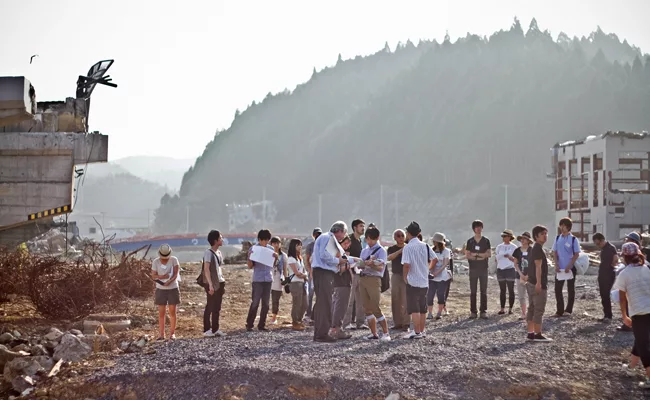
Last summer, a team of students and faculty members from MIT traveled to Minami-sanriku, Japan, to survey damage caused by the March 2011 tsunami. The trip was spawned by the MIT Japan 3/11 Initiative
MIT Program Comes to Aid of Post-Tsunami Japan
Minami-sanriku, Japan
Last summer, a team of students and faculty members from MIT traveled to Minami-sanriku, Japan, to survey damage caused by the March 2011 tsunami. The trip was spawned by the MIT Japan 3/11 Initiative, a program launched after the Tohoku catastrophe.
Photo courtesy MIT
The MIT Japan 3/11 Initiative is particularly interested in creating community centers in relocation areas, where tsunami refugees have been placed based on a lottery system. Last November, MIT profes
MIT Program Comes to Aid of Post-Tsunami Japan
Minami-sanriku, Japan
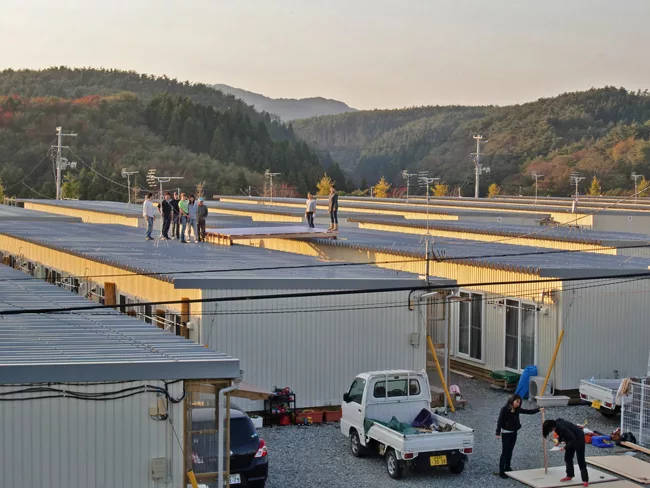
The MIT Japan 3/11 Initiative is particularly interested in creating community centers in relocation areas, where tsunami refugees have been placed based on a lottery system. Last November, MIT professor Shun Kanda returned to Minami-sanriku to construct a small gathering space for 640 residents living in prefabricated units.
Photo courtesy MIT
“They’re depressing, uniform aluminum prefab boxes attached to one another,” says Kanda of the temporary housing. “When one steps outside his door, there is no place to chat, t
MIT Program Comes to Aid of Post-Tsunami Japan
Minami-sanriku, Japan
“They’re depressing, uniform aluminum prefab boxes attached to one another,” says Kanda of the temporary housing. “When one steps outside his door, there is no place to chat, to sit and have tea with a friend or neighbor.”
Photo courtesy MIT
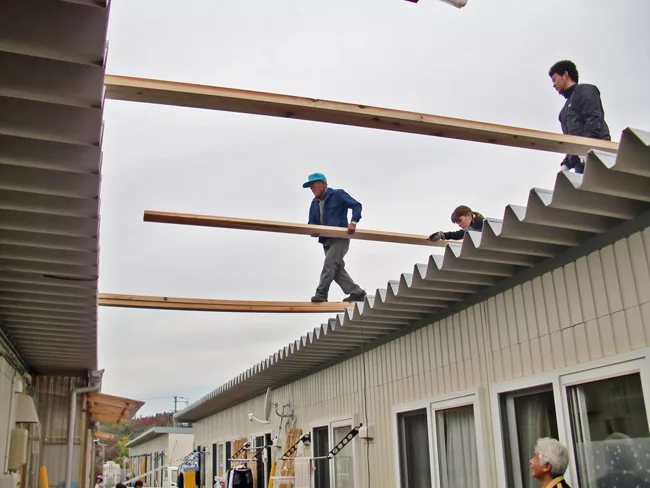
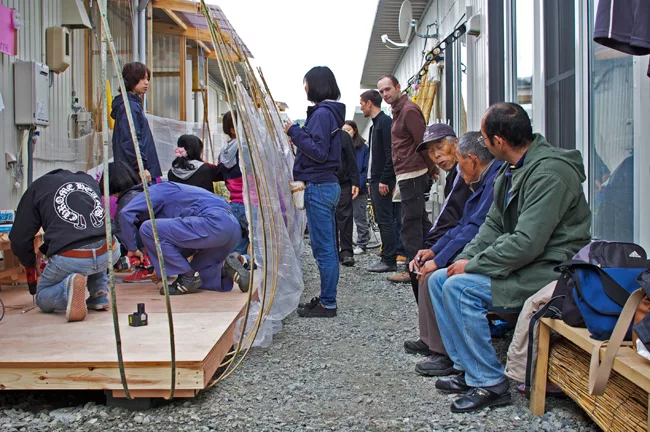
Built in an alleyway between two rows of housing, the new 175-square-foot meeting space features a wood frame and polycarbonate roof.
MIT Program Comes to Aid of Post-Tsunami Japan
Minami-sanriku, Japan
Built in an alleyway between two rows of housing, the new 175-square-foot meeting space features a wood frame and polycarbonate roof.
Photo courtesy MIT
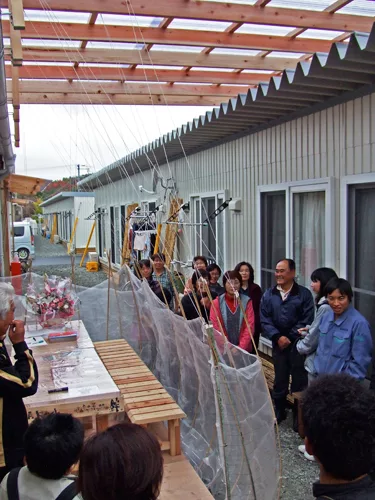
The structure was built using volunteer labor.
MIT Program Comes to Aid of Post-Tsunami Japan
Minami-sanriku, Japan
The structure was built using volunteer labor.
Photo courtesy MIT
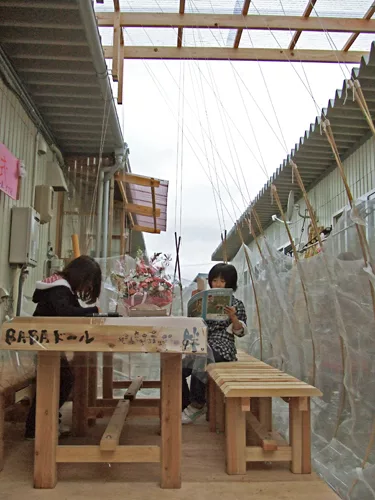
The project was built in one of the largest resettlement areas in Minami-sanriku. Each prefab unit is about 200 square feet and houses up to four residents. Creating community gathering areas, where p
MIT Program Comes to Aid of Post-Tsunami Japan
Minami-sanriku, Japan
The project was built in one of the largest resettlement areas in Minami-sanriku. Each prefab unit is about 200 square feet and houses up to four residents. Creating community gathering areas, where people can talk and drink tea, is becoming increasingly important in these makeshift villages.
Photo courtesy MIT
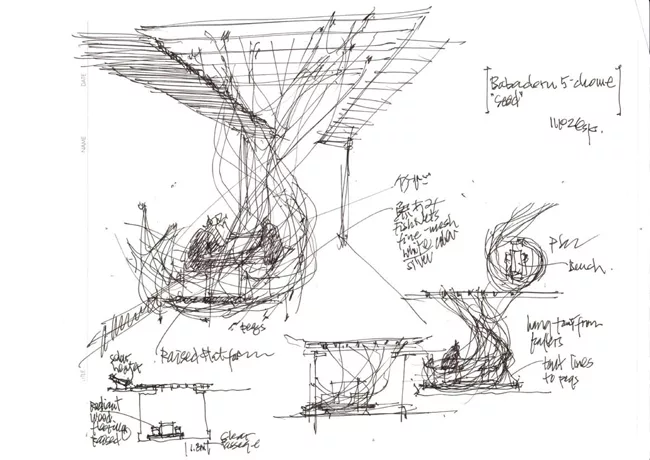
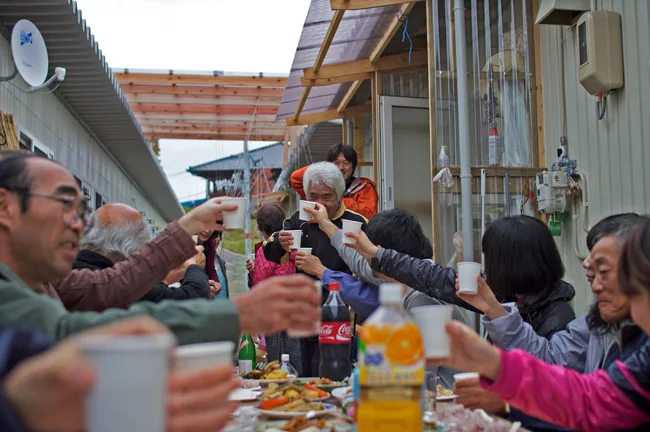
The project was dubbed Babadoru 5-Chome'“baba” is a colloquial Japanese term for grandmother; “doru” means street; “chome” means intersection; and “five&rdquo
MIT Program Comes to Aid of Post-Tsunami Japan
Minami-sanriku, Japan
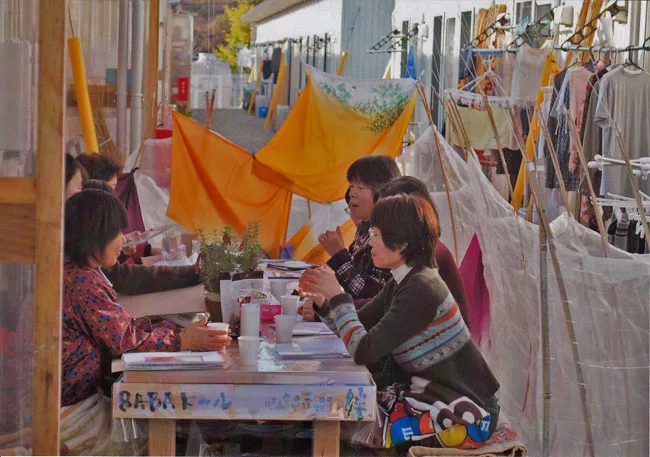
The project was dubbed Babadoru 5-Chome'“baba” is a colloquial Japanese term for grandmother; “doru” means street; “chome” means intersection; and “five” refers to the row where the little community center now sits. It’s often used by women in their 50s, who assemble there to talk and sip tea.
Photo courtesy MIT
The $2,000 project is a “humble start,” says Kanda. “It is a seed for more to come.”
MIT Program Comes to Aid of Post-Tsunami Japan
Minami-sanriku, Japan
The $2,000 project is a “humble start,” says Kanda. “It is a seed for more to come.”
Photo courtesy MIT
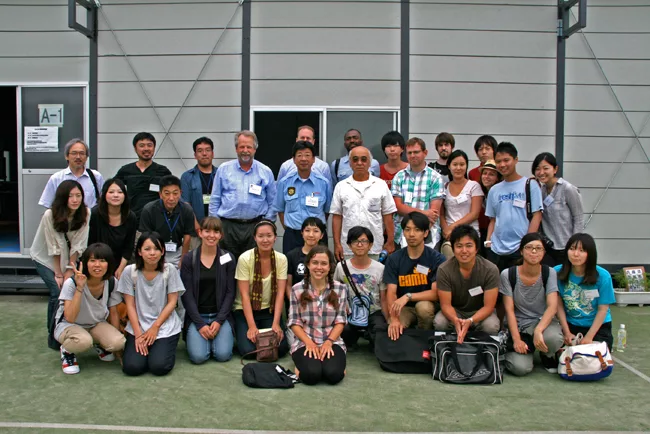
“Every time I visit, they’re all laughing and joking,” says Kanda. “They’re a very happy bunch.”
MIT Program Comes to Aid of Post-Tsunami Japan
Minami-sanriku, Japan
“Every time I visit, they’re all laughing and joking,” says Kanda. “They’re a very happy bunch.”
Photo courtesy MIT
This April, Kanda and volunteers will build two more community centers, these ones larger and freestanding. Creating these centers will become increasingly important to boosting spirits among displace
MIT Program Comes to Aid of Post-Tsunami Japan
Minami-sanriku, Japan
This April, Kanda and volunteers will build two more community centers, these ones larger and freestanding. Creating these centers will become increasingly important to boosting spirits among displaced residents. “Social workers are seeing that people are not coming outside. They are brooding in isolation,” he says. “They need to get out and share their problems.”
Photo courtesy MIT
More than two dozen students and faculty members participated in last July’s research expedition. This summer, professor Kanda will host a four-week-long summer workshop that hopefully will offe
MIT Program Comes to Aid of Post-Tsunami Japan
Minami-sanriku, Japan
More than two dozen students and faculty members participated in last July’s research expedition. This summer, professor Kanda will host a four-week-long summer workshop that hopefully will offer building opportunities.
Photo courtesy MIT
Last summer, a team of students and faculty members from MIT traveled to Minami-sanriku, Japan, to survey damage caused by the March 2011 tsunami. The trip was spawned by the MIT Japan 3/11 Initiative
The MIT Japan 3/11 Initiative is particularly interested in creating community centers in relocation areas, where tsunami refugees have been placed based on a lottery system. Last November, MIT profes
“They’re depressing, uniform aluminum prefab boxes attached to one another,” says Kanda of the temporary housing. “When one steps outside his door, there is no place to chat, t
Built in an alleyway between two rows of housing, the new 175-square-foot meeting space features a wood frame and polycarbonate roof.
The structure was built using volunteer labor.
The project was built in one of the largest resettlement areas in Minami-sanriku. Each prefab unit is about 200 square feet and houses up to four residents. Creating community gathering areas, where p
The project was dubbed Babadoru 5-Chome'“baba” is a colloquial Japanese term for grandmother; “doru” means street; “chome” means intersection; and “five&rdquo
The $2,000 project is a “humble start,” says Kanda. “It is a seed for more to come.”
“Every time I visit, they’re all laughing and joking,” says Kanda. “They’re a very happy bunch.”
This April, Kanda and volunteers will build two more community centers, these ones larger and freestanding. Creating these centers will become increasingly important to boosting spirits among displace
More than two dozen students and faculty members participated in last July’s research expedition. This summer, professor Kanda will host a four-week-long summer workshop that hopefully will offe
March 9, 2012

Established after the 2011 disaster, the MIT Japan 3/11 Initiative is giving students invaluable experience while also helping devastated communities.

Photo courtesy MIT

Last summer, a team of students and faculty members from MIT traveled to Minami-sanriku, Japan, to survey damage caused by the March 2011 tsunami. The trip was spawned by the MIT Japan 3/11 Initiative, a program launched after the Tohoku catastrophe. Click to view additional images.

The $2,000 project is a “humble start,” says Kanda. “It is a seed for more to come.” Click to view additional images.
Related Links: Extensive Coverage: Rebuilding Japan

When a team of students and faculty members from the Massachusetts Institute of Technology (MIT) arrived in the seaside town of Minami-sanriku, Japan, last July, it didn’t waste time getting to work. “No one talked,” said James Wescoat, a landscape architect and Aga Khan Professor at MIT, speaking last fall at a seminar in Cambridge. “Every hour had to count.”

The town was one of the hardest hit during the earthquake and tsunami one year ago—on March 11, 2011—and the team (about 29 people strong) was there for two-and-a-half days to document the widespread damage and identify reconstruction opportunities. The trip was spawned by the MIT Japan 3/11 Initiative, a program launched after the Tohoku catastrophe. Its goal: to help victims and to spur collaboration between MIT and Japanese universities in the study and implementation of disaster planning and recovery.

The group is particularly interested in creating community centers in relocation areas, where tsunami refugees have been placed based on a lottery system. “In many locations, neighbors are not from the same village,” says Shun Kanda, an MIT architecture professor and director of the MIT Japan 3/11 Initiative. “Getting to know each other takes a lot of time, especially if you don’t have a place to gather. That’s a problem we’re trying to address.” Other architecture professors involved in the program include Yoshihiro Hiraoka, from Miyagi University in Sendai, and Hiroto Kobayashi, from Keio University in Tokyo.

For now, the group is focusing its efforts on Minami-sanriku, a hilly town with 27 individual villages. Team members have been working with local residents and government leaders, aid groups, and professional consultants to devise short- and long-term plans of action. Wescoat emphasized that they are not merely swooping in and imposing their ideas on the community. “We understand the need for local participation and strong dialogue,” he says.

Post-Disaster Analysis

To analyze structural conditions during last summer’s visit, the team adapted rapid-assessment methods developed by the U.S. Federal Emergency Management Agency. The group split up to collect data along six transects; some followed transportation routes while others surveyed the coastline. The students—from architecture, engineering, landscape architecture, and planning programs—recorded information about debris, vegetation, soil, topography, and other environmental features. “Students observed where structures had been less affected, where erosion and slope failure was less intense, where debris was distributed,” says Wescoat. “What surprised many people in the area was how the tsunami had run up side valleys and narrow valleys with enormous velocity.”

Following the site visit, the group traveled to Tan' Valley, in central Japan, where MIT has an existing research outpost. There, they examined their findings during a three-week-long workshop and came up with suggested building sites for future community centers. “These community building opportunities were then shared with community, as well as the mayor and others,” says Wescoat.

The Building Begins, Slowly

Professor Kanda, a native of Tokyo, is continuing the momentum. In November, he returned to construct a small gathering space for 640 residents living in prefabricated units. “They’re depressing, uniform aluminum prefab boxes attached to one another,” says Kanda of the temporary housing. “When one steps outside his door, there is no place to chat, to sit and have tea with a friend or neighbor.”

The 175-square-foot meeting space, built in an alleyway between two rows of housing, features a wood frame and polycarbonate roof. The project was dubbed Babadoru 5-Chome—“baba” is a colloquial Japanese term for grandmother; “doru” means street; “chome” means intersection; and “five” refers to the row where the little community center now sits. It’s often used by women in their 50s, who assemble there to talk and sip tea. “Every time I visit, they’re all laughing and joking,” says Kanda. “They’re a very happy bunch.” The $2,000 project is a “humble start,” he says. “It is a seed for more to come.”

Already, the seed has sprouted. This April, Kanda and volunteers will build two more community centers, these ones larger and freestanding. “We had civic leaders from two separate areas [in Minami-sanriku] come to us and ask for more permanent centers,” says Kanda (unfortunately, none of the sites aligns with those proposed by the summer researchers). One will feature a stone base with a cedar frame and roof; Kanda also aims to incorporate bamboo screens. The 200-square-foot structure will be constructed on a lot donated by a private owner. The other center, at 300 to 400 square feet, will be architecturally similar, although its ambitions are grander. “They want people to come here to have tea, but also to make things and earn an income,” says Kanda. Also slated to rise on donated land, the project entails future phases, including housing for the elderly.

Fundraising is under way. Kanda says most of his donations are coming from Japanese foundations and corporations. “The cost will vary,” he says of the two projects, noting that they aim to raise $150,000 for each building. Creating these centers will become increasingly important to boosting spirits among displaced residents. “Social workers are seeing that people are not coming outside. They are brooding in isolation,” he says. “They need to get out and share their problems.”

Other Efforts

In addition to the community centers, Kanda is also teaching a graduate studio course this spring at MIT called “Beyond 3.11: Scaling New Ground” (the title refers to the distance above sea level in which rebuilding should occur in Minami-sanriku). During their spring break at the end of March, the 25 students in his class will travel to Tohoku to get a firsthand look at post-tsunami milieu. Then, this summer, Kanda will offer a four-week workshop, in which he hopes to build structures conceived during the spring course.

Currently, the tireless professor is spending one week a month in Japan. He’s bound to keep generating ideas for how to help the traumatized country. “Every time I go back, something new pops up,” he says. “And with the springtime, there is a whole different energy.”

Share This Story

Looking for a reprint of this article?
From high-res PDFs to custom plaques, order your copy today!

Jenna M. McKnight is an award-winning journalist and RECORD's former news editor. She has held senior positions at print and online publications and writes regularly about architecture and design.

Post a comment to this article

Report Abusive Comment

Subscription Center
  • Create an Account
  • Start a Subscription
  • Manage My Account
  • Sign Up for Newsletters
  • Visit Customer Service
  • Update Preferences

More Videos

Sponsored Content

Sponsored Content is a special paid section where industry companies provide high quality, objective, non-commercial content around topics of interest to the Architectural Record audience. All Sponsored Content is supplied by the advertising company and any opinions expressed in this article are those of the author and not necessarily reflect the views of Architectural Record or its parent company, BNP Media. Interested in participating in our Sponsored Content section? Contact your local rep!

close
  • TAMLYN XtremeTrim Exterior Trim
    Sponsored byTamlyn

    Designing Cleaner Panel Facades: Why Exterior Trim Details Matter

  • Building with Vapor Barriers
    Sponsored byReef Industries, Inc.

    Vapor Barriers Help Control Moisture in Tighter Building Designs

  • Duct Interior with Prodeq System
    Sponsored byHenry, a Carlisle Company

    Designing Resilient Water Containment Systems

DESIGN:ED Podcast
Listen to Architectural Record’s DESIGN:ED Podcast

Events

June 10, 2026

Rethinking Stormwater – The Power of Porous Paving

Credits: 1 AIA LU/HSW; 1 AIBD P-CE; 0.1 ICC CEU

Learn how porous paving systems support stormwater management, reduce heat island effects, and enhance sustainable site design performance.

June 11, 2026

Very Early Warning Fire Detection for Mission-Critical Facilities

Credits: 1 AIA LU/HSW; 1 AIBD P-CE; 0.1 ICC CEU

Examine advanced fire detection strategies that support uptime and enhance safety in data centers and other mission-critical facilities.

View All Submit An Event

Products

2026 Architect's Square Foot Costbook

2026 Architect's Square Foot Costbook

See More Products

Popular Stories

Practice Matters illustration

What’s in a (Firm’s) Name? Thinking About Succession and Legacy

Practice Matters illustration

By the Numbers: Counting America's Architects

House on a Hill

Design Vanguard 2026: Forma

Crane Cove, ONO

Design Vanguard 2026 Winners

KRESA by DLR

In Kalamazoo, DLR Group Completes a Mass-Timber Hub for Career and Technical Education Programs

Broader Sustainability of CMU - Free Webinar - May 21, 2026

Related Articles

  • AFH Comes to Aid of Cyclone Victims

    See More
  • SCAD Comes to the Rescue of Atlanta's Ivy Hall

    See More
  • From the Rubble: Architects and Preservationists Assess How to Aid Nepal

    See More

Related Products

See More Products
  • GlobalData_logo_blue_header.png

    Construction in the US - Key Trends and Opportunities to 2023

  • movable arch.jpg

    Movable Architecture: A Design Guide to Container Reuse

See More Products
×

The latest news and information

#1 Source for Architectural Design, News and Products

SUBSCRIBE
  • RESOURCES
    • Advertise
    • Contact Us
    • Submit
    • Store
  • ACCOUNT CENTER
    • Create an Account
    • Start a Subscription
    • Manage My Account
    • Sign Up for Newsletters
    • Visit Customer Service
    • Update Preferences
  • PRIVACY
    • PRIVACY POLICY
    • TERMS & CONDITIONS
    • DO NOT SELL MY PERSONAL INFORMATION
    • PRIVACY REQUEST
    • ACCESSIBILITY
  • SERVICES
    • Marketing Services
    • Reprints
    • Market Research
    • List Rental
    • Survey/Respondent Access
  • STAY CONNECTED
    • Linkedin
    • Facebook
    • Instagram
    • YouTube
    • X (Twitter)

Copyright ©2026. All Rights Reserved BNP Media, Inc. and BNP Media II, LLC.

Design, CMS, Hosting & Web Development :: ePublishing