Architectural Record
search
cart
facebook twitter linkedin youtube
  • Sign In
  • Subscribe
  • Sign Out
  • My Account
Architectural Record
  • NEWS
    • Latest News
    • Awards
    • Interviews
    • Obituaries
    • Podcasts
      • Design:Ed Podcast
      • Sponsored Podcasts
  • OPINION
    • Book Reviews / Excerpts
    • Exhibition Reviews
    • Forum
  • EXCLUSIVES
    • Videos
    • Design Vanguard
    • Top 300 Firms
    • Sponsored Content
    • Sponsored eBooks
    • From the Archives
  • CONTINUING ED
    • Editorial Continuing Ed
    • CE Center
    • CE Academies
  • PROJECTS
    • Buildings By Type
    • Reuse & Renovation
    • Museums & Arts Centers
    • Colleges & Universities
    • Multifamily Housing
    • Interiors
    • Lighting
    • Kitchen & Bath
  • HOUSES
    • Record Houses
    • House of the Month
    • Featured Houses
  • PRODUCTS
    • Products by Category
    • Record Products of the Year
    • Latest Products
  • EVENTS
    • Dates & Events
    • Record on the Road
    • Innovation Conference
    • Sustainability in Practice
    • Women In Architecture
    • Webinars
    • Ad Excellence Awards
    • Submit an Event
  • CONNECT
    • Ask RECORD AI
    • Newsletters
    • Contact
    • Advertise
    • Editorial Calendar
    • Store
    • Customer Service
  • SUBMIT
    • Submission Guidelines
    • RECORD Competitions
  • MAGAZINE
    • Subscribe
    • My Account
    • Digital Edition
    • Current Issue
    • Firm Pass
    • Historic Archive
Architecture NewsInterviews

Newsmaker: Richard Meier
By Suzanne Stephens
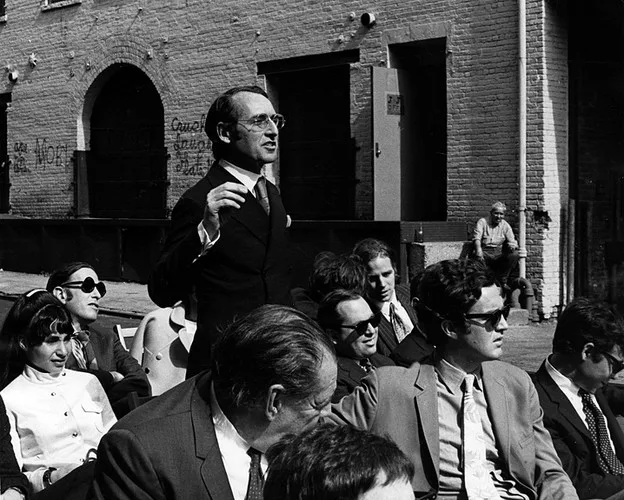
Meier (standing) at Westbeth, a nonprofit affordable housing complex for artists in New York's West Village, in 1970. Also shown in photo: Barbara Littenberg; Gerry Gurland (in front of Meier); and To
Newsmaker: Richard Meier
Meier (standing) at Westbeth, a nonprofit affordable housing complex for artists in New York's West Village, in 1970. Also shown in photo: Barbara Littenberg; Gerry Gurland (in front of Meier); and Tod Williams (behind Gurland).
Photo © Richard Meier and Partners
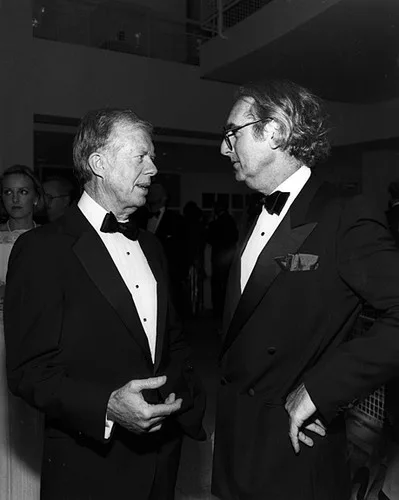
Meier at the opening of Atlanta's High Museum of Art with President Jimmy Carter.
Newsmaker: Richard Meier
Meier at the opening of Atlanta's High Museum of Art with President Jimmy Carter.
Photo © Richard Meier and Partners
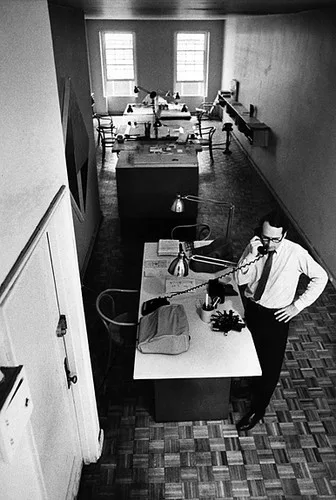
Meier at his former office on East 53rd Street in Manhattan.
Newsmaker: Richard Meier
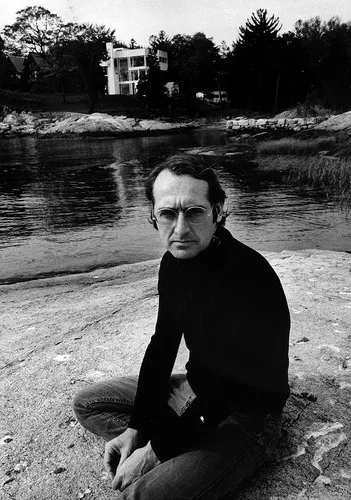
Meier at his former office on East 53rd Street in Manhattan.
Photo © Richard Meier and Partners
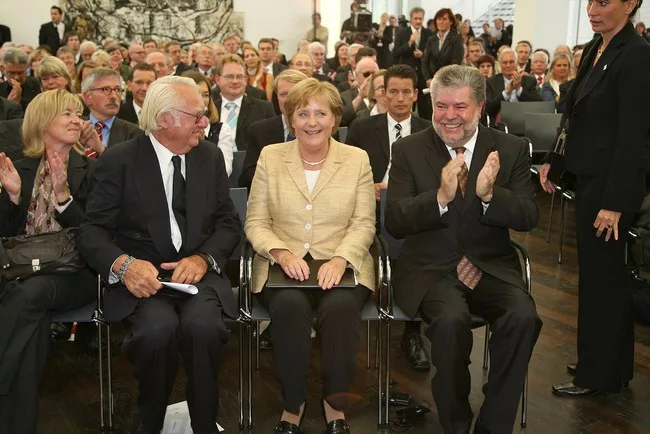
Meier at the opening of the Arp Museum in Germany, with German Chancellor Angela Merkel.
Newsmaker: Richard Meier
Meier at the opening of the Arp Museum in Germany, with German Chancellor Angela Merkel.
Photo © Richard Meier and Partners
Meier at the Smith House in Darien, Connecticut, in 1967.
Newsmaker: Richard Meier
Meier at the Smith House in Darien, Connecticut, in 1967.
Photo © Richard Meier and Partners
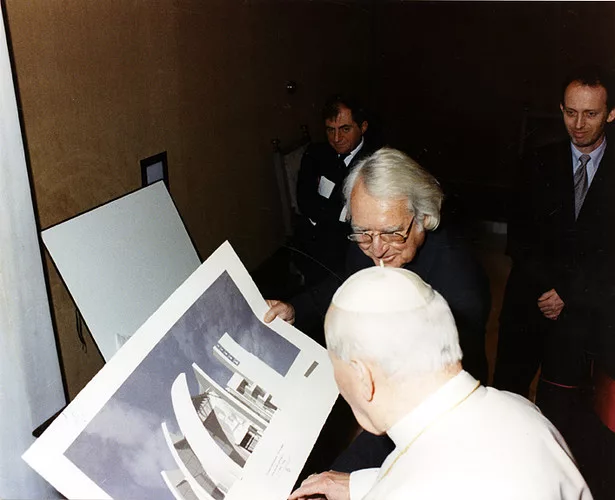
Meier presenting the design of the Jubilee Church to Pope John Paul II at the Vatican in February 1997.
Newsmaker: Richard Meier
Meier presenting the design of the Jubilee Church to Pope John Paul II at the Vatican in February 1997.
Photo © Richard Meier and Partners
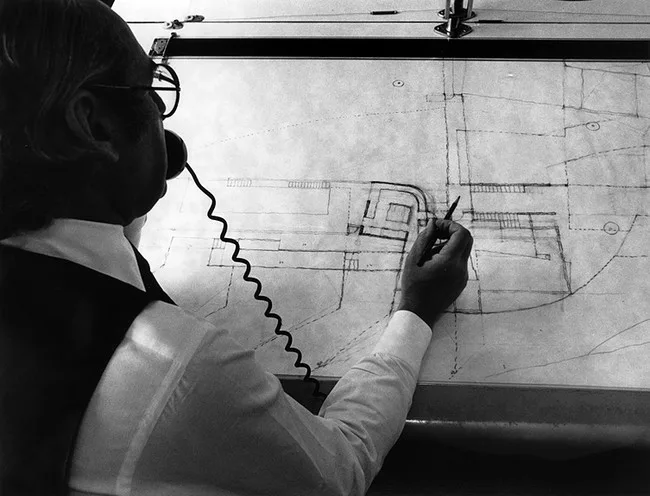
Meier sketching.
Newsmaker: Richard Meier
Meier sketching.
Photo © Richard Meier and Partners
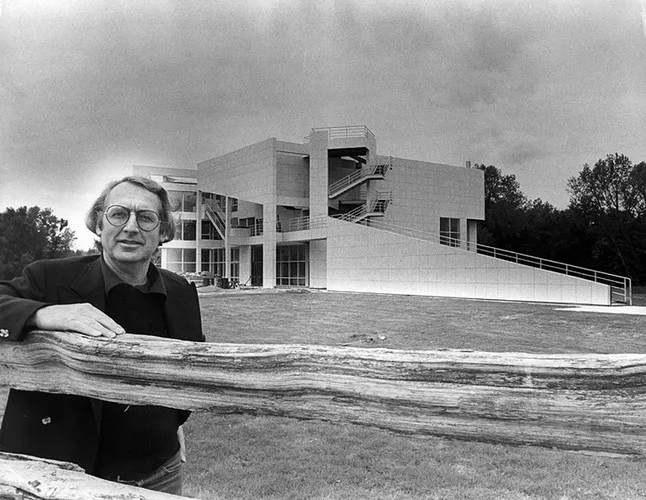
Meier in 1979 at the Atheneum, New Harmony, Indiana's visitor center.
Newsmaker: Richard Meier
Meier in 1979 at the Atheneum, New Harmony, Indiana's visitor center.
Photo © Richard Meier and Partners
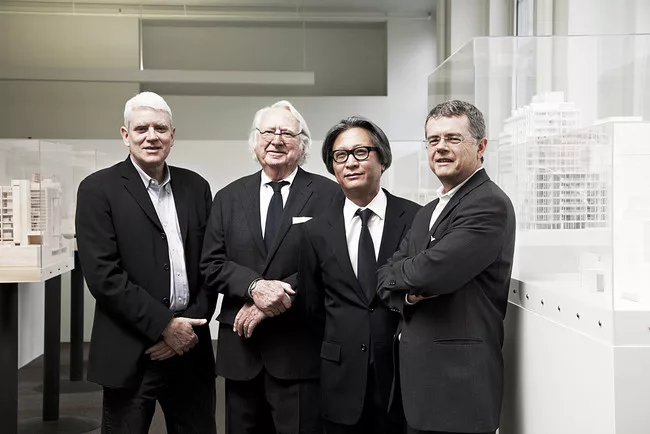
From left to right: Bernhard Karpf, Associate Partner; Richard Meier, Managing Partner; Dukho Yeon, Associate Partner; Reynolds Logan, Associate Partner.
Newsmaker: Richard Meier
From left to right: Bernhard Karpf, Associate Partner; Richard Meier, Managing Partner; Dukho Yeon, Associate Partner; Reynolds Logan, Associate Partner.
Photo © Silja Magg
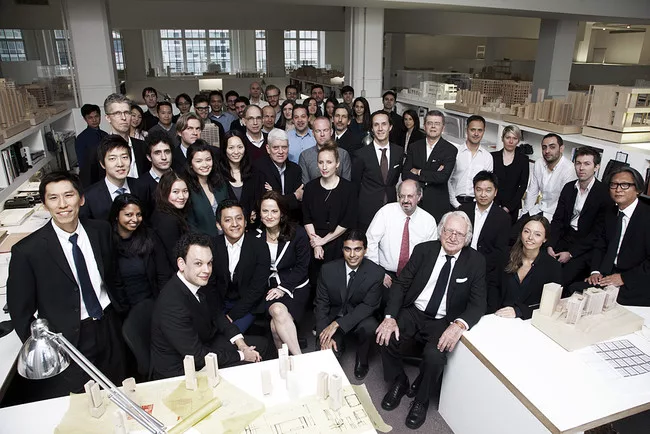
Richard Meier & Partners
Newsmaker: Richard Meier
Richard Meier & Partners
Photo © Silja Magg
Meier (standing) at Westbeth, a nonprofit affordable housing complex for artists in New York's West Village, in 1970. Also shown in photo: Barbara Littenberg; Gerry Gurland (in front of Meier); and To
Meier at the opening of Atlanta's High Museum of Art with President Jimmy Carter.
Meier at his former office on East 53rd Street in Manhattan.
Meier at the opening of the Arp Museum in Germany, with German Chancellor Angela Merkel.
Meier at the Smith House in Darien, Connecticut, in 1967.
Meier presenting the design of the Jubilee Church to Pope John Paul II at the Vatican in February 1997.
Meier sketching.
Meier in 1979 at the Atheneum, New Harmony, Indiana's visitor center.
From left to right: Bernhard Karpf, Associate Partner; Richard Meier, Managing Partner; Dukho Yeon, Associate Partner; Reynolds Logan, Associate Partner.
Richard Meier & Partners
August 20, 2013

Meier (standing) at Westbeth, a nonprofit affordable housing complex for artists in New York's West Village, in 1970. Also shown in photo: Barbara Littenberg; Gerry Gurland (in front of Meier); and Tod Williams (behind Gurland).

This October Richard Meier celebrates the 50th anniversary of establishing his own office in New York City. Over the years, Meier has witnessed significant changes in architectural practice—including his own. It has become more global in a world where he and other "design"-oriented architects are now able to attract a gamut of large-scale commissions. Richard Meier & Partners currently has major projects going up in Taiwan, Italy, Germany, Turkey, and Brazil, to mention some.

Through the past decades, architectural styles have changed as well, veering from Modernism to Postmodernism, neo-Expressionism, and even neo-Modern. But Meier hasn’t swerved. He has been a Steady Eddie of modernism since he opened his one-man office in 1963. Now Meier, a Pritzker-prize winner, maintains a 60-person office in Manhattan plus a 40-person office in Los Angeles. During this time, Meier also stayed true to creating Architecture with a capital A. Record recently asked him about his impressive sense of resolution.

After getting your architecture degree from Cornell University in 1958, you did stints at Davis, Brody & Wisniewski, Skidmore Owings & Merrill (SOM), and Marcel Breuer & Associates before going out on your own in 1963. Why did you make those choices?

These were three different architects and it was a good way to learn various ways of practicing. At that time Davis, Brody & Wisniewski was very small, and SOM was a large, full-service firm with Gordon Bunshaft as its lead designer. Bunshaft told me that architects could only practice with a full-service firm, but I said, “That’s not way I want to practice.” So I went off to Breuer’s office, which was smaller than SOM and larger than Davis, Brody, but where everyone did everything. Today there are many different ways to practice. My way is one way.

When you opened your first office it was in your own apartment at 91st Street and Park Avenue, right?

I did that for a year–solo—then moved to a former townhouse on East 53rd Street between Park and Madison avenues [long since demolished]. By then the office had grown to maybe four people but we all sat around one table.

Your early work was residential with some houses, such as the Lambert House on Fire Island (1962), built with wood. It was the majestically modern and unremittingly white Smith House (1965-67), in Darien, Connecticut, that really launched your career in the media. What about clients?

Because of the Smith House, and then Westbeth Artists Housing [a renovation of the former Bell Laboratories in New York City, 1970], I got a call from Ed Logue [then CEO of the New York State Urban Development Corporation] who said, “We’re doing some public housing in Bronx, Twin Parks [1969-1974].” They were looking for young talented designers.

You have stuck with the Modernist vocabulary, unlike some of your colleagues.

It never occurred to me to do anything else. Modernism suits our time: architecture is about making space. We’re not making Baroque or Renaissance space, but modern space with linear, planar, abstracted forms and with opaque and transparent surfaces.

You’ve adamantly stayed with your predilection for the color white—inside and out. Why?

The way white reflects and refracts light makes color around us more vivid. It helps us appreciate changing tones and hues in nature.

Your affinity with Le Corbusier’s architecture is well known. Now his first retrospective in the U.S., Le Corbusier: An Atlas of Modern Landscapes, is at New York’s Museum of Modern Art (until September 23). Will this help his legacy?

Architects of my generation grew up with Le Corbusier, but I don’t really know if young architects are as enamored of or interested in him as we were. This exhibition should open the younger generation’s eyes to his work. There is no question that his manipulation of light and space has always been important to me.

You said a while ago, “Architecture is a lousy business.” But you’ve made it work, expanding your firm into a large, global practice. All the while you have maintained your own high ideals in the service of architecture.

Well, if you want to go into business, architecture should not be your first choice. You have to want to do architecture. But we do have a comptroller in each of the offices to run the business side. Also, I have three associate partners in New York and one partner, Michael Palladino, in the L.A. office.

So how did you bring design and business together successfully? What’s the secret?

I wish I knew. But we’ve managed to stay in business.

You are called Managing Partner. That suggests a business role.

I am? Where does it say that?

On your website.

Oh. I wonder how that happened.

How do you keep creativity alive?

I still sketch out concepts before doing anything. The people in office often want to put a single line on the screen and go with it. But I say, “Let’s think it through.” We use lots of tracing paper before going to the computer. Once it’s on the computer, I walk around and say, “What’s that?” You have to separate image from reality. Also we spend time with the concept. We make tons of study models, which start small and go to about a two-foot height. Even today, with the computer, there is no substitute for models. It’s still a single image on a screen.

Knowing what you know now, would you have changed anything in your approach?

You learn with experience the things that are not worth doing. Most architects think, no matter what, they can make something out of any commission. For example, I don’t do prisons or hospitals, or restoration work. I do know, by now, who I am. And by now at least clients come to us with their eyes open. They don’t expect something we don’t do.

Share This Story

Looking for a reprint of this article?
From high-res PDFs to custom plaques, order your copy today!

Stephens

Suzanne Stephens, a former deputy editor of Architectural Record, has been a writer, editor, and critic in the field of architecture for several decades. She has a Ph.D. in architectural history from Cornell University, and teaches a seminar in the history of architectural criticism in the architecture program of Barnard and Columbia colleges.

Post a comment to this article

Report Abusive Comment

Subscription Center
  • Create an Account
  • Start a Subscription
  • Manage My Account
  • Sign Up for Newsletters
  • Visit Customer Service
  • Update Preferences

More Videos

Sponsored Content

Sponsored Content is a special paid section where industry companies provide high quality, objective, non-commercial content around topics of interest to the Architectural Record audience. All Sponsored Content is supplied by the advertising company and any opinions expressed in this article are those of the author and not necessarily reflect the views of Architectural Record or its parent company, BNP Media. Interested in participating in our Sponsored Content section? Contact your local rep!

close
  • TAMLYN XtremeTrim Exterior Trim
    Sponsored byTamlyn

    Designing Cleaner Panel Facades: Why Exterior Trim Details Matter

  • Building with Vapor Barriers
    Sponsored byReef Industries, Inc.

    Vapor Barriers Help Control Moisture in Tighter Building Designs

  • Duct Interior with Prodeq System
    Sponsored byHenry, a Carlisle Company

    Designing Resilient Water Containment Systems

DESIGN:ED Podcast
Listen to Architectural Record’s DESIGN:ED Podcast

Events

June 10, 2026

Rethinking Stormwater – The Power of Porous Paving

Credits: 1 AIA LU/HSW; 1 AIBD P-CE; 0.1 ICC CEU

Learn how porous paving systems support stormwater management, reduce heat island effects, and enhance sustainable site design performance.

June 11, 2026

Very Early Warning Fire Detection for Mission-Critical Facilities

Credits: 1 AIA LU/HSW; 1 AIBD P-CE; 0.1 ICC CEU

Examine advanced fire detection strategies that support uptime and enhance safety in data centers and other mission-critical facilities.

View All Submit An Event

Products

2026 Architect's Square Foot Costbook

2026 Architect's Square Foot Costbook

See More Products

Popular Stories

Practice Matters illustration

What’s in a (Firm’s) Name? Thinking About Succession and Legacy

Coronado Bridge

The Architect’s Guide to San Diego

Practice Matters illustration

By the Numbers: Counting America's Architects

Riverdale House by Studio Lau

Riverdale House by Studio Lau

House on a Hill

Design Vanguard 2026: Forma

Broader Sustainability of CMU - Free Webinar - May 21, 2026

Related Articles

  • meier-partners-news_archrecord.jpg

    Richard Meier Retires As Firm Re-Organizes

    See More
  • Richard Meier

    See More
  • Richard Meier Tapped for Two W Hotels in Mexico

    See More
×

The latest news and information

#1 Source for Architectural Design, News and Products

SUBSCRIBE
  • RESOURCES
    • Advertise
    • Contact Us
    • Submit
    • Store
  • ACCOUNT CENTER
    • Create an Account
    • Start a Subscription
    • Manage My Account
    • Sign Up for Newsletters
    • Visit Customer Service
    • Update Preferences
  • PRIVACY
    • PRIVACY POLICY
    • TERMS & CONDITIONS
    • DO NOT SELL MY PERSONAL INFORMATION
    • PRIVACY REQUEST
    • ACCESSIBILITY
  • SERVICES
    • Marketing Services
    • Reprints
    • Market Research
    • List Rental
    • Survey/Respondent Access
  • STAY CONNECTED
    • Linkedin
    • Facebook
    • Instagram
    • YouTube
    • X (Twitter)

Copyright ©2026. All Rights Reserved BNP Media, Inc. and BNP Media II, LLC.

Design, CMS, Hosting & Web Development :: ePublishing