Architectural Record
search
cart
facebook twitter linkedin youtube
  • Sign In
  • Subscribe
  • Sign Out
  • My Account
Architectural Record
  • NEWS
    • Latest News
    • Awards
    • Interviews
    • Obituaries
    • Podcasts
      • Design:Ed Podcast
      • Sponsored Podcasts
  • OPINION
    • Book Reviews / Excerpts
    • Exhibition Reviews
    • Forum
  • EXCLUSIVES
    • Videos
    • Design Vanguard
    • Top 300 Firms
    • Sponsored Content
    • Sponsored eBooks
    • From the Archives
  • CONTINUING ED
    • Editorial Continuing Ed
    • CE Center
    • CE Academies
  • PROJECTS
    • Buildings By Type
    • Reuse & Renovation
    • Museums & Arts Centers
    • Colleges & Universities
    • Multifamily Housing
    • Interiors
    • Lighting
    • Kitchen & Bath
  • HOUSES
    • Record Houses
    • House of the Month
    • Featured Houses
  • PRODUCTS
    • Products by Category
    • Record Products of the Year
    • Latest Products
  • EVENTS
    • Dates & Events
    • Record on the Road
    • Innovation Conference
    • Sustainability in Practice
    • Women In Architecture
    • Webinars
    • Ad Excellence Awards
    • Submit an Event
  • CONNECT
    • Ask RECORD AI
    • Newsletters
    • Contact
    • Advertise
    • Editorial Calendar
    • Store
    • Customer Service
  • SUBMIT
    • Submission Guidelines
    • RECORD Competitions
  • MAGAZINE
    • Subscribe
    • My Account
    • Digital Edition
    • Current Issue
    • Firm Pass
    • Historic Archive
Commentary & CriticismOpinion

Sustainable Urban Metabolism

By David Sokol
February 15, 2014
By John Fernández and Paulo Ferrão. MIT Press, 2013, 264 pages, $35.

Helping Cities Go Green

In 2012, officials in Dubai asserted that their city would rank among the most sustainable metropolises in the world by 2020. About the same time, Washington, D.C., Mayor Vincent Grey trumpeted greenest-city status by 2032. A glimpse of the cities' sustainability plans shows two different approaches to the same goal. For Dubai, it means supplying five percent of electricity photovoltaically and outlawing energy-hog buildings. While Washington also aims for renewable-energy use and efficient structures, it prioritizes cleaning up the Anacostia River and increasing urban agriculture.
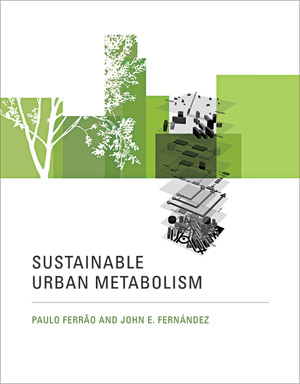
Sustainable Urban Metabolism

In concept, tailoring one city's sustainability initiatives to reflect its climate, culture, and stage of development should benefit all cities—or at least maximize the environmental benefits. But even the best intentions will not necessarily yield positive results. What if Dubai's photovoltaics are sourced irresponsibly upstream? What if urban farming in Washington causes a spike in the insecticides and fertilizers that wash into the Anacostia? Because the causes and effects of environmental management are complex and far from linear, urban-scale sustainability is littered with possible backfirings: electrical vehicles that draw their power from coal-fired plants, local manufacturing initiatives that lead to transit inequity, and so on.

In this book, the authors shed light on the inconsistent terms and blind spots that plague urban sustainability initiatives. Professors of mechanical engineering and building technology, respectively, Ferrão and Fernández want to arm municipal stewards with data that are currently unavailable to them. Without an accurate portrayal of environmental inputs and outputs, decisions may lack impact or do more harm than good.

The first step in measuring and analyzing the resources a city consumes and the waste it emits is to establish a methodology. Employing the metaphor of urban metabolism, the authors show how to measure the environmental systems that converge in a city. They set criteria, weight them according to different city typologies, and identify the data sources to quantify those terms. Watching this framework unfold is like witnessing the creation of an algorithm. One can imagine this book spawning the next round of Code for America fellowships.

For readers who are not smart-cities acolytes or app programmers, this narrative may seem more technical than compelling. Its potential usefulness, on the other hand, should thrill anyone: standardized data could help planners from Dubai and Washington form a mutual understanding of what it means to be green (or greenest). Perhaps more important, it could help planners from cities similar in resource flows or physical form compare policies for mutual improvement. Sustainable Urban Metabolism applies the management adage, "What gets measured gets done" to the 21st-century game of planetary survival.

Share This Story

Looking for a reprint of this article?
From high-res PDFs to custom plaques, order your copy today!


David Sokol is a contributing editor to Architectural Record. 

Post a comment to this article

Report Abusive Comment

Subscription Center
  • Create an Account
  • Start a Subscription
  • Manage My Account
  • Sign Up for Newsletters
  • Visit Customer Service
  • Update Preferences

More Videos

Sponsored Content

Sponsored Content is a special paid section where industry companies provide high quality, objective, non-commercial content around topics of interest to the Architectural Record audience. All Sponsored Content is supplied by the advertising company and any opinions expressed in this article are those of the author and not necessarily reflect the views of Architectural Record or its parent company, BNP Media. Interested in participating in our Sponsored Content section? Contact your local rep!

close
  • TAMLYN XtremeTrim Exterior Trim
    Sponsored byTamlyn

    Designing Cleaner Panel Facades: Why Exterior Trim Details Matter

  • Building with Vapor Barriers
    Sponsored byReef Industries, Inc.

    Vapor Barriers Help Control Moisture in Tighter Building Designs

  • Duct Interior with Prodeq System
    Sponsored byHenry, a Carlisle Company

    Designing Resilient Water Containment Systems

DESIGN:ED Podcast
Listen to Architectural Record’s DESIGN:ED Podcast

Events

June 18, 2026

Rebooting the Aging Office Building

Credits: 1 AIA LU/HSW; 1 AIBD P-CE; 0.1 ICC CEU; 1 PDH

Explore façade retrofit strategies and award-winning design concepts that can transform aging office buildings into healthier, higher-performing workplaces for today’s hybrid workforce.

June 23, 2026

Enhancing Fire Resistance with Advanced PVC Solutions

Credits: 1 AIA LU/HSW; 1 AIBD P-CE; 0.1 ICC CEU; 1 IIBEC CEH

Evaluate advanced PVC solutions that improve fire resistance, support WUI compliance, and enhance resilience in residential and commercial building design.

View All Submit An Event

Products

2026 Architect's Square Foot Costbook

2026 Architect's Square Foot Costbook

See More Products

Popular Stories

SanDiegoAirport

Top 300 Architecture Firms of 2026

Coronado Bridge

The Architect’s Guide to San Diego

Lorcan O' Herilhy

California Architect Lorcan O’Herlihy Has Died, Age 66

CCA, Studio Gang

The Winners of the AIA’s 2026 Architecture Award Range from Collegiate Rowing Hubs to Housing for the Homeless

Dusk House

Design Vanguard 2026: ONO

Rebooting the Aging Office Building - Free Webinar - June 18, 2026

Related Articles

  • Project Japan: Metabolism Talks

    See More
  • Packer Collegiate Institute Expansion

    WXY’s Expansion at a Prestigious Private School in New York Points to a Sustainable Future

    See More
  • Emerging Ecologies Lead.jpg

    ‘Emerging Ecologies’ at MoMA Looks to Architecture’s Past for a Fresh Perspective on a Sustainable Future

    See More

Related Products

See More Products
  • 047177751X.gif

    Sustainable Urbanism: Urban Design With Nature

  • facade.jpg

    Sustainable Facades: Design Methods for High-Performance Building Envelopes

  • 0470126736.gif

    Modern Sustainable Residential Design: A Guide for Design Professionals

See More Products
×

The latest news and information

#1 Source for Architectural Design, News and Products

SUBSCRIBE
  • RESOURCES
    • Advertise
    • Contact Us
    • Submit
    • Store
  • ACCOUNT CENTER
    • Create an Account
    • Start a Subscription
    • Manage My Account
    • Sign Up for Newsletters
    • Visit Customer Service
    • Update Preferences
  • PRIVACY
    • PRIVACY POLICY
    • TERMS & CONDITIONS
    • DO NOT SELL MY PERSONAL INFORMATION
    • PRIVACY REQUEST
    • ACCESSIBILITY
  • SERVICES
    • Marketing Services
    • Reprints
    • Market Research
    • List Rental
    • Survey/Respondent Access
  • STAY CONNECTED
    • Linkedin
    • Facebook
    • Instagram
    • YouTube
    • X (Twitter)

Copyright ©2026. All Rights Reserved BNP Media, Inc. and BNP Media II, LLC.

Design, CMS, Hosting & Web Development :: ePublishing