Architectural Record
search
cart
facebook twitter linkedin youtube
  • Sign In
  • Subscribe
  • Sign Out
  • My Account
Architectural Record
  • NEWS
    • Latest News
    • Awards
    • Interviews
    • Obituaries
    • Podcasts
      • Design:Ed Podcast
      • Sponsored Podcasts
  • OPINION
    • Book Reviews / Excerpts
    • Exhibition Reviews
    • Forum
  • EXCLUSIVES
    • Videos
    • Design Vanguard
    • Top 300 Firms
    • Sponsored Content
    • Sponsored eBooks
    • From the Archives
  • CONTINUING ED
    • Editorial Continuing Ed
    • CE Center
    • CE Academies
  • PROJECTS
    • Buildings By Type
    • Reuse & Renovation
    • Museums & Arts Centers
    • Colleges & Universities
    • Multifamily Housing
    • Interiors
    • Lighting
    • Kitchen & Bath
  • HOUSES
    • Record Houses
    • House of the Month
    • Featured Houses
  • PRODUCTS
    • Products by Category
    • Record Products of the Year
    • Latest Products
  • EVENTS
    • Dates & Events
    • Record on the Road
    • Innovation Conference
    • Sustainability in Practice
    • Women In Architecture
    • Webinars
    • Ad Excellence Awards
    • Submit an Event
  • CONNECT
    • Ask RECORD AI
    • Newsletters
    • Contact
    • Advertise
    • Editorial Calendar
    • Store
    • Customer Service
  • SUBMIT
    • Submission Guidelines
    • RECORD Competitions
  • MAGAZINE
    • Subscribe
    • My Account
    • Digital Edition
    • Current Issue
    • Firm Pass
    • Historic Archive
Opinion

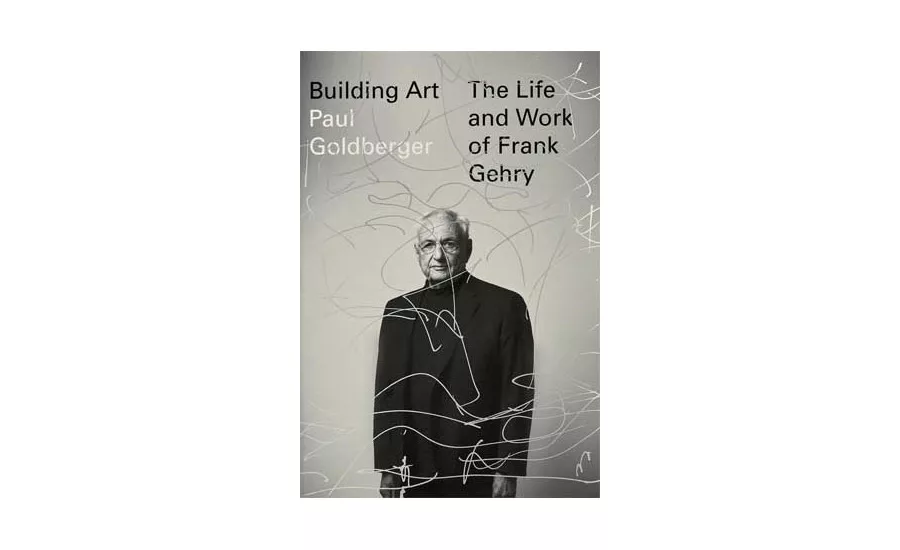
Building Art: The Life and Work of Frank Gehry
By Hugh Pearman
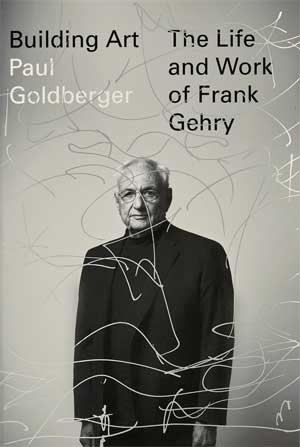
Building Art: The Life and Work of Frank Gehry
September 16, 2015
By Paul Goldberger. Knopf, September 2015, 528 pages, $35.

'I wish I could enjoy it like you're supposed to. I wish I could be that guy'at least for an hour. I wish I could live in the place people are making for me. I want to be popular, but I don't trust it.' That is Frank Gehry, speaking late at night and late in life, among friends, while being feted at the opening of his Fondation Louis Vuitton in Paris in October 2014. He lunched with the president of France. He had a huge career retrospective at the Centre Pompidou. The opening exhibition at his remarkable new building was devoted to him. Gehry, 86, a man of several careers like that other Frank'Lloyd Wright'had been a world star since the opening of his Bilbao Guggenheim in 1997. If anyone had cause to feel satisfied with his career, it was Gehry. Yet he worried. He had always worried. Paul Goldberger's excellent new biography is a history of an anxiety-driven, needy, thin-skinned genius'one quite capable of giving critical questioners the finger, as he famously did at a different event shortly after the Paris museum opened.
Building Art: The Life and Work of Frank Gehry

This is a proper biography, being as much about the personal life of Gehry as it is about his buildings. It reads well, mostly avoiding archi-speak and technicalities, preferring the clarity of plain English, as you would hope from a critic of Goldberger’s standing. He is plainly on Frank’s side—he has known him so long, and voices little personal critical dissent. But he does not avoid the turkeys, and when a building is critically panned—the Experience Music Project in Seattle, say, or the Fondation Louis Vuitton, which set off a revolt by several English critics (though not this one)—he reports it. This is an authorized biography, done with Gehry’s full cooperation but without his editorial control. And I believe it, because this is no hagiography. The flaws of Gehry the person are laid bare.

We get the therapy sessions, the determined gathering of famous friends (Gehry is nothing if not starstruck, from his earliest years hanging around Los Angeles artists to his later liaisons with Bono and Brad Pitt), the dope smoking, the sex. Gehry walked away from his first, somewhat oppressive marriage and family nicely in time for the West Coast hippie era. Goldberger recounts how Gehry was pulled onto a bed by the wife of a client (“What do you do?” shrugs Frank; “He’s going to be coming home in about 30 minutes, and here I am wrestling with his wife”), which in the end looks suspiciously as if it was in lieu of fees. Balancing this is the touching reunion of both Gehry families at the deathbed of his daughter Leslie by his first marriage, who died of cancer at age 54 in 2008. For the last six months of her life, Gehry was there for her, and acknowledged his prior neglect. “I did what a father does, and realized that I should have done that long before.”

His second marriage lasts to this day. But the work has always come first; he acknowledges he is a workaholic, and that this is not always a good thing. Goldberger shows how Gehry can be suspicious. He has to be in control. He often walks away from projects, or threatens to in order to reassert his authority. Thus he regained control of L.A.’s Walt Disney Concert Hall when he was being sidelined. One after the other, trusted long-term lieutenants and even personal friends are dropped, sometimes to their surprise, and seldom face-to-face. It does not do to think for the boss, or to develop separate relationships with clients. Lately, Gehry has retreated from the shop floor to a more private raised command post in his office. Goldberger recounts how he has rejected proposals to sell the practice or even put in place a succession plan for his partners. The fate of his huge archive is still unclear. While acknowledging his mortality, Gehry is showing clear signs of denial about it.

According to Goldberger, Gehry has found a path that rejects both puritanical modernism and effusive postmodernism: his buildings rediscover the art of ornament without recourse to history. His instinctive manner of designing is like the “action painting” of Jackson Pollock, says Goldberger. But the writer does not “crit” individual buildings, preferring to quote others such as Philip Johnson, who declared the Bilbao Guggenheim “the greatest building of our time.” There are exceptions. In a casual aside he says of Disney Hall, for instance, “It was, of course, an architectural tour de force,” and moves on, as if that was just a universally accepted fact. Not so: some of us have reservations about that building.

But not about his overall achievement. In the end, there is the work. Gehry struggled to get where he is, took huge risks, fought for his art. He still feels the outsider, yet he is, without question, up there in the pantheon of great architects. Goldberger’s biography shows us this—and also the collateral damage incurred along the way.

Hugh Pearman is the architecture critic of The Sunday Times, London, and editor of the Journal of the Royal Institute of British Architects.

Share This Story

Looking for a reprint of this article?
From high-res PDFs to custom plaques, order your copy today!

London-based Hugh Pearman is the editor of the RIBA Journal.

Post a comment to this article

Report Abusive Comment

Subscription Center
  • Create an Account
  • Start a Subscription
  • Manage My Account
  • Sign Up for Newsletters
  • Visit Customer Service
  • Update Preferences

More Videos

Sponsored Content

Sponsored Content is a special paid section where industry companies provide high quality, objective, non-commercial content around topics of interest to the Architectural Record audience. All Sponsored Content is supplied by the advertising company and any opinions expressed in this article are those of the author and not necessarily reflect the views of Architectural Record or its parent company, BNP Media. Interested in participating in our Sponsored Content section? Contact your local rep!

close
  • TAMLYN XtremeTrim Exterior Trim
    Sponsored byTamlyn

    Designing Cleaner Panel Facades: Why Exterior Trim Details Matter

  • Building with Vapor Barriers
    Sponsored byReef Industries, Inc.

    Vapor Barriers Help Control Moisture in Tighter Building Designs

  • Duct Interior with Prodeq System
    Sponsored byHenry, a Carlisle Company

    Designing Resilient Water Containment Systems

DESIGN:ED Podcast
Listen to Architectural Record’s DESIGN:ED Podcast

Events

June 10, 2026

Rethinking Stormwater – The Power of Porous Paving

Credits: 1 AIA LU/HSW; 1 AIBD P-CE; 0.1 ICC CEU

Learn how porous paving systems support stormwater management, reduce heat island effects, and enhance sustainable site design performance.

June 11, 2026

Very Early Warning Fire Detection for Mission-Critical Facilities

Credits: 1 AIA LU/HSW; 1 AIBD P-CE; 0.1 ICC CEU

Examine advanced fire detection strategies that support uptime and enhance safety in data centers and other mission-critical facilities.

View All Submit An Event

Products

2026 Architect's Square Foot Costbook

2026 Architect's Square Foot Costbook

See More Products

Popular Stories

Practice Matters illustration

What’s in a (Firm’s) Name? Thinking About Succession and Legacy

Practice Matters illustration

By the Numbers: Counting America's Architects

House on a Hill

Design Vanguard 2026: Forma

Crane Cove, ONO

Design Vanguard 2026 Winners

KRESA by DLR

In Kalamazoo, DLR Group Completes a Mass-Timber Hub for Career and Technical Education Programs

Broader Sustainability of CMU - Free Webinar - May 21, 2026

Related Articles

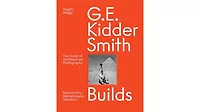
  • G.E. Kidder Smith Builds: The Travel of Architectural Photography.

    Excerpts from the Life and Work of One of the Nation's Most Talented, if Overlooked, Architectural Photographers

    See More
  • The Architecture of Sir Edwin Lutyens

    The Life and Work of Sir Edwin Landseer Lutyens Returns to Print in New Format

    See More
  • The Saarinens

    New PBS Documentary Explores the Life and Work of Eero Saarinen

    See More

Related Products

See More Products
  • Architectural Record - January 2026

    Architectural Record January 2026 Issue

See More Products
×

The latest news and information

#1 Source for Architectural Design, News and Products

SUBSCRIBE
  • RESOURCES
    • Advertise
    • Contact Us
    • Submit
    • Store
  • ACCOUNT CENTER
    • Create an Account
    • Start a Subscription
    • Manage My Account
    • Sign Up for Newsletters
    • Visit Customer Service
    • Update Preferences
  • PRIVACY
    • PRIVACY POLICY
    • TERMS & CONDITIONS
    • DO NOT SELL MY PERSONAL INFORMATION
    • PRIVACY REQUEST
    • ACCESSIBILITY
  • SERVICES
    • Marketing Services
    • Reprints
    • Market Research
    • List Rental
    • Survey/Respondent Access
  • STAY CONNECTED
    • Linkedin
    • Facebook
    • Instagram
    • YouTube
    • X (Twitter)

Copyright ©2026. All Rights Reserved BNP Media, Inc. and BNP Media II, LLC.

Design, CMS, Hosting & Web Development :: ePublishing