Architectural Record
search
cart
facebook twitter linkedin youtube
  • Sign In
  • Subscribe
  • Sign Out
  • My Account
Architectural Record
  • NEWS
    • Latest News
    • Awards
    • Interviews
    • Obituaries
    • Podcasts
      • Design:Ed Podcast
      • Sponsored Podcasts
  • OPINION
    • Book Reviews / Excerpts
    • Exhibition Reviews
    • Forum
  • EXCLUSIVES
    • Videos
    • Design Vanguard
    • Top 300 Firms
    • Sponsored Content
    • Sponsored eBooks
    • From the Archives
  • CONTINUING ED
    • Editorial Continuing Ed
    • CE Center
    • CE Academies
  • PROJECTS
    • Buildings By Type
    • Reuse & Renovation
    • Museums & Arts Centers
    • Colleges & Universities
    • Multifamily Housing
    • Interiors
    • Lighting
    • Kitchen & Bath
  • HOUSES
    • Record Houses
    • House of the Month
    • Featured Houses
  • PRODUCTS
    • Products by Category
    • Record Products of the Year
    • Latest Products
  • EVENTS
    • Dates & Events
    • Record on the Road
    • Innovation Conference
    • Sustainability in Practice
    • Women In Architecture
    • Webinars
    • Ad Excellence Awards
    • Submit an Event
  • CONNECT
    • Ask RECORD AI
    • Newsletters
    • Contact
    • Advertise
    • Editorial Calendar
    • Store
    • Customer Service
  • SUBMIT
    • Submission Guidelines
    • RECORD Competitions
  • MAGAZINE
    • Subscribe
    • My Account
    • Digital Edition
    • Current Issue
    • Firm Pass
    • Historic Archive
Opinion

Affordable Housing in New York: The People, Places, and Policies that Transformed a City

Essays by editors Nicholas Dagen Bloom, Matthew Gordon Lasner, and others discuss the history of the city's housing subsidies from 1900 to the present.
By Jayne Merkel
Affordable Housing in New York

Affordable Housing in New York

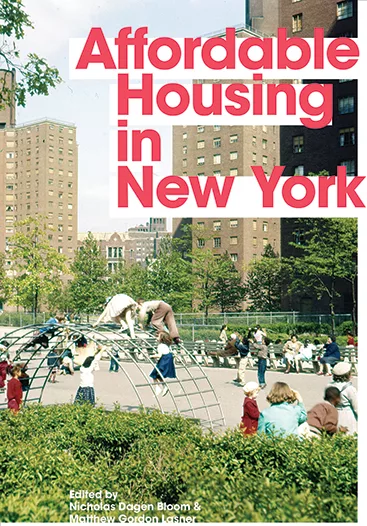
Affordable Housing in New York: The People, Places and Policies that Transformed a City, edited by Nicholas Dagen Bloom and Matthew Gordon Lasner. Princeton University Press, November 2015, 336 pages, $39.95.

February 1, 2016

Affordable Housing in New York: The People, Places, and Policies that Transformed a City, edited by Nicholas Dagen Bloom and Matthew Gordon Lasner, Princeton University Press, November 2015, 336 pages, $39.95.

This is a superb history of the numerous ways that New York has provided subsidized housing for low-, moderate-, and middle-income residents from around 1900 to the present. As such, it provides a model to other cities—consider, for example, that the New York City Housing Authority (NYCHA) is the largest public housing agency in the country, overseeing 178,000 low-income apartments, with an official—probably underestimated— population of 403,000. That would qualify as a good-sized city in most places in this country.

In a series of essays, editors Nicholas Bloom and Matthew Lasner, and historians such as Andrew Dolkart, Hilary Ballon, and Karen Kubey, discuss tenement-reform legislation, tower-in-the-park projects, mid-rise buildings oriented to the urban grid, and suburban-style single-family houses on city streets. The contributors explain why various neighborhoods look the way they do, and show how attitudes toward the poor have changed, for better—and for worse— over time. In doing so, they describe the complex legal, philanthropic, and financial methods used to create, maintain, and sustain affordable housing, such as the low-rise, high-density Marcus Garvey Housing in Brooklyn (1975) and Via Verde, the model of energy efficiency in the South Bronx (2012). Historic photographs and new ones—some showing residents in their personally decorated homes—supplement plans and models of apartment layouts.

This is no dull study of methodologies for assorted programs. The book brings idealistic characters to life—from Fiorella LaGuardia to Alfred Smith, Clarence Stein, Robert Moses, Ed Logue, and Jane Jacobs—as well as lesser known, often female, pioneering housing advocates. The authors describe how hip-hop music grew up in housing projects in the Bronx. They also explain the role that labor unions played in creating some of the best complexes. For example, Penn South, the 2,820-unit middle-income nonprofit coop, a tower-in-the-park complex, was developed by the ILGWU (International Ladies Garment Workers Union) and thrives today on Manhattan land that has become very valuable, in West Chelsea, a neighborhood now full of high-end art galleries.

Yet it’s well known that there are problems with low-, moderate-, and middle-income housing in this city. With maintenance deficiencies from the recent loss of federal funding, NYCHA housing is less successful than it was when first conceived in 1934. And while Mayor Bill de Blasio has made the creation of more affordable housing a priority, the city lacks the federal subsidies, philanthropic commitment, and the strong unions that built housing in the past. Also missing are public-transportation initiatives to make underused land on the city’s edges attractive to developers.

The mayor’s ambitious 10-year plan to create affordable housing has made some headway: de Blasio claims that more than 20,000 low-cost apartments and residences materialized during the fiscal year of 2015. Yet his call for mandatory inclusionary zoning has met resistance from some community groups who fear that the character of their neighborhoods will change and that there is inadequate infrastructure, such as schools, for projected population increases. Building on the achievements of New York City’s past, as described in this essential book, will be a steep uphill battle.

Looking for quick answers on architecture and design topics?
Try Ask RECORD, our new smart AI search tool.
Ask RECORD →

KEYWORDS: Book Reviews / Excerpts

Share This Story

Looking for a reprint of this article?
From high-res PDFs to custom plaques, order your copy today!


Post a comment to this article

Report Abusive Comment

Subscription Center
  • Create an Account
  • Start a Subscription
  • Manage My Account
  • Sign Up for Newsletters
  • Visit Customer Service
  • Update Preferences

More Videos

Sponsored Content

Sponsored Content is a special paid section where industry companies provide high quality, objective, non-commercial content around topics of interest to the Architectural Record audience. All Sponsored Content is supplied by the advertising company and any opinions expressed in this article are those of the author and not necessarily reflect the views of Architectural Record or its parent company, BNP Media. Interested in participating in our Sponsored Content section? Contact your local rep!

close
  • 3D configurator
    Sponsored byDoorBird

    How DoorBird’s 3D Configurator Is Redefining Customization Across Residential and Commercial Design

  • interior of modern office
    Sponsored byCurrent

    The Downlight's Second Life: Why Below-Ceiling Serviceability Is the Specification Detail That Matters Most

  • cold storage facility
    Sponsored byCarlisle SynTec Systems

    How Architects Can Design More Continuous Cold Storage Envelopes

DESIGN:ED Podcast
Listen to Architectural Record’s DESIGN:ED Podcast

Events

July 14, 2026

Designing Toilet Partitions for User Comfort and Utility

Credits: 1 AIA LU/HSW; 1 AIBD P-CE; 0.1 ICC CEU

Evaluate emerging restroom design strategies, materials, and specification options that enhance functionality, inclusivity, user comfort, and sustainability.

July 16, 2026

Fit, Form, Function: Rethinking Privacy Curtains for Modern Spaces

Credits: 1 AIA LU/HSW; 1 AIBD P-CE; 0.1 ICC CEU

Explore how privacy curtain systems can enhance occupant comfort, operational efficiency, and sustainability across healthcare, education, hospitality, and senior living environments.

View All Submit An Event

Products

2026 Architect's Square Foot Costbook

2026 Architect's Square Foot Costbook

See More Products

Popular Stories

Most Significant Works of American Architecture

For the Semiquincentennial, Practitioners and Scholars Survey 250 Years of American Architecture

Home Spirit apartment building exterior

Outdoor Access Drives the Design of a French Apartment Building

Theodore Roosevelt Presidential Library

The Theodore Roosevelt Presidential Library, Designed by Snøhetta, Is Set to Open in the North Dakota Badlands

Goldring Woldenberg Park

Continuing Education: Postindustrial Waterfronts

Dallas City Hall

World Monuments Fund Reveals Irreplaceable America List

Co-Intelligence: The Architect's AI Advantage - Free Webinar - July 8, 2026

Related Articles

  • The Housing Crisis in New York

    The Housing Crisis in New York

    See More
  • Urban Post-Disaster Housing Prototype Unveiled in New York CIty

    See More
  • Microsoft

    Microsoft Commits $500 Million to Affordable Housing in Seattle Area

    See More

Related Products

See More Products
  • WC_-SCA.png

    Building Great Schools for a Great City

  • 9 ways.jpg

    9 Ways To Make Housing for People

See More Products
×

The latest news and information

#1 Source for Architectural Design, News and Products

SUBSCRIBE
  • RESOURCES
    • Advertise
    • Contact Us
    • Submit
    • Store
  • ACCOUNT CENTER
    • Create an Account
    • Start a Subscription
    • Manage My Account
    • Sign Up for Newsletters
    • Visit Customer Service
    • Update Preferences
  • PRIVACY
    • PRIVACY POLICY
    • TERMS & CONDITIONS
    • DO NOT SELL MY PERSONAL INFORMATION
    • PRIVACY REQUEST
    • ACCESSIBILITY
  • SERVICES
    • Marketing Services
    • Reprints
    • Market Research
    • List Rental
    • Survey/Respondent Access
  • STAY CONNECTED
    • Linkedin
    • Facebook
    • Instagram
    • YouTube
    • X (Twitter)

Copyright ©2026. All Rights Reserved BNP Media, Inc. and BNP Media II, LLC.

Design, CMS, Hosting & Web Development :: ePublishing