The New Design Museum in London
A project of OMA, Allies and Morrison, and John Pawson.
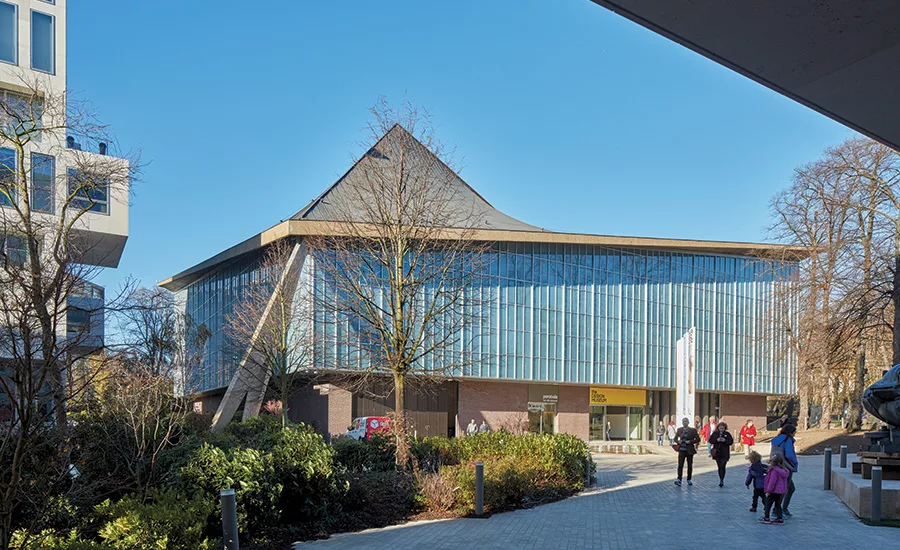
The museum occupies a renovated modernist landmark, now flanked by three OMA-designed residential blocks (Holland Green) set in a landscape by West 8.
Photo © Paul Raftery
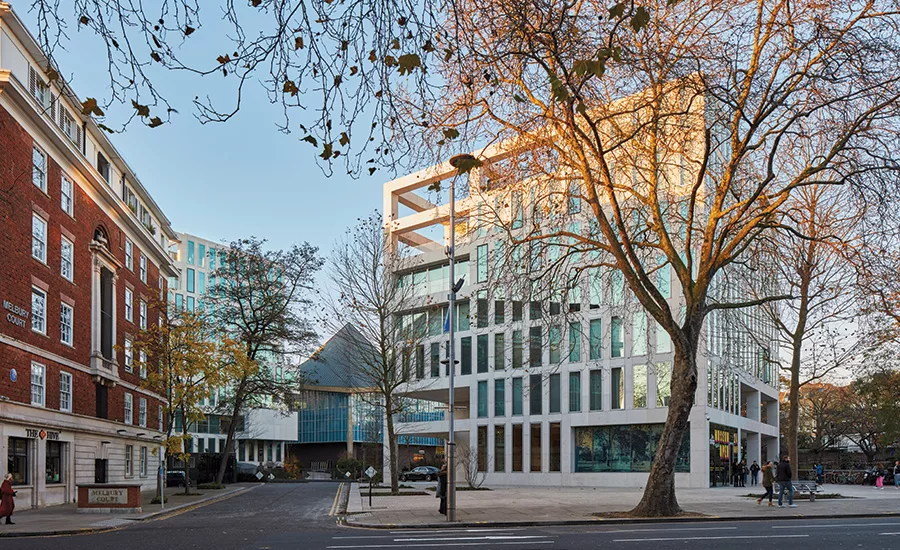
Visitors enter the site through double-height arcades in the base of one of the apartment buildings on Kensington High Street.
Photo © Paul Raftery
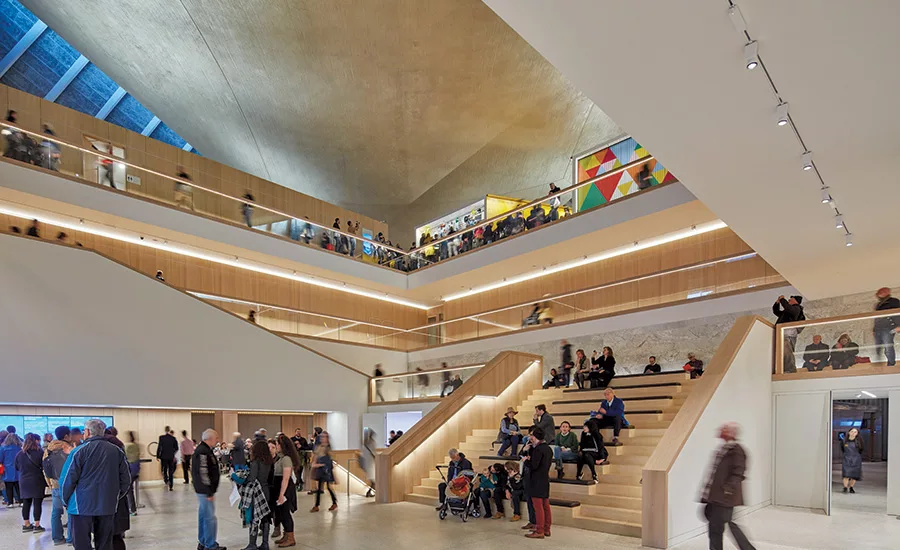
References to the building’s history are made through the selective reuse of original materials, including marble flooring that now lines a wall on the mezzanine within the atrium.
Photo © Paul Raftery
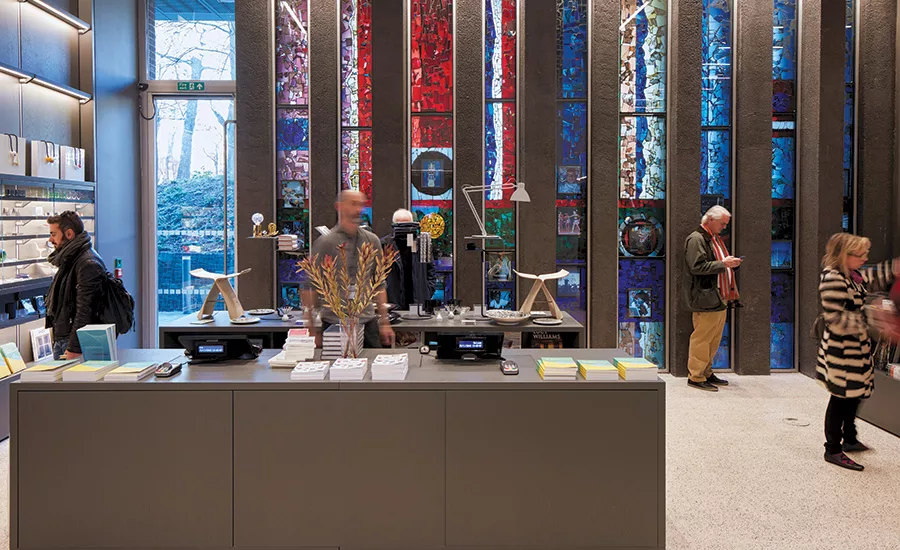
References to the building’s history are made through the selective reuse of original materials, including a stained-glass window that was relocated to the museum shop.
Photo © Paul Raftery
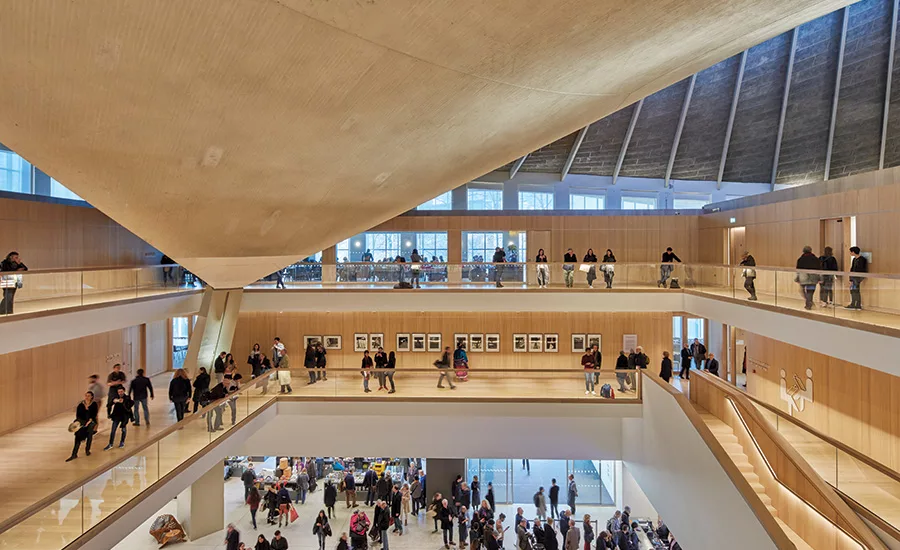
Replacement glazing admits daylight and views to spaces such as the second-floor restaurant (above), but maintains the outward appearance of the original opaque, blue-glass facades during the daytime
Photo © Paul Raftery
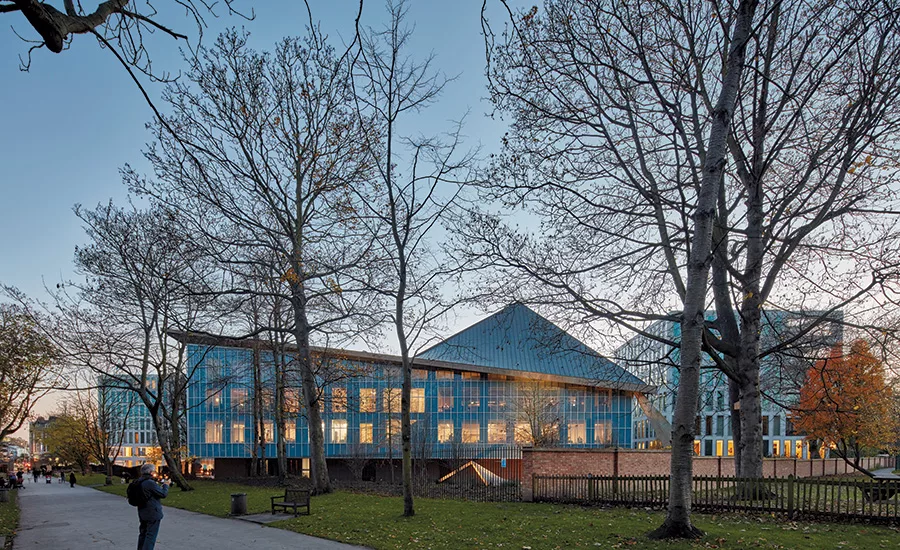
At night, the fritted glass allows electric light to seep from the building.
Photo © Paul Raftery
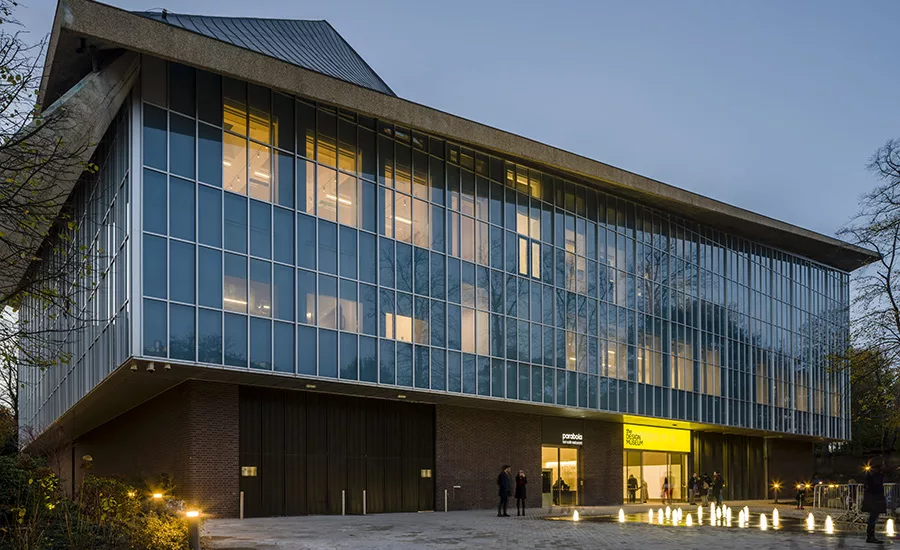
Photo © Gareth Gardner
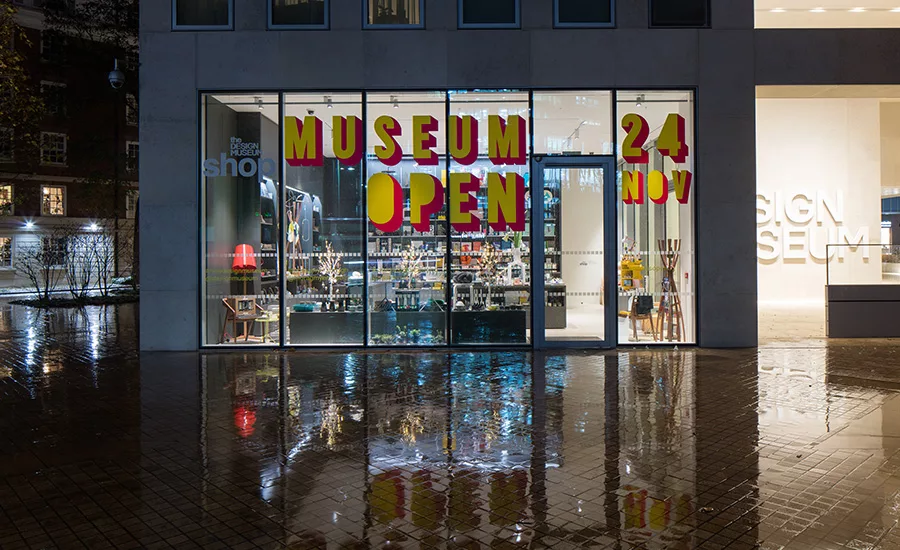
Photo © Luke Hayes
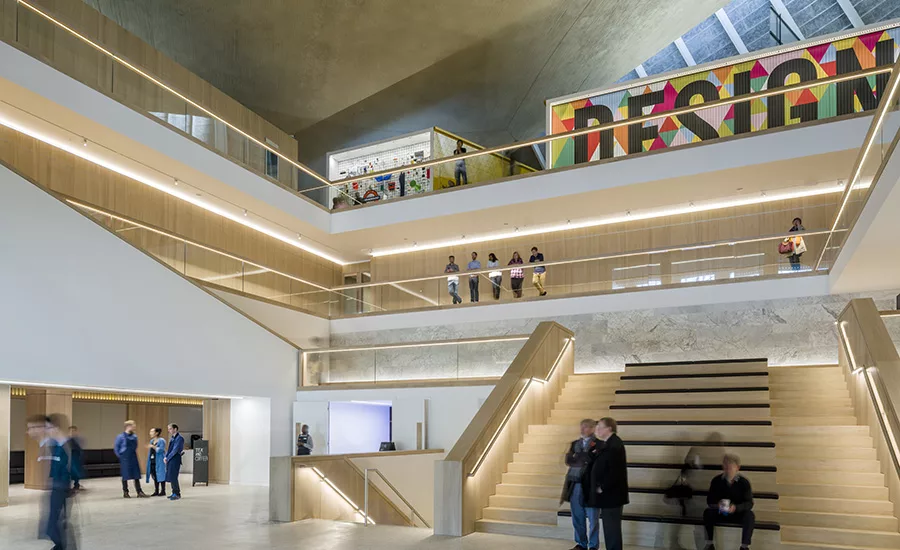
Photo © Gareth Gardner
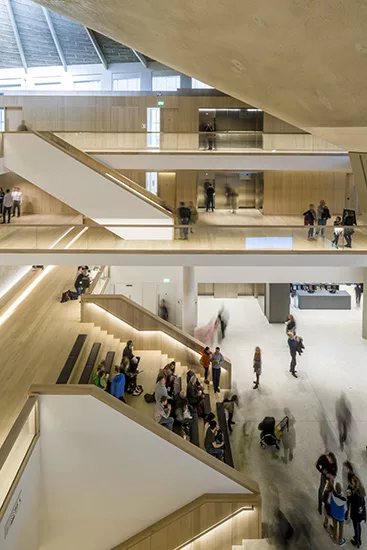
Photo © Gareth Gardner
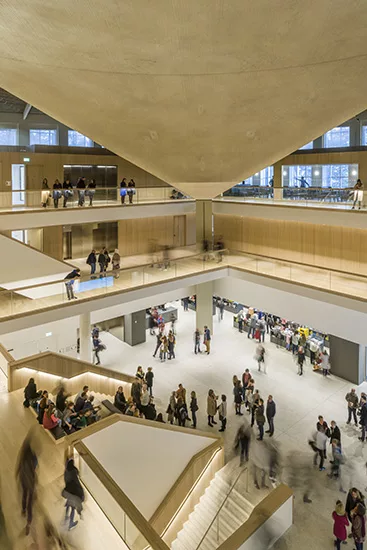
Photo © Gareth Gardner
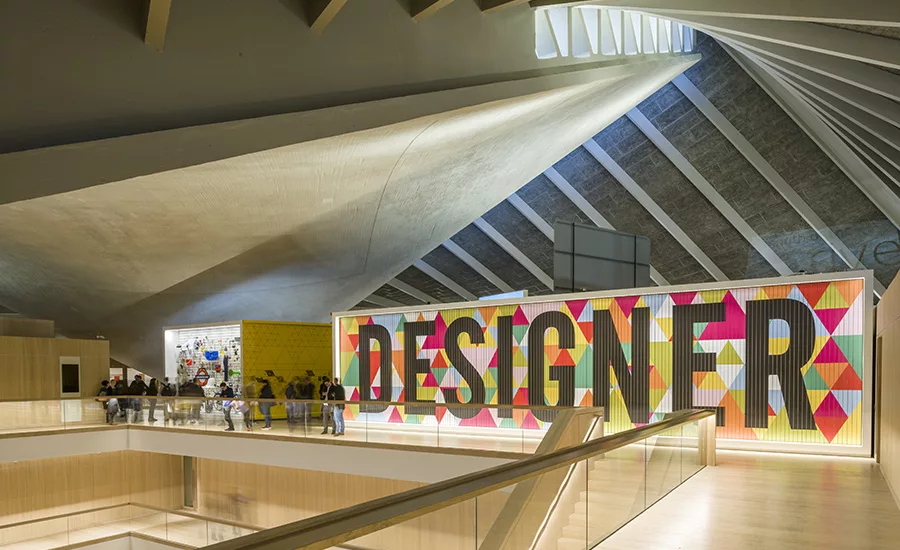
Photo © Gareth Gardner
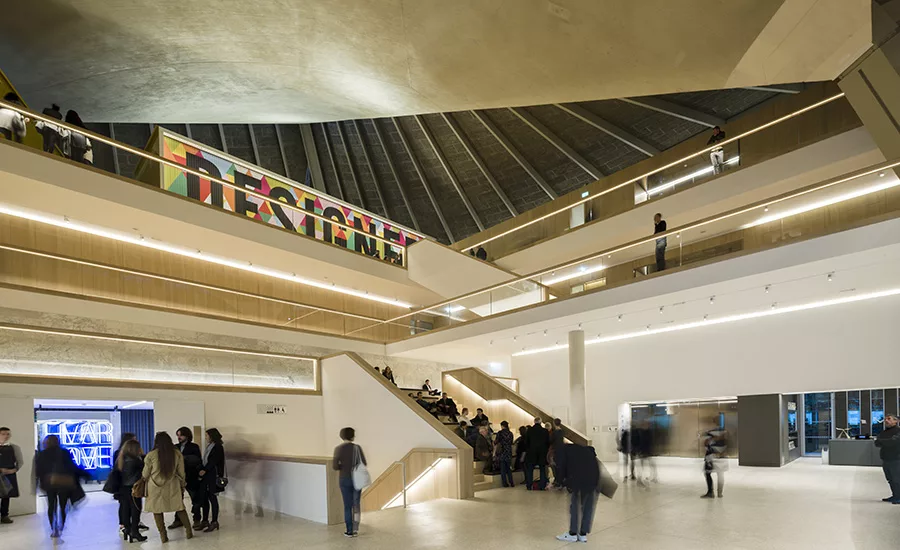
Photo © Gareth Gardner
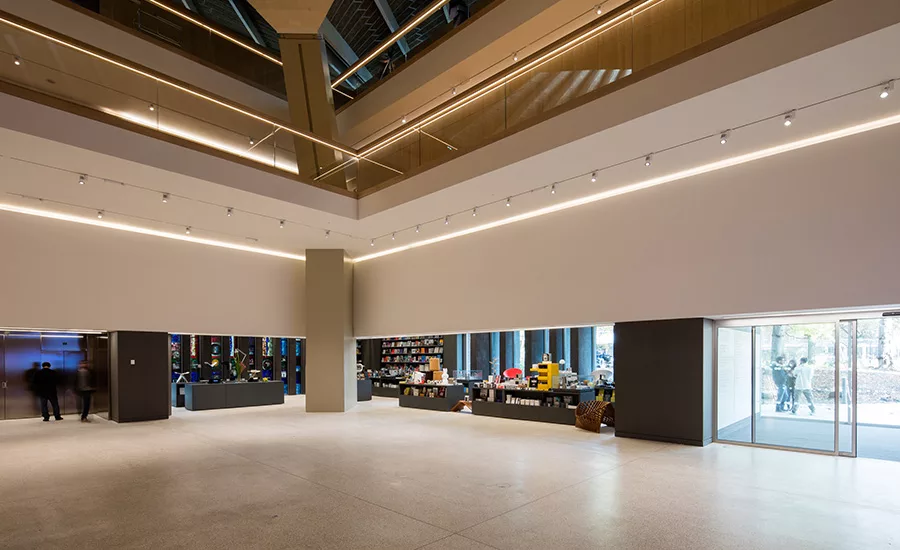
Photo © Luke Hayes
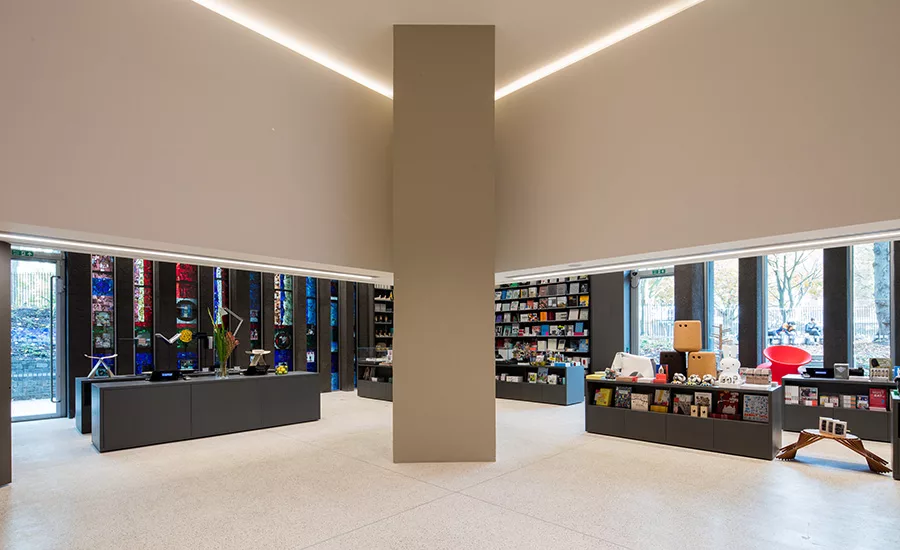
Photo © Luke Hayes
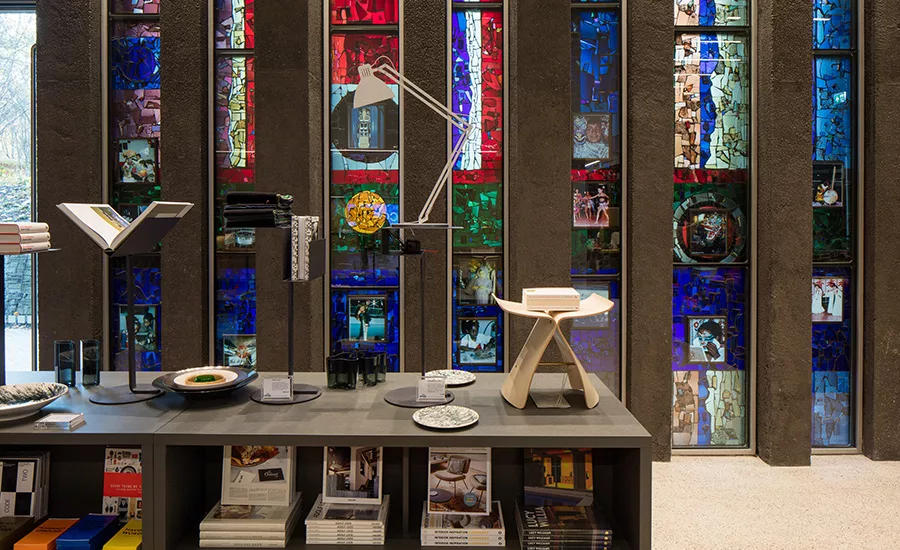
Photo © Luke Hayes
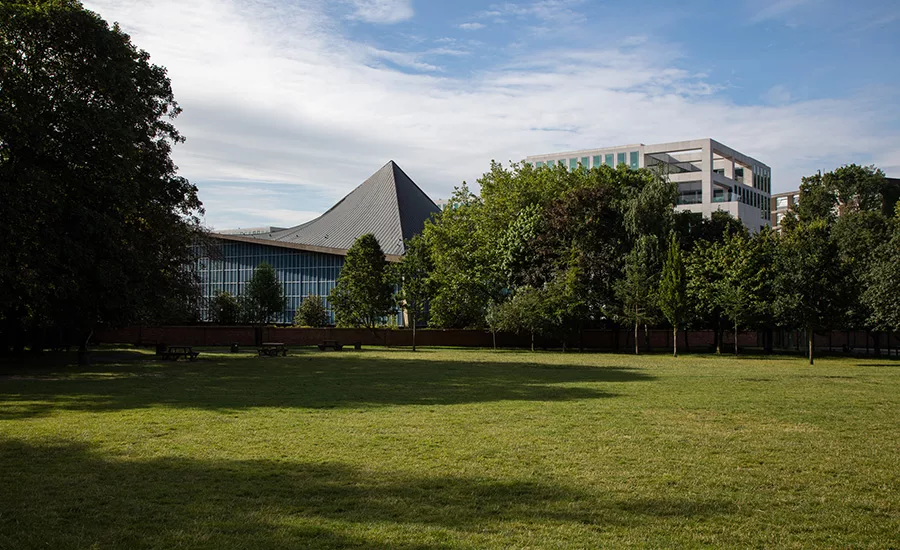
Photo © Luke Hayes
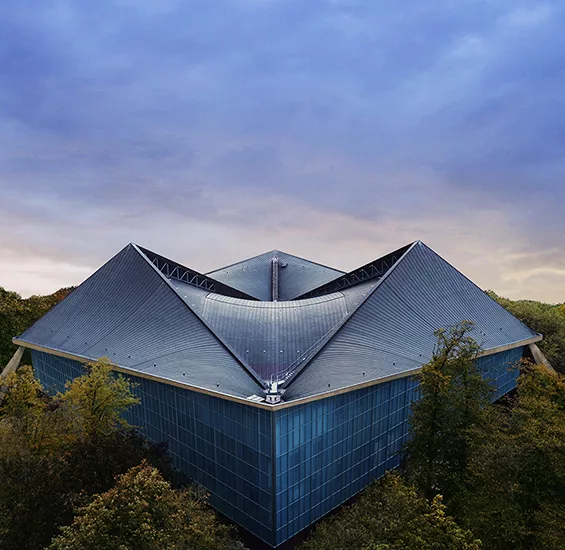
Photo © Gravity Road
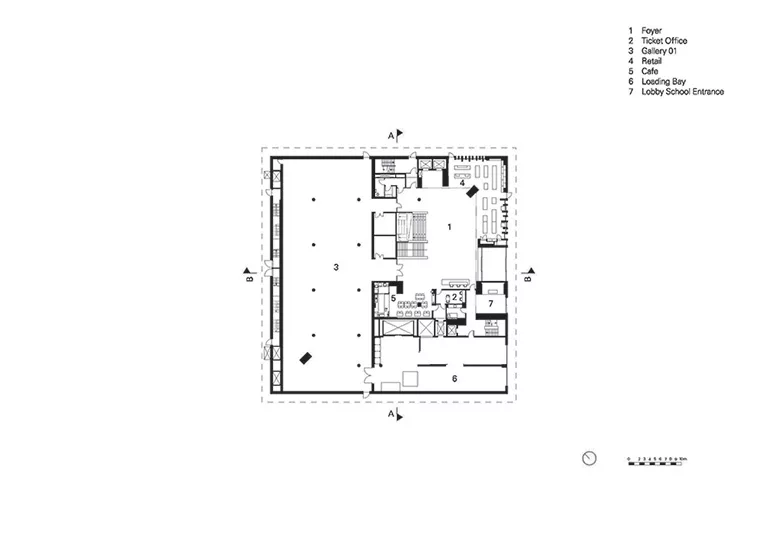
Ground-floor plan
Courtesy Design Museum
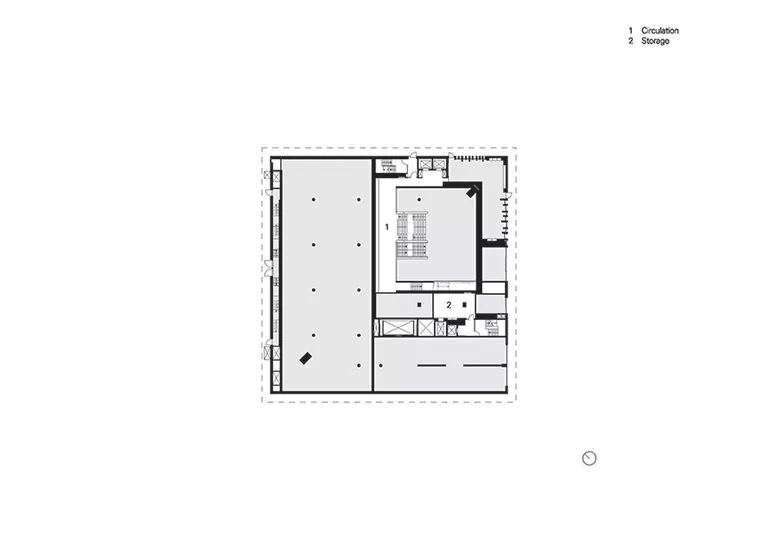
Mezzanine Floor Plan
Courtesy Design Museum
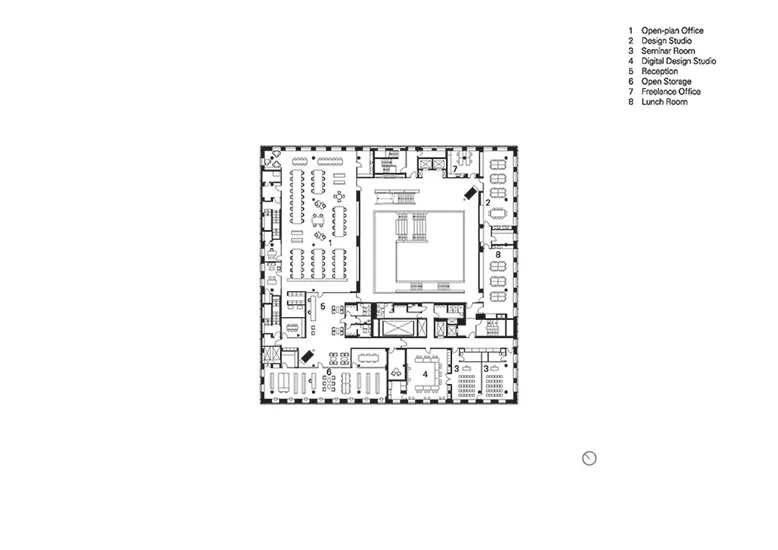
Second-floor Plan
Courtesy Design Museum
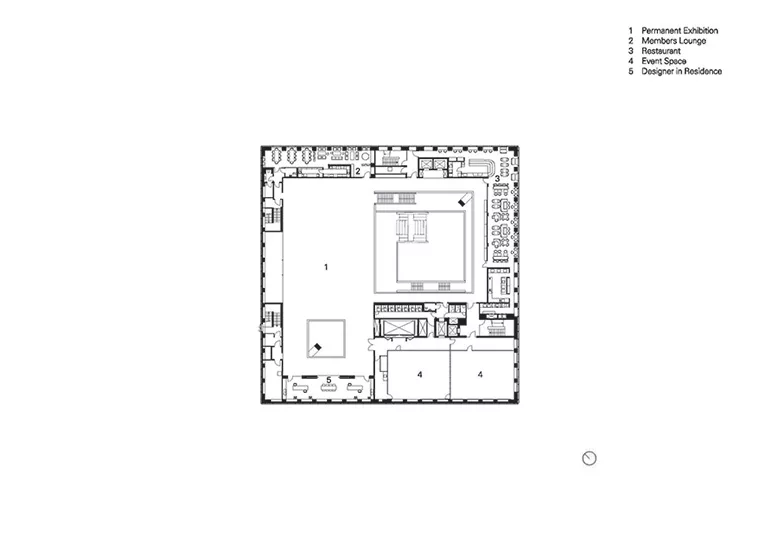
Third-floor Plan
Courtesy Design Museum
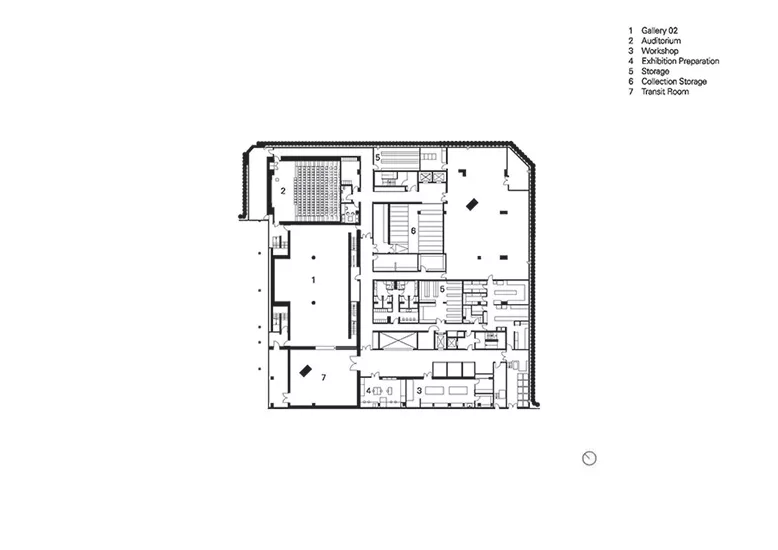
Lower-basement Floor Plan
Courtesy Design Museum
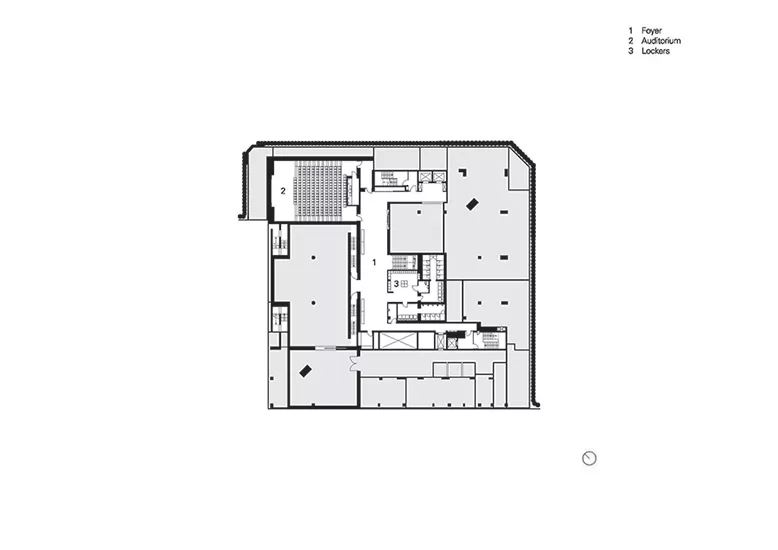
Upper-basement Floor Plan
Courtesy Design Museum
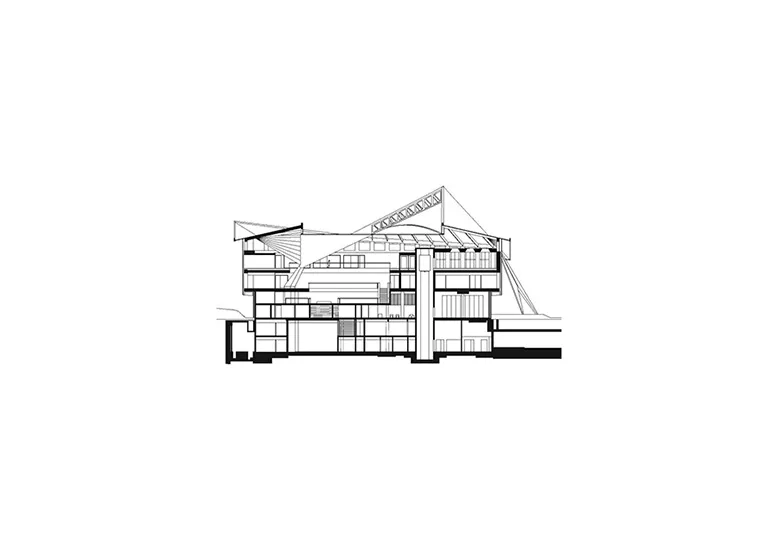
Section A-A
Courtesy Design Museum
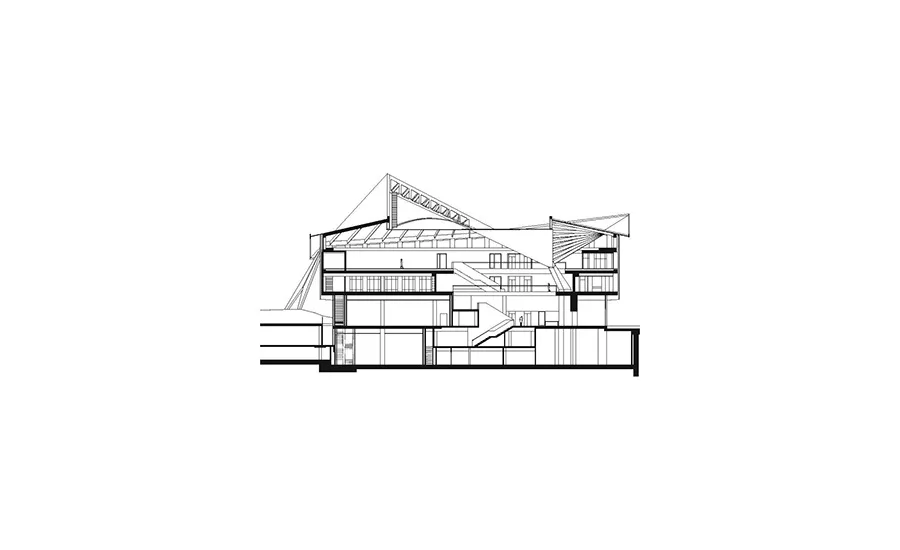
Section B-B
Courtesy Design Museum
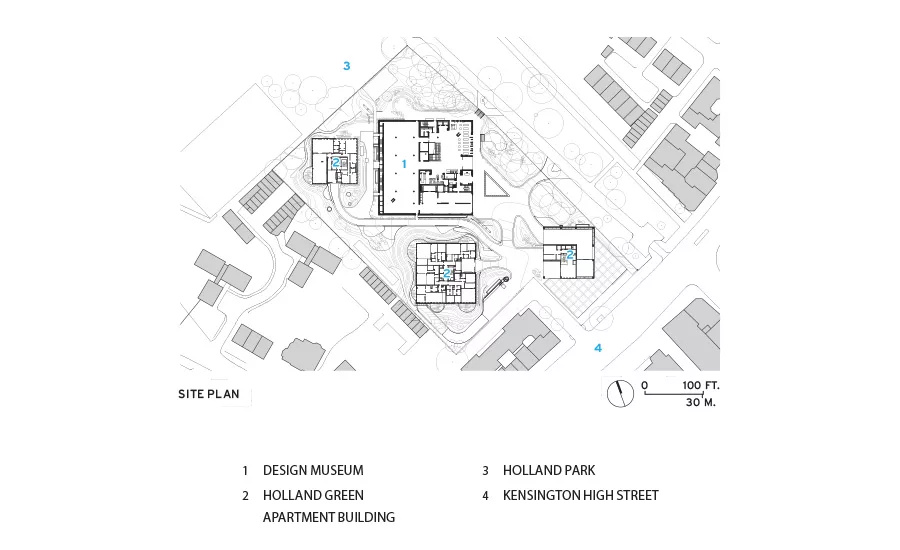
Site plan
Courtesy Design Museum
For almost 30 years, the Design Museum in London occupied a converted warehouse on the South Bank of the Thames, a compact building with a Bauhaus-inspired aesthetic that chimed with the mission of its founder, Sir Terence Conran: to champion good design for industrial production. Its move to a new home in west London, which opened on November 24, is a moment of reinvention both for the growing institution and for a celebrated modernist landmark that has been transformed by architects OMA, Allies and Morrison, and John Pawson to accommodate it.
Additional Information:Jump to credits & specifications
With design now a hugely popular—and ever broadening— subject of public interest, the museum aims to triple its visitor numbers to 600,000 people a year, and to foster a deeper understanding of how design thinking can shape social, economic, and physical environments. “It is a museum of ideas rather than things,” as director Deyan Sudjic puts it. The inaugural show, Fear and Love, links design to such subjects of urgent concern as the impact of dating apps, anxiety at the rise of robots, and Britain’s post-Brexit identity. As the museum’s role is to “steer a debate about where design is going, exhibitions must be part of a wider ecosystem of discussions and events,” says chief curator Justin McGuirk. At 100,000 square feet, the new building is three times the size of the old, with spaces for conversation, programs, and hands-on creation as well as exhibitions.
Located on the southern edge of Holland Park, the original building, designed by RMJM, was built in 1962 for the Commonwealth Institute, to house a permanent exhibition about the nations of the former British Empire. Though protected, it had been empty since 2002 and was sufficiently dilapidated that demolition was considered before a developer, Chelsfield, stepped in with an offer to restore it in return for permission to build high-end apartments (now the Holland Green development) on the surrounding land. Working for the developer, OMA explored numerous reuse options, including a fashion-show venue for Prada and a concert hall for the BBC, but then the Design Museum emerged as the likely occupant, lured by a 175-year, rent-free lease.
To adapt the structure, OMA and collaborating architect Allies and Morrison retained its unique copper-clad hyperbolic paraboloid roof and replicated the glassy aquamarine exterior walls with blue-fritted high-performance glazing, but they reconstructed the interior’s floor slabs and structural cores above a new basement. Shorn of a chunky administration wing that adjoined its west corner, the rejuvenated building appears as an elegant, freestanding pavilion in the park, though closely flanked by three cubic housing blocks, by OMA, whose gridded facades contrast with the swooping, tentlike roof of the museum. Visitors approach from the south, off Kensington High Street, through a landscape created by West 8.
The renovation reinterprets the Institute’s eccentric interior in a rationalized form that “strikes a balance between paying tribute to the building as it was and the needs of the museum,” says OMA partner Reinier de Graaf. Previously, an asymmetric atrium was ringed by two upper tiers of open-fronted exhibition space, accessed via bridges from an elevated circular dais at the center of the plan. Though still organized around a central void that cuts through two upper levels to reveal the sculptural roof, the dais and bridges are gone, and a more compact, orthogonal form at the center increases usable space around the perimeter.
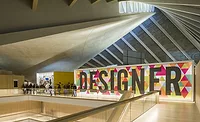
The entrance foyer leads directly into the new atrium that is the building’s organizational heart, providing sight lines to two large galleries that occupy the northern half at the ground and below-grade levels, and to most of the principal spaces above: offices, restaurants, and rooms for education and events. The museum’s interior architect, John Pawson, has created a grand processional route, beginning at a new central stair and spiraling upward around the atrium to a new mezzanine and the permanent-collection display on the top level.
The ground floor and basement have terrazzo floors and white painted walls, while the upper levels are lined with oak, in counterpoint to the gray concrete vaults above. Warm light from discreetly concealed fixtures washes wood walls and sparkles on glass balustrades. Memories of the original building are preserved in reclaimed materials used as accents: chipped-marble flooring now lines one wall, and a stainedglass window illuminates the museum shop. With the soaring roof more fully exposed and well lit, it is a dramatic interior, but the new additions have a warm and quiet material character that is almost domestic. “I didn’t want to make an overt display of design,” says Pawson. “I wanted to make a space which curators can use as they choose, and where people can gather, relax, and enjoy themselves.”
Broad steps that double as seating rise up to the mezzanine, where light spills from behind a long oak bench. The deep circulation routes are also meeting places and can be used for exhibitions, with picture rails integrated into the oak wall lining. This colonization is already evident in a scrolling advertising sign on the upper level that announces the permanent-collection display. Although a self-proclaimed “minimalist,” Pawson is sanguine: “It’s a design museum; it will always contain many voices.” And while these relaxed spaces invite occupation, their spatial and material character will not be overwhelmed by the noise as more join in the conversation—a happy balance for an institution that wishes to be a forum, not a temple.
CreditsArchitect: John Pawson ltd
Personnel in architect's firm who should receive special credit: Chris Masson (Project architect, registered architect)
Engineers: Arup, Structural Engineer
Consultants: Chapman BDSP, Lighting
General contractor: Willmot Dixion Interior
|
SpecificationsExterior Cladding Metal/glass curtain wall: Martifer Doors Entrances: Dorma Fire-control doors, security grilles: Selo Riser Doors Hardware Locksets: Assa Abloy Closers: Dorma Exit devices: Allgood Pulls: Allgood Security devices: Allgood Other special hardware: Allgood Interior Finishes Acoustical ceilings: - Knauf Demountable partitions: - SAS Cabinetwork and custom woodwork: Realm Projects Paneling: Topakoustik Solid surfacing: lovair Resilient flooring: - Bolon Raised flooring: Knauf Gifa Special interior finishes unique to this project: Ardex Pandomo TerazzoPlus Furnishings Office furniture: Vitra Reception furniture: John Pawson ltd with Realm Projects Fixed seating: John Pawson ltd with Realm Projects Chairs: Vitra Tables: Vitra Upholstery: - John Pawson ltd with Race Furniture (auditorium) Lighting Interior ambient lighting: Feilo Sylvania Dimming system or other lighting controls: Lutron |
Looking for a reprint of this article?
From high-res PDFs to custom plaques, order your copy today!