Design Vanguard 2015
Studio Link-Arc, New York
The designs of a globally connected firm are rooted in nature and local context.
Studio Link-Arc New York
Photo © Studio Link-Arc
Fraser Suite Hotel
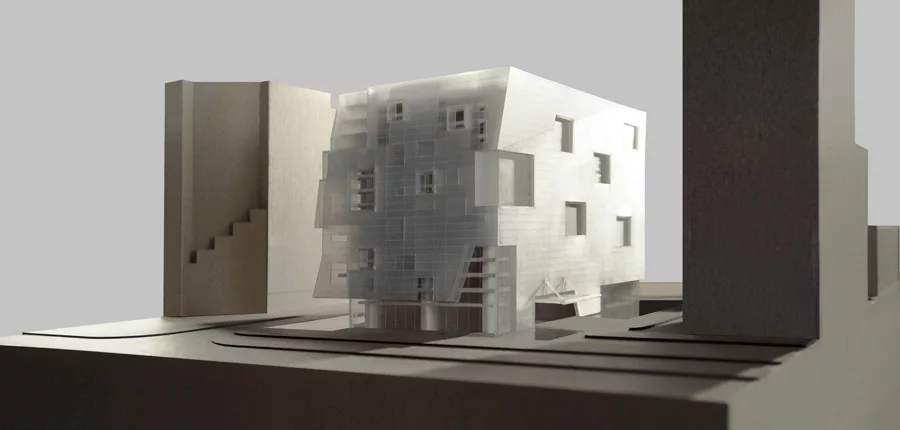
The architects transformed a modernist dormitory-style apartment building in Shenzhen’s Huaqiangbei district into a 200-room boutique hotel, aiming to distinguish it from the lighter, glass-clad office buildings nearby. Layering a volumetric facade onto the existing substantial concrete structure, they attuned each side to its urban context: the western facade features subtractive voids that frame views of a city park, while the northern face contains additive “sunlight rooms” that are angled upward to welcome daylight and preserve privacy (a busy street runs below). The other two facades are flatter, giving adjacent buildings breathing room.
Photo © Studio Link-Arc
Milan Expo: China Pavilion
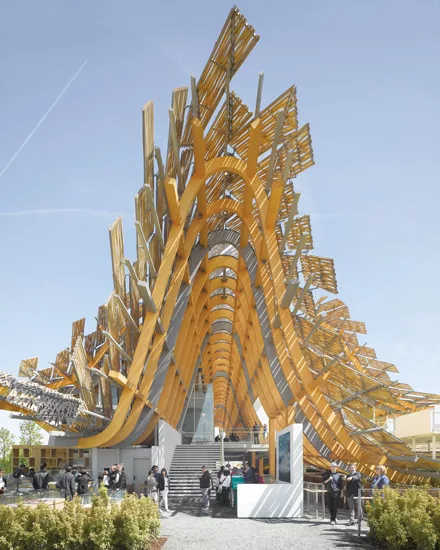
Envisioning a “Land of Hope” that would merge the urban and the pastoral, Studio Link-Arc and a team from Tsinghua University designed a long sequence of exhibition spaces shaded by a sloping roof. The timber-framed, bamboo-paneled roof bridges a mountainous silhouette on its south end with a profile of the Beijing skyline on its north end. The architects used parametric analysis to match 1,052 shingled bamboo panels to the shape of the roof’s curvilinear structure; they ended up with 287 distinct panel shapes. A waterproofing PVC membrane and a series of stainless-steel rafters complete the four-layer roof system.
Photo © Roland Halbe
Milan Expo: China Pavilion
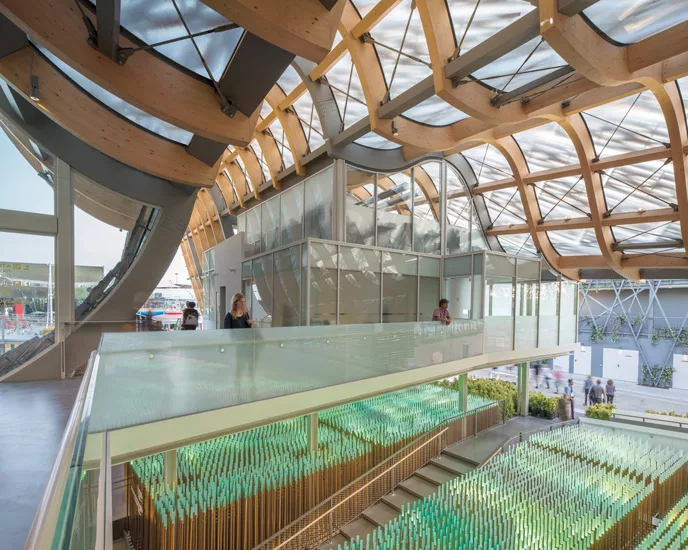
Envisioning a “Land of Hope” that would merge the urban and the pastoral, Studio Link-Arc and a team from Tsinghua University designed a long sequence of exhibition spaces shaded by a sloping roof. The timber-framed, bamboo-paneled roof bridges a mountainous silhouette on its south end with a profile of the Beijing skyline on its north end. The architects used parametric analysis to match 1,052 shingled bamboo panels to the shape of the roof’s curvilinear structure; they ended up with 287 distinct panel shapes. A waterproofing PVC membrane and a series of stainless-steel rafters complete the four-layer roof system.
Photo © LV Hengzhong
AVIC Gallery
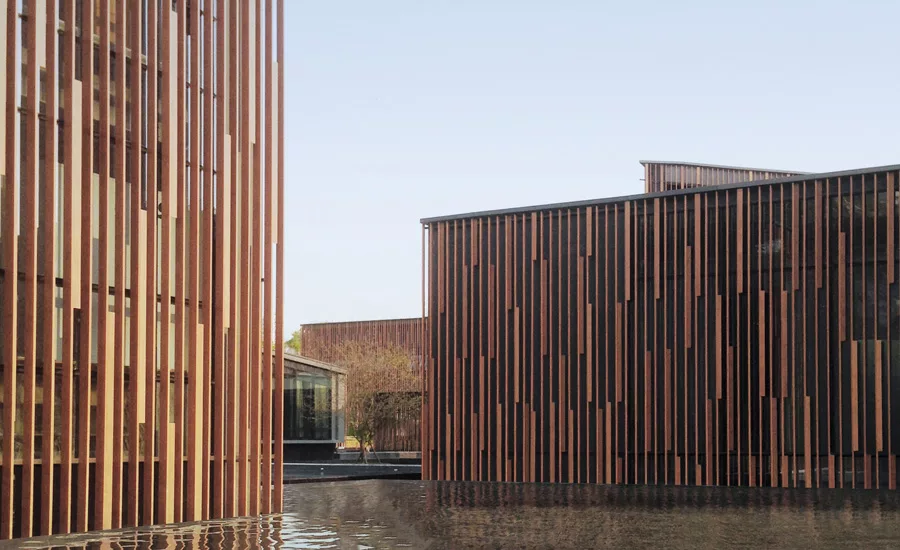
A reflecting pool unifies this cluster of cubic structures, located at the center of a dense residential development in Jinyang, southwest of central Guiyang. The buildings—which include a reception area, private meeting rooms, an exhibition space, and a café—are clad in patterned metal screens resembling bamboo groves. Because the buildings are situated at varying elevations, they each establish a distinct visual relationship with the pool. Countering a topographic depression at the project site, the architects raised the ground plane to establish this new set of sectional relationships.
Photo © Studio Link-Arc
China Pavilion (2015)
Milan Expo
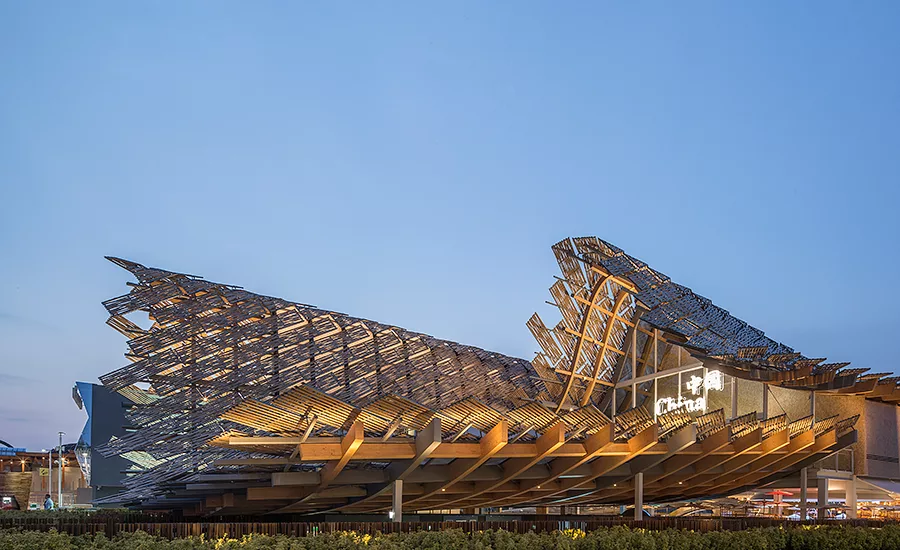
Envisioning a “Land of Hope” that would merge the urban and the pastoral, Studio Link-Arc and a team from Tsinghua University designed a long sequence of exhibition spaces shaded by a dramatically sloping roof. The timber-framed, bamboo-paneled roof is the conceptual core of this project: it bridges a mountainous silhouette on its south end with a profile of the Beijing skyline on its north end. The architects used parametric analysis to match 1052 shingled bamboo panels to the roof’s curvilinear structure; they ended up with 287 distinct panel shapes. A waterproofing PVC membrane and a series of stainless steel rafters complete the four-layer roof system.
Photo © LV Hengzhong
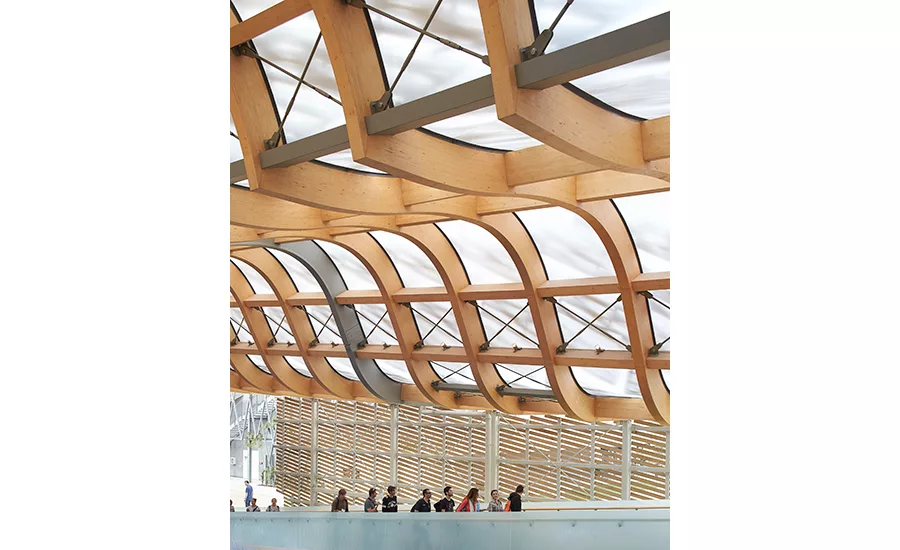
China Pavilion (2015)
Milan Expo
Envisioning a “Land of Hope” that would merge the urban and the pastoral, Studio Link-Arc and a team from Tsinghua University designed a long sequence of exhibition spaces shaded by a dramatically sloping roof. The timber-framed, bamboo-paneled roof is the conceptual core of this project: it bridges a mountainous silhouette on its south end (left) with a profile of the Beijing skyline on its north end. The architects used parametric analysis to match 1052 shingled bamboo panels to the roof’s curvilinear structure; they ended up with 287 distinct panel shapes. A waterproofing PVC membrane and a series of stainless steel rafters complete the four-layer roof system.
Photo © Hufton+Crow
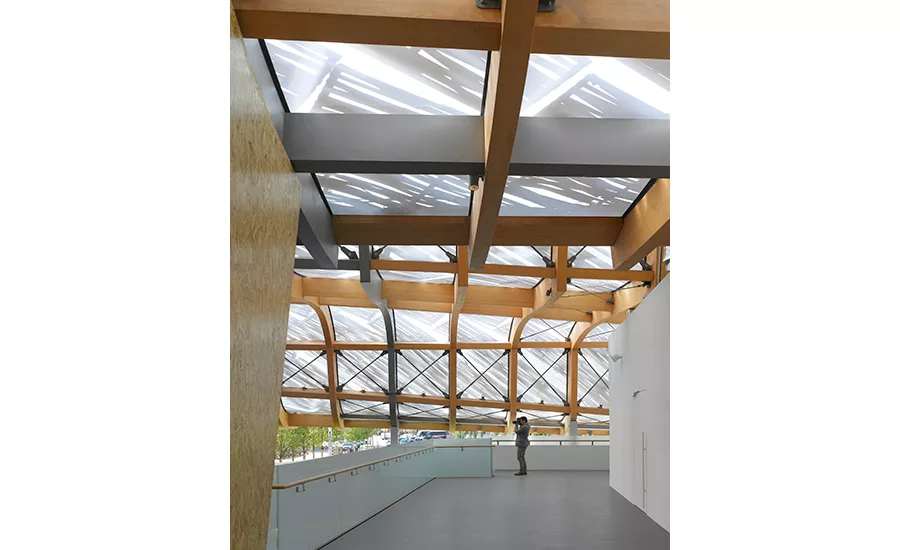
China Pavilion (2015)
Milan Expo
Envisioning a “Land of Hope” that would merge the urban and the pastoral, Studio Link-Arc and a team from Tsinghua University designed a long sequence of exhibition spaces shaded by a dramatically sloping roof. The timber-framed, bamboo-paneled roof is the conceptual core of this project: it bridges a mountainous silhouette on its south end with a profile of the Beijing skyline on its north end. The architects used parametric analysis to match 1052 shingled bamboo panels to the roof’s curvilinear structure; they ended up with 287 distinct panel shapes. A waterproofing PVC membrane and a series of stainless steel rafters complete the four-layer roof system.
Photo © Roland Halbe
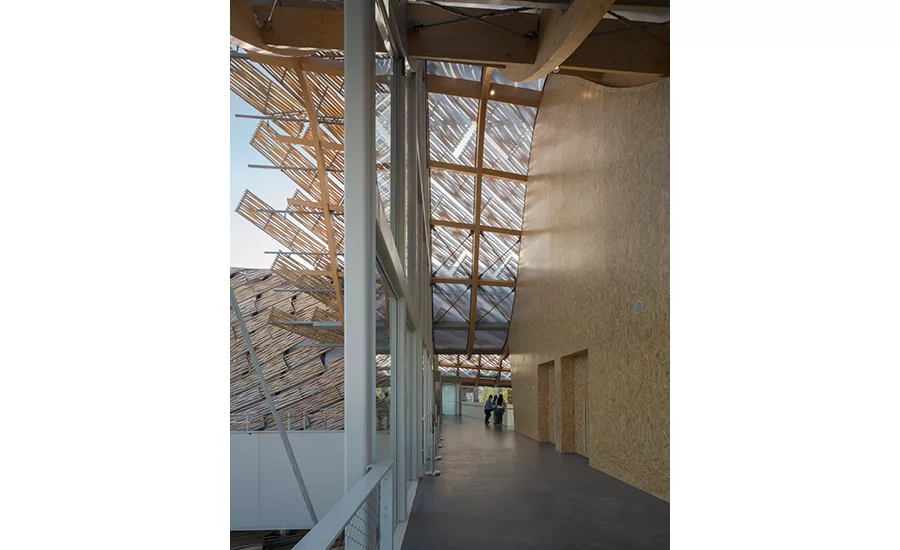
China Pavilion (2015)
Milan Expo
Envisioning a “Land of Hope” that would merge the urban and the pastoral, Studio Link-Arc and a team from Tsinghua University designed a long sequence of exhibition spaces shaded by a dramatically sloping roof. The timber-framed, bamboo-paneled roof is the conceptual core of this project: it bridges a mountainous silhouette on its south end with a profile of the Beijing skyline on its north end. The architects used parametric analysis to match 1052 shingled bamboo panels to the roof’s curvilinear structure; they ended up with 287 distinct panel shapes. A waterproofing PVC membrane and a series of stainless steel rafters complete the four-layer roof system.
Photo © LV Hengzhong
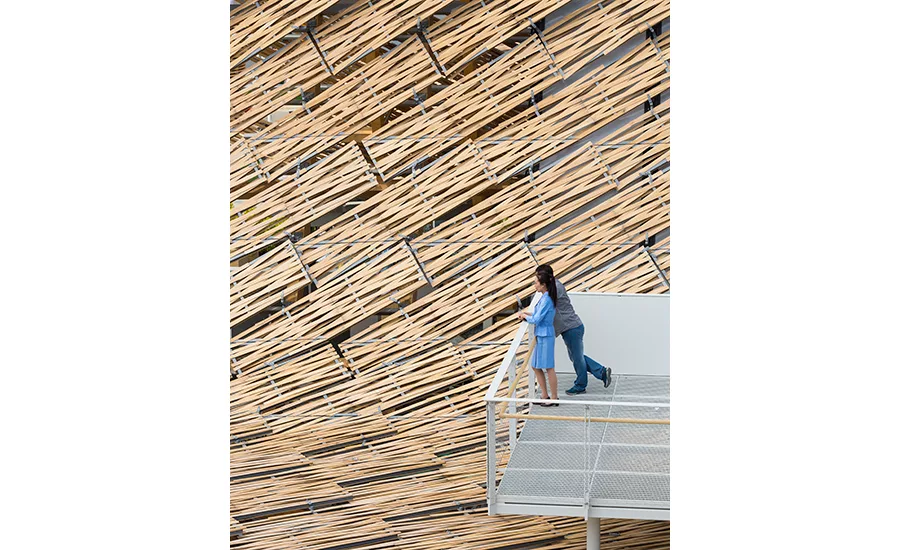
China Pavilion (2015)
Milan Expo
Envisioning a “Land of Hope” that would merge the urban and the pastoral, Studio Link-Arc and a team from Tsinghua University designed a long sequence of exhibition spaces shaded by a dramatically sloping roof. The timber-framed, bamboo-paneled roof is the conceptual core of this project: it bridges a mountainous silhouette on its south end with a profile of the Beijing skyline on its north end. The architects used parametric analysis to match 1052 shingled bamboo panels to the roof’s curvilinear structure; they ended up with 287 distinct panel shapes. A waterproofing PVC membrane and a series of stainless steel rafters complete the four-layer roof system.
Photo © Sergio Grazia
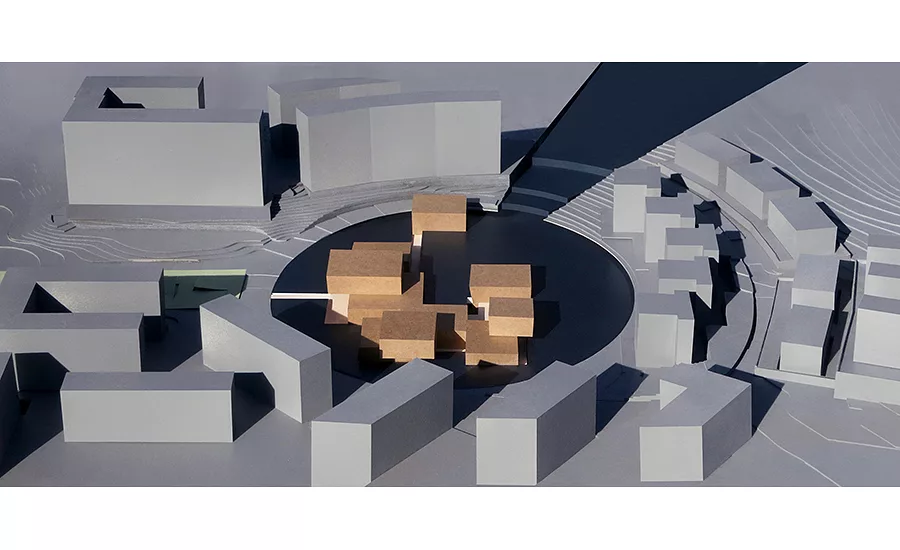
AVIC Gallery (2013)
Guiyang, China
A reflecting pool unifies this cluster of cubic structures, located at the center of a dense residential development in Jinyang, southwest of central Guiyang. The buildings—which include a reception area, private meeting rooms, an exhibition space, and a café—are clad in patterned metal screens resembling bamboo groves. Because the buildings are situated at varying elevations, they each establish a distinct visual relationship with the pool. Countering a topographic depression at the project site, the architects raised the ground plane to establish this new set of sectional relationships.
Image courtesy Studio Link-Arc
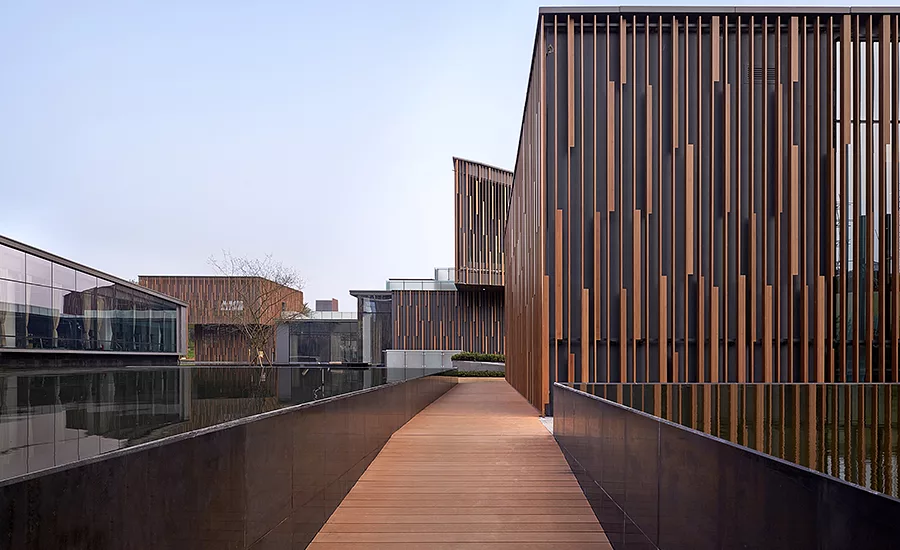
AVIC Gallery (2013)
Guiyang, China
A reflecting pool unifies this cluster of cubic structures, located at the center of a dense residential development in Jinyang, southwest of central Guiyang. The buildings—which include a reception area, private meeting rooms, an exhibition space, and a café—are clad in patterned metal screens resembling bamboo groves. Because the buildings are situated at varying elevations, they each establish a distinct visual relationship with the pool. Countering a topographic depression at the project site, the architects raised the ground plane to establish this new set of sectional relationships.
Photo © Studio Link-Arc
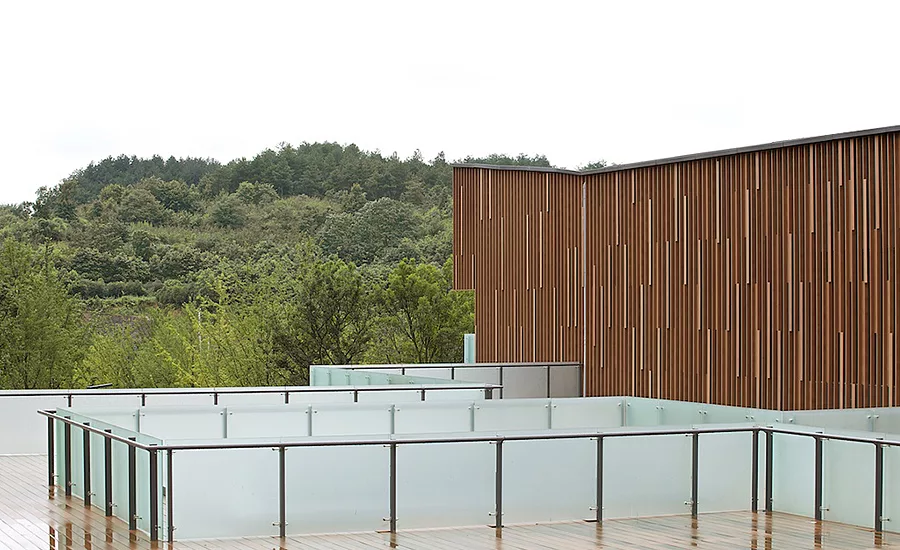
AVIC Gallery (2013)
Guiyang, China
A reflecting pool unifies this cluster of cubic structures, located at the center of a dense residential development in Jinyang, southwest of central Guiyang. The buildings—which include a reception area, private meeting rooms, an exhibition space, and a café—are clad in patterned metal screens resembling bamboo groves. Because the buildings are situated at varying elevations, they each establish a distinct visual relationship with the pool. Countering a topographic depression at the project site, the architects raised the ground plane to establish this new set of sectional relationships.
Photo © Wang Xiangdong
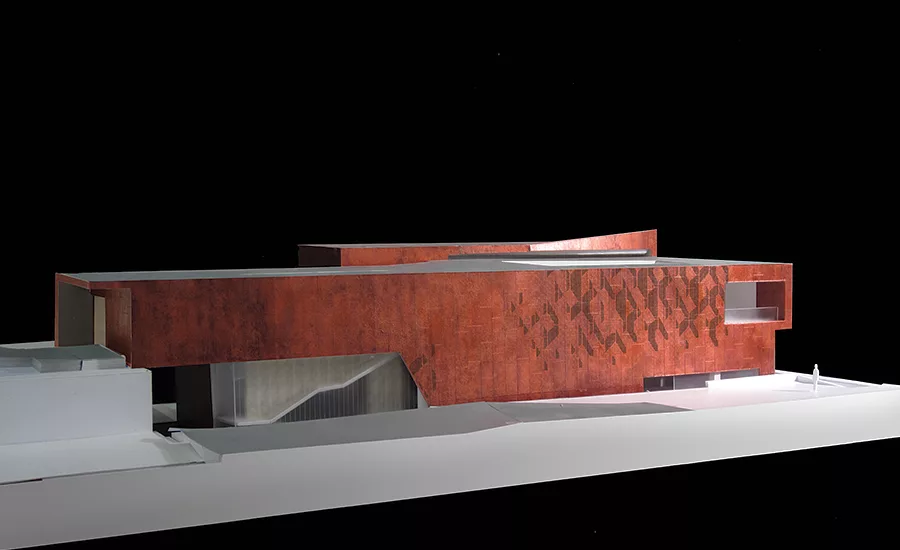
Shenzhen Bay Gallery (2013)
Shenzhen, China
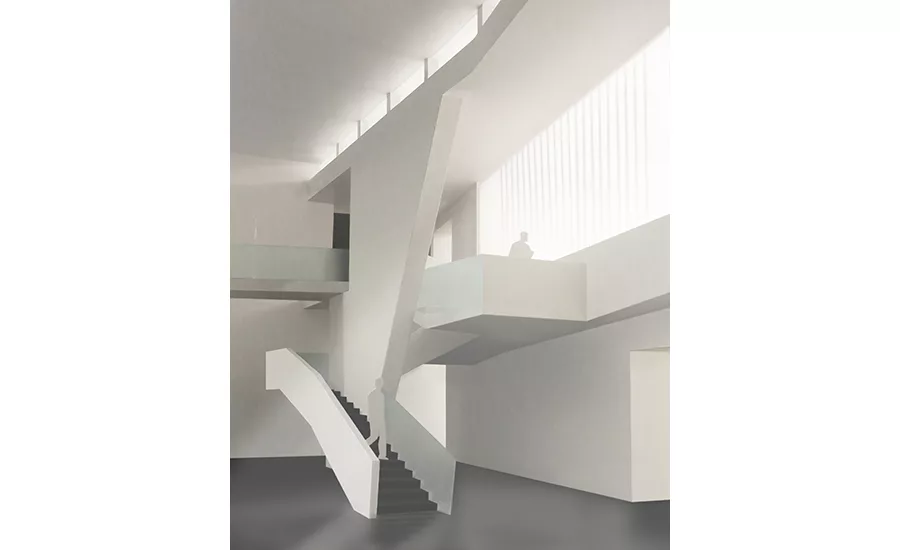
The architects employed a subtractive design strategy for this gallery, carefully carving a sequence of three exterior spaces out of a cubic form. Entering the gallery through a “water courtyard,” which features a reflecting pool, visitors are guided through the rest of the space—which includes a a private landscaped courtyard on the second floor and an entry courtyard at ground level. The building seamlessly integrates with an existing infrastructural space, gradually descending into a parking garage on one end.
Image courtesy Studio Link-Arc
Shenzhen Bay Gallery (2013)
Shenzhen, China
The architects employed a subtractive design strategy for this gallery, carefully carving a sequence of three exterior spaces out of a cubic form. Entering the gallery through a “water courtyard,” which features a reflecting pool, visitors are guided through the rest of the space—which includes a a private landscaped courtyard on the second floor and an entry courtyard at ground level. The building seamlessly integrates with an existing infrastructural space, gradually descending into a parking garage on one end.
Image courtesy Studio Link-Arc
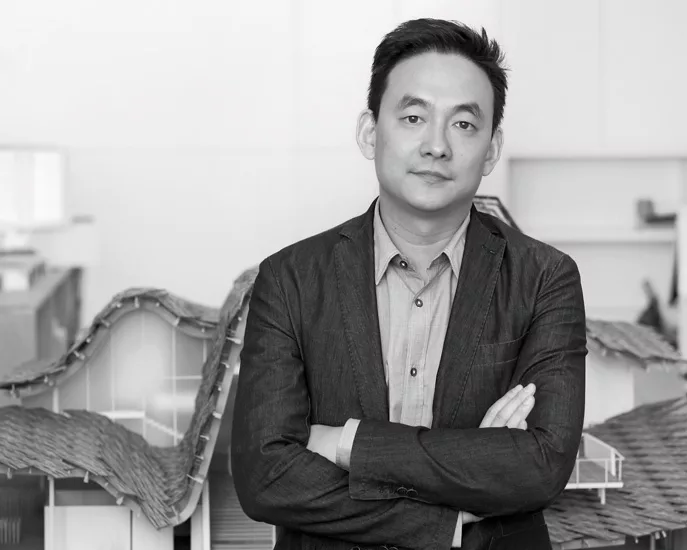
Shuttling through time zones is second nature for Yichen Lu, the 39-year-old founder and principal of Studio Link-Arc. Lu—a Shanghai native who doubles as an associate professor at Tsinghua University in Beijing—spent this year bouncing between New York and China, with frequent stops in Italy to supervise the construction of the Milan Expo’s China Pavilion. But despite the firm’s global reach, each of its projects remains deeply local. Its aim is to build structures that foster dialogue between people and their natural surroundings. By weaving nature into the built environment, Studio Link-Arc aims to construct what Lu calls a “second nature” of its own.
“Nature, rather than man-made structures, is the eternal theme of architecture,” Lu says. This idea shone through every bamboo panel of the China Pavilion’s roof, a four-layer feat of digital fabrication and parametric design that hovered over a carefully paced sequence of spaces. The temporary pavilion was built for the six-month Milan Expo, which ended on October 31. However, the structure’s roof, which merged the profile of a city skyline with topographical curves, evoked the permanence of an urban landscape. The sun beamed through a translucent PVC membrane beneath the panels, casting shadows that stretched and shifted across the pavilion’s interior as the day passed. “It’s a building that can record time,” Lu says. Such fluid yet precise interactions with the elements occur at varying scales across Link-Arc’s portfolio, from renovations to new gallery spaces. In the firm’s current furnishings project for Milan’s 2016 Design Week, nature serves as an inspiration, as the team is experimenting with patterns and folds that mimic mountains and waves.
Lu likens the firm’s design process to the creation of a storyboard in film: in the China Pavilion as well as in its gallery projects, the transitions between one space and the next are carefully choreographed. Limiting the size of their buildings is crucial to the dance. Even with big residential developers in China, the firm commits only to projects at fewer than 100,000 square feet in size. With high-rises shooting up all over the country, staying relatively small creates “a lot of economic pressure,” Lu says, but the 15-person firm remains adamant about building on a limited scale at a careful pace.
After earning his undergraduate degree from Tsinghua University and his M.Arch. at Yale, Lu worked for Yung Ho Chang at Atelier FCJZ—China’s first independently licensed firm. According to Lu, Chang’s aim was to “redefine contemporary architecture in China” and to promote dialogue between Chinese architects and the rest of the world. Inspired by Chang to think globally, Lu spent two years working for Frank Gehry, his Yale advisor, on the Guggenheim Abu Dhabi, and then spent another two years as a project manager in China for Steven Holl before opening his own office in 2012. At both firms, Lu gained experience with cultural projects, which make up most of Studio Link-Arc’s work, but he hopes to expand his portfolio to include schools and more commercial projects.
Currently, the firm is working on a roof terrace atop a residential building in Manhattan, a library in Shenzhen, and several competition entries across Europe. Says Lu, “Traveling keeps us sharp to our surroundings and to cultural differences.”
Studio Link-Arc New York
Looking for quick answers on architecture and design topics?
Try Ask RECORD, our new smart AI search tool.
Ask RECORD →
Looking for a reprint of this article?
From high-res PDFs to custom plaques, order your copy today!