Architectural Record
search
cart
facebook twitter linkedin youtube
  • Sign In
  • Subscribe
  • Sign Out
  • My Account
Architectural Record
  • NEWS
    • Latest News
    • Awards
    • Interviews
    • Obituaries
    • Podcasts
      • Design:Ed Podcast
      • Sponsored Podcasts
  • OPINION
    • Book Reviews / Excerpts
    • Exhibition Reviews
    • Forum
  • EXCLUSIVES
    • Videos
    • Design Vanguard
    • Top 300 Firms
    • Sponsored Content
    • Sponsored eBooks
    • From the Archives
  • CONTINUING ED
    • Editorial Continuing Ed
    • CE Center
    • CE Academies
  • PROJECTS
    • Buildings By Type
    • Reuse & Renovation
    • Museums & Arts Centers
    • Colleges & Universities
    • Multifamily Housing
    • Interiors
    • Lighting
    • Kitchen & Bath
  • HOUSES
    • Record Houses
    • House of the Month
    • Featured Houses
  • PRODUCTS
    • Products by Category
    • Record Products of the Year
    • Latest Products
  • EVENTS
    • Dates & Events
    • Record on the Road
    • Innovation Conference
    • Sustainability in Practice
    • Women In Architecture
    • Webinars
    • Ad Excellence Awards
    • Submit an Event
  • CONNECT
    • Ask RECORD AI
    • Newsletters
    • Contact
    • Advertise
    • Editorial Calendar
    • Store
    • Customer Service
  • SUBMIT
    • Submission Guidelines
    • RECORD Competitions
  • MAGAZINE
    • Subscribe
    • My Account
    • Digital Edition
    • Current Issue
    • Firm Pass
    • Historic Archive

Le Corbusier Reconsidered

Two new books on the architect we love to hate
By Eric Mumford
Chandigarh’s Le Corbusier
The Struggle for Modernity in Postcolonial India, by Vikramaditya Prakash.
Le Corbusier
Architect of the Twentieth Century, by Kenneth Frampton.
Chandigarh’s Le Corbusier
Le Corbusier
January 18, 2016

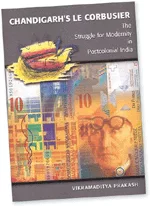
CHANDIGARH'S Le CORBUSIER:
THE STRUGGLE FOR MODERNITY IN POSTCOLONIAL INDIA


By Vikramaditya Prakash

Why do we need another book about Le Corbusier? Since well before his death in 1965, the prolific French-Swiss architect has been the center of a virtual industry of publications about his work. In the case of Prakash’s book, the answer is that while Le Corbusier as the hero (or villain) of Western architecture is a story that has often been told, his ambiguous standing outside of Europe and North America has seldom been thoughtfully considered. Although the Punjabi provincial capital of Chandigarh has not been the model for future Indian urbanization that Le Corbusier intended, his deep interest in the problem of creating a monumental government complex for a new state in the first modern postcolonial nation has had many consequences for architecture around the world.

Prakash intends his book to be accessible not only to architects but also, as he puts it, to "multiple audiences in history and theory," including those interested in the history of South Asia in particular. His own background as the son of one of the Indian architects involved with the design of Chandigarh has both advantages and disadvantages. While he tries to keep in mind that the general reader has little knowledge of Le Corbusier’s work, modern India, or postcolonial theory, the book in fact requires some knowledge of all three to be appreciated. Nevertheless, Chandigarh’s Le Corbusier offers a welcome introduction to the complexities of the intersections between Modern art and architecture and the non-Western world. Colonialist appropriation and condescension were usually part of such encounters, yet at the same time Le Corbusier’s work in India ushered in a new paradigm for architecture whose effects in India still resonate. Charles Correa’s assertion that perhaps someday Le Corbusier "will be acknowledged … as the greatest Indian architect of them all" is now a widely shared view. Thousands of buildings ranging from the works of Correa and another member of the Chandigarh team, Balkrishna Doshi, to those of less well known figures such as Achyut Kanvinde, Shivnath Prasad, Jeet Malhotra, Harbinder Singh Chopra, Rajinder Kumar, and dozens of others testify to Le Corbusier’s influence on Indian architecture, which is now a historical fact regardless of one’s opinion of his work and legacy.

Prakash notes that for Prime Minister Jawaharlal Nehru, Le Corbusier’s patron, the old Indian nationalist opposition between "Indian" and "European" was replaced by a dialectic between "tradition" and "modernity." Like Nehru, Le Corbusier was interested in negotiating between these newly articulated polarities, rather than simply imposing a European model, which explains much of the veneration he inspired in India. As postcolonialist views have emerged, this veneration now appears to some as an embarrassing relic of colonialism. It is to Prakash’s credit that he tries to steer between glib dismissal and adulation as he moves beyond the familiar oppositions of awestruck Corbu-worship and easy postmodern rejection. At the same time, there is something a little disappointing about a book on Chandigarh that for the most part still traverses the familiar visual terrain of the capitol complex, rather than looking more broadly at the phenomenon of its influence in India. 


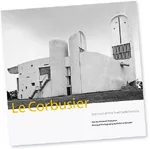
Le CORBUSIER: ARCHITECT OF THE TWENTIETH CENTURY

By Kenneth Frampton

The second of two books the eminent Columbia University critic and historian has published recently on Le Corbusier, this volume consists mainly of recent large-format photographs by Roberto Schezen. They amply illustrate 17 well-known projects, which range from the architect’s Purist villas of the 1920s to the late work in France and India.

Schezen’s photographs are accompanied by short texts that describe the circumstances of the design of each work and, in some cases, the later vicissitudes of the buildings. The book is a useful visual resource, and the texts concisely synthesize a great deal of historical material from other sources, much of it still only available in French. These brief chapters are clear and informative, and the book serves as a good introduction for those unfamiliar with Corbu’s work. 

One can argue with some of the projects omitted: the Curruchet House in Argentina (1949), the "regionalist" houses in France from the 1930s, and the Brazilian Ministry of Education and Health in Rio (1936–42), designed with Oscar Niemeyer, Lúcio Costa, Affonso Reidy. The featured works, however, which include the Villa Savoye, the Swiss Pavilion dormitory, the Unité in Marseilles, Ronchamp, Chandigarh, and the monastery of La Tourette, are well documented, and the photographs reveal new aspects of Le Corbusier’s widely varying design responses over his long career.

The book also includes many of Corbu’s conceptual sketches, which help to explain the ideas behind the work and address issues of site and climate in immediately comprehensible ways. Le Corbusier: Architect of the Twentieth Century makes a strong case for the master’s continuing importance to architectural design in the 21st century.

Looking for quick answers on architecture and design topics?
Try Ask RECORD, our new smart AI search tool.
Ask RECORD →

KEYWORDS: Book Reviews / Excerpts Le Corbusier

Share This Story

Looking for a reprint of this article?
From high-res PDFs to custom plaques, order your copy today!

Eric P. Mumford is professor of architecture at Washington University in St. Louis and author of Designing the Modern City: Urbanism Since 1850.

Post a comment to this article

Report Abusive Comment

Subscription Center
  • Create an Account
  • Start a Subscription
  • Manage My Account
  • Sign Up for Newsletters
  • Visit Customer Service
  • Update Preferences

More Videos

Sponsored Content

Sponsored Content is a special paid section where industry companies provide high quality, objective, non-commercial content around topics of interest to the Architectural Record audience. All Sponsored Content is supplied by the advertising company and any opinions expressed in this article are those of the author and not necessarily reflect the views of Architectural Record or its parent company, BNP Media. Interested in participating in our Sponsored Content section? Contact your local rep!

close
  • TAMLYN XtremeTrim Exterior Trim
    Sponsored byTamlyn

    Designing Cleaner Panel Facades: Why Exterior Trim Details Matter

  • Building with Vapor Barriers
    Sponsored byReef Industries, Inc.

    Vapor Barriers Help Control Moisture in Tighter Building Designs

  • Duct Interior with Prodeq System
    Sponsored byHenry, a Carlisle Company

    Designing Resilient Water Containment Systems

DESIGN:ED Podcast
Listen to Architectural Record’s DESIGN:ED Podcast

Events

June 10, 2026

Rethinking Stormwater – The Power of Porous Paving

Credits: 1 AIA LU/HSW; 1 AIBD P-CE; 0.1 ICC CEU

Learn how porous paving systems support stormwater management, reduce heat island effects, and enhance sustainable site design performance.

June 11, 2026

Very Early Warning Fire Detection for Mission-Critical Facilities

Credits: 1 AIA LU/HSW; 1 AIBD P-CE; 0.1 ICC CEU

Examine advanced fire detection strategies that support uptime and enhance safety in data centers and other mission-critical facilities.

View All Submit An Event

Products

2026 Architect's Square Foot Costbook

2026 Architect's Square Foot Costbook

See More Products

Popular Stories

Practice Matters illustration

What’s in a (Firm’s) Name? Thinking About Succession and Legacy

Coronado Bridge

The Architect’s Guide to San Diego

Practice Matters illustration

By the Numbers: Counting America's Architects

Riverdale House by Studio Lau

Riverdale House by Studio Lau

KRESA by DLR

In Kalamazoo, DLR Group Completes a Mass-Timber Hub for Career and Technical Education Programs

Broader Sustainability of CMU - Free Webinar - May 21, 2026

Related Articles

  • Le Corbusier Takes the Stage in NYC

    See More
  • Le Corbusier Paper Models: 10 Kirigami Buildings to Cut and Fold

    Review of 'Le Corbusier Paper Models: 10 Kirigami Buildings to Cut and Fold'

    See More
  • Le Corbusier and New York City: A Love-Hate Relationship

    See More

Related Products

See More Products
  • iconic house.jpg

    The Iconic House

See More Products
×

The latest news and information

#1 Source for Architectural Design, News and Products

SUBSCRIBE
  • RESOURCES
    • Advertise
    • Contact Us
    • Submit
    • Store
  • ACCOUNT CENTER
    • Create an Account
    • Start a Subscription
    • Manage My Account
    • Sign Up for Newsletters
    • Visit Customer Service
    • Update Preferences
  • PRIVACY
    • PRIVACY POLICY
    • TERMS & CONDITIONS
    • DO NOT SELL MY PERSONAL INFORMATION
    • PRIVACY REQUEST
    • ACCESSIBILITY
  • SERVICES
    • Marketing Services
    • Reprints
    • Market Research
    • List Rental
    • Survey/Respondent Access
  • STAY CONNECTED
    • Linkedin
    • Facebook
    • Instagram
    • YouTube
    • X (Twitter)

Copyright ©2026. All Rights Reserved BNP Media, Inc. and BNP Media II, LLC.

Design, CMS, Hosting & Web Development :: ePublishing