Architectural Record
search
cart
facebook twitter linkedin youtube
  • Sign In
  • Subscribe
  • Sign Out
  • My Account
Architectural Record
  • NEWS
    • Latest News
    • Awards
    • Interviews
    • Obituaries
    • Podcasts
      • Design:Ed Podcast
      • Sponsored Podcasts
  • OPINION
    • Book Reviews / Excerpts
    • Exhibition Reviews
    • Forum
  • EXCLUSIVES
    • Videos
    • Design Vanguard
    • Top 300 Firms
    • Sponsored Content
    • Sponsored eBooks
    • From the Archives
  • CONTINUING ED
    • Editorial Continuing Ed
    • CE Center
    • CE Academies
  • PROJECTS
    • Buildings By Type
    • Reuse & Renovation
    • Museums & Arts Centers
    • Colleges & Universities
    • Multifamily Housing
    • Interiors
    • Lighting
    • Kitchen & Bath
  • HOUSES
    • Record Houses
    • House of the Month
    • Featured Houses
  • PRODUCTS
    • Products by Category
    • Record Products of the Year
    • Latest Products
  • EVENTS
    • Dates & Events
    • Record on the Road
    • Innovation Conference
    • Sustainability in Practice
    • Women In Architecture
    • Webinars
    • Ad Excellence Awards
    • Submit an Event
  • CONNECT
    • Ask RECORD AI
    • Newsletters
    • Contact
    • Advertise
    • Editorial Calendar
    • Store
    • Customer Service
  • SUBMIT
    • Submission Guidelines
    • RECORD Competitions
  • MAGAZINE
    • Subscribe
    • My Account
    • Digital Edition
    • Current Issue
    • Firm Pass
    • Historic Archive
Architecture NewsInterviews

Interview with Vishaan Chakrabarti on the Future of Penn Station

By Suzanne Stephens
Newsmaker: Vishaan Chakrabarti

Photo © PAU

Vishaan Chakrabarti

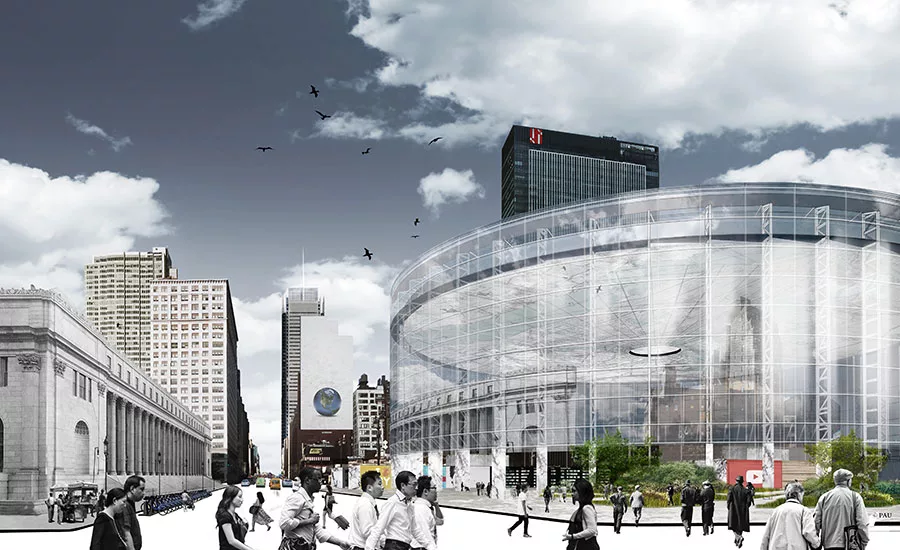
PAU's proposal for a revamped Penn Station.

Image courtesy PAU
Vishaan Chakrabarti

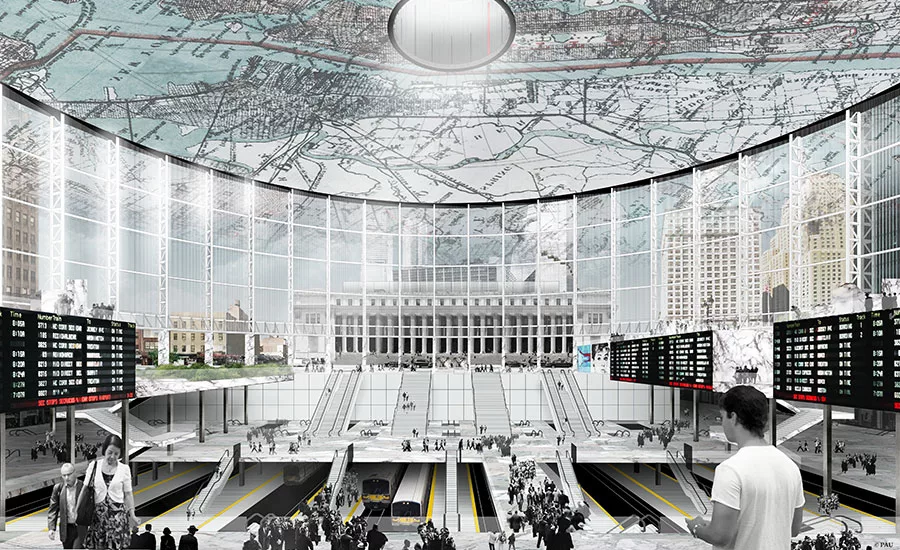
PAU's proposal for a revamped Penn Station.

Image courtesy PAU
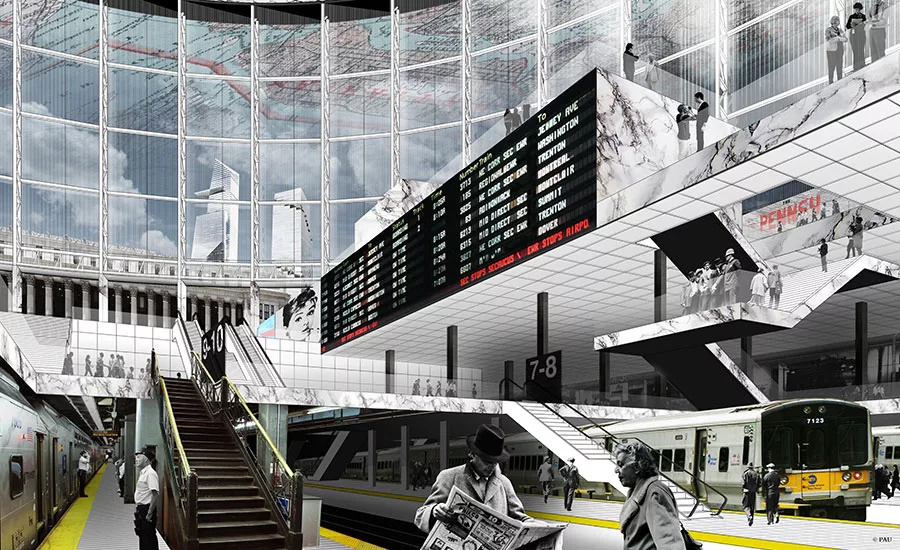
Vishaan Chakrabarti

PAU's proposal for a revamped Penn Station.

Image courtesy PAU
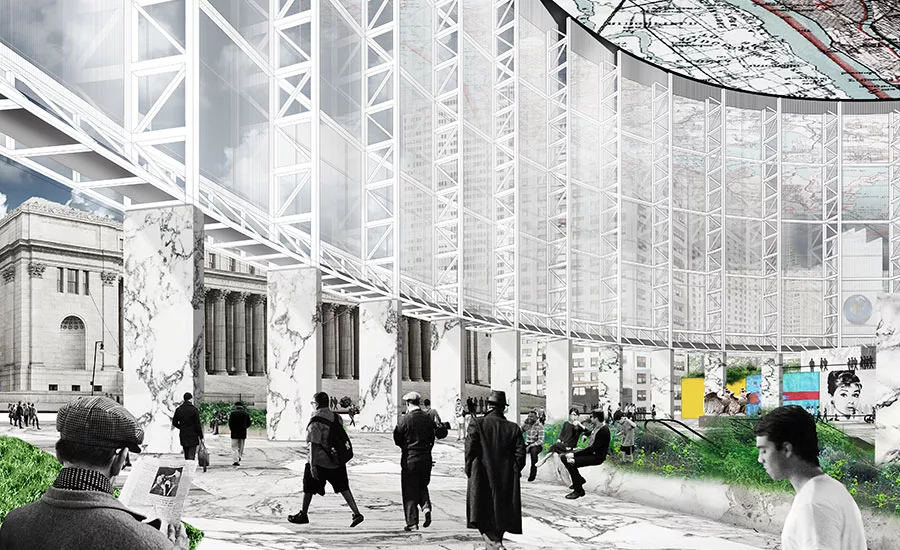
Vishaan Chakrabarti

PAU's proposal for a revamped Penn Station.

Image courtesy PAU
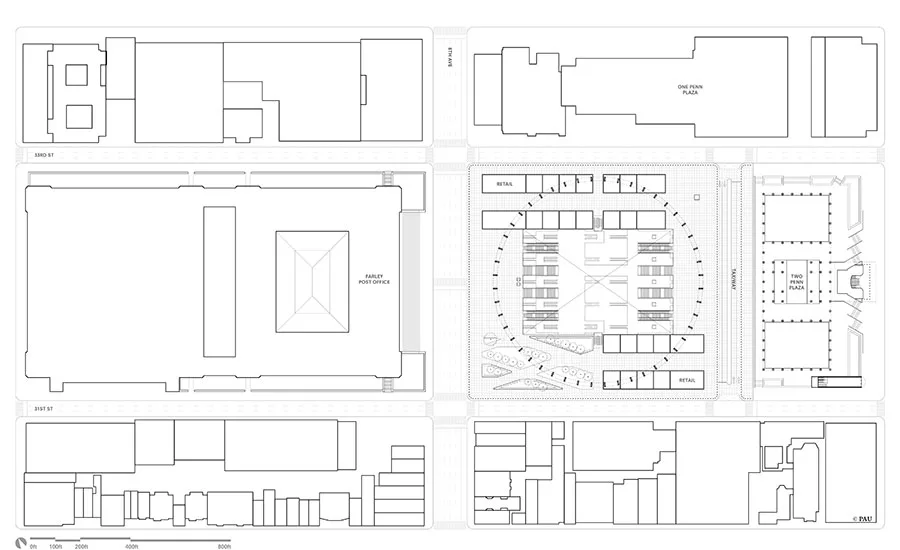
Vishaan Chakrabarti

PAU's proposal for a revamped Penn Station.

Image courtesy PAU

Newsmaker: Vishaan Chakrabarti
Vishaan Chakrabarti
Vishaan Chakrabarti
Vishaan Chakrabarti
Vishaan Chakrabarti
Vishaan Chakrabarti
November 1, 2016

Ever since McKim, Mead & White’s stately Penn Station was demolished in 1964 and replaced by Charles Luckman’s ultrabanal one, which included a doughnut-shaped Madison Square Garden and dreary office buildings, its users have suffered. The aesthetic pain has not been helped by the functional discomfort caused by excessive numbers (650,000 commuters a day). So cheers resounded with Governor Andrew Cuomo’s announcement in late September: the state and developers Related Companies and Vornado Realty Trust would put into place a long-touted plan by the late Senator Daniel Patrick Moynihan to divert Amtrak—and now the Long Island Rail Road—to a new train hall to be located in the nearby James A. Farley Post Office, also designed by McKim, Mead & White. 

Soon after, architect and planner Vishaan Chakrabarti and his firm Practice for Architecture and Urbanism (PAU) unveiled a scheme addressing the fact that many tracks and platforms need to remain under the existing Madison Square Garden (MSG). They urge stripping the present Garden to its frame, glazing it, and recycling it as a hall for commuters. (Read more about the proposal in the New York Times editorial.)

RECORD has asked Chakrabarti for more de­tails about his scheme, its genesis, and its future. 


Architectural Record: After the Times’s extensive coverage of your proposal, have you had any reaction from Governor Cuomo and his cohorts? 

Vishaan Chakrabarti: Not directly. But we’ve had tremendously positive response from the public. One thing this has taught me is just the vast number of people who are touched by Penn Station. 

You worked on the previous plan for Farley (aka Moynihan Station) between 2005 and 2009 as the president of Moynihan Station Venture, a partnership formed between Related and Vornado. Why didn’t you work with those developers on this new proposal?

For me, Penn Station is about much more than the station. What we ultimately do to solve its problems is really a symbol of whether we actually believe in a shared, collective realm. It’s also about the role of an architect.

Looking for quick answers on architecture and design topics?
Try Ask RECORD, our new smart AI search tool.
Ask RECORD →

You have suggested that a new Madison Square Garden move to the back (west) end of Farley, where there is plenty of room for an arena. That will need backing. 

There’s a critical first step: the governor's office and MSG have to make a deal for it to move to Farley. I believe that the Garden would want to move into a new facility: they have severe operational constraints in their existing building. The federal government is a stakeholder as well, since it’s the driver behind the Gateway plan to build new tunnels under the Hudson River for tracks that would tie into the station. It’s complicated, but creating a brand-new train station with new structure and foundations looks like a $6 or $7 billion enterprise. We're trying to say, “If the Garden were to move and if we recycled the existing arena, you could have a beautiful new station without a grand public price tag.” The renovated Garden in Penn Station would cost about $1.5 bil­lion. The new arena in Farley should be $1.5 billion too. 

But couldn’t Vornado and Related—already landowners in the area—help by putting money into relocating MSG to the back of Farley? 

The deal the last time around was that the Garden would get a new arena free in the back of Farley, and Related and Vornado were building it. They would get about 5.5 mil­lion square feet of air rights over the Garden in return. The only thing now is where you land the air rights for new development, with the Gateway tunnels’ tracks and platforms coming in due south of the Garden. 

Are there other incentives besides air-rights transfers for the developers?

You could also give tax-increment financing to basically take advantage of the higher value of the real estate in the future. Such financing mechanisms can pay for this without public money. Creating a truly civic building in the heart of the district, you get incredibly valuable real estate all around it, which is the model of Grand Central.

Where do you make money on this? 

This is an advocacy project. We make money on the other projects we do. If someone wants to hire us to do the station, we would be thrilled. We’re a 10-person office, but we could collaborate with great larger firms where we’re the design engine. 

What is the next step? 

We’re going to see if there is a groundswell around the idea. We all have to keep the vision alive. That’s the key.

KEYWORDS: New York City Penn Station

Share This Story

Looking for a reprint of this article?
From high-res PDFs to custom plaques, order your copy today!


Stephens

Suzanne Stephens, a former deputy editor of Architectural Record, has been a writer, editor, and critic in the field of architecture for several decades. She has a Ph.D. in architectural history from Cornell University, and teaches a seminar in the history of architectural criticism in the architecture program of Barnard and Columbia colleges.

Post a comment to this article

Report Abusive Comment

Subscription Center
  • Create an Account
  • Start a Subscription
  • Manage My Account
  • Sign Up for Newsletters
  • Visit Customer Service
  • Update Preferences

More Videos

Sponsored Content

Sponsored Content is a special paid section where industry companies provide high quality, objective, non-commercial content around topics of interest to the Architectural Record audience. All Sponsored Content is supplied by the advertising company and any opinions expressed in this article are those of the author and not necessarily reflect the views of Architectural Record or its parent company, BNP Media. Interested in participating in our Sponsored Content section? Contact your local rep!

close
  • 3D configurator
    Sponsored byDoorBird

    How DoorBird’s 3D Configurator Is Redefining Customization Across Residential and Commercial Design

  • interior of modern office
    Sponsored byCurrent

    The Downlight's Second Life: Why Below-Ceiling Serviceability Is the Specification Detail That Matters Most

  • cold storage facility
    Sponsored byCarlisle SynTec Systems

    How Architects Can Design More Continuous Cold Storage Envelopes

DESIGN:ED Podcast
Listen to Architectural Record’s DESIGN:ED Podcast

Events

July 14, 2026

Designing Toilet Partitions for User Comfort and Utility

Credits: 1 AIA LU/HSW; 1 AIBD P-CE; 0.1 ICC CEU

Evaluate emerging restroom design strategies, materials, and specification options that enhance functionality, inclusivity, user comfort, and sustainability.

July 16, 2026

Fit, Form, Function: Rethinking Privacy Curtains for Modern Spaces

Credits: 1 AIA LU/HSW; 1 AIBD P-CE; 0.1 ICC CEU

Explore how privacy curtain systems can enhance occupant comfort, operational efficiency, and sustainability across healthcare, education, hospitality, and senior living environments.

View All Submit An Event

Products

2026 Architect's Square Foot Costbook

2026 Architect's Square Foot Costbook

See More Products

Popular Stories

Home Spirit apartment building exterior

Outdoor Access Drives the Design of a French Apartment Building

The Bend in Winnipeg, Canada

Multifamily Housing 2026

Trump's triumphal arch

What Exactly Does Trump’s Triumphal Arch Commemorate?

The Mark and Hive Glenrock, LOHA

Two Student Residences Continue LOHA’s Decades-long Reimagination of the L.A. Lifestyle

The Bend in Winnipeg, Canada

The Bend Wraps an Adapted Winnipeg Warehouse, Adding Apartments and Defining Public Space

Co-Intelligence: The Architect's AI Advantage - Free Webinar - July 8, 2026

Related Articles

  • Interview with Vishaan Chakrabarti, the New SHoP Architects Partner

    See More
  • Review: The Rise and Fall of Penn Station

    See More
  • Imani-Day.jpg

    The Future of Practice: Interview with Imani Day of RVSN Studios

    See More

Related Products

See More Products
  • 3dthinking.jpg

    3D Thinking in Design and Architecture: From Antiquity to the Future

  • 1118522532.gif

    Future Details of Architecture

See More Products
×

The latest news and information

#1 Source for Architectural Design, News and Products

SUBSCRIBE
  • RESOURCES
    • Advertise
    • Contact Us
    • Submit
    • Store
  • ACCOUNT CENTER
    • Create an Account
    • Start a Subscription
    • Manage My Account
    • Sign Up for Newsletters
    • Visit Customer Service
    • Update Preferences
  • PRIVACY
    • PRIVACY POLICY
    • TERMS & CONDITIONS
    • DO NOT SELL MY PERSONAL INFORMATION
    • PRIVACY REQUEST
    • ACCESSIBILITY
  • SERVICES
    • Marketing Services
    • Reprints
    • Market Research
    • List Rental
    • Survey/Respondent Access
  • STAY CONNECTED
    • Linkedin
    • Facebook
    • Instagram
    • YouTube
    • X (Twitter)

Copyright ©2026. All Rights Reserved BNP Media, Inc. and BNP Media II, LLC.

Design, CMS, Hosting & Web Development :: ePublishing