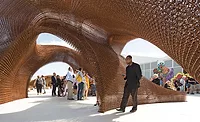
Highlights from Design Miami/ 2016
Ole Scheeren, SHoP, and more create communal spaces that provoke new kinds of behavior at the annual design fair.
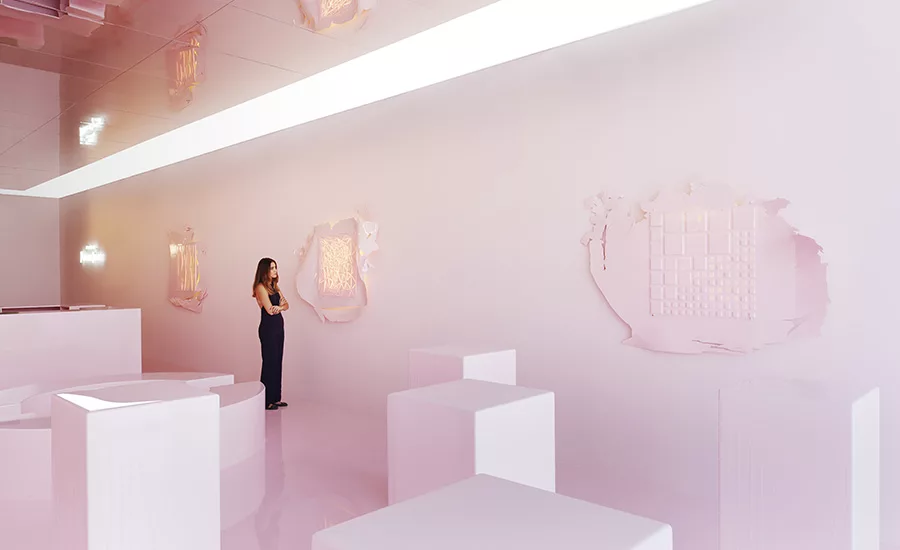
Flamingo Lounge by Tabanlioğlu Architects
60-year-old Istanbul-based firm Tabanlioğlu Architects created the Flamingo Lounge for VIP collectors.
Photo © James Harris
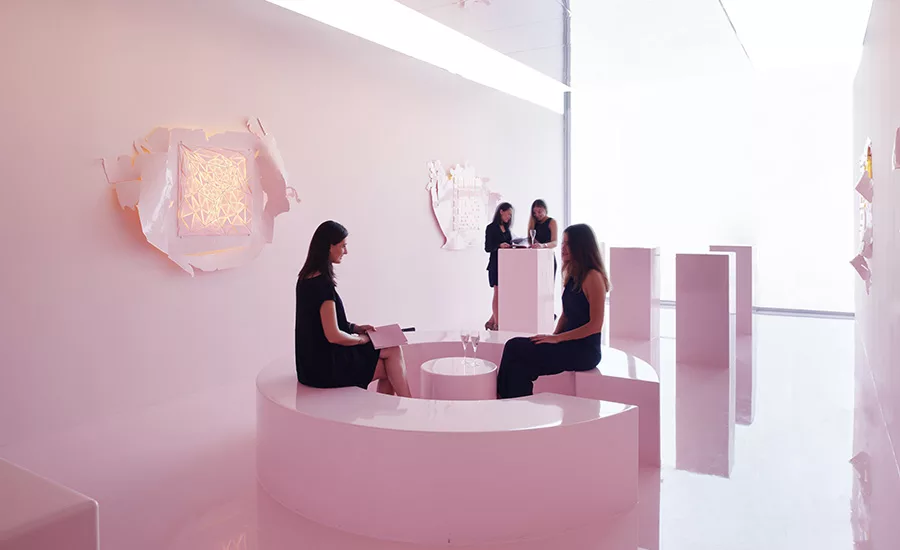
Flamingo Lounge by Tabanlioğlu Architects
“Because Design Miami is crowded visually and loud and chaotic, we wanted to make the Collectors Lounge one color and one type of material—pink resin—to isolate you from the fair, so you can sit and talk together,” said Gonca Ark Caliska of Tabanlioğlu Architects.
Photo © James Harris

Flamingo Lounge by Tabanlioğlu Architects
The wall-mounted lights in the booth are resin recreations of the elevations of their buildings around the world.
Photo © James Harris
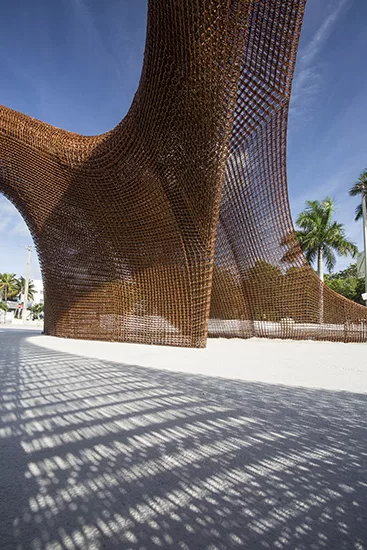
Flotsam & Jetsam by SHoP Architects
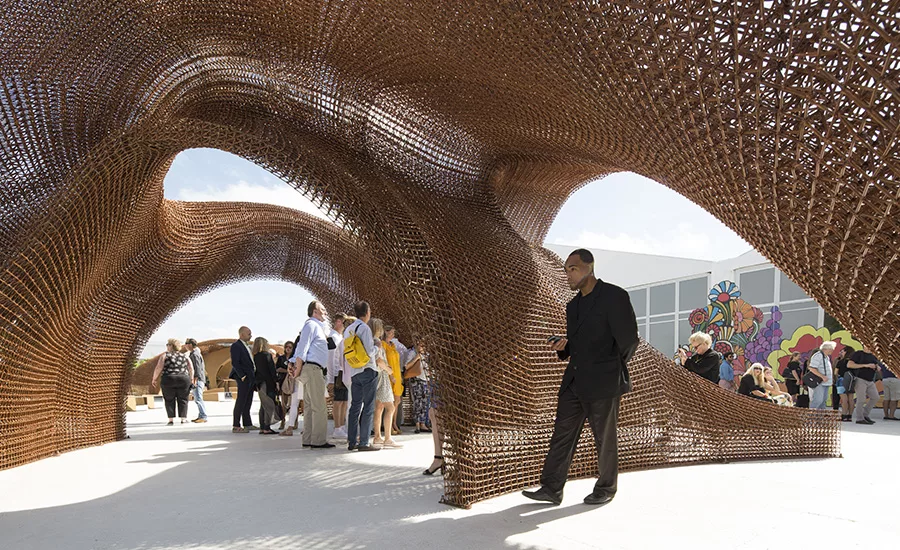
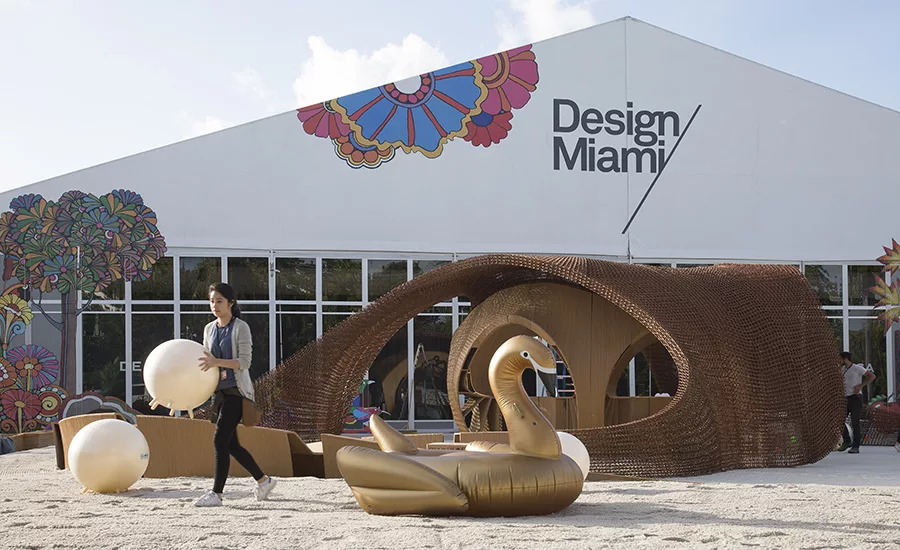
SHoP’s Flotsam & Jetsam pavilions, meant to evoke sea creatures like jellyfish and diatoms, are made up of 27 miles of carbon-fiber-reinforced plastic. The firm received the fair’s 2016 Panerai Visionary Award.
Photo © Robin Hill
Flotsam & Jetsam by SHoP Architects
“We adapted industrial robots to bring 3D printing into a broader use as a full-scale means of production,” said Philip Nobel, editorial director of SHoP Architects. “We want to make a mesh strong enough—and we hope eventually cheap enough—to replace a stud wall. The trick is to use every emerging technology until it’s an everyday process.”
Photo © Robin Hil
Flotsam & Jetsam by SHoP Architects
Greg Pasquerelli of SHoP said, “There’s something magical about doing a pavilion that is both very technological and beautiful that took only five months from start to finish.” After the fair, Flotsam & Jetsam will grace a plaza in the Miami Design District for the next two years.
Photo © Robin Hill
Stage by Büro Ole Scheeren
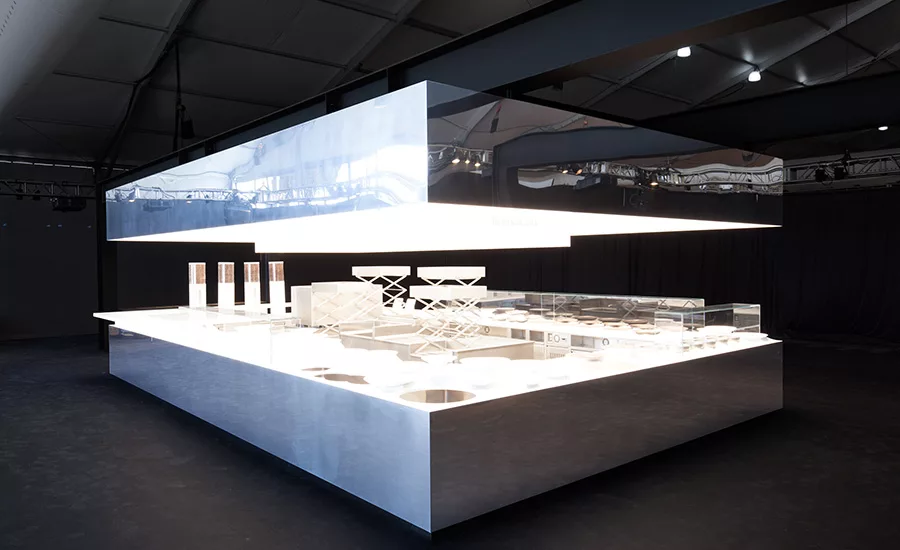
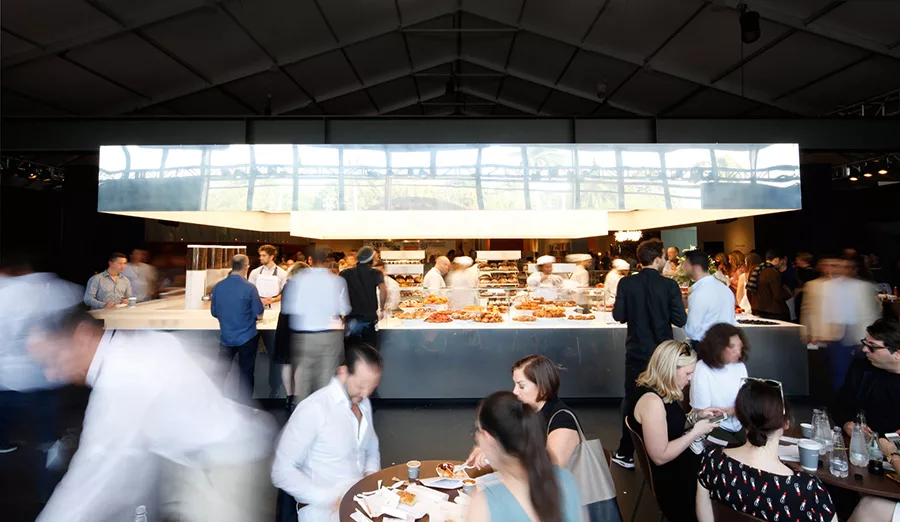
Ever since Pace Development bought Dean & DeLuca in 2014, it has been working with Büro Ole Scheeren of Berlin to roll out a prototype for a new fast-food concept store that the high-end food purveyor will expand into key North American markets.
Image courtesy Dean & DeLuca
Stage by Büro Ole Scheeren
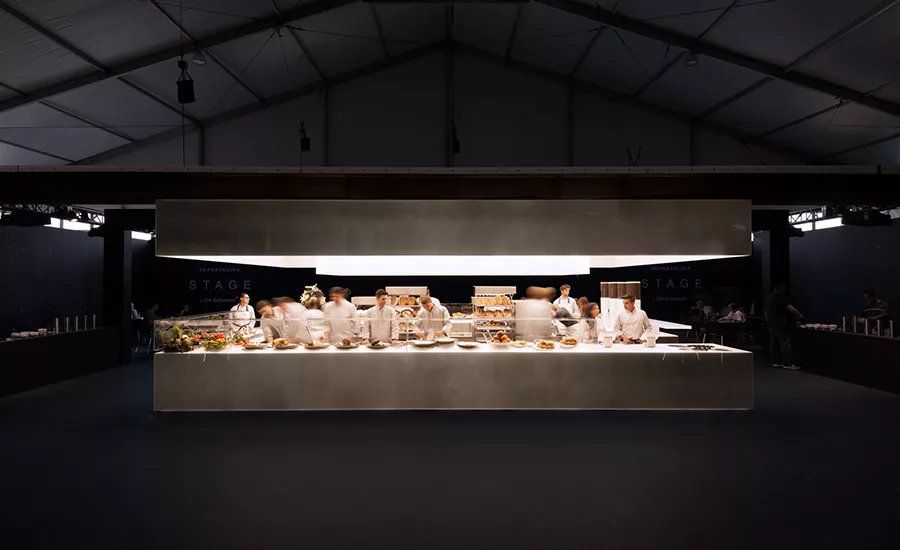
Each pavilion is a mirrored stainless steel rectangle incorporating a high tech display system and is designed to encourage interaction between customers and the servers behind the counter.
Image courtesy Dean & DeLuca
Stage by Büro Ole Scheeren
The mirrored stainless steel volume is composed of two rectangular plates, one floating above the other; one volume forms the counter (covered in a landscape of salads and pastries) while the other provides a glowing ceiling.
Image courtesy Dean & DeLuca
Strand Garden by Matsys
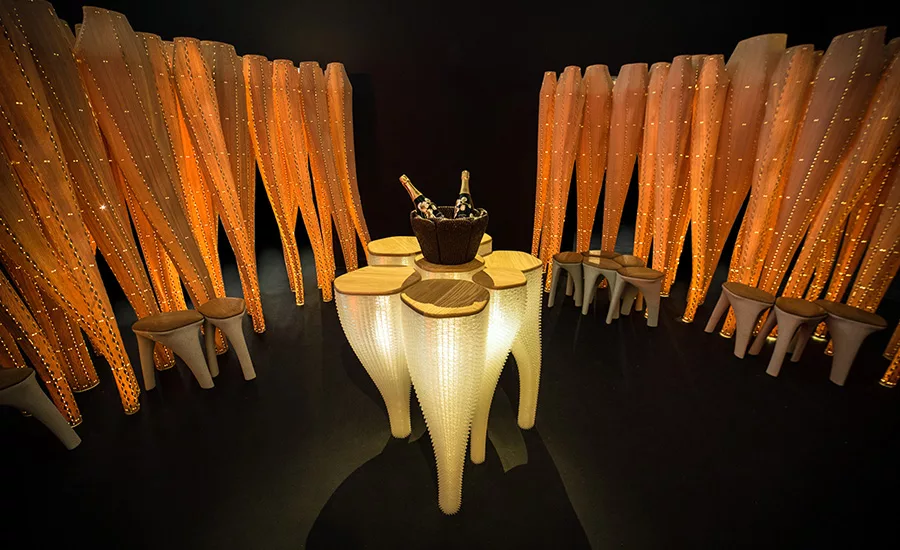
In the Collaborations section of Design Miami/, San Francisco architect Andrew Kudless of the studio Matsys created the installation Strand Garden for champagne producer Maison Perrier-Jouët. After visiting the vineyards of Epernay in France, Kudless designed an enchanting grove of “trees” made of translucent oak veneer to reference wine presses, punctured them with tiny holes, and illuminated them from within to simulate rising champagne bubbles.
Image courtesy Maison Perrier-Jouët
Strand Garden by Matsys
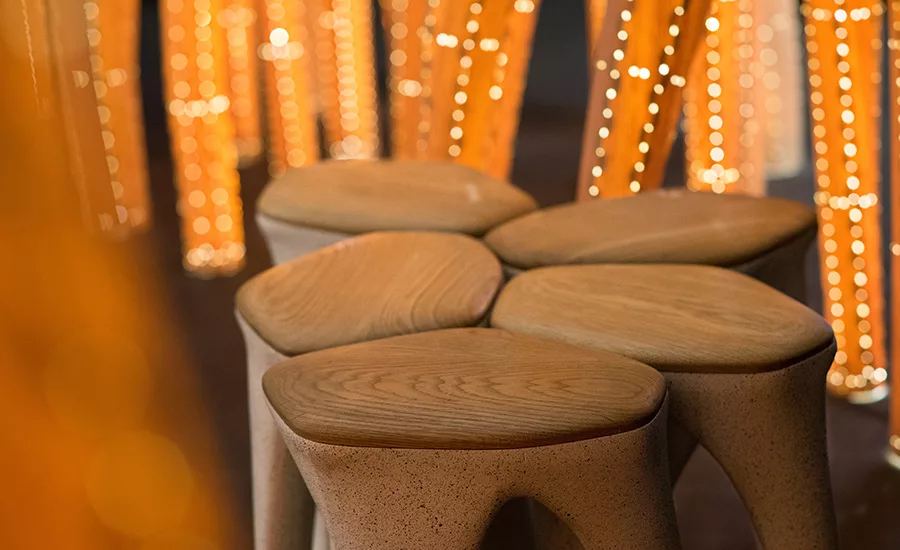
Kudless also designed white concrete stools to reference the chalk caves of Epernay and tasting tables with clear mesh legs (made of 3D printed corn-based, biodegradable plastic) to evoke a wine-picker’s basket.
Image courtesy Maison Perrier-Jouët
Airbnb Pavilon by Pedro&Juana
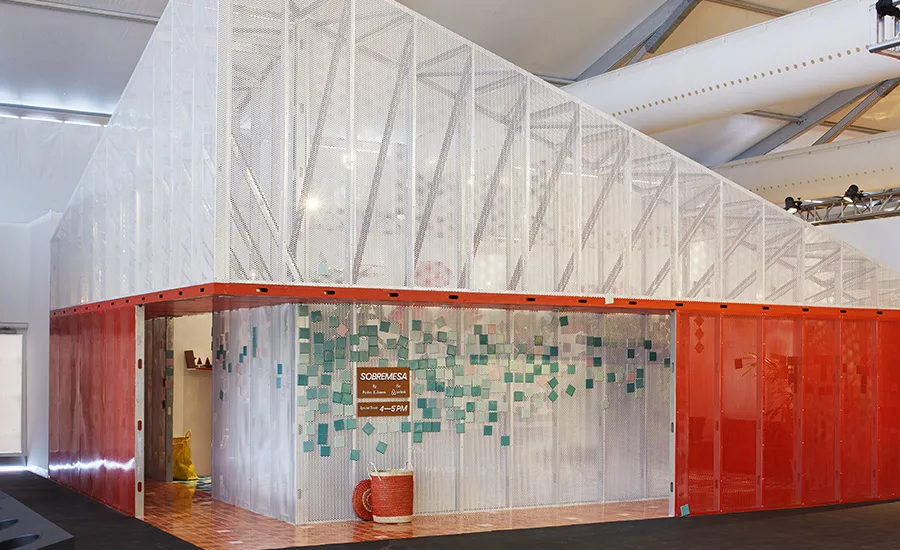
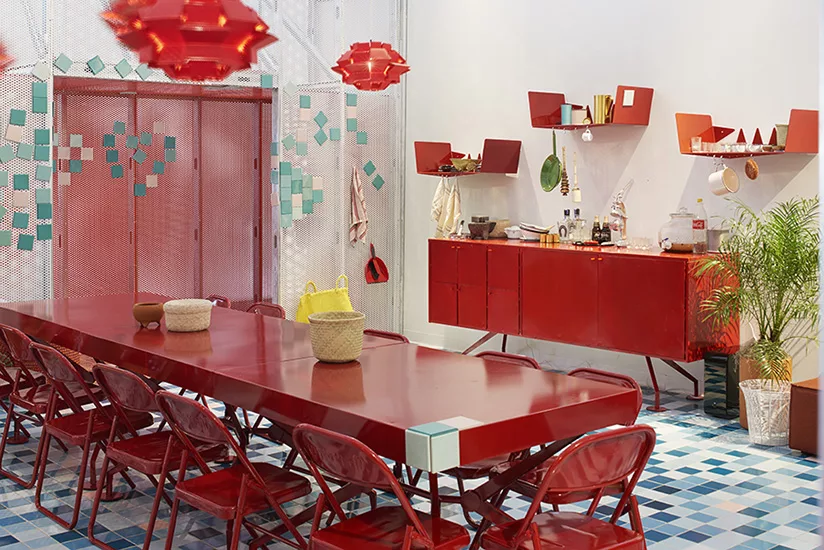
Pedro & Juana of Mexico City created a leafy courtyard for Airbnb to demonstrate the relationships between a host and guest.
Photo © James Harris
Airbnb Pavilon by Pedro&Juana
Perforated metal walls allowed fairgoers to peek into the interior where German architect Mecky Russ and his Mexican partner Anna Paula Ruiz Galindo played festive music. Their red-hot, handmade cardboard lanterns hung over a long dinner table where guests enjoyed drinks and snacks.
Photo © James Harris
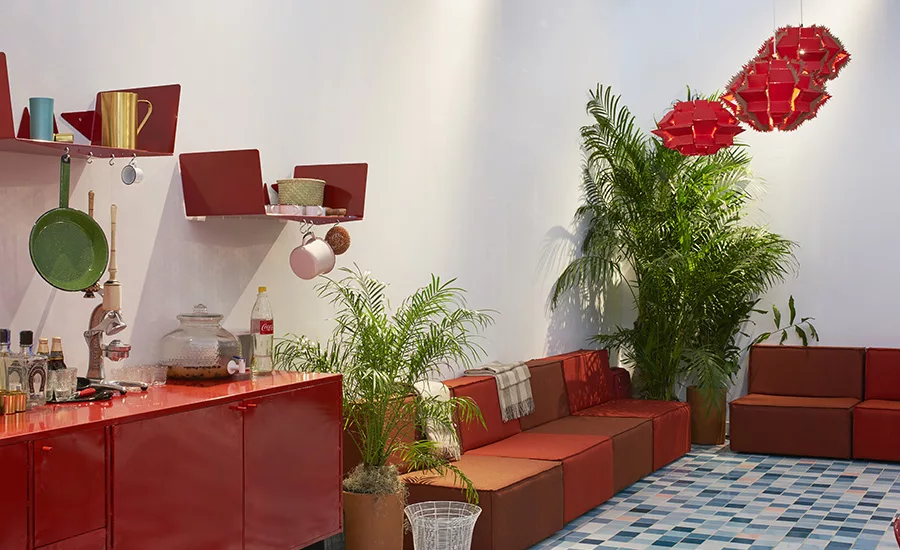
Airbnb Pavilon by Pedro&Juana
Called Sobremesa (“above the table”), the installation was meant to evoke the time after a meal in Mexico when conversation lingers on and on.
Photo © James Harris
No Sex in Miami by Atelier Biagetti
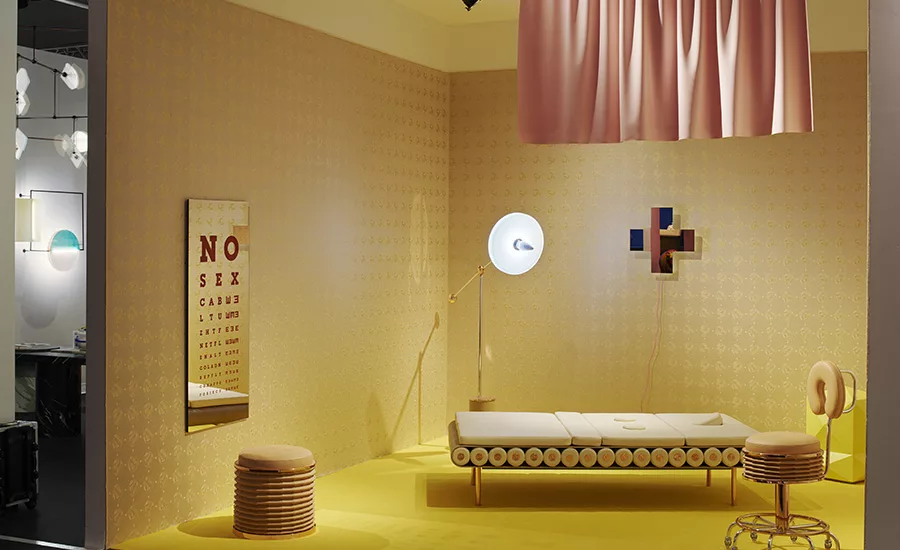
As a response to the Zika scare in Miami, Atelier Biagetti of Milan designed a super-luxurious therapist’s office titled No Sex in Miami meant to instigate dialogue about what is and isn’t sexy.
Photo © James Harris

No Sex in Miami by Atelier Biagetti
“We are trying to build new relationships with the objects in our life by decontextualizing them,” said designer Alberto Biagetti, who collaborated with Laura Balassari. Their installation included a soft leather massage table wrapped in rubber; a phallus-shaped bulb in a floor lamp; a pink latex privacy curtain; an accordion-seat chair of pink leather, which makes a squishing sound when sat upon; and twin models dressed as nurses in translucent pink latex.
Photo © James Harris
Architects at this year’s edition of Design Miami/, the fair that runs concurrently with the city’s installment of Art Basel, were all about getting up close and personal, creating spaces in which fairgoers can meet, pause, relax, and interact with—or react against—one another.
These exchanges began even outside of the main exhibition tent. A pair of 3D printed pavilions designed by SHoP Architects called Flotsom & Jetsam was surrounded by a sandy “beach” where visitors could laze on float toys. Inside, Tabanlioğlu Architects of Istanbul created the Flamingo Lounge—clad entirely in pink resin—where VIP collectors could gather around prefabricated seating and cocktail tables.
Two architecture offices explored the relationships between hosts and guests in their installations. Berlin-based architect Ole Scheeren unveiled Stage, a fast-food prototype for the gourmet grocer Dean & DeLuca. Meanwhile, Pedro&Juana, a Mexico City design studio, created Sobremesa (“above the table”) for Airbnb. The installation invited fairgoers to share free snacks, cocktails, and conversation at communal tables in a leafy courtyard.
One installation, however, pushed the boundary between desire and revulsion. New York gallerist Patricia Findlay commissioned Atelier Biagetti of Milan to create NO SEX in Miami—a surrealist sex therapist’s office that juxtaposes sumptuous materials with jarring details such as a rubber-wrapped massage table and phallic light bulbs.
Scroll through the slideshow to view more Design Miami/ highlights.
Looking for quick answers on architecture and design topics?
Try Ask RECORD, our new smart AI search tool.
Ask RECORD →
Looking for a reprint of this article?
From high-res PDFs to custom plaques, order your copy today!