Interview with Jeanne Gang
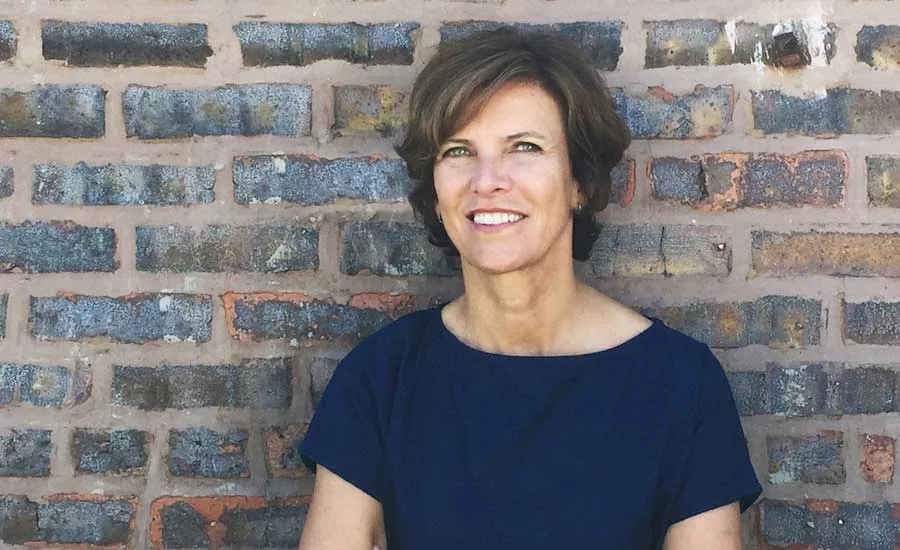
Architect Jeanne Gang
Image courtesy Studio Gang
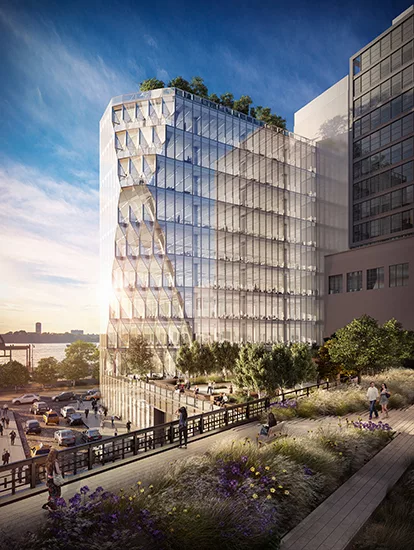
Studio Gang’s 40 Tenth Avenue tower along New York’s High Line park is expected to break ground this year. Its unique faceted form was dictated by the sun’s path.
Image courtesy Studio Gang
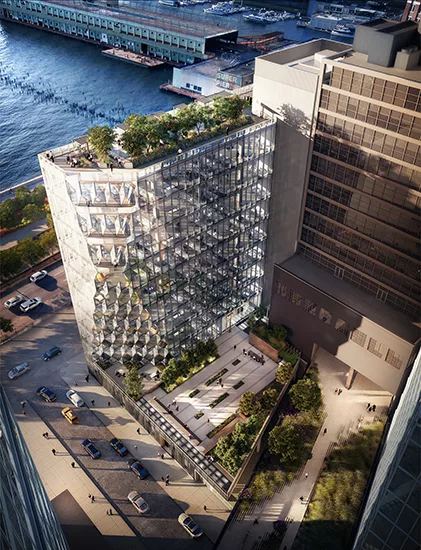
Studio Gang’s 40 Tenth Avenue tower along New York’s High Line park is expected to break ground this year. Its unique faceted form was dictated by the sun’s path.
Image courtesy Studio Gang
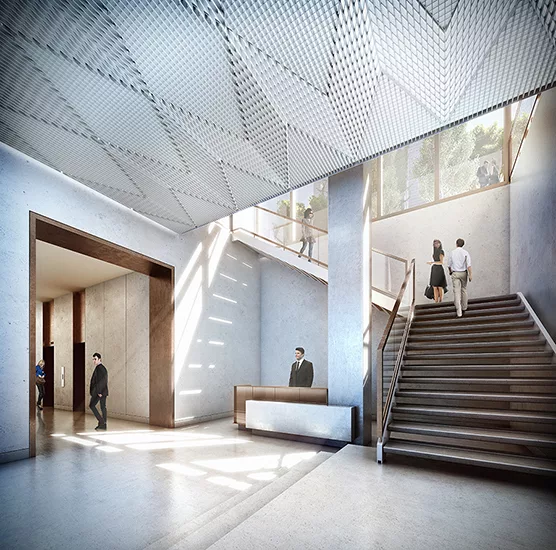
40 Tenth Avenue lobby
Image courtesy Studio Gang
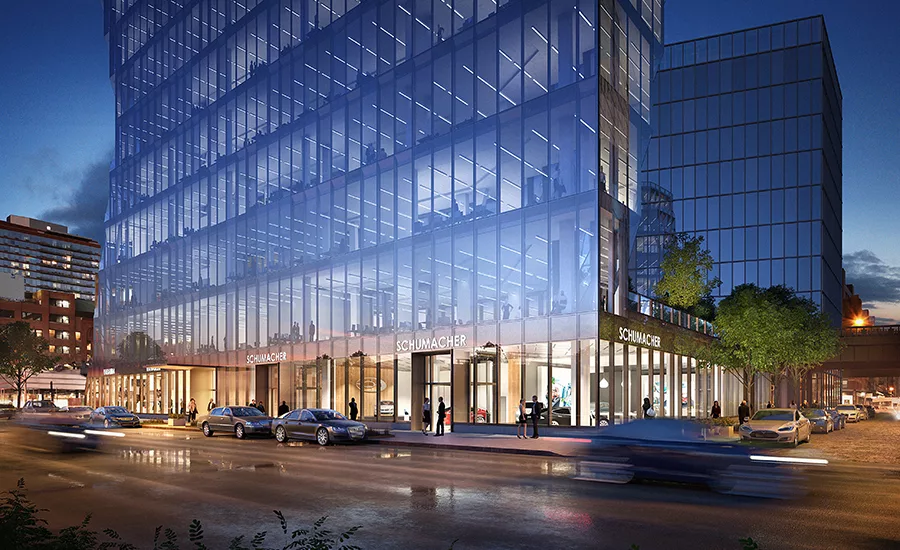
The tower will include retail spaces at its base.
Image courtesy Studio Gang
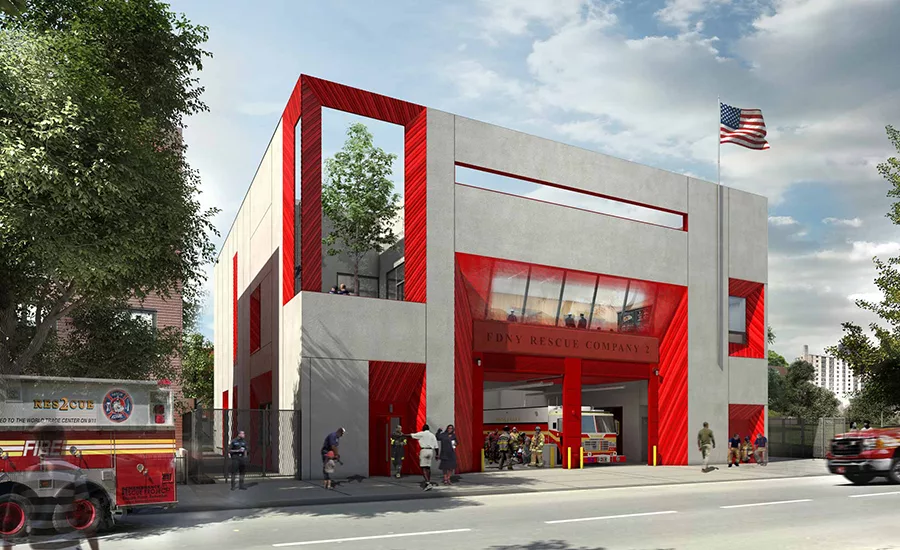
Studio Gang has also designed a fire station for the Brownsville neighborhood of Brooklyn.
Image courtesy Studio Gang
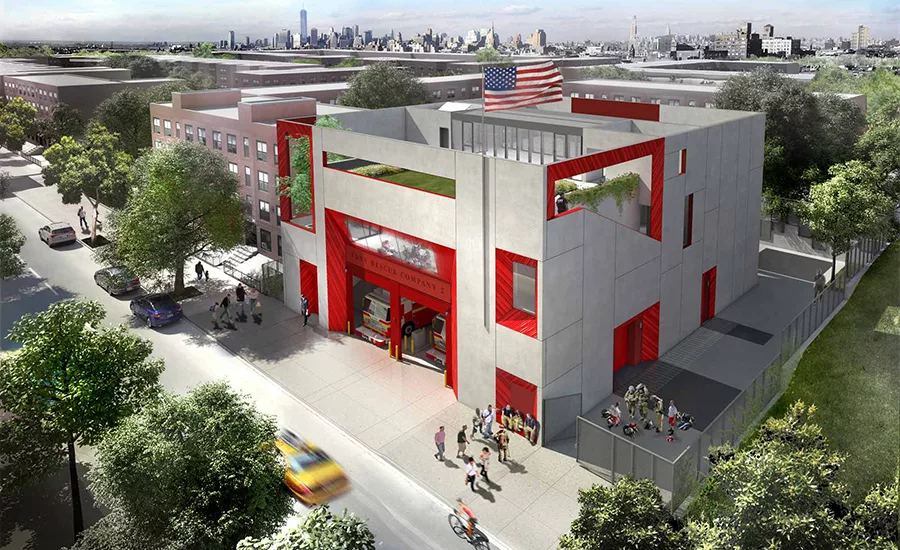
The building enables firefighters to simulate a variety of emergency scenarios for training purposes.
Image courtesy Studio Gang
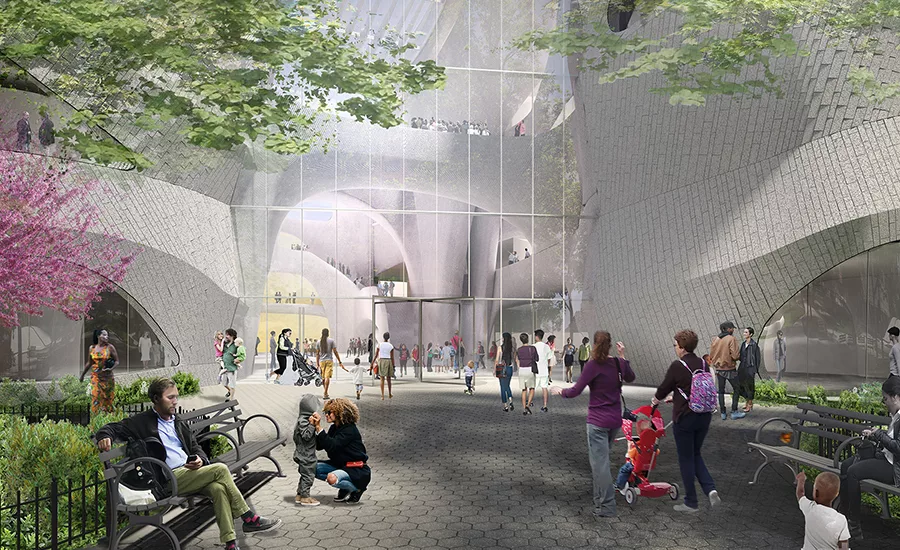
This January, Studio Gang revealed plans for the Richard Gilder Center for Science, Education, and Innovation at the American Museum of Natural History in New York.
Image courtesy Studio Gang
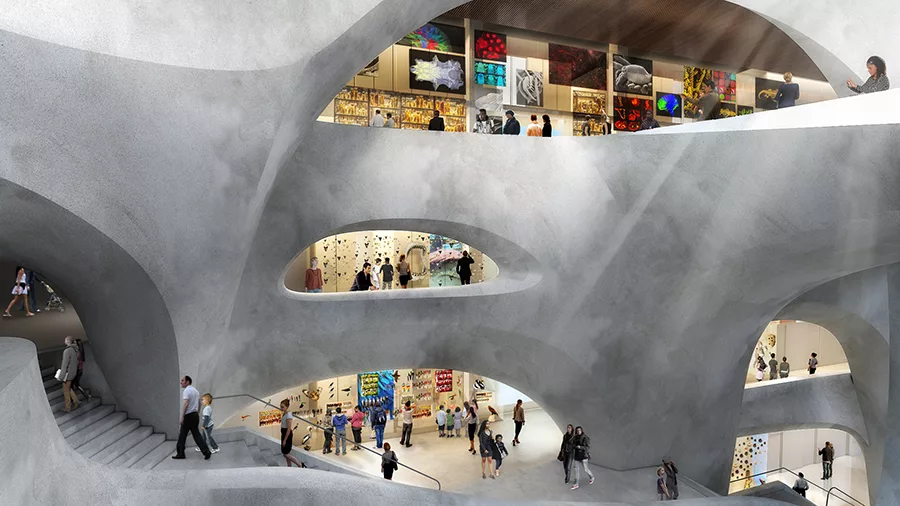
The building will include a cavernous collections core for exhibitions.
Image courtesy Studio Gang
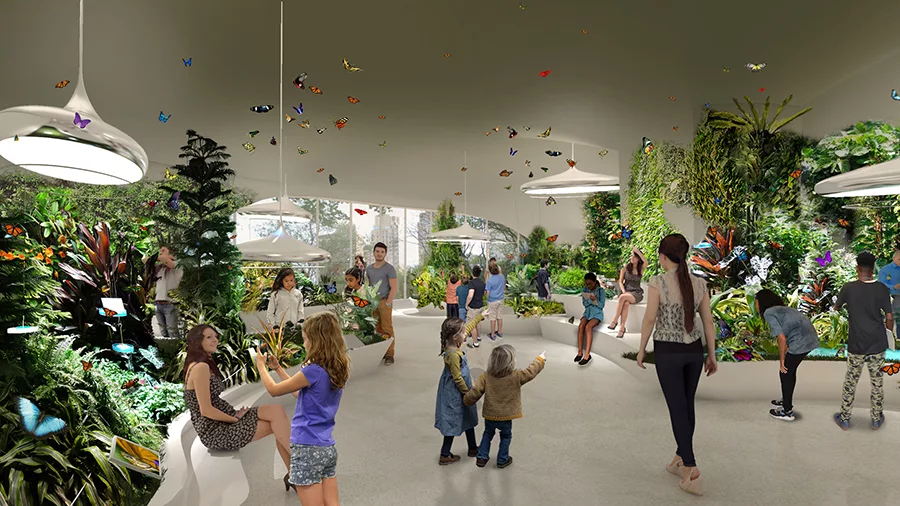
The Gilder Center will also feature a live butterfly vivarium.
Image courtesy Studio Gang
Architect Jeanne Gang is best known for the Aqua Tower in Chicago and its rippling facade. But her work has long melded the formal with social concerns, and from the start of her Chicago-based practice—Studio Gang—in 1997, she has worked across scales and building types. Some current and justcompleted projects include a new campus for the California College of the Arts in San Francisco, a second boathouse on the Chicago River, and the U.S. embassy in Brasilia. Gang is also among a handful of international architects named to the shortlist for the redesign of the widely reviled Tour Montparnasse in Paris. The studio now has an office in Lower Manhattan and has several New York commissions, including an expansion of the American Museum of Natural History. RECORD recently chatted with Gang about her work and the direction of the profession.
Architectural Record: Aqua, completed in 2010, is arguably your most famous building. So it seems odd that you haven’t completed other towers since then.
That’s probably because, right after Aqua was completed, the economic crisis happened. But we’ve been working on tall buildings the entire time, continuously, starting with Aqua, of course. The Folsom Street tower in San Francisco, which has been in planning for quite a while, should be breaking ground this year. Vista, in Chicago, which we started years ago, and then it went on hold, is now moving forward as a hotel and condominium. Solar Carve, in New York [now called 40 Tenth Avenue], is not a particularly tall tower, but it’s an interesting design, and it should be breaking ground in 2017. We also have a condo tower in Hyde Park in Chicago called Solstice on the Park. It was put on hold in 2008, and then it came back alive as rental apartments, and now it’s going up. Another residential tower, One Hundred, was recently announced for St. Louis. Everything has to fall into place for them to actually break ground. It is exciting when it all comes together.
How has your thinking about tall buildings evolved?
From the first design for Aqua, we’ve identified a number of strategies for making a tall building more social and helping people get to know their neighbors. That’s an ongoing interest, and we’ve done that through everything from creating balconies that become outdoor threshold spaces to rethinking the common areas within the building and considering how the building meets the ground. With Vista, the building forms three stems and they bridge over a link between two parks. It is possible for people to go right under the building, from one side to another. This connects it to the city. Another interest is how buildings work with the sun. We might use the exterior wall for solar shading or solar access, including angling the glass to reduce heat gain.
But we also look at the play of light and shadow within the unit. We’re not only thinking from outside in on these buildings, but also from inside out. We come at it from the scale of the living space, then the scale of the social space, and the scale within the city. High-rises do have a role in terms of the overall skyline, but that’s only one aspect of a tall building.
Tell me about the research aspect of your practice. Is the research dictated by your commissions? Or are there areas of interest that you explore that then find their way into building projects?
Looking for quick answers on architecture and design topics?
Try Ask RECORD, our new smart AI search tool.
Ask RECORD →
We’ve always conducted research, and we think of it as somewhat independent of the commissions. It might apply to our projects, or it might be an interest that emerges from a commission. One example is our Rescue Company 2 project, in Brooklyn. It made us think about the role of the fire station and how it is different from a police station.
But then we went further—investigating how a police station could reach out to the community. We did a case study of Chicago’s North Lawndale police station. One of the potential solutions that came out of this was an idea to use extra parking for basketball courts. We raised money with the city of Chicago and the parks department to install a half-court on one of the parking lots. And after it was built, they started using it—a lot. Neighborhood kids are using the courts nearly every day. It’s also being used for tournaments that bring youth teams from other areas in the city. Police officers are beginning to join in too, and they keep a stash of basketballs inside the station that the kids can borrow. Now the alderman and the community want to expand it. That was a research project, but it was also a way to have an impact in our community.
What do you think some of the biggest challenges facing the profession are now?
There are some firms with an academic focus and an interest in developing a formal language using all of the digital tools. Then you have architects that have more of a focus on social issues. But there are a lot more ways to practice, which is great.
The challenges are in the public sector and how you make sure there is enough money for public projects. One project that we’ve been working on is an initiative [by the JPB, Knight, Kresge, and Rockefeller foundations] called the Civic Commons. Since there isn’t much money available for new public buildings, we’re trying to develop strategies for how to make use of existing recreation centers, libraries, police stations, transit centers, and schools and reinvent them for today’s needs. It would be great if architects, instead of just thinking about new buildings, would think about reinventing older ones so they don’t get abandoned and torn down.
It’s important to be inventive with processes and with solutions. But it doesn’t necessarily have to involve bricks and mortar. Sometimes things that have nothing to do with the traditional idea of what architecture is can be game-changing.
Looking for a reprint of this article?
From high-res PDFs to custom plaques, order your copy today!