Architectural Record
search
cart
facebook twitter linkedin youtube
  • Sign In
  • Subscribe
  • Sign Out
  • My Account
Architectural Record
  • NEWS
    • Latest News
    • Awards
    • Interviews
    • Obituaries
    • Podcasts
      • Design:Ed Podcast
      • Sponsored Podcasts
  • OPINION
    • Book Reviews / Excerpts
    • Exhibition Reviews
    • Forum
  • EXCLUSIVES
    • Videos
    • Design Vanguard
    • Top 300 Firms
    • Sponsored Content
    • Sponsored eBooks
    • From the Archives
  • CONTINUING ED
    • Editorial Continuing Ed
    • CE Center
    • CE Academies
  • PROJECTS
    • Buildings By Type
    • Reuse & Renovation
    • Museums & Arts Centers
    • Colleges & Universities
    • Multifamily Housing
    • Interiors
    • Lighting
    • Kitchen & Bath
  • HOUSES
    • Record Houses
    • House of the Month
    • Featured Houses
  • PRODUCTS
    • Products by Category
    • Record Products of the Year
    • Latest Products
  • EVENTS
    • Dates & Events
    • Record on the Road
    • Innovation Conference
    • Sustainability in Practice
    • Women In Architecture
    • Webinars
    • Ad Excellence Awards
    • Submit an Event
  • CONNECT
    • Ask RECORD AI
    • Newsletters
    • Contact
    • Advertise
    • Editorial Calendar
    • Store
    • Customer Service
  • SUBMIT
    • Submission Guidelines
    • RECORD Competitions
  • MAGAZINE
    • Subscribe
    • My Account
    • Digital Edition
    • Current Issue
    • Firm Pass
    • Historic Archive
Architecture News

A Data-Driven Approach to Revitalizing the L.A. River
By Anna Fixsen
Data Driven Approach LA River

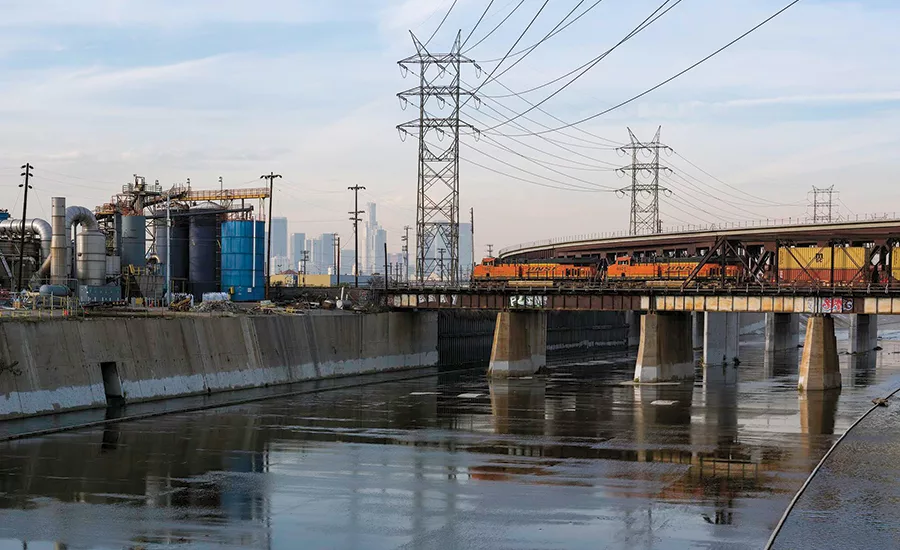
Frank Gehry, along with partners Tensho Takemori and Anand Devarajan, and with landscape architect Laurie Olin, have been working behind the scenes on a comprehensive framework to revitalize all 51 miles of the Los Angeles River.

Photo © Daniel Lee Postaer
Data Driven Approach LA River

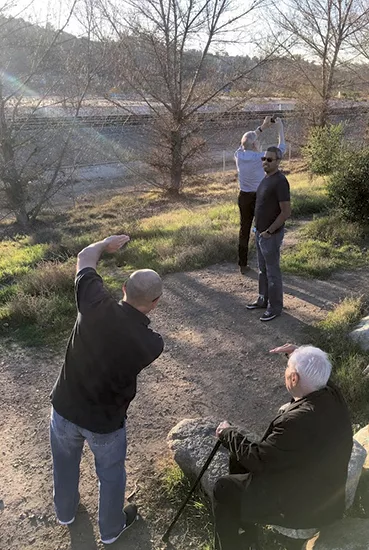
Frank Gehry, along with partners Tensho Takemori and Anand Devarajan, and with landscape architect Laurie Olin, have been working behind the scenes on a comprehensive framework to revitalize all 51 miles of the Los Angeles River.

Photo courtesy Gehry Partners

Data Driven Approach LA River
March 28, 2017

To most, the Los Angeles River doesn’t look like much. For the majority of its 51 miles, it winds through the metropolitan area in a concrete flood-control ditch—a setting better suited for chase scenes in films like Grease and Terminator II than, say, a picnic lunch. But its gritty appearance belies its potential to become one of America’s great civic spaces. And, after years of complex—and contentious—revitalization proposals, things seem to be coming together.

The most publicized transformation strategy is being led by Frank Gehry and his team, who were commissioned in 2014 by the city-affiliated nonprofit River LA. More than two years into Phase I, a design has yet to be revealed. But behind the scenes, firm partners Tensho Takemori and Anand Devarajan, with the expertise of landscape firm OLIN and hydrological specialists at Geosyntec, have been in the midst of exhaustive data collection and analysis—an essential first step in getting a preliminary design off the ground. “Everybody’s wondering what it’s going to look like,” says Devarajan. “But if you predetermine that, you are not letting information drive the solution.”

As the L.A. River snakes southward down the California coast, it passes through 17 distinct municipalities, all with different priorities. Over the course of eight months, Takemori and Devarajan staged meetings in almost all of these communities, hearing from civic leaders and residents to identify what their needs were. The architects began to consider how revitalization efforts not only affect obvious issues, like flood control, ecology, and public space, but less tangible qualities, such as social equity and public health.

The Gehry team also needed to build on a large body of existing river research, including a 2007 City of Los Angeles–commissioned master plan, and Alternative 20, an 11-mile revitalization effort led by Mia Leher + Associates and others (news of Gehry’s appointment drew chagrin from activists, who say his involvement undercuts decades of grassroots advocacy). Wanting to make the most of earlier work, the architects asked themselves, “How do we coalesce the data into a single conversation from which people can prioritize?” says Takemori.

Last summer the architects unveiled the LA River Index, a website detailing Takemori and Devarajan’s findings so far. The Index identifies nine issues central to revitalization: flood-risk management, groundwater recharge, water quality, greenhouse gases, ecology and habitat, open space and parks, public health and social equity, transportation, and programming. Each category includes extensive explanations, charts, maps, and data sets.

How such information will translate into a design is yet to be determined. But the architects say that the final scheme will probably take the form of a kit of parts that can be tailored to specific stretches of the river.

Important strides are being made: earlier this month, Los Angeles acquired a 42-acre riverside parcel that will be part of the Alternative 20 plan, an effort that is being pursued concurrently with Gehry Partners’ larger river framework. Meanwhile, the Gehry team hopes to embark on Phase II of their plan by the end of the year, maybe even by summer, if funding permits. It’s a meticulous process and a labor of love, but the architects are committed to doing it right. Says Devarajan, “This is an opportunity for architecture and landscape design to make a difference where it really can.”

Looking for quick answers on architecture and design topics?
Try Ask RECORD, our new smart AI search tool.
Ask RECORD →

KEYWORDS: Frank Gehry Los Angeles

Share This Story

Looking for a reprint of this article?
From high-res PDFs to custom plaques, order your copy today!

Anna Fixsen was a staff writer and editor for Architectural Record from 2013 to 2017, during which time she covered topics ranging from new projects to human rights, and edited Firms to Watch—a special section devoted to emerging architecture firms.

Post a comment to this article

Report Abusive Comment

Subscription Center
  • Create an Account
  • Start a Subscription
  • Manage My Account
  • Sign Up for Newsletters
  • Visit Customer Service
  • Update Preferences

More Videos

Sponsored Content

Sponsored Content is a special paid section where industry companies provide high quality, objective, non-commercial content around topics of interest to the Architectural Record audience. All Sponsored Content is supplied by the advertising company and any opinions expressed in this article are those of the author and not necessarily reflect the views of Architectural Record or its parent company, BNP Media. Interested in participating in our Sponsored Content section? Contact your local rep!

close
  • TAMLYN XtremeTrim Exterior Trim
    Sponsored byTamlyn

    Designing Cleaner Panel Facades: Why Exterior Trim Details Matter

  • Building with Vapor Barriers
    Sponsored byReef Industries, Inc.

    Vapor Barriers Help Control Moisture in Tighter Building Designs

  • Duct Interior with Prodeq System
    Sponsored byHenry, a Carlisle Company

    Designing Resilient Water Containment Systems

DESIGN:ED Podcast
Listen to Architectural Record’s DESIGN:ED Podcast

Events

June 10, 2026

Rethinking Stormwater – The Power of Porous Paving

Credits: 1 AIA LU/HSW; 1 AIBD P-CE; 0.1 ICC CEU

Learn how porous paving systems support stormwater management, reduce heat island effects, and enhance sustainable site design performance.

June 11, 2026

Very Early Warning Fire Detection for Mission-Critical Facilities

Credits: 1 AIA LU/HSW; 1 AIBD P-CE; 0.1 ICC CEU

Examine advanced fire detection strategies that support uptime and enhance safety in data centers and other mission-critical facilities.

View All Submit An Event

Products

2026 Architect's Square Foot Costbook

2026 Architect's Square Foot Costbook

See More Products

Popular Stories

Practice Matters illustration

What’s in a (Firm’s) Name? Thinking About Succession and Legacy

Practice Matters illustration

By the Numbers: Counting America's Architects

House on a Hill

Design Vanguard 2026: Forma

Crane Cove, ONO

Design Vanguard 2026 Winners

KRESA by DLR

In Kalamazoo, DLR Group Completes a Mass-Timber Hub for Career and Technical Education Programs

Broader Sustainability of CMU - Free Webinar - May 21, 2026

Related Articles

  • Taylor Yard Bridge.

    SPF:a and Hood Embed an Eye-Catching Bridge in the L.A. River

    See More
  • Home-of-Giancarlo-Valle-and-Jane-Kelter-de-Valle.webp

    Michael Diaz-Griffith Showcases the New Generation of Collectors Revitalizing the Antiques World

    See More
  • DMitchell_SDW_TheRadical_01.jpg

    Designers Bring a Cinematic Approach to a Boutique Hotel in Asheville

    See More

Related Products

See More Products
  • bim design firms.jpg

    BIM for Design Firms: Data Rich Architecture at Small and Medium Scales

  • movable arch.jpg

    Movable Architecture: A Design Guide to Container Reuse

  • GlobalData_logo_blue_header.png

    Construction in the US - Key Trends and Opportunities to 2023

See More Products
×

The latest news and information

#1 Source for Architectural Design, News and Products

SUBSCRIBE
  • RESOURCES
    • Advertise
    • Contact Us
    • Submit
    • Store
  • ACCOUNT CENTER
    • Create an Account
    • Start a Subscription
    • Manage My Account
    • Sign Up for Newsletters
    • Visit Customer Service
    • Update Preferences
  • PRIVACY
    • PRIVACY POLICY
    • TERMS & CONDITIONS
    • DO NOT SELL MY PERSONAL INFORMATION
    • PRIVACY REQUEST
    • ACCESSIBILITY
  • SERVICES
    • Marketing Services
    • Reprints
    • Market Research
    • List Rental
    • Survey/Respondent Access
  • STAY CONNECTED
    • Linkedin
    • Facebook
    • Instagram
    • YouTube
    • X (Twitter)

Copyright ©2026. All Rights Reserved BNP Media, Inc. and BNP Media II, LLC.

Design, CMS, Hosting & Web Development :: ePublishing