Architectural Record
search
cart
facebook twitter linkedin youtube
  • Sign In
  • Subscribe
  • Sign Out
  • My Account
Architectural Record
  • NEWS
    • Latest News
    • Awards
    • Interviews
    • Obituaries
    • Podcasts
      • Design:Ed Podcast
      • Sponsored Podcasts
  • OPINION
    • Book Reviews / Excerpts
    • Exhibition Reviews
    • Forum
  • EXCLUSIVES
    • Videos
    • Design Vanguard
    • Top 300 Firms
    • Sponsored Content
    • Sponsored eBooks
    • From the Archives
  • CONTINUING ED
    • Editorial Continuing Ed
    • CE Center
    • CE Academies
  • PROJECTS
    • Buildings By Type
    • Reuse & Renovation
    • Museums & Arts Centers
    • Colleges & Universities
    • Multifamily Housing
    • Interiors
    • Lighting
    • Kitchen & Bath
  • HOUSES
    • Record Houses
    • House of the Month
    • Featured Houses
  • PRODUCTS
    • Products by Category
    • Record Products of the Year
    • Latest Products
  • EVENTS
    • Dates & Events
    • Record on the Road
    • Innovation Conference
    • Sustainability in Practice
    • Women In Architecture
    • Webinars
    • Ad Excellence Awards
    • Submit an Event
  • CONNECT
    • Ask RECORD AI
    • Newsletters
    • Contact
    • Advertise
    • Editorial Calendar
    • Store
    • Customer Service
  • SUBMIT
    • Submission Guidelines
    • RECORD Competitions
  • MAGAZINE
    • Subscribe
    • My Account
    • Digital Edition
    • Current Issue
    • Firm Pass
    • Historic Archive
Opinion

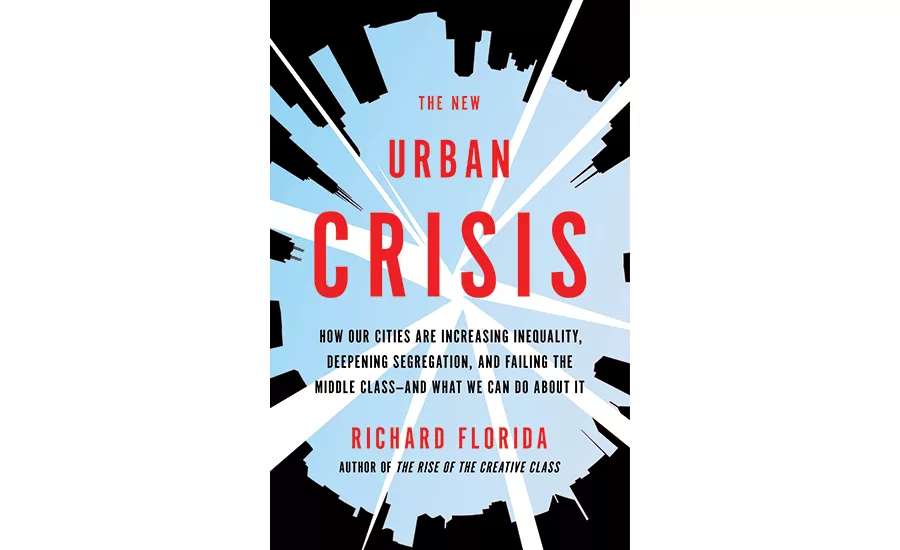
The New Urban Crisis: How Our Cities Are Increasing Inequality, Deepening Segregation, and Failing the Middle Class—and What We Can Do About It

By Richard Florida
By James S. Russell, FAIA Emeritus
Too Much of a Good Thing

The New Urban Crisis: How Our Cities Are Increasing Inequality, Deepening Segregation, and Failing the Middle Class—and What We Can Do About It, By Richard Florida. Basic Books, April 2017, 336 pages, $28.

June 1, 2017

In his best-selling book, The Rise of the Creative Class (2002), Richard Florida documented the growth of work related to knowledge and highlighted the importance of creativity, design, and art to business success. Highly educated, highly social “creatives” (the word has migrated from adjective to noun) spurned corporate suburbs and gravitated to cities that were diverse and rich in cultural and entertainment opportunities. Business followed the architects, designers, artists, app makers, writers, media entrepreneurs—among others—to the cities.

Yet in his latest book, Florida argues that this phenomenon has triumphed too well. The clustering of imaginative people and innovative businesses has not spread itself widely among metro areas but has ended up concentrated in a handful of “superstar cities”—Boston, New York, Washington, Chicago, Austin, Los Angeles, San Francisco, and Seattle. Here in the glittering gulches of skyscrapers and prowling Teslas, factors like stratospheric housing prices, costly entrepreneur- stifling zoning regulations, and a homogenizing tidiness threaten to kill the creative ethos.

There’s more. Florida’s new “crisis” is one of growing income inequality everywhere, segregation (by neighborhood, income, and race), and a disappearing middle class. It’s a crisis of suburbs, where poverty, income insecurity, and crime grow. It’s a crisis of the developing world, where urban hypergrowth and rapid industrialization fail to move people up the income scale.

But can you blame every urban ill on bikeriding young architects designing for social-impact investors while sipping artisanal Fair Trade coffee?

Architects have always understood the value of proximity to consultants and key clients. The superstar cities are attractive because creative-class businesses want to cluster there, and footloose, affluent people are willing to pay for the glamorous features. This wealth concentration is partly a product of the economic globalization that, since the fall of Communism, rewards large global-hub cities with top-drawer brains and leaves behind most of the rest.

These denser, desirable downtowns are inevitably more costly, but they can employ talent at all income and knowledge tiers if well supplied with transit. Florida understates the value of a comprehensive metropolitan mobility strategy (trains, buses, bikes, ride-sharing, and walkability) to reduce costs by drawing together affordable neighborhoods and good jobs. Since America fails to coordinate mobility investments and spends little on transit, cities with ample alternatives to driving are expensive because they are so few.

Then there is the nature of income equality, for which the new generation of creative entrepreneurs and the urban density they prefer are not responsible. Yes, some creative workers, especially in tech, have the market power to earn good salaries. But the vanishing middle class results from government policies that reward investors and penalize people whose jobs are replaceable. It’s augmented by a business culture that believes that giving ordinary earners a raise will hurt stock prices. The stagnation and decline of incomes for service and industrial jobs is the most important reason job-rich cities shut out middle-income earners, suburbs grow poorer, and industrial cities struggle. Creators, especially the tech types, are the only ones with the market power to buck income stagnation. Is that so bad?

Florida crams his book with charts, and the numbers are often startling and illuminating. But he brings in few outside voices to put the numbers in context. This is why he misses the key point that today’s dilemmas are not a “new urban crisis” but the result of broader unaddressed problems.

Looking for quick answers on architecture and design topics?
Try Ask RECORD, our new smart AI search tool.
Ask RECORD →

KEYWORDS: Book Reviews / Excerpts cities

Share This Story

Looking for a reprint of this article?
From high-res PDFs to custom plaques, order your copy today!

James S. Russell, FAIA Emeritus, a journalist who often focuses on sustainability and resilience, is the author of­­­­­ ­­­The Agile City: Building Well Being and Wealth in an Era of Climate Change (Island Press, 2011).

Post a comment to this article

Report Abusive Comment

Subscription Center
  • Create an Account
  • Start a Subscription
  • Manage My Account
  • Sign Up for Newsletters
  • Visit Customer Service
  • Update Preferences

More Videos

Sponsored Content

Sponsored Content is a special paid section where industry companies provide high quality, objective, non-commercial content around topics of interest to the Architectural Record audience. All Sponsored Content is supplied by the advertising company and any opinions expressed in this article are those of the author and not necessarily reflect the views of Architectural Record or its parent company, BNP Media. Interested in participating in our Sponsored Content section? Contact your local rep!

close
  • TAMLYN XtremeTrim Exterior Trim
    Sponsored byTamlyn

    Designing Cleaner Panel Facades: Why Exterior Trim Details Matter

  • Building with Vapor Barriers
    Sponsored byReef Industries, Inc.

    Vapor Barriers Help Control Moisture in Tighter Building Designs

  • Duct Interior with Prodeq System
    Sponsored byHenry, a Carlisle Company

    Designing Resilient Water Containment Systems

DESIGN:ED Podcast
Listen to Architectural Record’s DESIGN:ED Podcast

Events

June 10, 2026

Rethinking Stormwater – The Power of Porous Paving

Credits: 1 AIA LU/HSW; 1 AIBD P-CE; 0.1 ICC CEU

Learn how porous paving systems support stormwater management, reduce heat island effects, and enhance sustainable site design performance.

June 11, 2026

Very Early Warning Fire Detection for Mission-Critical Facilities

Credits: 1 AIA LU/HSW; 1 AIBD P-CE; 0.1 ICC CEU

Examine advanced fire detection strategies that support uptime and enhance safety in data centers and other mission-critical facilities.

View All Submit An Event

Products

2026 Architect's Square Foot Costbook

2026 Architect's Square Foot Costbook

See More Products

Popular Stories

Practice Matters illustration

What’s in a (Firm’s) Name? Thinking About Succession and Legacy

Coronado Bridge

The Architect’s Guide to San Diego

Practice Matters illustration

By the Numbers: Counting America's Architects

Riverdale House by Studio Lau

Riverdale House by Studio Lau

KRESA by DLR

In Kalamazoo, DLR Group Completes a Mass-Timber Hub for Career and Technical Education Programs

Broader Sustainability of CMU - Free Webinar - May 21, 2026

Related Articles

  • What Architects Can Do

    See More
  • Electric Illumination: There's Nothing Artificial About It

    See More
  • What a Dean Can Do

    See More
×

The latest news and information

#1 Source for Architectural Design, News and Products

SUBSCRIBE
  • RESOURCES
    • Advertise
    • Contact Us
    • Submit
    • Store
  • ACCOUNT CENTER
    • Create an Account
    • Start a Subscription
    • Manage My Account
    • Sign Up for Newsletters
    • Visit Customer Service
    • Update Preferences
  • PRIVACY
    • PRIVACY POLICY
    • TERMS & CONDITIONS
    • DO NOT SELL MY PERSONAL INFORMATION
    • PRIVACY REQUEST
    • ACCESSIBILITY
  • SERVICES
    • Marketing Services
    • Reprints
    • Market Research
    • List Rental
    • Survey/Respondent Access
  • STAY CONNECTED
    • Linkedin
    • Facebook
    • Instagram
    • YouTube
    • X (Twitter)

Copyright ©2026. All Rights Reserved BNP Media, Inc. and BNP Media II, LLC.

Design, CMS, Hosting & Web Development :: ePublishing