Architectural Record
search
cart
facebook twitter linkedin youtube
  • Sign In
  • Subscribe
  • Sign Out
  • My Account
Architectural Record
  • NEWS
    • Latest News
    • Awards
    • Interviews
    • Obituaries
    • Podcasts
      • Design:Ed Podcast
      • Sponsored Podcasts
  • OPINION
    • Book Reviews / Excerpts
    • Exhibition Reviews
    • Forum
  • EXCLUSIVES
    • Videos
    • Design Vanguard
    • Top 300 Firms
    • Sponsored Content
    • Sponsored eBooks
    • From the Archives
  • CONTINUING ED
    • Editorial Continuing Ed
    • CE Center
    • CE Academies
  • PROJECTS
    • Buildings By Type
    • Reuse & Renovation
    • Museums & Arts Centers
    • Colleges & Universities
    • Multifamily Housing
    • Interiors
    • Lighting
    • Kitchen & Bath
  • HOUSES
    • Record Houses
    • House of the Month
    • Featured Houses
  • PRODUCTS
    • Products by Category
    • Record Products of the Year
    • Latest Products
  • EVENTS
    • Dates & Events
    • Record on the Road
    • Innovation Conference
    • Sustainability in Practice
    • Women In Architecture
    • Webinars
    • Ad Excellence Awards
    • Submit an Event
  • CONNECT
    • Ask RECORD AI
    • Newsletters
    • Contact
    • Advertise
    • Editorial Calendar
    • Store
    • Customer Service
  • SUBMIT
    • Submission Guidelines
    • RECORD Competitions
  • MAGAZINE
    • Subscribe
    • My Account
    • Digital Edition
    • Current Issue
    • Firm Pass
    • Historic Archive
Interviews

Interview with Dr. Eve Edelstein
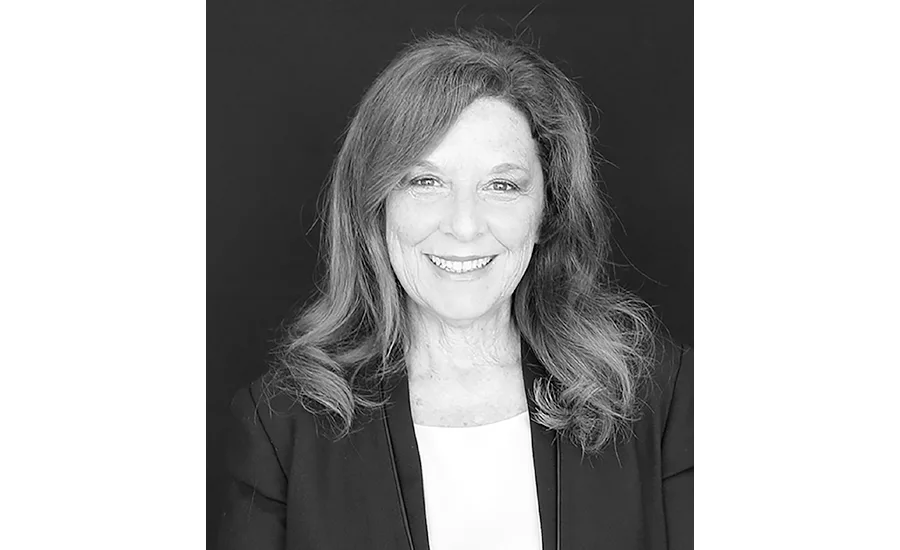
By Anna Fixsen
July 2017 Newsmaker

Photo © Perkins + Will

June 23, 2017

There is no question that design can have significant effects on our well-being—whether encouraging us to take stairs or exposing us to uplifting views of nature. Less obvious is how these decisions can influence us on a neurological level. Enter Dr. Eve Edelstein, an in-house researcher and “neuro-architect” based in Perkins + Will’s San Francisco office. Edelstein, who holds degrees in neuroscience, architecture, and anthropology, leads the firm’s Human Experience Lab, one of 10 specialized in-house research groups. There she conducts research and works with universities to introduce scientific evidence into designing everything from workplaces to health-care facilities. Edelstein is also a cofounder of Clinicians for Design, an international consortium of scientists and design professionals. Edelstein spoke with RECORD from London, where she was addressing a conference.


Architectural Record: What kind of research is your lab focusing on at the moment?

I focus each year on two or three strategic issues. My Ph.D. was in hearing sciences, so I focus currently on the problems that are associated with the challenges of acoustics. That actually comes up as one of the top complaints in almost every design. It’s become popular to introduce white noise to increase privacy, and we have a good deal of research to show that can work. However, the other essential thing to happen in health-care design is working toward accurate speech intelligibility: if you cannot hear the doctor’s orders, or you cannot hear a patient, medical errors can occur.

What about lighting?

It’s very similar to the question of sound. There are multiple layers on which we can make adaptations. So there’s daylighting for health and well-being. We know it measurably makes a difference—to our circadian rhythms, our mental state, our cognitive ability, our activity, as well as our health. And you also have to have darkness, and that often isn’t designed into a hospital. Right now, we have a one-size-fits-all approach to lighting. So we can think about different lighting solutions within the same space, and then the lighting around the individual. Is the patient trying sleep or read? Is a surgeon trying to do work, or is a caregiver trying to draw blood? And that argues for adaptable lighting, controlled by the individual.

Do you have any current examples of how your research has translated into an architectural solution?

Yes. We’ve got a building being raised from the ground right now, the University of Cincinnati Gardner Neuroscience Institute. And we’ve made a great many changes to embody some of the principles from neuroscience and from cognitive science. Examples include consideration of the type of screens that wrap the facade. We’re thinking about energy performance and privacy, but also the specular effects of looking through a screen; there’s some evidence of specular grids’ being disturbing to some neurological patients. Similarly, we are considering mobility disorders of neurological patients, so we’re designing to allow for regular places to rest and easier movement. All of these dramatically change the plan of the building.

Are there technologies you’re particularly excited about?

Looking for quick answers on architecture and design topics?
Try Ask RECORD, our new smart AI search tool.
Ask RECORD →

One of the fun things about being one of 10 labs at Perkins + Will is that I have this network of people I can turn to. I also collaborate with universities, like the University of California San Diego, where we have put projects as large as a 2.4 million-square-foot hospital campus into a virtual simulation. We’ve used it along with brainwave caps so that we can track the brainwaves that occur as people are moving through a virtual mock-up.

Are there design solutions that you can employ in buildings that are already complete?

Oh, absolutely. One example: I was asked to consult for a hospital where the wayfinding wasn’t working. So I toured it, and I observed, and I realized that the problem was the lighting—it was drawing people to a certain location, and other paths seemed so dark that people thought, “I’m not meant to go down there.” It’s a matter of using the anthropologist in me to understand human behavior, the neuroscientist in me to try to understand what sensory stimuli might make this happen, and then the architect in me to design a solution that’s feasible.

Share This Story

Looking for a reprint of this article?
From high-res PDFs to custom plaques, order your copy today!


Anna Fixsen was a staff writer and editor for Architectural Record from 2013 to 2017, during which time she covered topics ranging from new projects to human rights, and edited Firms to Watch—a special section devoted to emerging architecture firms.

Post a comment to this article

Report Abusive Comment

Subscription Center
  • Create an Account
  • Start a Subscription
  • Manage My Account
  • Sign Up for Newsletters
  • Visit Customer Service
  • Update Preferences

More Videos

Sponsored Content

Sponsored Content is a special paid section where industry companies provide high quality, objective, non-commercial content around topics of interest to the Architectural Record audience. All Sponsored Content is supplied by the advertising company and any opinions expressed in this article are those of the author and not necessarily reflect the views of Architectural Record or its parent company, BNP Media. Interested in participating in our Sponsored Content section? Contact your local rep!

close
  • TAMLYN XtremeTrim Exterior Trim
    Sponsored byTamlyn

    Designing Cleaner Panel Facades: Why Exterior Trim Details Matter

  • Building with Vapor Barriers
    Sponsored byReef Industries, Inc.

    Vapor Barriers Help Control Moisture in Tighter Building Designs

  • Duct Interior with Prodeq System
    Sponsored byHenry, a Carlisle Company

    Designing Resilient Water Containment Systems

DESIGN:ED Podcast
Listen to Architectural Record’s DESIGN:ED Podcast

Events

June 10, 2026

Rethinking Stormwater – The Power of Porous Paving

Credits: 1 AIA LU/HSW; 1 AIBD P-CE; 0.1 ICC CEU

Learn how porous paving systems support stormwater management, reduce heat island effects, and enhance sustainable site design performance.

June 11, 2026

Very Early Warning Fire Detection for Mission-Critical Facilities

Credits: 1 AIA LU/HSW; 1 AIBD P-CE; 0.1 ICC CEU

Examine advanced fire detection strategies that support uptime and enhance safety in data centers and other mission-critical facilities.

View All Submit An Event

Products

2026 Architect's Square Foot Costbook

2026 Architect's Square Foot Costbook

See More Products

Popular Stories

Coronado Bridge

The Architect’s Guide to San Diego

Practice Matters illustration

What’s in a (Firm’s) Name? Thinking About Succession and Legacy

Practice Matters illustration

By the Numbers: Counting America's Architects

Inward House

Inward House by VeeV Design Studio

Riverdale House by Studio Lau

Riverdale House by Studio Lau

Broader Sustainability of CMU - Free Webinar - May 21, 2026

Related Articles

  • AIA-Conference-2017-c-Architectural-Record-keynote2---1.jpg

    2017 AIA Conference: Michael Bierut, Eve Edelstein, and NASA Visual Strategists on the Power of Creative Thinking

    See More
  • Frances Anderton

    Interview with Journalist Frances Anderton

    See More
  • Diébédo Francis Kéré

    Interview with Diébédo Francis Kéré on Serpentine 2017 and Future Projects

    See More

Related Products

See More Products
  • 047177751X.gif

    Sustainable Urbanism: Urban Design With Nature

See More Products
×

The latest news and information

#1 Source for Architectural Design, News and Products

SUBSCRIBE
  • RESOURCES
    • Advertise
    • Contact Us
    • Submit
    • Store
  • ACCOUNT CENTER
    • Create an Account
    • Start a Subscription
    • Manage My Account
    • Sign Up for Newsletters
    • Visit Customer Service
    • Update Preferences
  • PRIVACY
    • PRIVACY POLICY
    • TERMS & CONDITIONS
    • DO NOT SELL MY PERSONAL INFORMATION
    • PRIVACY REQUEST
    • ACCESSIBILITY
  • SERVICES
    • Marketing Services
    • Reprints
    • Market Research
    • List Rental
    • Survey/Respondent Access
  • STAY CONNECTED
    • Linkedin
    • Facebook
    • Instagram
    • YouTube
    • X (Twitter)

Copyright ©2026. All Rights Reserved BNP Media, Inc. and BNP Media II, LLC.

Design, CMS, Hosting & Web Development :: ePublishing