Architectural Record
search
cart
facebook twitter linkedin youtube
  • Sign In
  • Subscribe
  • Sign Out
  • My Account
Architectural Record
  • NEWS
    • Latest News
    • Awards
    • Interviews
    • Obituaries
    • Podcasts
      • Design:Ed Podcast
      • Sponsored Podcasts
  • OPINION
    • Book Reviews / Excerpts
    • Exhibition Reviews
    • Forum
  • EXCLUSIVES
    • Videos
    • Design Vanguard
    • Top 300 Firms
    • Sponsored Content
    • Sponsored eBooks
    • From the Archives
  • CONTINUING ED
    • Editorial Continuing Ed
    • CE Center
    • CE Academies
  • PROJECTS
    • Buildings By Type
    • Reuse & Renovation
    • Museums & Arts Centers
    • Colleges & Universities
    • Multifamily Housing
    • Interiors
    • Lighting
    • Kitchen & Bath
  • HOUSES
    • Record Houses
    • House of the Month
    • Featured Houses
  • PRODUCTS
    • Products by Category
    • Record Products of the Year
    • Latest Products
  • EVENTS
    • Dates & Events
    • Record on the Road
    • Innovation Conference
    • Sustainability in Practice
    • Women In Architecture
    • Webinars
    • Ad Excellence Awards
    • Submit an Event
  • CONNECT
    • Ask RECORD AI
    • Newsletters
    • Contact
    • Advertise
    • Editorial Calendar
    • Store
    • Customer Service
  • SUBMIT
    • Submission Guidelines
    • RECORD Competitions
  • MAGAZINE
    • Subscribe
    • My Account
    • Digital Edition
    • Current Issue
    • Firm Pass
    • Historic Archive
Opinion

Michael Graves: Design for Life

By Ian Volner

By Paul Goldberger
Michael Graves: Design for Life

Michael Graves: Design for Life, by Ian Volner. Princeton Architectural Press, 304 pages, $30.

October 5, 2017

For a few years in the 1980s, Michael Graves was Frank Gehry, Bjarke Ingels, and Zaha Hadid rolled into one: the biggest architectural celebrity of the day, a man whose work appeared to bridge the chasm that so often separates the architecture that excites the public from the architecture that is taken seriously by critics and scholars. Some of it was the drama of conversion: after a debut as one of the neo-Corbusian “Five Architects” in the early ’70s, he turned away from the approach of his confreres Peter Eisenman, Charles Gwathmey, Richard Meier, and John Hejduk and dove fully into the history-churned waters of post-modernism. He talked a lot about using classical form to make architecture understandable, but his style was less purely traditional than it was a highly personal mix of classicism and cubism. He was more interested in composition than in space, more attuned to color than to shape and proportion. Whatever you thought about Graves, there was no denying that he was an original voice in American architecture, and that structures like his Portland Building of 1982, his far superior Humana Building of 1985 and Denver Central Library of 1991, and his compelling, if mannered, interiors, tapped into a widely felt desire for an architecture that at once connected to tradition and felt exciting and new.

And so it was, until it wasn’t. Graves’s star fell relatively quickly as postmodernism faded, with some of its adherents, like Robert A. M. Stern, moving toward a more literal form of historicism. Graves stayed the course, and his architecture was remarkably consistent throughout his career. What defined his middle years was not so much the buildings he produced—decent but unexciting—as the product design, a second career he developed, first for Alessi and then, most famously, for Target. And then there was Graves’s final chapter, after a tragic infection to the spinal cord left him paralyzed from the chest down. He, heroically, continued to work from his wheelchair, generating not only the exquisite drawings he was known for—drawings that were often more beautiful than the buildings they represented—but also embarking on yet another subcareer as he produced furniture and surgical products aimed specifically at the disabled. The artist/architect/designer ended his professional life as an activist for this latter audience.

His was a career made up of equal parts exhilaration and frustration, and it is perplexing to sum up. Ian Volner has worked conscientiously to do so in Michael Graves: Design for Life, the first biography of the architect, who died in 2015 at the age of 80. (Volner began the book with Graves’s cooperation, but finished after the architect’s death.) Volner is a sympathetic chronicler, and he is at his best when he recounts Graves’s early years as a young architect—when he once tricked his first wife into thinking he was taking her to a beach on the shore of Lake Michigan but was really on his way to see Frank Lloyd Wright’s Johnson Wax headquarters in Racine, Wisconsin. We get a picture of a man who was passionate, single-minded, ambitious, and work-obsessed, and at the same time could be thoughtful, charming, sardonic, and gentle. Volner shows us a Graves whose greatest joy was in working alone, making sketches and watercolors, and who at the same time would go to great lengths to exploit his celebrity. He craved the respect of the academy—he taught at Princeton for decades—and yet he mocked it constantly for being out of touch with the interests of ordinary people. He was devastated when the Whitney Museum, his most prestigious client, abandoned him after a third try at redesigning an aggressive expansion of the Whitney’s Marcel Breuer building won no more praise than his two previous versions. He produced many fine buildings, but arguably no truly great ones. Was Graves the most populist of elitists, or the most elitist of populists? I suspect that no one, including Ian Volner, can ever fully answer that.

Looking for quick answers on architecture and design topics?
Try Ask RECORD, our new smart AI search tool.
Ask RECORD →

KEYWORDS: Book Reviews / Excerpts

Share This Story

Looking for a reprint of this article?
From high-res PDFs to custom plaques, order your copy today!

Paul Goldberger is an architecture critic and contributing editor to Vanity Fair.

Post a comment to this article

Report Abusive Comment

Subscription Center
  • Create an Account
  • Start a Subscription
  • Manage My Account
  • Sign Up for Newsletters
  • Visit Customer Service
  • Update Preferences

More Videos

Sponsored Content

Sponsored Content is a special paid section where industry companies provide high quality, objective, non-commercial content around topics of interest to the Architectural Record audience. All Sponsored Content is supplied by the advertising company and any opinions expressed in this article are those of the author and not necessarily reflect the views of Architectural Record or its parent company, BNP Media. Interested in participating in our Sponsored Content section? Contact your local rep!

close
  • TAMLYN XtremeTrim Exterior Trim
    Sponsored byTamlyn

    Designing Cleaner Panel Facades: Why Exterior Trim Details Matter

  • Building with Vapor Barriers
    Sponsored byReef Industries, Inc.

    Vapor Barriers Help Control Moisture in Tighter Building Designs

  • Duct Interior with Prodeq System
    Sponsored byHenry, a Carlisle Company

    Designing Resilient Water Containment Systems

DESIGN:ED Podcast
Listen to Architectural Record’s DESIGN:ED Podcast

Events

June 11, 2026

Very Early Warning Fire Detection for Mission-Critical Facilities

Credits: 1 AIA LU/HSW; 1 AIBD P-CE; 0.1 ICC CEU

Examine advanced fire detection strategies that support uptime and enhance safety in data centers and other mission-critical facilities.

June 16, 2026

Focus on the Façade: Exploring Steel, Timber & Fire-Rated Curtain Walls and Channel Glass Systems

Credits: 1 AIA LU/HSW; 1 AIBD P-CE; 0.1 ICC CEU

Explore modern façade and glazing systems that enhance daylighting, fire safety, and thermal performance while expanding architectural design possibilities.

View All Submit An Event

Products

2026 Architect's Square Foot Costbook

2026 Architect's Square Foot Costbook

See More Products

Popular Stories

Practice Matters illustration

What’s in a (Firm’s) Name? Thinking About Succession and Legacy

Coronado Bridge

The Architect’s Guide to San Diego

Practice Matters illustration

By the Numbers: Counting America's Architects

SanDiegoAirport

Top 300 Architecture Firms of 2026

Crane Cove, ONO

Design Vanguard 2026 Winners

Broader Sustainability of CMU - Free Webinar - May 21, 2026

Related Articles

  • Museum Director Who Championed a Controversial Michael Graves Design Dies

    See More
  • Steven Holl Places Winning Bid for Michael Graves' Last Artwork

    See More
  • Obituary: Michael Graves Dies

    See More

Related Products

See More Products
  • 0470126736.gif

    Modern Sustainable Residential Design: A Guide for Design Professionals

  • superlux.jpg

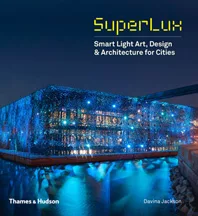
    SuperLux: Smart Light Art, Design & Architecture for Cities

  • facade.jpg

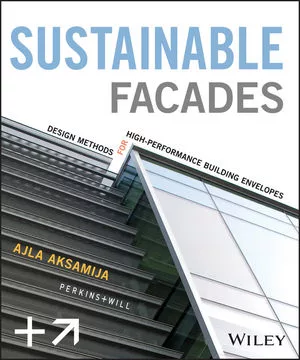
    Sustainable Facades: Design Methods for High-Performance Building Envelopes

See More Products
×

The latest news and information

#1 Source for Architectural Design, News and Products

SUBSCRIBE
  • RESOURCES
    • Advertise
    • Contact Us
    • Submit
    • Store
  • ACCOUNT CENTER
    • Create an Account
    • Start a Subscription
    • Manage My Account
    • Sign Up for Newsletters
    • Visit Customer Service
    • Update Preferences
  • PRIVACY
    • PRIVACY POLICY
    • TERMS & CONDITIONS
    • DO NOT SELL MY PERSONAL INFORMATION
    • PRIVACY REQUEST
    • ACCESSIBILITY
  • SERVICES
    • Marketing Services
    • Reprints
    • Market Research
    • List Rental
    • Survey/Respondent Access
  • STAY CONNECTED
    • Linkedin
    • Facebook
    • Instagram
    • YouTube
    • X (Twitter)

Copyright ©2026. All Rights Reserved BNP Media, Inc. and BNP Media II, LLC.

Design, CMS, Hosting & Web Development :: ePublishing