Architectural Record
search
cart
facebook twitter linkedin youtube
  • Sign In
  • Subscribe
  • Sign Out
  • My Account
Architectural Record
  • NEWS
    • Latest News
    • Awards
    • Interviews
    • Obituaries
    • Podcasts
      • Design:Ed Podcast
      • Sponsored Podcasts
  • OPINION
    • Book Reviews / Excerpts
    • Exhibition Reviews
    • Forum
  • EXCLUSIVES
    • Videos
    • Design Vanguard
    • Top 300 Firms
    • Sponsored Content
    • Sponsored eBooks
    • From the Archives
  • CONTINUING ED
    • Editorial Continuing Ed
    • CE Center
    • CE Academies
  • PROJECTS
    • Buildings By Type
    • Reuse & Renovation
    • Museums & Arts Centers
    • Colleges & Universities
    • Multifamily Housing
    • Interiors
    • Lighting
    • Kitchen & Bath
  • HOUSES
    • Record Houses
    • House of the Month
    • Featured Houses
  • PRODUCTS
    • Products by Category
    • Record Products of the Year
    • Latest Products
  • EVENTS
    • Dates & Events
    • Record on the Road
    • Innovation Conference
    • Sustainability in Practice
    • Women In Architecture
    • Webinars
    • Ad Excellence Awards
    • Submit an Event
  • CONNECT
    • Ask RECORD AI
    • Newsletters
    • Contact
    • Advertise
    • Editorial Calendar
    • Store
    • Customer Service
  • SUBMIT
    • Submission Guidelines
    • RECORD Competitions
  • MAGAZINE
    • Subscribe
    • My Account
    • Digital Edition
    • Current Issue
    • Firm Pass
    • Historic Archive
Architecture News

L.A. Takes Big Step to Curb Greenhouse Gas Emissions from Buildings
By Deborah Snoonian Glenn
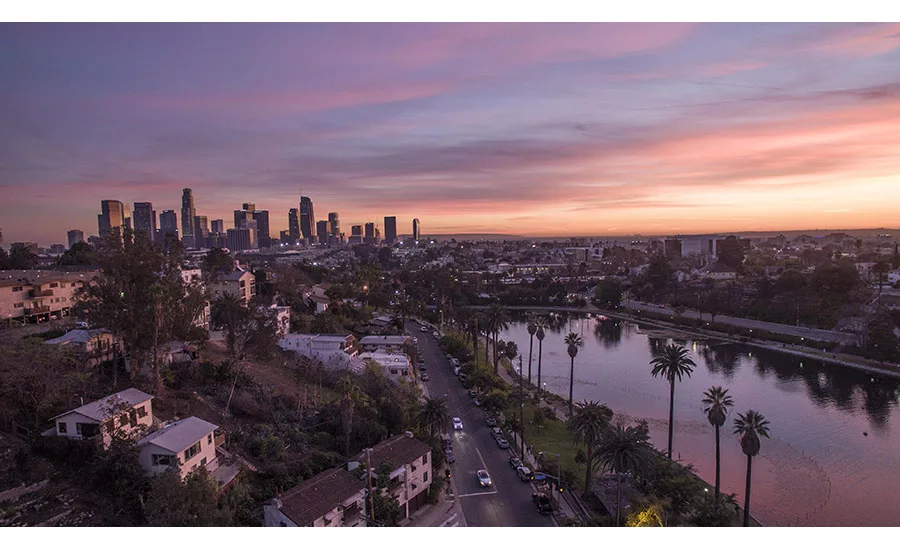
L.A. Takes Big Step to Curb Greenhouse Gas Emissions from Buildings

Photo courtesy Wikipedia Commons

February 16, 2018

On February 6, the Los Angeles City Council adopted a resolution targeting drastic cuts to greenhouse gas emissions from commercial and residential buildings—the latest step by the nation’s second-largest city to shrink the environmental footprint of its built environment.

The measure gives L.A.’s Building and Safety Department and the Department of Water and Power (DWP) 90 days to recommend methods for reducing reliance on natural gas and shifting toward electricity from clean sources for heating, water heating, and cooking; and requires DWP to set ambitious goals for building electrification in 2028 and 2038. The targets are in line with mayor Eric Garcetti’s aggressive sustainability plan, which aims to reduce greenhouse gas emissions by 60 percent before 2035. “Our vision for L.A. is to be fossil fuel-free, and we need building electrification to make this vision a reality,” says Lauren Faber O’Connor, L.A.’s chief sustainability officer. Currently, the L.A. region burns more fossil fuels in its buildings than in its power plants.

The two departments tasked with the 90-day study may recommend changing local building codes, or crafting incentives for adopting efficient electric-powered building technologies, says Maria Stamas, an attorney with the Natural Resources Defense Council’s climate and energy programs. The DWP, the nation’s largest public utility, must also include the new electrification goals in its planning, “which will create internal pressure to invest in electrification so it can meet anticipated future demand,” she says.

Like L.A., forward-thinking U.S. cities have been taking a leadership role in mitigating climate change, many acting even before the current administration’s 2017 decision to withdraw the country from the Paris Agreement. These cities are using a mix of regulatory measures and incentive programs to slash energy use and curb carbon emissions from buildings, says Tim Pryce, energy and buildings program director for the C40 Cities Climate Leadership Group, a global initiative focused on reducing greenhouse gas emissions. New York is in the process of passing legislation requiring owners to retrofit existing buildings greater than 25,000 square feet to meet minimum energy efficiency standards. In addition, New York and several other cities, including Denver and Minneapolis, have adopted broad “80x50” mandates to cut carbon emissions by 80 percent below 2005 levels by the year 2050. In April 2016, San Francisco became the first major U.S. city to approve legislation requiring rooftop solar on new buildings with 10 or fewer stories. In Boston, a voluntary program for property owners called The Mayor’s Carbon Cup asks participants to commit to a 35 percent reduction in greenhouse gas emissions by 2020 for at least one million square feet of building space; through 2016, participants have cut their emissions by 52 percent compared to their baselines.

Back in L.A., the move by City Council is a welcome shift from setting ambitious targets toward outlining steps needed to reach them, says Leigh Christy, an associate principal in the local office of Perkins+Will. “Of course, we as architects should still design buildings for maximum energy efficiency, with tight building envelopes and reduced heating and cooling loads to curb emissions,” she says. “But any measure that aims to reduce the use of fossil fuels is a step in the right direction.”

Looking for quick answers on architecture and design topics?
Try Ask RECORD, our new smart AI search tool.
Ask RECORD →

KEYWORDS: Los Angeles

Share This Story

Looking for a reprint of this article?
From high-res PDFs to custom plaques, order your copy today!

Deborah Snoonian Glenn, a former senior editor of RECORD and This Old House, lives in Los Angeles, where she writes about architecture.

Post a comment to this article

Report Abusive Comment

Subscription Center
  • Create an Account
  • Start a Subscription
  • Manage My Account
  • Sign Up for Newsletters
  • Visit Customer Service
  • Update Preferences

More Videos

Sponsored Content

Sponsored Content is a special paid section where industry companies provide high quality, objective, non-commercial content around topics of interest to the Architectural Record audience. All Sponsored Content is supplied by the advertising company and any opinions expressed in this article are those of the author and not necessarily reflect the views of Architectural Record or its parent company, BNP Media. Interested in participating in our Sponsored Content section? Contact your local rep!

close
  • TAMLYN XtremeTrim Exterior Trim
    Sponsored byTamlyn

    Designing Cleaner Panel Facades: Why Exterior Trim Details Matter

  • Building with Vapor Barriers
    Sponsored byReef Industries, Inc.

    Vapor Barriers Help Control Moisture in Tighter Building Designs

  • Duct Interior with Prodeq System
    Sponsored byHenry, a Carlisle Company

    Designing Resilient Water Containment Systems

DESIGN:ED Podcast
Listen to Architectural Record’s DESIGN:ED Podcast

Events

June 10, 2026

Rethinking Stormwater – The Power of Porous Paving

Credits: 1 AIA LU/HSW; 1 AIBD P-CE; 0.1 ICC CEU

Learn how porous paving systems support stormwater management, reduce heat island effects, and enhance sustainable site design performance.

June 11, 2026

Very Early Warning Fire Detection for Mission-Critical Facilities

Credits: 1 AIA LU/HSW; 1 AIBD P-CE; 0.1 ICC CEU

Examine advanced fire detection strategies that support uptime and enhance safety in data centers and other mission-critical facilities.

View All Submit An Event

Products

2026 Architect's Square Foot Costbook

2026 Architect's Square Foot Costbook

See More Products

Popular Stories

Coronado Bridge

The Architect’s Guide to San Diego

Practice Matters illustration

What’s in a (Firm’s) Name? Thinking About Succession and Legacy

Practice Matters illustration

By the Numbers: Counting America's Architects

Inward House

Inward House by VeeV Design Studio

Riverdale House by Studio Lau

Riverdale House by Studio Lau

Broader Sustainability of CMU - Free Webinar - May 21, 2026

Related Articles

  • Biden

    A New Coalition Takes Aim at Emissions from Existing Buildings

    See More
  • On the Greenhouse Gas Trail, One Engineer Aims Beyond "Carbon Neutral"

    See More
  • On the greenhouse gas trail, one engineer aims beyond "carbon neutral"

    See More

Related Products

See More Products
  • 3dthinking.jpg

    3D Thinking in Design and Architecture: From Antiquity to the Future

See More Products

Events

View AllSubmit An Event
  • July 29, 2026

    Adaptive Reuse Reimagined: Designing Multifamily Housing from Existing Buildings

    Credits: 1 AIA LU/HSW; 1 AIBD P-CE; 0.1 ICC CEU; 1 IIBEC CEHExamine adaptive reuse envelope strategies that improve energy performance, preserve architectural character, and transform existing buildings into high-performing multifamily housing.
View AllSubmit An Event
×

The latest news and information

#1 Source for Architectural Design, News and Products

SUBSCRIBE
  • RESOURCES
    • Advertise
    • Contact Us
    • Submit
    • Store
  • ACCOUNT CENTER
    • Create an Account
    • Start a Subscription
    • Manage My Account
    • Sign Up for Newsletters
    • Visit Customer Service
    • Update Preferences
  • PRIVACY
    • PRIVACY POLICY
    • TERMS & CONDITIONS
    • DO NOT SELL MY PERSONAL INFORMATION
    • PRIVACY REQUEST
    • ACCESSIBILITY
  • SERVICES
    • Marketing Services
    • Reprints
    • Market Research
    • List Rental
    • Survey/Respondent Access
  • STAY CONNECTED
    • Linkedin
    • Facebook
    • Instagram
    • YouTube
    • X (Twitter)

Copyright ©2026. All Rights Reserved BNP Media, Inc. and BNP Media II, LLC.

Design, CMS, Hosting & Web Development :: ePublishing