Irish Hunger Memorial Renovation by CTA Architects and SiteWorks
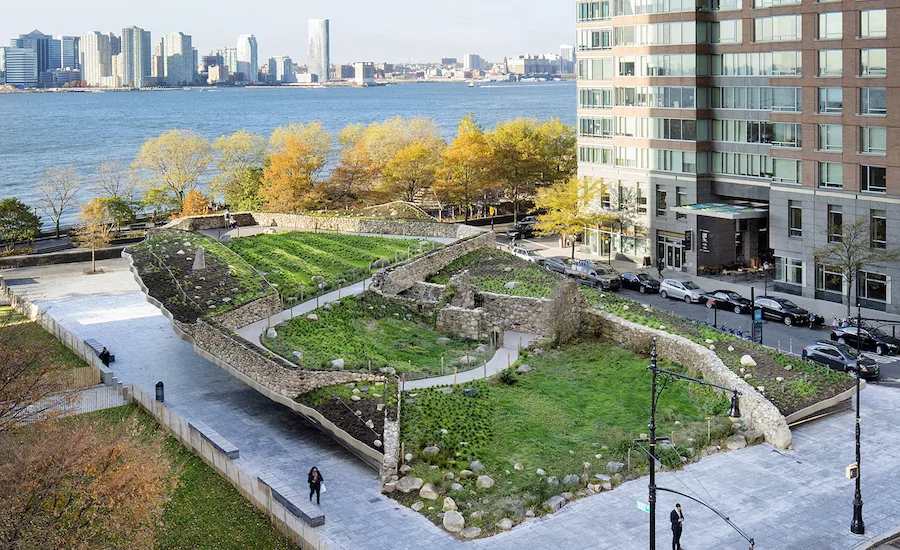
The Irish Hunger Memorial Renovation by CTA Architects and SiteWorks
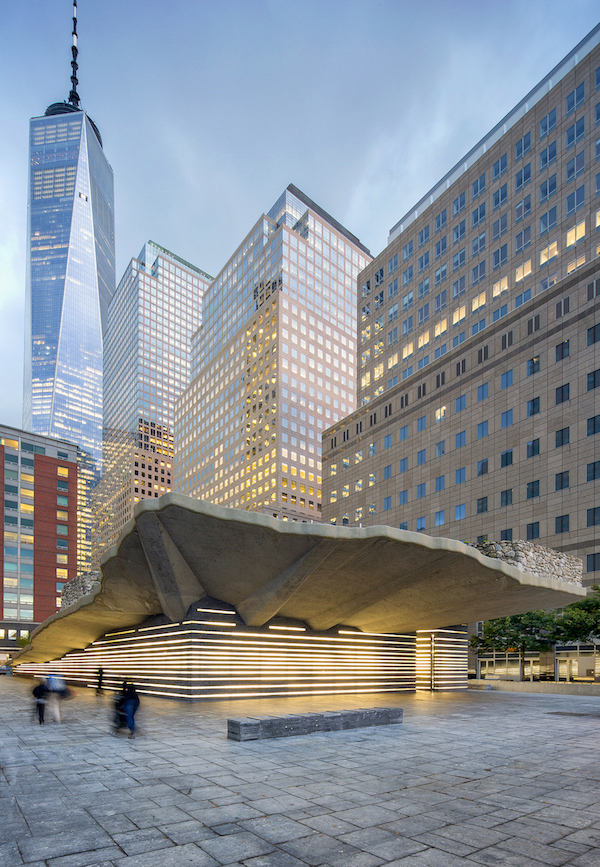
The memorial faces the Hudson River on the West Side of Manhattan.
Photo © Edward Menashy
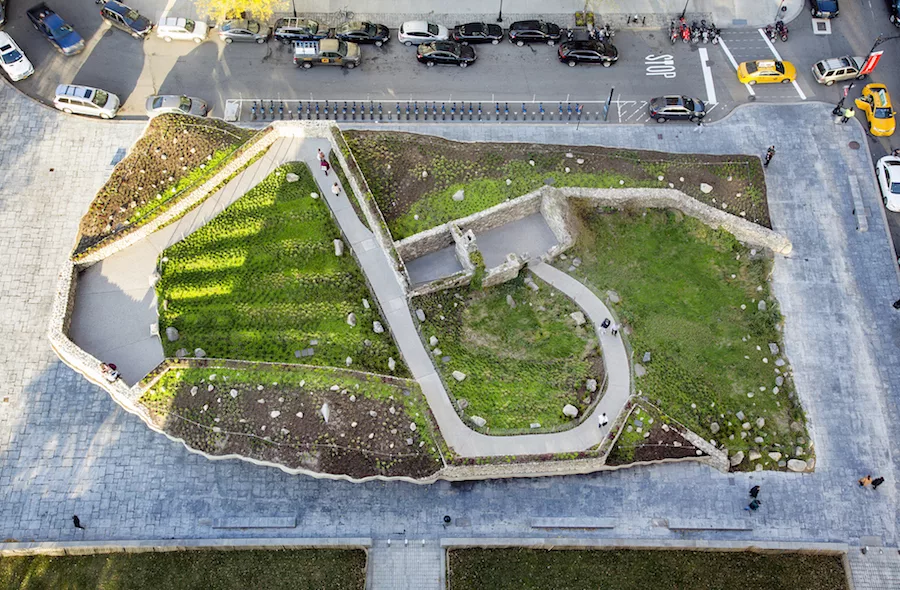
The Irish Hunger Memorial Renovation by CTA Architects and SiteWorks
Photo © Edward Menashy
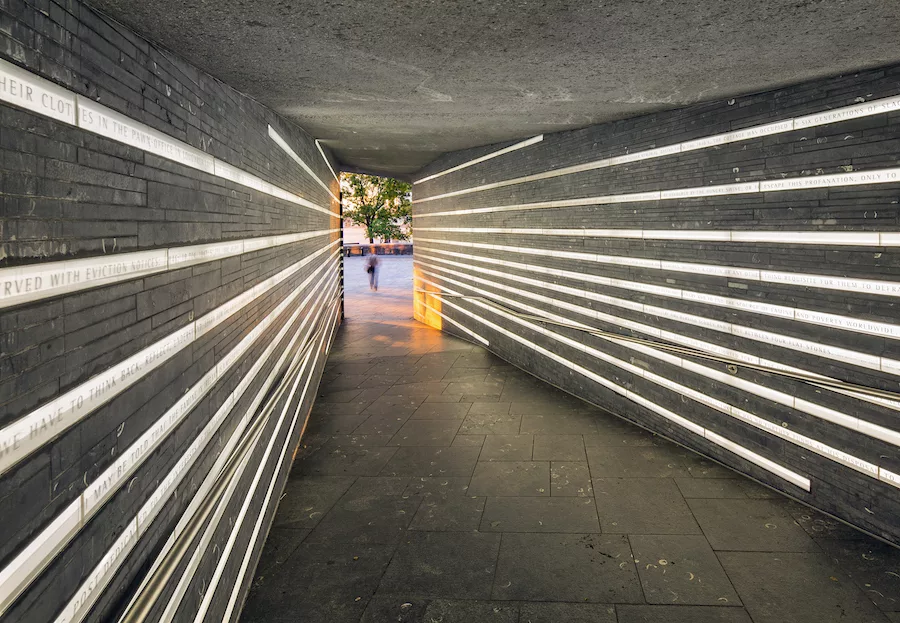
The covered entrance to the memorial is lined with glass cases that display quotes about the Great Irish Famine and contemporary hunger and fossil-bed limestone.
Photo © Edward Menashy
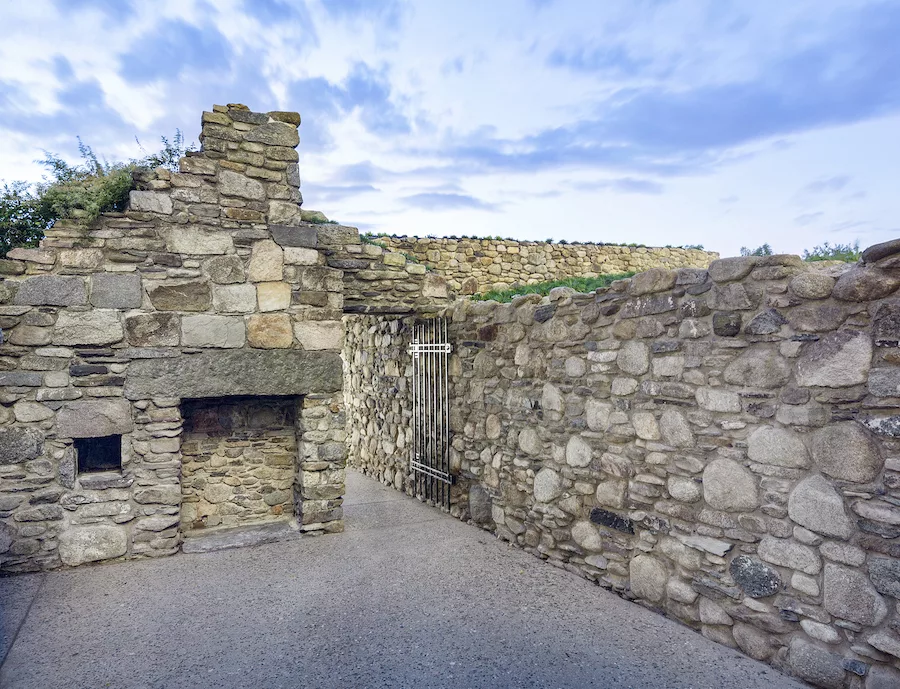
The memorial includes a house from County Mayo in Ireland that dates back to the Famine-era, which donated to the memorial, shipped and reconstructed on the site.
Photo © Edward Menashy
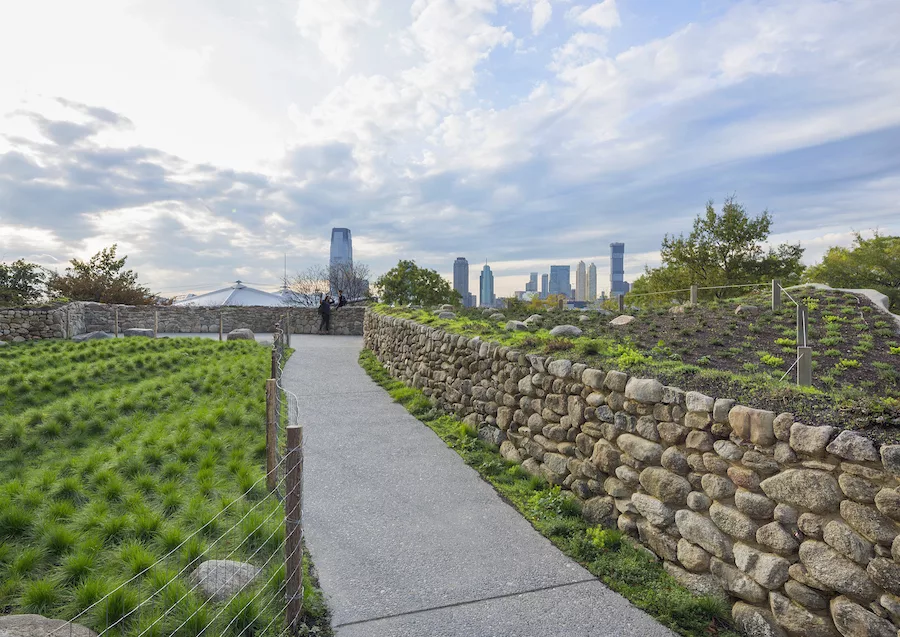
A furrowed terrace (left) sits just below the highest point on the memorial’s cantilevered slope.
Photo © Edward Menashy

The Irish Hunger Memorial Renovation by CTA Architects and SiteWorks
Photo © Edward Menashy
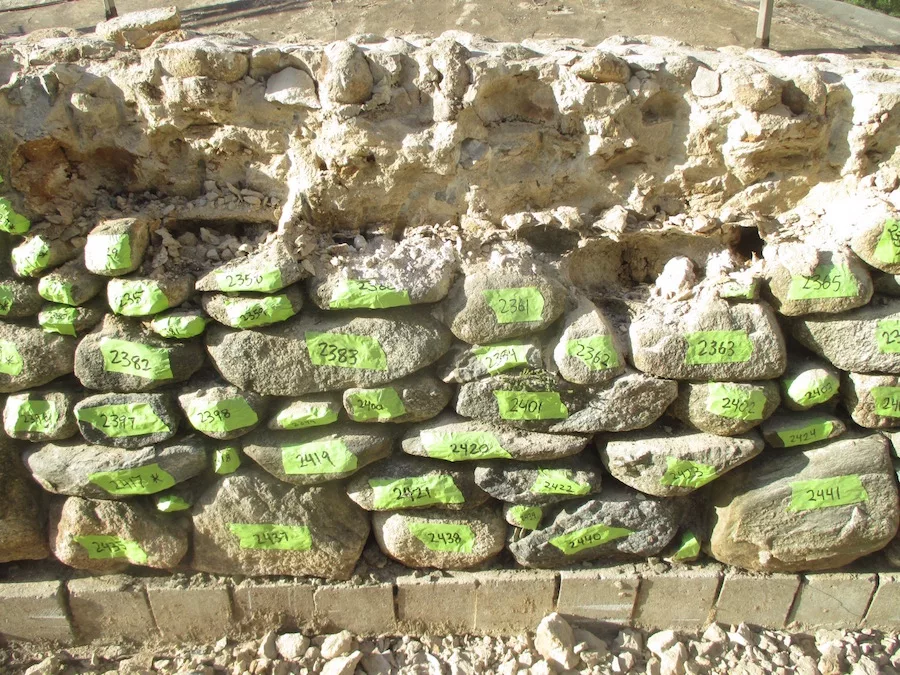
To install a new structural waterproofing system, the architects had to remove all elements from the cantilevered concrete slab, including rocks that had been sourced from Ireland. The team catalogued each rock so they could be reinstalled in the same spot.
Photo © Edward Menashy
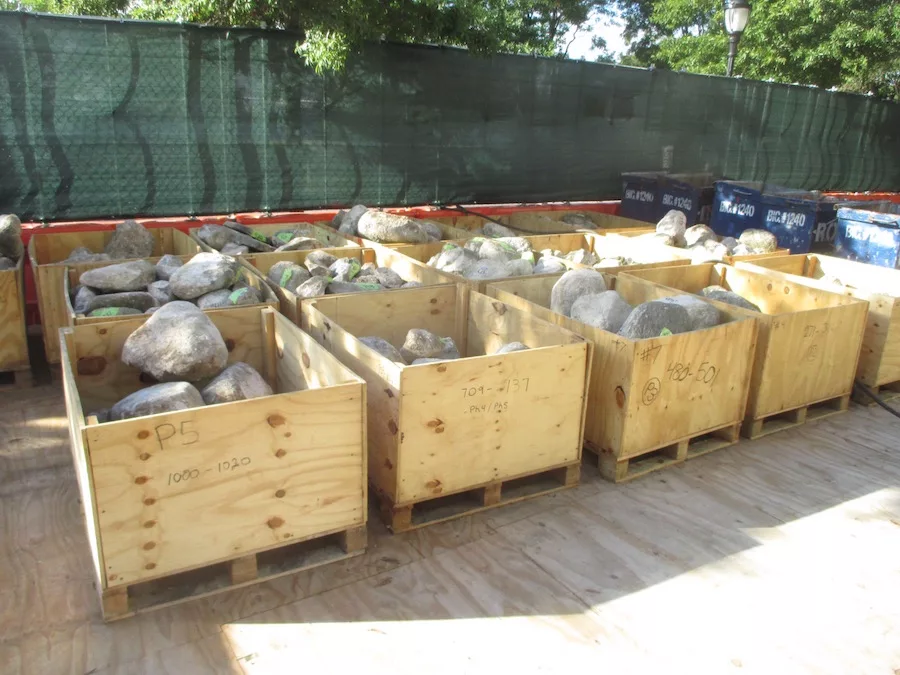
To install a new structural waterproofing system, the architects had to remove all elements from the cantilevered concrete slab, including rocks that had been sourced from Ireland. The team catalogued each rock so they could be reinstalled in the same spot.
Photo courtesy CTA Architects
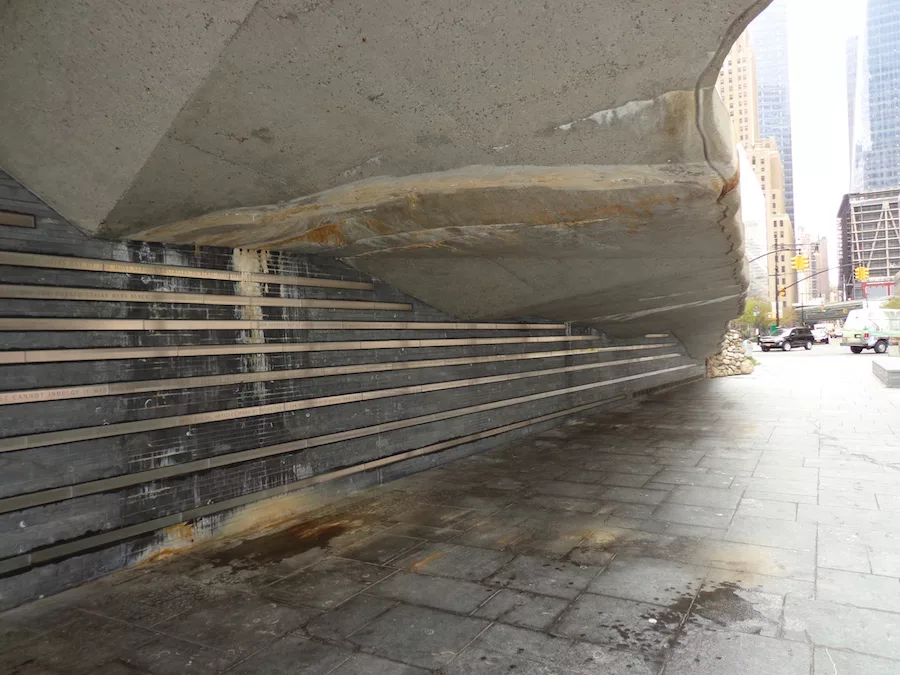
Originally completed in 2002, the memorial had longstanding leaks, which prompted the client, Battery Park City Authority, to hire the architects to renovate the memorial by installing new irrigation and waterproofing systems.
Photo courtesy CTA Architects
To get a small glimpse of Ireland, New Yorkers need only travel as far as Battery Park City, where the newly renovated Irish Hunger Memorial by CTA Architects and landscape architecture firm SiteWorks has reopened for good.
The memorial, which was first built in 2002, underwent a $5.3 million renovation between 2016 and last summer, only to briefly close again for plantings. The structure uses 52 types of plants and stone elements transported from Ireland to tell the story of the 19th century’s Great Irish Famine, when millions migrated from their homeland and about a million more died of starvation.
Designed by New York artist Brian Tolle with 1100 Architect, the outdoor memorial features a 7,200-square-foot cantilevered concrete slab, meant to resemble a small hill in the Irish countryside, that visitors can climb. Following the path formed by an aggregate concrete ramp that begins underneath the concrete slope, visitors walk through a covered corridor where backlit glass cases display quotes about hunger and a sound installation plays from speakers overhead.
The ramp continues through the remains of a house dating back to the famine. (The centuries-old residence was donated by Tolle’s extended family in County Mayo, Ireland, shipped to New York, and rebuilt as part of the memorial.) The journey culminates in a furrowed field reminiscent of the abandoned potato fields that were left vacant during the Great Irish Famine, after consecutive years of molded crops and unpaid rent caused the eviction and starvation of hundreds of thousands of farmers and laborers.
“This is landscape I grew up looking at,” architect Frank Scanlon tells RECORD on a visit to the site, slowing to a stop about midway up the memorial. Scanlon, CTA’s project manager for the memorial, was born and raised in Ireland’s Connacht province.
“We find would abandoned farmsteads like this, toiled and dug a hundred years before, but you can still see them. It was very, very poignant,” he says.
The memorial itself has a fraught story, which the architects meticulously labored to conceal in the recent renovation. The structure’s concrete was originally scheduled to be poured in place on September 11, 2001; instead, the nearby Twin Towers collapsed, killing thousands and covering the half-finished project in debris. The tragic scene so close to the site may explain the project’s later difficulties.
Looking for quick answers on architecture and design topics?
Try Ask RECORD, our new smart AI search tool.
Ask RECORD →
“We had pictures of the most dispirited looking contractors working in the shadows of the ruined towers, putting this thing together about a month after September 11,” says CTA principal Daniel Allen.
Shortly following the memorial’s opening on July 16, 2002, the client, Battery Park City Authority (BPCA), noted cracking in the concrete and leakages. CTA became involved in the renovation around 2012, though work only officially began in 2016.
“It’s had a troubled history of water problems and leaking for a long time,” Allen explains. “The idea was that we would tell BPCA how to fix it completely, so we wouldn’t have to come back again.”
The architects removed the soil and plants from the cantilevered section of the concrete slab in order to install a 2,000-square-foot waterproofing system using a Kemper 2K PUR membrane that wraps over the top and sides of the concrete slab, as well as a new irrigation system for the landscaping.
SiteWorks preserved the soil and plants that had been growing on the site for about 14 years and replanted them alongside new vegetation—still species native to Ireland, but sourced from Oregon—once CTA’s structural work was complete.
For all their efforts, the architects’ interventions are easy to miss. Adhering to the design Tolle conceptualized years before, and respecting his wishes to maintain the memorial’s original aesthetics, the team endeavored to blend new elements with those left untouched during the renovation. In one instance, contractor Nicholson & Galloway manually weathered the concrete pathway, taking hammers to its edges, so that it would fade into the dirt.
But if you look closely—for instance, at the concrete soffit of the cantilever, or at a conspicuous though inoffensive strip of lime mortar that divides old and new stone walls near the entrance to the remains of the 19th century house—evidence of the renovation comes into view.
On a cold and windy March day, standing atop the memorial almost gives you a sense of walking the famously lush and windswept hills of the Emerald Isle, but the illusion is fleeting. If the surrounding views of the glass towers of Brookfield Place and One World Trade Center don’t distract you, tourists rolling their suitcases behind them as they ascend the ramp or workers out for a coffee break from the neighboring office complexes likely will, but that’s what Lorcan Murphy, an Irishman visiting New York to walk in the St. Patrick’s Day parade, loves about the memorial.
“This is fantastic. With all the skyscrapers and life in 2018, this is representation,” he says, shaking hands with the memorial’s most recent team of architects.
Looking for a reprint of this article?
From high-res PDFs to custom plaques, order your copy today!