The Forum Opens at Columbia's Manhattanville Campus
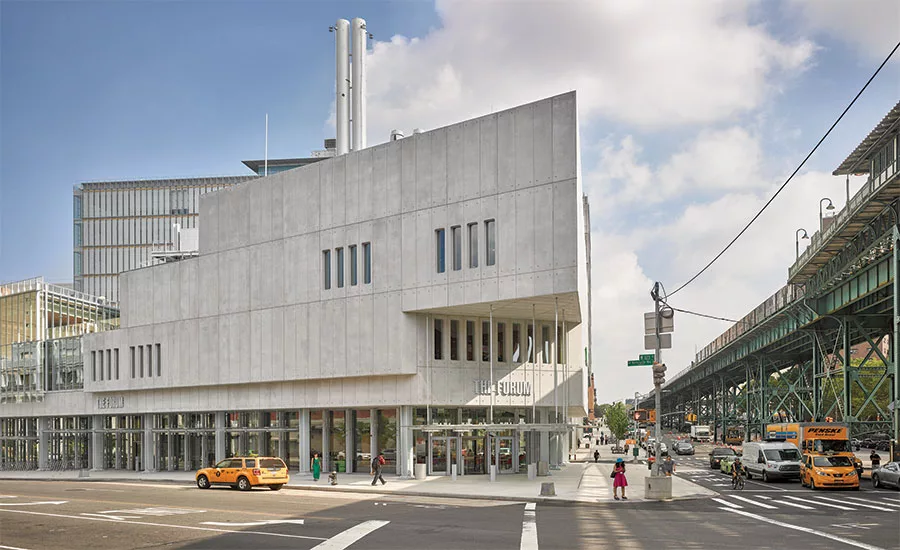
Generous glazing at the street level is meant to give the impression that the Forum is floating. To underscore that idea during the design, Renzo Piano did not include a ground floor in any of his sketches of the building.
Photo © Frank Oudeman
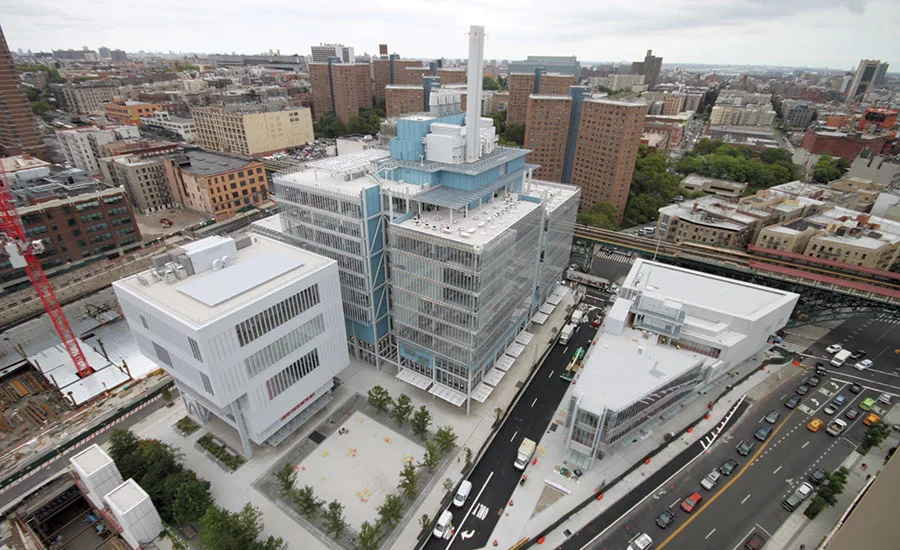
Clustered around a public plaza called the Small Square, the Forum (the triangular building) joins the Lenfest Center for the Arts (at left in photo) and the Jerome L. Greene Science Center (in the middle).
Photo courtesy Columbia University / Manny Chung
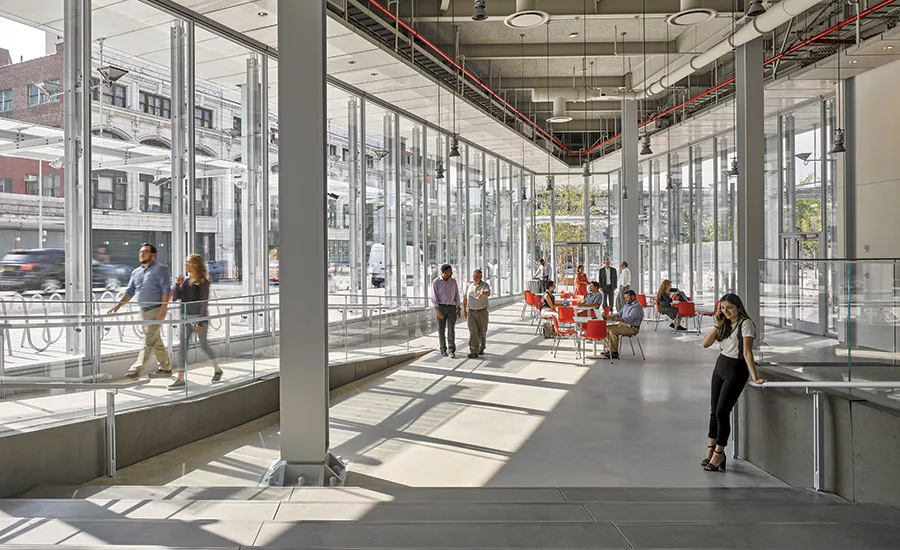
Flooded with natural light, the ground floor of the Forum is open to the public.
Photo © Frank Oudeman
Architects & Firms
A new cityscape, 17 years in the making, is rising at the corner of 125th Street and Broadway in the West Harlem neighborhood of Manhattan. Just beyond a century-old viaduct, on a sliver of a block—where, not long ago, a sign reading “Dear Columbia: No Forced Displacement” hung above a gas station—stands a gleaming structure of metal, glass, and concrete panels.
The Forum, as it’s called, is the third component to open at Columbia University’s new Manhattanville campus. A massive uptown expansion of the school, the $6.3 billion project will transform more than 17 acres, or about 7 percent, of West Harlem into a multidisciplinary academic hub, complete with a master plan by Renzo Piano Building Workshop (RPBW) and SOM that achieved LEED Platinum certification for neighborhood development. Situated at the site’s southeastern-most corner, the Forum—which will host conferences and events and house Columbia World Projects, an initiative to address global issues—may prove a case study of how one of the city’s largest landowners can coexist with a community.
“The Forum is the entry point to the new campus in every way,” says university president Lee Bollinger. Together with two completed structures just to the north—the Jerome L. Greene Science Center and the Lenfest Center for the Arts—the Forum makes a trio of “modern yet classical” RPBW designs that set the tone for this new type of open, collaborative campus. With their activated street frontages and glazed facades, the structures provide a public-facing alternative to the cloistered academic environments of the past.
Unlike the university’s historic McKim, Mead & White campus less than a mile south, in Manhattan’s Morningside Heights neighborhood, where heavy iron gates emblazoned with the words “May All Who Enter Find Peace And Welcome” mark the boundaries, there’s no such announcement of Columbia’s new turf. Instead, there’s a shift from the surrounding brick to RPBW’s variations on glass, metal, and concrete. The materials recall the area’s “industrial soul,” says RPBW partner in charge, Antoine Chaaya, and seamlessly blend the “urban layer” with public amenities like the café and lobby, as sidewalk transitions to radiant-heated polished-concrete interior floor.
“Manhattanville expresses the values of this century: tolerance, openness, permeability, transparency, and sharing space with others,” explains Chaaya, who sought to give these values form in the latest building. At street level, 10-foot setbacks create wide, welcoming sidewalks, while on the slightly larger, cantilevered upper floors, expanses of glass offer a glimpse of the work taking place inside. According to Chaaya, the building’s massing, material, and varying degrees of transparency offer hints of its function: open workspaces at one end and a 437-seat auditorium at the other.
The building’s shape responds to the constraints of the site, including zoning changes that came with the creation of the Special Manhattanville Mixed Use District, which was approved in 2007 and allows for new commercial and residential spaces in the former manufacturing district. Since the master plan’s proposal, some community members raised serious concerns that the school would overwhelm the neighborhood, displacing residents and jobs in an area that’s 56.5 percent Latino and 27.2 percent black, and where the mean income is about 44 percent below the city average. When Columbia responded with plans to engage the community, it did little to quell fears that the campus would hasten large-scale gentrification—remnants of the distrust seeded in 1968, when the school proposed an athletic facility with a separate entrance for members of the local Harlem community. (That center, which was never built, came to be known as “Gym Crow.”)
Though such large-scale development inevitably draws staunch criticism from some quarters (the campus was cited as a harbinger of New York’s demise in the recent Harper’s magazine essay, “The Death of a Once Great City”), initiatives like a Community Benefit Agreement, to support local businesses and quality-of-life efforts, as well as a Clean Construction Plan that mitigated noise, air pollution, and interruption, have helped dampen protests.
Looking for quick answers on architecture and design topics?
Try Ask RECORD, our new smart AI search tool.
Ask RECORD →
Columbia spokespeople point out that the neighborhood has benefited from infrastructure improvements (including updates to the sewer system, water and gas lines, and electric conduits), wider sidewalks, and Wi-Fi–enabled public plazas, along with an influx of new jobs. And beyond the new cafés, galleries, and rock-climbing gym, there’s a community Education Lab and Wellness Center already operating in the Jerome L. Green Science Center.
“In my view, this is still an unrealized vision,” says Bollinger, who looks at the development in century-long terms. “I don’t for a second think we have figured out how to connect Manhattanville with the other parts of Columbia University, or with the surrounding communities and New York City in all the ways that we should. But on every level, in every dimension, our people are thinking about this all the time.”
And, now, there’s a Forum to further that conversation.
Looking for a reprint of this article?
From high-res PDFs to custom plaques, order your copy today!