Pearling Path Visitors Center by Valerio Olgiati Architect
Muharraq, Bahrain
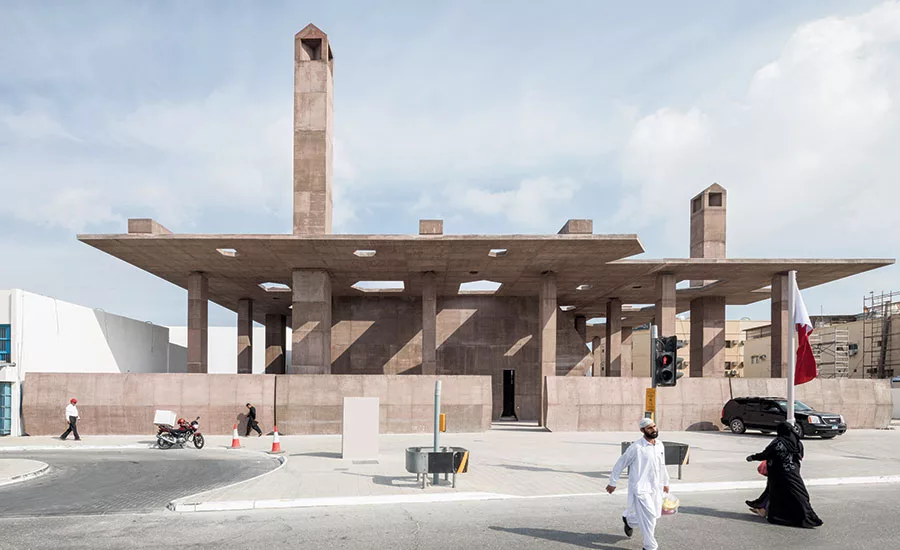
Photo © Laurian Ghinitoiu
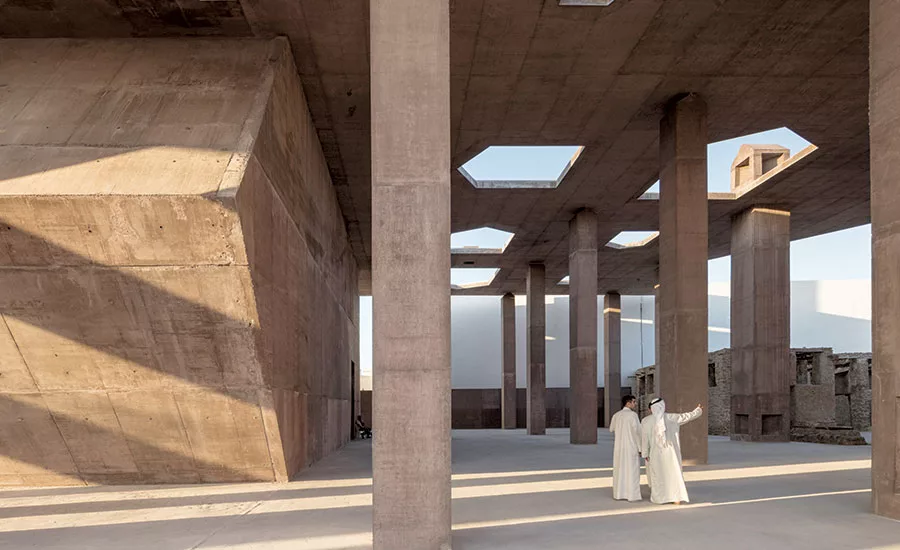
While much of the porous new building is open to the elements, an enclosed area contains space for exhibitions.
Photo © Laurian Ghinitoiu
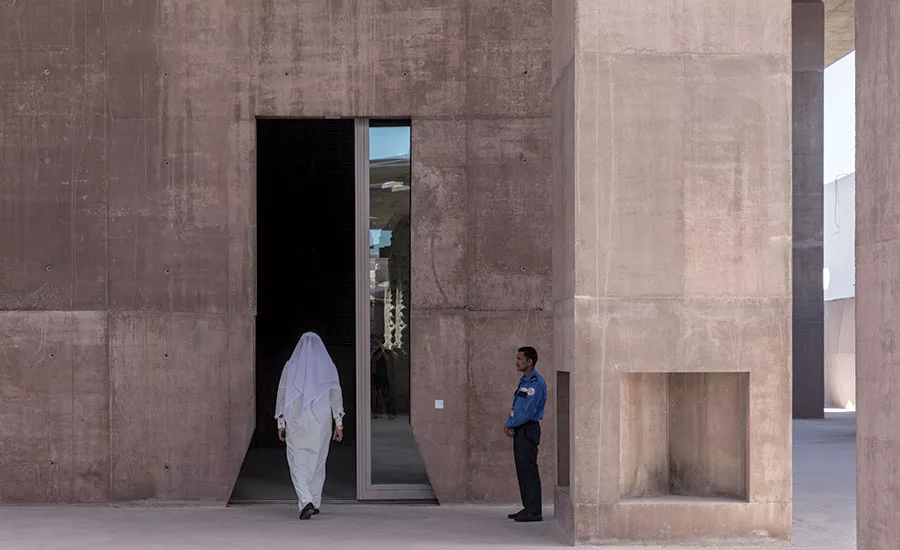
While much of the porous new building is open to the elements, an enclosed area contains space for exhibitions.
Photo © Laurian Ghinitoiu
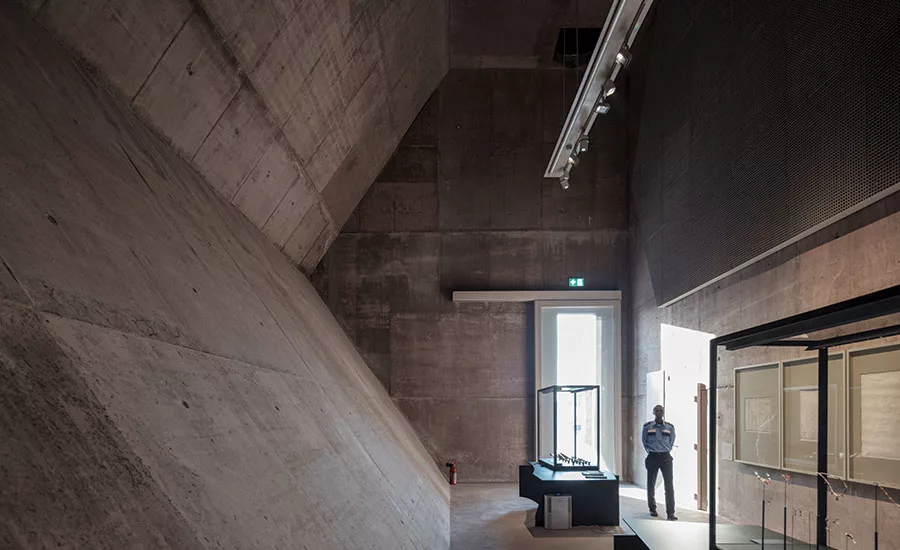
The current show is of pearls from the Mattar jewelry house, Cartier, and the museum archive.
Photo © Laurian Ghinitoiu
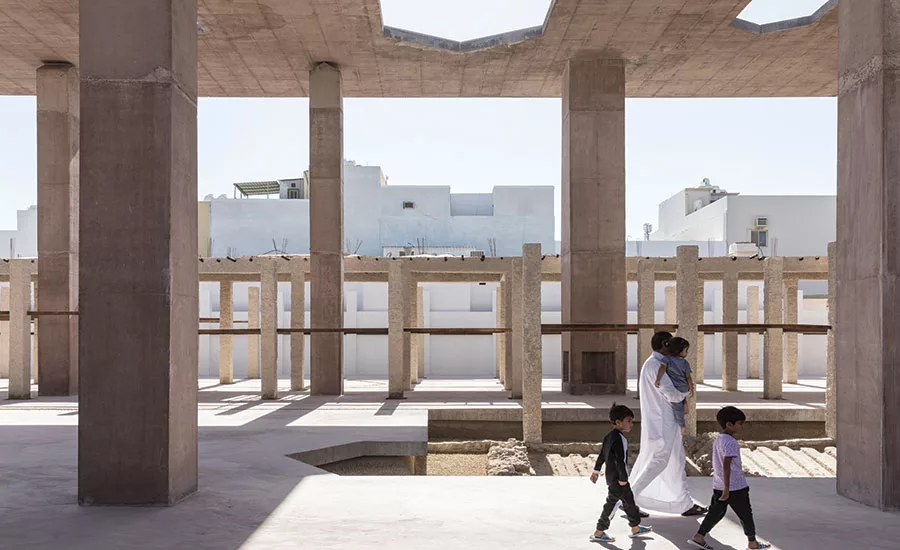
The scale of the new building is far greater than the ruins it houses (shown) and the adjacent buildings in the historic city.
Photo © Laurian Ghinitoiu
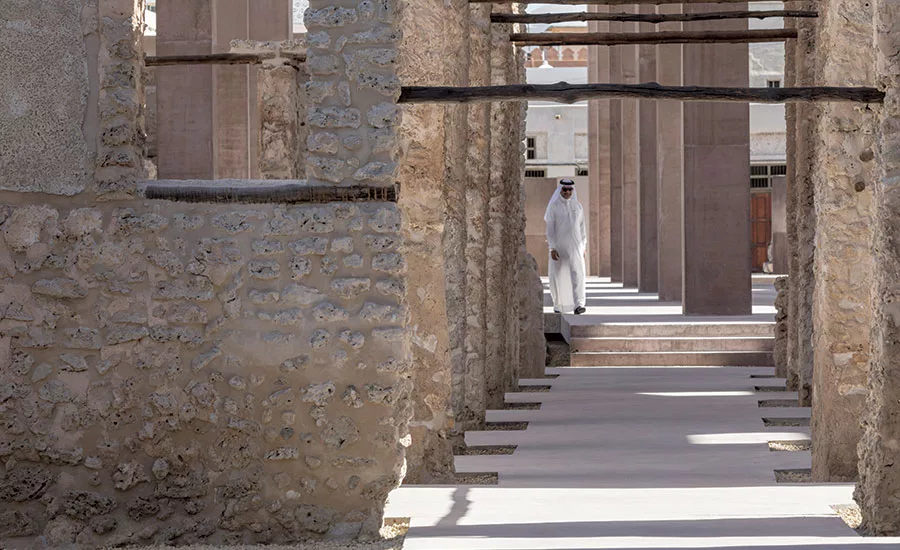
The scale of the new building is far greater than the ruins it houses (shown) and the adjacent buildings in the historic city.
Photo © Laurian Ghinitoiu
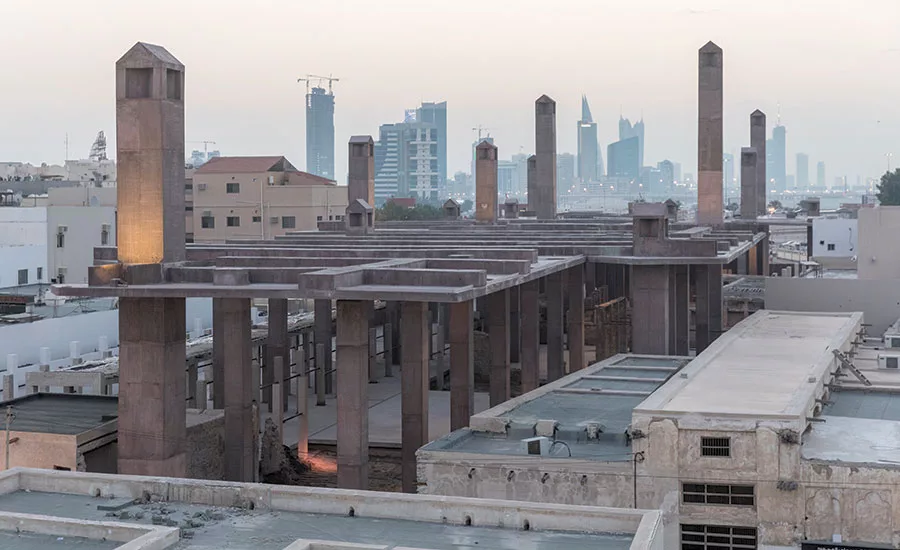
The scale of the new building is far greater than the ruins it houses and the adjacent buildings in the historic city (shown).
Photo © Laurian Ghinitoiu

The wind towers open up at the bottom to allow air flow and to create a ledge for seating.
Photo © Laurian Ghinitoiu
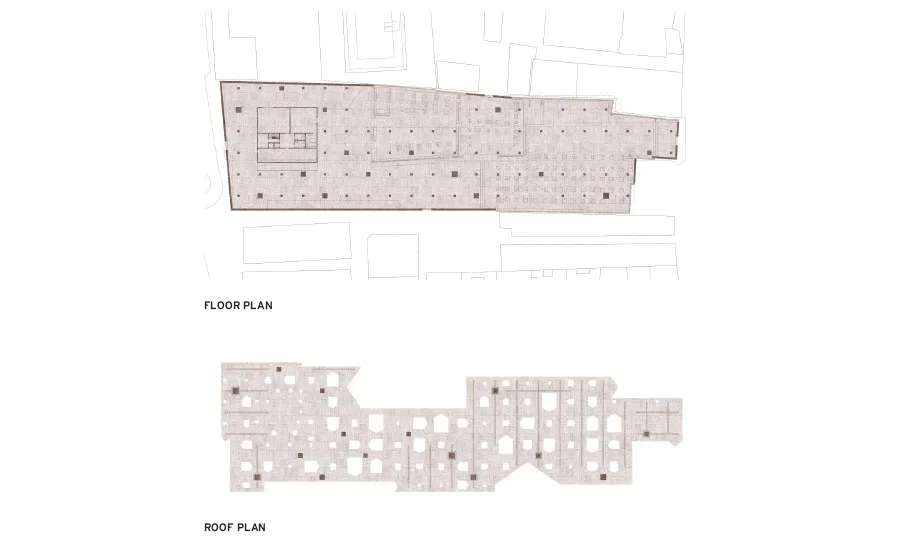
Image courtesy Valerio Olgiati Architect
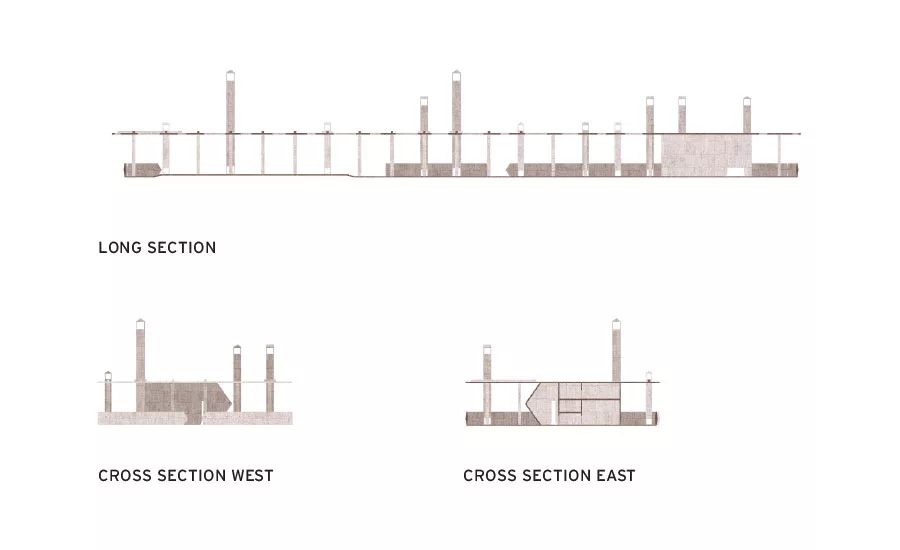
Image courtesy Valerio Olgiati Architect
Architects & Firms
After a frenetic six-month construction schedule, the Pearling Path Visitors Center, designed by Swiss architect Valerio Olgiati, opened to the public in November. It is the largest new construction to date on the UNESCO World Heritage site in Bahrain—an area from the 19th and early 20th centuries tied to the island nation’s pre-oil wealth, defined by the extraction and trade of pearls. The center is part of the Bahrain Authority for Culture and Antiquities’ effort to preserve parts of the historic city of Muharraq while also creating notable works by international architects that has resulted in a steady increase in tourism.
Additional Content:
Jump to credits
In recent years, Olgiati has become a cult figure in architectural circles, known for the technical and conceptual rigor of his built works. His second project outside Europe, the 72,000-square-foot Pearling Path Visitors Center is his most ambitious civic project yet.
As one crosses the bridge from Bahrain’s capital, Manama, into Muharraq, the center’s triangular wind towers loom over their neighbors, signaling arrival in the historic city. The visitors center is a single architectural gesture in concrete, its roof plane lifted by columns over the ruins of a historic structure called an amara—a combination of warehouse, factory, and market. Olgiati describes the project as an act of urban generosity: the nearly 500-foot-long burgundy roof plane provides shade from the Middle Eastern sun while, underneath, a “public foyer” is created within a concrete wall that encircles the site.
To enter, the visitor steps through the gates and under the roof, where the amara dock once existed. The enclosed part of the center houses a small auditorium, café, and exhibition room, but the most dramatic space is the outdoor hypostyle hall, with its fenestrated roof plane. This colonnade of dappled shadow and light covers various parts of the old amara: the storage areas, the madbasas where date honey was made, and the eastern gate through which visitors entered the market.
The roof, cutting and jutting out along the edges of the site, is made porous by the deletion and addition of figures shaped like pitched roofs. The rotation and changing direction of the openings allow the roof to be read not as a plane with a single vector, but as a patchwork of different trajectories. The varied widths of the columns and the moments they pierce through the roof to become wind towers give the roof plane a sense of lightness and movement, as if it had floated down and settled at the top of the triangular ends of the columns.
The building borrows few visual cues from its surroundings—the pitched roof/pyramidal motif is foreign to the Bahraini context but, rather, is part of the architect’s pursuit of a new formal language, evident in other recent works such as his Céline flagship store in Miami (2018) and an office building currently under construction in Basel. As the project architect, Sofia Albrigo, puts it, “The building makes an effort to rid itself of semantic associations.”
Yet the columns and wind towers are more contextual: they read as abstractions of the amara’s repetitive rectilinear structure and as a visual reference to the minarets and wind towers of Muharraq. The wind towers here open at the bottom to allow airflow and create seating, while several of them also conceal pipes for drainage during the rare rainy day. The use of the poured-in-place concrete continues to the floor, which is a 10-inch-thick structural slab that sits around some of the ruins upon 50-foot-long piles.
Given the expedited timeline of the construction, the building is far from the Swiss standard for which Olgiati is renowned, with aggregate, rebar, and staining visible in some parts of the concrete. Olgiati remarked that the poor finish of the concrete gives it an honest local quality, and it is true that the roughness contributes to the monumentality and texture of the building. The reddish pigmented concrete stands in contrast to the largely white, sandy color of the city, as well as to the ruins beneath it. It gives the building a living quality as its hue changes from orange, to yellow-gray, to dark maroon, depending on the quality of light and dust in the air.
The visitors center’s nonreferential forms, its grand scale, and the coarseness of its construction make its architecture seem far more inscrutable, and as a result, far older than the ruins, which are overpowered. While the center and the amara coexist as two distinct entities—a product of Olgiati’s efforts to avoid any heavy-handed attempts at the dramatically contextual or explicitly didactic—the new construction seems largely indifferent to the UNESCO site it houses. Although it is intended to be the first experience in Muharraq before seeing the rest of the sites, the scale of the center is far greater than any other architectural work in the old city. The new building’s monumentality raises the architectural datum of the visitor experience to a height that runs the risk of flattening all subsequent variations in scale experienced in the rest of Muharraq. And although the colonnade of the visitors center is meant to be a gallery for the ruins, the architecture is neither quiet nor neutral: the columns become architectural objects of varying widths, as irregular as the openings in the roof. As a result, the regular bays of the ruins and their smaller scale end up becoming the backdrop for the visitors center rather than the other way around. It’s almost as if the amara is a humble intervention in an ancient monumental architecture.
Construction has continued on the Pearling Path Visitors Center since its soft opening in November, with completion expected this month. But it is already a stunning building and will definitely rank among the finest cultural spaces in the region. As a singular architectural work, the center is a beauty. However, the relationship between the visitors center and the ruins makes one question its success as a part of the Pearling Path master plan. On a cloudy day, when the light is soft and the shadows absent, the visitors center turns a warm brown and slips into the background, allowing the amara to come to the fore. But on most days, Olgiati steals the spotlight.
CreditsArchitect: Valerio Olgiati Architect — Valerio Olgiati, principal; Sofia Albrigo (project manager), Anthony Bonnici
Associate architect: Emaar Engineering
General contractor: Almoayyed Contracting Group |
Looking for a reprint of this article?
From high-res PDFs to custom plaques, order your copy today!