Architectural Record
search
cart
facebook twitter linkedin youtube
  • Sign In
  • Subscribe
  • Sign Out
  • My Account
Architectural Record
  • NEWS
    • Latest News
    • Awards
    • Interviews
    • Obituaries
    • Podcasts
      • Design:Ed Podcast
      • Sponsored Podcasts
  • OPINION
    • Book Reviews / Excerpts
    • Exhibition Reviews
    • Forum
  • EXCLUSIVES
    • Videos
    • Design Vanguard
    • Top 300 Firms
    • Sponsored Content
    • Sponsored eBooks
    • From the Archives
  • CONTINUING ED
    • Editorial Continuing Ed
    • CE Center
    • CE Academies
  • PROJECTS
    • Buildings By Type
    • Reuse & Renovation
    • Museums & Arts Centers
    • Colleges & Universities
    • Multifamily Housing
    • Interiors
    • Lighting
    • Kitchen & Bath
  • HOUSES
    • Record Houses
    • House of the Month
    • Featured Houses
  • PRODUCTS
    • Products by Category
    • Record Products of the Year
    • Latest Products
  • EVENTS
    • Dates & Events
    • Record on the Road
    • Innovation Conference
    • Sustainability in Practice
    • Women In Architecture
    • Webinars
    • Ad Excellence Awards
    • Submit an Event
  • CONNECT
    • Ask RECORD AI
    • Newsletters
    • Contact
    • Advertise
    • Editorial Calendar
    • Store
    • Customer Service
  • SUBMIT
    • Submission Guidelines
    • RECORD Competitions
  • MAGAZINE
    • Subscribe
    • My Account
    • Digital Edition
    • Current Issue
    • Firm Pass
    • Historic Archive
Architecture NewsClimate Change & SustainabilityCommentary & CriticismOpinion

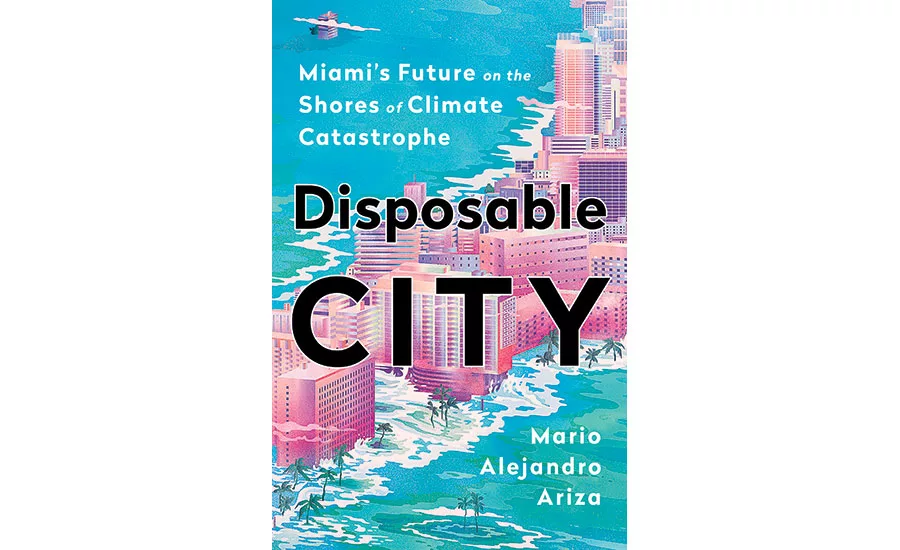
Review of 'Disposable City: Miami’s Future on the Shores of Climate Catastrophe'

By Mario Alejandro Ariza
By Terence Riley
Disposable City: Miami’s Future on the Shores of Climate Catastrophe

Disposable City: Miami’s Future on the Shores of Climate Catastrophe, by Mario Alejandro Ariza. Perseus Books, 320 pages, $17.99.

September 7, 2020

Mario Alejandro Ariza’s Disposable City is an extremely well-researched book on the future of Miami and South Florida in the face of the climate crisis and rising seas—scanning his footnotes alone is daunting. For those of us who live here, it’s also distressing reading—each year over the coming decades will result not only in diminished coastal territory but inland inundations as well. Decades away might sound distant, but American real-estate finance is based on 30-year mortgages. This has been vague in Floridians’ minds, but Ariza rules out any possible haziness about the future.

READ MORE ABOUT

• Book Reviews

• Climate Change

It’s hard to imagine a major federal intervention at this moment; Florida would have to convince Congress that its environmental issues supersede many others. The city of Venice, Italy, comes to mind: its frequent flooding has prompted calls for the national government to take action for decades, but progress has been excruciatingly slow. In my opinion, one contentious but helpful strategy in Florida would be to rethink regulations that govern the built environment and let property owners pursue individual solutions. To do that, three official documents need radical alteration.

Miami 21, the city’s current zoning code, was adopted in 2009, on the cusp of local environmental awareness. There is no mention of sea-level rise and no provision for rezoning higher density to higher ground. Ironically, the higher elevations are home to some of the poorest neighborhoods, such as Little Haiti and Liberty City (location of the Oscar-award-winning Moonlight). The city should quickly redesignate the most sustainable areas for new development, but also protect the interests of local property owners—a challenging proposition.

The second document is the City of Miami’s Preservation Ordinance, which aims to accomplish “the protection, enhancement, perpetuation, and use of  ” Miami’s built and natural landmarks. Preservation departments, however, do not focus solely on perpetuating individual buildings but entire neighborhoods, a difficult goal. I’d suggest creating a commission to consider, on a citywide basis, the challenges of protecting landmarks in an era of sea-level rise.

Before the destruction of Hurricane Andrew in 1992, Florida’s municipalities had their own building codes; 10 years later, the state adopted the Florida Building Code “based on national model building codes and consensus standards which are amended where necessary for Florida’s specific needs.” But the current version does not address “specific needs” such as sea-level rise. Instead, a whole chapter addresses snow loading on roofs. Moreover, the code principally deals with standard types of construction: high-rise condos and single-family homes. It lacks critical imagination in terms of what may be new solutions to elevated-water conditions: Floating buildings? Buildings over expressways? Canals as infrastructure?

Each of these three documents took years to negotiate; revisions to address Florida’s impending crisis need to be expedited. Hopefully, Ariza’s work will serve as a clarion call for timely action.

Looking for quick answers on architecture and design topics?
Try Ask RECORD, our new smart AI search tool.
Ask RECORD →

KEYWORDS: Book Reviews / Excerpts Florida Miami resiliency

Share This Story

Looking for a reprint of this article?
From high-res PDFs to custom plaques, order your copy today!

Terence Riley is a Miami-based architect and former museum director.

Post a comment to this article

Report Abusive Comment

Subscription Center
  • Create an Account
  • Start a Subscription
  • Manage My Account
  • Sign Up for Newsletters
  • Visit Customer Service
  • Update Preferences

More Videos

Sponsored Content

Sponsored Content is a special paid section where industry companies provide high quality, objective, non-commercial content around topics of interest to the Architectural Record audience. All Sponsored Content is supplied by the advertising company and any opinions expressed in this article are those of the author and not necessarily reflect the views of Architectural Record or its parent company, BNP Media. Interested in participating in our Sponsored Content section? Contact your local rep!

close
  • TAMLYN XtremeTrim Exterior Trim
    Sponsored byTamlyn

    Designing Cleaner Panel Facades: Why Exterior Trim Details Matter

  • Building with Vapor Barriers
    Sponsored byReef Industries, Inc.

    Vapor Barriers Help Control Moisture in Tighter Building Designs

  • Duct Interior with Prodeq System
    Sponsored byHenry, a Carlisle Company

    Designing Resilient Water Containment Systems

DESIGN:ED Podcast
Listen to Architectural Record’s DESIGN:ED Podcast

Events

June 10, 2026

Rethinking Stormwater – The Power of Porous Paving

Credits: 1 AIA LU/HSW; 1 AIBD P-CE; 0.1 ICC CEU

Learn how porous paving systems support stormwater management, reduce heat island effects, and enhance sustainable site design performance.

June 11, 2026

Very Early Warning Fire Detection for Mission-Critical Facilities

Credits: 1 AIA LU/HSW; 1 AIBD P-CE; 0.1 ICC CEU

Examine advanced fire detection strategies that support uptime and enhance safety in data centers and other mission-critical facilities.

View All Submit An Event

Products

2026 Architect's Square Foot Costbook

2026 Architect's Square Foot Costbook

See More Products

Popular Stories

Coronado Bridge

The Architect’s Guide to San Diego

Practice Matters illustration

What’s in a (Firm’s) Name? Thinking About Succession and Legacy

Practice Matters illustration

By the Numbers: Counting America's Architects

Inward House

Inward House by VeeV Design Studio

Riverdale House by Studio Lau

Riverdale House by Studio Lau

Broader Sustainability of CMU - Free Webinar - May 21, 2026

Related Articles

  • The Shenzhen Experiment

    Review of 'The Shenzhen Experiment: The Story of China's Instant City'

    See More
  • The Agile City: Building, Well-Being, and Wealth in an Era of Climate Change

    See More
  • City on the Hill

    Review of 'City on a Hill: Urban Idealism in America from the Puritans to the Present'

    See More

Related Products

See More Products
  • 1118522532.gif

    Future Details of Architecture

  • reuse.jpg

    Resource Salvation: The Architecture of Reuse

See More Products
×

The latest news and information

#1 Source for Architectural Design, News and Products

SUBSCRIBE
  • RESOURCES
    • Advertise
    • Contact Us
    • Submit
    • Store
  • ACCOUNT CENTER
    • Create an Account
    • Start a Subscription
    • Manage My Account
    • Sign Up for Newsletters
    • Visit Customer Service
    • Update Preferences
  • PRIVACY
    • PRIVACY POLICY
    • TERMS & CONDITIONS
    • DO NOT SELL MY PERSONAL INFORMATION
    • PRIVACY REQUEST
    • ACCESSIBILITY
  • SERVICES
    • Marketing Services
    • Reprints
    • Market Research
    • List Rental
    • Survey/Respondent Access
  • STAY CONNECTED
    • Linkedin
    • Facebook
    • Instagram
    • YouTube
    • X (Twitter)

Copyright ©2026. All Rights Reserved BNP Media, Inc. and BNP Media II, LLC.

Design, CMS, Hosting & Web Development :: ePublishing