Andrés Jaque Takes an Unconventional Approach to Design and Construction at Madrid's Colegio Reggio
Spain
Architects & Firms
“When you dream with other people, you go so much further!” laughs Eva Martín, principal of the Colegio Reggio in Madrid. “It’s far better than what you could have imagined alone,” she says of the four-year “journey” she and the teachers and parents undertook to build their school with New York/Madrid-based Office for Political Innovation (OFFPOLINN)—the architecture firm founded by Andrés Jaque, the new dean of Columbia University’s Graduate School of Architecture, Planning and Preservation. Iberian pioneers of the Reggio Emilia alternative-education approach, Martín and company opened Spain’s first Reggio school in 2009, in rented accommodations, but eventually needed a purpose-built home to comply with government regulations. There was more to it than mere bureaucracy, though, since the Reggio method sees the environment as the “third teacher,” alongside adults—parents and professional educators—and other children (the impact of the social group in learning). The building in which schooling takes place is therefore of prime importance.
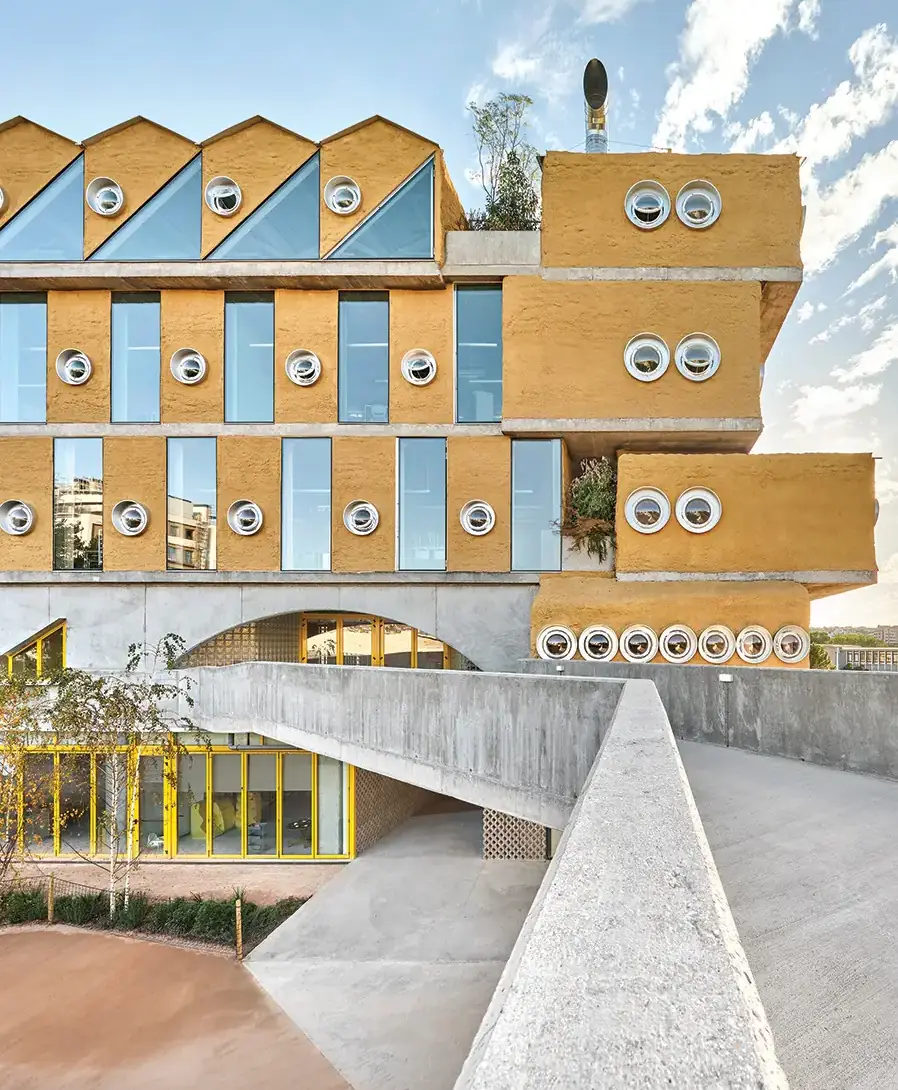
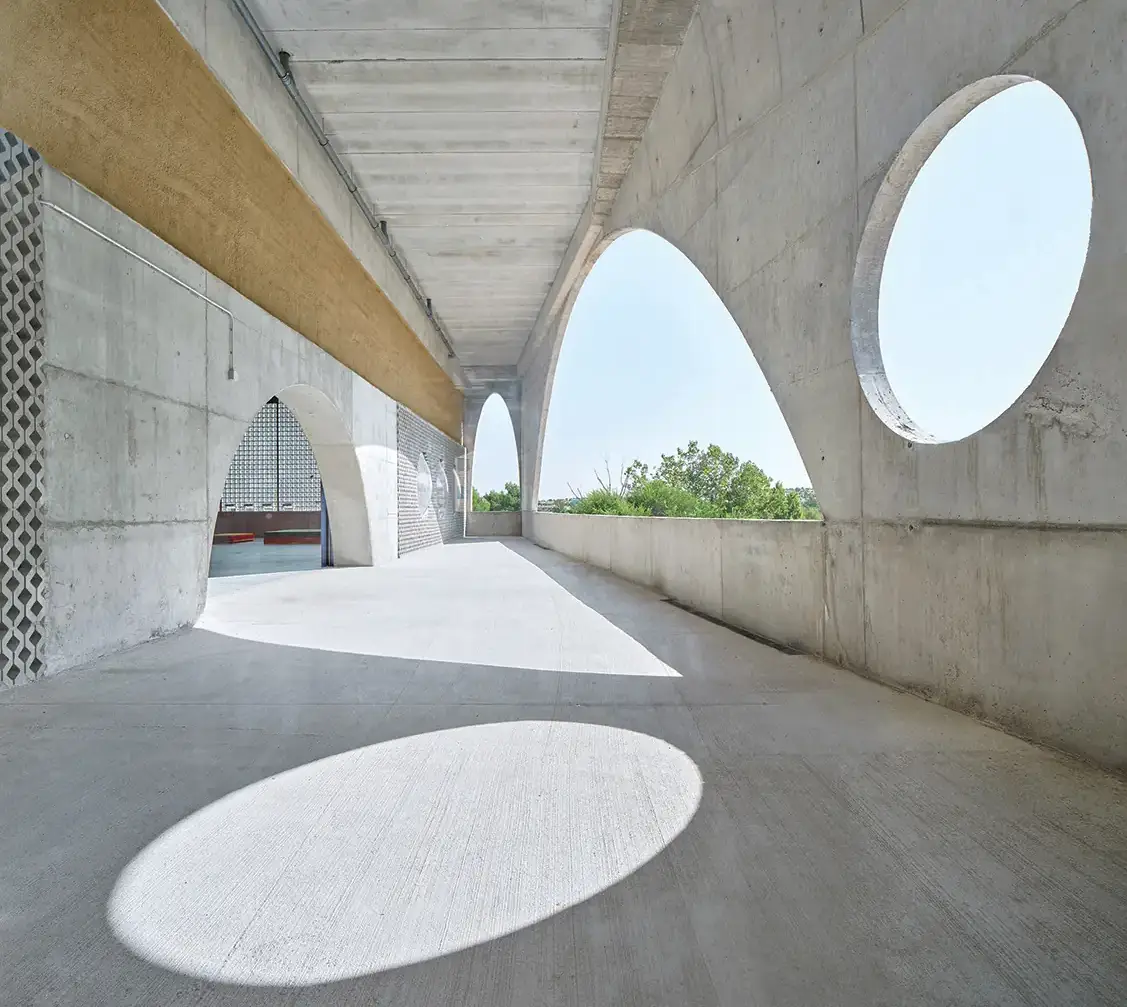
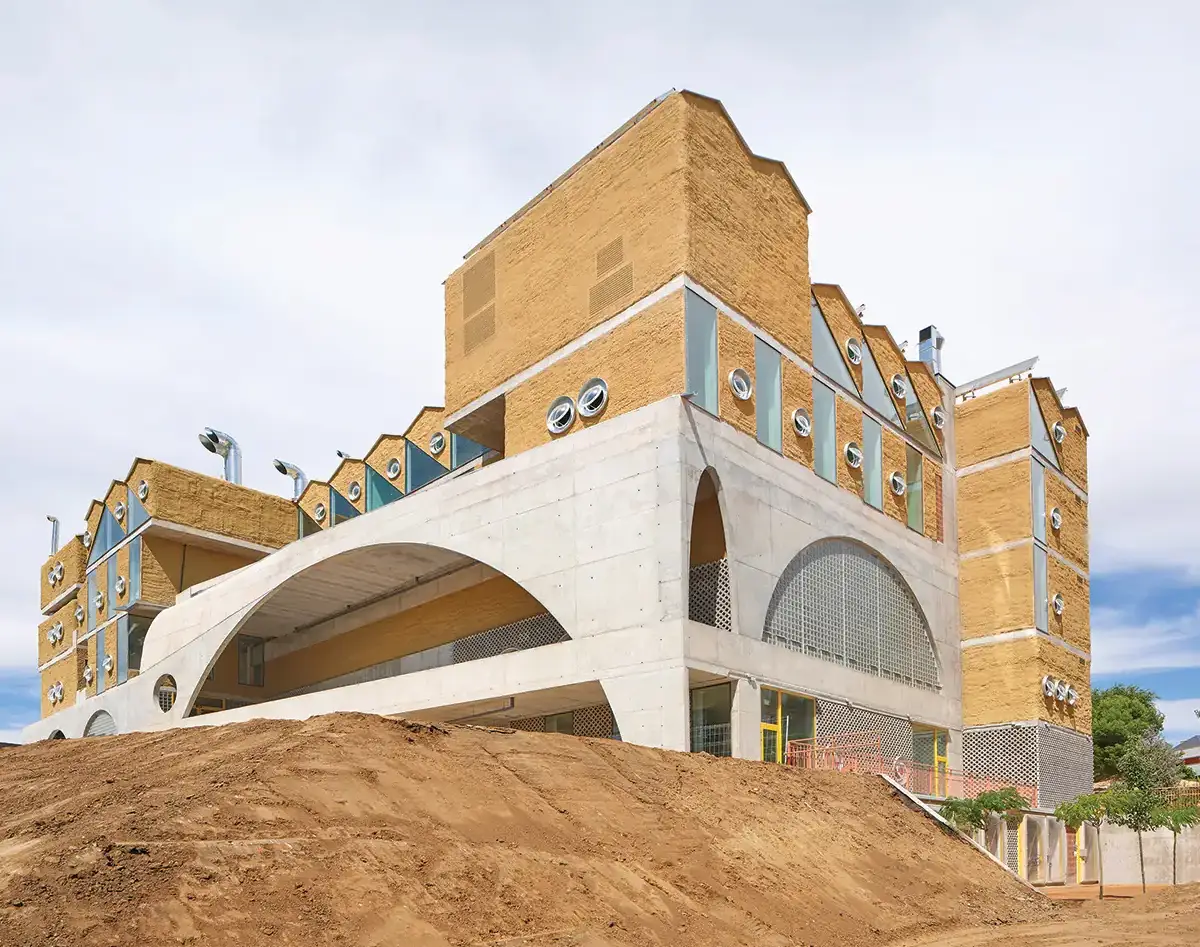
Since the colegio is funded privately by a group of Reggio devotees, money was tight. Eleven miles north of central Madrid, where land is cheaper, the modest rectangular site, adrift in a middle-class suburban jumble, is linked to the street by a long, narrow driveway. “School buildings are often low-lying, spread-out affairs,” says Jaque, “but that wouldn’t have been efficient or cost-effective” in the context of the $9.1 million construction budget. Instead the colegio takes the form of a compact five-story block, with playgrounds in simple rammed earth out front and back. “One thing we liked about the location is its proximity to a network of parks running up the Castellana, Madrid’s main north–south axis,” says Jaque. This is partly what prompted OFFPOLINN to locate the school’s main entrance and “public” spaces—the library and the double-height sports/assembly hall—on level two, in what they describe as a piano nobile. Inspired by Veneto villas, this elevated floor looks out over the trees, connecting the viewer to the wider ecosystem. As in a castle, the main entrance is gained via a footbridge (the land slopes down from the street), and, in keeping with the idea of nobility, this part of the building, in concrete, is perched high on pilotis, and engineered as thinly as possible, thanks to an impressive series of structural arches that, Jaque says, reduced the need for steel reinforcement.
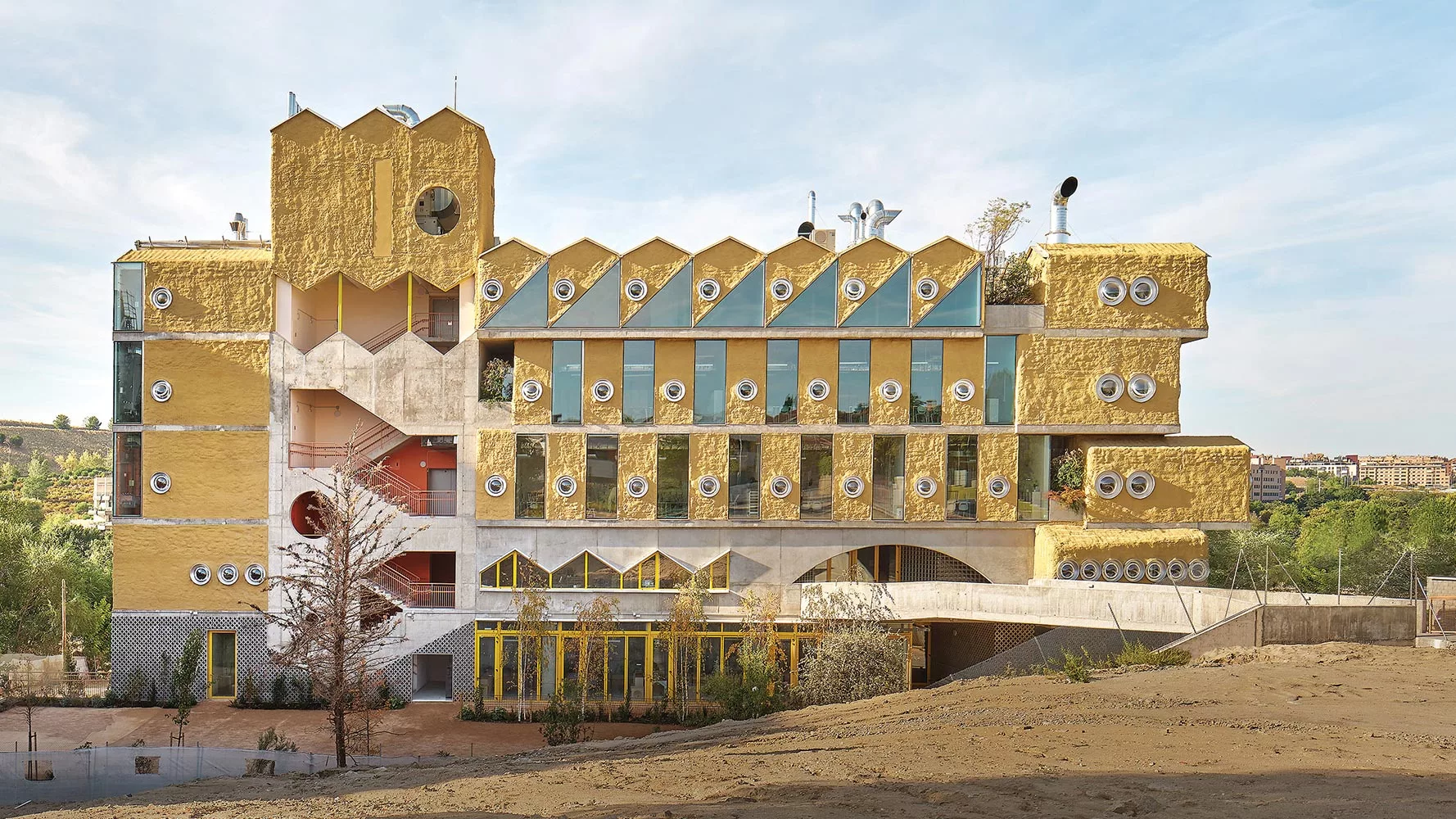
Yellow cork insulation is sprayed onto the external envelope. Polycarbonate bubble porthole windows add to the building’s unconventional appearance. Photo © José Hevia
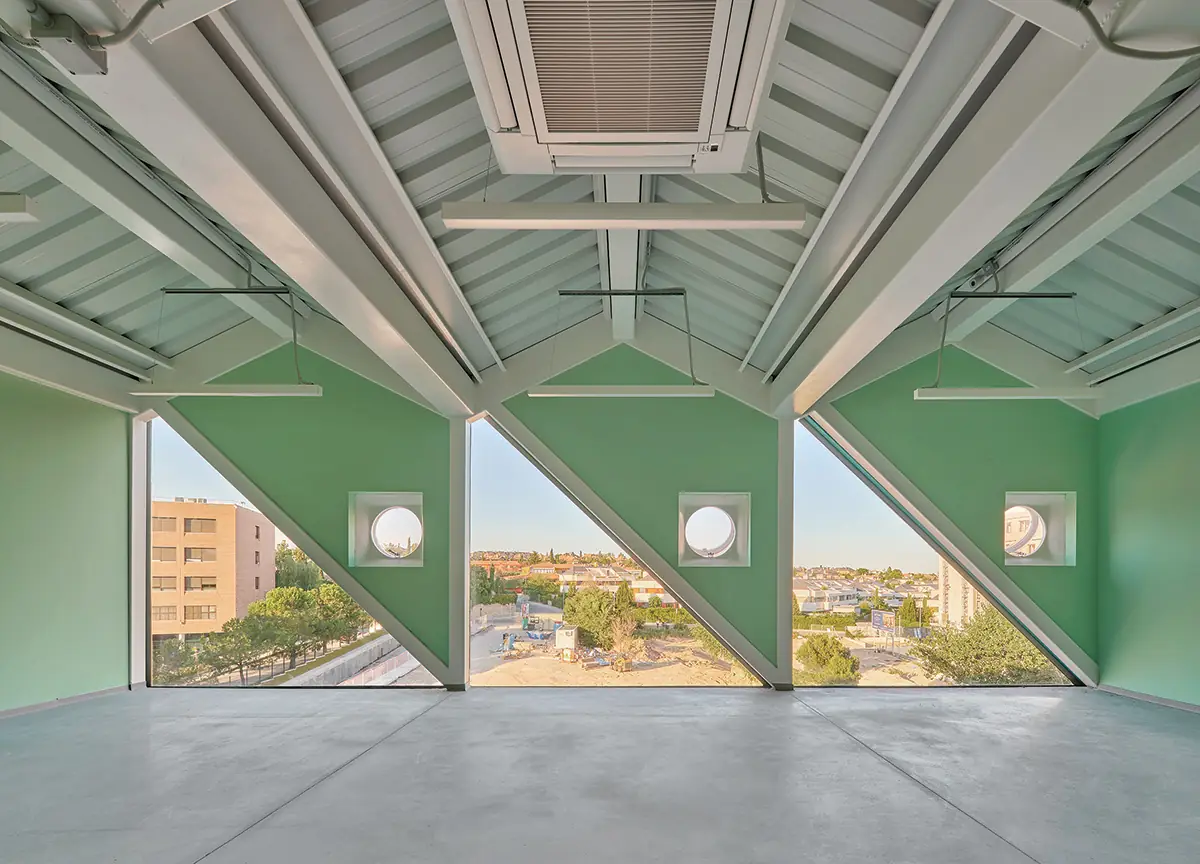
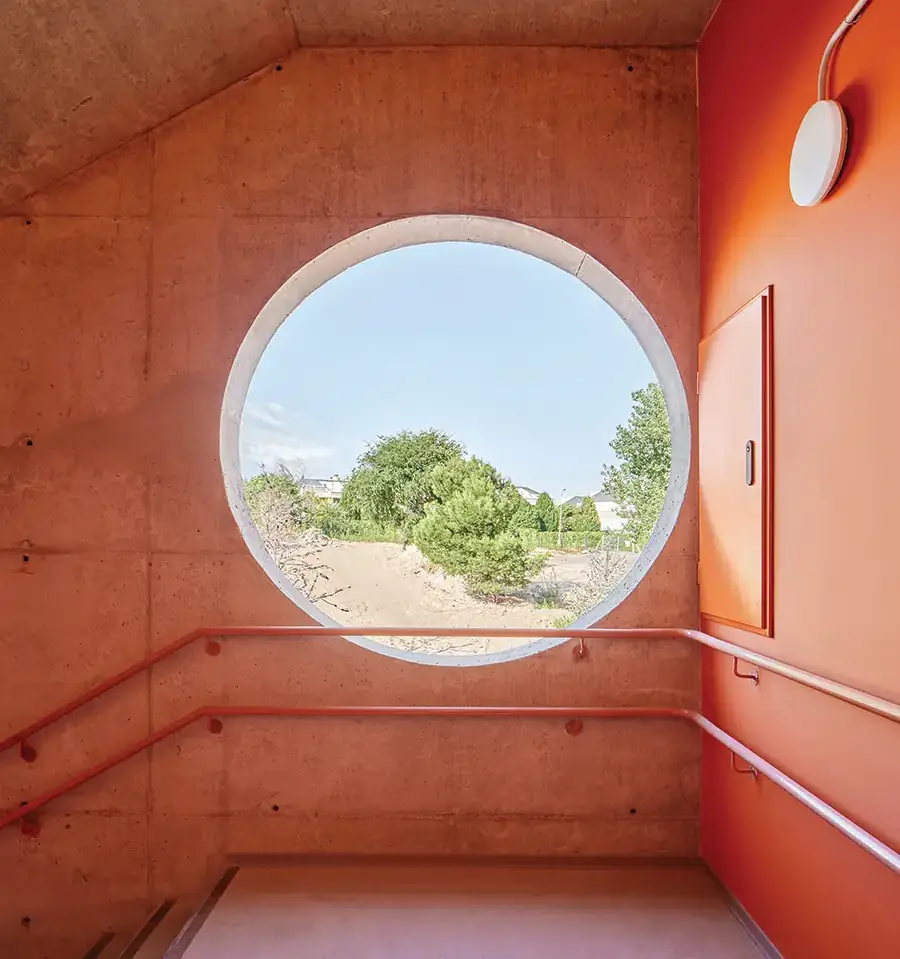
Again in the interests of economy, the envelope is in lightweight perforated brick, while the upper levels are constructed from a steel frame with thin concrete floor slabs, some parts taking the form of what the architects term casitas—“little houses”—intended to bring a village feel to these areas of the school. Generous glazing panels allow abundant light into the building, while natural ventilation is provided via countless polycarbonate bubble portholes that contribute to the colegio’s distinctly eccentric appearance. “We wanted the children to adopt it like a pet,” says Jaque, “a sort of Hello Kitty look.” For 9-year-old Nuria, quoted on the Colegio Reggio’s Facebook page, her school “looks like a robot made of butter,” a reference to the yellow cork insulation sprayed in several layers onto the external envelope over the brick. Developed by OFFPOLINN, this sustainable technique encourages biodiversity, since it is intended to weather like the tree bark it once was, gathering moss, lichen, and other forms of non-human life. Likewise, tiny recessed gardens set into the school’s facades are intended to attract birds, butterflies, and bats, increasing the building’s “third teacher” potential.
1
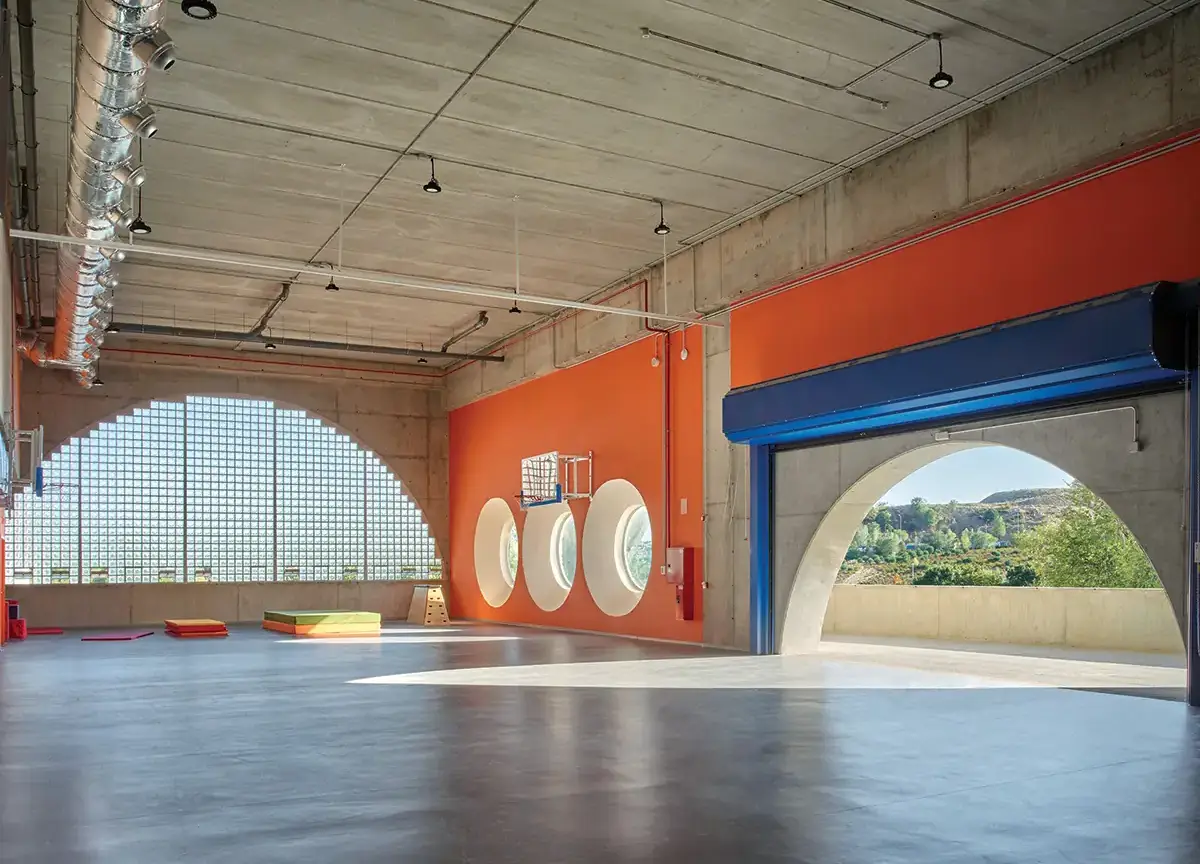
The building features a series of structural arches and triangular cutouts in the envelope (1 - 3). Photos © José Hevia, click to enlarge.
2
3
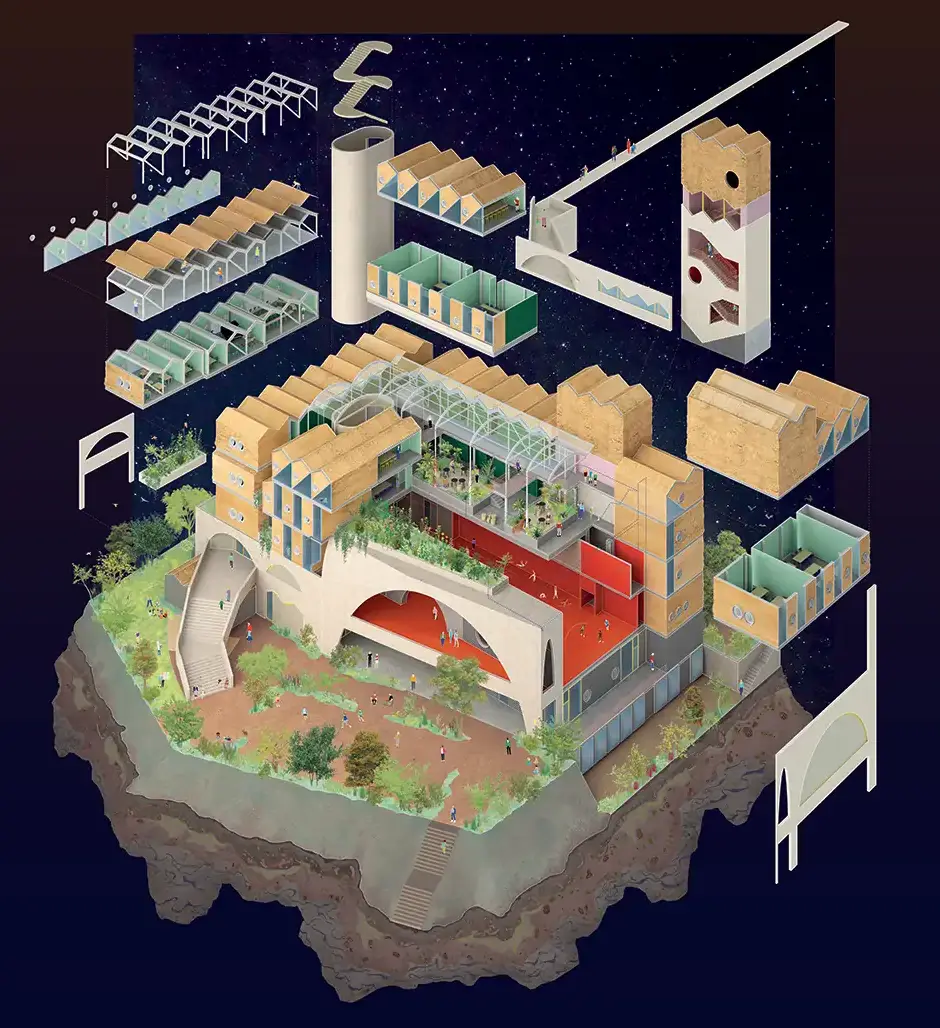
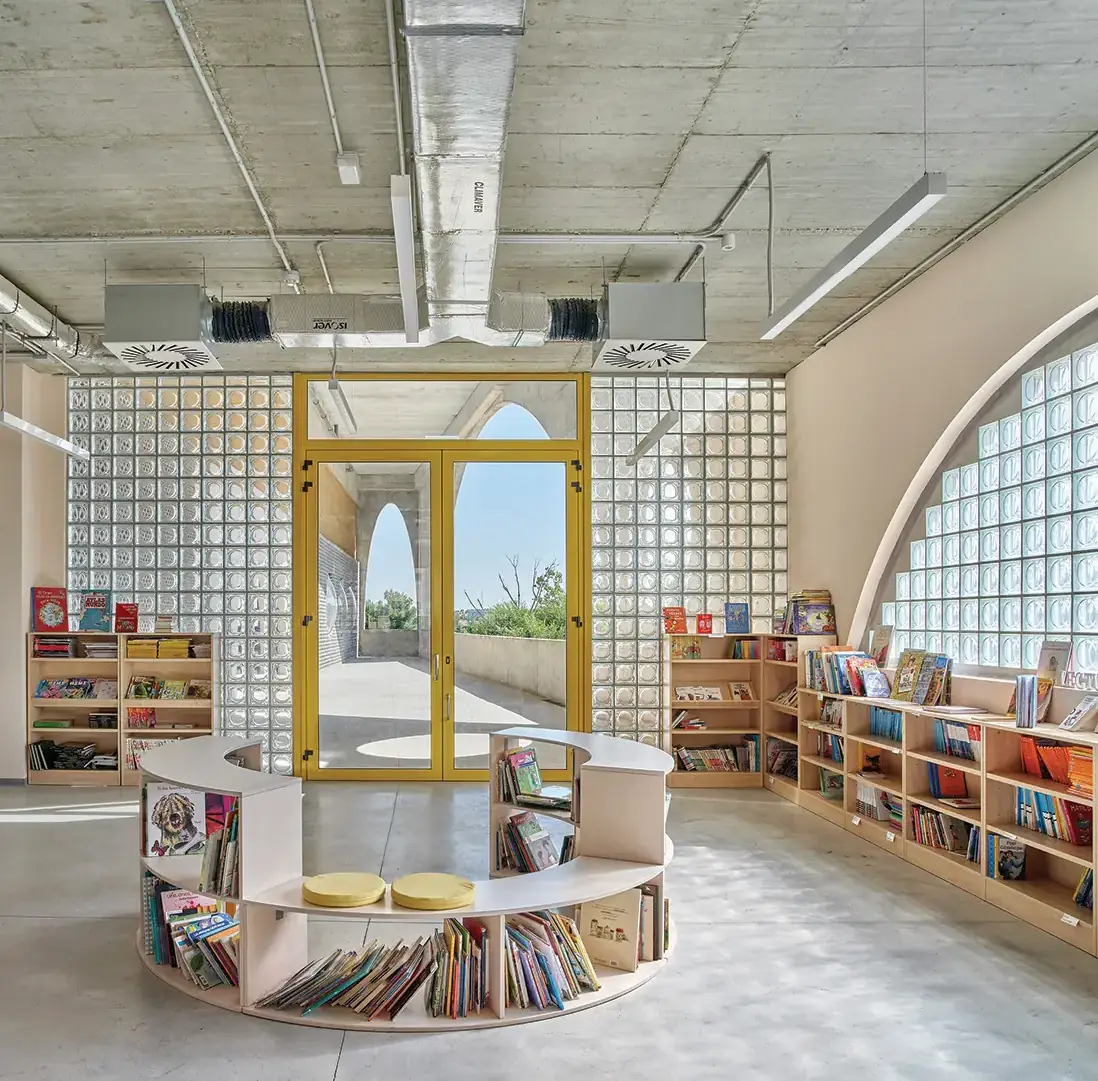
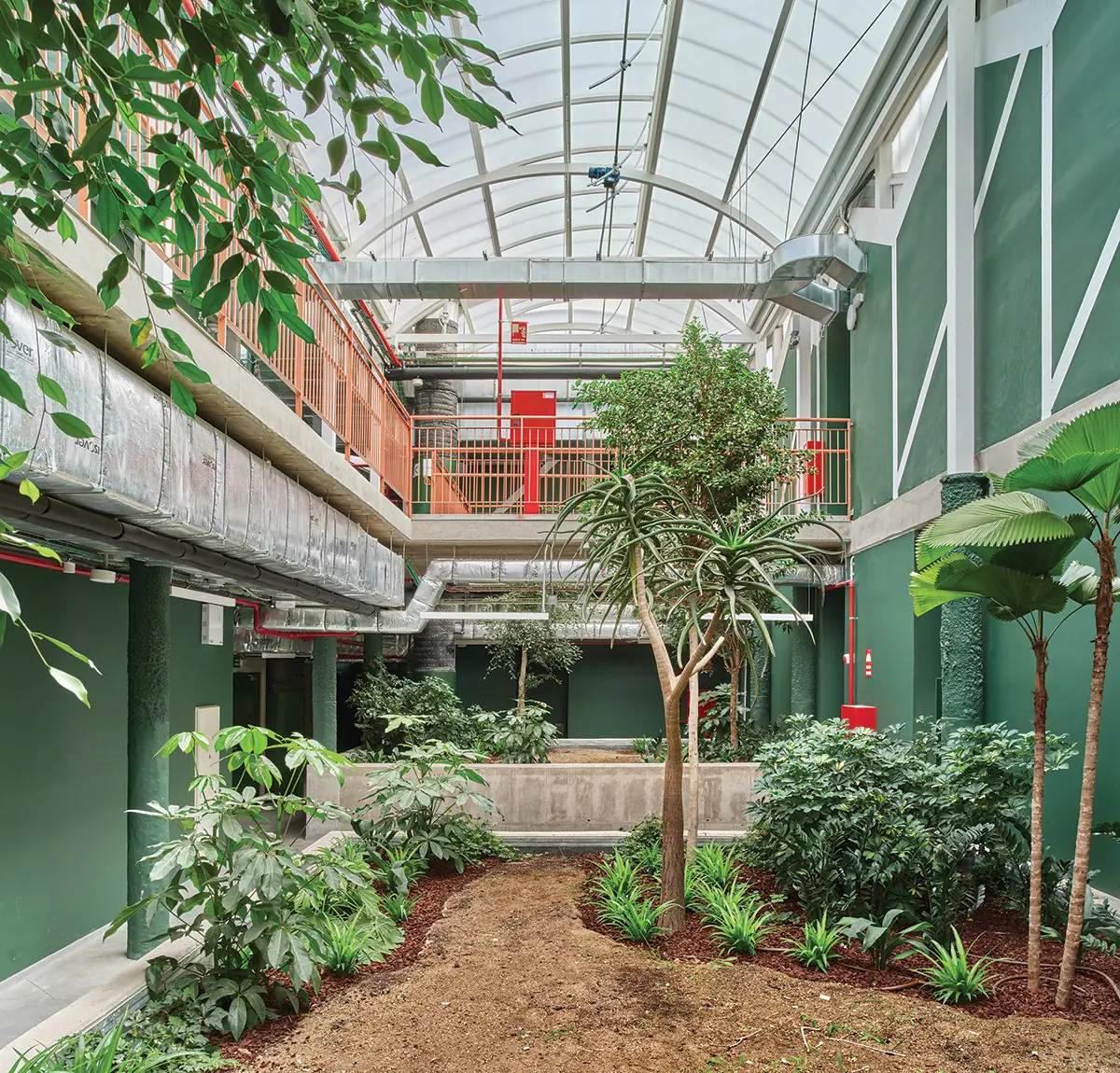
“Children come here as babies and leave when they’re 17 or 18. We felt they should go on a journey as they progress through the school,” says Jaque of the decision to organize the building in strata according to age. The youngest pupils are on the ground floor, their classrooms opening on to the front playground and also the dining room (since toddlers’ parents often spend time with them at the school, they can use the dining room as a workplace). On level two, the library opens on a terrace from which the rear playground can be reached via a concrete stair—“We wanted to allow outdoor reading, but also to be inclusive, with a recreation space for bookish children who aren’t so into games,” explains Jaque—while the sports/assembly hall enjoys a generous open-air loggia. Middle-school children occupy part of level two and all of level three, while the oldest are up top, their two floors organized around a double-height tree-filled atrium, realized using “agricultural infrastructure that we optimized in a Lacaton & Vassal kind of way,” says Jaque. Looking out toward the towers of Madrid’s business district on level five, three interconnecting laboratories—chemistry, physics, and biology—symbolically place senior students in the wider context of science, economics, society, and the world at large.
4
5
The five-story stack is arranged around children’s ages (4 & 5). Photo © José Hevia
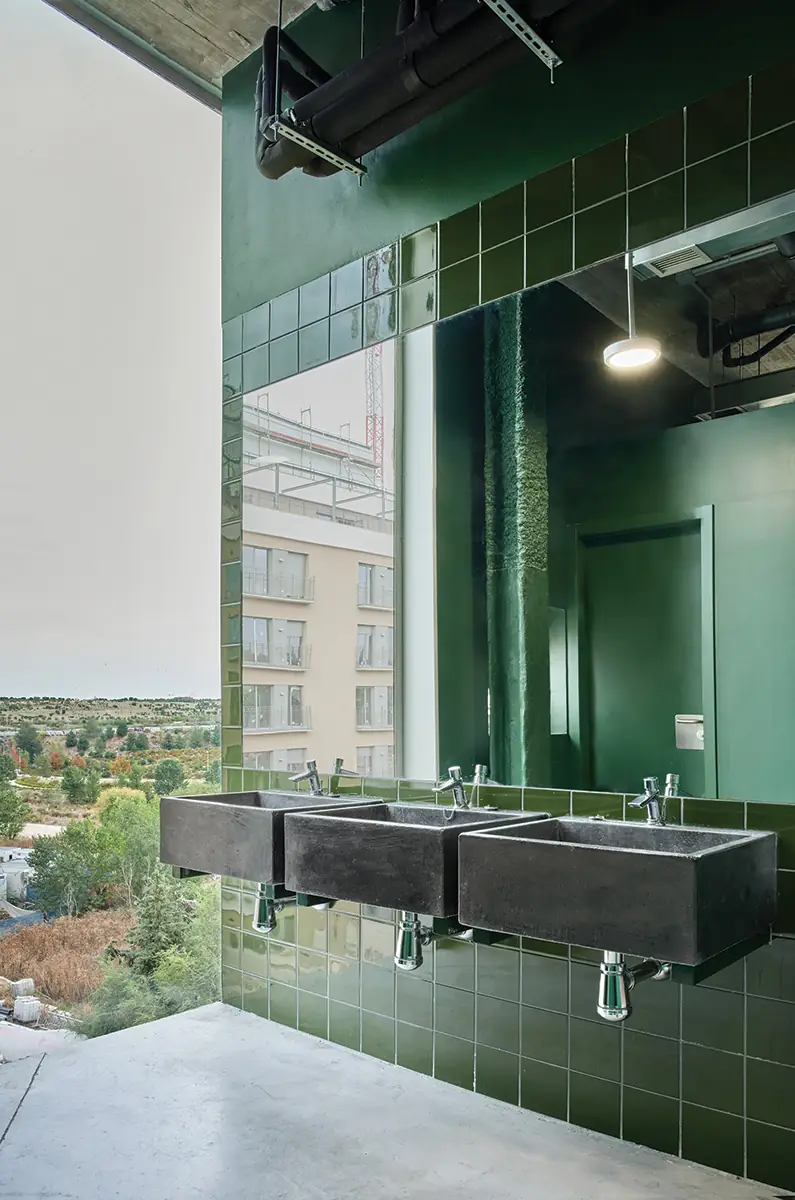
Inside, structure, wiring, and mechanical heating and ventilation systems (there is no air-conditioning) are entirely exposed. “One reason we left everything naked was the limited budget,” explains Jaque. “But we also wanted an unfinished building that would be perceived as living and would evolve. Then there were the science teachers, who felt the innards that are usually hidden would make for a good teaching aid.” If the school looks like an anthropomorphic factory, it’s no accident, for besides studying monasteries, Palladian villas, and James Stirling’s Oxbridge colleges, OFFPOLINN also had Japanese Metabolism and Alejandro de la Sota’s airy, luminous Clesa dairy plant in mind. Inside, with all the ducting revealed, this biological-industrial image is yet further reinforced. While these days we’re used to exposed technics à la Centre Pompidou, architects usually seek to aestheticize them; here, however, where ceilings groan with ducts, piping snakes everywhere, and lumpy fireproofed columns block the way, the result is sometimes ugly, and even oppressive in certain circulation areas. Though it’s clearly deliberate—an informal aesthetic of raw truth whose unintimidating mess can stand whatever is thrown at it—one wonders what design lessons children will take away. Anything goes? A reactionary retreat into hyper-minimalism?
6
Throughout the building, piping and ductwork is exposed. As a counterpoint, the spaces have abundant daylight and lots of color and plantings (6 - 9). Photos © José Hevia
7
8
9
At any rate, the way this late-Modernist cliché has been made to feel radical again demonstrates how, in keeping with OFFPOLINN’s name, building the Colegio Reggio was a fundamentally political act. “Education in Spain has traditionally been the preserve of the Catholic Church,” explains Jaque, “which used it as a means for social control. The Spanish Civil War was partly about that.” With democracy, he says, nothing changed: rather than constructing a public education system, the government funded private schools, leaving the Catholic hegemony intact. “The Reggio system offers an alternative,” he continues, “a nonreligious education that encourages social innovation and seeks to develop children’s personal capacities and identities, giving them the agency to define their place in society.” For Martín, who remembers being hit by the nuns at her all-girls’ school, it’s about doing “what’s best for the children and not for the adults” to produce well-adjusted members of society. It will be 15 years before the youngest children complete their entire schooling in this jolly “Willy Wonka” building, and only then will we know how this utopian experiment has turned out.
Credits
Architect:
Office for Political Innovation — Andrés Jaque, principal; Roberto González García, Luis González Cabrera, Alberto Heras, Ismael Medina Manzano, Jesús Meseguer Cortés, Paola Pardo-Castillo, Rajvi Anandpara, Juan David Barreto, Inês Barros, Ludovica Battista, Shubhankar Bhajekar, Elise Durand, Drishti Gandhi, Maria Karagianni, Bansi Mehta, Alessandro Peja, Meeerati Rana, Mishti Shah, Saumil Shanghavi, design team
Architect of Record:
ADAMA Arquitectos Técnicos — Ángel David Moreno Casero
Engineers:
Qube Ingeniería de Estructuras (structural); JG Ingenieros (m/e/p)
Consultants:
Mingobasarrate (soil and ecology); Dirtec Arquitectos Técnicos (survey)
Client:
Colegio Reggio
Size:
72,150 square feet
Cost:
$9.1 million
Completion Date:
October 2022
Looking for quick answers on architecture and design topics?
Try Ask RECORD, our new smart AI search tool.
Ask RECORD →
Looking for a reprint of this article?
From high-res PDFs to custom plaques, order your copy today!