Continuing Education: Decarbonizing Concrete—The Ubiquitous Material Gets a Climate Friendly Makeover
Concrete is wonderfully versatile. It is durable, resilient, and relatively inexpensive. It can be used to create utilitarian infrastructure as well as expressive sculptural forms that range from the minimal to the muscular. And it has a long track record—concrete has been around in some form since before the Romans. Given all these attributes, it is easy to believe the often-cited assertion that concrete is the most widely used substance on earth after water.
However, this ubiquitous material has a carbon problem. According to some estimates, concrete is responsible for 11 percent of global CO2 emissions. The main culprit? Cement, the “glue” that binds all of concrete’s ingredients together. Even though it makes up only 10 to 15 percent of the finished material by volume, cement is the primary contributor to concrete’s environmental footprint, due to its manufacturing method: raw materials, consisting chiefly of crushed limestone, are heated in a kiln to about 2,700 degrees Fahrenheit, causing the kiln’s contents to react and partially fuse. This chemical reaction, known as calcination, produces a rock-like substance called clinker, which is then ground to produce cement. The energy required to maintain the kiln at the required temperatures naturally generates carbon, but so too does the calcination process itself, which releases CO2 and is responsible for about 60 percent of the emissions of cement. This means that the most significant component of concrete’s carbon footprint is impossible to avoid unless the need for cement or clinker is reduced or eliminated.
The good news is that there are already some well-established strategies for reducing the proportion of cement in concrete. Contractors have long used so-called supplementary cementitious materials (SCMs) to replace some amount of cement in a typical concrete mix. Among the most common are fly ash and ground granulated blast-furnace slag, both waste products of other industrial processes, fly ash of coal combustion—usually at power plants—and slag of iron smelting. But fly ash is increasingly hard to come by as coal-fired power plants shutter, while the supply of slag is also variable, since in the U.S. it is mostly imported, points out New York–based Amanda Kaminsky, director of sustainable construction for the Americas at developer Lendlease and a former principal of Building Product Ecosystems, a public-private partnership focused on material circularity. Now ground-glass pozzolan (GGP)—sourced from post-consumer bottles and jars that might otherwise go to the landfill—is gaining some traction, since ASTM (American Society for Testing and Materials) standards on its use in concrete were published in 2020. GGP “scratches a few itches, both on the construction-supply chain side and on the municipal-recycling side,” Kaminsky says. Lendlease is using the product on an 800-unit housing complex designed by architecture firm Marvel, now under construction in Brooklyn.
Rather than replace cement, other strategies for reducing concrete’s environmental impact aim to use the material as CO2 storage, including the one commercialized by Halifax, Nova Scotia–based CarbonCure Technologies. Its process, which the company licenses to concrete producers, injects waste CO2 from industrial gas suppliers into raw concrete, where it chemically bonds with cement and creates calcium carbonate (commonly known as limestone), increasing the mix’s compressive strength and thereby reducing the total amount of cement needed. On average, the technique cuts CO2 by 25 pounds per cubic yard of concrete, according to CarbonCure. To date, the company has licensed its technology to more than 700 customers in more than 30 countries.
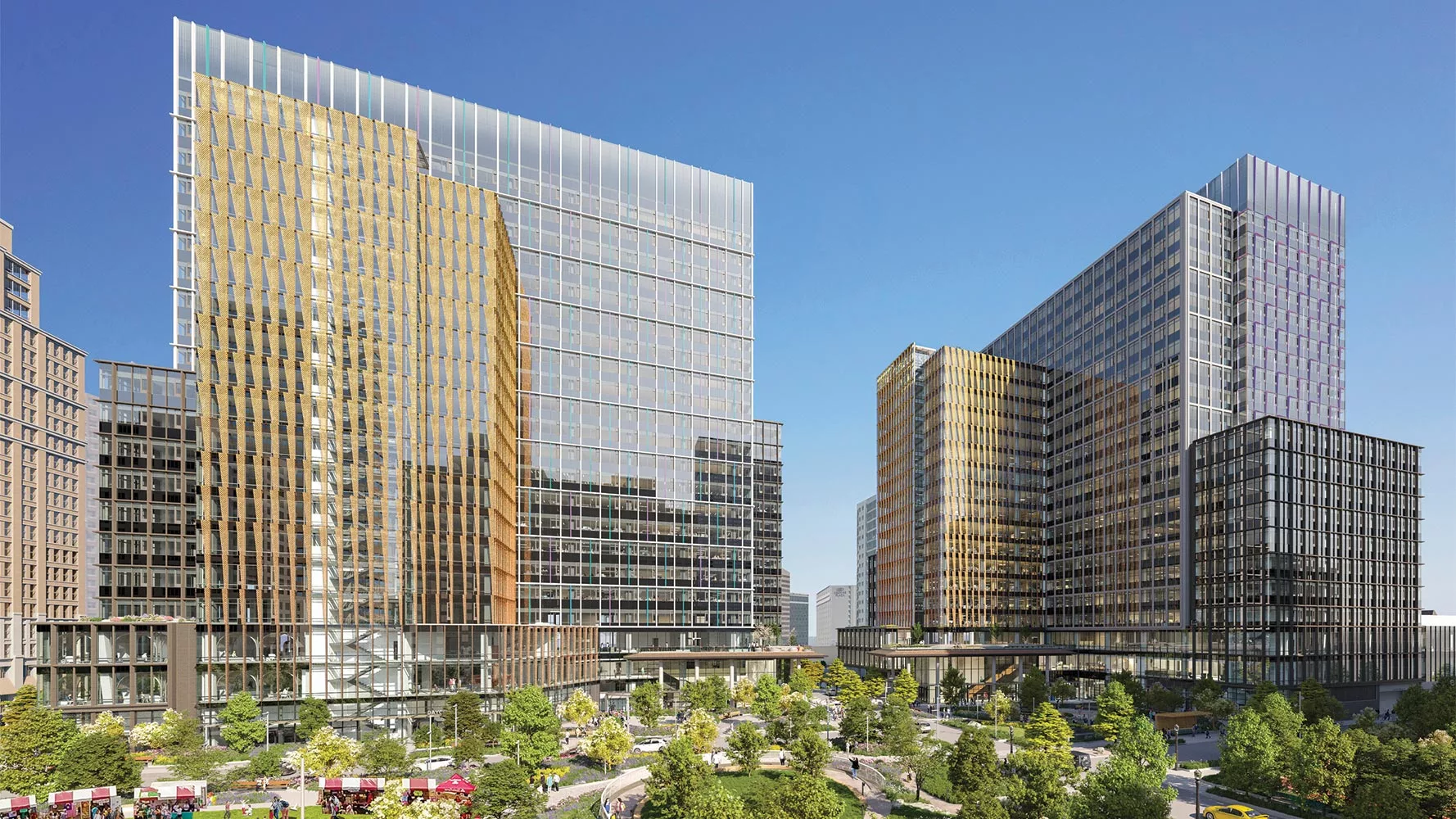
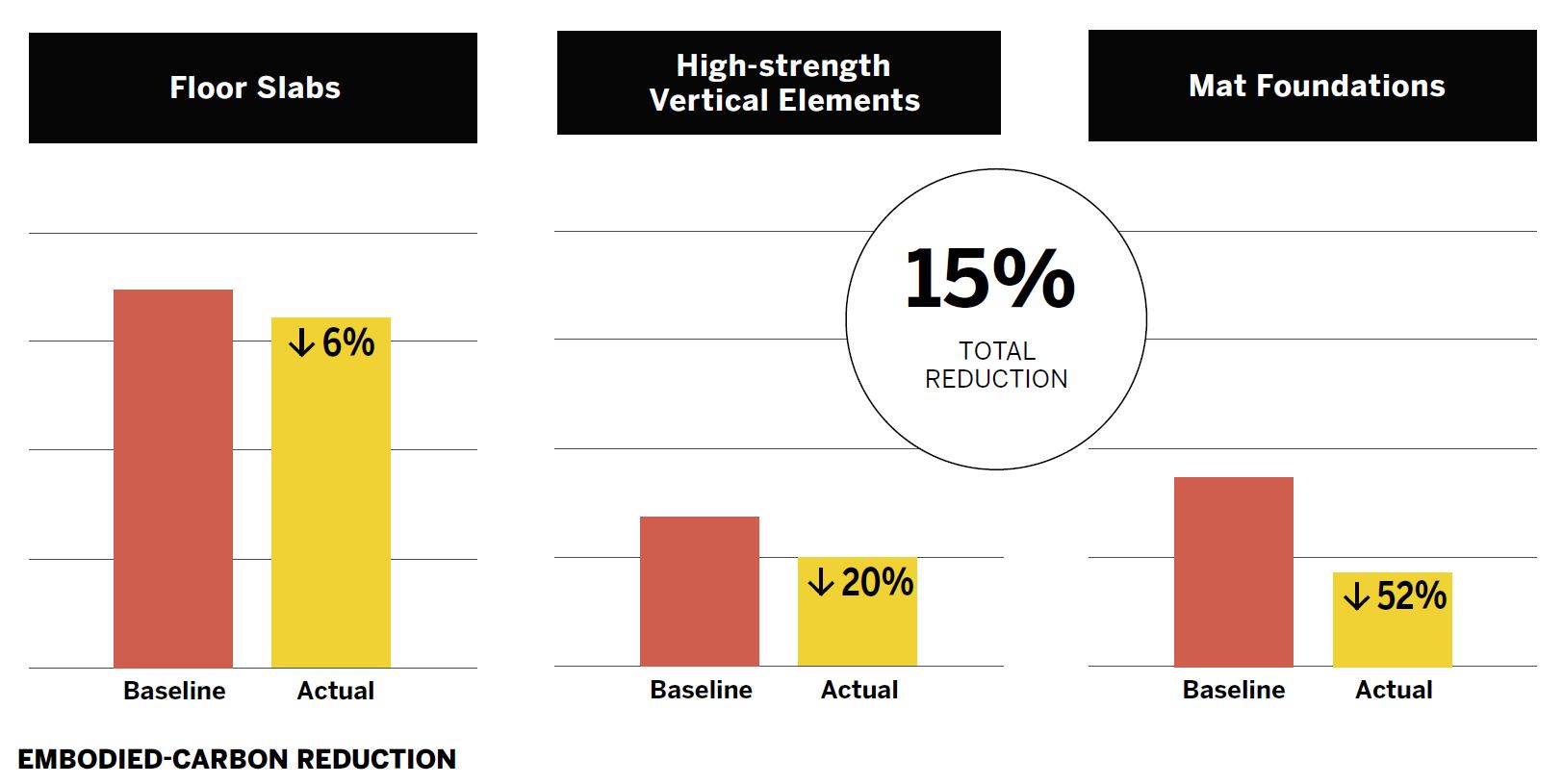
About 90 percent of the concrete used in the ZGF-designed headquarters for Amazon now nearing completion in Arlington, Virginia, incorporates CarbonCure. “But it’s not a silver bullet,” cautions Brian Earle, a ZGF principal. At Amazon, it is being used in combination with other strategies. For instance, the mixes for the foundation, columns, and shear walls for the two-building, 2.1 million-square-foot complex replace about half the cement with slag. “Introducing waste CO2 into the mix achieves a modest reduction, but, combine it with other approaches, and the benefits all add up,” says Michael Cropper, a vice president at Thornton Tomasetti, the project’s structural engineer. Some structural components for the complex have a 52 percent embodied-carbon reduction while, on average, the project’s concrete is tracking at an at least 15 percent savings compared to typical buildings of the same type in the region.
1
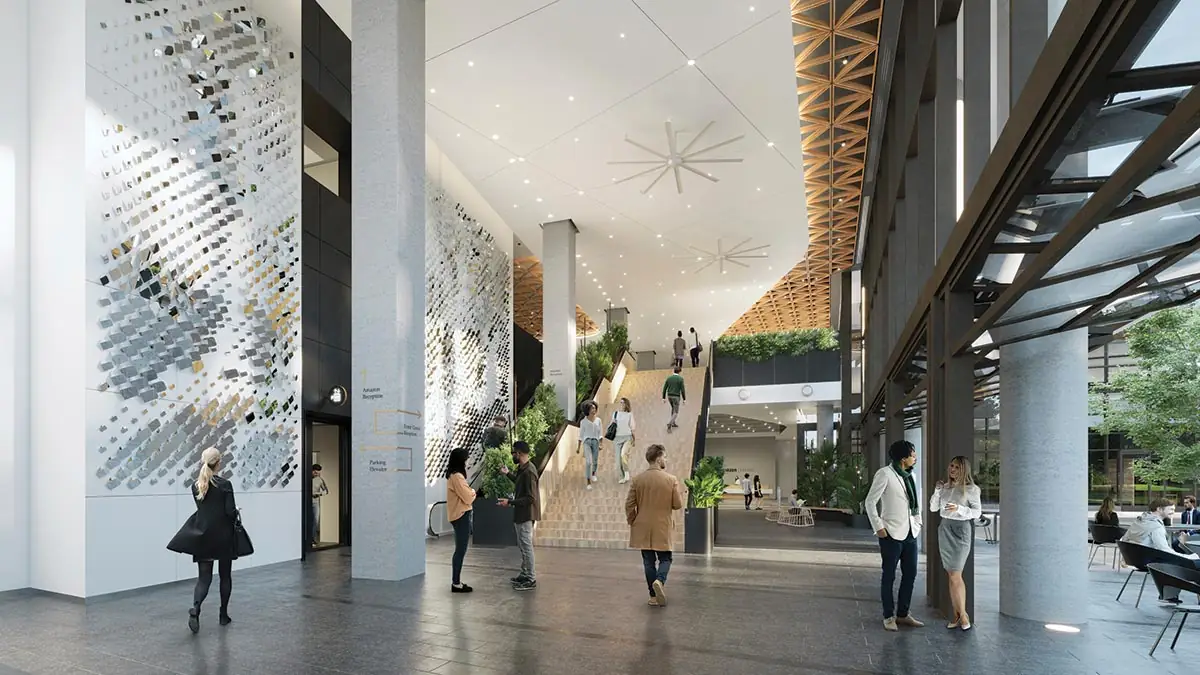
The various structural elements on Amazon’s new headquarters near Washington, D.C. (1), each have a unique carbon-reduction profile, but overall the savings average 15 percent (2). Images courtesy of ZGF, click to enlarge.
Click graphic to enlarge
2
The carbon reduction contributes to Amazon’s corporate environmental, social, and governance goals but is also integral to the complex’s LEED Platinum target. Along with the low-carbon concrete, the buildings have high-performance facades, stormwater capture for irrigation and cooling-tower makeup, and use graywater for flushing. The all-electric headquarters will be supplied with 100 percent-renewable power from a utility-scale solar farm in southern Virginia.
Some of the more emergent solutions for concrete’s carbon problem take their cues from nature. Prometheus Materials, for instance, makes a product that starts with microscopic algae, which naturally sequesters carbon. Based on the research of a team of scientists and engineers at the University of Colorado, Boulder, the technology depends on a patent-pending photosynthetic biomineralization process. The resulting “bio-cement,” when mixed with aggregate (the granular material in concrete, often quarried rock and sand), creates a zero-carbon building material with physical properties similar, though not identical, to those of concrete.
Looking for quick answers on architecture and design topics?
Try Ask RECORD, our new smart AI search tool.
Ask RECORD →
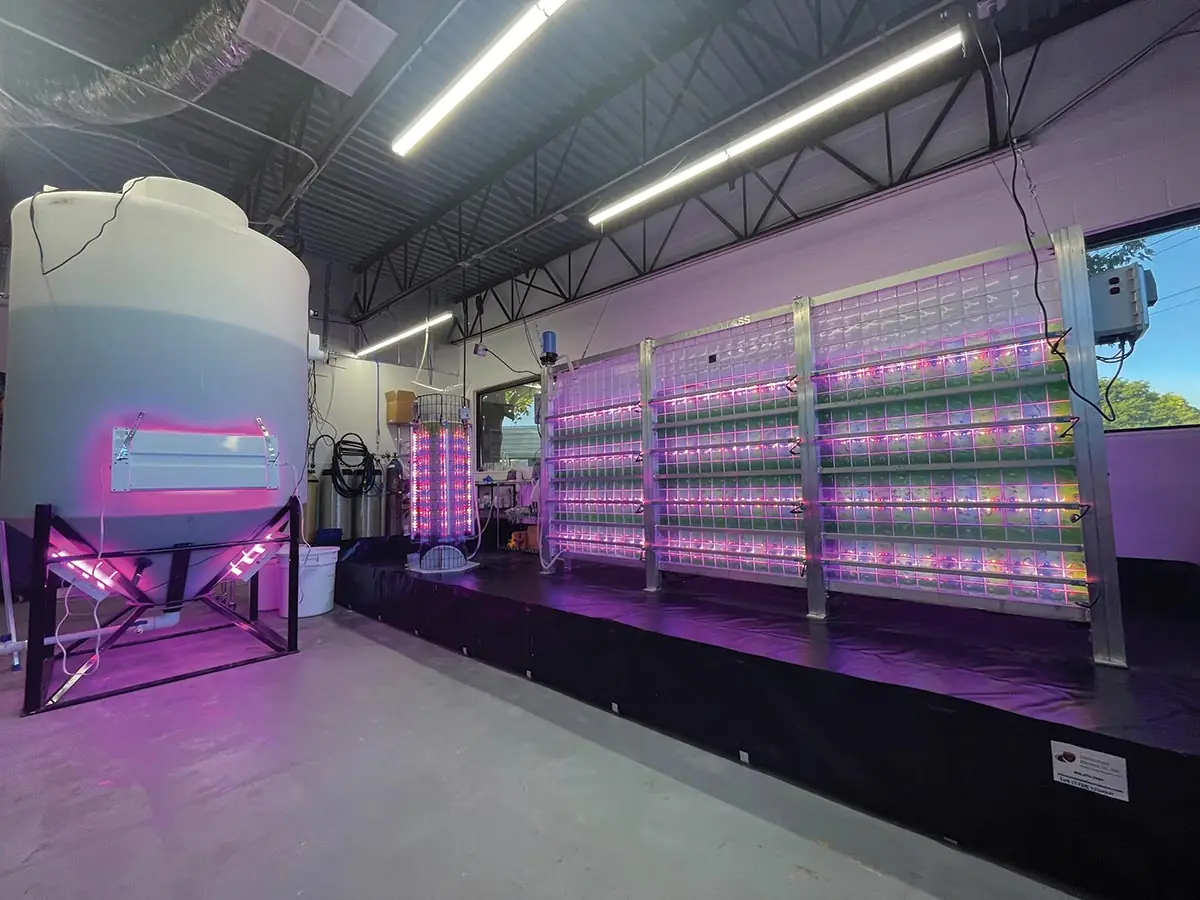
The bio-cement manufacturing process developed by Prometheus includes microalgae bioreactors. Image courtesy of Prometheus Materials
Last June, the startup secured $8 million in Series A financing and, in January, received ASTM certifications for its load-bearing and non-load-bearing masonry units. Loren Burnett, president and cofounder, says the company is also working on precast and ready-mix products. Prometheus plans another capital-raising round in late summer, and is targeting early 2024 for completion of a manufacturing facility.
SOM has an equity stake in Prometheus. “We are always looking for innovative products that fill a gap in the market and that align with our values,” explains Brant Coletta, a managing partner in SOM’s San Francisco office. The firm made the bio-cement central to Urban Sequoia, its conceptual carbon-absorbing tower unveiled at COP 26, the United Nations climate conference held in Glasgow in late 2021. For the same event, it designed a pavilion of Prometheus bricks, though it was not realized due to the pandemic. In parallel with Prometheus’s ongoing research and development, the firm continues its own small-scale experiments to better understand the unique characteristics of the material. The bio-cement has, for example, more tensile capacity than typical concrete, offering the possibility of omitting rebar, further reducing carbon emissions, points out Yasemin Kologlu, an SOM design director.
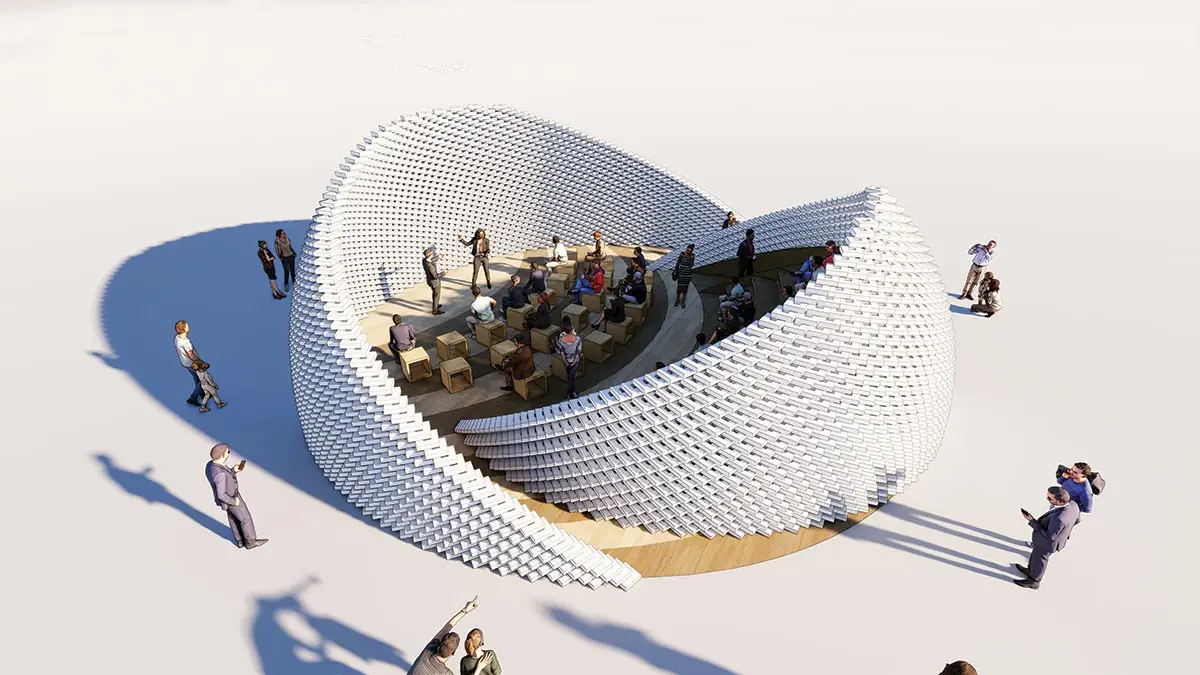
SOM designed a pavilion of Prometheus bricks for the 2021 United Nations climate conference in Glasgow. Image courtesy of SOM
Los Gatos, California–based Blue Planet Systems has taken a different tack. Rather than focusing on cement, the company is rethinking aggregate, since it is the largest component of concrete, comprising up to 90 percent of the material by weight. At its Bay Area pilot facility, Blue Planet captures the CO2 emitted by a nearby natural gas–fired power plant, combining it with alkaline industrial-waste materials, including concrete demolition debris. The resulting reaction “grows” calcium carbonate that is 44 percent CO2 by mass. According to the company, a cubic yard of concrete using its product in place of conventional aggregate can permanently store 1,120 pounds of CO₂, more than offsetting the 600 pounds of carbon that would typically be embodied in that concrete, making it carbon negative.
Blue Planet aggregate has been used thus far in demonstration projects, including one at the San Francisco International Airport. The company plans to expand its pilot plant later this year and is assembling an engineering and construction team for a commercial-scale production facility, says David Gottfried, Blue Planet’s chief global impact officer.
Use of low-carbon concrete strategies—both leading edge and well established—should get a boost from recent legislation at the Federal and state levels. The Inflation Reduction Act (IRA), signed by President Biden in August, includes funds to incentivize the use of building products with smaller environmental footprints in public-infrastructure projects and government-owned buildings. It provides nearly $4.5 billion, for identifying and procuring climate-friendly materials, to the Environmental Protection Agency, the General Services Administration (GSA), and the Department of Transportation. At the state level, similar “buy clean” policies have already been instituted or are wending their way through the legislative and policy-making processes in jurisdictions that include Colorado, Oregon, Washington, Minnesota, and New York.
The legislative trend should fuel demand not only for low-embodied-carbon materials, but also for environmental-product declarations (EPDs)—reports commissioned by manufacturers that document the ways in which their products affect the environment across several impact categories, including greenhouse-gas emissions, or global-warming potential (GWP)—since many of the new policies require them. The GSA, for instance, recently published guidance for projects funded through the IRA, setting EPD requirements and GWP limits.
Once completed, EPDs are generally included in databases such as EC3 (also known as the Embodied Carbon in Construction Calculator)—a free tool, administered by the nonprofit Building Transparency—that now includes nearly 80,000 concrete EPDs, searchable by data points like manufacturer, region, and compressive strength. Such databases allow comparisons among products that are functionally equivalent and help project teams set GWP-reduction goals and track their progress through the life of a project.
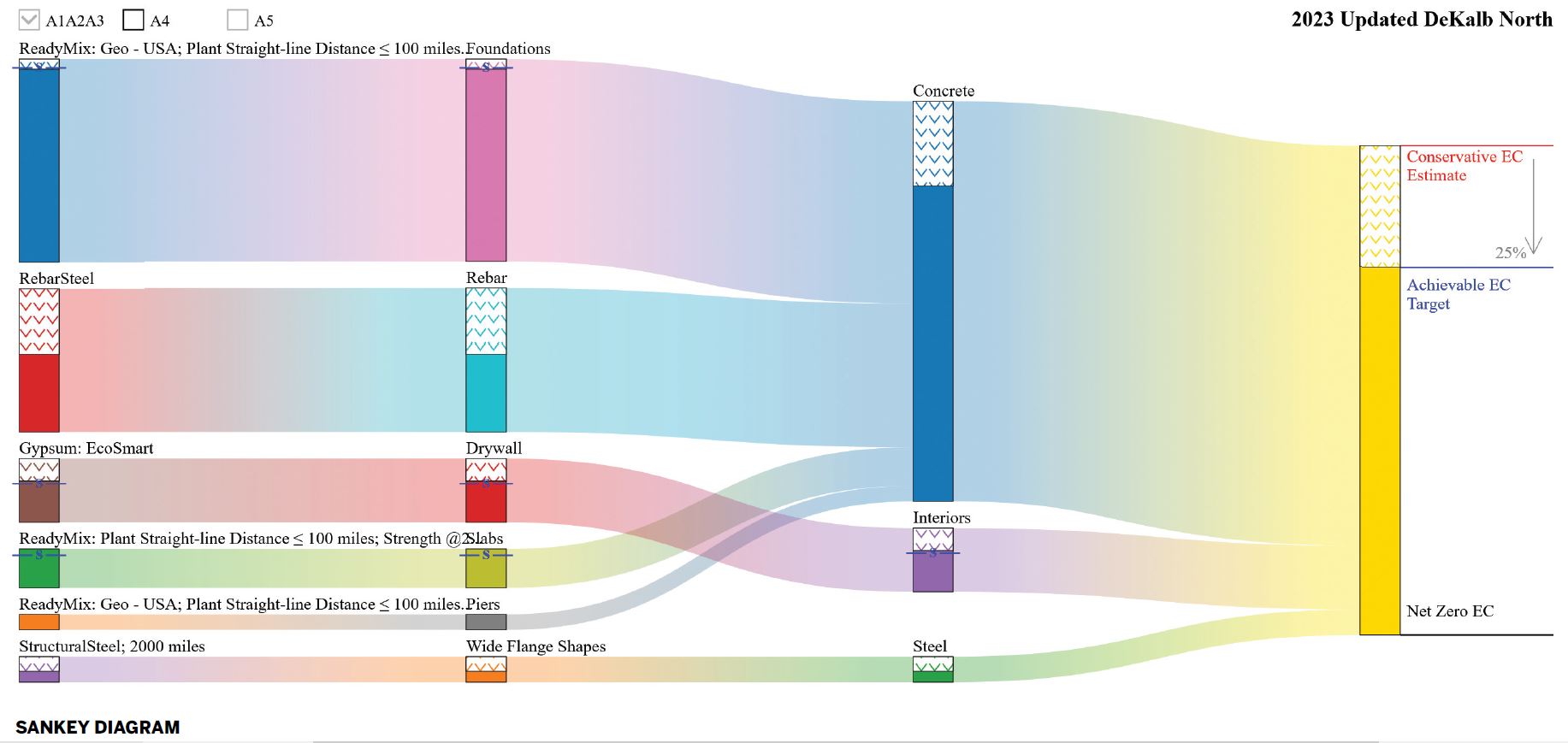
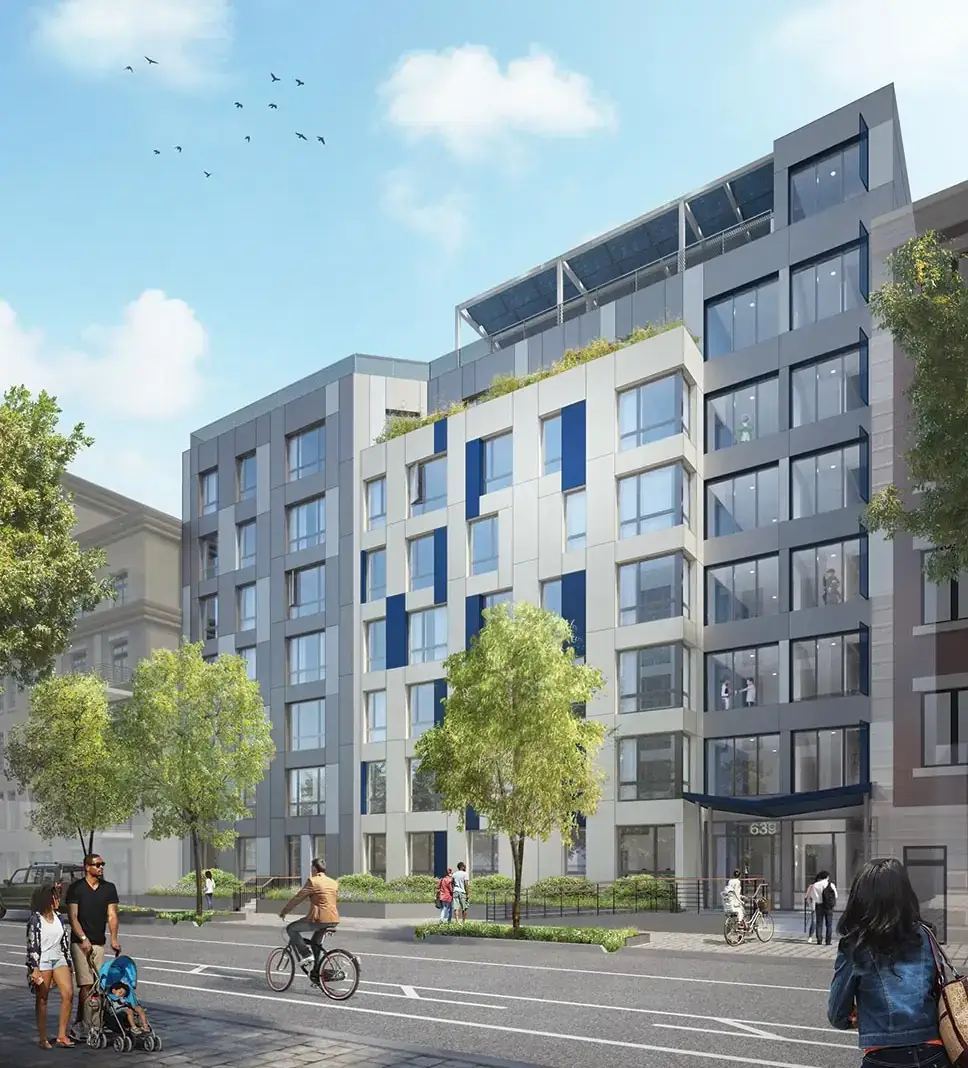
Many design teams maintain that the most effective approach for implementing low-embodied-carbon concrete on a project is not to mandate a particular mix composition or a specific technology. Instead, architects and engineers should specify desired performance criteria—including compressive strength and maximum GWP. Magnusson Architecture and Planning has taken this route for Dekalb Commons. The two-building, 85-unit affordable-housing project in Brooklyn’s Bedford Stuyvesant neighborhood, slated to start construction this summer, is targeting Passive House certification and an overall embodied-carbon reduction of 20 to 30 percent. Magnusson hopes to replace up to 40 percent of cement in the foundations and slabs on grade with GGP rather than fly ash or slag. The architects would prefer the newer SCM in part because it comes from a more renewable waste stream, and preliminary information from a local supplier indicates that the carbon-reduction goals can easily be met. Even so, the project’s performance specification presents GGP as an idea but not a prerequisite for the concrete subcontractor selection, says Sara Bayer, the firm’s director of sustainability.
Click graphic to enlarge
3
AT Dekalb Commons, an affordable-housing complex in Brooklyn (4), Magnusson Architecture and Planning aims to reduce embodied carbon by 20 to 30 percent (3). Images courtesy Magnusson Architecture and Planning (3); Nightnurse Images / Magnusson Architecture and Planning (4)
4
The Amazon design team also emphasizes the importance of performance specifications rather than prescriptive ones. “As a structural engineer, I can’t design mixes,” says Thornton Tomasetti’s Cropper. He notes that with 200,000 cubic yards of concrete on the project (enough to fill about 60 Olympic-size swimming pools), there are more than 40 unique mixes, depending on their location in the buildings. All have different performance criteria, transportation requirements, strength-gain timelines, and formwork-stripping needs—parameters that influence construction sequencing, scheduling, and coordination, which fall within the contractor’s area of responsibility, says Cropper.
ZGF sees promising signs that low-carbon concrete, whatever its form, is gaining traction within the building industry. Not so long ago, when the firm told contractors that the design team wanted to reduce a project’s global-warming potential, the response was typically, “Global-warming what?” says Earle. But now, “they know what GWP is, and they know how to reduce it.”
Continuing Education

To earn one AIA learning unit (LU), including one hour of health, safety, and welfare (HSW) credit, read the article above and “Making Concrete Change: Innovation in Low-Carbon Cement and Concrete,” Johanna Lehne and Felix Preston, Chatham House, 2018. Executive Summary, pages V – XIV.
Then complete the quiz. Upon passing the test, you will receive a certificate of completion, and your credit will be automatically reported to the AIA. Additional information regarding credit-reporting and continuing-education requirements can be found at continuingeducation.bnpmedia.com.
Learning Objectives
- Explain why typical concrete is a high-embodiedcarbon material.
- Outline the cement-manufacturing process.
- Discuss research and recent innovations in concrete.
- Discuss recent legislation and policy that relates to concrete.
AIA/CES Course #K2305A
Looking for a reprint of this article?
From high-res PDFs to custom plaques, order your copy today!