Tribute: Paolo Portoghesi (1931–2023)
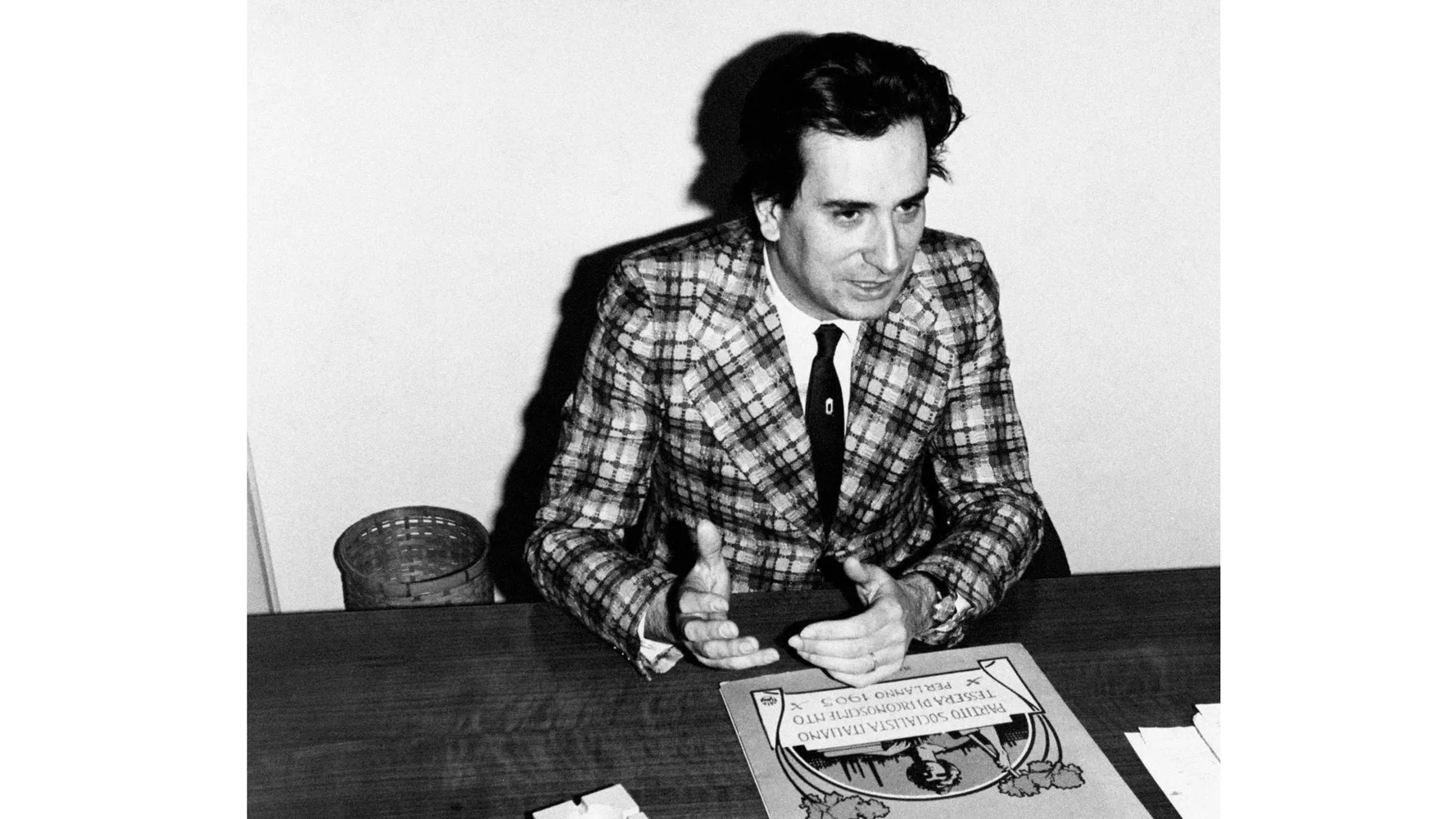
The architect in 1970. Photo by Adriano Alecchi (Mondaroni Publishers) via Wikimedia Commons
Paolo Portoghesi, the Italian architect and theorist whose Strada Novissima at the 1980 Venice Biennale heralded the ascendance of Postmodernism in architecture, died Tuesday at his home in Calcata, north of Rome. He was 92.
In addition to his work at the Biennale—first as the inaugural architecture curator from 1979 to 1982 and then as president from 1983 to 1992—Portoghesi designed a number of notable buildings, wrote extensively on historical and contemporary subjects, edited several major Italian publications, and taught generations of students. He was an “unusual character in the panorama of 20th-century architecture,” says Léa-Catherine Szacka, who is coauthoring a book on Portoghesi that will be published this fall. “He was a great mediator and operated with a charm and suavity remembered by many.”
Beginning in the 1960s, Portoghesi’s scholarship and restless architectural experimentation radically expanded the Italian discourse around architecture. “Portoghesi’s role in the evolution of Postmodern architecture cannot be overstated,” says Robert A.M. Stern, who worked closely with him on the 1980 Biennale. “He was a talented architect whose built work was often overlooked, and a historian of Roman and Baroque architecture, bringing it to our attention in fresh new ways with lavish books.”
Born in Rome in 1931, Portoghesi was fascinated by architecture from a young age. He would later remember conversations with his father, an engineer, about construction, as well as the profound impact of early encounters with Francesco Borromini’s work. “I remember seeing the dome of Sant’Ivo going to school,” he recalled in a 2019 interview, describing it as “something that upset me in a way.” For Portoghesi, this was a source of compulsion rather than repulsion; “that architecture could create problems immediately fascinated me,” he said.
Portoghesi enrolled in 1950 at the Sapienza University of Rome. While still in school, he published essays on Borromini and a monograph on the work of Guarino Guarini, which established him as an accomplished historian with a desire to challenge contemporary thinking through reinterpretations of history.
Several years after graduating, Portoghesi and his friend and mentor Bruno Zevi co-curated a prominent exhibition on Michelangelo that was as much a comment on the failings of mainstream Modernism as it was about the 16th Century. Both Zevi and Portoghesi found in Michelangelo’s work a precedent for the freeing of architecture from orthogonal orthodoxy—though Zevi would not ultimately follow Portoghesi in fully embracing Postmodern eclecticism.
Portoghesi, who had begun practicing architecture in the late 1950s and teaching at Sapienza in 1961, launched a joint practice with the architect-engineer Vittorio Gigliotti in 1964. Together the duo would go on to design well-regarded works including the geometrically complex Church of the Holy Family in Salerno (1968–74) and the overtly referential Mosque of Rome (1984–95), which includes motifs drawn from Roman and Islamic architecture.
Looking for quick answers on architecture and design topics?
Try Ask RECORD, our new smart AI search tool.
Ask RECORD →
In 1966, Portoghesi founded the journal Controspazio, which he edited until 1983; he subsequently spent six years editing the influential large-format magazine Eupalino, where he sought to communicate his ideas to a wider audience. But it was the Strada Novissima of 1980 that would cement Portoghesi’s reputation as one of the foremost proponents of Postmodernism—of an architecture freed from the straitjacket of anti-traditionalist dogma and giddy at the prospect of delving back into the history books.
The 1980 Biennale was the first dedicated exclusively to architecture, and in order to ensure that attendance met expectations, its organizers—led by Portoghesi—elected to hold an exhibition for the first time in the historic Corderie dell’Arsenale. Within it, Portoghesi proposed the creation of a central walkway alongside which a selection of up-and-coming (and some already-established) architects would be invited to design storefront-like facades fronting interior displays of their respective works. The resulting Strada Novissima, which featured history-referencing contributions by the likes of Stern, Hans Hollein, and Stanley Tigerman, loudly announced that the ideas promulgated by Robert Venturi in Complexity and Contradiction in Architecture (1966) could no longer be relegated to the fringe of the profession.
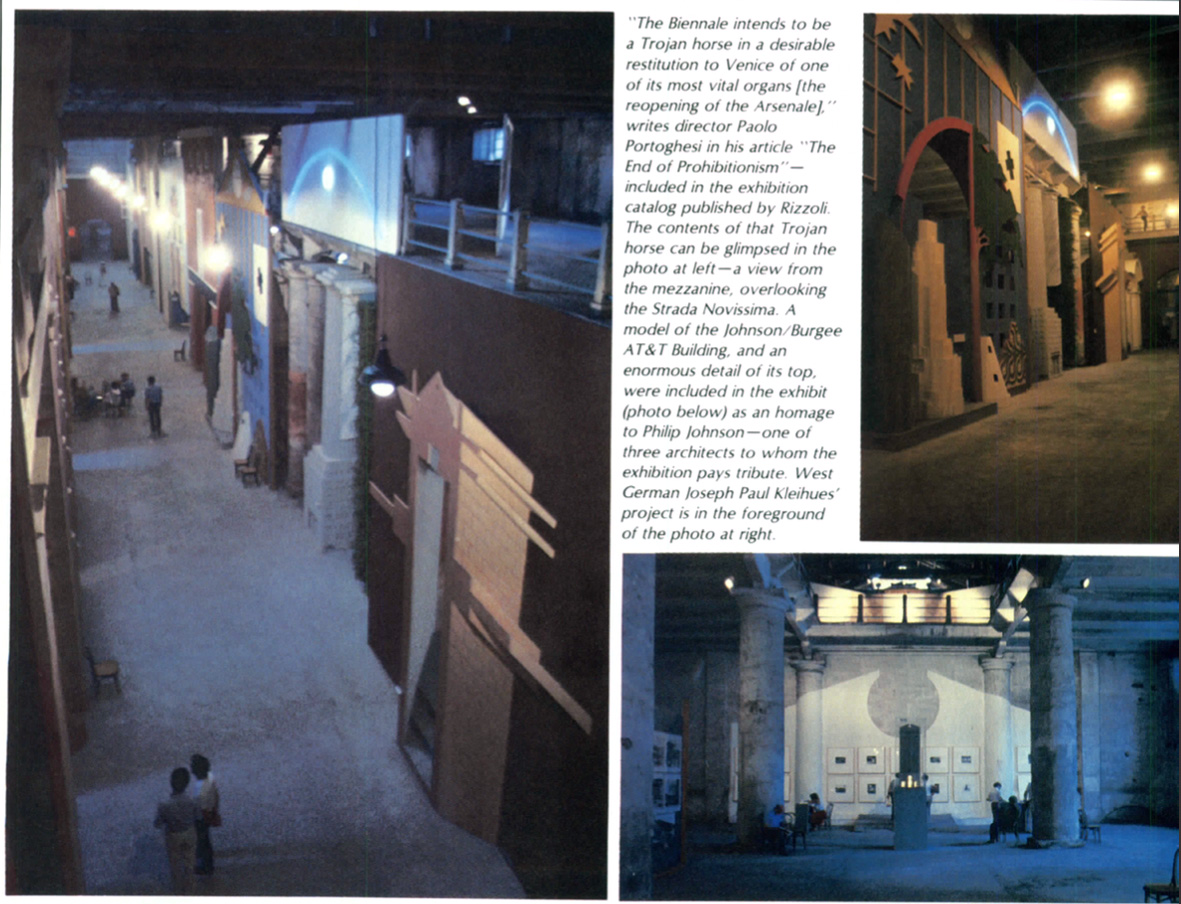
Portoghesi's Strada Novissima in Venice as featured in the March 1981 issue of RECORD. Photo © Architectural Record
As Postmodernism began to wane in the 1990s, Portoghesi moved on to other projects. He developed a philosophy that he called “geoarchitecture,” which tied the revival of history to environmental themes, and he spent over 20 years translating it into built form in the park surrounding his villa in Calcata. And he continued to write, edit, teach, and design larger buildings. His last built work, completed in 2019, was a cathedral in Calabria that, like his earliest houses, conveyed the formative influence of Borromini, in this case with its undulating facade.
Even Portoghesi’s critics had to concede that his historical acumen—along with his ability to navigate the world of culture—made him a force to be reckoned with. Manfredo Tafuri, a skeptic of the revivalism that Portoghesi helped usher in, dismissed his buildings as “montages of allusions and facile effects of ‘surprise,’ characterized by symptomatic ease of composition.” But, as Tafuri noted, the depth and longevity of Portoghesi’s explorations of history set him apart from his more superficial contemporaries.
Looking for a reprint of this article?
From high-res PDFs to custom plaques, order your copy today!