Architecture Program Leaders Face Existential Accreditation Crisis
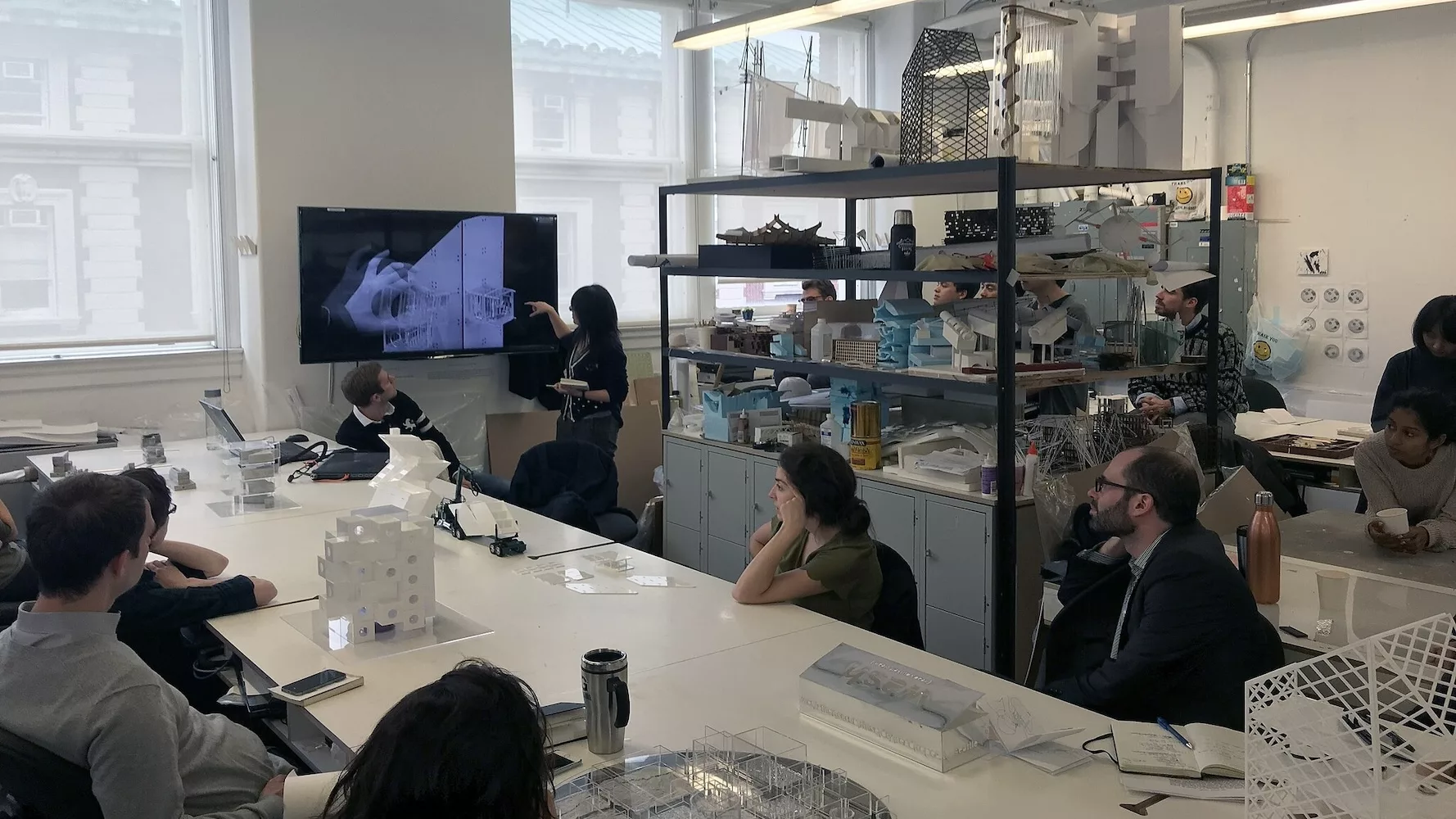
Architecture students at Avery Hall, home to Columbia University's Graduate School of Architecture, Planning and Preservation. Photo by GSAPPStudent, Flickr
The collapse of what should have been a routine renewal of a funding agreement between the National Architectural Accrediting Board (NAAB) and its partner organizations has incited howls of protest and a near-existential crisis at many architecture programs.
In 2022, NAAB requested a 47 percent funding increase, according to Mo Zell, president of the Association of Collegiate Schools of Architecture (ACSA), one of NAAB’s funders along with the National Council of Architectural Registration Boards (NCARB), the AIA, and the AIAS. The funding organizations rebuffed the request, and NAAB’s funding agreement expired at the end of 2023. The parties remain in mediation. NAAB received $1.29 million last year, but very little of its typical funding since, leading the organization to spend down reserves.
More consequentially, though, it pushed NAAB to upend its relationship with architecture schools. Breaking with eight decades of precedent, NAAB has proposed charging schools directly for their accreditation. This change follows an updated accreditation process, instituted in 2020, perceived by faculty as cumbersome and misdirected.
Absent support from its traditional funders, NAAB would charge accreditation fees ranging from approximately $15,000–$25,000, with smaller annual fees charged outside of the eight-year accreditation cycle. (Fees are based on the number and size of a school’s degree programs and would increase for the next three years.)
NAAB executive director Tanya Tamarkin tells RECORD via email that the organization is only asking for $1.73 million this year, funding on par with 2017 levels when adjusted for inflation. But the proposal to seek this money directly from schools has baffled department heads.
“[NAAB] was running on virtual visits for years before they made this request, which I think would be a significant savings,” says Dale Gyure, department chair at Lawrence Technological University’s College of Architecture and Design. “I just would like to see more justification from NAAB for why they’re asking for this. They’re going rogue and turning their backs on their collaborators.”
Daya Taylor, who chairs the architecture program at Hampton University, puts it more sharply. “Why does NAAB need all of this money? No one has been able to answer that question.”
Looking for quick answers on architecture and design topics?
Try Ask RECORD, our new smart AI search tool.
Ask RECORD →
Getting that money directly from schools will strain department budgets, educators say. Michael Zaretsky, associate professor and department head in the School of Architecture and Environment at the University of Oregon, says these new fees could be “an unbelievable financial burden for everyone,” especially public schools with dwindling government support. But for perpetually underfunded programs at Historically Black Colleges and Universities (HBCUs) like Hampton—schools most able to diversify the predominantly white and male profession—the NAAB proposal presents an even more significant challenge.
One-third of Black architecture students attends an accredited HBCU, of which there are only seven. Hampton’s program has 150 students, which means it could have to pay more than $20,000 during its next accreditation visit year and more than $8,000 in annual fees until then under NAAB’s plan. (With funding support from the AIA and NCARB, those fees are a third lower.) Those obligations could force administrators to choose between accreditation and the most baseline infrastructural maintenance projects, like dorm HVAC systems, Taylor says.
The fees would be “almost fatally threatening,” says Taylor, especially given the spike in enrollment and applications following the Supreme Court’s ban on affirmative action, which does not translate into a proportional stream of cash. “That decision is already straining us. Now you’re asking us to pay more?”
NAAB argues there is precedent for its proposed changes. Many other comparable professional degree accreditation organizations—like those in urban planning and engineering—charge programs directly.
More importantly, it says, its request for additional funding is necessary to maintain its operations. “The funds that NAAB will be able to realize through direct fees to programs would help to ensure the modest staff”—which it wants to increase with two new hires—"develops and delivers resources, training, and services to programs and volunteers in the accreditation process,” says Tamarkin.
NAAB’s proposal to alter its funding streams, and increase its fees, comes as educators question the value of the accreditation process, which was overhauled four years ago.
In late September, ACSA president Cathi Ho Schar sent a letter signed by 35 department heads and faculty to NAAB reiterating that “schools have continued to ask for streamlined accreditation processes and do not believe the current process reflects this.” The letter complained of “cumbersome and redundant processes in the current assessment approach, with growing concerns over increasing workload and costs.” Specifically, architecture professors cite the transition from assessing student work to examining departmental administrative processes and the emphasis on the time-intensive process of gathering mountains of quantitative data.
The summer before a March 2023 accreditation visit at Lawrence Tech, 10 to 12 faculty members worked on the required documentation and data-gathering, a situation Gyure calls “extraordinary.” In the fall and into the spring semester before the visit—which was conducted virtually—several faculty members spent 10 to 20 hours a week on accreditation.
Despite that, Gyure says, “I still feel like I have faculty who don’t fully understand what that review was about or why we had to make the switch to self-assessment. We’ve pulled away from the students to a certain extent.”
Complicating the process, Oregon’s Zaretsky says, is the ambiguity of NAAB’s evaluation. One metric is instilling a sense of lifelong learning. “How do you measure data that shows if students are experiencing lifelong learning?” Zaretsky says.
The funding fight and conflict over accreditation processes are exacerbated by a larger problem, according to those who spoke with RECORD: a frustrating lack of transparency.
In March 2024, the AIA and NCARB called for an operational assessment of NAAB. NAAB requested a non-disclosure agreement protecting the document, but in the months since it has repeatedly complained publicly about its findings, charging that they have been mischaracterized by its funding partners.
ACSA has said that the report revealed “inconsistent and erroneous financial management and accounting practices.” But NAAB board treasurer and University of Southern California architecture professor Michael Hricak says the assessment was assembled by a former “AIA officer unfamiliar with accreditation,” and described it as “flawed and partisan,“ adding “the report affirmed that NAAB’s general organizational model, its current reserves, and the costs associated with providing services expected of an accrediting body, are largely ‘in order.’”
In an email to RECORD, NAAB president Stephen Schreiber identified former AIA COO Jim Dinegar as the person who performed the assessment and said the NDA was necessary to protect confidential information submitted by programs, staff salaries, and “internal financial reports.” “[It] does not compel the organization to keep the report confidential, and we are not concerned with the release of the report’s findings,” he said, adding, paradoxically, “the quality of the report falls below professional standards, and for NAAB to release it would imply that we believe otherwise.”
The faculty feeling squeezed by NAAB’s recent actions say those “internal financial reports” contain the answers they seek, particularly when it comes to NAAB’s funding request. “If you don’t have what you need, let us know,” Hampton’s Taylor says. “But it shouldn’t be a secret to us because we’re the ones paying the bills.”
For its part, ACSA and its partners at the AIA and NCARB say they want NAAB to return to the negotiating table—a hope echoed by programs impacted by the funding and accreditation fight.
“I really hope that, whatever is going on here, these organizations can pull together and say, ‘What is really going to serve our constituency?’” Zaretsky says. “This current track is not.”
Looking for a reprint of this article?
From high-res PDFs to custom plaques, order your copy today!