Architectural Record
search
cart
facebook twitter linkedin youtube
  • Sign In
  • Subscribe
  • Sign Out
  • My Account
Architectural Record
  • NEWS
    • Latest News
    • Awards
    • Interviews
    • Obituaries
    • Podcasts
      • Design:Ed Podcast
      • Sponsored Podcasts
  • OPINION
    • Book Reviews / Excerpts
    • Exhibition Reviews
    • Forum
  • EXCLUSIVES
    • Videos
    • Design Vanguard
    • Top 300 Firms
    • Sponsored Content
    • Sponsored eBooks
    • From the Archives
  • CONTINUING ED
    • Editorial Continuing Ed
    • CE Center
    • CE Academies
  • PROJECTS
    • Buildings By Type
    • Reuse & Renovation
    • Museums & Arts Centers
    • Colleges & Universities
    • Multifamily Housing
    • Interiors
    • Lighting
    • Kitchen & Bath
  • HOUSES
    • Record Houses
    • House of the Month
    • Featured Houses
  • PRODUCTS
    • Products by Category
    • Record Products of the Year
    • Latest Products
  • EVENTS
    • Dates & Events
    • Record on the Road
    • Innovation Conference
    • Sustainability in Practice
    • Women In Architecture
    • Webinars
    • Ad Excellence Awards
    • Submit an Event
  • CONNECT
    • Ask RECORD AI
    • Newsletters
    • Contact
    • Advertise
    • Editorial Calendar
    • Store
    • Customer Service
  • SUBMIT
    • Submission Guidelines
    • RECORD Competitions
  • MAGAZINE
    • Subscribe
    • My Account
    • Digital Edition
    • Current Issue
    • Firm Pass
    • Historic Archive
Architecture NewsClimate Change & Sustainability

U.S. Green Building Council Announces Launch of LEED v5
By RECORD Editors
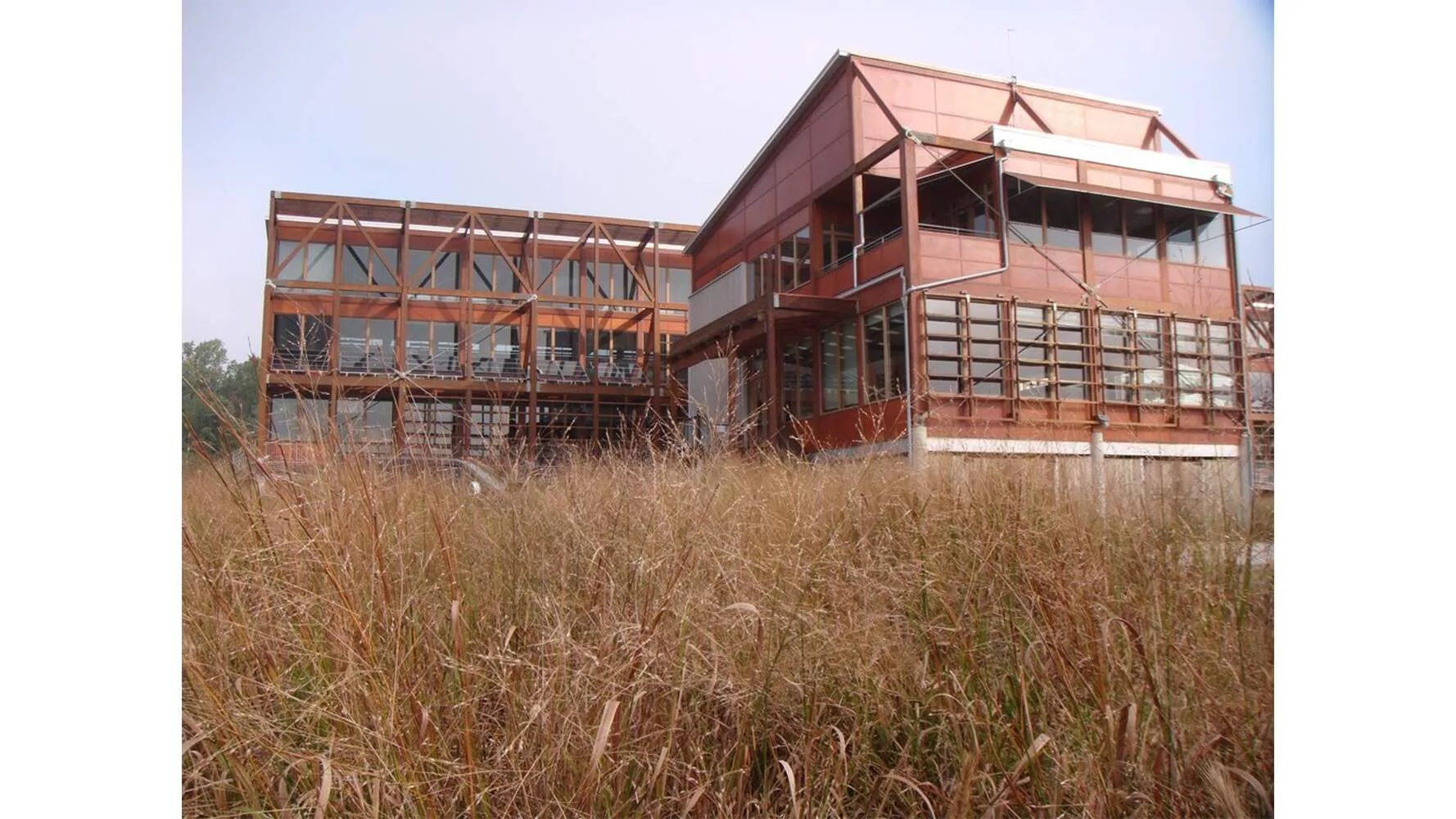
Philip Merrill Environmental Center
The Chesapeake Bay Foundation's Philip Merrill Environmental Center in Annapolis, Maryland, was the first building to receive a LEED Platinum rating, version 1.0, in 2001. The launch of LEED v5 marks another milestone for the influential green building program. Photo by theregeneration/Flickr via Wikimedia Commons
April 28, 2025

The U.S. Green Building Council (USGBC) announced the launch of the latest version of LEED (Leadership in Energy and Environmental Design). The last update to LEED, which ranks as the most widely used and globally recognized green building certification program, came in 2019 with the launch of LEED v4.1. Following several years of development, LEED was first adopted and initiated as a pilot program by the USGBC in August 1998; it was formally offered as a rating system two years later in 2000 making the program, as it exists today, 25 years old. 

Registration for the newest version, LEED v5, is immediately available to new construction, interior, and existing commercial building projects. 

Developed by the USGBC’s global network of green building professionals, LEED v5 was informed by two public comment periods held in 2024 and ratified by members earlier this year, a move that served as a final endorsement for the new rating system. In its announcement of the launch, the USGBC describes LEED v5 as being “focused on impact areas that touch decarbonization, human and ecological health, and resilience.” The new version, the organization notes, “further defines what it means to be a high-performance building today, creating even greater investment potential.” (Capable of reducing water, energy and waste by more than 20 percent, LEED-certified buildings achieve a 21.4 percent higher average market sales price per square foot compared to non-LEED buildings and 11 percent higher rent rates, per the USGBC.)

“LEED v5 raises the bar, further defining and evolving best practices and giving stakeholders across the building industry clear pathways to address today’s challenges to our health, climate, and communities,” adds USGBC president and CEO Peter Templeton.

As detailed by the USGBC, the latest version’s three key focus areas—decarbonization, quality of life, and ecological conservation and restoration—work together to “drive the market towards a near-zero carbon reality that is equitable, resilient, and promotes the wise, safe use of all resources.”

Accounting for half of all points for LEED v5 certification, decarbonization “targets reductions in operational, embodied, refrigerant, and transportation emissions.”

In response to global demand for greener, healthier spaces (and transparency around sustainability from building users), quality of life “improves health, well-being, resilience, and equity for building occupants and their communities, making spaces not just environmentally friendly but also people friendly.”

Looking for quick answers on architecture and design topics?
Try Ask RECORD, our new smart AI search tool.
Ask RECORD →

Finally, the focus area of ecological conservation and restoration “emphasizes strategies that limit environmental degradation and contribute to the restoration of ecosystems, ensuring that our built environment exists harmoniously with nature.” 

In addition to these new focus areas, LEED v5 introduces new requirements for projects seeking LEED Platinum certification along with other updates that the USGBC says will “provide greater flexibility for projects and more opportunities to evolve rating system requirements in response to a rapidly changing market.” 

More particulars on LEED v5 can be found here. 

KEYWORDS: LEED USGBC

Share This Story

Looking for a reprint of this article?
From high-res PDFs to custom plaques, order your copy today!
Post a comment to this article

Report Abusive Comment

Subscription Center
  • Create an Account
  • Start a Subscription
  • Manage My Account
  • Sign Up for Newsletters
  • Visit Customer Service
  • Update Preferences

More Videos

Sponsored Content

Sponsored Content is a special paid section where industry companies provide high quality, objective, non-commercial content around topics of interest to the Architectural Record audience. All Sponsored Content is supplied by the advertising company and any opinions expressed in this article are those of the author and not necessarily reflect the views of Architectural Record or its parent company, BNP Media. Interested in participating in our Sponsored Content section? Contact your local rep!

close
  • 3D configurator
    Sponsored byDoorBird

    How DoorBird’s 3D Configurator Is Redefining Customization Across Residential and Commercial Design

  • interior of modern office
    Sponsored byCurrent

    The Downlight's Second Life: Why Below-Ceiling Serviceability Is the Specification Detail That Matters Most

  • cold storage facility
    Sponsored byCarlisle SynTec Systems

    How Architects Can Design More Continuous Cold Storage Envelopes

DESIGN:ED Podcast
Listen to Architectural Record’s DESIGN:ED Podcast

Events

July 14, 2026

Designing Toilet Partitions for User Comfort and Utility

Credits: 1 AIA LU/HSW; 1 AIBD P-CE; 0.1 ICC CEU

Evaluate emerging restroom design strategies, materials, and specification options that enhance functionality, inclusivity, user comfort, and sustainability.

July 16, 2026

Fit, Form, Function: Rethinking Privacy Curtains for Modern Spaces

Credits: 1 AIA LU/HSW; 1 AIBD P-CE; 0.1 ICC CEU

Explore how privacy curtain systems can enhance occupant comfort, operational efficiency, and sustainability across healthcare, education, hospitality, and senior living environments.

View All Submit An Event

Products

2026 Architect's Square Foot Costbook

2026 Architect's Square Foot Costbook

See More Products

Popular Stories

Most Significant Works of American Architecture

For the Semiquincentennial, Practitioners and Scholars Survey 250 Years of American Architecture

Iga City Hall Transformation

Maru Architecture Turns a 1960s Government Building in Iga, Japan, into a Library and Hotel

Hudson Street Loft

Hudson Street Loft by AlexAllen Studio Architects

Home Spirit apartment building exterior

Outdoor Access Drives the Design of a French Apartment Building

Theodore Roosevelt Presidential Library

The Theodore Roosevelt Presidential Library, Designed by Snøhetta, Is Set to Open in the North Dakota Badlands

Co-Intelligence: The Architect's AI Advantage - Free Webinar - July 8, 2026

Related Articles

  • New Research Reveals the Safety Hazards of Green Building

    See More
  • Green Building Sees Growth, But Fewer Firms Pursue LEED

    See More
  • AIA Deconstructs Green-Building Standards

    See More

Related Products

See More Products
  • 0470130628.gif

    Sustainable Design: The Science of Sustainability and Green Engineering

See More Products
×

The latest news and information

#1 Source for Architectural Design, News and Products

SUBSCRIBE
  • RESOURCES
    • Advertise
    • Contact Us
    • Submit
    • Store
  • ACCOUNT CENTER
    • Create an Account
    • Start a Subscription
    • Manage My Account
    • Sign Up for Newsletters
    • Visit Customer Service
    • Update Preferences
  • PRIVACY
    • PRIVACY POLICY
    • TERMS & CONDITIONS
    • DO NOT SELL MY PERSONAL INFORMATION
    • PRIVACY REQUEST
    • ACCESSIBILITY
  • SERVICES
    • Marketing Services
    • Reprints
    • Market Research
    • List Rental
    • Survey/Respondent Access
  • STAY CONNECTED
    • Linkedin
    • Facebook
    • Instagram
    • YouTube
    • X (Twitter)

Copyright ©2026. All Rights Reserved BNP Media, Inc. and BNP Media II, LLC.

Design, CMS, Hosting & Web Development :: ePublishing