Architectural Record
search
cart
facebook twitter linkedin youtube
  • Sign In
  • Subscribe
  • Sign Out
  • My Account
Architectural Record
  • NEWS
    • Latest News
    • Awards
    • Interviews
    • Obituaries
    • Podcasts
      • Design:Ed Podcast
      • Sponsored Podcasts
  • OPINION
    • Book Reviews / Excerpts
    • Exhibition Reviews
    • Forum
  • EXCLUSIVES
    • Videos
    • Design Vanguard
    • Top 300 Firms
    • Sponsored Content
    • Sponsored eBooks
    • From the Archives
  • CONTINUING ED
    • Editorial Continuing Ed
    • CE Center
    • CE Academies
  • PROJECTS
    • Buildings By Type
    • Reuse & Renovation
    • Museums & Arts Centers
    • Colleges & Universities
    • Multifamily Housing
    • Interiors
    • Lighting
    • Kitchen & Bath
  • HOUSES
    • Record Houses
    • House of the Month
    • Featured Houses
  • PRODUCTS
    • Products by Category
    • Record Products of the Year
    • Latest Products
  • EVENTS
    • Dates & Events
    • Record on the Road
    • Innovation Conference
    • Sustainability in Practice
    • Women In Architecture
    • Webinars
    • Ad Excellence Awards
    • Submit an Event
  • CONNECT
    • Ask RECORD AI
    • Newsletters
    • Contact
    • Advertise
    • Editorial Calendar
    • Store
    • Customer Service
  • SUBMIT
    • Submission Guidelines
    • RECORD Competitions
  • MAGAZINE
    • Subscribe
    • My Account
    • Digital Edition
    • Current Issue
    • Firm Pass
    • Historic Archive
Architecture News

Serenbe Community in Georgia Offers Alternative to Suburban Sprawl

In a scenic area located one hour’s drive from downtown Atlanta, a 900-acre utopian community is taking shape.

By Johanna Lenander
Serenbe Community in Georgia
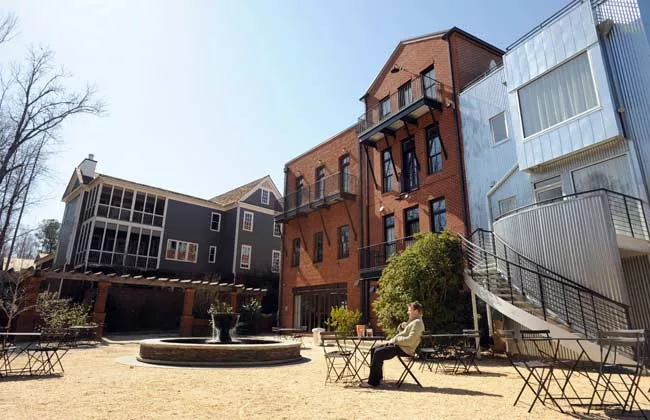
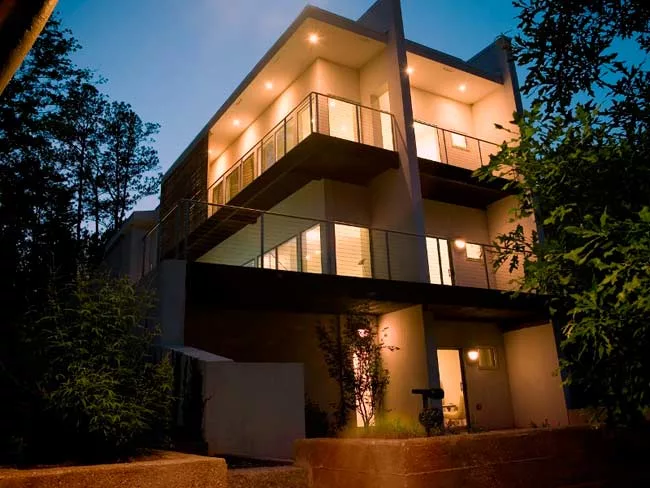
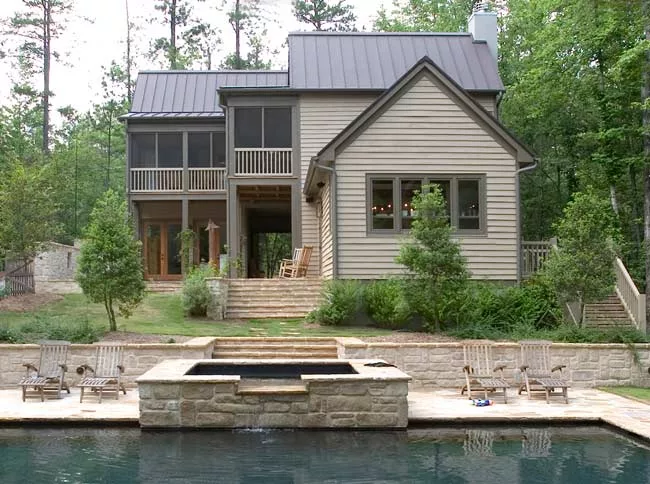
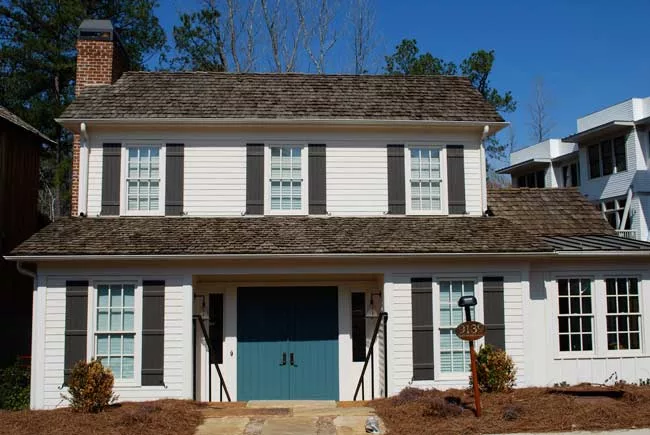
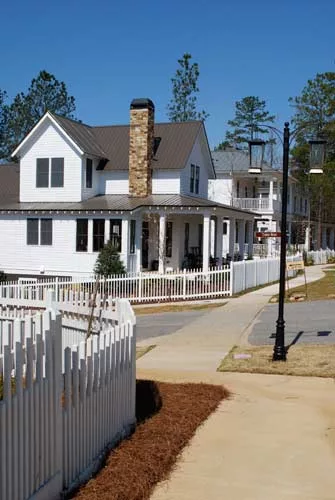
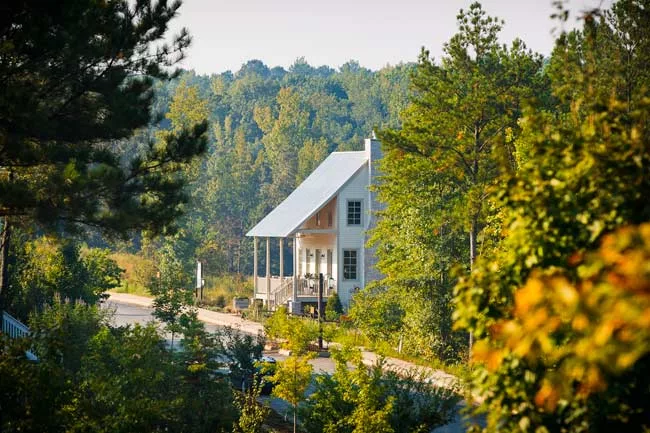
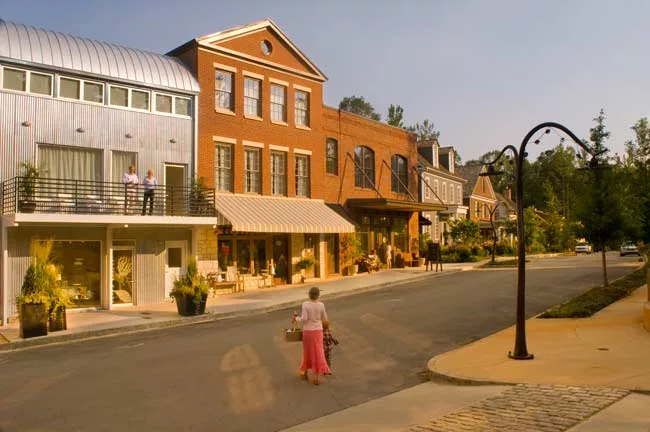
Called Serenbe''a serene place to be''the New Urbanism-style development is designed to be an antidote for suburban sprawl. The master plan, conceived by architect Phillip Tabb, director of the architecture department at Texas A&M University, envisions 2,500 residents scattered through four interconnected villages. Serenbe weaves together high-density residences with walkability, sustainability, and a self-sufficient mix of agriculture and local businesses.
 
Photo courtesy Serenbe
Serenbe Community in Georgia
Called Serenbe''a serene place to be''the New Urbanism-style development is designed to be an antidote for suburban sprawl. The master plan, conceived by architect Phillip Tabb, director of the architecture department at Texas A&M University, envisions 2,500 residents scattered through four interconnected villages. Serenbe weaves together high-density residences with walkability, sustainability, and a self-sufficient mix of agriculture and local businesses.
 
Photo courtesy Serenbe
Serenbe Community in Georgia
Called Serenbe''a serene place to be''the New Urbanism-style development is designed to be an antidote for suburban sprawl. The master plan, conceived by architect Phillip Tabb, director of the architecture department at Texas A&M University, envisions 2,500 residents scattered through four interconnected villages. Serenbe weaves together high-density residences with walkability, sustainability, and a self-sufficient mix of agriculture and local businesses.
 
Photo courtesy Serenbe
Serenbe Community in Georgia
Called Serenbe''a serene place to be''the New Urbanism-style development is designed to be an antidote for suburban sprawl. The master plan, conceived by architect Phillip Tabb, director of the architecture department at Texas A&M University, envisions 2,500 residents scattered through four interconnected villages. Serenbe weaves together high-density residences with walkability, sustainability, and a self-sufficient mix of agriculture and local businesses.
 
Photo courtesy Serenbe
Serenbe Community in Georgia
Called Serenbe''a serene place to be''the New Urbanism-style development is designed to be an antidote for suburban sprawl. The master plan, conceived by architect Phillip Tabb, director of the architecture department at Texas A&M University, envisions 2,500 residents scattered through four interconnected villages. Serenbe weaves together high-density residences with walkability, sustainability, and a self-sufficient mix of agriculture and local businesses.
 
Photo courtesy Serenbe
Serenbe Community in Georgia
Called Serenbe''a serene place to be''the New Urbanism-style development is designed to be an antidote for suburban sprawl. The master plan, conceived by architect Phillip Tabb, director of the architecture department at Texas A&M University, envisions 2,500 residents scattered through four interconnected villages. Serenbe weaves together high-density residences with walkability, sustainability, and a self-sufficient mix of agriculture and local businesses.
 
Photo courtesy Serenbe
Serenbe Community in Georgia
Called Serenbe''a serene place to be''the New Urbanism-style development is designed to be an antidote for suburban sprawl. The master plan, conceived by architect Phillip Tabb, director of the architecture department at Texas A&M University, envisions 2,500 residents scattered through four interconnected villages. Serenbe weaves together high-density residences with walkability, sustainability, and a self-sufficient mix of agriculture and local businesses.
 
Photo courtesy Serenbe
Serenbe Community in Georgia
Called Serenbe''a serene place to be''the New Urbanism-style development is designed to be an antidote for suburban sprawl. The master plan, conceived by architect Phillip Tabb, director of the architecture department at Texas A&M University, envisions 2,500 residents scattered through four interconnected villages. Serenbe weaves together high-density residences with walkability, sustainability, and a self-sufficient mix of agriculture and local businesses.
 
Photo courtesy Serenbe
Serenbe Community in Georgia
Called Serenbe''a serene place to be''the New Urbanism-style development is designed to be an antidote for suburban sprawl. The master plan, conceived by architect Phillip Tabb, director of the architecture department at Texas A&M University, envisions 2,500 residents scattered through four interconnected villages. Serenbe weaves together high-density residences with walkability, sustainability, and a self-sufficient mix of agriculture and local businesses.
 
Photo courtesy Serenbe
Serenbe Community in Georgia
Called Serenbe''a serene place to be''the New Urbanism-style development is designed to be an antidote for suburban sprawl. The master plan, conceived by architect Phillip Tabb, director of the architecture department at Texas A&M University, envisions 2,500 residents scattered through four interconnected villages. Serenbe weaves together high-density residences with walkability, sustainability, and a self-sufficient mix of agriculture and local businesses.
 
Photo courtesy Serenbe
Serenbe Community in Georgia
June 8, 2011
Called Serenbe—“a serene place to be”—the New Urbanism-style development is a model for sustainable living, its creators believe. Designed to be an antidote for suburban sprawl, Serenbe weaves together high-density residences with walkability, sustainability, and a self-sufficient mix of agriculture and local businesses. The community has already grown to include 260 residents, a bakery, three high-end restaurants, a weekly farmer’s market, several shops and galleries, and a 19-room inn. “We are tremendously proud of what we’ve built,” says Steve Nygren, who founded the development with his wife, Marie.
 

The Serenbe master plan, designed by architect Phillip Tabb, director of the architecture department at Texas A&M University, envisions 2,500 residents scattered through four interconnected villages. Currently, the village of Shelborne is 80 percent finished, while a second, Grange, is 20 percent complete. The private development is part of Chattahoochee Hill Country, an incorporated area with a governing body and public services.   

The project started in the mid-1990s, when the Nygrens bought a property in the lush, undulating countryside on the edge of the Atlanta metro area. They soon realized, however, that their bucolic landscape was becoming engulfed by new development. To keep construction at bay, “I started to buy land,” recalls Steve Nygren, “but I realized that I couldn’t buy enough to protect us.”

So he and his wife came up with a bigger plan. After an initial courtship of “dinners and a lot of wine” with their neighbors, the Nygrens eventually assembled a large group of like-minded landowners in the region and formed the Chattahoochee Hill Country Alliance. The organization partnered with the local county to create a new land use plan, which in 2002 changed the zoning of a 40,000-acre area from standard agricultural zoning, which allows one acre per lot, to an unprecedented land use plan that clusters development in dense hamlets and preserves 70 percent of the area’s open space. That same year, they enlisted Tabb.

Tabb’s plan, finished in 2002 yet ever evolving, features four horseshoe-shaped hamlets that are connected by trails and roads and are dependent on each other for services. One village, for instance, has a concentration of arts and hospitality offerings, while another is centered around agriculture and a third around health (the plan for the fourth hamlet hasn’t been finalized).

In terms of layout, the hamlets take their cue from traditional English villages, where the outskirts are more rural and include larger estates and cottages, and the interior contains smaller and more densely built lots. “As you get closer to the center, the county road turns into a street,” says Tabb, “and the buildings are attached and built right up to the sidewalk, to create what we call an ‘urban room.’” 

All of the houses in Serenbe are single-family. Four different lot sizes are available, each with a designated housing type: estate (the largest and most isolated), cottage (smaller and closer to the center), townhouse (centrally located attached dwelling), and live/work units (attached storefront buildings with living quarters on top). A charter school is scheduled to open in Serenbe this August. 

Residential properties range in price from the $250,000 to $1 million. Owners are free to hire their own architect, who must follow guidelines about placement, style, and materials. Also, all homes must be “Earthcraft Certified,” a green-building rating system devised by the Greater Atlanta Home Builders Association and Southface Energy Institute. 

Despite the design restrictions, “the architecture at Serenbe is very loose and eclectic,” says the Atlanta-based architect Lew Oliver, who has designed about half of the 150 completed dwellings. He also conceived a cluster of tightly grouped (12 per acre) cottages known as The Nest. Two cottages are complete and four others are in development.

Oliver says Serenbe could prove to be a harbinger. “In this age of uncertainty, we need to build new communities, but we’re not sure of how to do it yet, so we need to be experimental,” he says. “We really think that this is where the future is.”


Share This Story

Looking for a reprint of this article?
From high-res PDFs to custom plaques, order your copy today!

Post a comment to this article

Report Abusive Comment

Subscription Center
  • Create an Account
  • Start a Subscription
  • Manage My Account
  • Sign Up for Newsletters
  • Visit Customer Service
  • Update Preferences

More Videos

Sponsored Content

Sponsored Content is a special paid section where industry companies provide high quality, objective, non-commercial content around topics of interest to the Architectural Record audience. All Sponsored Content is supplied by the advertising company and any opinions expressed in this article are those of the author and not necessarily reflect the views of Architectural Record or its parent company, BNP Media. Interested in participating in our Sponsored Content section? Contact your local rep!

close
  • TAMLYN XtremeTrim Exterior Trim
    Sponsored byTamlyn

    Designing Cleaner Panel Facades: Why Exterior Trim Details Matter

  • Building with Vapor Barriers
    Sponsored byReef Industries, Inc.

    Vapor Barriers Help Control Moisture in Tighter Building Designs

  • Duct Interior with Prodeq System
    Sponsored byHenry, a Carlisle Company

    Designing Resilient Water Containment Systems

DESIGN:ED Podcast
Listen to Architectural Record’s DESIGN:ED Podcast

Events

June 10, 2026

Rethinking Stormwater – The Power of Porous Paving

Credits: 1 AIA LU/HSW; 1 AIBD P-CE; 0.1 ICC CEU

Learn how porous paving systems support stormwater management, reduce heat island effects, and enhance sustainable site design performance.

June 11, 2026

Very Early Warning Fire Detection for Mission-Critical Facilities

Credits: 1 AIA LU/HSW; 1 AIBD P-CE; 0.1 ICC CEU

Examine advanced fire detection strategies that support uptime and enhance safety in data centers and other mission-critical facilities.

View All Submit An Event

Products

2026 Architect's Square Foot Costbook

2026 Architect's Square Foot Costbook

See More Products

Popular Stories

Practice Matters illustration

What’s in a (Firm’s) Name? Thinking About Succession and Legacy

Coronado Bridge

The Architect’s Guide to San Diego

Practice Matters illustration

By the Numbers: Counting America's Architects

Riverdale House by Studio Lau

Riverdale House by Studio Lau

House on a Hill

Design Vanguard 2026: Forma

Broader Sustainability of CMU - Free Webinar - May 21, 2026

Related Articles

  • PILARES

    Stately Brick Arches Turn a Community Center in Mexico into a Castle for Everybody

    See More
  • Hood Bike Park.

    Elkus Manfredi & Offshoots Design a Verdant Bike Park and Future Community Center in Boston

    See More
  • Shanghai New Towns: Searching for Community and Identity in a Sprawling Metropolis

    See More

Related Products

See More Products
  • GlobalData_logo_blue_header.png

    Construction in the US - Key Trends and Opportunities to 2023

  • 3dthinking.jpg

    3D Thinking in Design and Architecture: From Antiquity to the Future

  • book3.jpg

    If Architecture is a Language, Then a Building is a Story

See More Products
×

The latest news and information

#1 Source for Architectural Design, News and Products

SUBSCRIBE
  • RESOURCES
    • Advertise
    • Contact Us
    • Submit
    • Store
  • ACCOUNT CENTER
    • Create an Account
    • Start a Subscription
    • Manage My Account
    • Sign Up for Newsletters
    • Visit Customer Service
    • Update Preferences
  • PRIVACY
    • PRIVACY POLICY
    • TERMS & CONDITIONS
    • DO NOT SELL MY PERSONAL INFORMATION
    • PRIVACY REQUEST
    • ACCESSIBILITY
  • SERVICES
    • Marketing Services
    • Reprints
    • Market Research
    • List Rental
    • Survey/Respondent Access
  • STAY CONNECTED
    • Linkedin
    • Facebook
    • Instagram
    • YouTube
    • X (Twitter)

Copyright ©2026. All Rights Reserved BNP Media, Inc. and BNP Media II, LLC.

Design, CMS, Hosting & Web Development :: ePublishing