Architectural Record
search
cart
facebook twitter linkedin youtube
  • Sign In
  • Subscribe
  • Sign Out
  • My Account
Architectural Record
  • NEWS
    • Latest News
    • Awards
    • Interviews
    • Obituaries
    • Podcasts
      • Design:Ed Podcast
      • Sponsored Podcasts
  • OPINION
    • Book Reviews / Excerpts
    • Exhibition Reviews
    • Forum
  • EXCLUSIVES
    • Videos
    • Design Vanguard
    • Top 300 Firms
    • Sponsored Content
    • Sponsored eBooks
    • From the Archives
  • CONTINUING ED
    • Editorial Continuing Ed
    • CE Center
    • CE Academies
  • PROJECTS
    • Buildings By Type
    • Reuse & Renovation
    • Museums & Arts Centers
    • Colleges & Universities
    • Multifamily Housing
    • Interiors
    • Lighting
    • Kitchen & Bath
  • HOUSES
    • Record Houses
    • House of the Month
    • Featured Houses
  • PRODUCTS
    • Products by Category
    • Record Products of the Year
    • Latest Products
  • EVENTS
    • Dates & Events
    • Record on the Road
    • Innovation Conference
    • Sustainability in Practice
    • Women In Architecture
    • Webinars
    • Ad Excellence Awards
    • Submit an Event
  • CONNECT
    • Ask RECORD AI
    • Newsletters
    • Contact
    • Advertise
    • Editorial Calendar
    • Store
    • Customer Service
  • SUBMIT
    • Submission Guidelines
    • RECORD Competitions
  • MAGAZINE
    • Subscribe
    • My Account
    • Digital Edition
    • Current Issue
    • Firm Pass
    • Historic Archive
Architecture News

Life in the Slow Lane
By William Bostwick
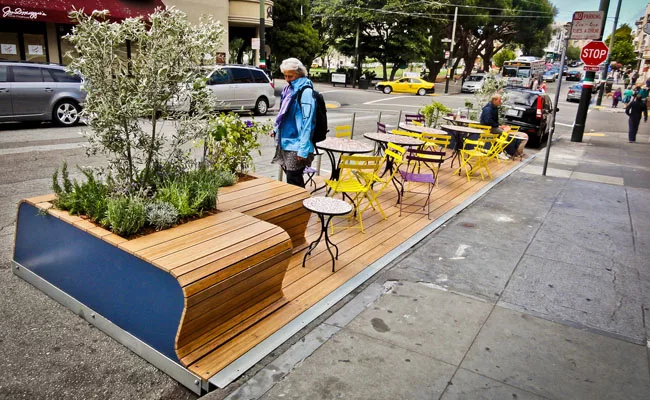
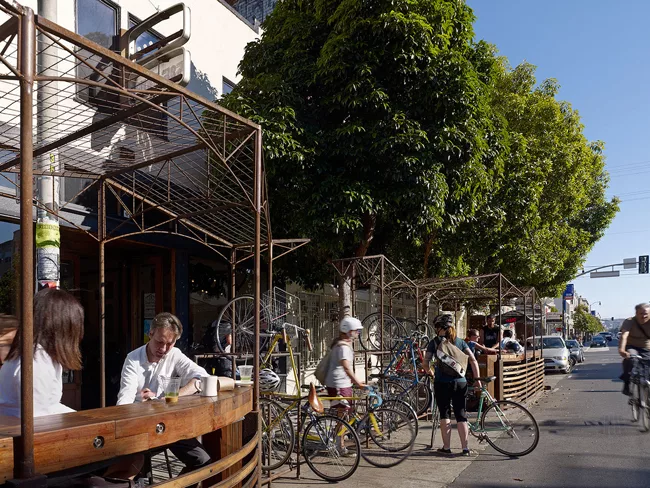
Rebar, a San Francisco firm, designed a parklet outside of Tony's Pizza Napoletana in the North Beach neighborhood.
Life in the Slow Lane
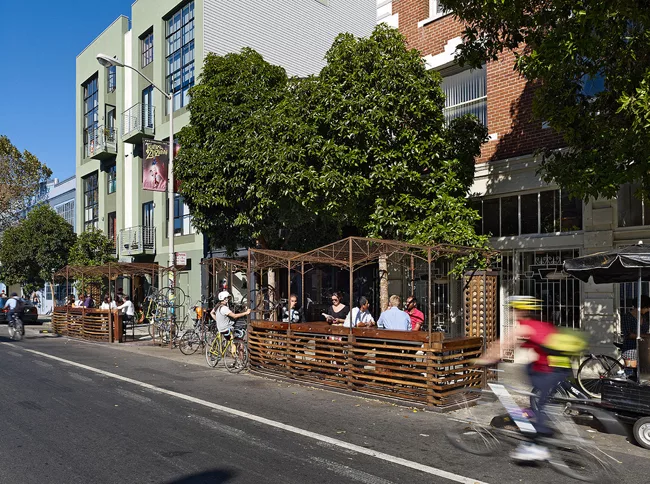
Rebar, a San Francisco firm, designed a parklet outside of Tony's Pizza Napoletana in the North Beach neighborhood.
Photo ' Søren Schaumberg Jensen/REBAR
A parklet by San Francisco's Boor Bridges Architecture on Valencia Street in the Mission neighborhood.
Life in the Slow Lane
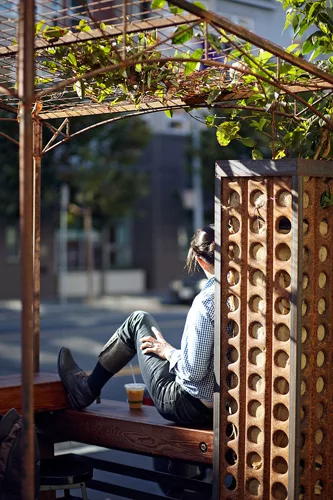
A parklet by San Francisco's Boor Bridges Architecture on Valencia Street in the Mission neighborhood.
Photo ' Søren Schaumberg Jensen/REBAR
A parklet by San Francisco's Boor Bridges Architecture on Valencia Street in the Mission neighborhood.
Life in the Slow Lane
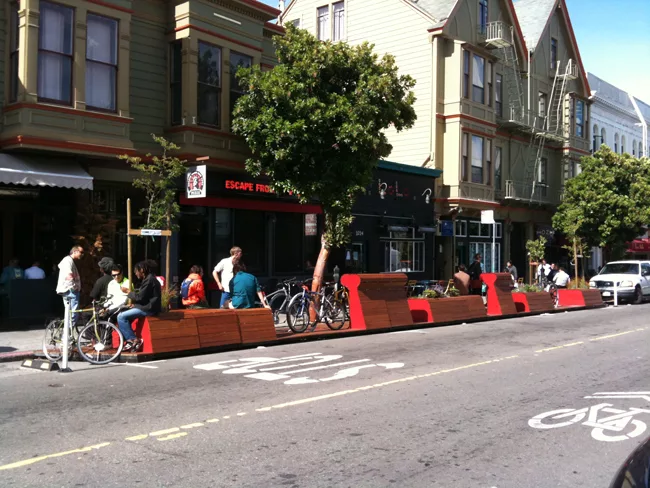
A parklet by San Francisco's Boor Bridges Architecture on Valencia Street in the Mission neighborhood.
Photo ' Søren Schaumberg Jensen/REBAR
A parklet by San Francisco's Boor Bridges Architecture on Valencia Street in the Mission neighborhood.
Life in the Slow Lane
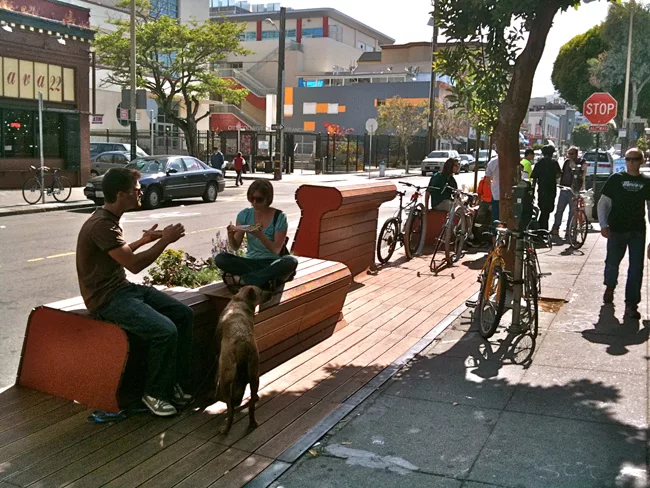
A parklet by San Francisco's Boor Bridges Architecture on Valencia Street in the Mission neighborhood.
Photo ' Søren Schaumberg Jensen/REBAR
Another parklet by Rebar on 22nd Street and Bartlett in the Mission.
Life in the Slow Lane
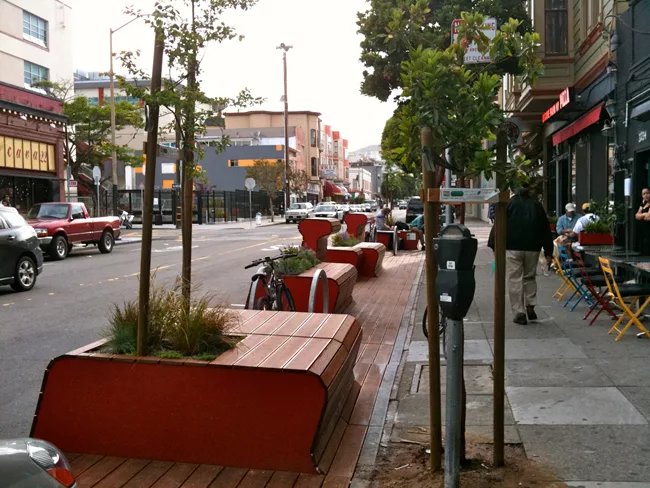
Another parklet by Rebar on 22nd Street and Bartlett in the Mission.
Photo ' Søren Schaumberg Jensen/REBAR
Another parklet by Rebar on 22nd Street and Bartlett in the Mission.
Life in the Slow Lane
Another parklet by Rebar on 22nd Street and Bartlett in the Mission.
Photo ' Søren Schaumberg Jensen/REBAR
Another parklet by Rebar on 22nd Street and Bartlett in the Mission.
Life in the Slow Lane
Another parklet by Rebar on 22nd Street and Bartlett in the Mission.
Photo ' Søren Schaumberg Jensen/REBAR
Rebar, a San Francisco firm, designed a parklet outside of Tony's Pizza Napoletana in the North Beach neighborhood.
A parklet by San Francisco's Boor Bridges Architecture on Valencia Street in the Mission neighborhood.
Another parklet by Rebar on 22nd Street and Bartlett in the Mission.
October 28, 2011

Mini-parks built atop parking spaces are cropping up throughout San Francisco. The trend is spreading to other cities, as well.

Photo ' Søren Schaumberg Jensen/REBAR

Rebar, a San Francisco firm, designed a parklet outside of Tony’s Pizza Napoletana in the North Beach neighborhood.

Related Links: NYC: They Unpaved Paradise and Took Out a Parking Lot

It’s the ultimate revenge on the modern city: one less parking space, one more park. A century and a half after San Francisco city planner Jasper O’Farrell was driven out of town by a lynch mob for taking farmers’ land to widen Market Street, parklets are reversing his folly, expanding the sidewalk into the flow of traffic, reclaiming street for feet.

Nearly two dozen of these miniparks, designed by a coterie of local architects, have appeared in neighborhoods across the city, from Outer Sunset to the Financial District. Built atop parking spaces in front of cafés, galleries, and shops, these slivers of refuge often contain planters, bike racks, and tables at which passersby can enjoy their locally roasted macchiatos. Technically temporary, they’re designed to slip through city bureaucracy. Permits last one year, at which point the parklet is reevaluated at a public hearing. “It’s representative of a new kind of city planning: full-scale prototypes and iterative, changeable design,” says Matthew Passmore of the firm Rebar, which has designed and built three parklets so far.

Seemingly overnight, parklets sprout: driftwood benches outside Trouble Coffee, undulating bamboo planks fronting Revolution Café, a scrap-wood playground before the Fabric8 art gallery. Now emerging in places like Vancouver, Philadelphia, and Chicago, parklets are a San Francisco phenomenon, thronged with sunbathers on fog-free days but defamed by drivers in a city where fickle public transit and complex parking rules make the rare spot as good as gold.

The city’s parklet movement took root several years ago. In late 2008, inspired by Gansevoort Plaza—a pop-up seating area in a bustling intersection in Manhattan’s Meatpacking District—San Francisco launched an experiment on a congested corner in the Castro: It built a pocket park. Concrete barriers, a few tables, and a row of potted trees went up; locals gathered for lunch and people watching; bureaucrats blanched. “The notion of its being exploratory, doing something temporary, was so foreign to career bureaucrats,” said Andres Power, project manager of the city’s Pavement to Parks program, established in 2009. “They said it’s too dangerous—you have streetcars, multiple grids coming together. Our response was, it’s the best place to figure out if it can work, and make changes if it doesn’t.”

The experiment was a success. Power and his team quickly built two more plazas like it in neighboring Noe Valley; then in early 2010, they turned their program loose with a public call for proposals for parklets throughout the city. Forty came in; 20 permits went out. Their next RFP, in June of this year, netted 40 more. Permits are now being issued.

The parklets are permitted by a trio of city agencies—Planning, Public Works, and the MTA—but must be funded, built, and maintained by whoever applies for them (typically owners of cafés, galleries, and stores). City oversight boils down to one simple rule that is enforced by plainclothes inspectors: The space must be public.

The parklets have drawn criticism, from similar circles that fought and killed a proposal for food stands in the city’s beloved Dolores Park and continue to battle the notion of POPOS (privately owned public open spaces) in downtown. Opponents argue that a parklet’s extra seating is a revenue generator veiled as public good. Then there’s the occasional voicing of the car driver’s plight. One more parklet, after all, means two or three fewer places to park.

I’ve seen firsthand how incendiary parklets can be. Enjoying a fair-trade espresso one morning in a parklet outside of Four Barrel Coffee, I was heckled by a passing driver: “How’s it feel to take away my parking spot?” he shouted, peppering his speech with curses.

While the city loses an estimated $5,000 per year in parking fees for each spot (and meter) removed, it gains an array of public gathering places. Built independently, quickly, and cheaply—usually between $7,000 and $20,000, often with materials and funds donated by neighbors—each parklet is defiantly unique, from Four Barrel’s bike rack–cum–garden trellis to Terroir wine shop’s planned bocce ball court. “If this was a typical, permanent city project, you wouldn’t see that level of creativity,” Power says.

Perhaps most notably, parklets give urban dwellers a place to kick back amid the bustle of the city. Says Seth Boor, whose studio, Boor Bridges, designed the Four Barrel parklet, “It’s like having the front porch and yard that none of us has.”

Share This Story

Looking for a reprint of this article?
From high-res PDFs to custom plaques, order your copy today!

Post a comment to this article

Report Abusive Comment

Subscription Center
  • Create an Account
  • Start a Subscription
  • Manage My Account
  • Sign Up for Newsletters
  • Visit Customer Service
  • Update Preferences

More Videos

Sponsored Content

Sponsored Content is a special paid section where industry companies provide high quality, objective, non-commercial content around topics of interest to the Architectural Record audience. All Sponsored Content is supplied by the advertising company and any opinions expressed in this article are those of the author and not necessarily reflect the views of Architectural Record or its parent company, BNP Media. Interested in participating in our Sponsored Content section? Contact your local rep!

close
  • TAMLYN XtremeTrim Exterior Trim
    Sponsored byTamlyn

    Designing Cleaner Panel Facades: Why Exterior Trim Details Matter

  • Building with Vapor Barriers
    Sponsored byReef Industries, Inc.

    Vapor Barriers Help Control Moisture in Tighter Building Designs

  • Duct Interior with Prodeq System
    Sponsored byHenry, a Carlisle Company

    Designing Resilient Water Containment Systems

DESIGN:ED Podcast
Listen to Architectural Record’s DESIGN:ED Podcast

Events

June 10, 2026

Rethinking Stormwater – The Power of Porous Paving

Credits: 1 AIA LU/HSW; 1 AIBD P-CE; 0.1 ICC CEU

Learn how porous paving systems support stormwater management, reduce heat island effects, and enhance sustainable site design performance.

June 11, 2026

Very Early Warning Fire Detection for Mission-Critical Facilities

Credits: 1 AIA LU/HSW; 1 AIBD P-CE; 0.1 ICC CEU

Examine advanced fire detection strategies that support uptime and enhance safety in data centers and other mission-critical facilities.

View All Submit An Event

Products

2026 Architect's Square Foot Costbook

2026 Architect's Square Foot Costbook

See More Products

Popular Stories

Practice Matters illustration

What’s in a (Firm’s) Name? Thinking About Succession and Legacy

Coronado Bridge

The Architect’s Guide to San Diego

Practice Matters illustration

By the Numbers: Counting America's Architects

Riverdale House by Studio Lau

Riverdale House by Studio Lau

House on a Hill

Design Vanguard 2026: Forma

Broader Sustainability of CMU - Free Webinar - May 21, 2026

Related Articles

  • Living the High Life in the Low-Country Residence Residential Quarterly

    See More
  • Living the High Life in the Low-Country Residence

    See More
  • High Life: Condo Living in the Suburban Century

    See More

Related Products

See More Products
  • GlobalData_logo_blue_header.png

    Construction in the US - Key Trends and Opportunities to 2023

  • 3dthinking.jpg

    3D Thinking in Design and Architecture: From Antiquity to the Future

See More Products
×

The latest news and information

#1 Source for Architectural Design, News and Products

SUBSCRIBE
  • RESOURCES
    • Advertise
    • Contact Us
    • Submit
    • Store
  • ACCOUNT CENTER
    • Create an Account
    • Start a Subscription
    • Manage My Account
    • Sign Up for Newsletters
    • Visit Customer Service
    • Update Preferences
  • PRIVACY
    • PRIVACY POLICY
    • TERMS & CONDITIONS
    • DO NOT SELL MY PERSONAL INFORMATION
    • PRIVACY REQUEST
    • ACCESSIBILITY
  • SERVICES
    • Marketing Services
    • Reprints
    • Market Research
    • List Rental
    • Survey/Respondent Access
  • STAY CONNECTED
    • Linkedin
    • Facebook
    • Instagram
    • YouTube
    • X (Twitter)

Copyright ©2026. All Rights Reserved BNP Media, Inc. and BNP Media II, LLC.

Design, CMS, Hosting & Web Development :: ePublishing