Architectural Record
search
cart
facebook twitter linkedin youtube
  • Sign In
  • Subscribe
  • Sign Out
  • My Account
Architectural Record
  • NEWS
    • Latest News
    • Awards
    • Interviews
    • Obituaries
    • Podcasts
      • Design:Ed Podcast
      • Sponsored Podcasts
  • OPINION
    • Book Reviews / Excerpts
    • Exhibition Reviews
    • Forum
  • EXCLUSIVES
    • Videos
    • Design Vanguard
    • Top 300 Firms
    • Sponsored Content
    • Sponsored eBooks
    • From the Archives
  • CONTINUING ED
    • Editorial Continuing Ed
    • CE Center
    • CE Academies
  • PROJECTS
    • Buildings By Type
    • Reuse & Renovation
    • Museums & Arts Centers
    • Colleges & Universities
    • Multifamily Housing
    • Interiors
    • Lighting
    • Kitchen & Bath
  • HOUSES
    • Record Houses
    • House of the Month
    • Featured Houses
  • PRODUCTS
    • Products by Category
    • Record Products of the Year
    • Latest Products
  • EVENTS
    • Dates & Events
    • Record on the Road
    • Innovation Conference
    • Sustainability in Practice
    • Women In Architecture
    • Webinars
    • Ad Excellence Awards
    • Submit an Event
  • CONNECT
    • Ask RECORD AI
    • Newsletters
    • Contact
    • Advertise
    • Editorial Calendar
    • Store
    • Customer Service
  • SUBMIT
    • Submission Guidelines
    • RECORD Competitions
  • MAGAZINE
    • Subscribe
    • My Account
    • Digital Edition
    • Current Issue
    • Firm Pass
    • Historic Archive
Architecture News

Halley VI Antarctic Research Station by Hugh Broughton Architects

Antarctica
By Chris Foges
Making a Home in Antartica

Photo © James Morris

Making a Home in Antartica

Photo © James Morris

Making a Home in Antartica

Photo © Sam Burrell

Making a Home in Antartica

Photo © James Morris

Making a Home in Antartica

Photo © Ant Dubber

Making a Home in Antartica
February 4, 2013

Architects & Firms

Hugh Broughton Architects

When Hugh Broughton Architects won a design competition for the Halley VI Antarctic research station, which officially opens today, the small London-based office had no experience working in extreme environments. But its proposal, developed with engineer AECOM, impressed the jury both for its technical ingenuity and its understanding that for up to 50 scientists, this inhospitable place is home.

British Antarctic Survey (BAS) established the Halley research station on the Brunt Ice Shelf in 1956. Its first four bases were lost to the ice, which piles up relentlessly – over three feet each year – burying and eventually crushing any building sitting on the ground. A fifth was constructed on steel legs that could be laboriously elongated, but after 20 years of service, the legs are encased in 75-feet of ice and break when it moves.

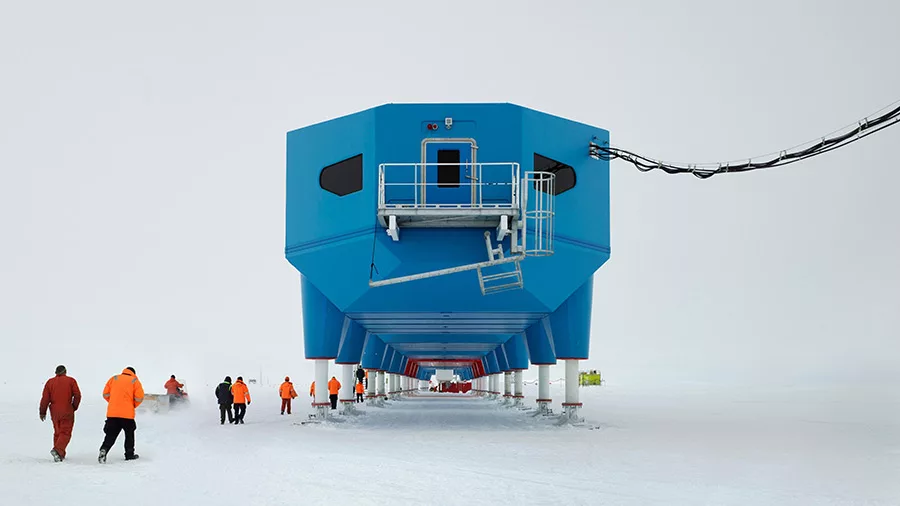
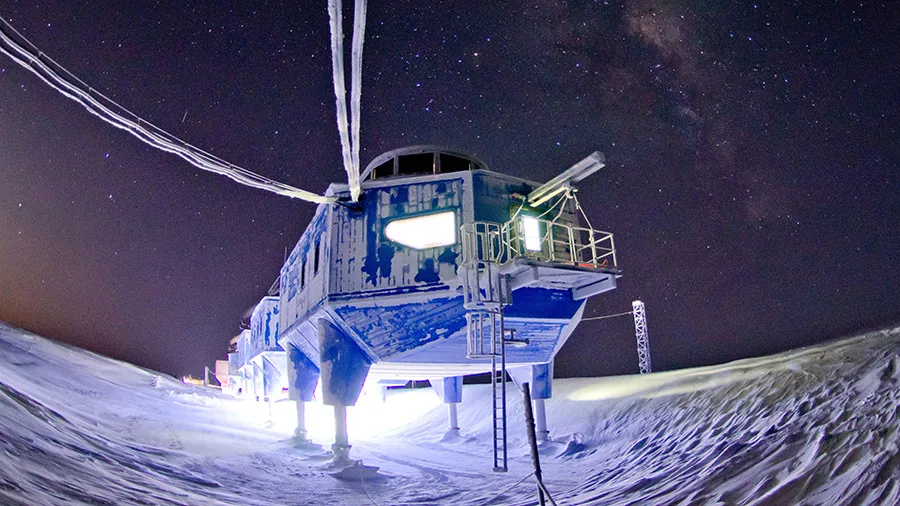
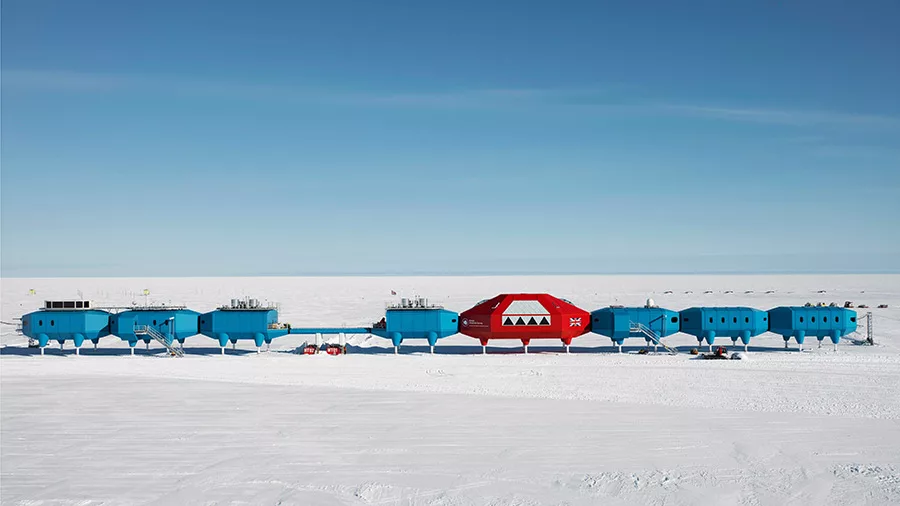
For Halley VI, BAS wanted an easier way to stay clear of the terrain. Broughton’s solution was to place eight modules on extendible hydraulic legs. The legs are retracted one by one, and three feet of snow is piled underneath each of them. Extending their legs again, the buildings haul themselves clear of the rising ground for another year.

The design of the new station also solves another key problem: the ice shelf itself flows towards the ocean, a quarter mile each year. Buildings that cannot be moved have a 10-year lifespan. Halley VI’s legs are fitted with giant skis; when the time comes, the modules will be towed inland by bulldozers.

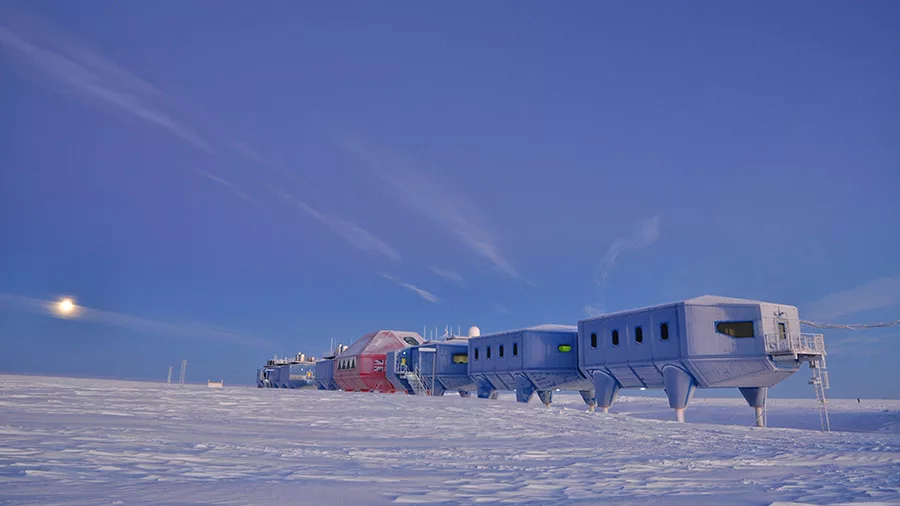
Linked by short, flexible corridors, the modules stand in line like a desert caravan, perpendicular to the direction of the prevailing wind, which drives snow from underneath. Living accommodations and laboratories, clad in blue glass-reinforced plastic, are positioned on either side of a larger unit clad in red.

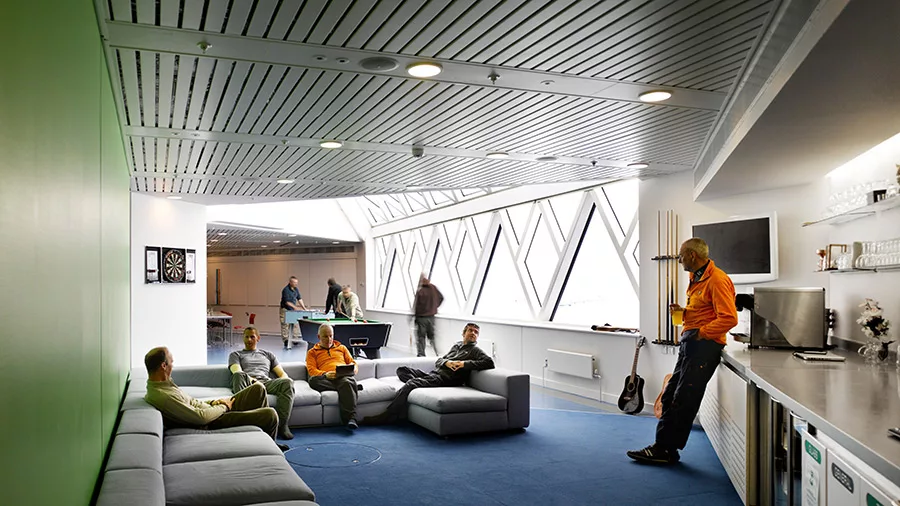
This red module contains a social space that is crucial to the wellbeing of the small crew who live at Halley year-round. Brutal winter conditions of permanent darkness, -60-degree temperatures, and 100-miles-per-hour winds leave them vulnerable to depression and stress – “winter-over syndrome.” Home comforts include a hydroponic salad garden and a climbing wall within a double-height central space lined with Lebanese cedar, selected for its scent. The architect also worked with a color psychologist to identify “refreshing and stimulating” shades, and developed a bedside lamp with a daylight bulb to simulate sunrise.

“It has been a fascinating project,” says architect Hugh Broughton, “because it combines microscopic examples of many different building types – an operating theater, air traffic control, a power plant – rolled into 20,000 square feet.” The opportunity to visit the pristine wilderness was another benefit for which the architect is grateful. Since Halley VI has led to similar projects for Spanish, Indian, and Korean scientists, that adventure may not be over.

Share This Story

Looking for a reprint of this article?
From high-res PDFs to custom plaques, order your copy today!

Chris Foges is a writer and editor working in architecture and the built environment, based in London. He is contributing editor at the RIBA Journal and was formerly editor of Architecture Today magazine. His books include Imagination and The City Works.

Post a comment to this article

Report Abusive Comment

Subscription Center
  • Create an Account
  • Start a Subscription
  • Manage My Account
  • Sign Up for Newsletters
  • Visit Customer Service
  • Update Preferences

More Videos

Sponsored Content

Sponsored Content is a special paid section where industry companies provide high quality, objective, non-commercial content around topics of interest to the Architectural Record audience. All Sponsored Content is supplied by the advertising company and any opinions expressed in this article are those of the author and not necessarily reflect the views of Architectural Record or its parent company, BNP Media. Interested in participating in our Sponsored Content section? Contact your local rep!

close
  • 3D configurator
    Sponsored byDoorBird

    How DoorBird’s 3D Configurator Is Redefining Customization Across Residential and Commercial Design

  • interior of modern office
    Sponsored byCurrent

    The Downlight's Second Life: Why Below-Ceiling Serviceability Is the Specification Detail That Matters Most

  • cold storage facility
    Sponsored byCarlisle SynTec Systems

    How Architects Can Design More Continuous Cold Storage Envelopes

DESIGN:ED Podcast
Listen to Architectural Record’s DESIGN:ED Podcast

Events

July 8, 2026

Co-Intelligence: The Architect's AI Advantage

Credits: 1 AIA LU/Elective; 1 AIBD P-CE; 0.1 ICC CEU

Examine how AI is reshaping architectural practice and how architects can elevate their role from task execution to directing design intent.

July 14, 2026

Designing Toilet Partitions for User Comfort and Utility

Credits: 1 AIA LU/HSW; 1 AIBD P-CE; 0.1 ICC CEU

Evaluate emerging restroom design strategies, materials, and specification options that enhance functionality, inclusivity, user comfort, and sustainability.

View All Submit An Event

Products

2026 Architect's Square Foot Costbook

2026 Architect's Square Foot Costbook

See More Products

Popular Stories

T Bar M Racquet Club

Lake Flato Architects Serves Up a Classic Tennis Clubhouse in Dallas

Under Armour Global  Headquarters

In a Former Industrial Area in Baltimore, Gensler Builds an Office Building that Broadcasts its Client’s Ambitions

Reservoir Park and Recreation Center

A Historic Sand Filtration Plant in Washington, D.C., is Transformed into a Multipurpose Green Space

Shelter Island Residence by Studio Modh Architecture

Shelter Island Residence by Studio Modh Architecture

Iga City Hall Transformation

Maru Architecture Turns a 1960s Government Building in Iga, Japan, into a Library and Hotel

Co-Intelligence: The Architect's AI Advantage - Free Webinar - July 8, 2026

Related Articles

  • The Painted Hall

    The Painted Hall, Old Royal Naval College by Hugh Broughton Architects with Martin Ashley Architects

    See More
  • Colorado Firm Designs New Antarctic Research Base

    Colorado Firm Designs New Antarctic Research Base

    See More
  • Elkhorn River Research Station

    See More
×

The latest news and information

#1 Source for Architectural Design, News and Products

SUBSCRIBE
  • RESOURCES
    • Advertise
    • Contact Us
    • Submit
    • Store
  • ACCOUNT CENTER
    • Create an Account
    • Start a Subscription
    • Manage My Account
    • Sign Up for Newsletters
    • Visit Customer Service
    • Update Preferences
  • PRIVACY
    • PRIVACY POLICY
    • TERMS & CONDITIONS
    • DO NOT SELL MY PERSONAL INFORMATION
    • PRIVACY REQUEST
    • ACCESSIBILITY
  • SERVICES
    • Marketing Services
    • Reprints
    • Market Research
    • List Rental
    • Survey/Respondent Access
  • STAY CONNECTED
    • Linkedin
    • Facebook
    • Instagram
    • YouTube
    • X (Twitter)

Copyright ©2026. All Rights Reserved BNP Media, Inc. and BNP Media II, LLC.

Design, CMS, Hosting & Web Development :: ePublishing