Architectural Record
search
cart
facebook twitter linkedin youtube
  • Sign In
  • Subscribe
  • Sign Out
  • My Account
Architectural Record
  • NEWS
    • Latest News
    • Awards
    • Interviews
    • Obituaries
    • Podcasts
      • Design:Ed Podcast
      • Sponsored Podcasts
  • OPINION
    • Book Reviews / Excerpts
    • Exhibition Reviews
    • Forum
  • EXCLUSIVES
    • Videos
    • Design Vanguard
    • Top 300 Firms
    • Sponsored Content
    • Sponsored eBooks
    • From the Archives
  • CONTINUING ED
    • Editorial Continuing Ed
    • CE Center
    • CE Academies
  • PROJECTS
    • Buildings By Type
    • Reuse & Renovation
    • Museums & Arts Centers
    • Colleges & Universities
    • Multifamily Housing
    • Interiors
    • Lighting
    • Kitchen & Bath
  • HOUSES
    • Record Houses
    • House of the Month
    • Featured Houses
  • PRODUCTS
    • Products by Category
    • Record Products of the Year
    • Latest Products
  • EVENTS
    • Dates & Events
    • Record on the Road
    • Innovation Conference
    • Sustainability in Practice
    • Women In Architecture
    • Webinars
    • Ad Excellence Awards
    • Submit an Event
  • CONNECT
    • Ask RECORD AI
    • Newsletters
    • Contact
    • Advertise
    • Editorial Calendar
    • Store
    • Customer Service
  • SUBMIT
    • Submission Guidelines
    • RECORD Competitions
  • MAGAZINE
    • Subscribe
    • My Account
    • Digital Edition
    • Current Issue
    • Firm Pass
    • Historic Archive
Architecture News

Architects Remember the '64-65 World's Fair
By Fred A. Bernstein
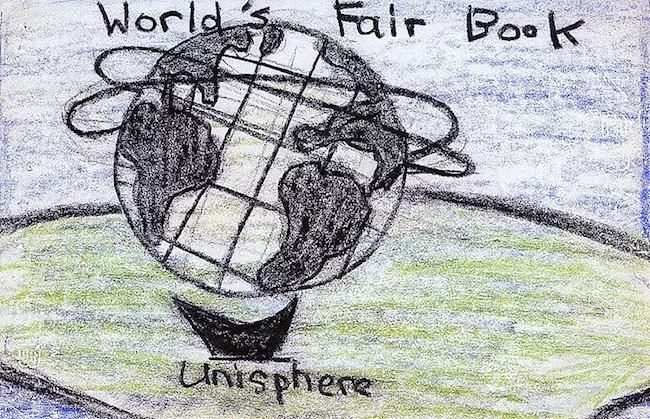
Architect Alexander Gorlin's drawings of the 1964-65 World's Fair showed early promise. Here, the Unisphere, a 12-story high, stainless steel globe in Queens, New York's Flushing Meadows-Corona Park.
Architects Remember the '64-65 World's Fair
Architect Alexander Gorlin's drawings of the 1964-65 World's Fair showed early promise. Here, the Unisphere, a 12-story high, stainless steel globe in Queens, New York's Flushing Meadows-Corona Park.
Image courtesy Alexander Gorlin
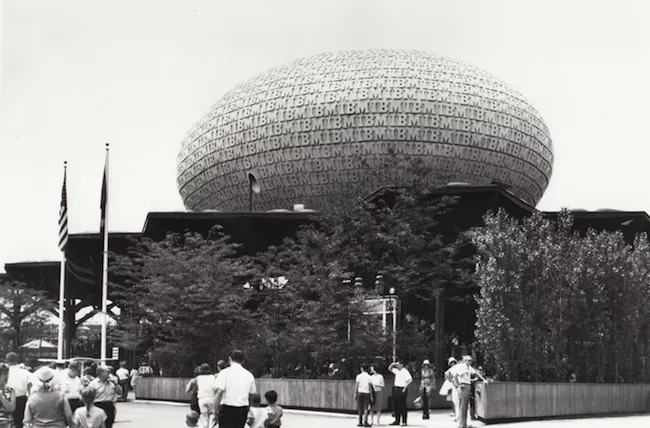
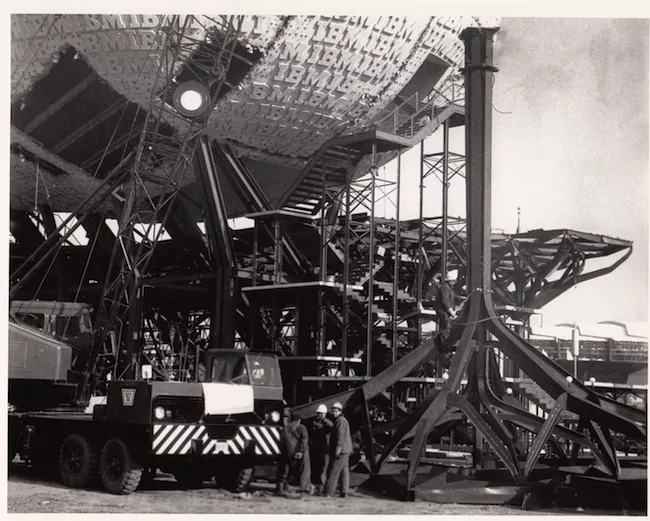
The IBM Pavilion, designed by Charles Eames and Eero Saarinen Associates.
Architects Remember the '64-65 World's Fair
The IBM Pavilion, designed by Charles Eames and Eero Saarinen Associates.
Photo courtesy Queens Museum
The IBM Pavilion, designed by Charles Eames and Eero Saarinen Associates.
Architects Remember the '64-65 World's Fair
The IBM Pavilion, designed by Charles Eames and Eero Saarinen Associates.
Photo courtesy Queens Museum
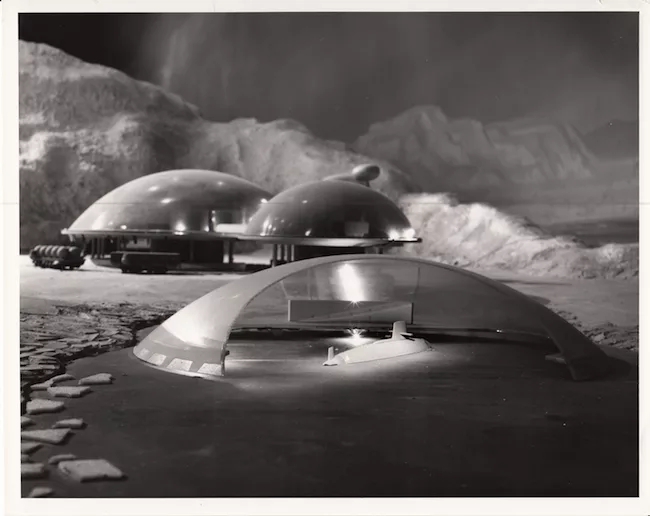
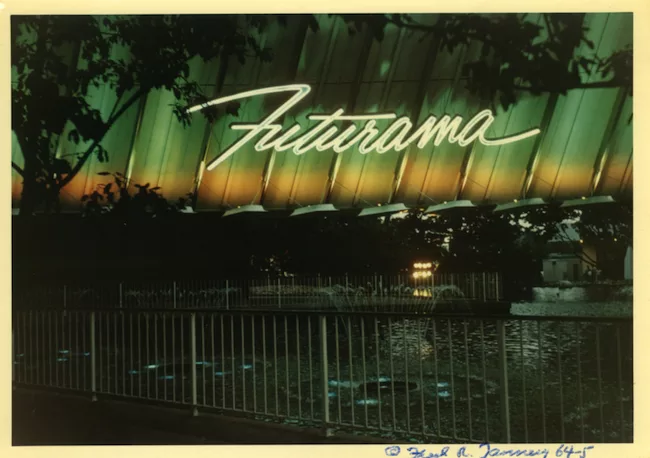
General Motors' Futurama exhibit envisioned a city 10,000 feet under the ocean, reached by atomic submarines.
Architects Remember the '64-65 World's Fair
General Motors' Futurama exhibit envisioned a city 10,000 feet under the ocean, reached by atomic submarines.
Image courtesy Queens Museum
General Motors' Futurama exhibit envisioned a city 10,000 feet under the ocean, reached by atomic submarines.
Architects Remember the '64-65 World's Fair
General Motors' Futurama exhibit envisioned a city 10,000 feet under the ocean, reached by atomic submarines.
Image courtesy Queens Museum
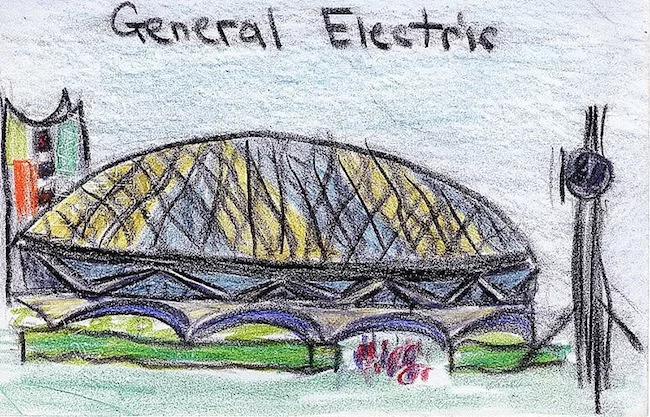
Architect Alexander Gorlin drew the General Electric pavilion during a childhood visit to the fair.
Architects Remember the '64-65 World's Fair
Architect Alexander Gorlin drew the General Electric pavilion during a childhood visit to the fair.
Image courtesy Alexander Gorlin
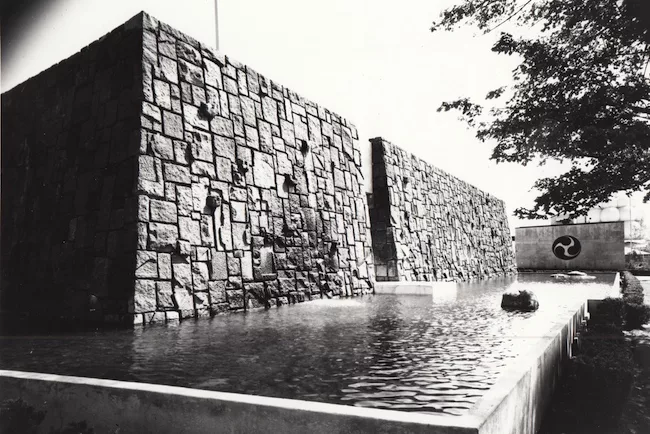
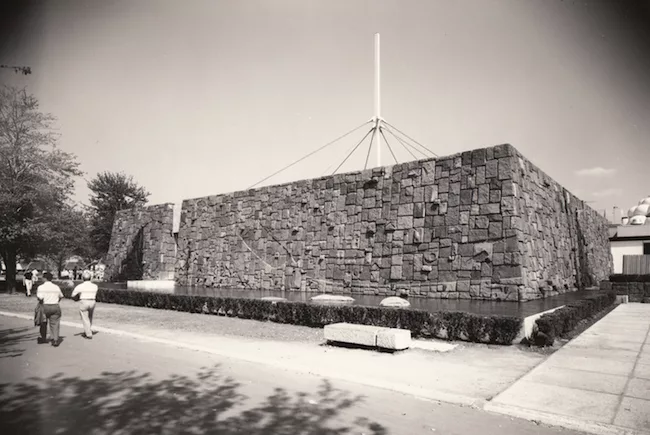
The Japanese Pavilion, by Kunio Maekawa.
Architects Remember the '64-65 World's Fair
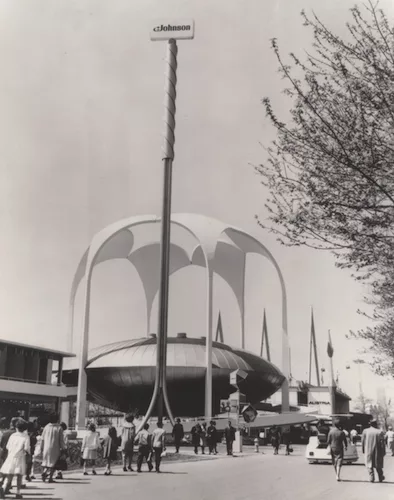
The Japanese Pavilion, by Kunio Maekawa.
Photo courtesy Queens Museum
The Japanese Pavilion, by Kunio Maekawa.
Architects Remember the '64-65 World's Fair
The Japanese Pavilion, by Kunio Maekawa.
Photo courtesy Queens Museum
The Johnson Wax theater.
Architects Remember the '64-65 World's Fair
The Johnson Wax theater.
Photo courtesy Queens Museum
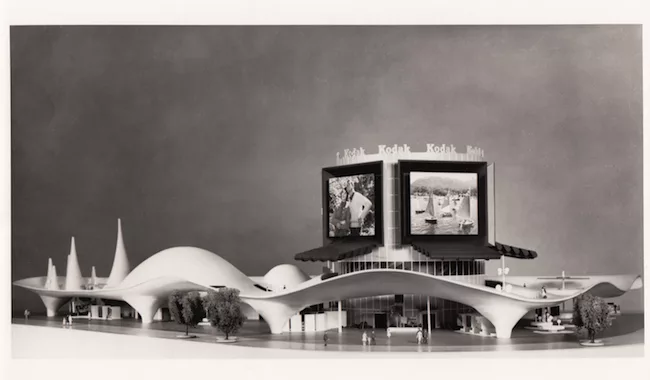
A model of the Kodak Pavilion.
Architects Remember the '64-65 World's Fair
A model of the Kodak Pavilion.
Image courtesy Queens Museum
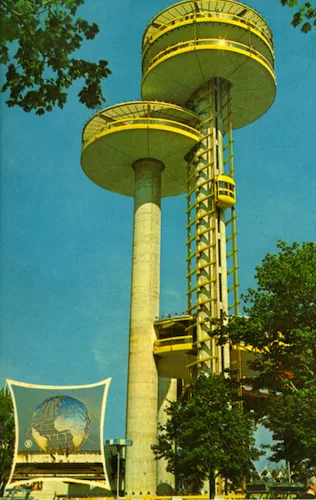
The New York State Pavilion, designed by Philip Johnson.
Architects Remember the '64-65 World's Fair
The New York State Pavilion, designed by Philip Johnson.
Image courtesy Queens Museum
The Spanish Pavilion, designed by Madrid architect Javier Carvajal with the help of New Yorkers Kelly & Gruzen.
Architects Remember the '64-65 World's Fair
The Spanish Pavilion, designed by Madrid architect Javier Carvajal with the help of New Yorkers Kelly & Gruzen.
Photo courtesy Queens Museum
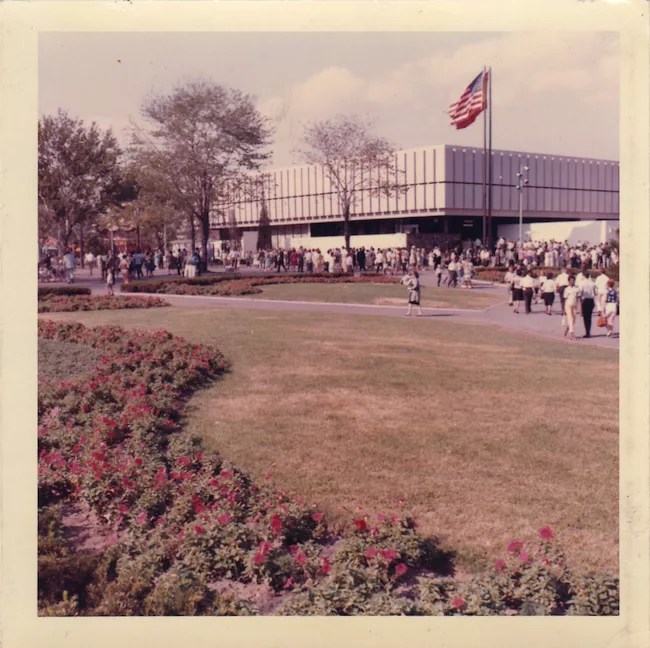
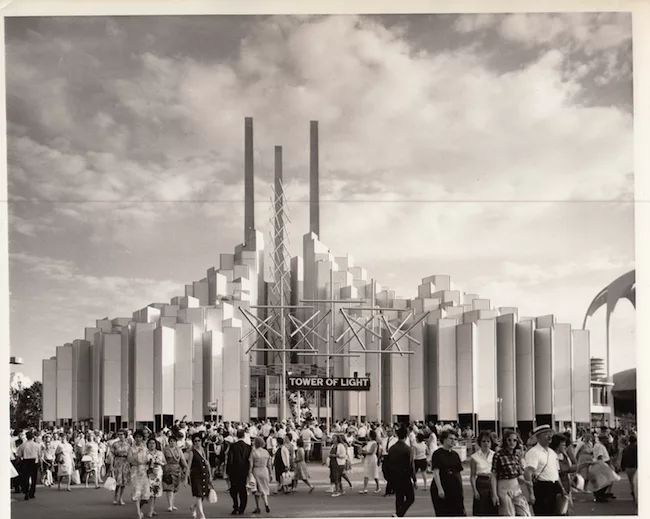
The Tower of Light.
Architects Remember the '64-65 World's Fair
The Tower of Light.
Photo courtesy Queens Museum
Architect Alexander Gorlin's drawings of the 1964-65 World's Fair showed early promise. Here, the Unisphere, a 12-story high, stainless steel globe in Queens, New York's Flushing Meadows-Corona Park.
The IBM Pavilion, designed by Charles Eames and Eero Saarinen Associates.
General Motors' Futurama exhibit envisioned a city 10,000 feet under the ocean, reached by atomic submarines.
Architect Alexander Gorlin drew the General Electric pavilion during a childhood visit to the fair.
The Japanese Pavilion, by Kunio Maekawa.
The Johnson Wax theater.
A model of the Kodak Pavilion.
The New York State Pavilion, designed by Philip Johnson.
The Spanish Pavilion, designed by Madrid architect Javier Carvajal with the help of New Yorkers Kelly & Gruzen.
The Tower of Light.
April 18, 2014

Fifty years ago this month, an architectural wonderland opened in Queens, New York—the 1964-65 World’s Fair that Robert Moses created to bring millions of visitors to Flushing Meadows and raise money to build a permanent park there. Unlike several earlier fairs, notably the 1893 Chicago exposition, with its all-white neoclassical confections, Moses’s effort lacked an architectural through-line; 140 exhibitors did pretty much what they pleased. That meant the sprawling fair lacked visual coherence, but also that companies and countries competed to attract visitors, if not with high architecture than with garish architectural gimmickry, including bright colors, odd shapes, and novel materials.

Critics—which is to say, adults—were almost universally dismissive of the effort. In a Life Magazine article titled “If This Is Architecture, God Help Us” Vincent Scully Jr. wrote: “I doubt whether any fair was ever so crassly, even brutally, conceived as this one.” For her part, Ada Louise Huxtable, writing in The New York Times, called the fair “disconnected, grotesque, lacking any unity of concept or style,” though she added that it is “just those accidental juxtapositions and cockeyed contrasts built into the fair that give it its particular attraction and charm.” She called much of it “trick or treat architecture.”

But for children, especially children interested in design, the experience was very different. Ask a 50-something architect who visited the fair about it, and you will see eyes light up, as detailed descriptions of long-ago buildings emerge: the Tower of Light, whose base resembled Superman’s Fortress of Solitude; the petal-like structure embracing the Johnson Wax theater; the Kodak pavilion, with its moon-like roof; and General Electric’s lightbulb-studded Carousel of Progress. (They also remember the exhibitions inside, which included George Nelson’s witty displays for the Chrysler Pavilion but for the most part equated progress with rampant suburbanization.)

“I was in disbelief, thinking I was seeing something from the future,” recalls Ann Marie Baranowski, a principal at Jacobs KlingStubbins, of her first glimpse of Philip Johnson’s New York State Pavilion. James Sanders, an author and architect, recalls the flared entry area of the General Motors Futurama—“this great big swoopy thing”—and the forest of steel girders (with thousands of Plexiglas leaves) supporting IBM’s egg-shaped arena. The Tower of Light, composed of 600 aluminum prisms bracketing a 12-billion-candlepower beam aimed skyward, made a powerful impression on Alexander Gorlin, who heads his own Manhattan firm. “The fair’s phantasmagorical architecture,” he says, “freed my mind from our tiny apartment and enabled me to imagine a future.”

For some kids, the fair became a kind of obsession. “I was mesmerized by a documentary about the making of the Unisphere,” says Barry Goralnick, who runs his own firm in Manhattan. Gorlin kept detailed diaries of his trips to the fair, illustrated with crayon drawings of the buildings. “It was the confirmation, not just that architecture was my calling,” he says, “but that architecture could be something amazing.” Baranowski notes, “I’m surprised by how much I remember. It was a formative experience for me.”

Richard Olcott, an Ennead partner, who was nine when he visited the fair, recalls GM’s pavilions as “mind-blowing.” Sanders visited the fair more than 20 times, even celebrating his 10th birthday there. “The nature of it being these slightly showy, gaudy things wasn’t lost on me. It wasn’t serious architecture,” he remembers. “But that didn’t make it any less fun.” Jonathan Marvel, owner of the Manhattan firm that bears his name, was only four when he visited the fair, but he says he remembers it as the “most exciting thing that had ever happened to me.”

Whether they came from suburbs or small towns (like Baranowski, who remembers Chicopee, Massachusetts, as architecturally bland), or from nearby Rego Park, Queens (Gorlin), or from Manhattan (Sanders), they experienced the fair as a taste of the future. And in a way, it was the future. The fair’s most daring buildings, in many cases, didn’t explore new construction methods so much as pretend to explore new construction methods, using jerry-rigged carpentry and tacked-on sheetrock to simulate the kinds of things that architects like Frank Gehry and Zaha Hadid would create, with more time, money, and CAD systems, decades later. Put another way, the fantasies of the fair came back with a vengeance in the “starchitect” era of the 1990s and early 2000s, when technology caught up to the vision.

In books and articles about the fair, it is remembered as an anachronism—as an attempt to put a happy face on an America that was coming apart at the seams. The news in the months leading up to the opening of the fair included John F. Kennedy's assassination, race riots, and Kitty Genovese’s murder in another section of Queens. But Sanders remembers it differently, as “the end of an age of innocence, the last time people could believe the future was going to be better, and architecture would very much be part of it.” Thomas Balsley, the landscape architect, was a college student and recalls the fair as “this marvelous place in which everything seemed possible. I distinctly remember seeing for the first time how planning, landscape architecture, and architecture could fuse into what felt like, at the time, a better world.” Youthful idealism? Maybe, but the same idealism has guided many architects who visited the fair through careers rooted in public service.

There were some buildings that adult aficionados admired. Huxtable lauded the Spanish pavilion, designed by the Madrid architect Javier Carvajal with the help of New Yorkers Kelly & Gruzen, for its “somber palette of muted earth colors in tile floors and walnut ceilings.” Another critical favorite was the Japanese pavilion, a mast-hung, stone-faced edifice by Kunio Maekawa. Several Scandinavian offerings garnered praise, as did the Hall of Science, a cathedral-like triumph by Wallace Harrison.  The IBM pavilion was showy, like all the corporate displays, but at least it had pedigree: the building, an egg-shaped structure into which a steeply-raked grandstand was raised on hydraulic lifts, was designed by Eero Saarinen’s firm and contained exhibitions by Charles and Ray Eames in a multi-screen format that remains influential to this day. And some critics, including Huxtable and Scully, liked Johnson’s New York State Pavilion, with its poured concrete observation towers and tensile roof protecting a vast, mosaic map of New York State. 

Virtually all of the pavilions were torn down or removed when the fair closed. But Johnson’s pavilion has remained in place, a disintegrating symbol of the fair’s dismaying denouement. Slammed by government leaders for failing to meet its financial goals, and viewed with cynicism ever since, the 1964-65 World’s Fair has suffered more than its share of indignities. But in the minds of the children who experienced it as an architectural Land of Oz, it remains a triumph.

Maybe the highest praise for the fair, as a springboard for childhood architectural fixations, comes from Scott Specht of the New York and Austin firm Specht Harpman. Born in 1963, “I was too young to have seen the fair,” says Specht. “But my parents made the trip, and when I was about six or seven, I found an official souvenir map that they had packed away. I remember being completely obsessed with that map for years. It was highly detailed, full-color, and drawn in axonometric projection. I researched every building, and in those pre-Internet days, tried to gather as much information as I could.”

These days, the Internet makes gathering information about the pavilions a cinch. But no Google image search can capture the excitement of those incipient architects who were lucky enough to visit them as children.

Share This Story

Looking for a reprint of this article?
From high-res PDFs to custom plaques, order your copy today!

Fred Bernstein studied architecture at Princeton and law at NYU and writes about both subjects.

Post a comment to this article

Report Abusive Comment

Subscription Center
  • Create an Account
  • Start a Subscription
  • Manage My Account
  • Sign Up for Newsletters
  • Visit Customer Service
  • Update Preferences

More Videos

Sponsored Content

Sponsored Content is a special paid section where industry companies provide high quality, objective, non-commercial content around topics of interest to the Architectural Record audience. All Sponsored Content is supplied by the advertising company and any opinions expressed in this article are those of the author and not necessarily reflect the views of Architectural Record or its parent company, BNP Media. Interested in participating in our Sponsored Content section? Contact your local rep!

close
  • cold storage facility
    Sponsored byCarlisle SynTec Systems

    How Architects Can Design More Continuous Cold Storage Envelopes

  • TAMLYN XtremeTrim Exterior Trim
    Sponsored byTamlyn

    Designing Cleaner Panel Facades: Why Exterior Trim Details Matter

  • Building with Vapor Barriers
    Sponsored byReef Industries, Inc.

    Vapor Barriers Help Control Moisture in Tighter Building Designs

DESIGN:ED Podcast
Listen to Architectural Record’s DESIGN:ED Podcast

Events

June 18, 2026

Rebooting the Aging Office Building

Credits: 1 AIA LU/HSW; 1 AIBD P-CE; 0.1 ICC CEU; 1 PDH

Explore façade retrofit strategies and award-winning design concepts that can transform aging office buildings into healthier, higher-performing workplaces for today’s hybrid workforce.

June 23, 2026

Enhancing Fire Resistance with Advanced PVC Solutions

Credits: 1 AIA LU/HSW; 1 AIBD P-CE; 0.1 ICC CEU; 1 IIBEC CEH

Evaluate advanced PVC solutions that improve fire resistance, support WUI compliance, and enhance resilience in residential and commercial building design.

View All Submit An Event

Products

2026 Architect's Square Foot Costbook

2026 Architect's Square Foot Costbook

See More Products

Popular Stories

SanDiegoAirport

Top 300 Architecture Firms of 2026

Coronado Bridge

The Architect’s Guide to San Diego

Lorcan O' Herilhy

California Architect Lorcan O’Herlihy Has Died, Age 66

CCA, Studio Gang

The Winners of the AIA’s 2026 Architecture Award Range from Collegiate Rowing Hubs to Housing for the Homeless

Dusk House

Design Vanguard 2026: ONO

Rebooting the Aging Office Building - Free Webinar - June 18, 2026

Related Articles

  • Court of Honor

    Lessons of the Chicago World's Fair

    See More
  • The Belgian Friendship Building

    A New Book Chronicles the Strange Saga of Belgium’s Contribution to the 1939 New York World’s Fair

    See More
  • Romaldo Giurgola

    Architects Remember Romaldo Giurgola

    See More
×

The latest news and information

#1 Source for Architectural Design, News and Products

SUBSCRIBE
  • RESOURCES
    • Advertise
    • Contact Us
    • Submit
    • Store
  • ACCOUNT CENTER
    • Create an Account
    • Start a Subscription
    • Manage My Account
    • Sign Up for Newsletters
    • Visit Customer Service
    • Update Preferences
  • PRIVACY
    • PRIVACY POLICY
    • TERMS & CONDITIONS
    • DO NOT SELL MY PERSONAL INFORMATION
    • PRIVACY REQUEST
    • ACCESSIBILITY
  • SERVICES
    • Marketing Services
    • Reprints
    • Market Research
    • List Rental
    • Survey/Respondent Access
  • STAY CONNECTED
    • Linkedin
    • Facebook
    • Instagram
    • YouTube
    • X (Twitter)

Copyright ©2026. All Rights Reserved BNP Media, Inc. and BNP Media II, LLC.

Design, CMS, Hosting & Web Development :: ePublishing