Newsmaker: Theaster Gates
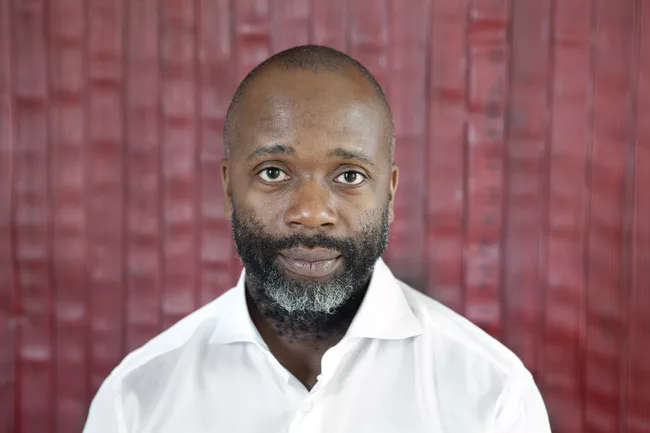
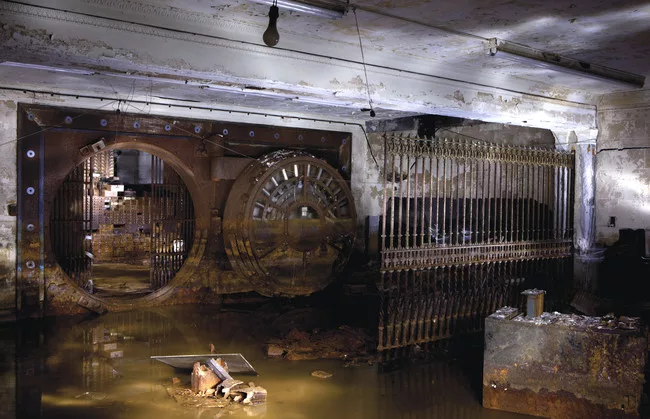
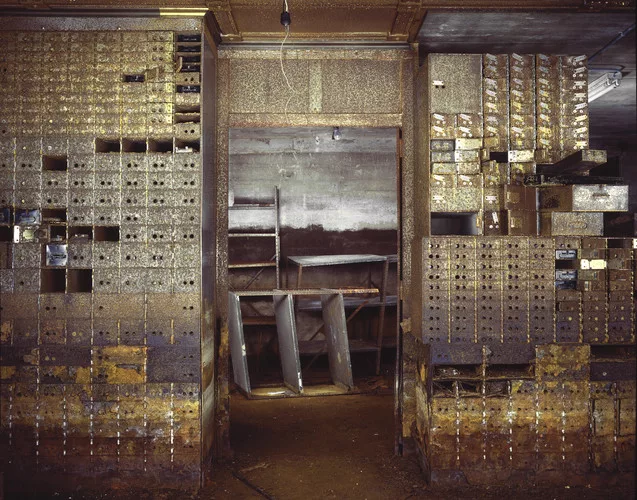

Theaster Gates is a performance artist, potter, object maker, educator, urban planner, and innovator, and he has become a catalyst for renewal on Chicago’s South Side by putting his background to use in a unique way. His Dorchester Projects transformed abandoned houses into small cultural centers. He partnered with the University of Chicago, where he is a lecturer in the Department of Visual Arts, to create the Arts Incubator for artists-in-residence in a neglected building. And he’s now working on transforming the long-vacant, former Stony Island State Savings Bank into a cultural center and archive housing the collection of John H. Johnson, the founder of Ebony and Jet magazines.
RECORD talked with Gates in Detroit, where he participated in the second annual Culture Lab Detroit, a conference that engages design and entrepreneurial talent to bring awareness to and stimulate development in the Motor City. On May 1, Gates will present the 10th annual Lewis Mumford Lecture at The City College of New York.
People have called you a social artist, a conceptual artist, a spatial artist. What do you call yourself?
I’m an artist. We’ve come to reduce things so much. Back in the day, an artist was also an alchemist and had an understanding of mineralogy. Over time we’ve created what we think is efficiency in these intellectual hierarchies, but I actually think it works against a whole being. I’m an artist whose training is in a couple of things and I’m passionate about a couple of things, but I like to think creatively in the world. And that’s all that matters to the disciplinary allies that I have, whether that’s a growing, fumbling knowledge of development, or training in urban planning, or a love of performance.
It’s interesting how you bring up the evolution of the idea of the artist, because you’ve also been described as an artist for today. Shigeru Ban was recently awarded the Pritzker Prize, recognizing his architecture and also his disaster relief work. Is the social aspect of your work timelier, more relevant, and more seen as “art” than perhaps it would have been before?
Isn’t the social always a part of art and architecture? So then the word social must be a code. We must be saying certain things when we use the word. Are we saying Shigeru thinks about certain communities? Is there a relationship between the word social and the idea of poverty and of destitution? Isn’t architecture always responding in some part to that? Aren’t artists always thinking about what’s happening outside of their studios and isn’t that part of the thing that informs what they make? The trap that I’m trying to avoid is the constricting of our vocations. I think about transformation—the transformation of material, the transformation of space. And I can’t think about material or spatial transformation without thinking about people. There are times I think about specific people or specific groups of people. And there are times when the outside, because our boxes are so narrow, they see a brother working in the hood they immediately call that community development. We have to find whatever grounding we can—political, cultural, artistic—to recognize the place we have in the city. Our cities need to be critiqued, and I’m looking for ways to do that without protest, but by design, by contributing. And that for me is where I want to root a portion of my artistic practice.
What about the other portion of your artistic practice? Like Ban, who also does very high-end luxury apartments that sell for millions of dollars apiece, you do works that sell for hundreds of thousands of dollars. Are those two things that can live happily together? Does one work support the other?
Unfortunately, we think we have to choose. We think that in order to be a successful architect we have to say that we concentrate on public buildings, or we concentrate on high-end homes. But I actually think that if we’re curious—and the principal driving force isn’t just paying the bills—but also deeply connected to things that we believe in, then we’ll find ourselves doing any number of right-fitting projects. So I enjoy making, any kind of making.
Museums across the world are experiencing incredibly high attendance rates. The Louvre has reached 10 million annual visitors for example. But even with such high attendance rates, the audience may still be very narrow. In a sense, are you bringing the museum, or art, to the places where that particular segment of the population, who is underrepresented at museums, lives?
I would accept that, historically, museums might have been made for the wealthy. And if they continue to only serve the wealthy, I wouldn’t be mad at them. I think that some museums understand that culture is everyone’s right, and that’s part of their mission. But I also think that museums are not the only platform whereby people can experience culture. So I don’t feel like, because of the work that I’m doing at Dorchester or at the University of Chicago, I’m necessarily doing that in response to the lack of critical engagement museums have in my neighborhood. I just think, in addition to that one small cultural platform—the museum is one small cultural platform in relationship to the rest of what cities can provide—that I’m interested in that other stuff, too. In what museums can do, but also what I can do in the rest of the world that doesn’t need an institutional apparatus at all.
We’re talking now from Detroit. Why are you here, and is there a way you can translate what you are doing in Chicago to cities like Detroit?
I grew up going to church, and there was this idea of witnessing. There was something you believe in and you want others to believe in it, so you share it. Maybe I’m here as a witness, to say that the challenges our cities have can be solved by real and normal people. And that I want to be a witness to the success of these normal people trying to do things in Detroit, and I want to give witness to the work that I’ve been doing. So I’m here to talk and encourage and be encouraged. I’ve asked myself, “Is there work for me to do here in Detroit?” Up to now, that answer has been no. I can be an example from Chicago or St. Louis and other places that I’m working, but I didn’t have enough bandwidth to think about this city, in part because the way that I’ve been involved in spatial transformation, cultural transformation in Chicago, required that I be there. I believe in individuals who love a place, doing the work. Because I’m not an individual in Detroit, there was no work to be done. But now, five years into this work, 10 years into thinking about these ideas, immaturely, I actually think that witnessing is very important—to gain a foothold in understanding how the forces of a city work, how culture plays a role in that, and how that can create new life and creativity and educational opportunities and new jobs. So if I can imagine Detroit not as Detroit but as an extension of a particular economic and cultural moment that has passed, then maybe there’s a way that all cities have something in common and we need to be witnesses for each other. And I feel like the work that I’m interested in is a conduit for some of those conversations to happen.
You’ve just celebrated one year with the Arts Incubator, and now you’re starting the Stony Island Bank building. Are there things that you’ve learned from the Arts Incubator project that would apply to doing things differently in the next project?
Yeah. They’re already different in that the Arts Incubator was built with support from the University of Chicago. There were a lot of ways it could have gone wrong because there’s been such a long history of failed projects between this poor black community and this large white institution. I had to learn those histories, hear the anxieties from the people who lived through those histories, and then try to be responsive with the Incubator. The bank didn’t have institutional support. There was no money in the TIF (tax increment financing), there is no foot traffic to say that if we build a restaurant or anything here that there’s a local community that’s going to support it. And as a result of all of those things that I couldn’t create a pro forma around, it was very hard to get the party started. So the bank really needed creative solutions. It meant I had to put some skin in the game. I had to find alternative ways of generating revenue, and then once people saw that I was for real, and that I have a track record now, they thought, “Ok, we’ll support half of the investment.” There’s a group called the Chicago Community Loan Fund that specializes in financing high-risk projects in poor communities—they make their money off CRAs and bank tax credits—and they became a partner.
What stage is it at?
We’re building. We hope to be done in late October. We’re going to do a really gentle restoration and critical preservation—that is, some of the decay that is evident from the 30 years of neglect, we’re going to leave. And other parts of it we’re going to make so that it’s conducive to emerging technology work. It’s really about protecting the building and protecting the programs that are happening in the building.
What are some of the programs?
It will become the permanent repository for an archive that was owned by Johnson Publishing Company. They were the first black publishers in the United States and they created Ebony and Jet magazines. We also have a small collection of African American memorabilia that was the collection of a guy named Ed Williams. We’ll use Ed Williams’ collection and the Johnson collection: Williams representing how white America perceived black America at the turn of the century, in all its stereotypical forms, and then how the black middle class responded to those stereotypical images in the 1950s and created new narratives for themselves in the form of this publication. We want these two collections to talk to each other and we want to talk to people about how they can archive the things that they own, that they think are important. The bank will now act as a cultural repository, partnering with other institutions like the University of Chicago and Columbia University. There will also be flexible cultural space, space for dining, event space, and exhibition space. It’s a 17,000-square-foot, three-story building. It’s the last standing terracotta structure on Stony Island, which used to be a really important economic corridor of the South Side.
Is it true you bought the building for a dollar?
Yes, but a dollar is never really a dollar. Before the city made a commitment and the building was turned over to me legally, $350,000 had already been spent—more expensive than a down payment on a $4 million mortgage. There was preliminary work to restore the roof, tap the terracotta, and secure the building from further threat of harm. They wanted to see my capacity to do that before they would agree to give me the building. It was a test, and I passed the test. We worked out the funding structure, so now the city is much more generous.
Are you ok with being called a developer?
You know, development is an action to me. I believe that beautiful things should happen in my neighborhood and that action requires these mechanisms. Rather than getting hung up on how developers do what they do, I’d rather just think, “How can I creatively solve this problem of this abandoned building?” To do that well, I may have to employ the tactics that developers use to make this happen. But there are also some things that I can do as an artist that developers can’t do, like I’ll create a bank bond for the bank and have the bank pay for itself, and that’s poetic to me.
You’re talking about the etchings you created from fragments of the building to resemble a bank bond and sold at Art Basel for $5,000 each?
Yes, I’ll sell it in a particular place where banking has a symbolic meaning. When those moments happen, that’s when I feel like the art that I’m after is bigger than if I just imagined myself as a potter still. It represents something when an architect or a designer or an artist can work in the scale of impossibility and make it possible.