Architectural Record
search
cart
facebook twitter linkedin youtube
  • Sign In
  • Subscribe
  • Sign Out
  • My Account
Architectural Record
  • NEWS
    • Latest News
    • Awards
    • Interviews
    • Obituaries
    • Podcasts
      • Design:Ed Podcast
      • Sponsored Podcasts
  • OPINION
    • Book Reviews / Excerpts
    • Exhibition Reviews
    • Forum
  • EXCLUSIVES
    • Videos
    • Design Vanguard
    • Top 300 Firms
    • Sponsored Content
    • Sponsored eBooks
    • From the Archives
  • CONTINUING ED
    • Editorial Continuing Ed
    • CE Center
    • CE Academies
  • PROJECTS
    • Buildings By Type
    • Reuse & Renovation
    • Museums & Arts Centers
    • Colleges & Universities
    • Multifamily Housing
    • Interiors
    • Lighting
    • Kitchen & Bath
  • HOUSES
    • Record Houses
    • House of the Month
    • Featured Houses
  • PRODUCTS
    • Products by Category
    • Record Products of the Year
    • Latest Products
  • EVENTS
    • Dates & Events
    • Record on the Road
    • Innovation Conference
    • Sustainability in Practice
    • Women In Architecture
    • Webinars
    • Ad Excellence Awards
    • Submit an Event
  • CONNECT
    • Ask RECORD AI
    • Newsletters
    • Contact
    • Advertise
    • Editorial Calendar
    • Store
    • Customer Service
  • SUBMIT
    • Submission Guidelines
    • RECORD Competitions
  • MAGAZINE
    • Subscribe
    • My Account
    • Digital Edition
    • Current Issue
    • Firm Pass
    • Historic Archive
Architecture News

Exhibition Review: Designing for Disaster

By Amanda Kolson Hurley
The recently completed retrofit of San Francisco's Bay Bridge, a designated emergency “lifeline” route, includes a new, self-anchored suspension span—the largest bridge of its kind a
Exhibition Review: Designing for Disaster
The recently completed retrofit of San Francisco's Bay Bridge, a designated emergency “lifeline” route, includes a new, self-anchored suspension span—the largest bridge of its kind anywhere. The East Span is largely designed to be elastic, with sections engineered to move independently.
Photo © Steve Proehl
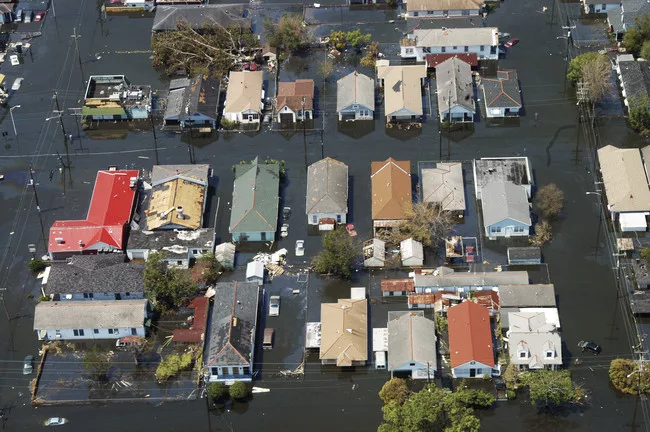
New Orleans, Louisiana, 2005. Flood waters in New Orleans, located below sea level, were slow to dissipate after levees failed during Hurricane Katrina, causing billions in damages.
Exhibition Review: Designing for Disaster
New Orleans, Louisiana, 2005. Flood waters in New Orleans, located below sea level, were slow to dissipate after levees failed during Hurricane Katrina, causing billions in damages.
Photo courtesy NOAA Photo Library, National Weather Service Collection, Lieut. Commander Mike Moran, NOAA Corps, NMAO/AOC
New Orleans, Louisiana, 2005. Flood waters in New Orleans, located below  sea level, were slow to dissipate after levees failed during Hurricane  Katrina, causing billions in damages.
Exhibition Review: Designing for Disaster
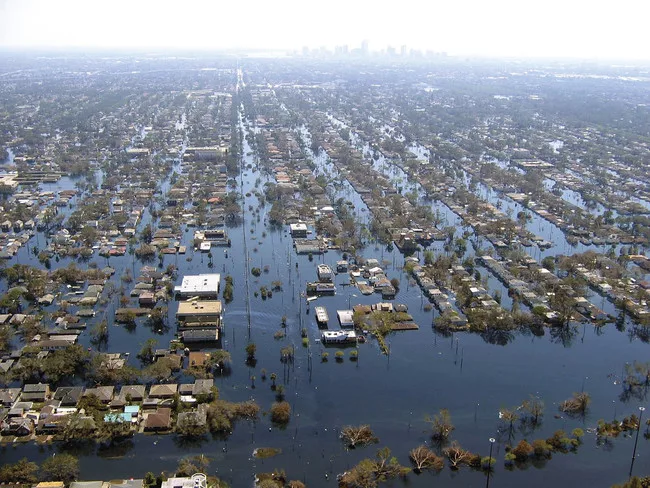
New Orleans, Louisiana, 2005. Flood waters in New Orleans, located below sea level, were slow to dissipate after levees failed during Hurricane Katrina, causing billions in damages.
Photo © NOAA Photo Library, National Weather Service Collection, Lieut. Commander Mike Moran, NOAA Corps, NMAO/AOC
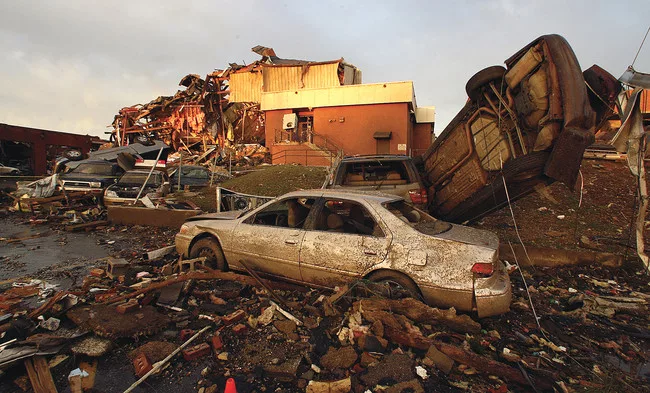
After a March 1, 2007 tornado destroyed the high school in Enterprise, Alabama, taking the lives of eight students, state officials signed a law requiring safe rooms in new K-12 schools.
Exhibition Review: Designing for Disaster
After a March 1, 2007 tornado destroyed the high school in Enterprise, Alabama, taking the lives of eight students, state officials signed a law requiring safe rooms in new K-12 schools.
Photo © AL.com/Press-Register, Mike Kittrell
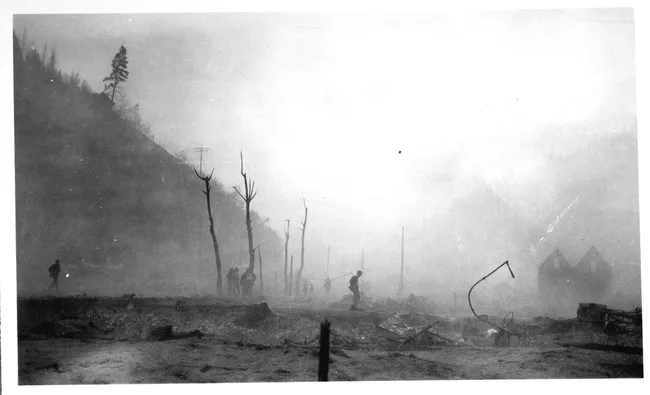
After a series of devastating fires in 1910, including the “The Big Burn,” which charred more than three million acres in Idaho, Washington, and Montana, the U.S. Forest Service initiated
Exhibition Review: Designing for Disaster
After a series of devastating fires in 1910, including the “The Big Burn,” which charred more than three million acres in Idaho, Washington, and Montana, the U.S. Forest Service initiated its fire protection and suppression policies.
Photo courtesy Special Collections and Archives, University of Idaho Library, Moscow, Idaho
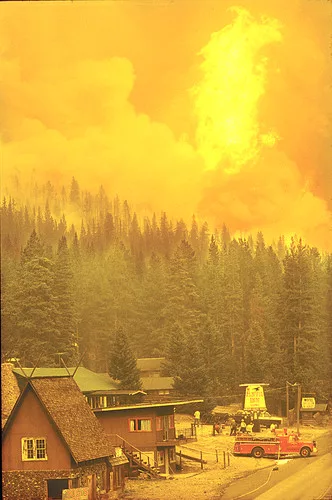
As a result of research conducted after the 1988 Yellowstone Fires, a new plan outlined strict guidelines for managing natural fires and allocated greater funding for fire management.
Exhibition Review: Designing for Disaster
As a result of research conducted after the 1988 Yellowstone Fires, a new plan outlined strict guidelines for managing natural fires and allocated greater funding for fire management.
Photo © Billings Gazette, James Woodcock
Long Beach, New York, October 30, 2012. A signature feature of Long Beach—its boardwalk—lies in ruins after Hurricane Sandy hit the barrier island off the southern shore of Long Island.&#1
Exhibition Review: Designing for Disaster
Long Beach, New York, October 30, 2012. A signature feature of Long Beach—its boardwalk—lies in ruins after Hurricane Sandy hit the barrier island off the southern shore of Long Island.  
Photo © Arden Designs, Kristie Arden
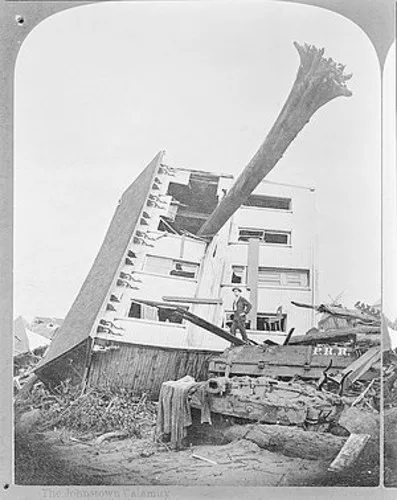
Johnstown, Pennsylvania, 1889.  A poorly maintained private dam ruptured after heavy rains, killing more than 2,200. The tragedy marked the first time the American Red Cross responded after a maj
Exhibition Review: Designing for Disaster
Johnstown, Pennsylvania, 1889.  A poorly maintained private dam ruptured after heavy rains, killing more than 2,200. The tragedy marked the first time the American Red Cross responded after a major natural disaster.
Photo © 1889 by George Barker, Niagara Falls, New York. Library of Congress Prints and Photographs, LC-USZ62-8685
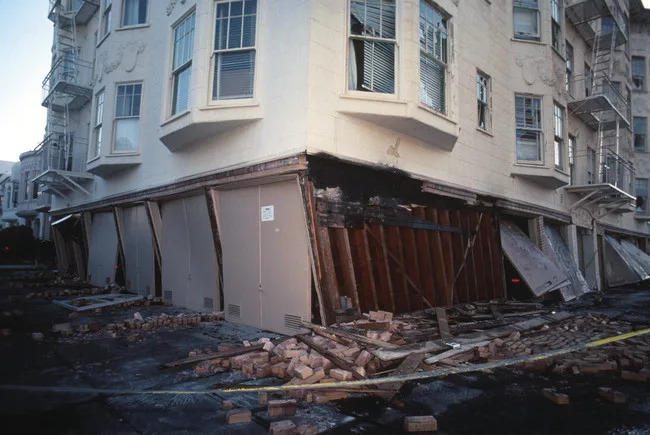
<p class='Standard'>San Francisco, California, October 17, 1989. The damage to the weak, unreinforced garage level of this building at the corner of Beach and Divisadero was typical of the failures se
Exhibition Review: Designing for Disaster

San Francisco, California, October 17, 1989. The damage to the weak, unreinforced garage level of this building at the corner of Beach and Divisadero was typical of the failures seen in the Marina District after the Loma Prieta Earthquake.
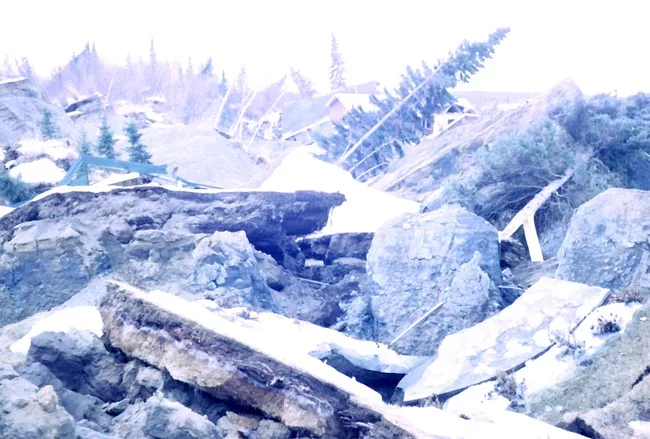
Photo © U.S. Geological Survey, J.K. Nakata
<p class='Standard'>Prince William Sound, Alaska, March 27, 1964. The West Coast &amp; Alaska Tsunami Warning Center was established in the wake of the Great Alaska Earthquake and Tsunami.</p>
Exhibition Review: Designing for Disaster

Prince William Sound, Alaska, March 27, 1964. The West Coast & Alaska Tsunami Warning Center was established in the wake of the Great Alaska Earthquake and Tsunami.
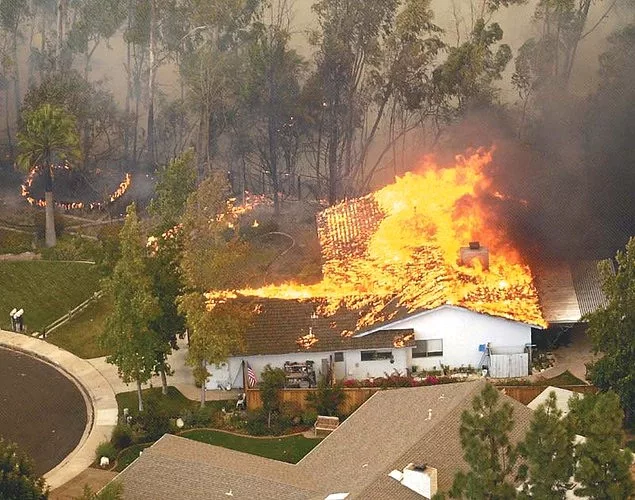
Photo © NOAA Photo Library, Historic Coast & Geodetic Survey Collection
<p class='Standard'>Almost 3,000 homes were lost in the 2003 Cedar Fire in San Diego, California, leading to improved access to fire insurance; landscaping regulations; and better warning, communicati
Exhibition Review: Designing for Disaster

Almost 3,000 homes were lost in the 2003 Cedar Fire in San Diego, California, leading to improved access to fire insurance; landscaping regulations; and better warning, communications, and evacuation plans.
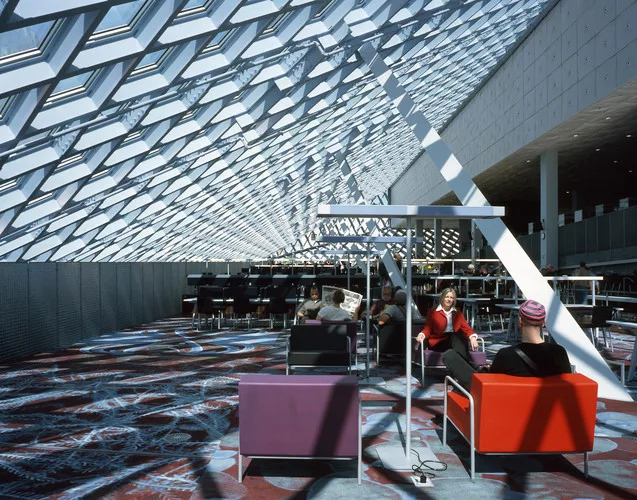
Photo © John Gibbins/U-T San Diego/ZUMA Press
<p class='Standard'>The glass and metal skin of Seattle's Central Library, designed by OMA/LMN and opened in 2004, acts like a giant braced frame, providing resistance to lateral forces from earthquak
Exhibition Review: Designing for Disaster

The glass and metal skin of Seattle's Central Library, designed by OMA/LMN and opened in 2004, acts like a giant braced frame, providing resistance to lateral forces from earthquakes or strong winds.
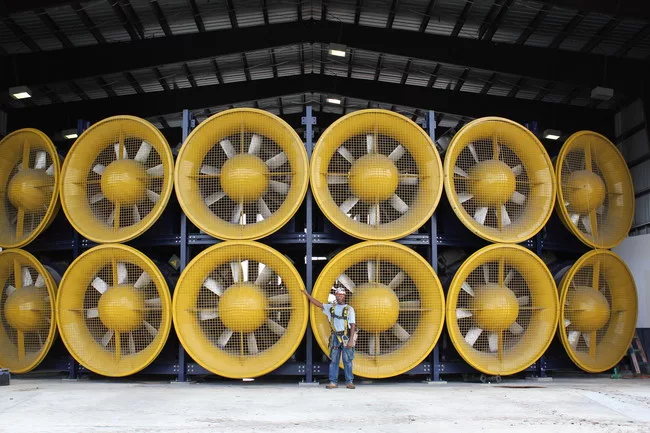
Photo © Philippe Ruault
<p class='Standard'>The International Hurricane Research Center in Miami features 12, six-foot tall fans&#8212;a virtual Wall of Wind&#8212;capable of simulating Category 5 hurricanes to test the perf
Exhibition Review: Designing for Disaster

The International Hurricane Research Center in Miami features 12, six-foot tall fans—a virtual Wall of Wind—capable of simulating Category 5 hurricanes to test the performance of structures and materials.

Photo © Wall of Wind™, Florida International University
The recently completed retrofit of San Francisco's Bay Bridge, a designated emergency &#8220;lifeline&#8221; route, includes a new, self-anchored suspension span&#8212;the largest bridge of its kind a
New Orleans, Louisiana, 2005. Flood waters in New Orleans, located below sea level, were slow to dissipate after levees failed during Hurricane Katrina, causing billions in damages.
New Orleans, Louisiana, 2005. Flood waters in New Orleans, located below  sea level, were slow to dissipate after levees failed during Hurricane  Katrina, causing billions in damages.
After a March 1, 2007 tornado destroyed the high school in Enterprise, Alabama, taking the lives of eight students, state officials signed a law requiring safe rooms in new K-12 schools.
After a series of devastating fires in 1910, including the &#8220;The Big Burn,&#8221; which charred more than three million acres in Idaho, Washington, and Montana, the U.S. Forest Service initiated
As a result of research conducted after the 1988 Yellowstone Fires, a new plan outlined strict guidelines for managing natural fires and allocated greater funding for fire management.
Long Beach, New York, October 30, 2012. A signature feature of Long Beach&#8212;its boardwalk&#8212;lies in ruins after Hurricane Sandy hit the barrier island off the southern shore of Long Island.&#1
Johnstown, Pennsylvania, 1889.&#160; A poorly maintained private dam ruptured after heavy rains, killing more than 2,200. The tragedy marked the first time the American Red Cross responded after a maj
<p class='Standard'>San Francisco, California, October 17, 1989. The damage to the weak, unreinforced garage level of this building at the corner of Beach and Divisadero was typical of the failures se
<p class='Standard'>Prince William Sound, Alaska, March 27, 1964. The West Coast &amp; Alaska Tsunami Warning Center was established in the wake of the Great Alaska Earthquake and Tsunami.</p>
<p class='Standard'>Almost 3,000 homes were lost in the 2003 Cedar Fire in San Diego, California, leading to improved access to fire insurance; landscaping regulations; and better warning, communicati
<p class='Standard'>The glass and metal skin of Seattle's Central Library, designed by OMA/LMN and opened in 2004, acts like a giant braced frame, providing resistance to lateral forces from earthquak
<p class='Standard'>The International Hurricane Research Center in Miami features 12, six-foot tall fans&#8212;a virtual Wall of Wind&#8212;capable of simulating Category 5 hurricanes to test the perf
May 13, 2014

The International Hurricane Research Center in Miami features 12, six-foot tall fans—a virtual Wall of Wind—capable of simulating Category 5 hurricanes to test the performance of structures and materials.

In the weeks before the exhibition Designing for Disaster opened on May 11 at Washington, D.C.’s National Building Museum, a wildfire in Oklahoma forced 1,000 people to evacuate and tornadoes ripped through the South and Midwest, killing 34 people. In the U.S., the threat of natural disaster is always with us.

As the exhibition (open through August 2, 2015) makes clear, our strategies for preventing disasters and lessening their impacts have evolved a lot over the past quarter-century. The show smartly brings these to the fore and makes them tangible, letting visitors unleash gusts on miniature houses in a replica hurricane testing lab, or activate expansion joints to move as in a quake. Throughout, Designing for Disaster stresses how much an individual can do to prepare, from creating fire breaks or buffers around a home to putting together a “go-bag” in case of emergency.

The show is organized by elements: Earth, Air, Fire, and Water. In the Earth room, a mockup of stairs at California Memorial Stadium in Berkeley demonstrates how expansion joints allow the structure to roll with a temblor—a good idea, since the historic stadium sits directly on top of the Hayward Fault. (It got a full seismic upgrade a few years ago.) “The star of this room is the engineer,” said the curator, Chrysanthe Broikos.

In the Air section, visitors can peer into an eight-by-eight-foot safe room built to FEMA specifications out of vertically reinforced concrete masonry units, plywood, and steel. As Broikos points out, FEMA didn’t have these specifications until the late 1990s. Similarly, the International Residential Code didn’t require continuous load paths, which better resist high winds, until 2000. Broikos speculates that the 9/11 terrorist attacks interrupted the momentum for disaster preparedness that had been growing after Hurricane Andrew in 1992.

Of the four parts of the show, Water is the least satisfying. SCAPE founder and design director Kate Orff’s widely-discussed Oyster-tecture scheme gets top billing, while the less well-known but interesting story of Valmeyer, Illinois, a town relocated entirely after a flood in 1993, gets lost. Timing doesn’t seem to have worked in the organizers’ favor; the Rebuild by Design competition just produced 10 schemes for a resilient New York/New Jersey coastline, but these no doubt arrived too late to make it into the show.

The final room of the exhibition has a pantry equipped with emergency supplies like plastic sheeting, duct tape, and sunblock. Walking into it is a bit unsettling—it’s our generation’s version of the bomb shelter. We know that disasters are getting more severe and occurring with more regularity. We can see it and feel it, in addition to hearing 98 percent of the world’s climate scientists say so. Therefore it’s odd and disappointing that the show makes no mention of climate change (at least none that I could find). Designing by Disaster is great at educating visitors about how they can be more hazard-proof. But it misses an opportunity to tell them why they have to be.

KEYWORDS: fire resistance

Share This Story

Looking for a reprint of this article?
From high-res PDFs to custom plaques, order your copy today!

Post a comment to this article

Report Abusive Comment

Subscription Center
  • Create an Account
  • Start a Subscription
  • Manage My Account
  • Sign Up for Newsletters
  • Visit Customer Service
  • Update Preferences

More Videos

Sponsored Content

Sponsored Content is a special paid section where industry companies provide high quality, objective, non-commercial content around topics of interest to the Architectural Record audience. All Sponsored Content is supplied by the advertising company and any opinions expressed in this article are those of the author and not necessarily reflect the views of Architectural Record or its parent company, BNP Media. Interested in participating in our Sponsored Content section? Contact your local rep!

close
  • TAMLYN XtremeTrim Exterior Trim
    Sponsored byTamlyn

    Designing Cleaner Panel Facades: Why Exterior Trim Details Matter

  • Building with Vapor Barriers
    Sponsored byReef Industries, Inc.

    Vapor Barriers Help Control Moisture in Tighter Building Designs

  • Duct Interior with Prodeq System
    Sponsored byHenry, a Carlisle Company

    Designing Resilient Water Containment Systems

DESIGN:ED Podcast
Listen to Architectural Record’s DESIGN:ED Podcast

Events

June 10, 2026

Rethinking Stormwater – The Power of Porous Paving

Credits: 1 AIA LU/HSW; 1 AIBD P-CE; 0.1 ICC CEU

Learn how porous paving systems support stormwater management, reduce heat island effects, and enhance sustainable site design performance.

June 11, 2026

Very Early Warning Fire Detection for Mission-Critical Facilities

Credits: 1 AIA LU/HSW; 1 AIBD P-CE; 0.1 ICC CEU

Examine advanced fire detection strategies that support uptime and enhance safety in data centers and other mission-critical facilities.

View All Submit An Event

Products

2026 Architect's Square Foot Costbook

2026 Architect's Square Foot Costbook

See More Products

Popular Stories

Practice Matters illustration

What’s in a (Firm’s) Name? Thinking About Succession and Legacy

Practice Matters illustration

By the Numbers: Counting America's Architects

House on a Hill

Design Vanguard 2026: Forma

Crane Cove, ONO

Design Vanguard 2026 Winners

House A on a Hill

Design Vanguard 2026: Santiago Valdivieso

Broader Sustainability of CMU - Free Webinar - May 21, 2026

Related Articles

  • Exhibition Review: Designing A Presidential Legacy

    See More
  • Exhibition Review: New Territories: Laboratories for Design, Craft and Art in Latin America

    See More
  • Exhibition Review: Bjarke Ingels' Hot to Cold at the National Building Museum

    See More

Related Products

See More Products
  • design change.jpg

    Designing Change

See More Products

Events

View AllSubmit An Event
  • March 26, 2026

    Elements of Expansion Joint Systems: Designing for Movement and Safety

    NOW ON DEMANDCredits: 1 AIA LU/HSW; 1 AIBD P-CE; 0.1 ICC CEU; 0.1 IACET CEUUnderstand how expansion joint systems manage movement, support life safety, and address environmental challenges in building design.
View AllSubmit An Event
×

The latest news and information

#1 Source for Architectural Design, News and Products

SUBSCRIBE
  • RESOURCES
    • Advertise
    • Contact Us
    • Submit
    • Store
  • ACCOUNT CENTER
    • Create an Account
    • Start a Subscription
    • Manage My Account
    • Sign Up for Newsletters
    • Visit Customer Service
    • Update Preferences
  • PRIVACY
    • PRIVACY POLICY
    • TERMS & CONDITIONS
    • DO NOT SELL MY PERSONAL INFORMATION
    • PRIVACY REQUEST
    • ACCESSIBILITY
  • SERVICES
    • Marketing Services
    • Reprints
    • Market Research
    • List Rental
    • Survey/Respondent Access
  • STAY CONNECTED
    • Linkedin
    • Facebook
    • Instagram
    • YouTube
    • X (Twitter)

Copyright ©2026. All Rights Reserved BNP Media, Inc. and BNP Media II, LLC.

Design, CMS, Hosting & Web Development :: ePublishing