Architectural Record
search
cart
facebook twitter linkedin youtube
  • Sign In
  • Subscribe
  • Sign Out
  • My Account
Architectural Record
  • NEWS
    • Latest News
    • Awards
    • Interviews
    • Obituaries
    • Podcasts
      • Design:Ed Podcast
      • Sponsored Podcasts
  • OPINION
    • Book Reviews / Excerpts
    • Exhibition Reviews
    • Forum
  • EXCLUSIVES
    • Videos
    • Design Vanguard
    • Top 300 Firms
    • Sponsored Content
    • Sponsored eBooks
    • From the Archives
  • CONTINUING ED
    • Editorial Continuing Ed
    • CE Center
    • CE Academies
  • PROJECTS
    • Buildings By Type
    • Reuse & Renovation
    • Museums & Arts Centers
    • Colleges & Universities
    • Multifamily Housing
    • Interiors
    • Lighting
    • Kitchen & Bath
  • HOUSES
    • Record Houses
    • House of the Month
    • Featured Houses
  • PRODUCTS
    • Products by Category
    • Record Products of the Year
    • Latest Products
  • EVENTS
    • Dates & Events
    • Record on the Road
    • Innovation Conference
    • Sustainability in Practice
    • Women In Architecture
    • Webinars
    • Ad Excellence Awards
    • Submit an Event
  • CONNECT
    • Ask RECORD AI
    • Newsletters
    • Contact
    • Advertise
    • Editorial Calendar
    • Store
    • Customer Service
  • SUBMIT
    • Submission Guidelines
    • RECORD Competitions
  • MAGAZINE
    • Subscribe
    • My Account
    • Digital Edition
    • Current Issue
    • Firm Pass
    • Historic Archive
Architecture News

Modernism's Jewish Connection
By Fred A. Bernstein
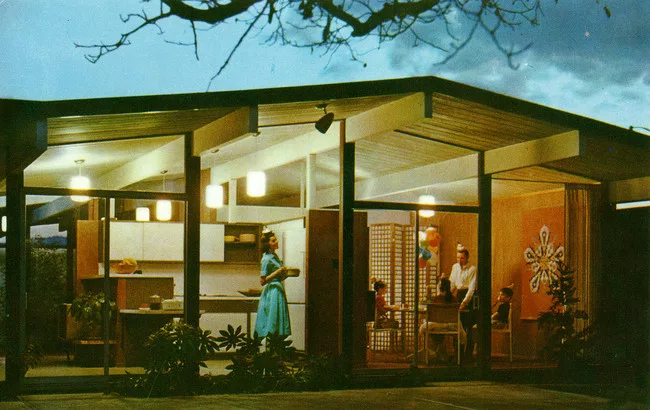
Eichler model home advertisement, c. 1960.
Modernism's Jewish Connection
Eichler model home advertisement, c. 1960.
Photo courtesy of the Local History Collection, Orange Public Library, Orange, CA.
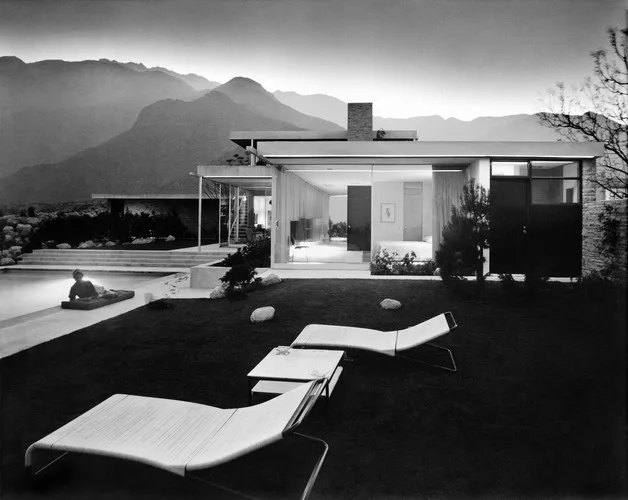
Julius Shulman, Kaufmann House designed by Richard Neutra (Palm Springs, CA), 1947.
Modernism's Jewish Connection

Julius Shulman, Kaufmann House designed by Richard Neutra (Palm Springs, CA), 1947.
Julius Shulman Photography Archive, Research Library at the Getty Research Institute. Photo © J. Paul Getty Trust
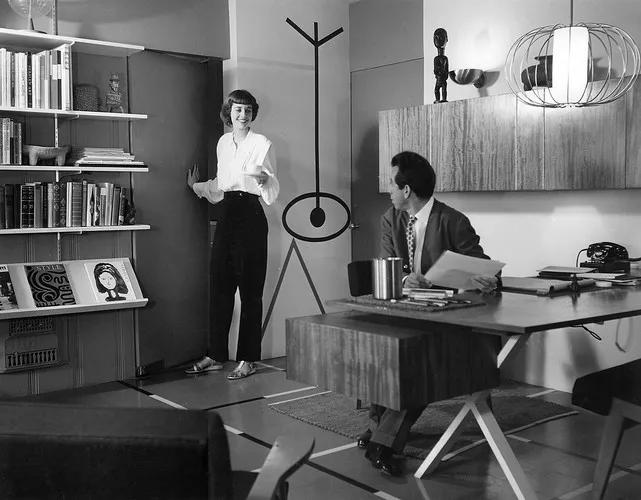
Elaine and Alvin Lustig, Sunset Office, 1949.<br />
Modernism's Jewish Connection

Elaine and Alvin Lustig, Sunset Office, 1949.
Collection of Elaine Lustig Cohen
Henry Dreyfuss. Honeywell Round Thermostat, 1953. Plastic and painted aluminum housing, 3 in. diameter.
Modernism's Jewish Connection
Henry Dreyfuss. Honeywell Round Thermostat, 1953. Plastic and painted aluminum housing, 3 in. diameter.
Photo byJohnna Arnold
Henry Dreyfuss, Princess Phone, 1959.
Modernism's Jewish Connection
Henry Dreyfuss, Princess Phone, 1959.
Photo by Johnna Arnold
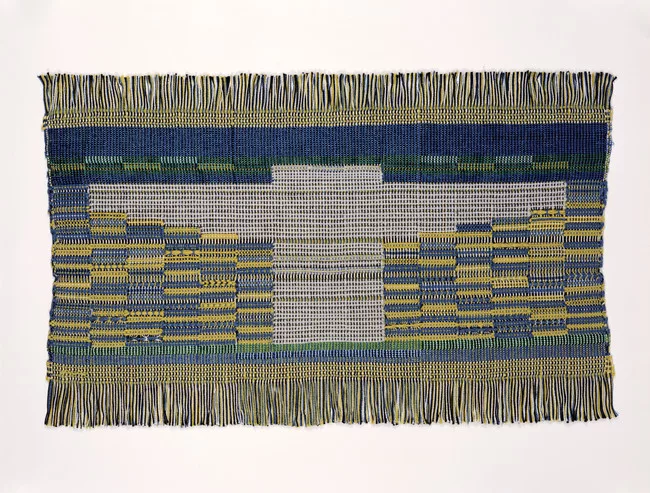
Anni Albers, Sheep May Safely Graze, 1959. Synthetic fiber; woven: plain weave and leno, 14 &#189; x 23 &#189; in.
Modernism's Jewish Connection
Anni Albers, Sheep May Safely Graze, 1959. Synthetic fiber; woven: plain weave and leno, 14 ½ x 23 ½ in.
Photo by Eva Heyd
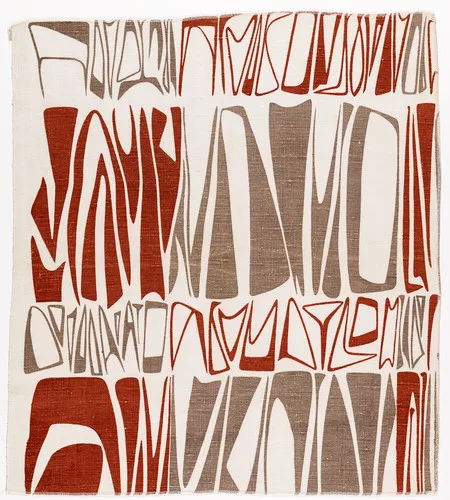
Ruth Adler Schnee, Cuneiforms, 1947&#8211;48. Screen-printed on linen, 27 &#188; x 24 3/8 in.
Modernism's Jewish Connection
Ruth Adler Schnee, Cuneiforms, 1947–48. Screen-printed on linen, 27 ¼ x 24 3/8 in.
Collection Cranbrook Art Museum
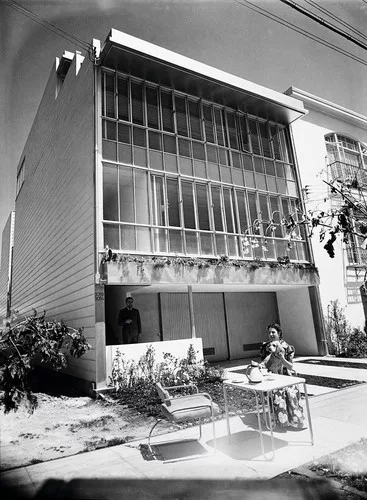
Julius Shulman, Schiff Apartment Duplex designed by Richard Neutra (San Francisco, California).
Modernism's Jewish Connection
Julius Shulman, Schiff Apartment Duplex designed by Richard Neutra (San Francisco, California).
Photo © J. Paul Getty Trust. Used with permission. Julius Shulman Photography Archive, Research Library at the Getty Research Institute.
Eichler model home advertisement, c. 1960.
Julius Shulman, Kaufmann House designed by Richard Neutra (Palm Springs, CA), 1947.
Elaine and Alvin Lustig, Sunset Office, 1949.<br />
Henry Dreyfuss. Honeywell Round Thermostat, 1953. Plastic and painted aluminum housing, 3 in. diameter.
Henry Dreyfuss, Princess Phone, 1959.
Anni Albers, Sheep May Safely Graze, 1959. Synthetic fiber; woven: plain weave and leno, 14 &#189; x 23 &#189; in.
Ruth Adler Schnee, Cuneiforms, 1947&#8211;48. Screen-printed on linen, 27 &#188; x 24 3/8 in.
Julius Shulman, Schiff Apartment Duplex designed by Richard Neutra (San Francisco, California).
July 2, 2014

Eichler model home advertisement, c. 1960.

Are Jews particularly likely to embrace new forms of artistic expression? The ongoing coverage of collections looted by the Nazis strongly suggests that, when it came to avant-garde painting, Jewish collectors were essential. So too for architecture: Can it be coincidence that Mies’s greatest clients, the Tugendahts, and le Corbusier’s, the Savoyes, were Jewish?  

In America, the Kaufmann family commissioned houses by both Frank Lloyd Wright and Richard Neutra, himself a Jewish emigre. Other Jewish architects of the time included Marcel Breuer, Rudolf Schindler, and of course Louis Kahn, born Itze-Leib Schmuilowsky. Those who couldn’t afford houses by the greats might have bought furniture by George Nelson, known for his marshmallow sofa, or appliances by prolific industrial designer Henry Dreyfuss. They would have been induced to embrace the modernist aesthetic directly by Jewish developers, including Joseph Eichler in California and William Levitt in New York, and indirectly through the work of two great architectural photographers: Julius Shulman on the west coast and Ezra Stoller on the east. Both photographers were Jewish, as were many of the editors who showed their work.

But the role of Jews in creating and popularizing post-war modernism has largely escaped attention. One reason is that some of the key players, including Anni Albers, the textile artist, and designer Laszlo Moholy-Nagy, didn’t have recognizably Jewish names; another is that well-intentioned efforts to de-link modernism (once portrayed as a Bolshevik style) from political or religious views largely succeeded. More recently, there has been the barrier of political correctness—why point to ethnicity or religion at all, unless doing so will reveal an important truth?

Now the Contemporary Jewish Museum of San Francisco has taken on this somewhat tricky subject with an exhibition (through October 6) that, perhaps in an attempt to avoid over-claiming, barely makes any claim at all. The curator is Donald Albrecht, who named the show Designing Home: Jews and Midcentury Modernism. But Albrecht went beyond the home, devoting sections of the gallery to the design of record jackets (by Alex Steinweiss) and corporate logos (by Paul Rand, born Peretz Rosenbaum in Brooklyn). Further confusing the topic, there is a selection of Judaica (mezuzahs, menorahs, and the like), not surprisingly designed by Jews. The meat of the show is a selection of furniture by Nelson, Schindler, and Paul Frankl, handsomely displayed alongside Albers textiles and two familiar Dreyfuss products: his Princess phone, in pink, and his bagel-shaped thermostat for Honeywell.

Furniture by the Bauhaus architect Harry Rosenthal, brought over from Germany by William and Ilise Schiff in the 1930s and displayed in their Neutra house in San Francisco’s Marina District, suggests that in the pre-war years, modernism was a luxury item. (Though owned by the San Francisco Museum of Modern Art, the Rosenthal pieces have never before been shown publicly.) It was in the post-War years that modernism went mass-market.

Along with its carefully selected objects, the exhibition includes diagrams showing how Jewish artists, curators and collectors—both foreign- and American-born—networked at institutions like the Walker Art Center in Minneapolis, New York’s Museum of Modern Art, and North Carolina’s Black Mountain College. The research into the role of these institutions in furthering careers is intriguing. But none of it suggests that Jews had more of a hand than any other group in popularizing modernism. In an interview, Albrecht notes that Jews did seem to have a disproportionate influence, perhaps because, unlike other immigrant groups, they had no longing for the old country and thus were all too ready to embrace the new.

The show, under Albrecht’s able direction, is worth seeing. But it also makes clear that a larger, more far-reaching show would be worth organizing—one that brings in not just Kahn, but also Gordon Bunshaft, Andrew Geller, and other influential Jewish architects, and grapples with the ways their backgrounds may have influenced their work.


Share This Story

Looking for a reprint of this article?
From high-res PDFs to custom plaques, order your copy today!

Fred Bernstein studied architecture at Princeton and law at NYU and writes about both subjects.

Post a comment to this article

Report Abusive Comment

Subscription Center
  • Create an Account
  • Start a Subscription
  • Manage My Account
  • Sign Up for Newsletters
  • Visit Customer Service
  • Update Preferences

More Videos

Sponsored Content

Sponsored Content is a special paid section where industry companies provide high quality, objective, non-commercial content around topics of interest to the Architectural Record audience. All Sponsored Content is supplied by the advertising company and any opinions expressed in this article are those of the author and not necessarily reflect the views of Architectural Record or its parent company, BNP Media. Interested in participating in our Sponsored Content section? Contact your local rep!

close
  • cold storage facility
    Sponsored byCarlisle SynTec Systems

    How Architects Can Design More Continuous Cold Storage Envelopes

  • TAMLYN XtremeTrim Exterior Trim
    Sponsored byTamlyn

    Designing Cleaner Panel Facades: Why Exterior Trim Details Matter

  • Building with Vapor Barriers
    Sponsored byReef Industries, Inc.

    Vapor Barriers Help Control Moisture in Tighter Building Designs

DESIGN:ED Podcast
Listen to Architectural Record’s DESIGN:ED Podcast

Events

June 23, 2026

Enhancing Fire Resistance with Advanced PVC Solutions

Credits: 1 AIA LU/HSW; 1 AIBD P-CE; 0.1 ICC CEU; 1 IIBEC CEH

Evaluate advanced PVC solutions that improve fire resistance, support WUI compliance, and enhance resilience in residential and commercial building design.

June 25, 2026

Designing Glass Railing Systems that Enhance Aesthetics and Meet Code

Credits: 1 AIA LU/HSW; 1 AIBD P-CE; 0.1 ICC CEU

Upon course completion, participants will possess a deeper understanding of glass railings to help ensure that safety, aesthetic, and performance objectives are achieved.

View All Submit An Event

Products

2026 Architect's Square Foot Costbook

2026 Architect's Square Foot Costbook

See More Products

Popular Stories

Lorcan O' Herilhy

California Architect Lorcan O’Herlihy Has Died, Age 66

Obama Presidential Center, Chicago

The Obama Presidential Center Opens on Chicago’s South Side

Spoonbill Ranch

Johnsen Schmaling Architects Integrates Spoonbill Ranch into a Pristine Landscape

West Village Penthouse

Design Vanguard 2026: Brent Buck Architects

Image of Bruce Springsteen Center for American Music

The CookFox-designed Bruce Springsteen Center for American Music Opens in New Jersey

Enhancing Fire Resistance with Advanced PVC Solutions - Free Webinar - June 23, 2026

Related Articles

  • Tikva-museu-judaico-Lisboa-libeskind-news-hero-1.jpg

    Studio Libeskind Unveils Jewish Museum in Lisbon

    See More
  • anoha-jewish-museum-berlin-news-olson-kundig_archrecord_1170_ss_01.jpg

    Olson Kundig's ANOHA Children’s Museum Opens at Jewish Museum Berlin

    See More
×

The latest news and information

#1 Source for Architectural Design, News and Products

SUBSCRIBE
  • RESOURCES
    • Advertise
    • Contact Us
    • Submit
    • Store
  • ACCOUNT CENTER
    • Create an Account
    • Start a Subscription
    • Manage My Account
    • Sign Up for Newsletters
    • Visit Customer Service
    • Update Preferences
  • PRIVACY
    • PRIVACY POLICY
    • TERMS & CONDITIONS
    • DO NOT SELL MY PERSONAL INFORMATION
    • PRIVACY REQUEST
    • ACCESSIBILITY
  • SERVICES
    • Marketing Services
    • Reprints
    • Market Research
    • List Rental
    • Survey/Respondent Access
  • STAY CONNECTED
    • Linkedin
    • Facebook
    • Instagram
    • YouTube
    • X (Twitter)

Copyright ©2026. All Rights Reserved BNP Media, Inc. and BNP Media II, LLC.

Design, CMS, Hosting & Web Development :: ePublishing